Mitsubishi Lancer 1400SL-5 (1973)
Publication: Car Graphic
Format: Road Test
Date: April 1973
Author: “C/G Test Group” (uncredited)
Summary: Mitsubishi’s new mass-market sedan adopts an orthodox mechanical layout derived largely from the Galant. Generally smooth and flexible engine, though somewhat noisy at higher speeds. Excellent 5-speed gearbox. Handling remains within the familiar boundaries of a conventional Japanese passenger car. Overall balance is admirable, making the Lancer a car with broad, all-around appeal.
Road testing the Mitsubishi Lancer 1400SL-5
It has now been nearly three years since the Colt 1200 and 11F disappeared from the market, during which time Mitsubishi maintained only a tenuous presence in a corner of the market with the coupe-bodied Galant FTO. At last, however, the company has introduced a new passenger car aimed squarely at the so-called “popular car” market: the Lancer, announced on January 19.
Originally, Mitsubishi’s return to this field was intended to be a compact sedan derived from the FTO platform, with the coupe arriving first as an image-building spearhead. Yet in this country, which at times seems governed by some kind of collective hysteria, the FTO’s styling–perhaps insufficiently flamboyant?–failed to win broad public support, and sales never reached a level sufficient to justify expansion into a full passenger-car range.
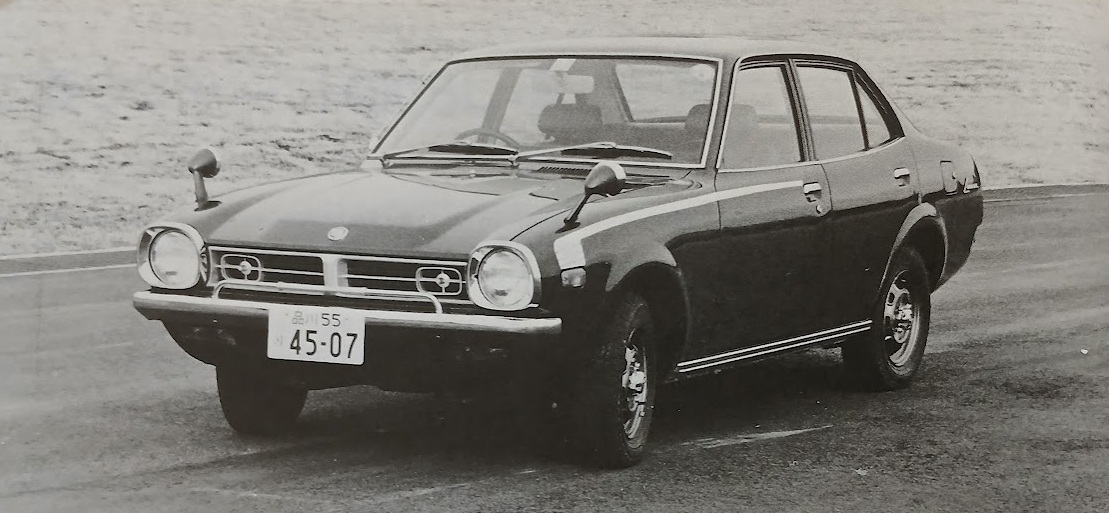
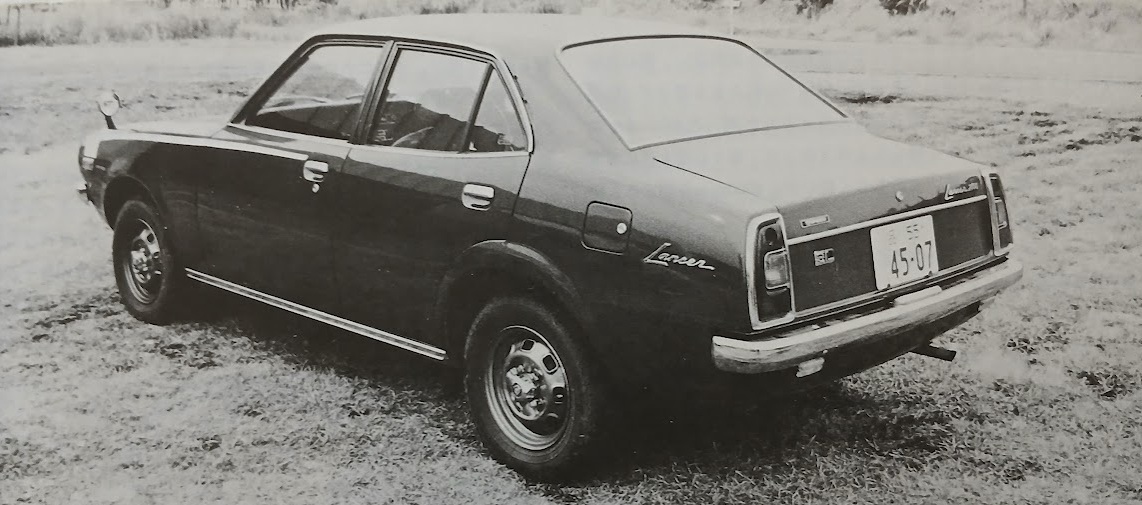
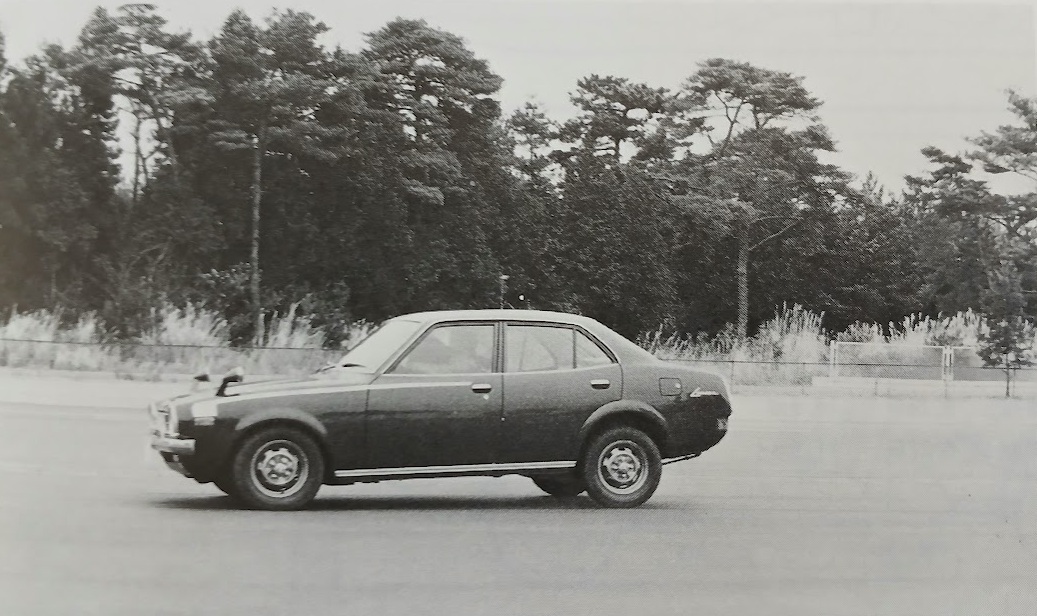
As a result, Mitsubishi changed course somewhat and produced the Lancer as a car slightly broader in focus than its formidable rivals, the Toyota Corolla and Datsun Sunny. The new series combines a thoroughly conventional long-nose/short-deck body–very much in step with prevailing American subcompact trends–with a variety of mechanical components developed through Mitsubishi’s accumulated experience since the introduction of the Galant.
The range consists fundamentally of three engines–1.2-liter/70ps, 1.4-liter/92ps, and 1.6-liter/100ps units–together with both 2-door and 4-door body styles, for a total of twelve models.
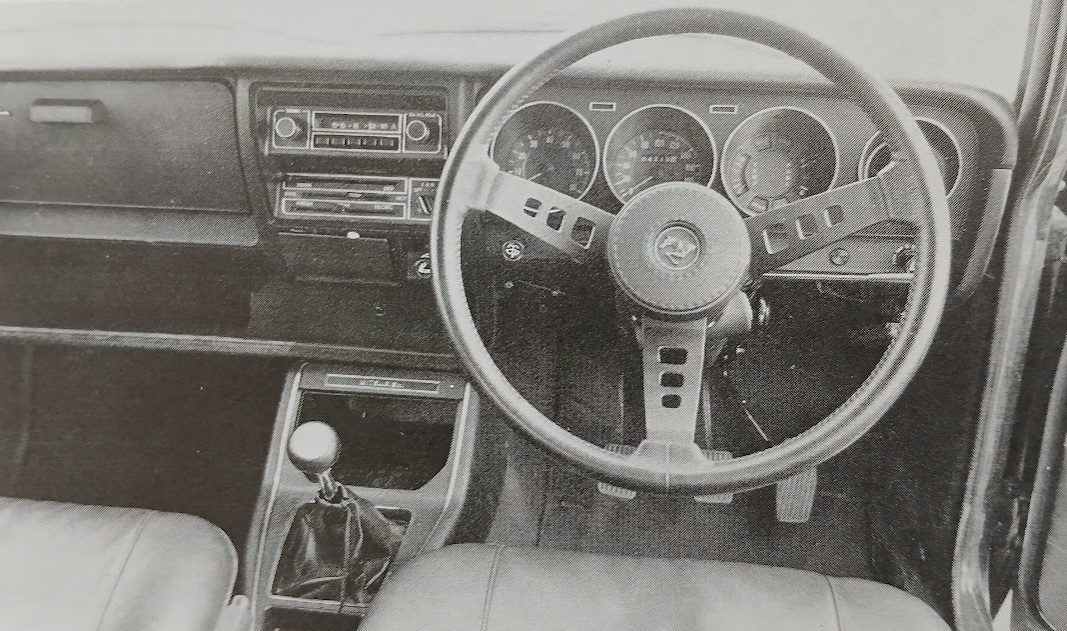
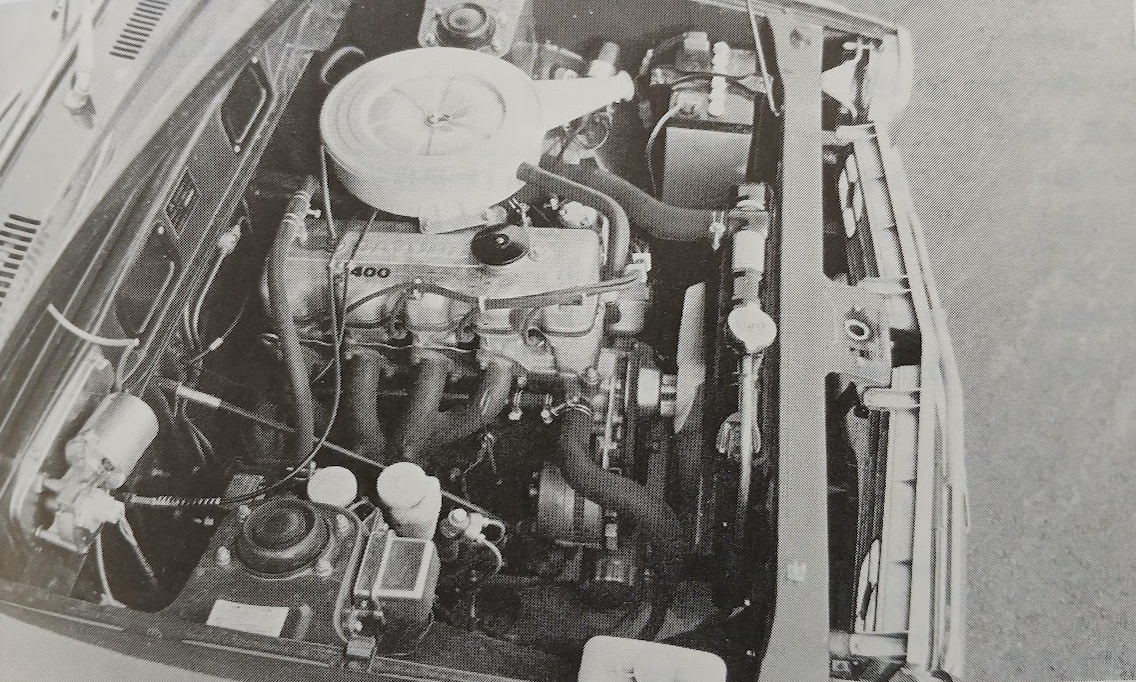
For this test, we brought out the sporting version known as the 1400SL-5. “Sporting,” however, should not be interpreted too literally. Engine specification is identical to that of the ordinary 1400-series models: a regular-production 1439cc unit developing 92ps/6300rpm, shared with the Galant 14L. The main differences lie in the use of a 5-speed gearbox incorporating an overdrive top ratio, together with suitably sporting trim and instrumentation both inside and out.
Whereas the highest-performance 1600 model–offered in a single GSL grade, and likewise equipped with a 5-speed gearbox–is available only as a 2-door, the 1400SL is offered in both 2-door and 4-door forms, giving it a certain practical advantage as an everyday car.
The example tested was the 4-door version, priced in Tokyo at 647,000 yen (the 2-door costs 622,000 yen). The Lancer 1400SL-5, in which we covered approximately 400km including high-speed testing at Yatabe, faithfully inherits all of the virtues that have characterized Mitsubishi’s practical passenger cars since the introduction of the Galant in 1970. It is an agreeable family sporting car: mechanically conventional, certainly, yet assembled with considerable competence and exceptionally easy to live with.
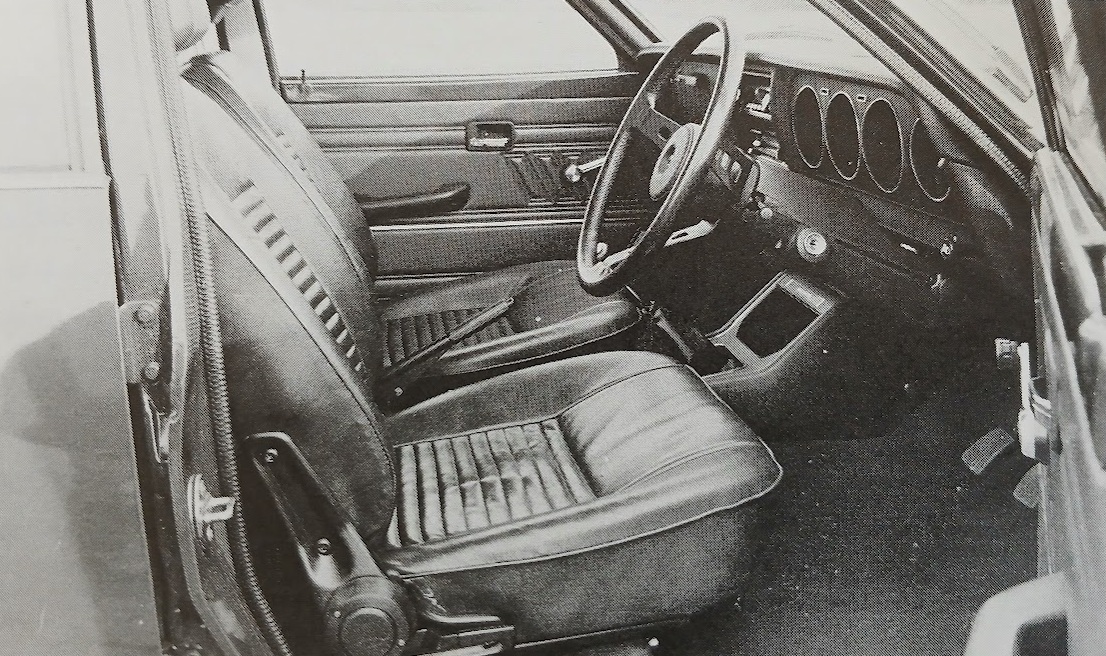
The first favorable impression upon taking one’s seat is the excellent driving position. The seats themselves are trimmed in ordinary vinyl, yet their dimensions, contours, and even the distribution of cushion firmness have all been carefully considered. Equally well judged is the relationship between the seat and the steering wheel, gear lever, pedals, and handbrake lever when seated in a natural driving position.
The seating position itself is not excessively low relative to the cowl, which contributes not only to excellent outward visibility but also to a welcome absence of psychological confinement. Particularly commendable is the continuation of one of Mitsubishi’s better traditions since the Galant: the steering wheel may be adjusted vertically through 35mm in a simple stepless arrangement.
The spacing of the three pedals is also well-executed, and for a suspended throttle pedal, heel-and-toe operation is surprisingly easy. If there is one criticism, it is that the clearance between the clutch pedal and the transmission tunnel is slightly too narrow. When lifting the left foot from the floor to depress the clutch, it was rather easy to catch the edge of one’s shoe against the side of the pedal.
Once under way, the impression is unmistakably that of a Galant. The 4G33 engine, with its decidedly long-stroke dimensions of 73x86mm, cannot exactly be described as quiet. In particular, the metallic thrumming that begins to make itself heard from around 4000rpm onward is somewhat intrusive. Yet it never becomes especially tiresome, thanks to the engine’s outstanding smoothness and flexibility.
In practice, the unit displays remarkable tractability at low speeds–smooth acceleration is possible from as little as 35km/h at 1300rpm even in fifth gear–while at the opposite extreme it will pull cleanly and without the slightest sense of strain all the way to the tachometer’s 6000rpm redline, which begins 300rpm below the power peak.
At this limit, maximum speeds in each gear are 45km/h in first, 75km/h in second, 112km/h in third, and 150km/h in fourth. The fact that even direct fourth gear will readily pull to such speeds can likely be attributed to the low overall gearing (3.328 / 1.955 / 1.341 / 1.000 / 0.854, with a 4.22 final drive), which is shared with the Mitsubishi Galant 14L SL-5.
The resulting flexibility–where first gear is used almost exclusively for starting, while once under way the car may be driven almost entirely in second gear or above, and even fifth can be used habitually in city traffic–is due in no small part to this gearing. Between 40km/h and 100km/h, third, fourth, and fifth gears all overlap sufficiently that the driver may choose freely among them according to either necessity or mood. Indeed, one almost begins to question the necessity of the 5-speed gearbox itself.
At a 100km/h cruising speed, engine speed is 3950rpm in fourth and 3300rpm in fifth.
If the driver presses on in earnest, the engine will spin very willingly to around 6500rpm, but apart from the greatly increased noise level, there is little real advantage in doing so. Beyond 6000rpm, useful torque falls away sharply, making this range of limited practical value for performance as well.
This characteristic is clearly reflected in the overtaking-acceleration figures recorded in third gear. The times for 20-60km/h, 40-80km/h, and 60-100km/h were an excellent 7.29, 7.27, and 7.08 seconds respectively, demonstrating the engine’s highly favorable torque characteristics. Yet in the 80-120km/h interval—which required stretching the engine laboriously to 6500rpm–the time deteriorated dramatically to 11.34 seconds.
Maximum speed measured over the flying kilometer was 156.18km/h, achieved under completely calm wind conditions. The reasonably accurate speedometer indicated 160km/h at this point, with the engine turning 5250rpm. Although this fell short of the manufacturer’s claimed 170km/h, it nevertheless represents a perfectly satisfactory figure for a practical 1.4-liter sedan.
Compared with the previously tested Mitsubishi Galant 14L SL-5, the Lancer’s maximum speed represents a slight improvement over the Galant’s 153.2km/h, as does its 0-400m time of 17.3 seconds (18.2 seconds for the Galant) and its 0-1000m time of 33.2 seconds (34.9 seconds).
Vehicle weight is 830kg for the Lancer against 900kg for the Mitsubishi Galant 14L SL-5, while frontal area is also slightly smaller in the Lancer’s case. Since the powertrain itself is entirely unchanged, the improvement in performance is simply the natural result of reduced size and weight.
Throughout performance testing–and particularly the severe standing-start acceleration runs–the excellence of the gearbox left an especially strong impression. Ratio selection is as previously described, but the shift action itself is light, positive, and with appropriately short lever throws, allowing the transmission to be operated freely and easily.
With fifth gear positioned to the upper right in the conventional H-pattern, one might expect frequent shifts between fourth and fifth to require some care, yet in practice such movements demand little conscious effort. The synchromesh, too, is extremely effective, and not once throughout testing did the gears protest even slightly.
Turning next to handling, we must admit that before driving the Lancer we did not hold especially high expectations for the capabilities of its chassis. Certainly, the larger Galant series had already distinguished itself among conventionally laid-out Japanese passenger cars, but even setting aside the 80mm reduction in wheelbase, the fact that track width had been narrowed by 10mm at the front and no less than 30mm at the rear inevitably gave rise to some pessimism.
Once driven in earnest, however, these concerns were dispelled completely.
Like the Galant, the Lancer’s handling is almost textbook in character. Indeed, in terms of refinement in the finer details, it may even surpass its larger stablemate.
To begin with, steering response is exceptionally good. The sensation is not quite the direct, mechanical feel of a rack-and-pinion system, yet the front wheels react to the driver’s inputs without the slightest hesitation. Free play around the straight-ahead position is minimal, the steering is appropriately quick, and effort is pleasantly light.
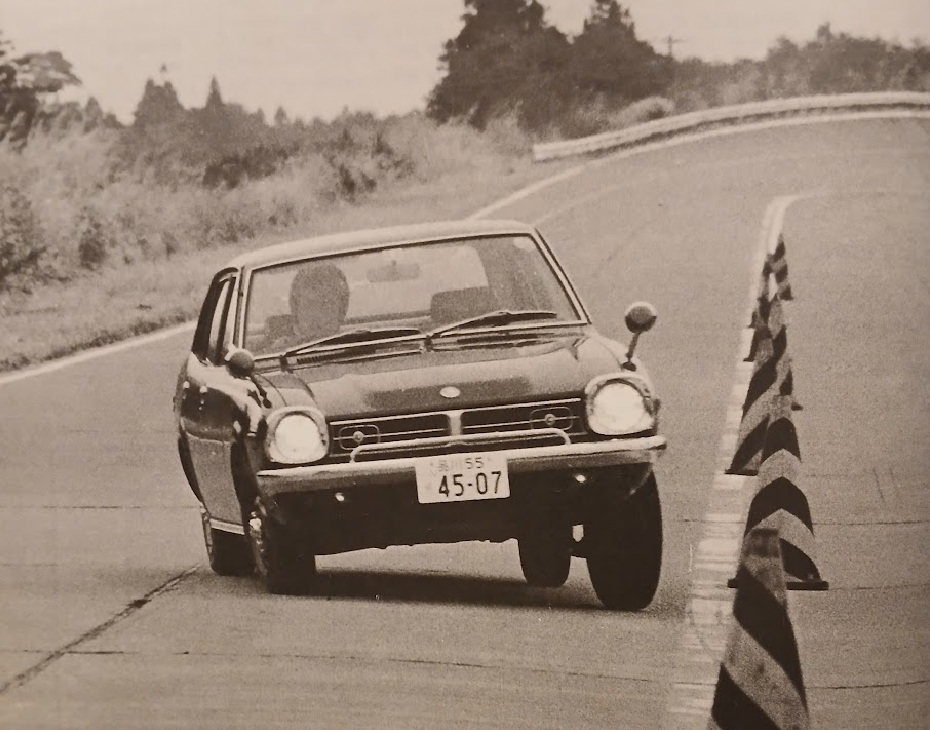
During slalom testing, the car consistently displayed only a very mild and reassuring tendency toward understeer. Body roll is fairly pronounced, yet never alarming, and the point of breakaway is indicated by the rear wheels beginning to slide gently outward.
Unless deliberately provoked by abrupt changes in driving force–for example, applying full power in second gear while negotiating a tight corner–the onset of breakaway is extremely gradual, and correcting it through the precise steering is remarkably easy.
As a result, the car can thread its way lightly through a slalom course without requiring exaggerated steering inputs, relying mostly on steering correction alone and, when necessary, allowing the tail to drift outward gently under throttle.
One characteristic absent in the Galant did, however, make itself apparent. Presumably as a consequence of the considerably narrower rear track, heavy body roll occasionally caused the inside driven wheel to lift slightly and spin, momentarily robbing the car of power.
Even so, the Lancer’s handling must fundamentally be regarded as both safe in character and genuinely enjoyable to exploit.
Nor should the contribution of the tires be overlooked. The test car was fitted with optional Yokohama GT Special Steel tubeless radial tires–155SR-13 Y-850s–and their compatibility with the chassis proved exceptionally good, to the point that one may fairly say they allowed the Lancer to display its full capabilities.
Even at the manufacturer’s recommended high-speed pressures of 1.7kg/cm² front and rear, there was very little of the harsh, sharp-edged impact harshness so often associated with steel-belted radials. Only when striking abrupt projections such as cat’s eyes did the tires make their presence distinctly felt.
Taken together with the steering response already mentioned, this suggests that both the amount and directional characteristics of compliance engineered into the suspension bushings were very carefully judged.
The tires themselves were also commendably refined. Road noise at high speed never became intrusive or high-pitched, while even under severe conditions such as slalom testing, squeal remained surprisingly subdued for a tire only 155mm in section width.
We had no opportunity to evaluate behavior on wet surfaces, but adhesion on dry pavement was remarkably high. During violent racing starts the tires refused to spin at all; indeed, the grip was so strong that engine speed would momentarily drop the instant the clutch was engaged.
In C/G’s previous experience, the mechanically similar Galant AI and 14L–with nearly identical suspension layouts and very similar power-to-weight ratios–would spin their wheels violently under standing-start acceleration when fitted with the standard 6.15-13-4PR crossply tires, often accompanied by severe rear-axle tramp.
This difference must therefore be attributed almost entirely to the tires themselves.
If one criticism remains, it is that the wheel rims deserve at least another half-inch of width. Even in photographs taken during slalom testing, the outside tires, while still maintaining grip securely, can be seen deforming rather substantially and beginning to show signs of rolling under before ultimate breakaway.
Even retaining the same 155-section tires, simply increasing rim width to 4.5Jx13 should produce an appreciably firmer and better-supported feel.
The brakes–servo-assisted discs at the front and leading-trailing drums at the rear–inspire plenty of confidence. Even in the severe fade test we refer to as the “0-100-0,” they produced highly satisfactory results. Initial pedal effort of 15kg actually fell to 14kg by the third stop, as disc brakes tend to become more effective once warmed, before gradually increasing thereafter and finally stabilizing at approximately 26kg by the end of the test.
This suggests that brake pads of particularly high fade resistance have been specified, yet despite this, braking performance itself remained impressively strong, as the accompanying test figures indicate. Pedal feel, too, is entirely natural and progressive.
We have already mentioned the excellent driving position, but in other respects as well the interior is generally unified by a pleasingly simple and tasteful design.
In addition to the glovebox at the left side of the dashboard, there is a broad tray beneath which can carry even a large road atlas, as well as a recess in the console large enough to hold a 35mm camera. Altogether, the abundance of storage space is particularly convenient.
Even with the front seats adjusted well rearward, two adults can still sit comfortably in the rear bench seat, although legroom then just reaches the limit against the backs of the front seats.
The main drawback stems from the body layout itself. Presumably in pursuit of the long-nose styling theme, the entire cabin has been shifted rearward, with the unfortunate consequence that despite the four-door body, the rear doors are substantially pushed up over the wheel arches.
As a result, the wheel housings protrude into both sides of the rear seat almost like the armrests of a bench, making ingress and egress distinctly less convenient.
In smaller details as well, we were somewhat dissatisfied with the dashboard switch layout.
Most notably, in the Galant series all wiper functions were operated through a single lever on the right of the steering column, incorporating on-off and windshield washer controls, together with headlight dipping, flashing, and turn-signal functions. In the Lancer, however, the wiper controls have been relocated to a push-pull knob positioned awkwardly out of reach to the far left.
Similarly, the light switch at the lower right of the dashboard abandons the Galant’s convenient–if slightly distant–toggle-type arrangement in favor of a push-pull knob with soft detents.
Although the dashboard and seats themselves are fairly luxurious in appearance, attempting to justify the nearly 50,000-yen price difference relative to the Galant 14L SL-5 by economizing in such essential controls strikes us as a serious mistake in a practical passenger car.
Despite its lightweight design, the body structure is solidly constructed, and sound insulation measures are generally well executed. The fit and closing action of all four doors are also pleasingly substantial.
Even when driven hard over rough gravel roads at speeds exceeding 80km/h, the body produced virtually no creaks or rattles whatsoever. (Over hard-edged irregular surfaces like tram tracks, the scuttle would occasionally emit some noise.) Nor did stones striking the underside of the floorpan produce excessive booming or resonance.
Ride quality, too, consistently conveys a feeling of solidity and substance.
Wind noise at high speed is very low, though beyond 4000rpm the exhaust note tends to boom somewhat inside the cabin.
The ventilation system is powerful, and the eyeball outlets at both ends of the dashboard continuously admit a generous volume of fresh air whenever the car is in motion.
Similarly, the heater itself is quite effective, but unfortunately the ram-air boost from vehicle speed is excessively sensitive to changes in road speed, with the result that heat fluctuates rather dramatically.
Average fuel consumption over the total 396km test distance–including repeated maximum-speed and standing-start acceleration testing at Yatabe–was 7.63km/l. When driven briskly along open national roads, generally leading the flow of traffic, consumption averaged around 8km/l.
In congested urban driving, figures ranged from 6.5-7km/l, which must be considered somewhat uneconomical for a 1.4-liter passenger car. Part of the reason, however, may have been that the excellence of the gearbox encouraged us into shifting unnecessarily.
Once accustomed to the car, it should certainly be possible to drive far more economically by making fuller use of the flexible fifth gear even in city traffic, as the steady-speed fuel-consumption figures clearly suggest.
Even so, a slightly taller final-drive ratio would likely improve fuel economy at lower speeds, while at the same time allowing fifth gear to function more genuinely as an overdrive on the highway.
Opinions will naturally differ regarding both exterior styling and interior presentation. In these respects, the Lancer is fundamentally a rather middle-of-the-road design. It is neither especially spacious nor particularly quiet, yet it unquestionably possesses the ability to carry four adults safely and comfortably over long distances at sustained high speeds.
Above all, its outstanding ease of operation–best exemplified by its thoroughly well-resolved handling–is beyond reproach.
Anyone can drive the Lancer with complete confidence, almost as though it were a car already long familiar to them, while at the same time being able to exploit a surprisingly wide variety of driving styles as circumstances require. In that sense, it may fairly be described as a car suited to virtually everyone.
From the standpoint of practicality, the four-door version naturally holds the advantage.
Considering the level of performance achieved in this test by the 1400SL-5, there seems little compelling reason to opt for the 1600 with its 8 additional horsepower.
In that respect, the Lancer 1400SL-5 represents a purchase one can make with confidence.
Indeed, owing to the fundamentally agreeable characteristics of the engine, the 5-speed gearbox itself seems almost unnecessary at times. Seen in that light, even the ordinary 1400GL–priced at 609,000 yen, with the two-door version costing 25,000 yen less still–becomes a model well worth considering.
Postscript: Story Photos