Toyota Sprinter SR (1971)
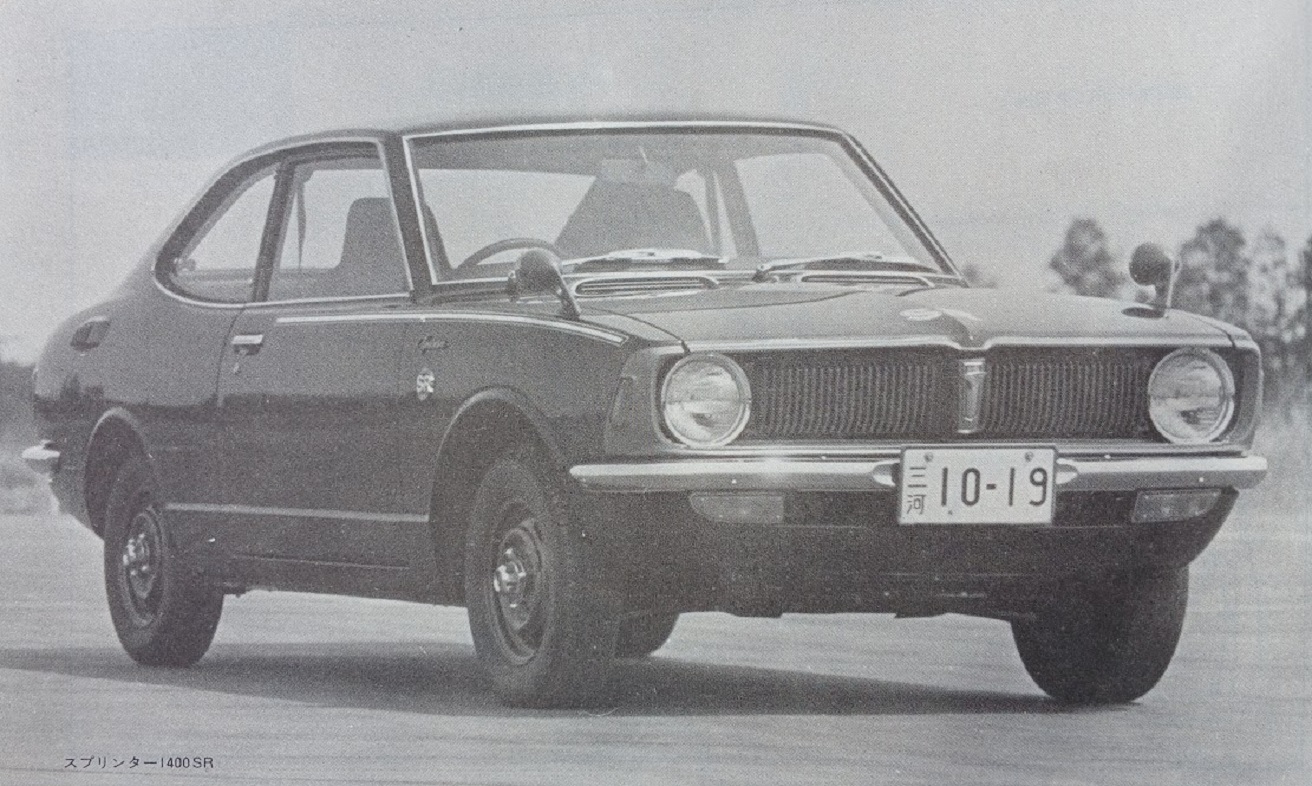
Publication: Motor Fan
Format: Road Test Summary
Date: 1971 (Motor Fan Road Test Digest Annual)
Author: Motor Fan Editorial Staff (uncredited)
Toyota Sprinter 1400SR Model Overview
As consumers become accustomed to having their own cars, they tend to gravitate toward higher-end models within a vehicle series. The successive release of engines of gradually larger displacement in the same model series is likely a response to these changing user preferences and demands. The launch of the 1400cc engine as the top-of-the-line Corolla and Sprinter in April 1971 can be considered part of this trend. The test car this time, the Sprinter SR, as its name suggests, is flavored as a sports car for rallies, and it does not simply offer increased displacement, but also goes one step further to pursue single-purpose functionality in response to the diversification of user preferences.
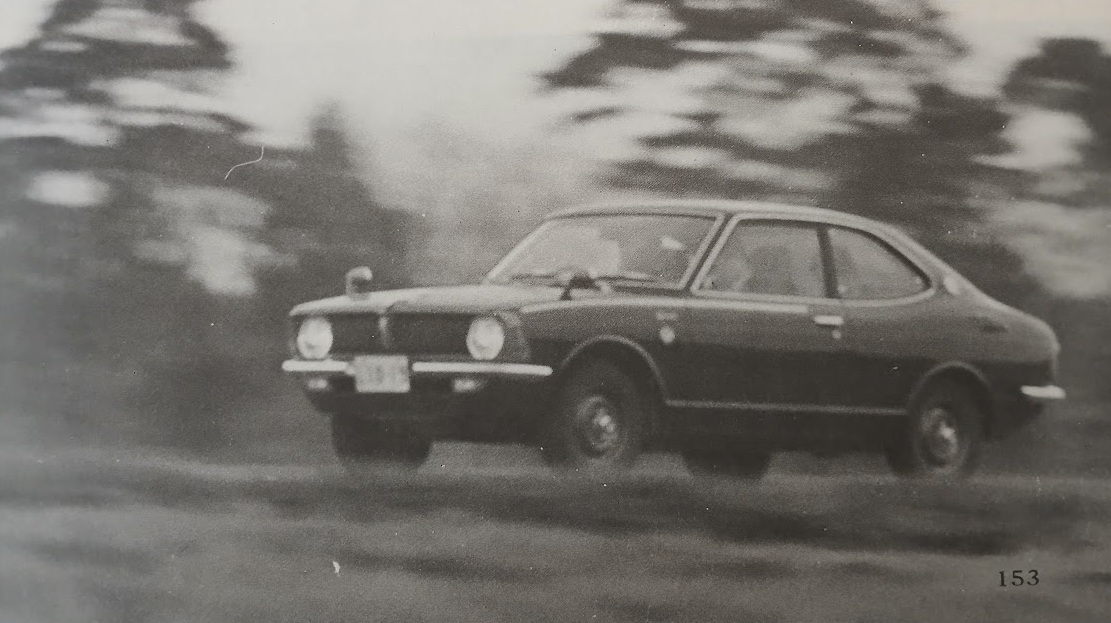
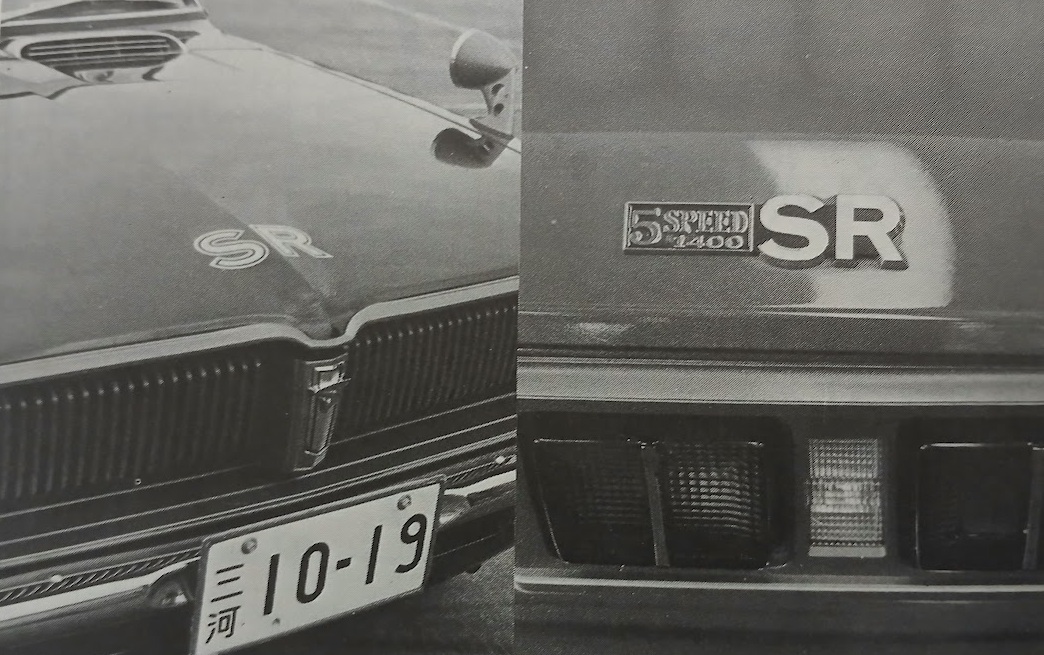
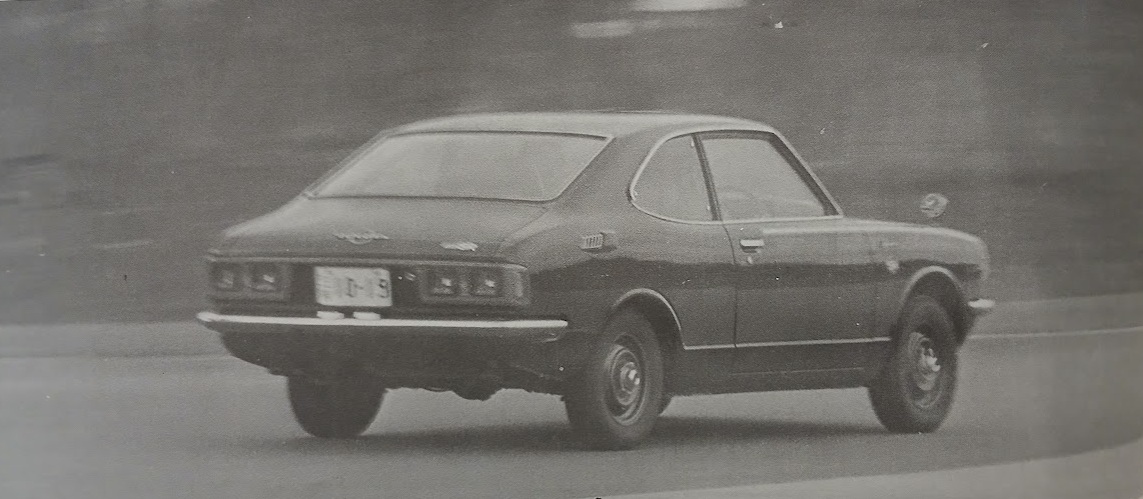
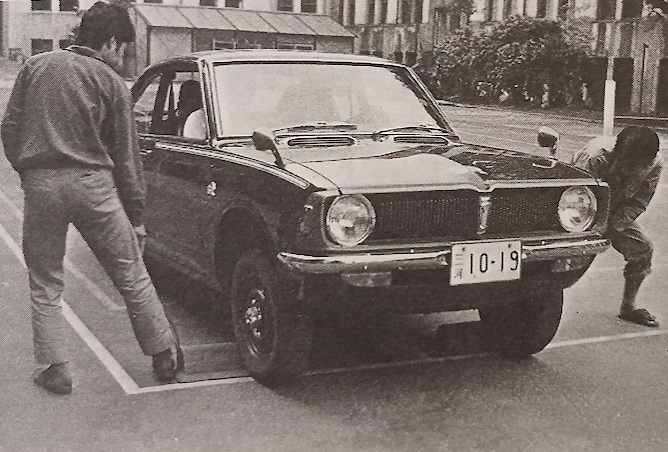
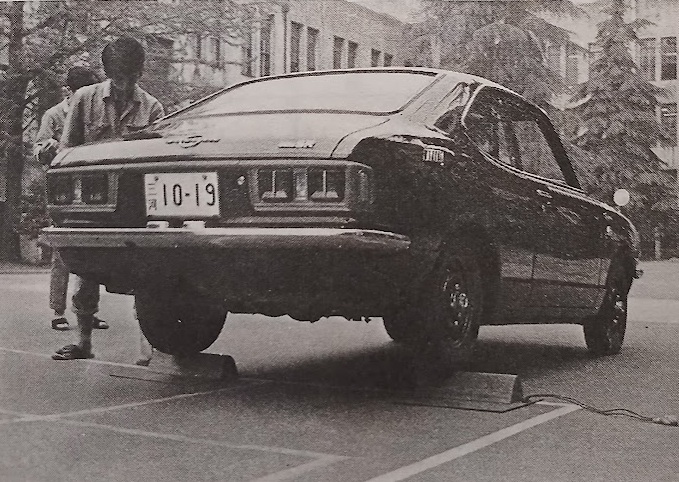
Styling features that distinguish it from other Sprinters include the large SR lettering on the nose and front fenders, the bold stripes on the waistline, standard-equipment radial tires, capless wheel rims, and bullet-shaped fender mirrors.
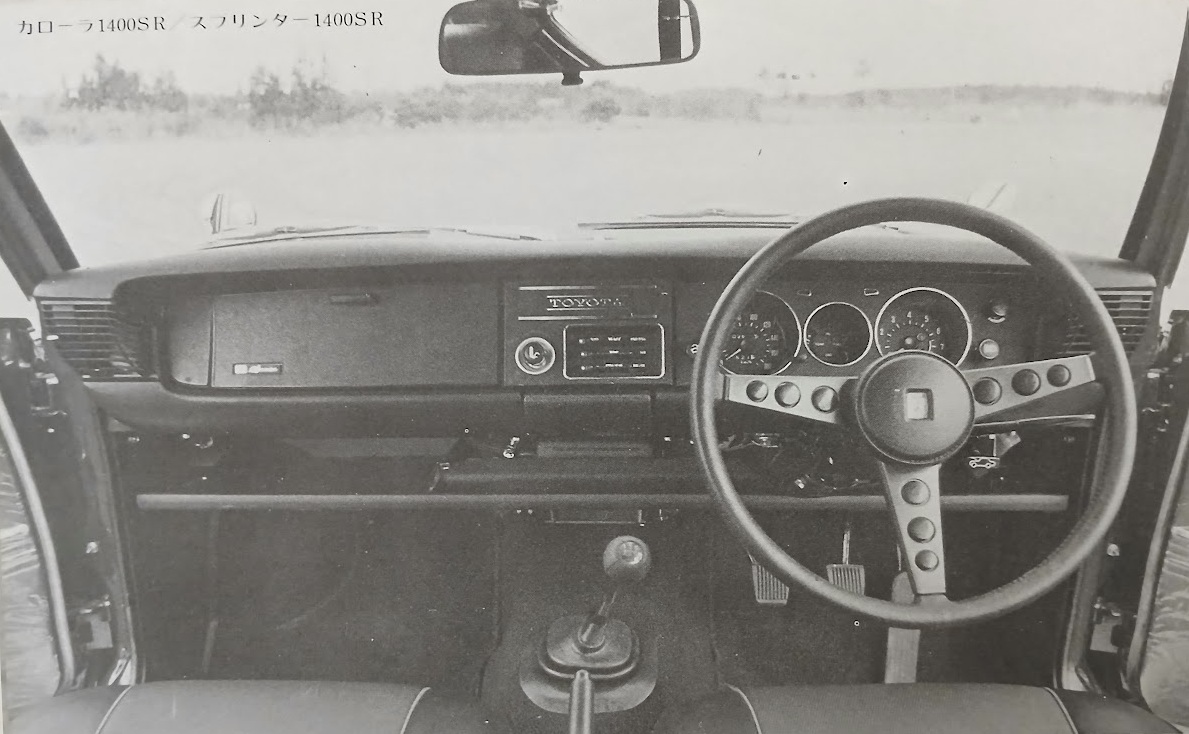
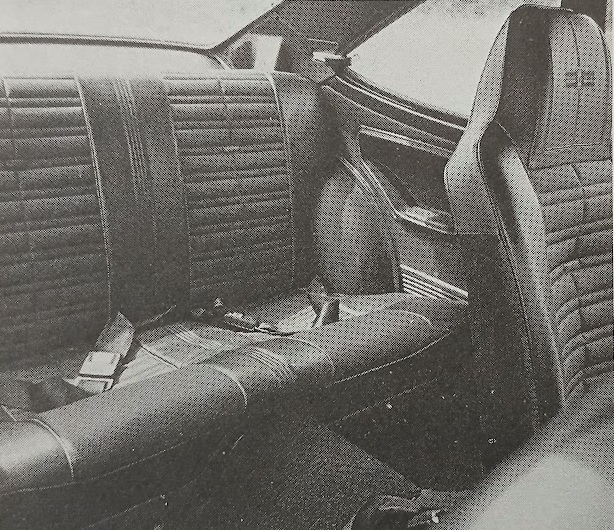
The interior is almost the same as the conventional Sprinter SL, but the SR’s instrument panel and headliner are all-black, and deluxe items such as the radio, console storage box, rear window defogger, and trim moldings have been removed to bring out the mechanical feel of the car. At the same time, this is likely done to reduce the official weight for actual competition events. The steering wheel is a three-spoke Nardi type with a padded center hub, and the shift lever knob is covered in black leather to improve grip and feel.
The high-backed, fully reclining seats are upholstered in vinyl leather with a non-slip surface and thin red accent lines, providing a good grip. The instrument panel is all-black with an anti-glare finish, with a speedometer scaled to 190km/h on the left, a tachometer with a red zone above 6500rpm on the right, and a combination meter between them incorporating a water temperature gauge, fuel gauge, and oil pressure and charging warning lights. All the gauges have raised white letters on a black background and red needles, making them easy to read.
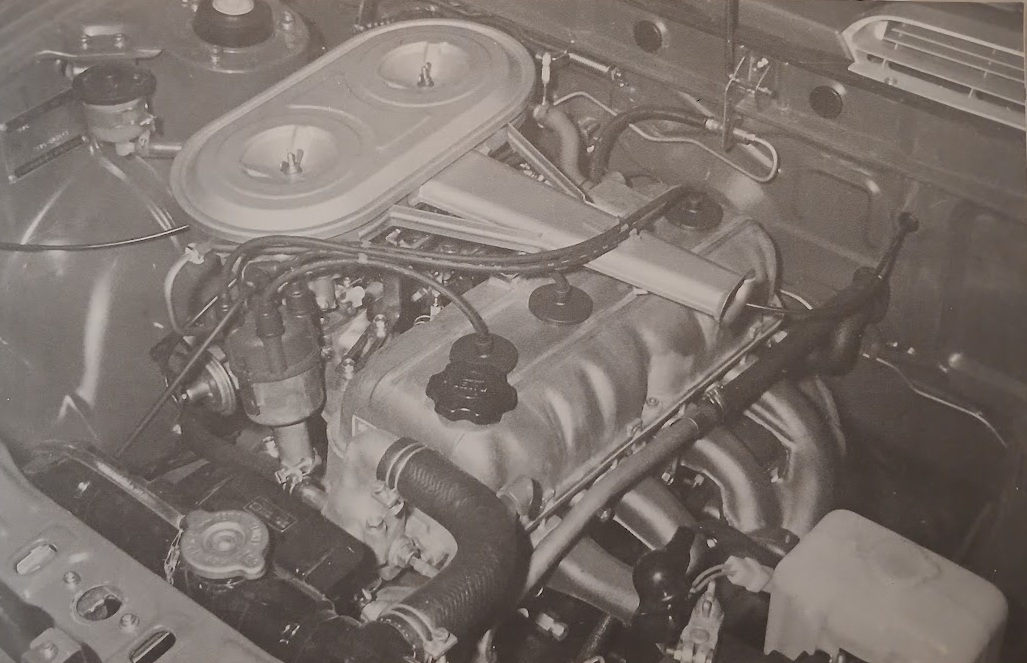
The engine is a 1407cc OHV four-cylinder with twin downdraft two-barrel carburetors, with a maximum output of 95ps/6000rpm and a maximum torque of 12.3kgm/4000rpm. Like the Celica/Carina engine, it uses a deep-skirt high camshaft to reduce the moving mass at high revolutions. The pushrods are short, the valves are arranged in a V-shape to increase airflow efficiency, and the plugs are positioned in the center to create an ideal combustion chamber shape.
The standard transmission is a 5-speed, with the shift fork shaft shifted slightly backward to adopt a direct system, and the shift feel has been improved by increasing the capacity of the synchronizers. The 5-speed was created by adding an overdrive fifth gear to the existing 4-speed transmission, and the gear ratios from first to fourth gear are a little wide, while the gear ratios for fourth and fifth are close.
The front suspension is the same as other Corolla series, with MacPherson struts, and the rear is a rigid axle with asymmetric semi-elliptical leaf springs. Due to the nature of the car, the spring constants are increased both front and rear, and the damping force is also increased. Combined with 13-inch radial tires, this provides good roadholding on both rough and winding roads, and improves cornering performance.
The Sprinter SR is the first car to be released specifically as a rally sports car, and with just a little modification, it does have the elements to take part in full-scale rallies. However, as is the case with similar machines in the motorcycle world, it can also be seen as a single-purpose on-road sports car, and so its future development will be of great interest.
Manufacturer’s Development Intention
“The SR is a very targeted car, focusing on young sporty users.
SR stands for Sports Rally, and it can be said that starting with the SL, the top model in the Corolla/Sprinter series, it has been given more S (Sportiness) and less L (Luxury).
Although we use the word ‘rally,’ it is not capable of participating in a full-scale rally as is. Rather, it is equipped as a base for such a car, and is set up to suit general sporty use. However, compared to a normal car, it still has considerable potential.”
Toyota Sprinter 1400SR Test Drive
The Sprinter SR is the fastest and sportiest model in the Corolla/Sprinter series, as indicated by the SR (Sports Rally) name.
In terms of appearance, there are only slight differences compared to the SL, but it still has a distinct sports car feel. The test car was painted dark green with yellow SR markings and side stripes, which will surely be popular with young people.
The driving position is no different from other Corollas and Sprinters, but since it was a sporty position to begin with, there was no need to change it specifically for the SR model.
The pedal layout is unchanged, and there seems to be no problem with this either. If we had to point out a problem, it would be that it’s a little difficult to heel and toe…
The steering wheel rim is made of soft synthetic resin and at first glance looks like real leather. It’s a good thickness and diameter, and feels much better in your hands than a cheap leather-wrapped wheel.
The SR is marketed as a car that is focused on functionality, and a radio and console box are only available as options. Functionality is fine, but you would still want a radio…
The SR’s engine has a displacement of 1407cc, and although it is OHV, it has a cross-flow head. Carburetion is by twin downdraft two-barrels. With a compression ratio of 9.6, it produces a maximum output of 95ps/6000rpm and a maximum torque of 12.3kgm/4000rpm. Perhaps because the test car was new, its revving felt heavy, and we got a strong impression of poor throttle response, especially at high rpm.
The gearbox is a fully-synchronized 5-speed, the same as in the Celica/Carina. The gear ratios are the same as the Corolla 1400’s 4-speed with an overdrive fifth gear of 0.861 added on top, but the final drive ratio is 4.38, compared to 4.11 for the 4-speed.
The gearbox itself feels good, and we’re very happy to see a 5-speed in such an inexpensive car, but because the final drive ratio has been lowered, each gear feels a little lacking in extension, which spoils the sporty feeling quite a bit. Especially in first and second gear, the revs quickly hit a plateau, despite there being plenty of power to spare.
In normal driving, there are advantages such as being able to use fourth and fifth gears from low speeds, and being able to use third gear quite effectively on hills, but since this is a car that clearly asserts its sports character, you want a gear ratio that allows sufficient power extension from each gear and allows you to effectively extract the power available.
Also, even when you take the name Sports Rally at face value and consider it as a car intended for rally driving, with short bursts of acceleration at low speeds, the extension in first and second gear is insufficient. Most rallies are run on mountain roads, so in that case you definitely want a speed of around 50km/h in first gear and 90km/h in second gear.
Our conclusion was that it would have been better to leave the final drive ratio at 4.11, the same as the 4-speed gearbox. The 4-speed model has proven that the 4.11 gearing provides no inconvenience in everyday use in urban areas, and the taller overall ratio means quieter and more economical driving on the highway.
The 4.11 final drive is not available as an option, but we would very much like it to be. In fact, for a car like this, it would be nice if they added several types of final drives to the options list, so they could be installed as factory options. In the meantime, the 4.11 final drive is available as a factory part for the 4-speed, so if you really want to, you can just buy one and install it yourself.
The brakes are discs at the front and drums at the rear. Since there is no servo assistance, the pedal is a little heavy at low speeds, but stability is high and you can step on them with confidence from high speeds.
The biggest distinguishing feature of the SR is its suspension. Both the springs and dampers have been strengthened, and 155SR-13 radial tires come as standard.
The strengthened suspension is immediately apparent when driving. The ride is much harder than the SL, and the steering response is much better. The steering characteristics are basically slight understeer. The point where it reverses into oversteer is also higher than the SL, and it seems to recover more quickly after breaking away. It can be said that the suspension has more than sufficient capability and feeling for a street sports car.
However, although the manufacturer says that “this car can be entered into rallies as is,” it is natural that it will lack the strength required for rally driving on rough roads. In particular, the damping force of the dampers is clearly insufficient. If it is a rally at the beginner or lower intermediate level, this setup may be enough, however, it obviously won’t work in rallies that have special stages.
Of course, it’s unlikely that any driver would be so ignorant as to enter a full-scale rally with a stock car as-is…
With that in mind, although the name is “Rally,” the suspension settings of this car give the impression that it is primarily designed for paved roads. In practical terms, this is by no means a negative. Until now, sports cars have tended to only increase engine power while maintaining the same suspension as standard models, so in that sense, the SR can be said to be a true enthusiast’s car.
All manufacturers sell suspension kits for racing and rallying, but there were practically no sports kits for street use, making tuning difficult. By contrast, the SR is perfect for users who want high performance in a sports car they can drive around town.
With the introduction of this SR, we can expect other manufacturers to also introduce full-fledged street sports models with reinforced suspension.
Postscript: Story Photos