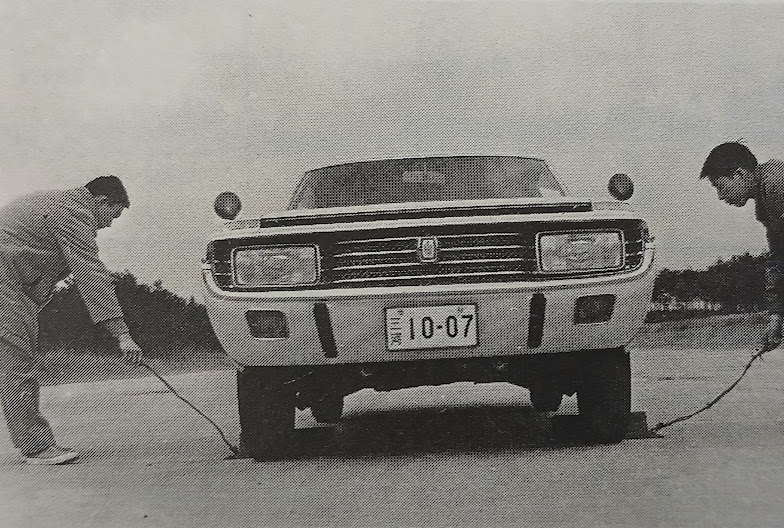
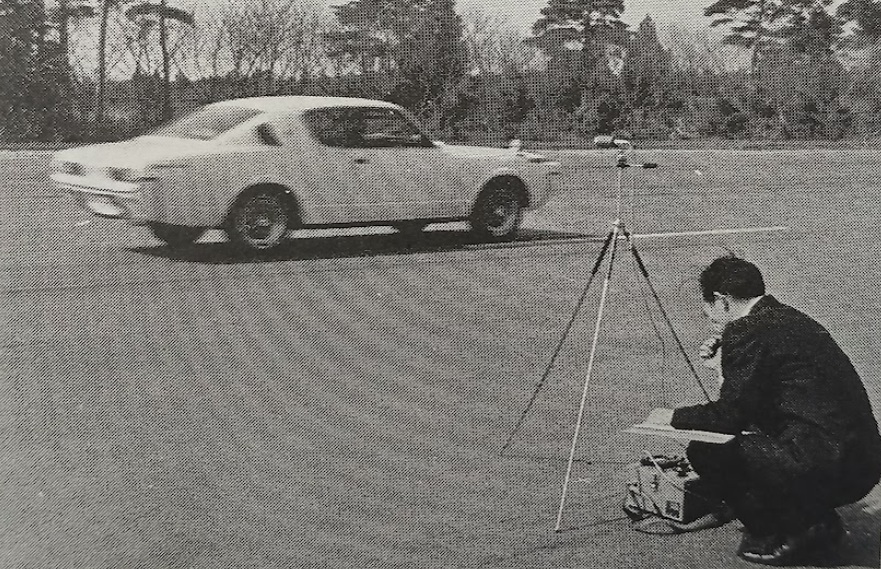
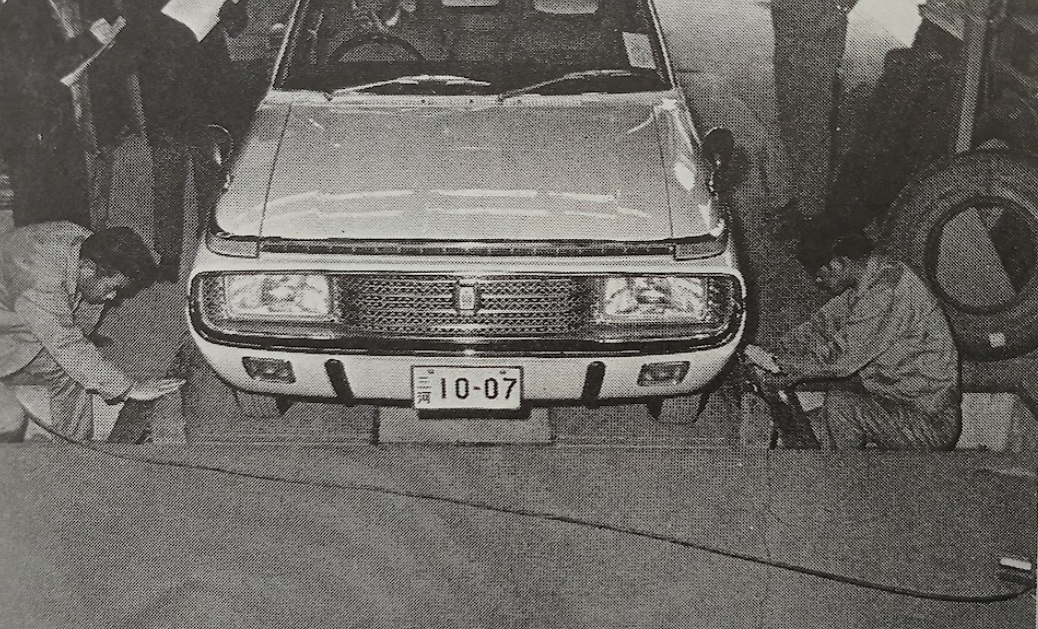
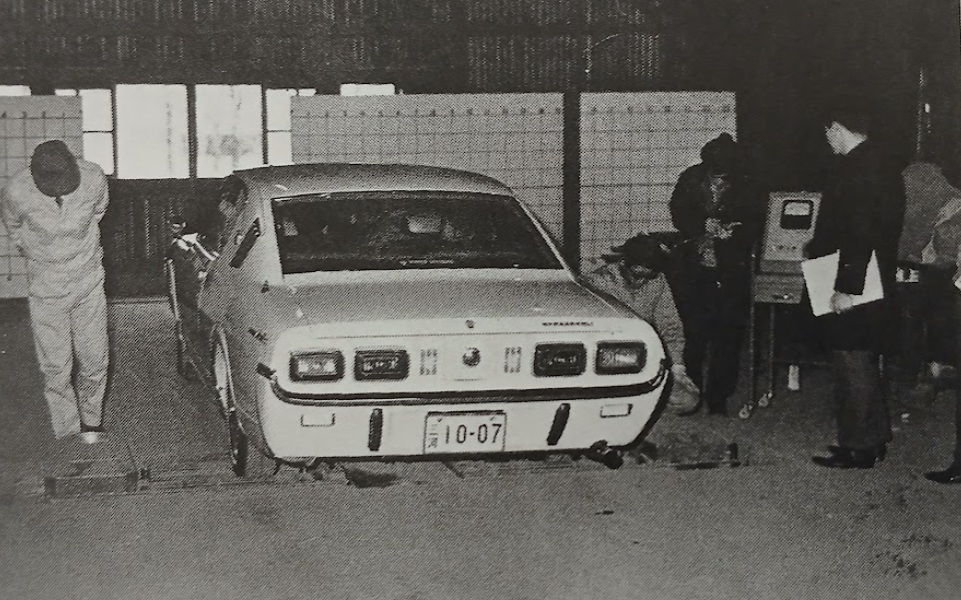
Toyota Crown Hardtop Super Saloon (1971)
Publication: Motor Fan
Format: Road Test Summary
Date: 1971 (Motor Fan Road Test Digest Annual)
Author: Motor Fan Editorial Staff (uncredited)
Toyota Crown Hardtop Model Overview
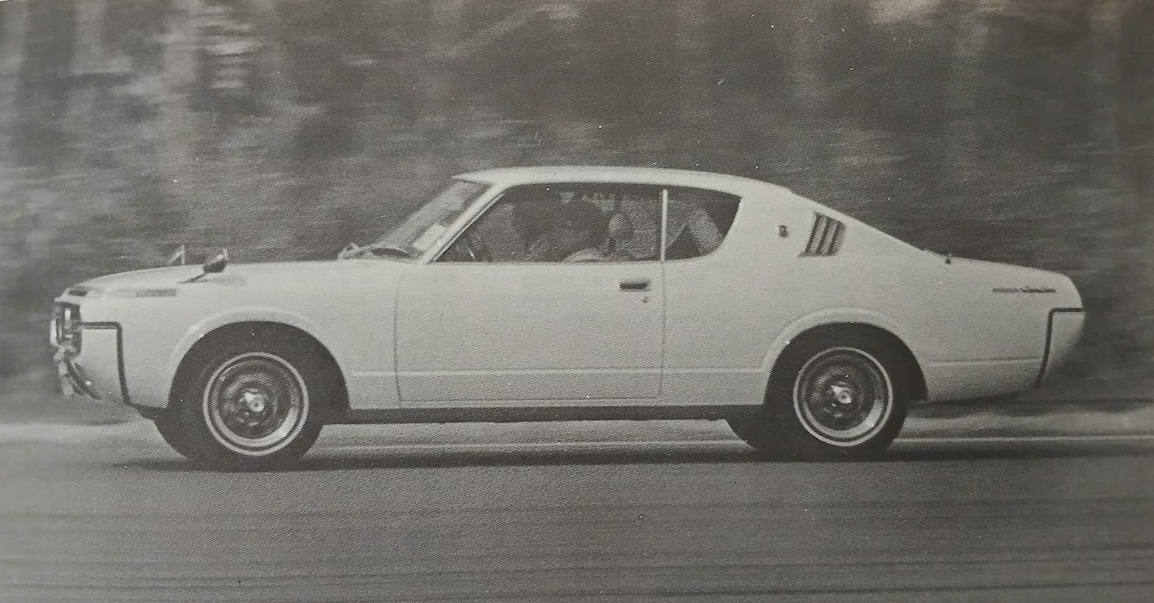
With this model change, the Crown’s styling has undergone major changes that seem to be ahead of their time. The rounded roofline, bonnet treatment, and other innovative forms are evident throughout, giving the car a style that ranks among the best of Toyota’s cars, while still retaining the familiar curved body shapes in the same vein as the Corona and Mark II, the so-called “Toyota Line.” The first thing that catches your eye is how smooth the body is, without any conspicuous protrusions. The front and rear body-colored bumpers are integrated into the rest of the body so as not to disturb the lines of the exterior. The bumpers are thicker than the body panels, giving them the strength required for their function, while also making them easy to replace in the event of damage. The smooth flow of the roofline blends into the rear fender line to create a graceful curved surface. The semi-matte wheel covers, which at first glance resemble magnesium, and the large air outlets in the rear pillars add a further special touch to the car’s exterior.
To reduce driver fatigue, power steering is standard equipment, but it is not too light and is easy to get used to, which is more typical of European cars. Another convenient feature is the remote trunk opener, which allows the driver to open the trunk by turning the key counterclockwise in the ignition, without leaving the driver’s seat.
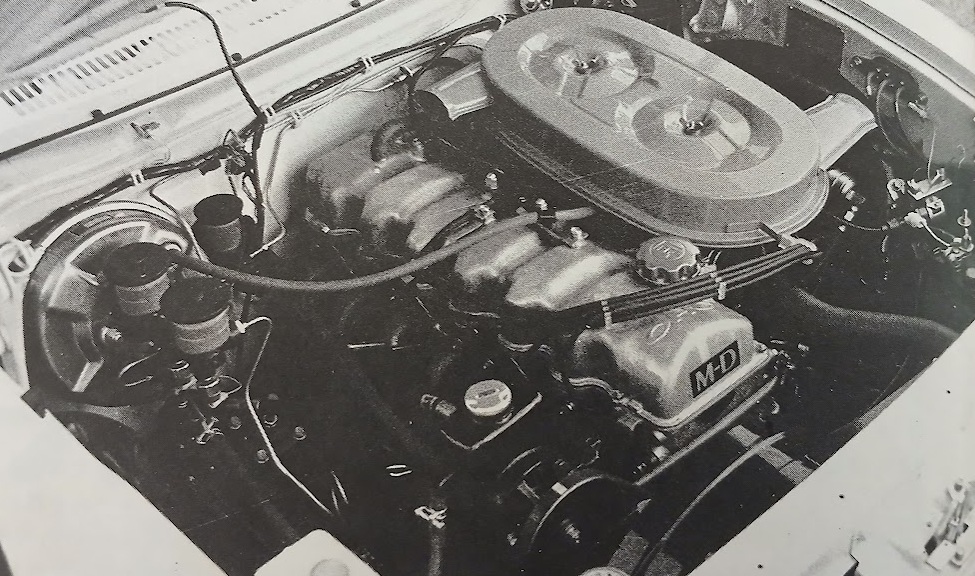
The engine remains an OHC inline six-cylinder with twin two-barrel carburetors. Maximum output is 115ps/5800rpm, maximum torque is 16.0kgm/3600rpm, and it is equipped with a PCV device designed to purify exhaust gases.
The transmission is a fully synchronized 4-speed, and the previous tough shifting feel has been softened by increasing the size of the synchro spline diameter.
The front suspension is double wishbone, while the rear suspension is a four-link rigid axle type with four arms of unequal length supporting the front of the axle and a Panhard rod to maintain rigidity in the lateral direction. Coil springs are used front and rear, providing a soft ride.
The driveshaft is divided into three parts, and the center part is fixed to the floor with a rubber bearing. This, combined with reinforcements to the propeller shaft and the reduction in the swing of the differential due to the four-link system, has resulted in improved safety and quietness.
When braking suddenly on wet, frozen, or gravel roads, a car’s rear wheels tend to lock up first, causing directional control to become unstable. To prevent this, a proportioning valve is installed to regulate hydraulic pressure to the rear wheels so that it does not exceed a certain value.
Manufacturer’s Development Goals
The new Crown series was developed with the five following basic points in mind, with the overall aim of bringing the car to a standard of international acceptance:
- Make it unmistakable that this is a full model change, with a completely new exterior and interior.
- Address safety thoroughly, without compromise.
- Improve the drive system and chassis to provide additional strength and rigidity.
- Improve high-speed driving performance, and since the engine is 2000cc, focus not only on increasing the maximum speed, but on improving performance for continuous driving on the highway.
- Offer a wide range of models to meet a diverse variety of customer needs.
Toyota Crown Hardtop Test Drive
The styling of the new Crown series is quite innovative. In particular, the hardtop, which was designed with private owner-drivers’ needs in mind, is very eye-catching.
The old Crown hardtop retained a strong commonality of image with the sedan, but this new hardtop seems to have weakened its association with the sedan image considerably.
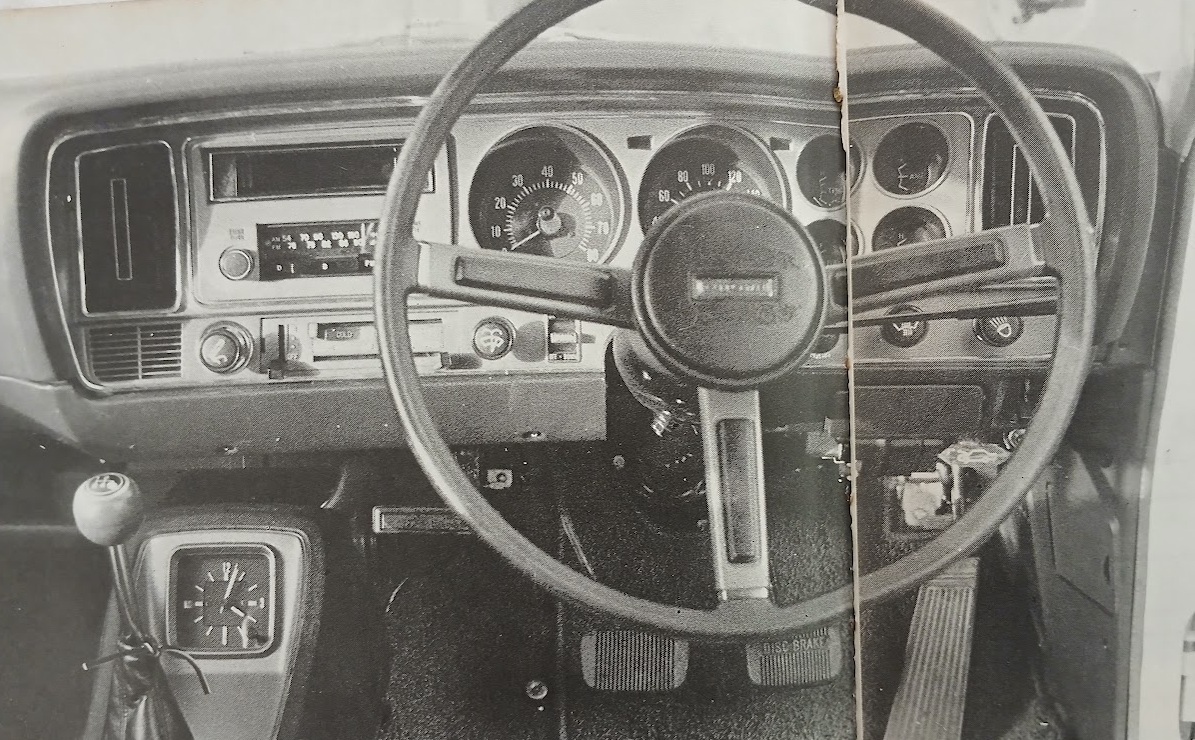
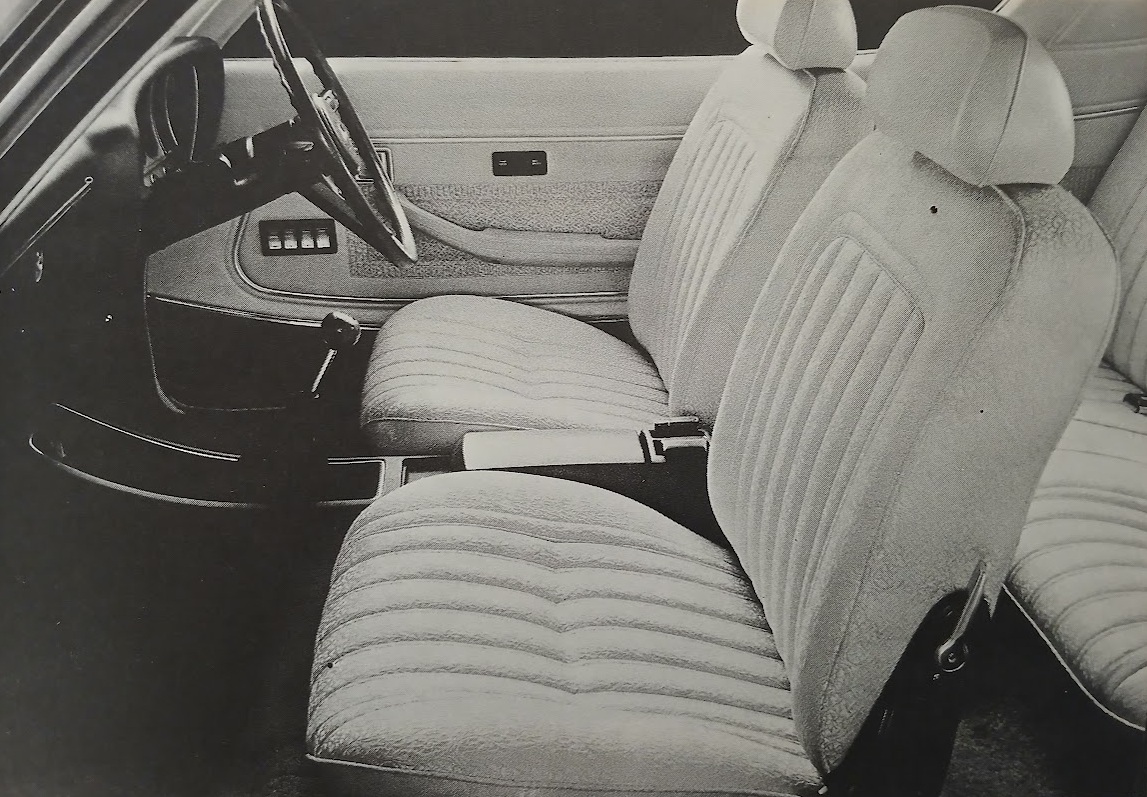
The interior exudes a luxurious atmosphere, and the finish is first-class. It is also lavishly equipped and filled with thoughtful touches, including a car stereo with auto-tuning AM/FM radio, power windows, power steering, and a clock with date calendar. Even high-income earners who can easily afford this model will not be dissatisfied.
In fact, it is safe to say that when looking at the world’s 2-liter class cars, it leads the standard in terms of luxury.
The instrument panel is also luxuriously finished, but the controls are not very easy to use, especially the dash-mounted switches which require you to stretch your arms around the outside of the steering wheel to get to them. The location of the wiper/washer switch, in particular, needs to be reconsidered.
It is a nice touch that the radio tuner is located on the floor in the pedal area, similar to the foot-operated dimmer switches found in older cars. We wouldn’t say there’s anything wrong with it, in the sense that it emphasizes luxury. However, from a functional standpoint, wouldn’t it be much more appreciated by users if this switch operated something more useful, like the windshield washer linked to the wipers?
The dimensions of the seats are adequate and their design is impeccable visually, but here too, there seems to be room for improvement in terms of functional design.
The firmness of the seat is just right, but the cushion doesn’t fit the body well. It feels like your body is floating on top of the seat, and it lacks a stable, supportive feel, giving the sense you could slide right off it. These seats may become more comfortable with use, but the impression we got from the test drive wasn’t very relaxing.
At the risk of belaboring the point, the sense of stability and connection you feel with a car when sitting in the seat has a significant impact on the psychological comfort of driving, so we place a great deal of importance on this. We hope they will think of ways to improve in this area.
When evaluating the driving position in the context of a powerful car with sporty elements, which this hardtop certainly is, one concern is that the viewpoint is a little high and that the seatback is overly reclined, making driving in a sporty posture, with the arms and legs stretched forward, a little uncomfortable. However, when evaluated as a personal car aimed at middle-aged and older people, it can be said to be appropriate.
In other words, the driving position is most comfortable with the seatback set upright, and the driver positioned close to the steering wheel with their arms and legs bent, due to the shape of the seat and the relationship between the seating position and the driving controls.
The layout of the pedals is not much different from that of the old Crown, and the difference in height between the accelerator and brake pedals is noticeable, which means the footwork to move from the accelerator to the brake becomes quite exaggerated.
The new Crown’s brakes have a significantly increased servo effect, so the effort required to apply them is now very light, but this lightness, combined with the pedal arrangement that requires you to lift your heel off the floor when applying the brakes, makes delicate brake control difficult.
In other words, the Crown’s pedal placement is still a “heavy pedal arrangement,” wherein the pedal is positioned to give the driver leverage to apply heavy force to the brakes, only now the brakes themselves have been made lighter.
Now that normal braking is accomplished with just a tap of your toes on the pedal, it would be better to reduce the difference in height between the pedals so that you can control them while keeping your heels on the floor.
The SOHC inline six-cylinder engine is the same unit as in the previous Crown, with only minor changes. The carburetor is a twin two-barrel type, producing a maximum output of 115ps/5800rpm and a maximum torque of 16.0kgm/3600rpm.
To get straight to the conclusion about the engine’s power performance: although it can’t be helped since this is only a 2-liter engine, there’s still a lack of absolute power. It’s fine when paired with the manual 4-speed gearbox, but when paired with an automatic, the lack of power becomes obvious.
Naturally, a large percentage of owners in this class will order an automatic transmission and air conditioning, and in that case, you’ll wish for at least 2.5 liters, and preferably 3 (In fact, after our test went to print, a model with a 2.6-liter engine was added to the lineup).
This 2-liter engine is very flexible and feels unstressed even in crowded city streets. In that sense, it’s fine for practical use, but in a car like this…
Ride quietness, meanwhile, is at a high level. Hardtops tend to be at a disadvantage when it comes to wind noise, but the Crown Hardtop has very little wind noise even at high speeds. The drip guides for the front pillars are embedded in the pillars, and in this treatment, you can clearly see the enthusiasm of Toyota’s design team for creating a “quiet car.”
However, one thing that bothered us about the sound is that the engine’s intake noise becomes quite bothersome when the engine speed is increased.
The steering is power-assisted, and the lightness of this power steering is somewhere between that of American and European cars. Some people who are used to driving American cars say that it could stand to be a little lighter, but for Japanese drivers who are generally not used to power steering, we think that it’s just right.
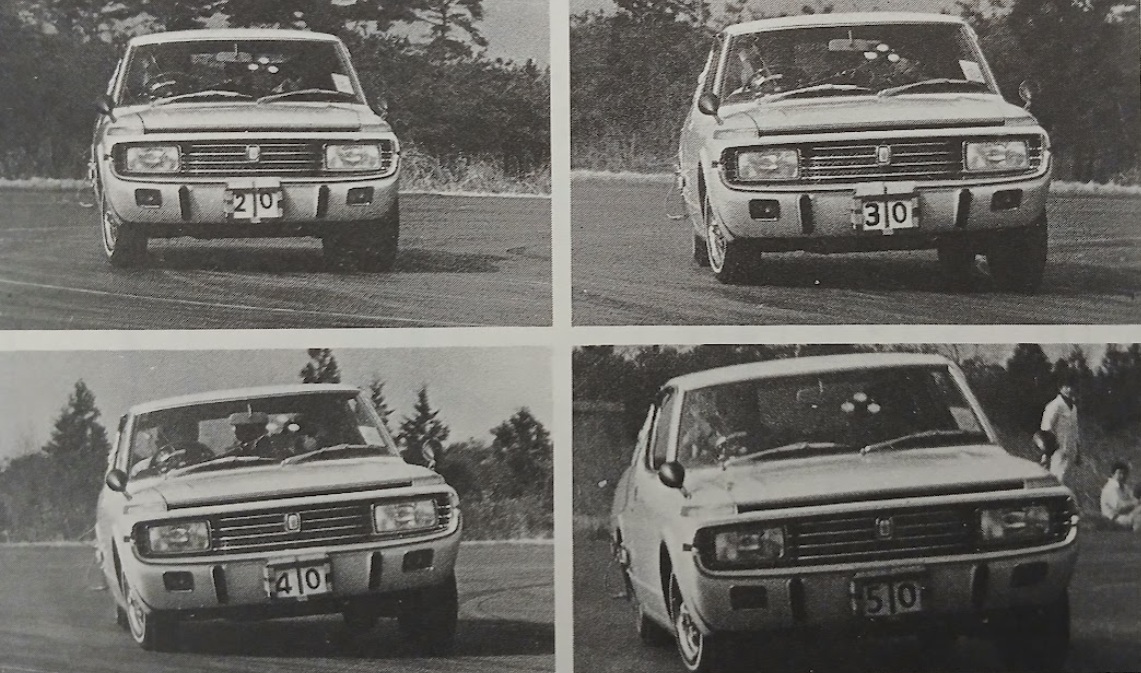
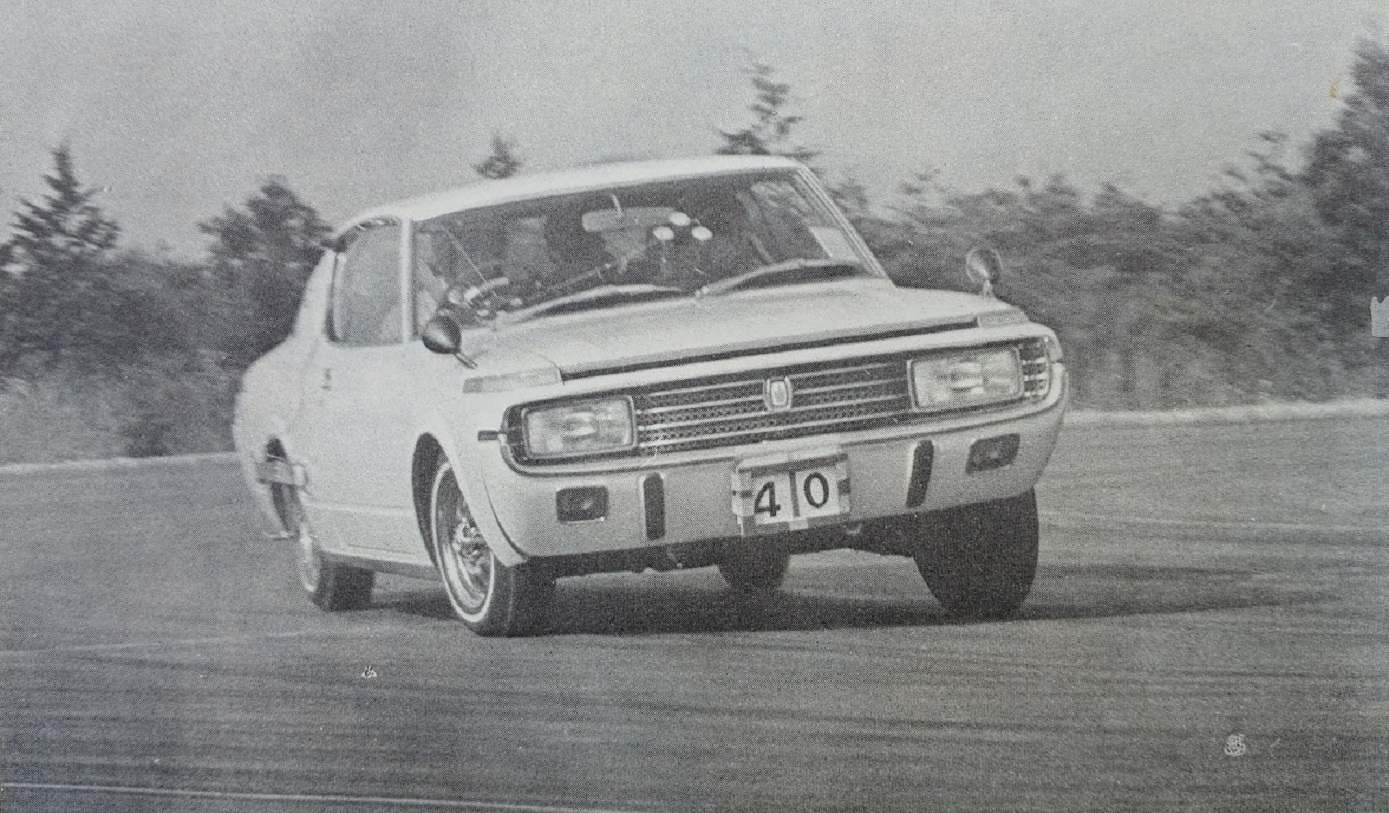
In cornering, the handling is characterized by strong understeer. However, due to the light steering effort provided by the power steering, the car doesn’t feel like it’s understeering as much as it is.
The chassis’ compromise between maneuverability and stability leans towards stability, but this is to be expected given the character of the car.
The car demonstrates good straight-line stability at high speeds, and is also resistant to crosswinds.
The newly-designed 4-speed gearbox has a more direct shift feel than the previous model, and the synchronization and quietness have also improved, but the stroke of the lever seems to be slightly longer.
The brakes are disc/drum, and are servo-assisted front and rear. The pedal is light and the brakes are effective, but as mentioned above, the relationship between pedal placement and pedal force is not well-balanced, which makes control a little difficult.
Although we have made some critical comments, there is no doubt that the Crown Hardtop Super Saloon is the pinnacle of Japanese-made personal cars in terms of its styling, its luxurious equipment, and the overall presence it exudes.
Postscript: Story Photos