Toyota Crown Hardtop Super Saloon (1971)
Publication: Motor Fan
Format: Road Test
Date: May 1971
Authors (Roundtable): Takeshi Komura, Osamu Hirao, Kenji Higuchi, Kinji Kuneida, Keitai Fu, Kazuhiko Shindo, Hiroshi Hoshijima, Katsuzo Kageyama, Hiroshi Okazaki, Kunitaka Furutani, Taizo Tateishi, Atsushi Watari, Kenzaburo Ishikawa, Toshihide Hirata, Minoru Onda, Motor Fan Editorial Staff (uncredited)
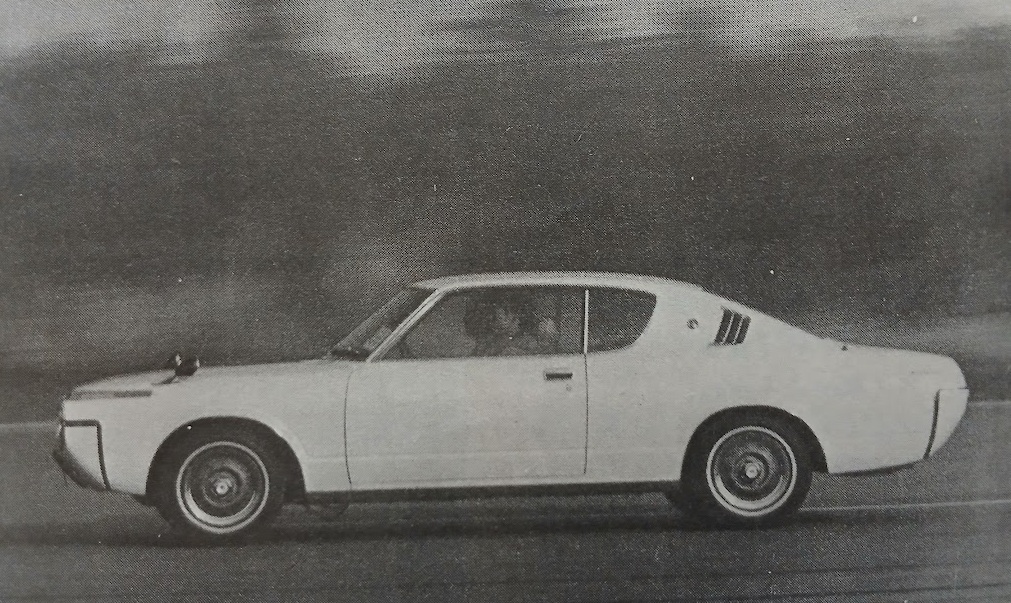
A Style That Redefines the Image
Magazine: To begin with, we’d like to start by asking about the overall outline of development for the new Toyota Crown.
Komuro: The previous Crown underwent a model change in September of 1967. That places this latest model’s release roughly three and a half years later. By conventional thinking, that’s a relatively short lifecycle between full model changes. However, it’s not that the previous model had lost its appeal or reached the end of its useful life, forcing us into a redesign.
Rather, with market liberalization on the horizon, we felt it was important to further elevate the car while its existing appeal was still intact. At the same time, we wanted to draw out even greater attractiveness from the car as a whole—that was the thinking behind this model change.
In that sense, we aimed to create something that could stand on an international level. With that in mind, development proceeded with five main points as our foundation:
- To completely renew both exterior and interior design, in keeping with a full model change.
- To incorporate additional considerations in the area of safety.
- To re-examine the drivetrain and chassis, increasing margins of strength and rigidity, while also improving feel and overall performance.
- To enhance capability at high speeds. Since the engine remains in the 2000cc class, this wasn’t about raising absolute top speed, but rather improving performance under sustained high-speed driving, such as on the Tomei Expressway.
- To broaden the appeal of the Crown range so that it can be used by a wider range of customers, by offering a more extensive lineup tailored to diverse user needs.
Those were the key points guiding the project.
Magazine: Styling is widely seen as the central highlight this time. Could you tell us how this particular design direction was decided?
Komuro: Up to now, the Crown has tended to be viewed primarily as a car for corporate use or taxis. There’s been a general perception that its user base is limited to those areas. Meanwhile, private owners have been moving steadily into cars like the Toyota Mark II, but not making the step up to the Crown. There seems to be a kind of divide there.
In response, we introduced things like the “white Crown” and hardtop models as a way of appealing more directly to private owners. That led us to question whether the Crown’s image should simply be an extension of what it has always been, or whether it ought to take a form that speaks more clearly to that private owner demographic. That became the fundamental starting point for the design.
With that in mind, a number of proposals were developed. Among them, we selected the one that felt the most fresh—the one that represented the greatest departure in image from previous models. As a result, the overall character has changed quite noticeably, but we believe the change has been successful in its own way.
Magazine: What were everyone’s first impressions when you saw the styling?
Hirao: The area above the rear wheels seems very broad. There’s nothing there—it gives the impression of an empty space, almost as if something is missing.
I can’t help but feel it might benefit from some kind of accent…
Komuro: If that’s how it comes across, then perhaps a vinyl roof treatment would address it quite well.
Higuchi: Lately, American cars—even hardtops—tend to obscure the rear seat area from the outside. I wondered if that was a deliberate influence here, with the rear quarter pillars made thicker to achieve a similar effect.
Komuro: That’s certainly part of it. In terms of styling, the hardtop version seems to be receiving better feedback than the sedan.
The previous hardtop’s relatively spacious rear seating has been well regarded, so we again made a point of not compromising rear-seat comfort this time.
Hirao: That’s certainly a positive. Still, from an exterior standpoint, that area does stand out to me.
Body Colors—Could Patterns Work?
Hirao: Even the color-keyed bumpers don’t quite sit right with me. Maybe it’s something you get used to in time, but…
Komuro: If you chrome them, they end up looking more conventional—but the surface area is simply too large.
Hirao: Setting aside whether it’s good or not, it’s certainly a selling point.
As for colors, you sometimes see things tied to a particular “image color”—“Minobe is blue, Hatano is orange,” that sort of idea. With the Crown, are you continuing with white as the signature color?
Kunieda: Black cars still carry a strong association with corporate fleets, government use, or hire cars. To shift that image, we launched the “White Crown” campaign, and it’s been quite effective. From what we hear from dealers and customers, the perception of the Crown as a car for private owners has become much clearer. So I don’t think there’s any longer a need to push the “White Crown” idea so explicitly. That said, it’s true that private buyers are increasingly choosing lighter, brighter colors. The new Crown is still in its early phase, so it’s a bit too soon to see a clear trend yet.
Hirao: So you’ve moved away from that kind of “guided” thinking? (laughs) You must have built quite a few white ones, though.
Komuro: The percentage of white cars certainly went up. But lately, I get the sense that colorful cars are increasing again. Buyers are starting to choose according to their own preferences.
Hirao: So there are no “patterned” finishes, then? (laughs)
Komuro: You mean not just two-tone, but actual patterns?
Hirao: I was reading something by a female writer who said, “Automotive styling is a form of costume.” Looking at it that way, you start to wonder why everything is in plain color. Since there are people who see it like that, I think there might be room to try something patterned.
Kunieda: We once had Peter Max do a body paint design. It was very much in a pop-art style. We thought it might appeal to younger buyers, but going that far turned out to be a bit too much.
Hirao: You wouldn’t want something like a kimono hem pattern, though. (laughs) It would have to be just right—something that fits.
Fu: Given the scale of production and sales, there are a lot of identical cars out there. From an owner’s perspective, I imagine there’s a desire to add something personal—almost like a family crest—a sense of customization.
Hirao: A kind of bespoke finish.
Fu: Not something that stands out too much, though…
Hirao: Something more understated.
Komuro: Perhaps stripes could evolve and diversify into something more like a pattern…
Vinyl leather tops started out in a single color–black–but now we’re seeing more variation in color, and even some subtle changes in pattern.
Hirao: Even in clothing, you have things like twill, where the fabric isn’t plain, but the weave itself creates a difference.
Shindo: From a painting standpoint, that becomes quite difficult.
Hirao: It could be one direction for the age of information, though. With toys, for instance, they print onto sheet metal before pressing it. If you did something similar, you could create all kinds of patterned finishes.
Higuchi: There used to be station wagons with woodgrain panels, didn’t there?
Assessing the Styling
Magazine: The overall dimensions have grown, haven’t they?
Komuro: Up to now, the overall length was comfortably within the 4.7m limit, with some room to spare. This time, the length has increased to fully occupy that limit.
Hirao: Has the height been reduced?
Shindo: The sedan’s height is now 1420mm overall, which is 25mm lower than before. The hardtop is about 10mm lower. What’s been taken off the top has essentially been redistributed downward. At the same time, we’ve worked to ensure that practical interior dimensions–seat positioning, headroom, and so on–are reduced as little as possible.
Magazine: Does the styling make the car look larger?
Hirao: If anything, it seemed smaller to me.
Komuro: That’s something we’ve heard both ways–it can look larger or smaller depending on the angle. From the rear, in particular, many people say it looks smaller. That’s partly due to the more rounded shape. From the front, on the other hand, the “face” is quite pronounced, so it can give the impression of greater width.
Magazine: What are your thoughts on the stepped hood design?
Hirao: With that shape, it’s hard to see over to the left side.
Hoshijima: It’s certainly unique–interesting, even–but it also feels like part of a Toyota tradition. There’s always something that strikes you as slightly unusual at first glance. It might improve with familiarity, but initially it does feel a bit odd. The old Crown’s fenders, or the earlier Corona’s front end–there’s always been something like that. It almost makes you wonder if those elements are deliberately introduced.
Komuro: It’s not so much deliberate as a desire to create some kind of defining feature, something that makes an impression.
Hoshijima: Overall, the styling is quite good, I think. But when you actually drive the car, while it may be safer in an external sense, from the driver’s seat the visibility can be a bit problematic. The rounded-off corners make it harder to judge the car’s width.
Hirao: You get used to that soon enough, though.
Fu: Styling always comes down to personal taste, but it’s rare to see a design that provokes such sharply divided opinions as this one.
There’s also some concern about the color-keyed bumpers–what happens if they get chipped? With conventional bumpers, you might nudge the car ahead or use them almost as a kind of “feeler,” but doing that here risks damaging the finish.
Higuchi: From the perspective of the person actually behind the wheel, I imagine many would find that a drawback.
Kageyama: Maybe they’ll offer some kind of protective strip for the bumpers as an option. (laughs)
Komuro: With chrome bumpers, even a light scrape can be troublesome to repair. With these, you can simply reshape and repaint them.
Okazaki: Still, when you think about them being used on taxis—often painted in some of the least flattering color schemes imaginable—it does make you wonder what kind of impression this styling will give.
Komuro: Taxis tend to use very bold colors, and that tends to dominate the impression anyway. In that context, I don’t think the styling itself is much of an issue.
An American-Style Layout
Magazine: You mentioned revisions to the drivetrain–what exactly was changed?
Komuro: We developed a new 4-speed transmission. Strength has been improved, the extension housing revised to reduce vibration, and both the synchros and shift mechanism have been reworked to improve feel. The propeller shaft joints have also been made larger, and on the Super Saloon we’ve adopted a three-joint setup. In short, the entire drivetrain has been given a thorough going-over.
As for the brakes, all but the standard model now use front discs. The brake booster has been enlarged to 9in, allowing it to assist both front and rear, improving overall braking performance. The suspension remains fundamentally the same, but we’ve made detail refinements to increase strength margins. In particular, for the brake lines, we’ve paid careful attention to routing–ensuring they don’t interfere with other components–and added protection against corrosion and stone damage.
Hirao: The brakes are definitely better. But I imagine there will be some complaints about the pedal layout. The brake pedal is set quite high.
Higuchi: It does feel like an American car that way, doesn’t it?
Komuro: The relative positioning is essentially the same as before…
Hirao: It feels like there’s a lot of depth in the toe board. Because the brake pedal sits high, if you set your driving position to suit the accelerator, it doesn’t quite work when you go to step on the brakes. A high pedal like that ends up wasting what could otherwise be useful space.
Higuchi: Maybe it’s meant to accommodate a wide range of driver physiques?
Hirao: That’s certainly how American cars tend to be.
Komuro: With the brake pedal, there’s also the need to align it with the clutch. Generally speaking, if you shorten the clutch stroke, the leverage ratio decreases and the pedal becomes heavier. So we retain a certain amount of travel, and the brake pedal follows in relation to that…
Hirao: But the clutch is operated with the left foot, and the brake with the right. So the relationship that really matters is between the accelerator and the brake. There’s no real need to line up the clutch and brake pedal faces. I’ve always wondered why that’s done. It’s a bit forced, considering they’re used by different feet.
Komuro: On the other hand, if the pedals aren’t aligned, we tend to hear complaints from users asking, “Why is there a step between them?”
Somewhat “Lazy” Power Performance
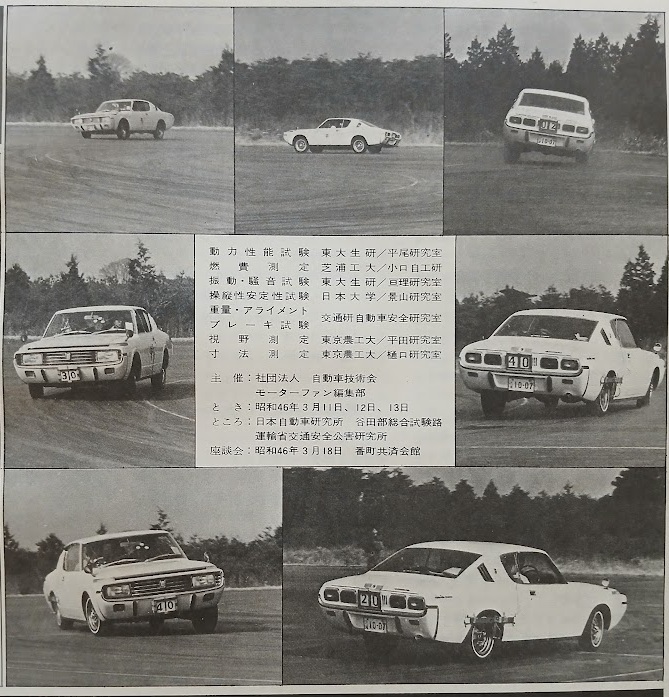
Magazine: Next, let’s have the results of the performance tests.
Furutani: For standing-start acceleration, the times were 0-50m in 5.1 seconds, 0-100m in 7.7 seconds, 0-200m in 12.0 seconds, and 0-400m in 18.7 seconds.
That 0-400m figure is exactly the same as the previous Crown Hardtop SL, but the initial pickup at low speeds is slower, while the high-speed extension is better. Has the drag coefficient been reduced compared to before? Or is the frontal area perhaps smaller?
Komuro: The frontal area hasn’t changed much, but aerodynamic drag should be slightly lower.
Hirao: The engine is the same as before, isn’t it?
Komuro: There are detail changes. We’ve revised the exhaust ports, exhaust manifold, and piping. As installed, those changes reduce power loss in the exhaust system, so high-speed performance is improved.
Hirao: What’s the maximum engine speed?
Komuro: Around 5800rpm.
Hirao: It did seem a bit noisy to me. When you rev it, there’s a sort of “whooshing” sound. Is that the fan, I wonder?
Hoshijima: Possibly the intake system.
Magazine: Since it’s meant to be a car for owner-drivers, there’s a view that compared with the 1.5- to 1.9-liter class, unless the driver has quite a calm disposition, it can feel a little “sluggish”…
Okazaki: Those acceleration figures are a little hard to believe, to be honest.
Hirao: Part of the reason the acceleration feels disappointing is the heavy throttle. A heavy accelerator pedal gives the impression of sluggishness.
Magazine: This is a twin-carburetor setup, after all.
Komuro: I don’t think it’s simply a matter of the twin carbs. We are working to lighten it somewhat.
Okazaki: When accelerating from something like a highway toll gate, it does feel a bit “sluggish.”
Hoshijima: Even in city driving, with the torque-converter version, it can feel a little dicey when you’re mixing it up with other cars.
Hirao: The reason a torque-converter car feels “sluggish” is delayed throttle input. To achieve the same acceleration, you need to press the pedal about 0.3 seconds earlier.
Hoshijima: Even among torque-converter cars, something in the Corona class gives a more reassuring feeling.
Hirao: The one I drove in particular had very poor response.
Perhaps it’s due to the car’s weight. Also, when a driver wants to increase speed, the force applied by the foot typically increases by only about 100-200g. But with this accelerator, that amount of force isn’t enough to get it to budge. (laughs)
You have to really step on it–then it responds. And in that moment, you lose a fraction of a second.
Okazaki: At the end of the day, perhaps that’s just how a 2-liter class car is–it can’t be helped.
Komuro: If someone moves up from a smaller class expecting the same feel, there will inevitably be complaints. But with a car like this, I’d like people to understand that it offers a different kind of enjoyment.
Hoshijima: Buyers looking for a hardtop are probably more sensitive to power performance. They may find it lacking.
Komuro: On the other hand, once you’ve driven a 2-liter class car, it isn’t easy to go back. There is a clear difference.
Hirao: In the end, once you learn the technique that suits the car, that anxious feeling goes away.
Hoshijima: So compared with the image of American cars, the key difference here is in the level of power.
A Quiet, Soft Ride Quality
Magazine: Next, could we have the results of the vibration and noise measurements?
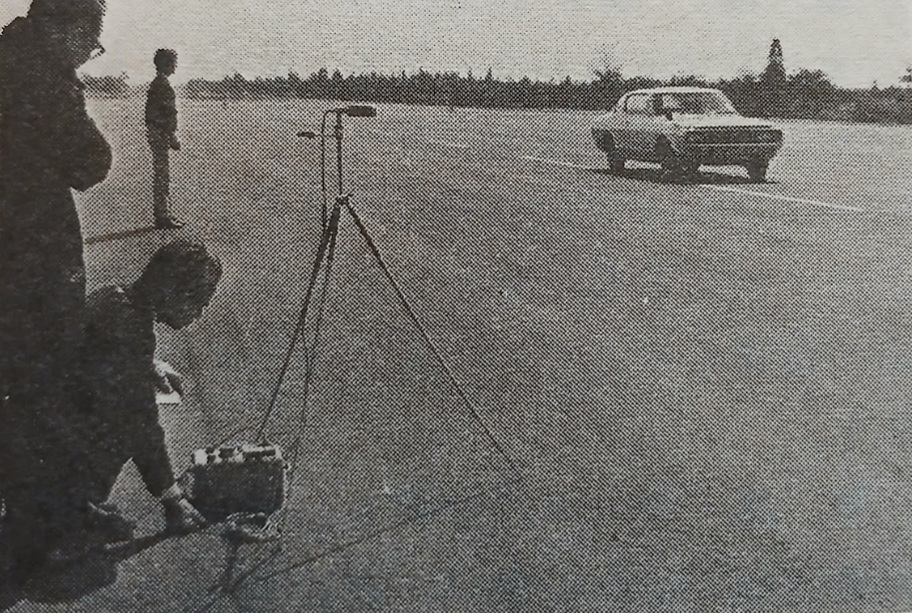
Tateishi: In terms of suspension vibration frequencies, the sprung mass shows 1.25Hz at the front and 1.4Hz at the rear. Unsprung mass is 13.7Hz at the front and 12.0Hz at the rear.
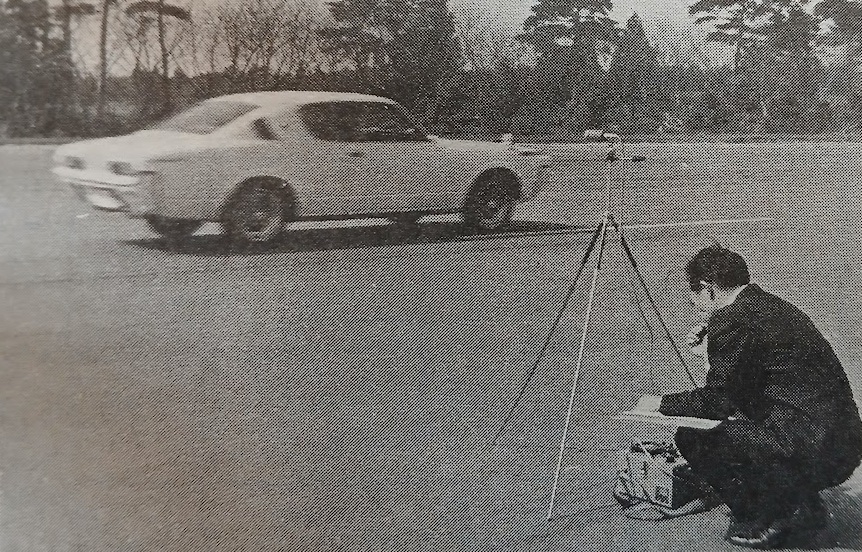
Interior noise levels were 55 phons at 40km/h, 61 at 60km/h, 65 at 80km/h, 70 at 100km/h, and 72.5 at 120km/h. Exterior noise was measured at 73 phons at a steady 50km/h, and 78.5 phons under acceleration.
Watari: The Crown has long been one of the quieter domestic cars. This time as well, the figures are extremely low. However, the road surface this time was considerably better than the usual Murayama course. If we convert the results, they would chart a roughly straight line connecting about 58 phons at 40km/h to 75 phons at 120km/h. Also, the absence of pronounced peaks along the curve probably contributes to the subjective impression of quietness. Exterior noise is also lower than the general average.
As for ride vibration, the sprung frequency remains the same as before–1.25 cps in bouncing and around 1.4 cps in pitching–so it still has that soft ride quality. If anything, it might go even further in that direction.
Tateishi: When I sat in the rear seat, I felt that some wind noise was coming in around the rear window frame area.
Komuro: Hardtops do tend to generate wind noise more easily, but compared to the previous model, I think the wind noise around the front pillar area has actually improved.
Hoshijima: Speaking of noise, one thing that caught my attention was the sound you hear when the door is opened. It makes a noise during movement, and it would be better if that weren’t so noticeable once the door is in the fully open position.
Well-Judged Power Steering
Magazine: Next, could we have the results for handling and stability?
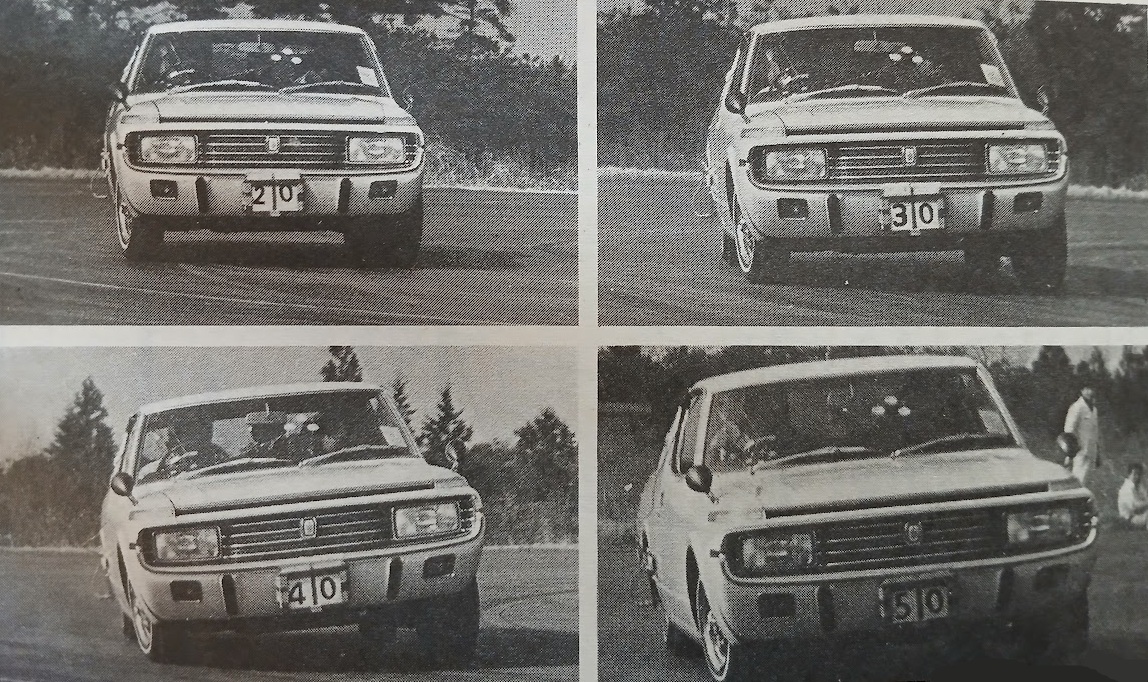
Fu: The minimum turning radius at the outer wheels is 5.97m, the same as the previous Crown hardtop. At a standstill, the power steering is extremely light–the maximum effort to turn the wheel is about 3.5kg. With the engine off, it becomes quite heavy, rising to around 18kg.
Understeer characteristics are also unchanged from the previous Crown; it maintains understeer even at high speeds.
Roll angle came out at 6.1°.
In the hands-off directional stability test, the overall characteristics haven’t changed, but convergence behavior was very good.
Hirao: In America, this kind of power steering is said to feel heavy, isn’t it?
Fu: In that sense, for Japanese drivers it gives a rather “good feel.”
Komuro: In Japan, a certain amount of self-centering “return” in the steering is expected, but in America that return isn’t regarded as particularly important. It’s simply: the lighter, the better.
Hirao: So this is what you might call a more European kind of power steering.
Fu: I think it’s good in the sense that the steering operation and the car’s response are well matched…
Komuro: For example, if an inexperienced driver gets in, they might not even realize it has power assist–that kind of subtlety is probably what gives it a good feel.
Fu: Even in slalom driving, it feels like you can place the car exactly where you intend.
Ishikawa: However, if you’re not used to it, the steering return after entering a corner does tend to feel slightly delayed.
Hirao: If the “power feel” is barely noticeable, then that’s almost by accident, isn’t it? (laughs) With an unassisted system, there’s no other way for it to be, but I’m not sure you can necessarily say that achieving that same kind of feel with power steering is always desirable.
Magazine: Let’s have the data on weight, alignment, and braking.
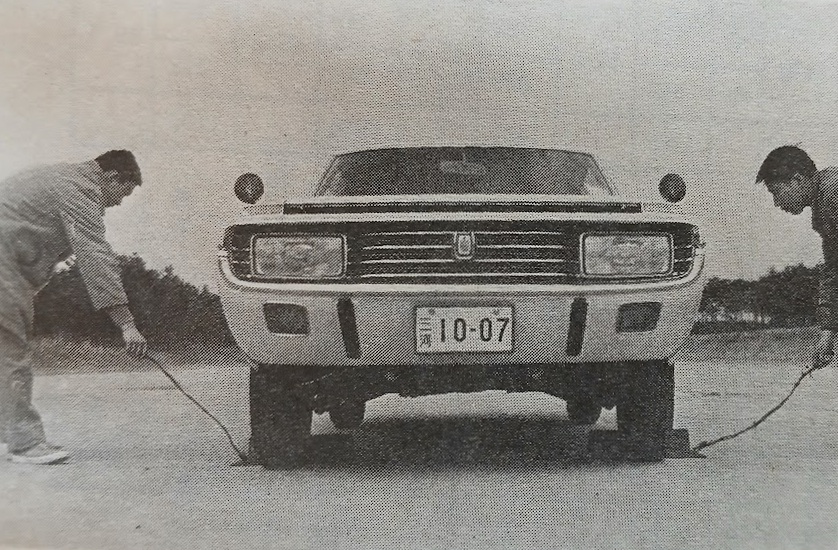
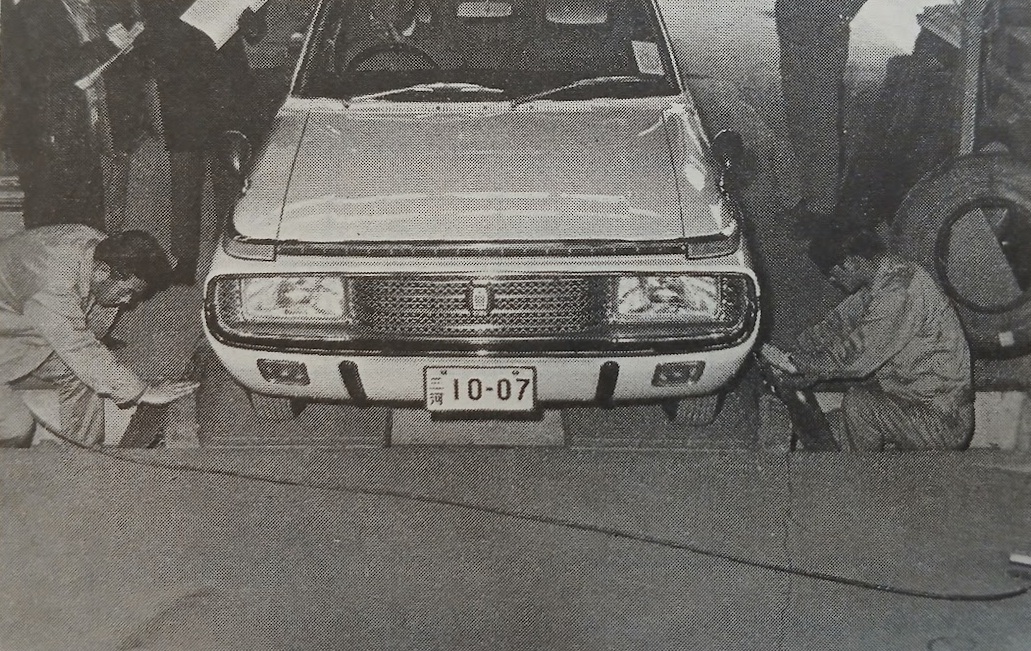
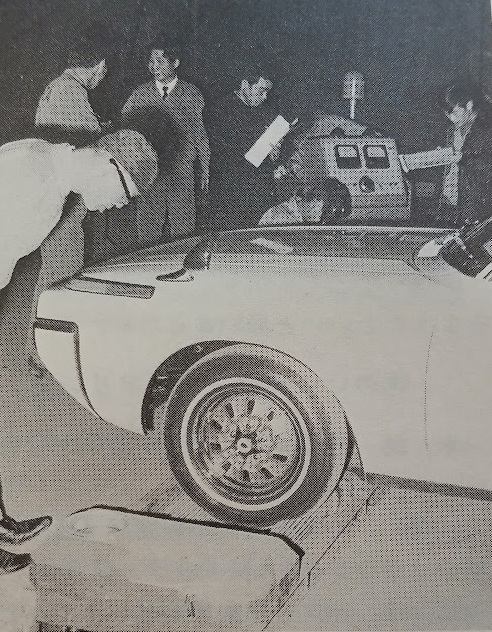
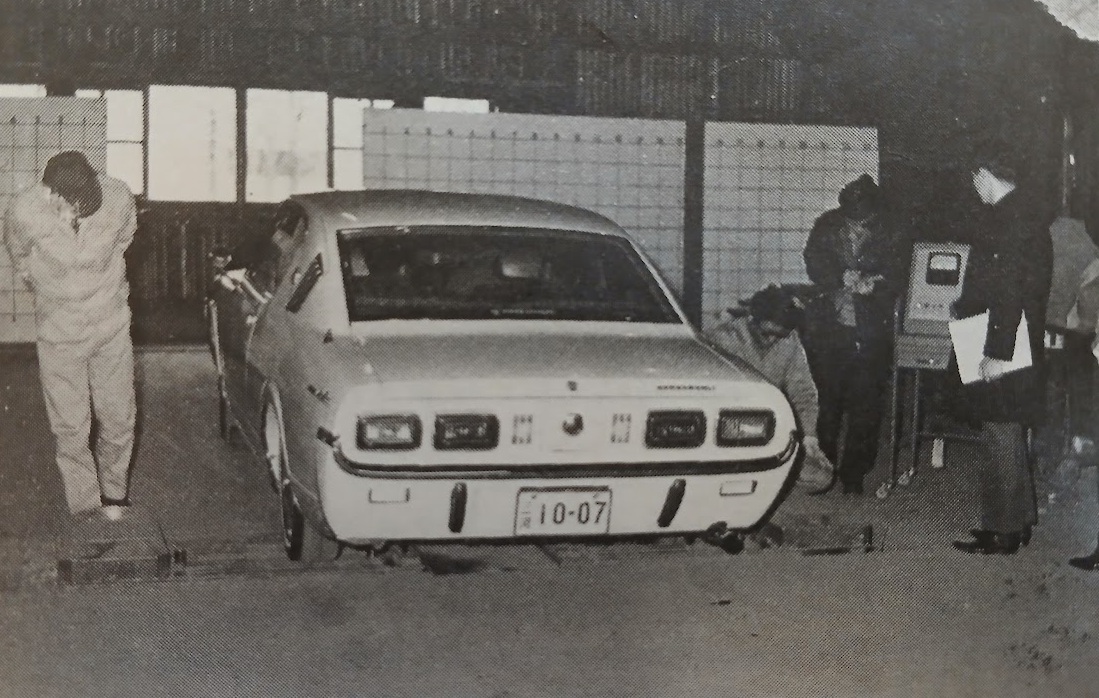
Ishikawa: Vehicle weight is 1386kg, about 40kg heavier than before. Front-to-rear weight distribution is 55:45, and it hardly changes even with a full load.
Weight per unit area is 174kg/m², which is fairly high, and power-to-weight ratio is 68ps/ton, which is not particularly high.
As for brakes, pedal effort for 0.6g deceleration is very light–about 15kg in bench testing, and around 19kg from 50km/h on the road.
Front-to-rear brake force distribution is 7:3. Rear brake proportioning begins to take effect at around 15kg of pedal effort, corresponding to roughly 0.45-0.5g deceleration on the road. The servo rest point is around 25kg, so the booster continues working fairly deep into the pedal range.
In general, operating forces are on the light side for this class, but the accelerator pedal requires about 4kg under acceleration, and around 1kg at a steady 50km/h, which feels slightly heavy.
Okazaki: Regarding the balance between pedal offset and weight–that of the brake versus the accelerator–smooth control was difficult because you have to lift your heel off the floor to brake.
Ishikawa: The lateral spacing between accelerator and brake pedals is normally 110-120mm, but here it’s 140mm. The height difference is also as much as 70mm.
Hirao: So in effect, it’s still the “heavy pedal layout,” only the brake pedal has been made lighter. (laughs)
Komuro: Since there were no issues with the driving position up to now, we carried it over as it was…
Hoshijima: It may be that because the brake has become lighter, the weight of the accelerator is more noticeable. I think the angle of the accelerator also plays a part–the foot doesn’t quite meet its surface naturally.
A Machine Full of “Helpful” Mechanisms
Magazine: Next, could we have the visibility test results?
Hirata: The total forward field of view is 92.5°, with 40° to the rear, and the wiper sweep range is 77°.
Total horizontal blind area comes to 63.5° overall.
In terms of solid angle, the total visible range is 2.64 steradians. That puts it slightly below the average of the data we’ve collected so far. There are no blind spots that present a serious issue, but until you get used to it, checking the left rear when backing into a garage is a little difficult.
Komuro: Rather than actually not being able to see, it’s more that it gives the impression that you won’t be able to see, or something like that.
Hoshijima: What stood out for me in terms of visibility is how high the wipers sit in the resting position.
Komuro: When you go to a high-speed wiper setup, and also avoid interference with the lower molding, that’s how it ends up.
Hirao: You could just make them retract completely.
Komuro: But if you suddenly get splashed with mud, you can’t activate them instantly…
Hirao: In that case, you just put them out in advance. (laughs)
Magazine: Next, please give us the dimensional data.
Onda: One thing that stands out from the outside is that the rear seat window area has been narrowed. That’s presumably either for privacy or styling reasons. In practical terms, however, there are no real problems with rear visibility thanks to seat height and related design.
Also, the color bumpers are a key styling element. Because they don’t protrude like conventional bumpers, there was some debate during measurement about exactly where the “bumper” begins and ends.
Since it’s a two-door, the doors are naturally large—but even so, they measure 1235mm and feel very wide, especially since there is no quarter window.
Interior dimensions are almost unchanged from before, though rear seat height has increased slightly.
Trunk space is also unchanged, but the spare tire is now mounted vertically.
This is a higher-grade model called the Super Saloon, so a great deal of attention has been paid to small details. It comes with a door buzzer, vacuum-type auto-locks, and a timer-equipped defogger—there are almost too many “helpful” devices fitted.
The seatbelt retractor system is very good, but when you tilt the seatback to get in and out of the rear, there is no preset to return to its original position, so you have to readjust it again each time. That’s a slight inconvenience.
The gear lever stroke is about 30mm longer than the previous Crown overall.
The instrument panel has no warning lamps at all—it’s an all-gauge layout. There isn’t even an ignition warning lamp, so there’s no direct warning if the engine stalls. Of course, you can tell by looking at the ammeter…
Ishikawa: If you turn the key off and rotate it a little too far to the left, the trunk pops open. I did that a few times myself. (laughs)
Hirao: I think the previous system was better—you had to turn left and then press.
Hoshijima: When something is “too helpful,” there are cases where it actually becomes inconvenient. (laughs)
For example, when sitting in the rear of the hardtop, you can’t reach the inner door handle easily. That position might need to be reconsidered.
Hirao: The door lock position is awkward on the sedan too. And it’s heavy. I think it could be moved further forward.
Ishikawa: Even the auto-lock system is a bit troublesome–it unlocks both sides in sync when you get out.
Higuchi: Convenience features can sometimes create their own problems.
Komuro: Once they get used to it, I think people will learn to make use of the convenient aspects.
Magazine: How about safety?
Higuchi: Most of the available safety accessories are included, and it scores the highest result so far–96 points out of 100. Looking ahead, though, I do wonder whether things like the door thickness and bumper design are really sufficient if we start taking side impacts into consideration, as American cars do…
Magazine: Finally, could you tell us about production plans?
Kunieda: At present, the Crown series–including Custom and van models–has a production volume of over 10,000 units.
As for the sedan-to-hardtop ratio, right after launch we’ve seen an unusual figure in Tokyo: 45% hardtops. But once things settle, we expect it to return to the usual 25-30% range.
Magazine: That’s all for now…
Postscript: Story Photos