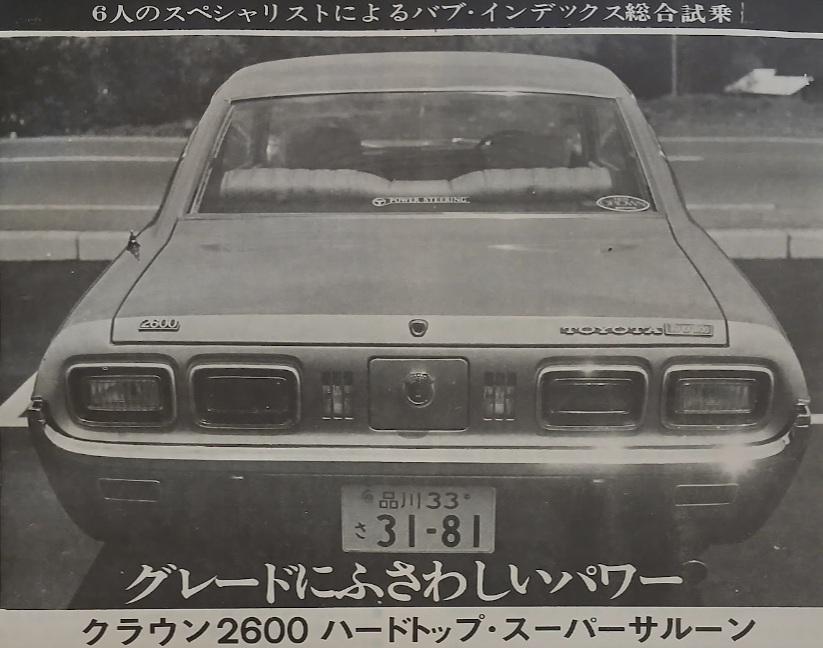
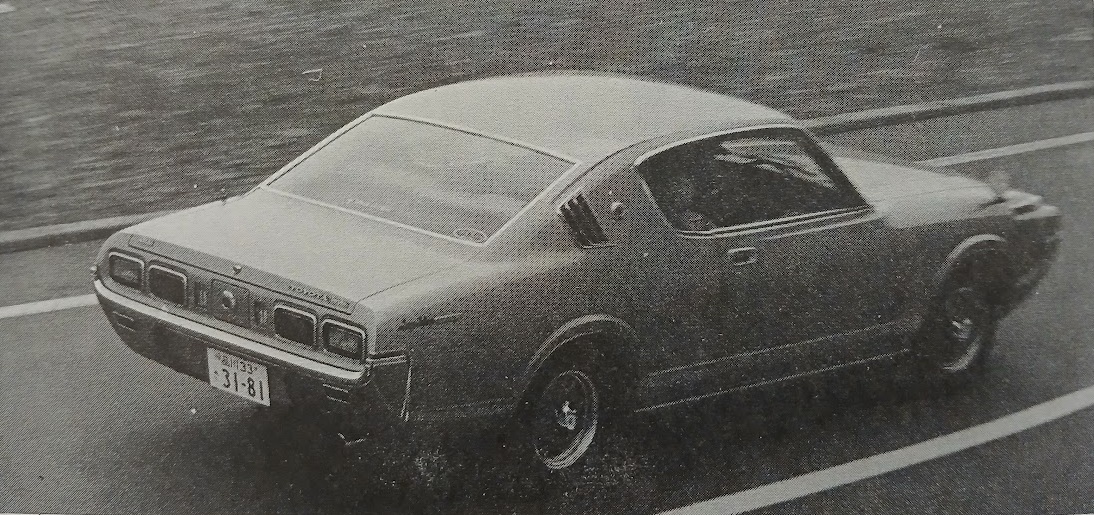
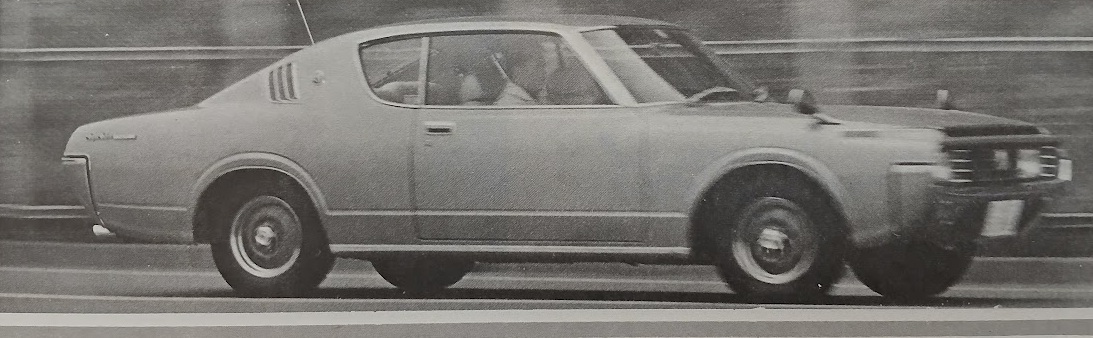
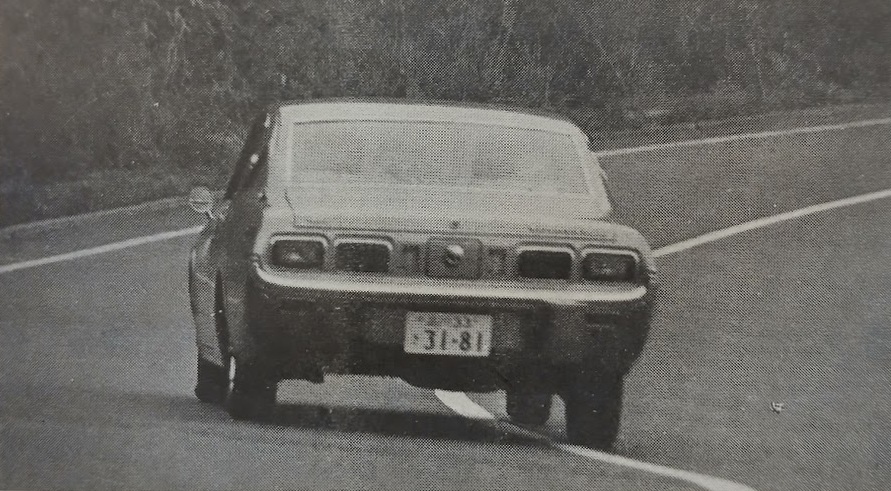
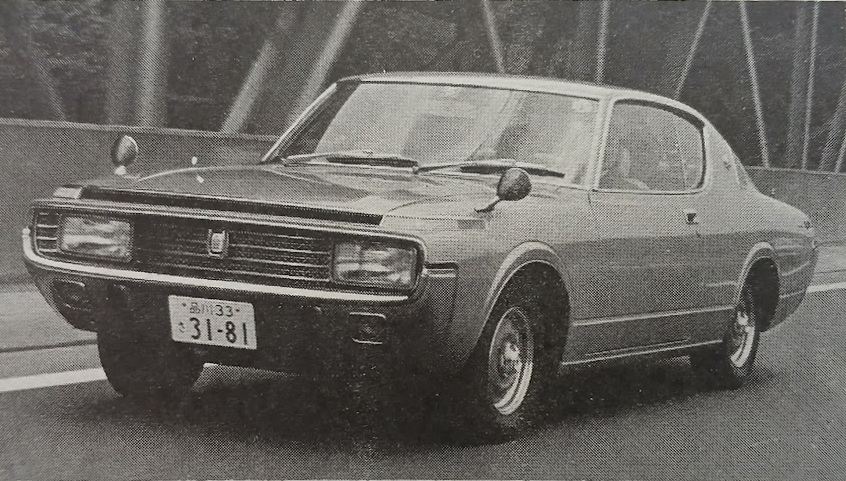
Toyota Crown 2600 Hardtop Super Saloon (1971)
Publication: Motor Fan
Format: “Bubble Index” Road Test
Date: July 1971
Author: Osamu Mochizuki, Katsuzo Kageyama, Shigeki Asaoka, Yasuhei Oguchi, Reiko Ikuuchi, Kensuke Ishizu
Power Worthy of the Class
“Underpowered for its weight” was a frequently-heard comment when the new 2-liter Crown was first introduced. Now a 2.6-liter version has arrived. What sort of driving feel does this newly released model deliver?
A 2.6-Liter and Torque Converter to Match the Body
On April 26, Toyota announced the addition of a 2600 series to the newly redesigned Crown lineup. In fact, the Crown 2600 had already been in production since March as an export model, shipped primarily to the American market.
Its announcement came at a time when rumors were circulating about a possible increase in the displacement limits for small passenger cars (the so-called “5-number” category) under Japanese tax law. For that reason alone, the new model has attracted attention from many sides within the industry.
At present, among domestically sold passenger cars not built specifically for export, there are only a handful that fall into the larger “3-number” category. Excluding special-purpose vehicles such as the Jeep, the list is essentially limited to two: the Century (2981cc) and the President (2974cc and 3988cc). In earlier years there were also large-displacement models such as the Crown Eight (2599cc, January 1963-August 1967) and the Cedric Special (2825cc, February 1963-1965), but today such cars have become increasingly rare.
The engine fitted to our test car was the 4M type, a 130ps inline-six with an overhead camshaft. Essentially a scaled-up version of the 2-liter M engine, its bore has been enlarged by 5mm and its stroke by 10mm. Maximum torque, meanwhile, is higher than that of the M-D and M-B engines used in the new Crown (MS60 and MS70 series) introduced this February, by 4kgm and 3.5kgm, respectively.
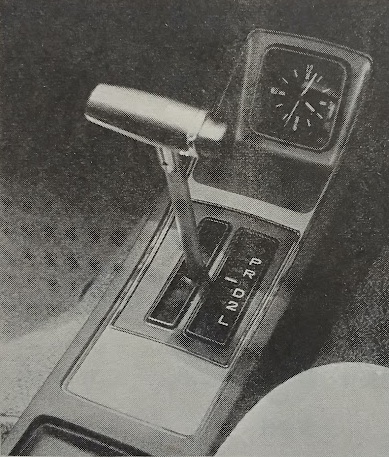
The car prepared for our test was a Hardtop Super Saloon, its blue metallic paint gleaming under the early-summer sun. It was equipped with the 3-speed Toyoglide automatic transmission, operated by a floor shifter.
As usual, the test group set out along our established course: starting on the Tomei Expressway from Tokyo IC to Gotemba IC, over Otome Pass, up the Hakone Turnpike, back again via Otome Pass, and then onto the Tomei once more from Gotemba IC for the return to Tokyo. The weather was clear–ideal conditions for a test drive.
After completing the run, the group returned to the Fantasy Drive-In–near the entrance to the Tomei Expressway, on Tamagawa-dori–to compare impressions.
Over the course of the discussion, two principal themes emerged. One concerned the possible expansion of the 5-number displacement limit under the tax system. The other was the usability of a 2600cc torque-converter car such as this one.
Strictly speaking, the question of tax-law revisions has no direct bearing on the driving impressions of this particular car. Even so, it must be said that asking a nearly 1400kg body to make do with a 2-liter engine and torque converter inevitably results in a certain feeling of sluggishness. A larger engine–something above the 2-liter class–seems almost a necessity. And if that is the case, then perhaps the limits of the 5-number category itself ought to be reconsidered. The conversation proceeded largely along these lines.
The second topic was this hardtop’s pairing of the new 2.6-liter engine with the torque converter automatic. Under current regulations it falls into the 3-number class, which brings certain disadvantages. Nevertheless, in terms of ease of use and sheer pulling power, the specialists all gave it high marks.
At the same time, one specialist quipped: “Isn’t the improvement in drivability brought by the 2600cc engine felt only by the driver?”
For the details of these differing views, we invite readers to turn to the reports from each of our specialists.
Power Performance: A Marked Difference from the 2-Liter (Osamu Mochizuki)
Up to now, the 2-liter Crown equipped with a torque-converter automatic had certainly offered convenience, but there was an inescapable feeling that its sluggish acceleration left something to be desired. In that respect, this 2.6-liter Crown succeeds admirably in resolving the problem.
The effect of replacing the 1988cc M-D engine (bore and stroke: 70 × 75mm) with the 2563cc 4M unit (80 × 85mm) is quite striking. Output rises only modestly–from 115ps to 130ps, a 15ps increase–but maximum torque increases significantly, from 16kgm at 3600rpm to 20kgm at the same engine speed.
Even with the same Toyoglide transmission, the 2.6-liter engine allows the car to keep pace effortlessly with the general flow of traffic, whether in the city or on the highway. It can also break free from that flow when necessary. In terms of performance, it may reasonably be compared to a sporting sedan of around the 1.3-liter class.
Pulling away in the “Drive” range, the transmission shifts up quickly: into second gear at about 10km/h and into top at around 20km/h. This shift timing remains almost unchanged whether the throttle opening is light or quite deep into its travel. Under full throttle, however, the shift points move considerably higher—about 60km/h for the change from low to second, and around 90km/h from second to top.
In ordinary city driving the car therefore runs almost entirely in top gear. Even at 30km/h, however, there is ample response, and acceleration presents little cause for concern.
At highway speeds, good response is available between roughly 80-120km/h. Beyond 120km/h, acceleration begins to taper off noticeably. Engine noise and other mechanical sounds are extremely subdued, and the driver is unlikely to experience much fatigue during sustained high-speed cruising. In that sense, the car seems fully deserving of the “Super Saloon” designation.
With an engine of this size, it makes virtually no difference whether the car is carrying a single occupant or four. A long-distance tour with four or five aboard should present no difficulty at all. Although the body is exactly the same as that of the 2-liter model, the qualitative difference between the 2-liter and 2.6-liter versions is greater than one might expect. If only there were no disadvantages in terms of cost or taxation, it would be difficult to find a downside to the increased displacement.
The brakes consist of servo-assisted discs at the front and drums at the rear, and the relationship between pedal effort and braking force is extremely well matched. Even when applying full braking from high speed, the car remains stable.
Although the vehicle weight is identical–1355kg for both the 2-liter and 2.6-liter Hardtop Super Saloon–the increase in power and torque means that the usual disadvantages associated with an automatic transmission are barely felt. Put another way, one might say that the earlier 2-liter automatic had simply lacked sufficient strength.
There are rumors that the upper displacement limit for this class may be raised under the tax system–from 2000cc to 2400cc. Surely that is something everyone would welcome.
“The sense of inadequacy that accompanied the previous 2000cc car has disappeared. It finally feels like the real thing.” —Kageyama
“Because this is an automatic, you really come to appreciate the generous power of the 2600cc engine.” —Oguchi
Handling and Stability: A Well-Judged Balance (Katsuzo Kageyama)
Since this car is essentially the existing Crown 2000 Hardtop fitted with a 2600cc engine, it is only natural that there is little change to its handling or stability. What can be said, however, is that the larger engine makes the car feel more lively in operation, and consequently easier to drive.
Being a hardtop with slender front pillars, visibility is excellent. Headroom and legroom are ample, even in the rear seats, giving a pleasing sense of spaciousness. The interior itself is richly finished and conveys a calm, dignified atmosphere.
Thanks to power steering, maneuvering from a standstill requires little effort. Even women drivers should have no difficulty guiding the car smoothly into a garage or parking space. That said, for a power-assisted system, the steering effort is somewhat on the heavy side.
Generally speaking, cars with extremely light power-assisted steering tend to make lane-keeping on the expressway somewhat troublesome. In that respect, this car is easier to hold in a straight line. Although the amount of assist feels slightly modest, when one considers the relationship between driver and machine, this degree of weight probably makes it more agreeable to use.
When the steering wheel is turned sharply at high speed, one feels a slight delay in the response. Body roll is also fairly pronounced. This seems to be due not only to the softness of the suspension but also to the seats themselves. The seats are plush, but they do not hold the body particularly firmly. As a result, the occupant tends to roll slightly on the seat cushion, which may exaggerate the sensation of body roll.
On severely undulating pavement at high speed, when the car begins to bounce significantly, the combination of power steering and changes in front-wheel load sometimes makes the steering feel alarmingly loose. At such moments it can feel quite unsettling.
Even so, this type of car is not designed for sporting use, and it would hardly be reasonable to demand too much in that direction.
The braking performance is excellent. Naturally the system is servo-assisted, but the braking effect remains smooth and consistent at both high and low speeds, without any abrupt change in feel.
Pedal effort is well judged, making precise control easy. Since a torque-converter car inevitably requires frequent use of the brakes, the ability to regulate speed precisely through braking is an important virtue.
Handling and stability are often spoken of as a single quality, but in reality they represent two opposing characteristics whose balance must be judged in relation to the intended purpose of the car. In that sense, this Crown demonstrates a very satisfactory balance. For long-distance business travel or family motoring, it offers handling and stability fully suited to comfortable driving.
“The steering response is good, and the feel through the wheel is reassuring. However, when the wheel is turned quickly, the steering effort tends to lighten suddenly.” —Mochizuki
“For a power-steering car it may feel slightly heavy, but owners coming from a mechanical steering system will probably find it very easy to become accustomed to.” —Oguchi
Ride and Comfort: A Mature Atmosphere Inside (Shigeki Asaoka)
Amid widespread rumors that the engine displacement limit for small passenger cars (the “5-number” category) may soon be expanded—with 2.4 liters being the figure most often mentioned—a 2.6-liter engine has now been added to the Crown series, which itself underwent a model change only recently.
Under current regulations it naturally falls into the standard passenger car class (3-number). Even if a future revision were to extend the 5-number category to 2.4 liters, this car would still end up in the 3-number class—by a margin of just 200cc.
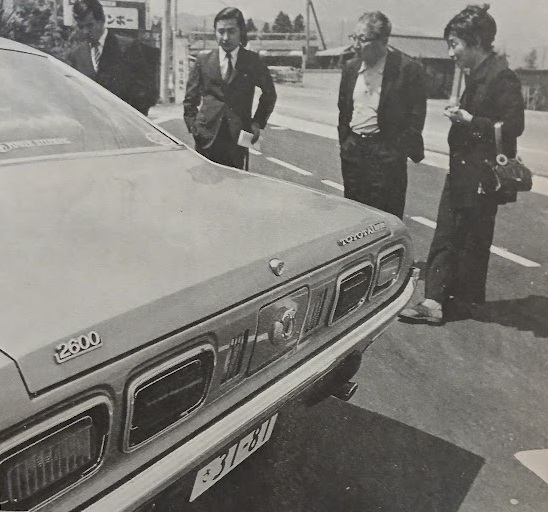
Since the body style is exactly the same as that of the 2000cc model, it is difficult to distinguish the two from the outside. Only the “2600” emblem at the rear identifies this version; in practice, however, the quickest way to tell is by simply looking for the 3-number license plate.
With a 2600cc engine, acceleration remains strong even with an automatic transmission. At fairly high speeds the cabin remains quieter than expected, reinforcing the car’s mature character. The Crown as a whole projects an air of grown-up composure, and whether driving or sitting in the passenger or rear seat, one feels able to relax with a certain calm assurance. Perhaps it is simply the sense that this is not a cheaply built small car. If there is anything to criticize, it is that the seats feel somewhat on the firm side.
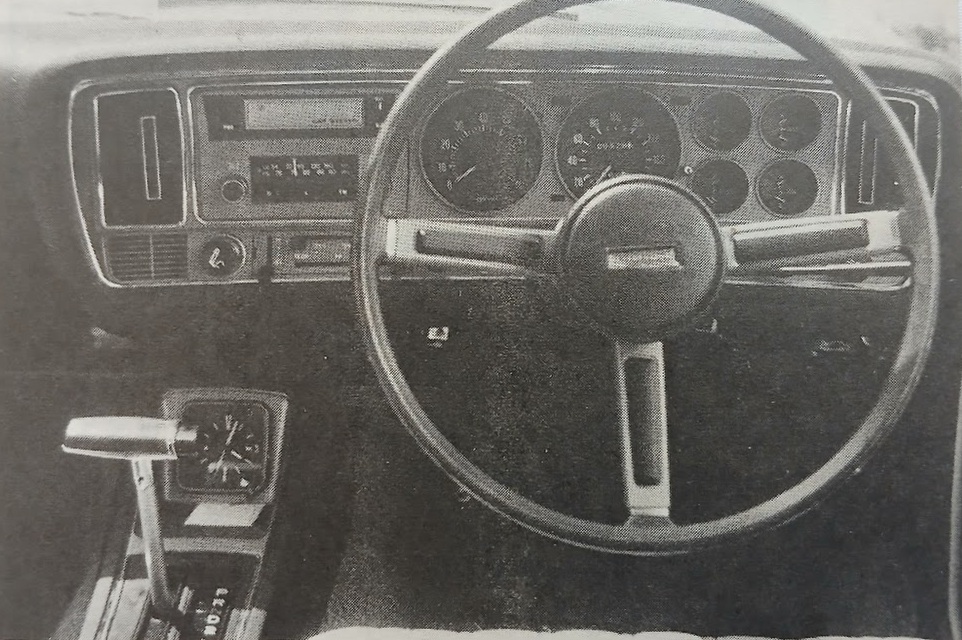
The steering is power-assisted, though compared with the systems in American cars it is still quite heavy. Also, the imitation wood-grain plastic steering wheel seems rather childish for a car of this class.
One feature I particularly liked is the automatic door locking system. Once the doors are closed and the car begins moving, both doors lock automatically. The locks on the left and right doors are linked, so that when the driver unlocks his door while the car is stopped, the passenger-side door unlocks automatically as well. This is a very convenient arrangement.
Power windows are always useful, but in this case, the switches are extremely poorly-positioned, making them difficult to operate. Unfortunately, this seems to be the case across the entire Toyota range.
Because automatic-transmission cars offer little in the way of engine braking, the brakes tend to be used more frequently than in a manual car. For that reason, strong and reliable braking is essential. The brakes on this car are equipped with a large booster, and their effectiveness is excellent and reassuring.
In most respects the equipment level is appropriate for a car in the 3-number class, but it is disappointing that air conditioning is not provided as standard.
“The gauges are small and set too deeply, making them difficult to read at a glance. Also, contrary to Asaoka’s impression, I felt the seat cushions were actually too soft. On long drives they may become tiring.” —Mochizuki
“No matter where this car may be used in Japan, I believe an air conditioner is necessary for a car in this class.” —Kageyama
“Given Japan’s hot and humid climate, even if power windows remain optional, air conditioning really ought to be standard equipment.” —Oguchi
Safety: Advanced Visibility (Yasuhei Oguchi)
Looking over the Crown’s distinctive front and rear styling, what I found particularly interesting was the shape and arrangement of the lamps.
In automotive styling the greatest difficulty lies not in the side view, but in the front—often called the “face” of the car—and the rear, which stands out so clearly when the car is in motion. Here these areas have been treated quite boldly, yet after looking at them for a while they seem to possess a quality that allows them to appear natural without much resistance.
At first, this was about as far as my impression went. But toward the end of the test drive, it occurred to me that these lamps–both lighting and signaling–may also have been designed with safety performance in mind.
For example, the unusual lamp shapes are not merely stylistic; their greater width improves visibility from a distance. The front turn signals are mounted at the outermost, highest position—generally considered ideal for visibility and for avoiding confusion with other lights. At the rear, the red brake lamps, which signal danger or emergency to following vehicles, are placed separately from the turn signals used as directional indicators. This separation also improves visibility.
The effectiveness of such features has been demonstrated to a considerable degree through experimental studies. Yet when it comes time to design an actual car, these principles are often not fully utilized. Drivers themselves, too, tend not to give much thought to such details.
Nevertheless, ensuring smooth communication between drivers–even in the presence of fatigue or momentary confusion–is a fundamental principle in designing for safety.
When discussing automotive safety, attention often turns to protection after an accident. For that reason I have deliberately focused here on preventive safety–specifically the lamps, which are rarely discussed. As for the more general safety measures, it hardly needs repeating that they are consistently embodied in Toyota’s design philosophy.
One point that stood out immediately when taking the wheel was the minimal blind area created by the windshield pillars. This made driving along the winding roads of Hakone particularly pleasant. However, the relatively slender pillars might pose some difficulties when considering body deformation in the event of a rollover, especially in light of the experimental safety vehicles currently being discussed for the future.
“The braking performance is excellent.” —Ishizu
Economy: Not Much Difference Even as a 3-Number Car (Reiko Ikuuchi)
The Crown 2600 Hardtop Super Saloon we test-drove (with 3-speed Toyoglide) carries a Tokyo price of 1,665,000 yen. By comparison, a similarly equipped 2000cc model costs 1,438,000 yen, a difference of 227,000 yen. From what we experienced behind the wheel, that gap hardly feels excessive. In fact, that difference actually includes the consumption tax: for engines up to 2000cc it’s 15%, while for the 2001-3000cc class it jumps to 30%. Considering that, the 2600cc price almost seems like a “generous offer.”
Still, what can weigh heavily on buyers is the fact that this car is classified as a 3-number vehicle, which raises post-purchase expenses.
Surprisingly, some of the additional costs aren’t as burdensome as one might think. Let’s compare the typical annual expenses of 3-number versus 5-number cars (listed in order of 5-number / 3-number; unless otherwise noted, insurance and taxes are for one year):
Automobile tax: 24,000 / 54,000 yen. Automobile insurance (typical policy): liability, 35,450 yen / same; comprehensive, 42,720 / 47,840 yen; personal injury, 1,500 yen / same; bodily injury, 23,340 / 23,520 yen; property damage, 8,040 / 9,270 yen. Toll fees: Tomei / Meishin Expressways (Tokyo–Nishinomiya): 4,950 / 9,500 yen; Shuto Expressway: 200 yen / same.
As you can see, the largest differences arise in vehicle tax and expressway tolls, while other expenses are either similar or only slightly higher for the 3-number car.
Maintenance costs do not differ between the 2600 and other Crowns, according to Toyota’s public relations staff.
Parking fees in central Tokyo—Hibiya and Nishi-Ginza lots—are generally the same for both 3-number and 5-number cars, though some lots do make a distinction. Car wash charges tend to differentiate by plate number.
In general, 3-number cars are assumed to be significantly more expensive than 5-number vehicles, but in reality, the difference isn’t nearly as stark as commonly thought.
Another perspective may be gained through comparison with similarly-priced foreign cars. For roughly the same price as the test car, one’s choices include the Opel Kadett Rally Coupe (1,630,000 yen), Audi Super (1,670,000 yen), Ford Capri 2000GT (1,680,000 yen), and Fiat 124 Sport Coupe (1,715,000 yen).
“At the moment, there are some economic drawbacks in terms of taxes and tolls, but cars of this class will likely become the mainstream for daily use.” — Ishizu
Product Appeal: Content Same as 2-Liter Model Is the Key (Kensuke Ishizu)
What is required of cars today is less about excessive horsepower or flashy looks, and more about providing some quality that gives users genuine satisfaction.
At a recent MFU (Men’s Fashion Union) meeting, this year’s theme was declared to be “Youthful Adult.” The idea conveys a sense of “mature youth”–emphasizing that those shaping fashion are not just the young and flashy, but people who carry a refined kind of youthful energy. Against avant-garde progressives chasing novelty for novelty’s sake, this perspective is labeled the “New Trad” faction (from “traditional”). They are conservative in respecting tradition, but aim to refresh its inherent strengths with modern touches.
This month’s test Crown carries that same spirit. Over the years, competition in the “Bluebird vs. Corona,” “Sunny vs. Corolla” mold has driven the release of many cars onto the market, resulting today in roughly 200 domestic models.
Even so, this wide array of cars seems destined to be gradually streamlined and organized. 360cc class, 1300-1400cc class, and 2500-2600cc class–these three may ultimately form the core.
Why skip the 2000cc class? In the case of mainstream midsize cars–the Crown, Gloria, Cedric, and Debonair–pulling such substantial bodies with a 2000cc engine is a stretch, even with a manual gearbox. Add air conditioning or an automatic transmission, and the strain becomes even greater.
Into this gap comes the 2.6-liter Crown. Its exterior, interior, and overall dimensions remain unchanged—and that is the key. If Toyota had tried to dress up the interior, embellish the grille, or add to the size just because of the 2600cc engine, it likely would have failed.
Only by placing this engine in a car of this size does the model gain real product value. In Japan today, anything larger is actually less practical. Globally, vehicles in the 2500-2600cc range seem likely to become the standard. In both size and power, this car feels perfectly suited for daily use. In that sense, it can be said to be ahead of its time.
Monthly production is reportedly set at 200 units, suggesting that Toyota is not pushing it aggressively. Even if the 5-number category is eventually expanded to 2400cc, this will remain a 3-number car, carrying the same tax and toll drawbacks. However, in my view this 2600cc Crown is the true front-runner for the future.
“The 2.6-liter will likely continue to hold status-symbol appeal for some time. If so, it should have a badge that clearly signals that.” — Kageyama
“A color-matched bumper feels more integrated and stylish than chrome.” — Asaoka
“It would be nice to create a special color just for the 2600cc, but with such low production numbers, it might not be feasible.” — Ikuuchi
How to Read the Bubble Index
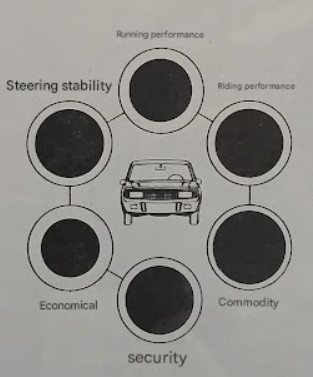
The aim of this comprehensive test drive is to assess a car’s overall performance by examining six key pillars: driving performance, handling and stability, ride quality, safety, economy, and product appeal. The evaluation method used is the “Bubble Session”—a systems-engineering approach in which six specialists from different fields gather around a hexagonal table (“bubble” = honeycomb) to share their opinions. In the diagrams, each black segment within the six circles represents a score for that pillar. A car whose segments are evenly sized is considered well-balanced across all categories, while uneven segments suggest a model with distinctive character.
Postscript: Story Photos