Toyota Corona Hardtop 2000SR (1972)
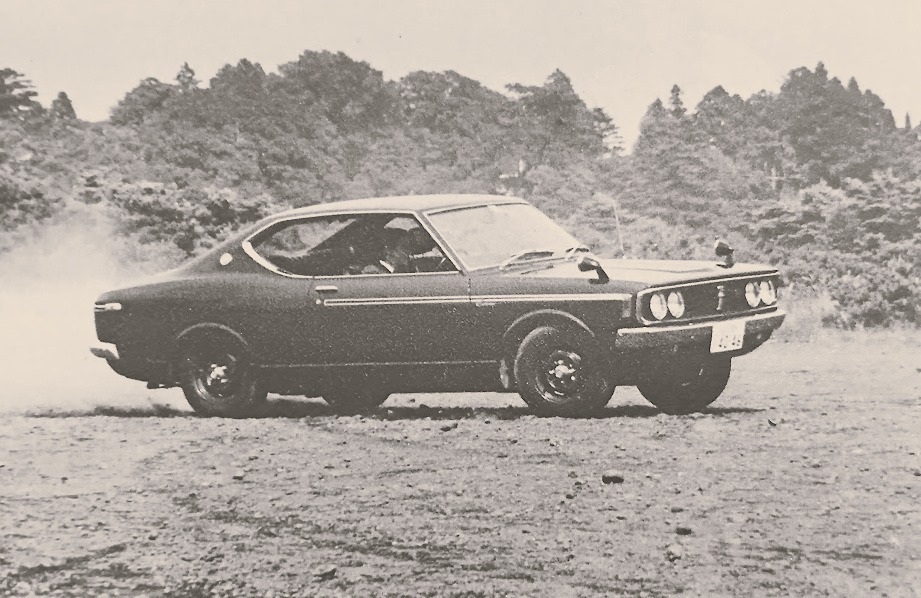
Publication: Motor Fan
Format: Test Drive Report
Date: November 1972
Author: Tadao Suzuki
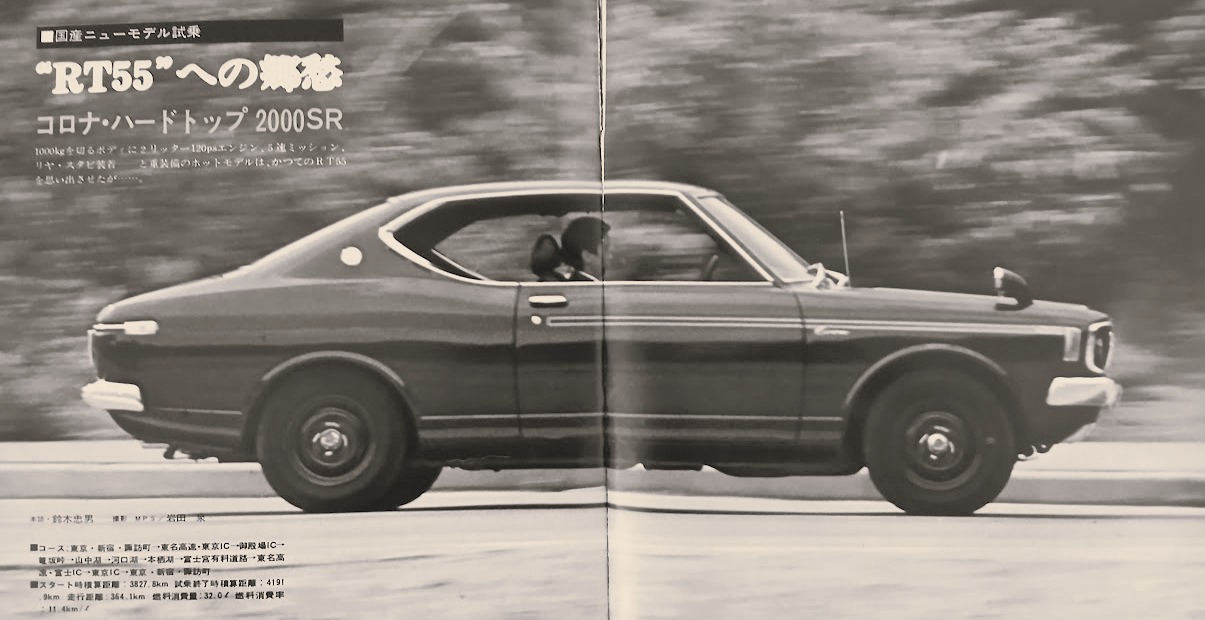
Nostalgia for the “RT55”
A well-equipped hot model with a 120ps 2-liter engine, 5-speed transmission, rear stabilizer bar, and a body weighing less than 1000kg–it immediately brought to mind the old RT55. And yet…
A Genuine Sporting-Car Specification
The Toyota 1600GT–better known as the RT55 and fondly remembered as one of Japan’s great sporting sedans–was derived from the Corona. Its popularity and success in competition have long since become part of the Corona’s proud history, while the twin-cam engine that defined its character has since grown in displacement and found a new home in the larger Mark II GSS. Likewise, much of the Corona’s sporting role seems to have been handed over to newer models such as the Celica and the Corolla/Sprinter.
As a result, the Corona’s sporting heritage has largely faded from view. Even so, its popularity has never waned. Thanks to its reputation as one of Japan’s most practical compact cars and its broad model lineup, it continues to enjoy consistently strong sales.
With this latest minor change, the Corona series receives not only a facelift but an increase in displacement from 1900cc to 2000cc. Two new flagship models have also been added: a fuel-injected version equipped with EFI (Electronic Fuel Injection), and the more overtly sporting 2000SR.
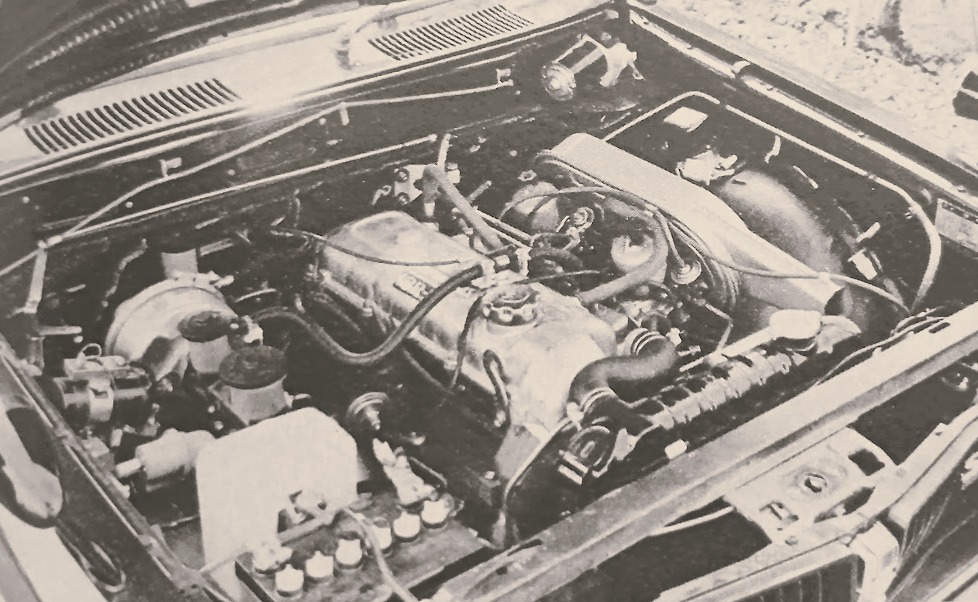
The 2000SR is powered by Toyota’s new 18R-B engine, developed by increasing the bore of the previous 1900SL’s 8R-B unit (86 × 80mm) to 88.5 × 80mm, bringing displacement to 1968cc.
This is the same engine already used in the new Mark II 2000. Equipped with twin SU carburetors, it produces 120ps/6000rpm and 16.5kgm/4000rpm. Installed in the 2000SR’s 990kg body, it gives a power-to-weight ratio of just 8.25kg/ps. Along with the increase in displacement and output, attention has also been paid to emissions control, most notably through the addition of a fuel-evaporation control canister.
The powertrain has likewise received significant attention. Borrowed from the new Mark II is a 5-speed transmission featuring Porsche-type servo synchromesh (with gear ratios specific to the Corona), while the limited-slip differential previously offered only as an option on the Celica GT, Carina GT, Levin, and Trueno is fitted as standard. As a result, the 2000SR runs from 0-400m in 16.7 seconds and reaches a top speed of 190km/h.
The suspension, too, has been given firmer tuning than that of the 2000SL, and the addition of a rear stabilizer gives it a thoroughly serious chassis package.
Looking over these specifications, the 2000SR appears to represent the arrival of a genuinely serious sporting car. It is the kind of car that inevitably raises expectations of recapturing something of the response and feel once offered by the RT55.
Torque Worthy of Two Liters
The hardtop body is so compact that one would hardly imagine a two-liter engine hiding under its hood. Compared with the 2000SL, ride height has been lowered by a further 10mm, while the blacked-out grille gives the front end an even more purposeful appearance. The interior follows the same theme, with the dashboard and nearly all the surrounding trim finished in black. In this respect, Toyota’s talent for creating a suitable atmosphere is very much evident.
After settling into the driver’s seat, I experimented with various seating positions, but somehow never felt entirely comfortable. Admittedly, this is a highly subjective matter, depending on one’s build and personal preference, but I suspect the seat is mounted a little too high, while the gear lever is slightly too far forward. If I had one request, it would be a little additional cushion length under the thighs.
Being a 2-liter, the 18R-B engine has ample torque to begin with, so even if the clutch is engaged at around 1500rpm, the car pulls away smoothly. There is none of the hesitation often associated with highly tuned small-displacement engines, either from a standing start or as speed builds.
It will even cruise through city traffic at 40km/h in fourth gear. Even so, that is hardly the way this car is meant to be driven. In urban traffic, where acceleration and deceleration are frequent, second and third gears are naturally used most often.
The engine does not begin to display its full strength until beyond 3000rpm, yet even then it still gives the impression of revving reluctantly. To get the best from the car, the most rewarding range is between 4000-5500rpm.
Maximum power arrives at 6000rpm, with the red zone beginning at 6400rpm. However, the test car showed signs of valve float before reaching 6000rpm, and beyond 5000rpm it felt as though I were having to flog an unwilling engine to higher revs. I simply couldn’t bring myself to push it any farther.
For the engine of a sporting car, an output of 120ps is certainly appealing. Even so, I would have welcomed crisper throttle response and a stronger pull at higher engine speeds.
The 5-speed transmission offers excellent shift feel, its only shortcoming being rather long lever throws. The servo-assisted synchromesh is highly effective, and each gear engages easily. Since this is not an especially peaky engine, I cannot say that a 5-speed gearbox is strictly necessary. Even so, there is no question that it reduces noise during high-speed cruising. At 100km/h, the difference between fourth and fifth gear amounts to roughly 500rpm–a worthwhile reduction that should also benefit fuel economy in the long run.
The Pros and Cons of the Limited-Slip Differential
The suspension is entirely conventional–double wishbones at the front, a leaf-sprung live axle at the rear–and of course, so is the front-engine, rear-wheel drive layout. The suspension has been tuned more firmly for sporting driving, a rear stabilizer bar has been added, and a limited-slip differential is fitted as standard. At least on paper, it has all the ingredients of a serious driver’s car.
The test car was fitted with Bridgestone Super Speed 20 165SR-13 radial tires, inflated to 1.8kg/cm² front and rear.
Even while driving through central Tokyo, the tires protested loudly around tight corners. At the same low speeds as surrounding traffic, the inside rear wheel would spin and chirp. Presumably this was because the effect of the limited-slip differential begins quite early.
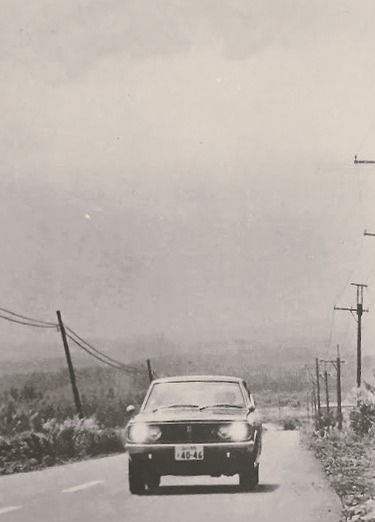
Straight-line stability on the expressway is excellent.
Wind noise is low, and the 5-speed transmission also helps reduce engine noise. At an indicated speed of approximately 110km/h, a speed warning begins chiming at roughly one-second intervals.
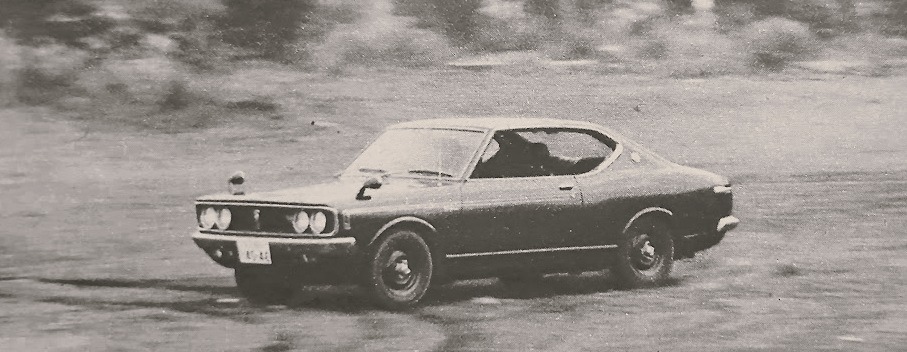
After leaving the expressway and heading onto the winding roads around Fuji, I expected the firmer suspension to come into its own. Instead, its responses proved rather less sharp than anticipated, and turn-in was not especially crisp. Understeer was also stronger than I expected.
The addition of the rear stabilizer bar has undoubtedly increased roll stiffness, but I found the tires to be the greatest limiting factor. The rear tires relinquish their grip early, almost as though the rear of the car simply gives way. Moreover, because there is so little body roll, the breakaway feels especially sudden.
For a 2-liter car producing 120ps, the optional 185/70HR-13 tires should really be considered the minimum requirement. Even 14-inch wheels would hardly seem oversized.
There was another characteristic of the limited-slip differential that concerned me. It is difficult to judge precisely when it begins to operate. Because its engagement varies according to throttle application while cornering, steering corrections tend to come a fraction too late, making it difficult to settle the car onto a chosen line at corner exit. Placing the car accurately requires becoming thoroughly familiar with the differential’s behavior.
These steering characteristics become even more pronounced on unpaved roads. At the risk of overstating the case, driving on dirt as it is means constantly trying to get a feel for the available grip.
Ride quality, however, is better than one might expect from such a sporting chassis. It is by no means harsh, but instead much what one would expect from an ordinary sporting car.
The brakes consist of front discs and rear drums with servo assistance and a proportioning valve. Pedal feel is somewhat spongy, and I was surprised to find that pumping the pedal changed the length of its travel noticeably. Even so, braking performance itself appears entirely adequate.
Perhaps my expectations for the car’s performance and driving feel had simply been too high, leading me to demand more than its fundamental character could realistically deliver. For better or worse, the underlying substance remains that of the Corona. To achieve true balance as a “hot car,” I cannot help feeling that it still needs a little further refinement.
Postscript: Story Photos