Toyota Corona Mark II GSS (1970)
Publication: Motor Magazine
Format: Test Drive Report
Date: December 1969
Author: Ryo Miyama
Corona Mark II GSS: A Soft But Responsive Car
The performance of domestic cars has continued to rise steadily in recent years. Even common practical sedans–including small-displacement models in the 1-liter class–can now often achieve 140km/h, while nearly all 1.5-liter sedans are now “100-mile cars.” Since even the standard production models have emphasized high performance as a major selling point, it is perhaps inevitable that their sporting variants–the ultimate extension of such model diversification–have further accelerated the trend.
Even internationally, it is rare to find a production car based on a normal sedan that can reach a maximum speed of 200km/h. Yet in Japan, Isuzu has recently introduced the Bellett 1600GTR, and now Toyota has brought out the Mark II GSS.
And slightly before these, Honda’s 1300 99 had already appeared on the market with performance approaching the same level.
Of course, there are some who question the need for this seemingly excessive escalation in performance. Even so, these developments can be seen as symbolic of the level of engineering now being achieved, demonstrating that the technology of Japan’s automotive industry has reached truly world-class standards.
Twin-Cam Power Based on the SL
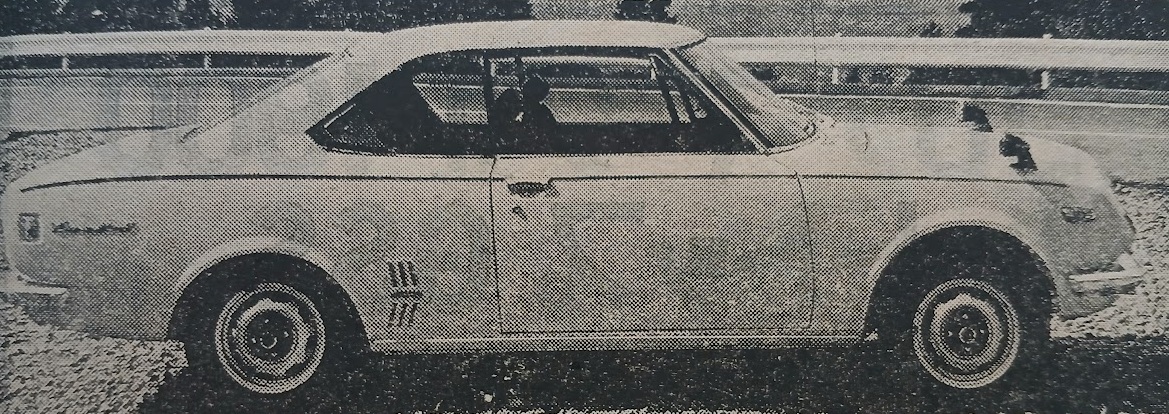
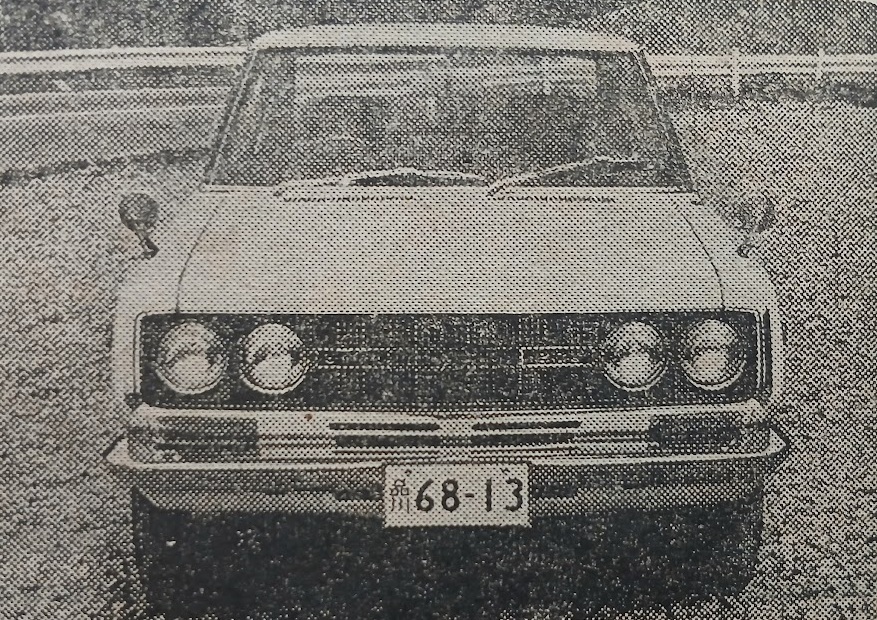
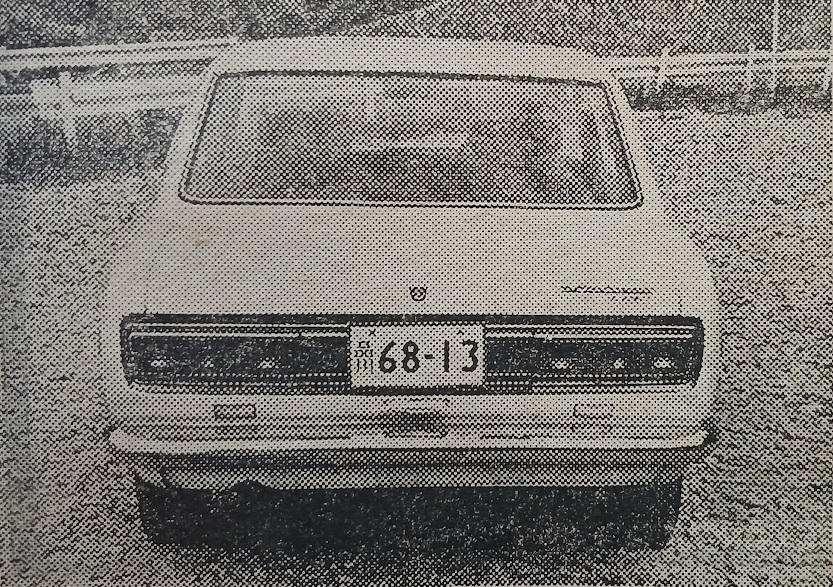
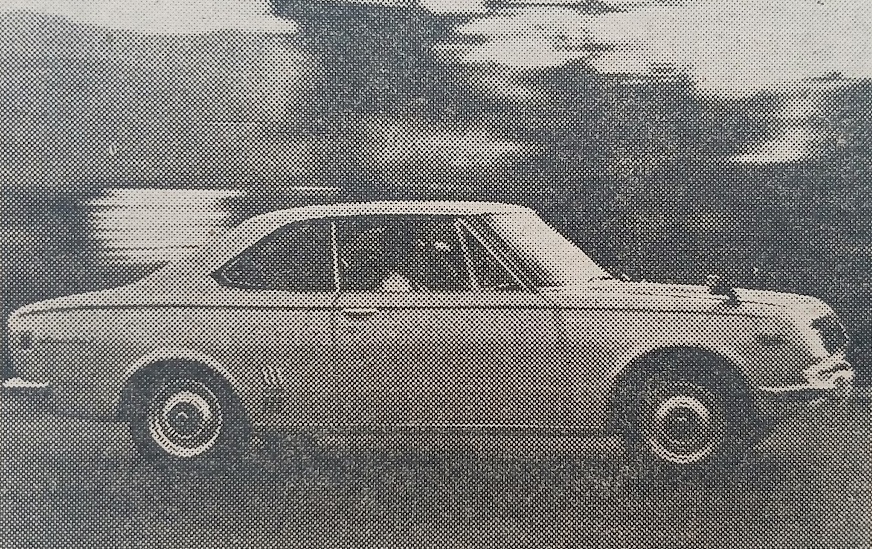
As one can see from a glance, the Mark II 1900 GSS is a sports sedan that is outwardly almost identical to the original model. The initials stand for “Grand Super Sports,” but apart from the “GSS” emblems on the radiator grille, rear end panel, and rear quarter panels, it is almost impossible to distinguish from the standard hardtop version.
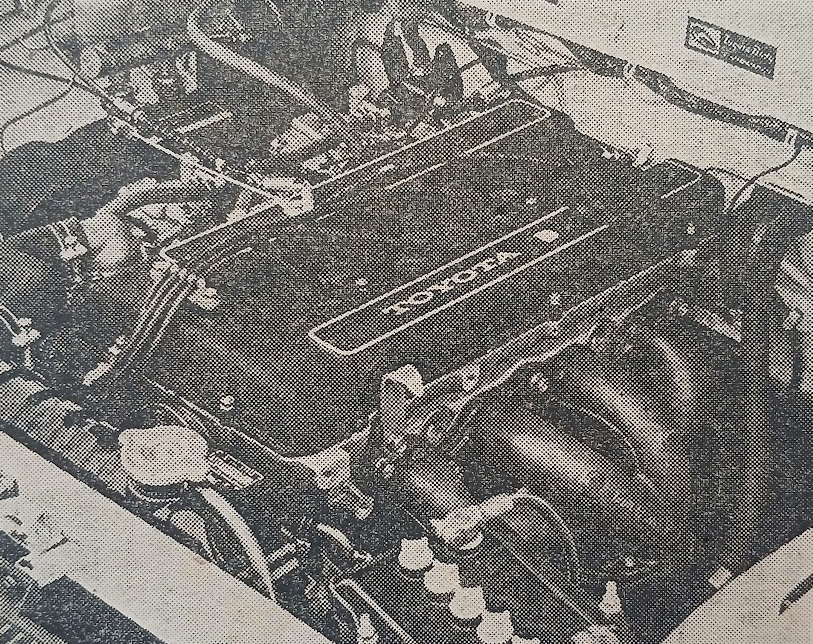
The engine, however, is the 10R unit, a twin-cam development of the 8R SOHC engine used in the SL. Though retaining the same 1858cc displacement, output has been increased substantially to 140ps/6400rpm, with torque rising to 17kgm/5200rpm, giving the car decidedly greater power specifications.
This inline four-cylinder DOHC engine’s bore and stroke dimensions are an oversquare 86mm × 80mm. The aforementioned output and torque figures are achieved through a 9.7:1 compression ratio together with twin Solex two-stage carburetors. Compared with the original 8R engine, these figures represent a considerable increase of 30ps in output and 1.5kgm in torque.
It could be said that the defining characteristic of the GSS is the powerful driving force gained through these revised engine specifications. At the same time, however, Toyota has deliberately shaped this high-performance model, which approaches the level of a racing version, into a car intended for general use–and this, in fact, may be the GSS’s most distinctive feature.
Remarkably Flexible Low-Speed Performance
Given the nature of this car, it would be natural to focus first on its powerful performance. However, our test drive began not on an expressway–let alone a test course–but on ordinary city streets with heavy traffic. For that reason, it seems appropriate to start by describing the car’s characteristics in low-speed driving. The greatest surprise of this test drive was the fact that, in this respect, the car behaved no differently from an ordinary sedan.
In other words, despite its impressive name and engine specifications, and the high performance figures listed in its catalog, it was capable of completely smooth low-speed cruising, to a degree that was genuinely unexpected.
To be more specific, when moving off in first gear, clutch engagement occurs at roughly 1000rpm. Shifting into second follows as soon as the car is rolling, then into third at around 30km/h, and finally into top gear at approximately 40km/h, after which smooth driving is entirely possible.
At 30km/h in second gear and 60km/h in third, engine speed is around 2000rpm. Selecting top gear from either point drops engine speed immediately to around 1500rpm, yet even at such low revs the engine still provides sufficient torque in top gear to maintain speed comfortably.
Piston knock occurs only at extremely low engine speeds. There is virtually no trace of it when maintaining 40km/h in top gear with half throttle, and while a slight vibration appears when the throttle is opened further, it smooths out completely once engine speed rises to around 1700rpm. The engine’s flexibility at low rpm is simply exceptional for this type of car.
The gearbox is a 5-speed unit with an overdrive fifth gear, but thanks to the car’s inherent characteristics, as long as the tachometer remains above at least 1500rpm, it is entirely possible to drive using only the two cruising gears, fourth and fifth.
Over 100km/h in Second Gear
Although this is unquestionably a high-output engine, producing 74ps per liter, the fact that its power peak arrives at 6400rpm also shows that its basic characteristics are similar to those of an ordinary sedan engine. It is by no means what one would call a high-revving unit, and accordingly valve overlap is kept relatively modest. Although torque peaks at 5200rpm, the torque band itself appears to extend considerably farther down the rev range. (At the time of testing, complete technical data was not yet available.) It is reasonable to conclude that the car’s excellent low-speed tractability is due in part to these characteristics.
The 5-speed transmission is a conventional-synchromesh unit, but when combined with an engine whose operating range remains relatively close to that of a normal sedan engine, this causes no particular complaints. As it is, its performance is entirely sufficient.
The defining characteristic of the gearing is its close-ratio setup. It is not especially extreme in this regard, but the road speeds per 1000rpm are as follows: 1st: 9.3km/h 2nd: 15.3km/h 3rd: 22.0km/h Top: 28.0km/h Over-Top: 32.0km/h
From these figures it can be seen that, while the speed in top gear remains very close to that of a normal sedan, the ratios from first through third are each approximately 25 to 30 percent higher.
This is due to the gear ratios themselves–3.074 in first, 1.838 in second, and 1.256 in third–all being comparatively high and closely spaced relative to the direct 1.000 top gear ratio.
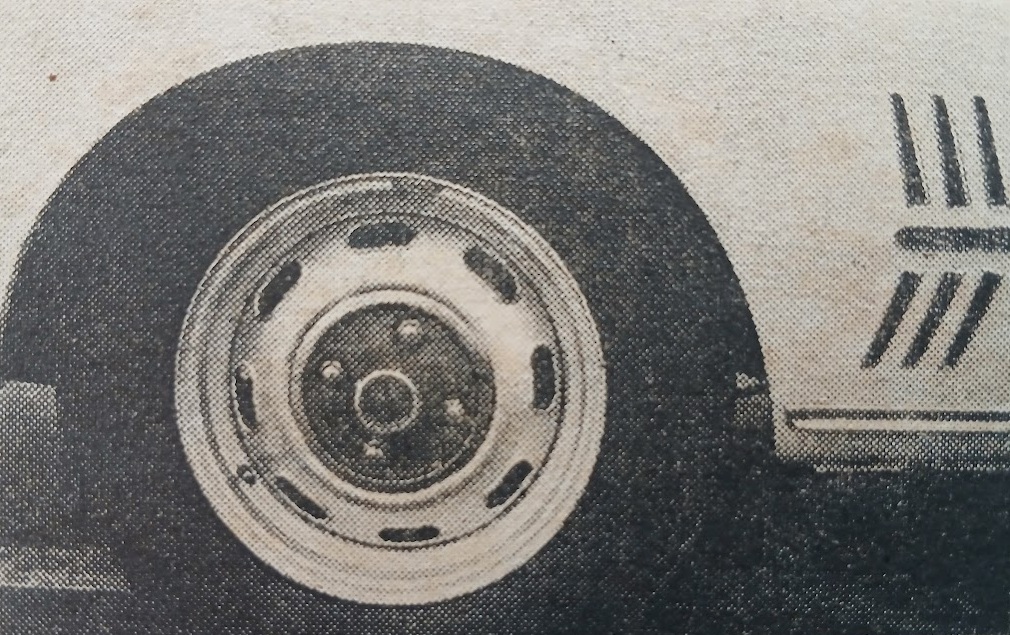
The final drive ratio is 4.375, which would ordinarily be considered lower-geared than a practical sedan. However, because the driven wheels use relatively large 14-inch rims, this does not result in an excessively low overall ratio.
In practical terms, the overall gearing ends up being broadly comparable to that of an ordinary sedan fitted with the more common 13-inch wheels and a final drive ratio of around 4.00. As a result, the road speeds per 1000rpm work out very much as the transmission’s close-ratio gearing would suggest.
Naturally, this also implies a very high maximum speed. Actual figures will differ somewhat from theoretical calculations, but assuming the engine is taken up to its 7000rpm red zone, the corresponding maximum speeds in each gear are 65km/h in first, 107km/h in second, and 154km/h in third.
In a burst of perhaps excessive bravery, we extended each gear fully on the test course. The results were 66km/h in first, 108km/h in second, and 158km/h in third. In top gear, the revs climbed easily to 6500rpm, at which point the car had already reached the extraordinary speed of 190km/h.
The catalog claims a maximum speed of 200km/h, and it may well be possible to reach this relatively easily using the 0.856 over-top gear. But in the end, our bravery did not quite extend that far.
The engine, equipped with twin Solex two-stage carburetors, is remarkably responsive to throttle inputs. These carburetors are generally said to provide balanced characteristics across both low- and high-speed operation, while also offering comparatively good fuel economy. As for the finer details of how they compare with Weber carburetors, it is difficult to say, but considering both the car’s excellent low-speed drivability and its outstanding high-speed performance, it seems fair to conclude that the matching of these carburetors to the engine has been entirely successful.
Needless to say, acceleration is extremely strong, fully in keeping with the engine’s exceptionally sharp response. Although our measurements were somewhat imprecise, being taken by hand, the recorded 0–100km/h time of 9.0 seconds gives an honest indication of the car’s performance.
A Highly Refined Personal Sedan
The GSS’s driver’s seat is not shaped with particularly deep contours, but its characteristics still approach those of a true bucket seat. Thanks in part to the use of leather with excellent grip, lateral support is very good, while the cushioning itself is not excessively soft. So long as one remains on paved roads, the car allows genuinely comfortable long-distance driving.
The steering wheel height can be easily adjusted using a screw mechanism on the right side of the steering column, making it relatively easy to set the driving position to one’s own preference.
That said, in the area of driver controls, two points did stand out. One is that the lower edge of the accelerator pedal sits at nearly the same height as the brake pedal. The other is that the horn button is only in the center pad of the steering wheel.
The accelerator pedal would likely benefit from being extended by at least another centimeter, which would make heel-and-toe operation easier. Likewise, it would seem more practical to have the horn buttons on the spokes, since it is hardly uncommon to use the horn while steering at the same time.
The suspension consists of front independent struts with a rear rigid axle suspended by leaf springs. Naturally, the springs have been strengthened compared with the standard model, while a torque rod has also been added at the rear in order to cope with the considerably increased driving force.
As a result of this reinforced suspension, ride quality is rather stiff, as one would expect, and impacts over rough roads are quite pronounced. When traversing a series of large bumps and uneven surfaces, passengers will likely require considerable patience. Even so, the rear end rarely becomes unsettled due to suspension bottoming, and overall rough-road capability is excellent.
This firm suspension setup also keeps body roll well under control, while nose dive under braking is minimal. Its excellent road-holding characteristics provide strong resistance to crosswinds as well, lending a reassuring sense of stability in high-speed cruising.
The exhaust note remains as subdued as that of an ordinary sedan at idle. Open the throttle–or accelerate hard–and the sound sharpens and grows more energetic as engine speed rises, yet even then it never becomes especially loud or resonant. Overall, the character remains fairly restrained, and with the windows closed, very little engine noise enters the cabin at all.
Road noise and powertrain noise are also well suppressed. As a result, even at speeds over 100km/h, ride comfort remains surprisingly close to that of a normal sedan, unusually for this type of car.
The brakes use servo-assisted front discs with rear drums. While initial braking response has the somewhat dull feel characteristic of disc systems, their resistance to fade and ability to bring the car down from speed reliably are on an entirely different level from ordinary drum brakes.
The handling has no particular bad habits, tending slightly toward understeer, though in actual driving this tendency is hardly noticeable. The steering system uses Toyota’s variable-ratio setup, with the ratio changing between 19.5 and 21.5:1, and requires four-and-a-half turns lock-to-lock. For a car of this type, it feels surprisingly slow, and steering effort is correspondingly light–so light, in fact, that the driver hardly notices the presence of the radial tires through the wheel.
In other words, the steering lacks sharpness. Yet in deliberately accepting this compromise–without pursuing the harder-edged feel suggested by the “GSS” name–one can clearly sense Toyota’s intention for this car not to appeal only to a limited circle of enthusiasts.
Come to think of it, the clutch is unusually light for such a high-powered machine as well. Taking together the flexible low-speed performance described earlier and these somewhat contradictory characteristics, the GSS is not merely a high-performance model defined by its “200km/h” speed. Rather, it seems more accurate to say that it was designed from the outset as a complete personal car.
Postscript: Story Photos