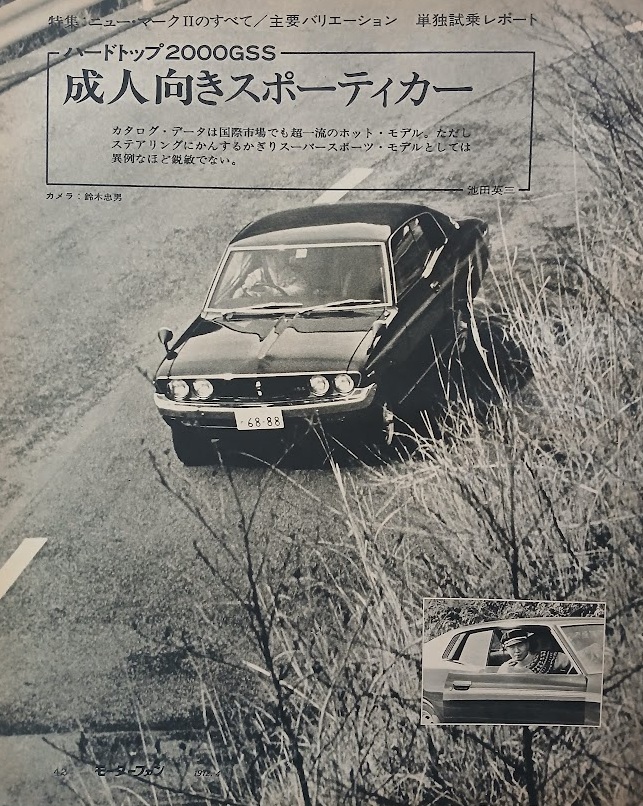
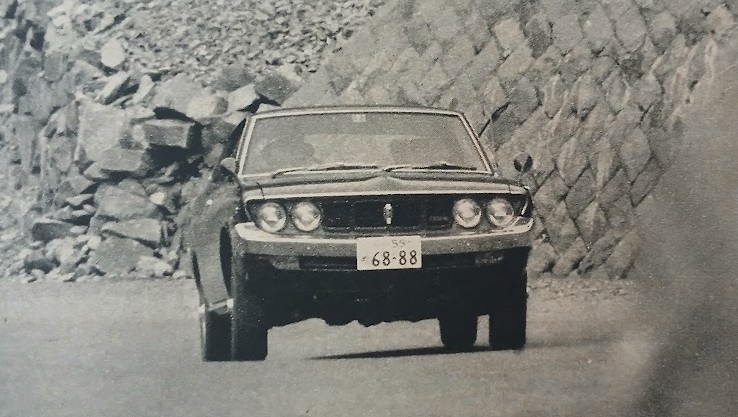
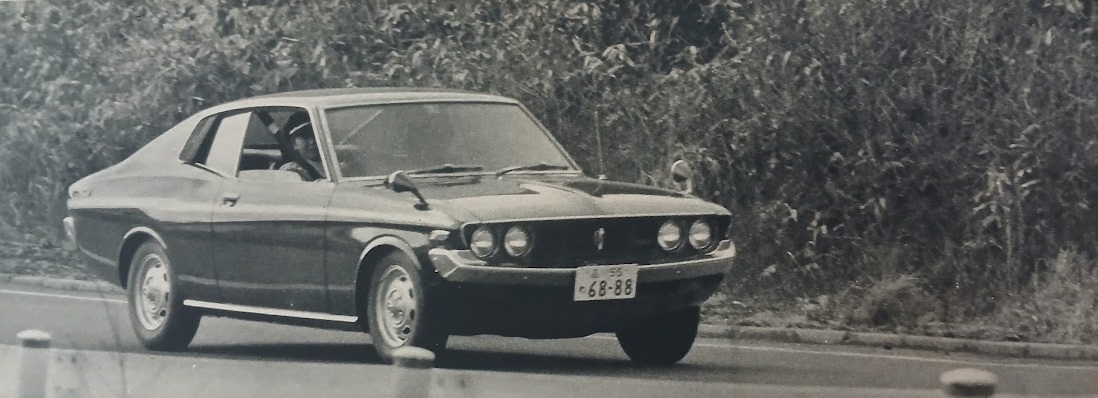
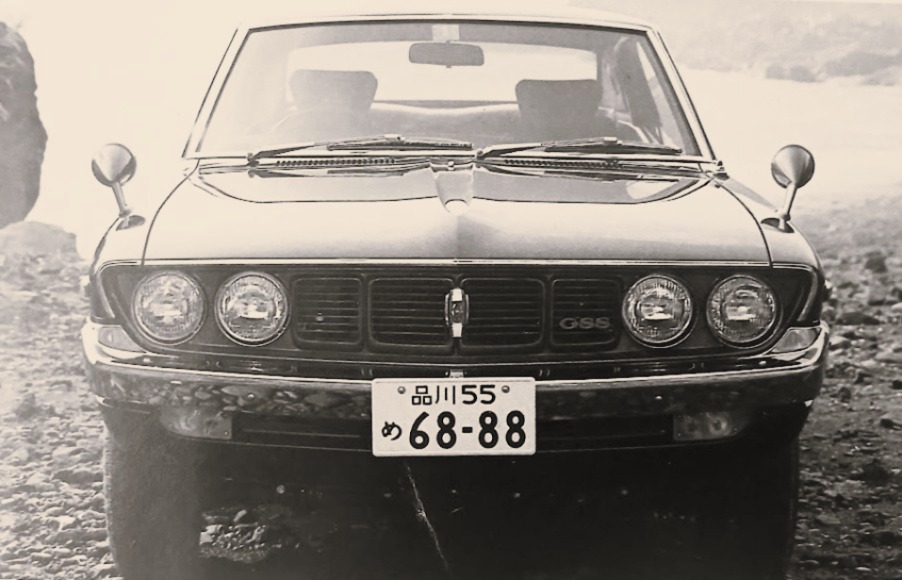
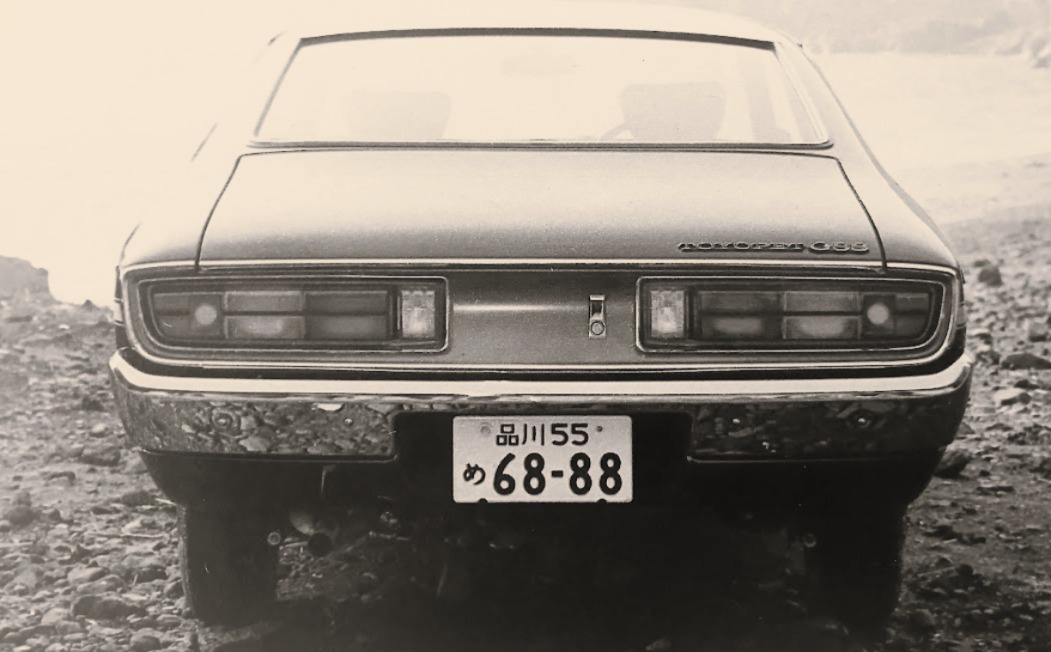
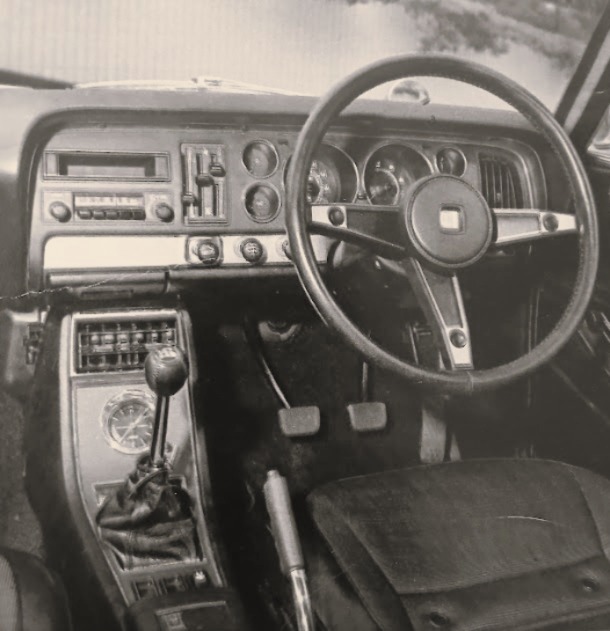
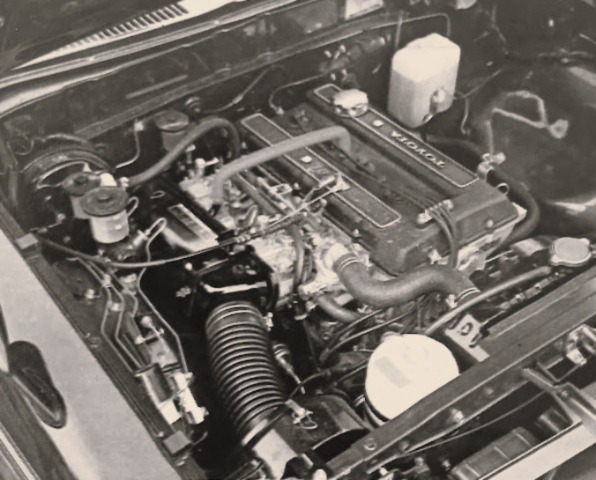
Toyota Corona Mark II Hardtop GSS (1972)
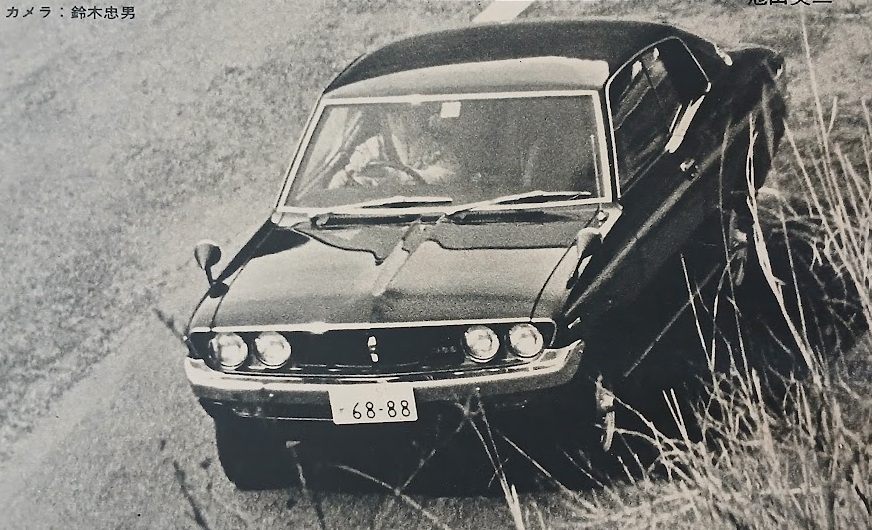
Publication: Motor Fan
Format: Test Drive Report
Date: April 1972
Author: Eizo Ikeda
A Sporting Car for Mature Drivers
On paper, its specifications place it among the world’s leading high-performance models. Yet in one respect it falls short of super-sports-car expectations: its steering is surprisingly lacking in sharpness.
Positioned Closer to the Crown
The Corona Mark II, by now a familiar sight on Japanese roads, has undergone a complete transformation.
At first glance, this full model change appears to focus primarily on styling. In reality, however, Toyota has fundamentally redefined the Mark II’s position in the marketplace. At the same time, a number of surprisingly bold changes have been made beneath the surface. The transformation is so extensive that one is almost tempted to call it a “Mark III.”
My own impression is that the previous Mark II was conceived entirely as an upscale companion to the previous-generation Corona (based on the RT40 series). Everything about it was designed with the Corona very much in mind. After all, that was why its official name was Corona Mark II.
Judging by this latest model, however, Toyota is no longer using the Corona as its point of reference. In the thinking behind many of its major components, the new car appears considerably closer to the Crown.
If I may be allowed a somewhat arbitrary conclusion, this is less a Corona Mark II than a Crown Mark II.
As readers will know, the domestic 2-liter class currently includes several “business cars” such as the Crown, Cedric, and Gloria. Within the same class, upscale sporting models led by Nissan’s Skyline 2000GT have grown tremendously popular.
Just as some owners use business cars for personal transportation, there are also many who feel drawn to luxurious versions of cars originally conceived as personal cars.
In this respect, it is clear that Toyota intends the 2-liter Mark II to compete directly with the Skyline GT.
Those were my first impressions before driving the car.
As a result, I approached the Mark II not as an evolution of the previous model, but as an entirely new car belonging to a different category. After completing the test, my impression remained much the same.
The car has unquestionably moved upmarket. As a status symbol, it already belongs among the most prestigious cars in the 5-number class.
Indeed, one senses an unmistakably mature character throughout the entire range.
A “Cool” Super Sports Model
The car I tested was the hottest model in the Mark II range: the Hardtop 2000GSS.
By “hot,” I am referring, of course, to its catalog designation as a GSS (“Grand Super Sports”) model. A five-passenger coupe equipped with a 2000cc DOHC engine, 5-speed transmission, 145ps, and a claimed top speed of 195km/h is hardly commonplace. Even among European cars, only a handful of high-speed touring GTs offer comparable credentials. One suspects there are enthusiasts around the world who would salivate upon seeing the specifications alone.
It has been some time since production of the Toyota 2000GT ended, and the 1900GSS never quite succeeded in filling the void it left behind. The new 2000GSS seems to have been developed with that point very much in mind.
The difference is that, because it is based on the mass-produced Mark II, it lacks the extravagance of a true exotic GT. Instead, it openly embraces the role of a wolf in sheep’s clothing. The subdued paint colors reinforce this impression, and while many sporting models advertise their intentions with elaborate decoration, Toyota has gone in the opposite direction, even eliminating the dummy air scoops previously applied to the bodysides.
As a result, identifying a GSS in traffic has become more difficult than ever–a development that will likely appeal to mature enthusiasts. It may well be the “coolest” super sports model yet produced.
Dimensionally, the new car is 25mm longer and 20mm wider than before, yet in practice it feels almost unchanged. The test car was finished in a deep green, which actually made it appear smaller than the familiar yellow GSS models I had grown accustomed to seeing.
That said, while this color is wonderfully restrained and lends the car a luxurious atmosphere, it is not what one would call a particularly conspicuous color for a super sports machine. In the case of the GSS, I would recommend choosing the brightest color available–for everyone’s safety!
A more significant change is the 75mm increase in wheelbase, and the effects of this are immediately apparent. Combined with revisions to the rear suspension layout, which I will discuss later, and a slower steering ratio, overall stability has improved substantially.
Above all, it is clear that Toyota has placed considerable emphasis on improving straight-line stability, very much in keeping with current industry trends. Naturally, something had to give in return, and the car’s handling has lost a measure of sharpness. This does not appear to be the result of a goal set for the GSS itself. Rather, it feels like one of the inevitable compromises that arise when developing a mass-production model intended to serve an entire range.
As a result, the 2000GSS’s catalog specifications suggest a car capable of competing with the world’s hottest performance cars, yet in terms of handling it must be described as remarkably tame.
To be sure, this character is hardly unusual for a Toyota and will come as no surprise to Toyota enthusiasts. Even so, it remains an unusual trait in a super sports model whose performance has been elevated to this level.
With that one exception, the 2000GSS deserves to be considered a first-rate super sports car.
An Easy-to-Live-With Porsche-Type Transmission
Before discussing the car’s behavior on the road, it is worth examining the areas in which the 2000GSS differs most significantly from its predecessor.
First and foremost is the DOHC engine, the heart of the GSS.
The new 18R-G is derived from the previous 8R-G engine used in the 1900GSS (86mm × 80mm, 1858cc), with the bore increased by 2.5mm to 88.5mm × 80mm, bringing displacement to 1968cc. The increase follows much the same logic that recently prompted Alfa Romeo to enlarge its own engine to the 2-liter class. The result is an additional 1.0kgm of torque and 5ps more power, for an output of 145ps/6400rpm and 18.0kgm/5200rpm.
The Skyline 2000GT-R produces 160ps/7000rpm, but it achieves that figure through a racing-derived four-valve design. The GSS engine, too, clearly has the potential for 160ps or more if equipped with a more aggressive camshaft and other competition-oriented modifications.
As delivered, however, it lacks the GT-R’s hard-edged character and is considerably easier to use on ordinary roads.
Previous Toyota DOHC engines have all been notable for their flexibility at low engine speeds, but this one is somewhat more temperamental below 2000rpm. Its genuinely sporting character begins to emerge only above about 2800rpm and continues through roughly 5500rpm.
As a result, one senses that a considerable amount of high-rpm performance has been deliberately restrained in production form.
Even so, the high-speed vibration that often becomes noticeable in 2-liter four-cylinder engines is remarkably well-suppressed, and this is one of the strengths common to the entire 18R family.
The test car was still virtually new and did not yet display the exhilarating high-speed surge one might expect. On the other hand, vibration was never a concern. Both qualities struck me as the result of lessons consciously applied from Toyota’s experience with the earlier Mark II.
Another major improvement to the GSS is the adoption of a Porsche-type synchronized 5-speed transmission.
The shift pattern remains unchanged, but the shift knob is unusually large and the throws are somewhat long. The lateral movement across the gate, however, is exceptionally short and precise, and the lever naturally returns to the 3rd-4th gear plane.
As a result, shifts between 1st and 2nd require very little effort to guide the lever, while the critical 4th-to-5th upshift can be completed with only a light touch.
The same is true when downshifting from 5th to 4th. Rather than forcing the lever through an exaggerated crank-shaped motion, one need only guide it gently and allow the centering spring to place it accurately into 4th. The 5th-to-3rd downshift works in much the same way.
Porsche itself adopted this Alfa-style 5-speed shift pattern for 1972, and aside from the absence of a centering spring in the Porsche installation, the feel is remarkably similar.
Porsche-type servo synchronizers have now become fairly common, but compared with the 5-speed transmissions previously fitted to the Mark II, Toyota 2000GT, and 1600GT, this new one represents a substantial advance. The synchronizers are far stronger and the shift feel markedly improved.
One characteristic of this design, however, is the pronounced mechanical resistance felt during shifts. The lever must be moved positively through that resistance and firmly engaged in the selected gear.
Furthermore, the hub sleeve and synchronizer employ an interlocking profile designed to prevent the transmission from jumping out of gear under fluctuating torque loads. As a result, even disengaging a gear requires a noticeable effort.
Overall, the synchronizers are strong enough in both upshifts and downshifts to permit clean, direct shifts without hesitation.
One point should be noted, however. On the test car, the synchronizing effect occasionally seemed weak when engaging 1st gear from a standstill.
Vibration transmitted through the transmission mounting and driveline has also been very effectively suppressed, while noise levels at high engine speeds have been reduced substantially.
The other area of major significance in the GSS is the revised suspension.
At the front, Toyota has retained the double-wishbone layout rather than adopting the increasingly fashionable MacPherson struts. At the rear, however, the changes are substantial. Previous Mark II and GSS models combined a leaf-sprung live axle with torque rods, but the entire Mark II range now uses a coil-sprung four-link layout located laterally by a Panhard rod.
This is essentially the same arrangement used on the Carina and Celica, where it has earned a favorable reputation. Toyota appears to be moving toward wider adoption of this design rather than pursuing independent rear suspension.
The coil springs themselves are relatively soft. On pavement the suspension feels somewhat firm, but on rough roads the ride is unexpectedly comfortable. Even so, it remains one of the firmer setups in the Mark II range and provides road-holding commensurate with the car’s performance.
Rear-wheel grip has improved significantly compared with the previous model, and the power slides that once came so readily are now far more difficult to provoke. This is clearly the result of the revised rear suspension.
However, this means that the front end has become the limiting factor, and the handling balance now tends toward fairly pronounced understeer. The longer wheelbase is partly responsible, but the new GSS is also equipped with a limited-slip differential as standard equipment, something not seen since the 1600GT. This too acts to resist turn-in during cornering.
Furthermore, the variable-ratio steering now ranges from 20.0-23.5:1, and in a car like this the response inevitably feels somewhat delayed.
The combined effect of these changes is that one cannot expect particularly sharp handling.
Put another way, the car offers excellent straight-line stability and, if one is willing to work the steering wheel vigorously, considerably higher cornering limits than the previous GSS. Unfortunately, the delay in initial steering response prevents it from delivering the crisp, immediate feel that is crucial to genuinely sporting driving.
For that reason, I believe the GSS in particular deserves a more direct steering gear with a lower ratio. After all, the intended customer for this model is already well defined.
There is another issue.
The steering wheel itself uses a thick rim, like that of a racing car, yet it is positioned just as high as the wheel in an ordinary passenger car. As a result, the driver’s elbows are lifted away from the body, precisely the opposite of what is desirable in spirited driving.
This kind of steering posture tends to reduce precision and confidence, and in a high-performance car it is exactly the sort of thing one would want to avoid.
A tilt steering column may be asking too much, but this is nevertheless a point that cannot be overlooked if the GSS is to be driven safely and to its full potential.
After the test, my overall impression was that the new GSS represents a substantial advance over its predecessor.
At the same time, I was struck by how much of its potential is compromised by its lack of steering sharpness. For a sporting car equipped as standard with a DOHC engine, 5-speed transmission, and limited-slip differential, the handling simply does not live up to the specifications.
As a result, the car’s overall balance has shifted toward the role of a high-performance highway car.
That is somewhat disappointing.
As it is, the GSS is a genuine sporting car for mature drivers–one designed to cover great distances with ample reserve capability rather than to deliver sharp response at every turn.
Postscript: Story Photos