Toyota Corolla Levin (1972)
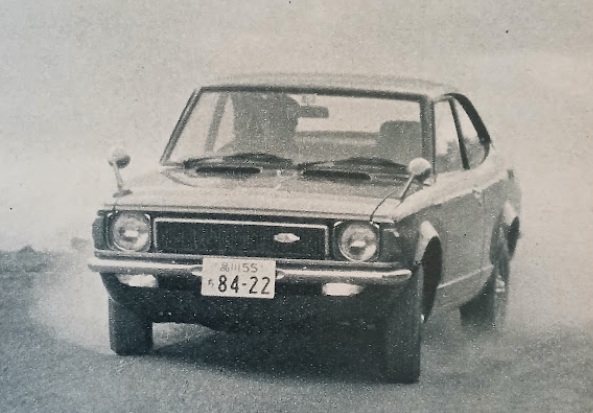
Publication: Motor Fan
Format: Test Drive Report
Date: May 1972
Author: Eizo Ikeda
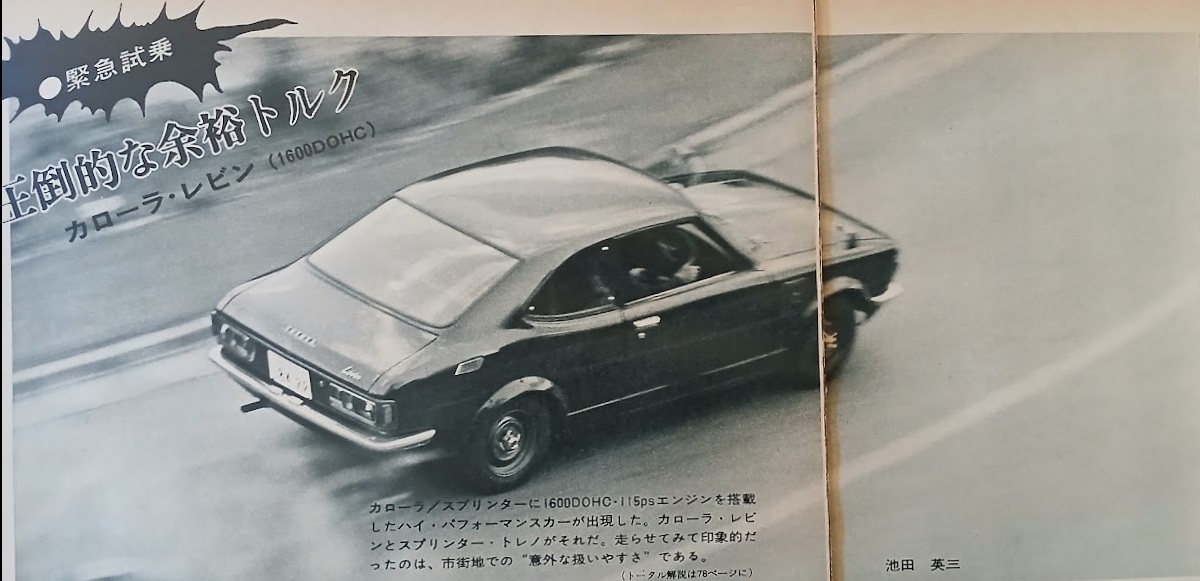
Overwhelming Torque In Reserve
Toyota has introduced a pair of high-performance models powered by a 115ps 1600cc DOHC engine: the Corolla Levin and Sprinter Trueno. What was most striking from behind the wheel was the unexpected ease of practical city driving.
Makes You Itch to Drive
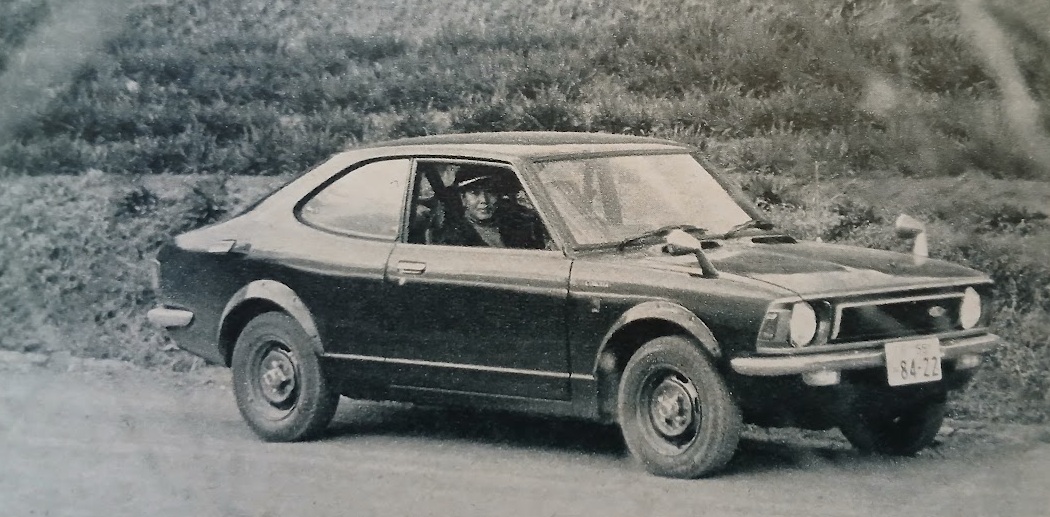
Toyota has been on something of a sporting-car streak lately, and now another one has been added to the lineup. Strictly speaking, there are two of them: the Corolla Levin and the Sprinter Trueno. Sharing the same basic specifications, they are, in effect, twins.
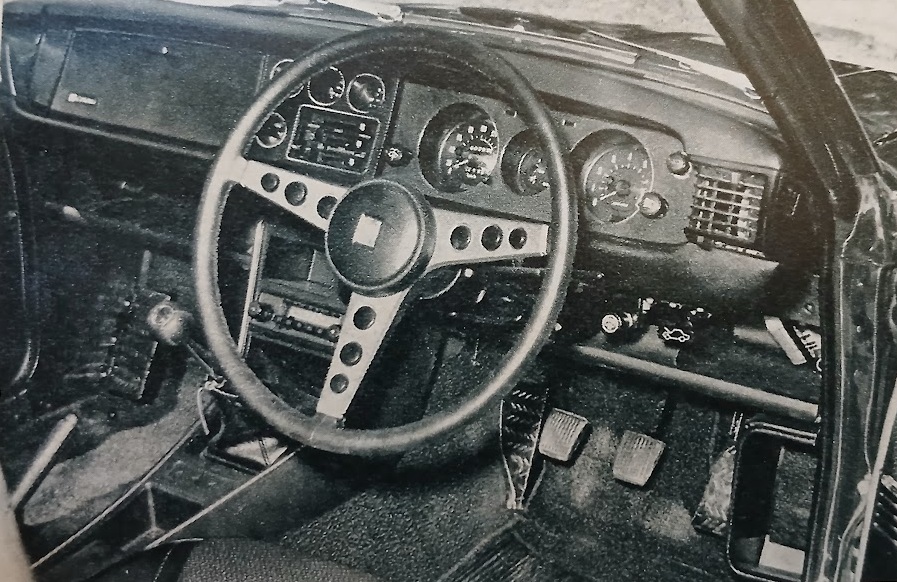
Both are based on the SR versions of the Corolla and Sprinter coupes. In both of those cars, unnecessary ornamentation is stripped away in pursuit of higher performance, resulting in something similar in spirit to a rally special. Even for buyers with no intention of entering rallies, however, the performance improvements also bring significant practical benefits, earning these models a surprisingly strong reputation. The tradeoff is the absence of the deluxe equipment that has become almost standard on Japanese cars, making them somewhat austere unless one prioritizes driving above all else.
Still, there were those who felt that the SR lacked sufficient performance for serious competition. As the pace of modern rally special stages has continued to increase, cries for “More horsepower!” have grown along with them. Just when one thought these calls were no more than wishful thinking from enthusiasts, Toyota responded by building what can only be described as a “super SR.”
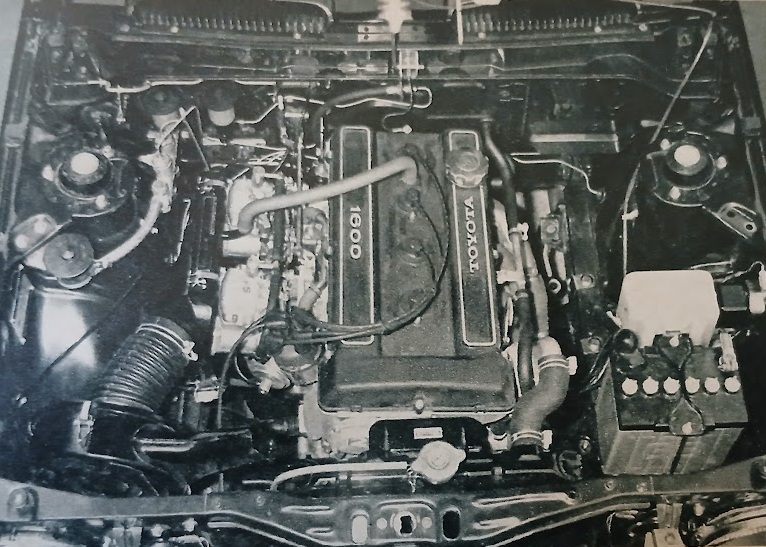
In simple terms, the Levin is a hybrid, combining the Corolla with the 1600GT engine from the Celica and Carina. From Toyota’s standpoint, it was even simpler to create than the Carina GT.
Of course, as those familiar with the regulations already know, virtually all forms of motorsport classify competitions by engine displacement. Therefore, a car with a 1600cc engine sits one class above the 1300cc-and-under class. This category is already occupied by the Celica 1600GT, currently Toyota’s most sporting model, and one which is proving to be highly competitive in racing.
For that reason, it is unlikely that Toyota intended the Corolla Levin or Sprinter Trueno to become the company’s ultimate sporting models. The Celica 1600GT already fills that role. On the other hand, since a 1400cc and 1600cc Corolla compete in the same class under the regulations, it makes perfect sense to increase displacement to the maximum 1600cc given the opportunity.
Instead, the Levin and Trueno seem aimed at two distinct groups: rally drivers already accustomed to the compact, economical Corolla, and young drivers who simply want a high-performance car, regardless of whether they have any interest in motorsport. How such a car is used is entirely up to its owner. Simply thinking about the possibilities makes one itch to get behind the wheel.
Unexpectedly Practical
Based on the published specifications, I approached the Corolla Levin expecting that it would be something of a handful. After all, anyone would expect as much from a 115ps DOHC engine in a Corolla. There are similar performance-focused cars overseas, such as the Ford Escort Twin Cam. Although I have never driven one myself, everything I have read suggests it is a highly specialized car, with an excellent record in competitive events. That also suggests a car that sacrifices much of its everyday practicality.
The first thing I must report, however, is that the new Corolla Levin was nothing like this. Far from behaving like a wild horse, it could be driven through the center of the city with complete ease. In this respect it felt very much like the Celica GT or Carina GT, giving no impression that it was a car intended only for serious sporting drivers.
Whether this simply reflects the progress made over the past few years, I cannot say, but I actually found it easier to drive than the early 1600GT4 (RT55) that I owned for two years. That car used torque rods to reinforce its leaf springs and even had a limited-slip differential, yet this seemingly ordinary Corolla was so much easier to handle that I found it hard to believe.
The greatest reason for this difference seems to lie in the basic stability of the chassis. Structurally it is no different from the standard Corolla, with MacPherson struts at the front and a leaf-sprung live axle at the rear. The biggest change is the new combination of 175/70HR-13 wide tires and 5-inch rims. Even so, straight-line stability is outstanding, imposing very little burden on the driver regardless of speed.
This kind of feel is something one normally associates with European cars. Compared even with the SR, the somewhat loose straight-line stability of previous Corollas has been transformed. The improvement is naturally most apparent at expressway speeds, and it is no exaggeration to say that the car now feels completely settled.
As a result, it lacks the heightened sensation of speed that is common in small cars, and if one forgets to glance at the speedometer, it is all too easy to end up going much faster than one thinks. During the test, the Tomei Expressway was hit with crosswinds strong enough that the windsocks were blowing nearly sideways, yet hardly any steering correction was required, and large trucks could be passed with complete confidence.
Until now, many Japanese cars have had engines that outclassed their chassis. The Levin, however, has underpinnings that are equal to its performance. Much of the credit belongs to the tires.
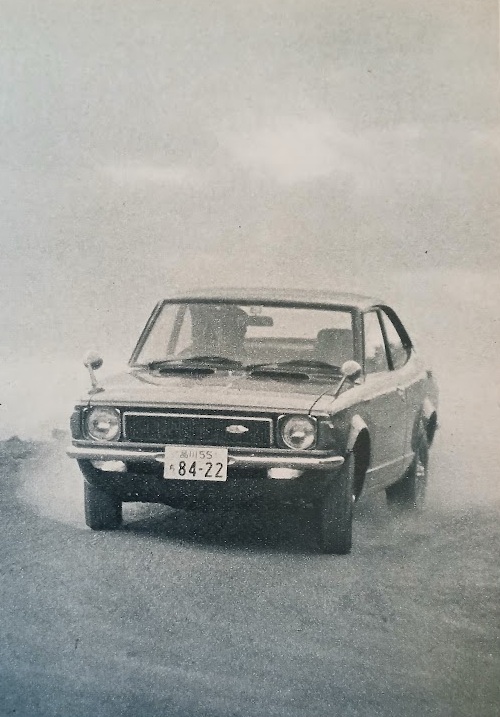
Having said that, on rough roads, the limitations of the live axle and leaf springs become readily apparent. They simply cannot make full use of so much torque. Admittedly, the test car was fitted with Dunlop SP Sport radial tires, which place a priority on ride comfort. But even on relatively gentle hillclimbs, it was easy to provoke wheelspin in second gear, with the tail sliding out in pronounced power oversteer. On steep, muddy grades, first gear delivered so much torque that avoiding wheelspin was impossible.
For anyone wishing to exploit this car’s performance on dirt roads, it seems necessary to fit ultra-grip tires like those used for rallying. In this respect, it is the owner’s responsibility to choose tires capable of transmitting the engine’s power effectively.
Of course, anyone competing in rallies will already understand this, but since wheelspin under power is simply unavoidable with the standard radial tires, it will lead to inevitable calculation errors in the distance-based rallies common in Japan. For the Corolla, which until now has generally suffered from too little power rather than too little grip, this is almost a welcome problem to have. The optional limited-slip differential now appears to be a genuinely worthwhile addition.
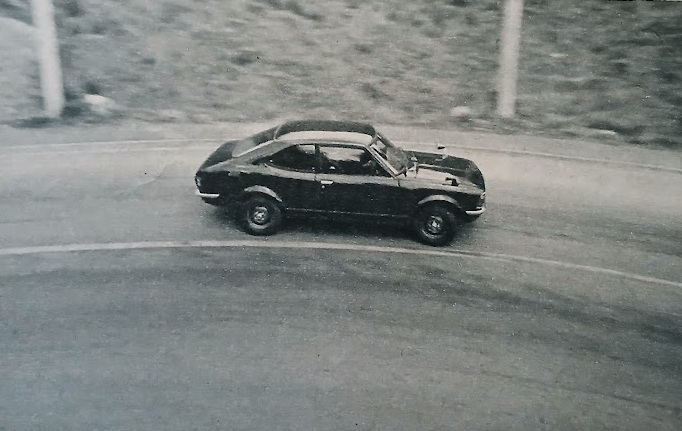
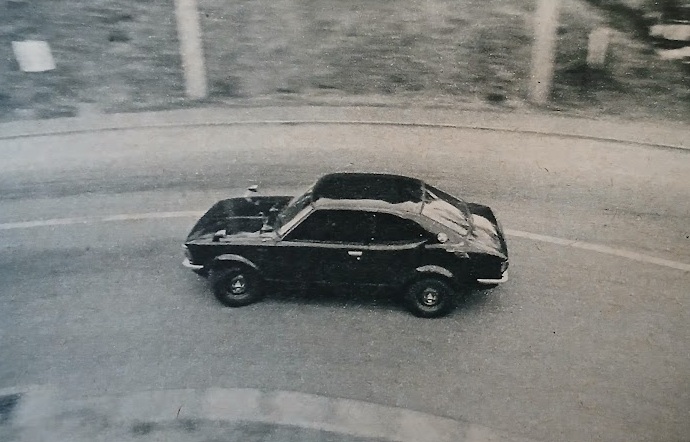
On the other hand, the Corolla’s steering has always been sharper than that of other Toyotas, making it easy to catch slides once they begin. This invites, and rewards, an enthusiastic approach to cornering on dry roads, though on winding dirt roads it requires caution.
As with many high-performance cars, in first and second gear, excessive applications of the throttle must be treated with respect. Once accustomed to using only part-throttle, however, there are no particular handling quirks. The Levin is simply a car that loses rear grip under power. (While this is commonly referred to as “power oversteer,” it is a behavior caused by the driver overwhelming the tires’ grip, not by the steering characteristics themselves.)
1600 DOHC and Five Speeds
The top-speed figures published by Japanese manufacturers are generally only estimates, but there can be little doubt that this car is easily capable of reaching its claimed maximum. The first indication comes while accelerating from a high-speed cruise in fifth gear. Even in top, the Levin responds much like an ordinary 1200 Corolla would in third. Nor does the power fade as speed rises. The speedometer needle continues to climb with overwhelming urge.
Standing-start acceleration interested me less than the car’s sheer driving force above 100km/h. Its acceleration at those speeds is so strong that, if one is careless with the throttle, the result could be a spectacular speeding violation! With such reassuring stability, the sensation of speed is correspondingly subdued, and the driver must keep a constant eye on the speedometer.
As mentioned earlier, the Levin uses the same combination of 2T-G engine and 5-speed gearbox as the Celica and Carina 1600GT, and is also available in a regular-octane gasoline version. The engine itself is already well known: a 1588cc DOHC four with an 85mm × 70mm bore and stroke, producing 115ps/6400rpm and a maximum torque of 14.5kgm/5200rpm. When this engine first appeared in the Celica GT, many expected it to be difficult to handle because peak torque arrived at a high 5200rpm. In practice, however, it was unexpectedly flexible.
Installed in the lighter Corolla, however–and with a shorter 4.30 final-drive ratio–the engine’s abundant peak torque becomes unmistakably apparent. The power-to-weight ratio is just 7.5kg/ps, compared with 9.2kg/ps for the 1400SR. Factor in the shorter final-drive ratio and the difference becomes greater still. In terms of torque per ton, the figure improves from 14.4 to 16.7kgm–a gain of roughly 15%. The difference between a 4.30 and 4.10 final-drive ratio amounts to a further 5%, so in terms of acceleration the overall advantage approaches 20%.
As a result, whenever the tachometer needle is below about 5000rpm, it seems determined to lunge toward 6000rpm regardless of road speed. Put simply, the engine has such an overwhelming reserve of torque that it visibly overcomes the car’s resistance.
For relaxed driving with a passenger aboard, there is no harm in shifting up at around 2000rpm in each gear. When the desire is to go faster, simply let it pull to 6000rpm before shifting.
This Toyota 5-speed gearbox, already familiar from the Celica and Corolla 1400, is particularly easy to use because the lever naturally returns to the third-and-fourth gear gate when released, making fifth gear easy to engage. With this much power in reserve, gears can be chosen almost without conscious thought. Since acceleration in fifth is roughly comparable to that of the 1400SR in fourth, using top gear at relatively low speeds for economical driving is also entirely possible.
For the sporting driver, however, the real pleasure lies in the ever-present sense of reserve power even in fifth gear, which makes the car exceptionally easy to control.
Downshifting directly from fifth to third is equally easy if performed with a light touch, proving especially useful when accelerating hard from a cruise, or in combination with hard braking below about 110km/h.
The approximate maximum speeds in each gear at 6500rpm are 45km/h in first, 80km/h in second, 115km/h in third, and 160km/h in fourth—a near-ideal distribution. At 100km/h, the engine turns approximately 3700rpm in fifth and an even 4000rpm in fourth.
Brakes That Are Difficult to Read
In the end, the one aspect of this super sports model that I did find disappointing was the brakes. Considering its impressive performance, braking ability seems rather out of balance with the rest of the car. The Corolla’s brakes have always been something of a challenge, even when modified for racing, and even as a rally car, they are less than reassuring for the level of performance.
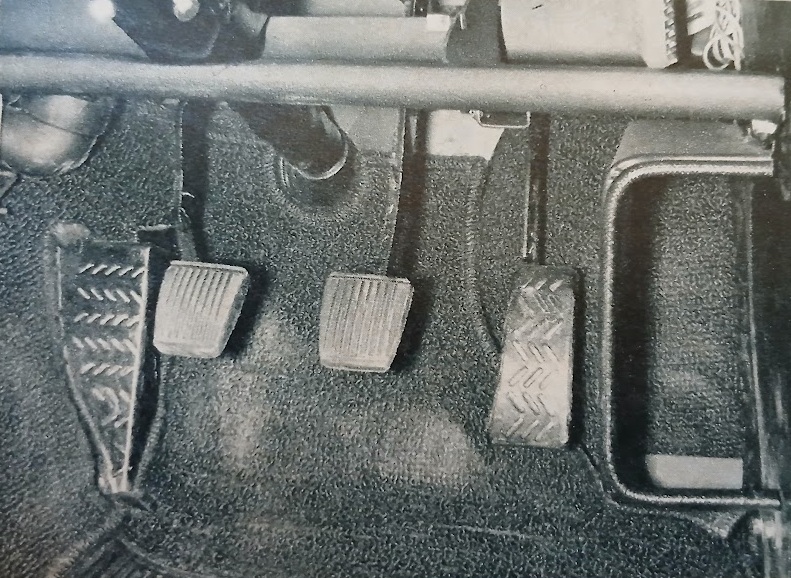
The lack of servo assistance is something one can simply get used to, but the real problem is that it is difficult to judge exactly how much braking force is being produced as pedal pressure is applied. Under full braking the feel is clear enough, but otherwise, even with practice, it is surprisingly difficult to develop a sense of the brakes’ response.
This is a genuine drawback during sporting driving, adding to the driver’s workload even if it isn’t always obvious. Moreover, considering how much the tires have been improved, the brakes cannot be said to have adequately kept up.
In conclusion, all that really remains is improved brakes–or perhaps simply the right choice of brake pads.
In every other respect, however, the Levin is a high-performance Corolla that defies almost every expectation, already surpassing the level expected of a mass-produced sporting car. Better still, ride quality has not become excessively stiff.
If the lessons learned from this specification are eventually carried over to the rest of the Corolla and Sprinter range, the safety of the entire lineup should be improved.
Postscript: Story Photos