Toyota Celica 1600GTV (1972)
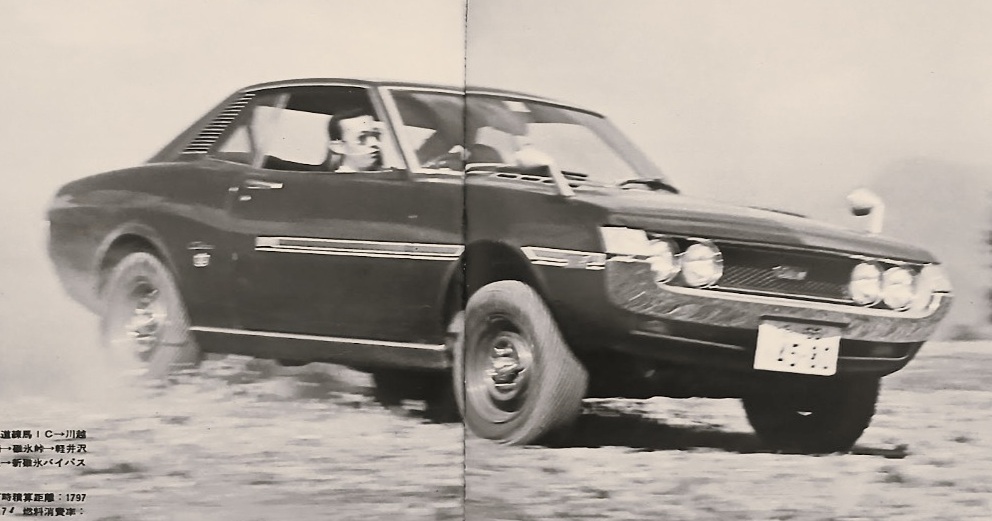
Publication: Motor Fan
Format: Test Drive Report
Date: November 1972
Author: Hajime Iida
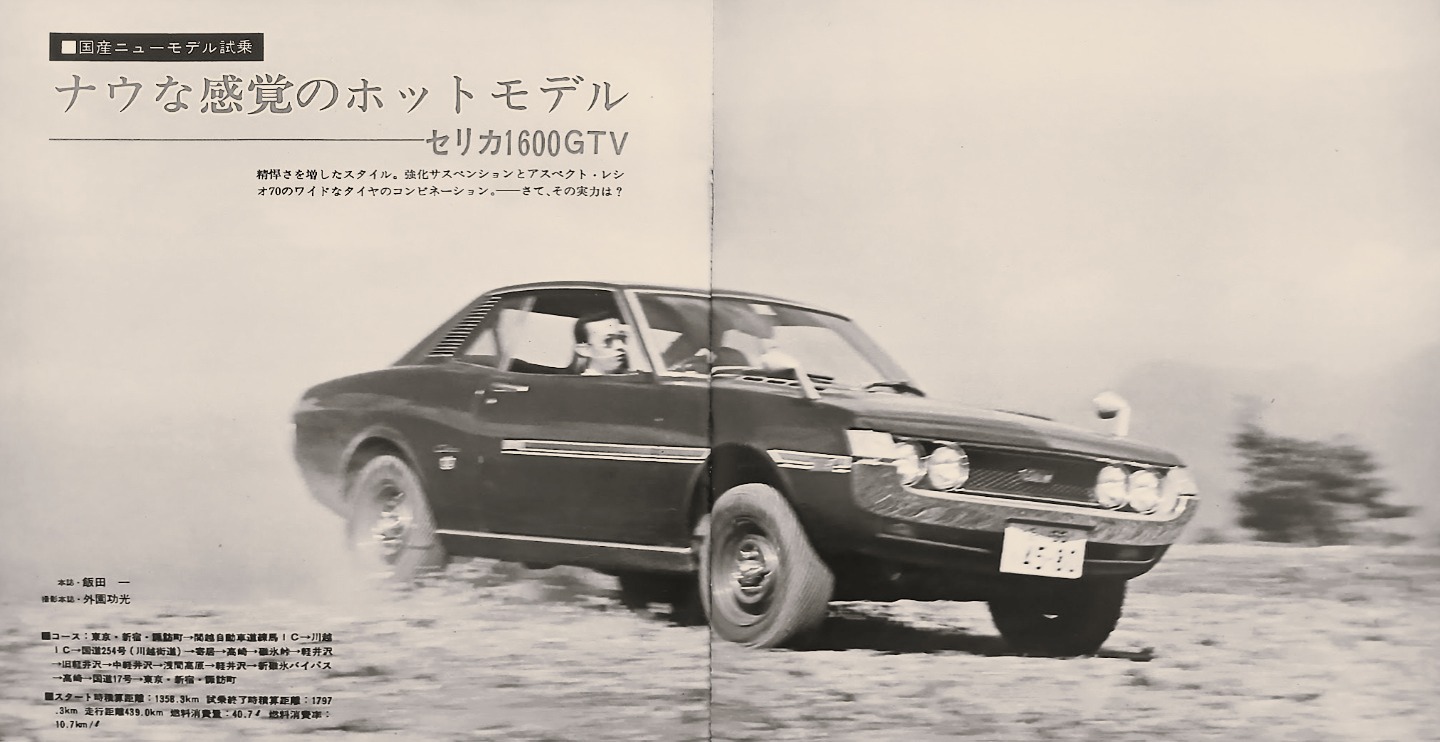
A Hot Model with a Contemporary Character
Sharper styling. A reinforced suspension paired with wide 70-series tires. But how much real performance do these changes deliver?
A Chassis with Wild Appeal
Toyota has been selling the Celica under the slogan, “The Celica’s only rival is the Celica.” Now the company has introduced a new model to the lineup called the GTV. Based on the existing GT, the GTV is focused primarily on strengthening the chassis, with a clear emphasis on driving performance.
The test car supplied by Toyota was finished in a dark olive-green metallic that gave it an unmistakably purposeful appearance. Most Celica GTs have until now been offered in brighter body colors, but this subdued finish, combined with black-painted wide wheels, lends the GTV a distinctly substantial and serious atmosphere.
The GTV designation derives from the Celica’s success in competition, the “V” standing for “Victory.” The Celica has already established itself as a highly capable racing machine, demonstrating both speed and consistency in the 1600cc class, most notably by taking first and second places in the T-II Touring Car class at this year’s Japanese Grand Prix. It is against this backdrop that the GTV has now been introduced.
The basic suspension layout is the same as previous models, but the rear shock absorbers have been retuned, with damping increased by approximately 30% over the GT. Spring rates have also been raised, from 1.7kg/mm to 2.3kg/mm at the front and from 1.7kg/mm to 2.2kg/mm at the rear. The stabilizer bar diameter remains unchanged at 21mm.
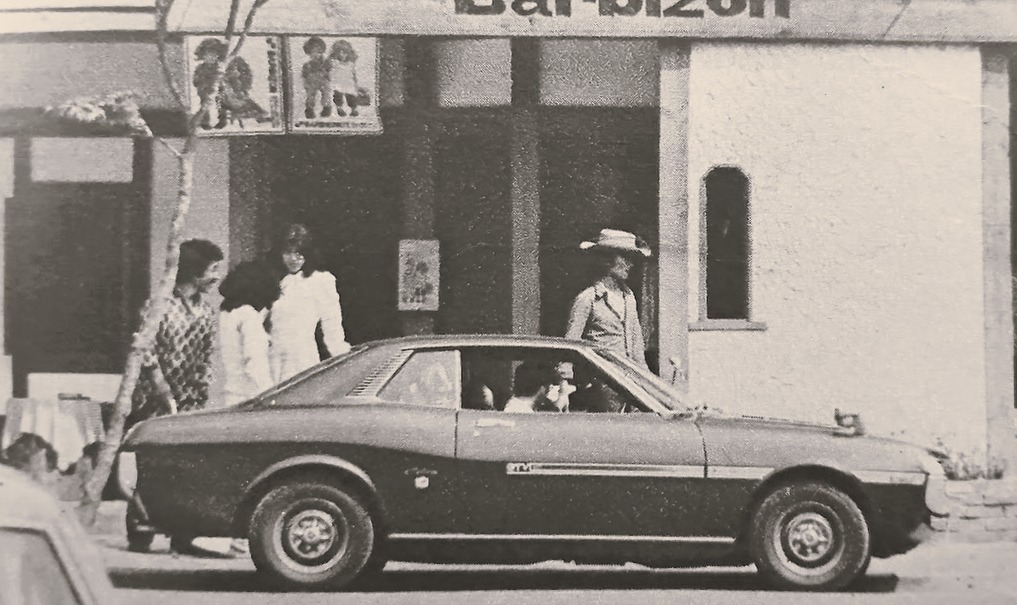
The GTV also comes standard with the now-fashionable 70-aspect-ratio tires. Accordingly, wheel width has increased by half an inch, from the GT’s 4.5J×13 to 5J×13. The combination of 5J wheels and 185/70-section wide tires gives the car an even lower, more stable-looking stance.
To complement the wider tires, the steering has been changed to a variable-ratio system that ranges from 18.0-20.5:1, reducing steering effort at low speeds.
Perhaps because it retains a recirculating-ball steering box, the test car exhibited approximately 5cm of free play at the wheel rim. I suspect this results from the extensive use of rubber bushings, together with insufficient rigidity in the steering system itself. This kind of mild setup, clearly intended to satisfy the broadest possible range of drivers, seems rather out of character for the GTV. On the other hand, considering its wide tires, steering effort during parking maneuvers remains light, while steering effort through high-speed corners is well judged and entirely satisfactory.
A Five-Speed Put to Better Use
I immediately set off for Karuizawa in the GTV. High-speed cruising on the Kan-Etsu Expressway proved exceptionally comfortable, with little wind noise from the body. Straight-line stability at speed has also improved over the GT.
As it is fitted with a 4.111 final-drive ratio, 100km/h in the GTV corresponds to approximately 3800rpm in fourth gear and 3300rpm in fifth (overdrive)—typical figures for this class. Mechanical noise is smooth, characteristic of Toyota’s twin-cam engines, while the exhaust note is equally agreeable at these engine speeds.
Once the tachometer climbs beyond about 4500rpm, however, the engine really begins to come alive, and the exhaust and mechanical noises combine into a raucous concerto. Younger drivers may find this soundtrack part of the car’s appeal, but to my ears the GTV’s note is just a little too dry. Speaking purely for myself, I think the exhaust could stand a slightly fuller, richer note. I’m sure it could produce the kind of sound young enthusiasts would find irresistible.
Power comes from the same 2T-G engine fitted to the GT: a 1588cc twin-cam four with a compression ratio of 9.8:1, breathing through a pair of Solex 40PHH side-draft carburetors. Maximum output is 115ps/6400rpm, with peak torque of 14.5kgm/5200rpm.
This engine delivers a broad range of usable torque from low engine speeds right through to the 7000rpm redline, climbing smoothly throughout the rev range.
The penalty for such flexibility, however, is a rather heavy flywheel, which prevents throttle response from being truly exceptional.
Given the GTV designation, I would gladly sacrifice a measure of low-speed flexibility in exchange for sharper, more eager response. In a model range as broad as the Celica’s, surely there is room for a version with a more uncompromising character, aimed at the most dedicated enthusiasts.
On ordinary highways, the engine has enough torque to complete most overtaking maneuvers without leaving fourth gear. My only request is for more immediate acceleration when cruising at 70-80km/h. The problem is that neither second nor third gear is quite ideal: second runs out of breath too quickly, while third feels slightly too lethargic.
Around town this is seldom an issue, but once traffic begins flowing quickly on the open road, the compromise becomes frustratingly apparent. Ideally, second, third, and fourth gears should be spaced more closely together. As it is, this 5-speed gearbox is essentially the existing 4-speed with an overdrive gear added. As a result, despite having five forward ratios, it offers surprisingly little freedom of choice when driving the GTV in the manner that its name suggests. One can only hope that Toyota will eventually provide gear ratios better suited to the GTV’s intended character.
Today, when so many cars seem determined to be impeccable all-rounders, a model that proudly claims to be the hottest of the range deserves a stronger personality. Rather than trying to satisfy the tastes of 95% of buyers, perhaps the time has come–at least in a car like this–to let the remaining 5% of real fanatics have their way.
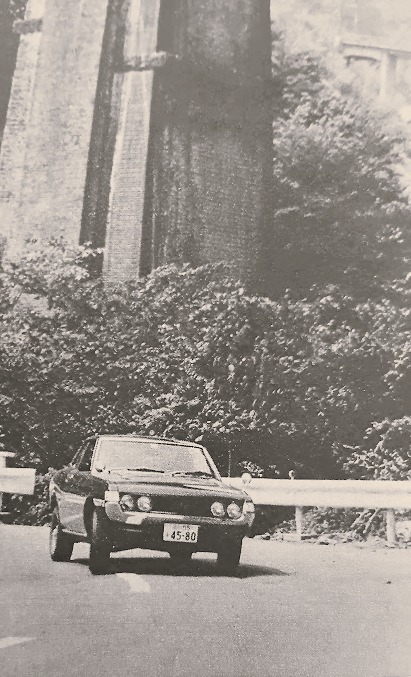
The opening of the Usui Bypass last year has left the old road comparatively free of traffic, and its succession of tight corners has the feel of a hillclimb course. This is exactly the sort of terrain in which the GTV excels. Working hard through the bends in first, second, and third gears, the GTV comes alive like a fish returned to water.
The test car was fitted with Bridgestone RD102 185/70HR-13 tires, the same tires we evaluated in our August tire test. In this matching of tires and uprated suspension, the tires come out slightly ahead.
As mentioned earlier, the suspension’s increased damping force has produced a remarkably well-controlled chassis. Ride quality is not as firm as that of the Trueno or Levin, and for everyday use, it is probably at about the practical limit.
The steering characteristics have also been improved. The pronounced understeer of the GT has been largely tamed, leaving the GTV with handling that is nearly neutral. The result is a high degree of controllability. The combination of the 21mm anti-roll bar shared with the GT and high-grip RD102 tires allows a fair amount of body roll, but this never becomes unsettling.
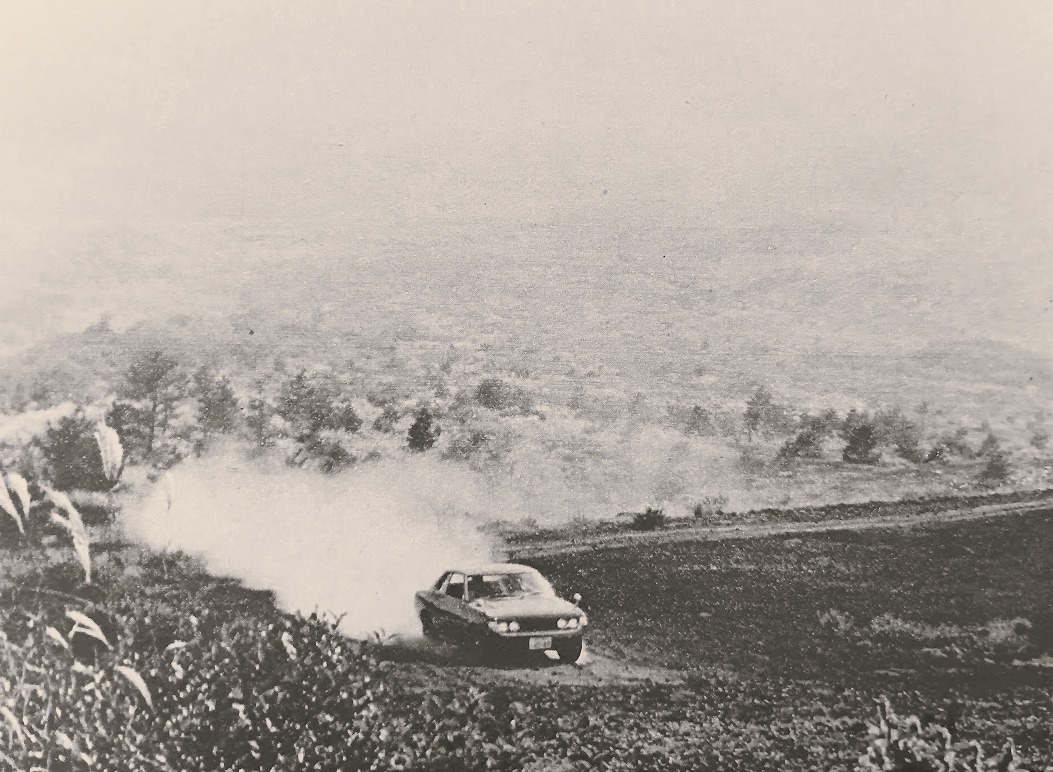
On paved roads, the hard suspension demonstrates its road-holding ability to excellent effect. Unfortunately, when driven over the dirt roads of the Asama Highlands, the tires proved simply too wide to allow the chassis to realize its full potential. In the end, the GTV is a model best suited to well-paved roads. Then again, owners are free to choose tires that best suit their intended use. Let us simply say that Toyota has thoughtfully left us something to experiment with ourselves.
Equipment for the Enthusiast Driver
The basic interior design remains unchanged from the GT, but the latest minor change brought the addition of a larger center console. Intended to support more sporting driving, it incorporates a new horizontal oil-temperature gauge.
Unfortunately, this gauge, recessed into the center console, is extremely difficult to read. It might have been better to incorporate it into the water-temperature gauge instead.
The 360mm leather-wrapped steering wheel is new as well. Its rim thickness feels just right, contributing to excellent steering feel and making the car a pleasure to handle.
Other newly introduced features include a speed warning system that sounds a chime above 110km/h, an ignition key that cannot be removed unless the release button is pressed, and a two-stage safety door lock.
Let me conclude by saying this: the Celica GTV is, above all, a car intended for smoothly-paved roads. The wide tires certainly look good, but they bring enough disadvantages under all-round driving conditions that their stylish appearance can be said to come at the expense of the car’s versatility.
Fuel consumption over the 439.0km round trip to Karuizawa, including city driving, was measured by the full-tank method. The GTV consumed 40.7 liters of premium gasoline, returning 10.7km/l–an average figure for this class.
At its Tokyo list price of 863,000 yen, I would not consider the GTV expensive. Even so, it would be even more appealing if Toyota were to offer an inexpensive sports kit that owners could select according to their own tastes. That, I suspect, would make the car twice as enjoyable.
Postscript: Story Photos