Toyota Celica 1600ST vs. Alfa Romeo 1750 Berlina (1971)
Publication: Motor Fan
Format: Group Test
Date: July 1971
Author: Joji Obara
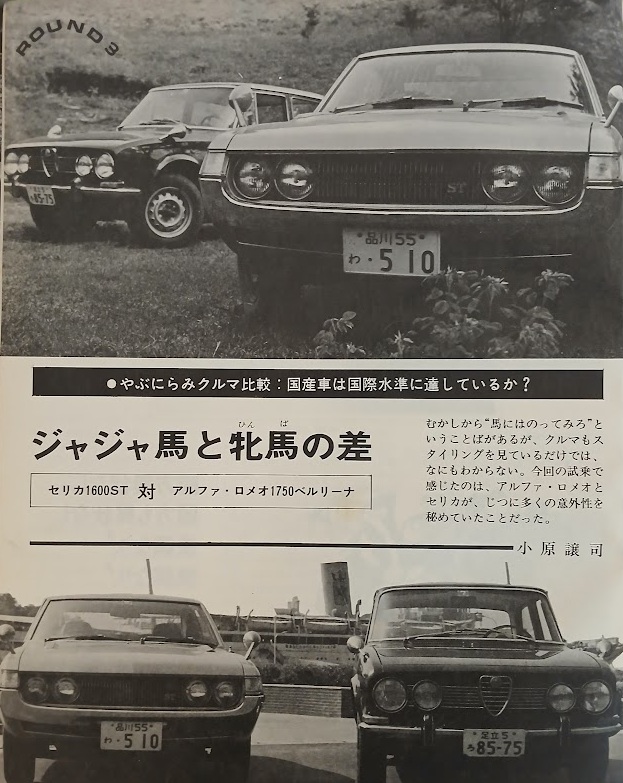
Have Domestic Cars Reached the International Standard? Round 3: The Difference Between a Wild Stallion and a Mare
There’s an old saying that goes, “You have to ride a horse to really know it.” The same applies to cars–just looking at the styling tells you almost nothing about them. What this test drive revealed was just how full of surprises both the Alfa Romeo and the Celica really are.
Prologue: A Personality That Doesn’t Match the Face
“A small car is just a small car–hardly worth the effort.” That used to be the American auto industry’s mindset. But lately, their panic over rising competition is difficult not to notice. It started with the European “beetle problem” (from Volkswagen) and, more recently, they’ve even started treating Japanese compacts like pests.
Still, this should come as no surprise. Toyota has overtaken Volkswagen in production and now ranks just behind GM and Ford, threatening to join the world’s Big Three. Naturally, the Americans are scrambling to defend themselves.
For this test, we pitted Toyota’s new Celica against a representative from Italy’s prestigious Alfa Romeo. The Celica is a fresh, sharp, newly-designed specialty car, while the Alfa Romeo carries six decades of history and countless racing victories–a truly aristocratic sports machine. Both are small cars that punch well above their weight, the kind of models that can hardly be faulted for their high performance… or so we thought.
To be honest, though, we may have chosen the wrong matchup for this “deliberately provocative” comparison. Initially, we planned to have the Celica 1600GT face off against the Alfa Romeo 1750GT Veloce. But after considering practical matters such as engine displacement and family use, we substituted in the Alfa 1750 Berlina (with a more family-friendly character) and the Celica ST (with its OHV engine and less sporting edge than the DOHC GT).
The result? The Alfa, which we expected to be the tame family car, turned out to be a wild stallion, while the Celica–with its sporty looks–turned out to be an incredibly easy, forgiving car to drive.
Style: Eyes of Envy and Curiosity on the Celica
The name “Celica” is apparently derived from Spanish, with a meaning along the lines of “celestial,” “majestic,” or “mysterious.” Its emblem evokes a dragon soaring freely through the sky. From the styling alone, I approached the Celica expecting something lively and energetic.
By now, readers probably know the Celica’s shape drew inspiration from Toyota’s experimental EX-1 prototype–displayed at the 16th Tokyo Motor Show in October 1969, and intended to hint at the company’s future direction. So, let’s turn to the Alfa Romeo.
The name “Alfa Romeo” has a romantic ring to it, which the cars themselves live up to. The company got its start in 1906 as Società Italiana Automobili Darracq, assembling French Darracqs. After producing its last Darracq in 1910, the company brought in chief technician Giuseppe Merosi and released the first Alfa in 1911. Entrepreneur Nicola Romeo later bought the company, combining ALFA (the company’s initials) with his own surname, and in 1915, Alfa Romeo was born.
The 1750 Berlina in this test has a sentimental story behind its name. Normally, “1750” would suggest a 1750cc engine, but this Berlina actually displaces 1779cc. The number comes from the 1929 Spider Touring 1750, a Grand Sports model that gained fame in races between 1928 and 1930 alongside drivers like Achille Varzi and Rudolf Caracciola. That model became Alfa Romeo’s first mass-produced car.
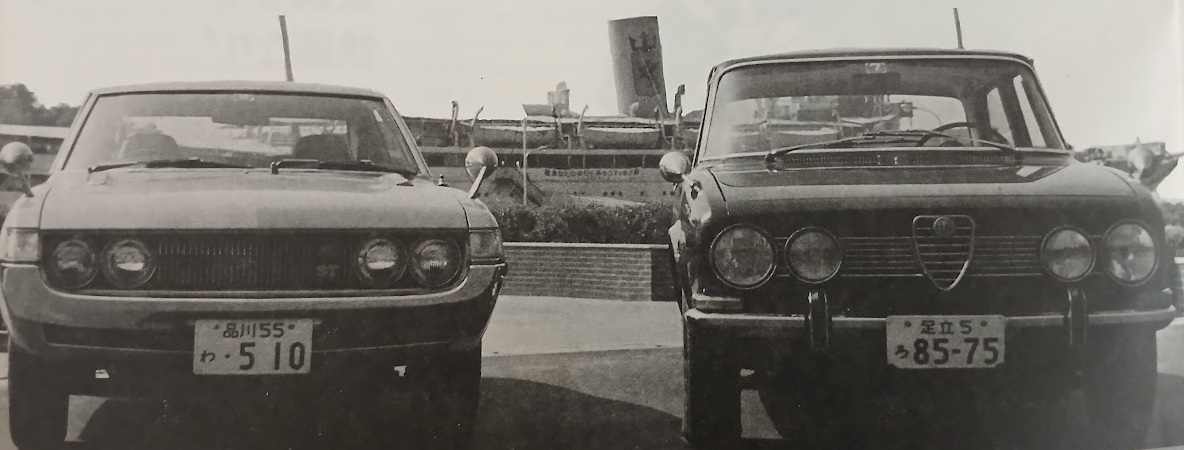
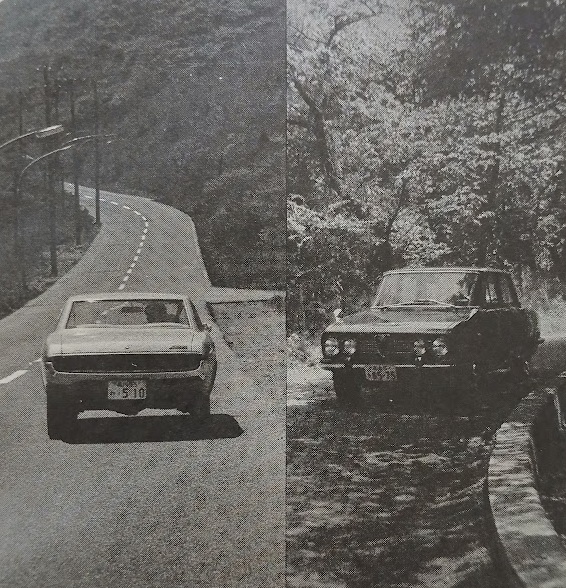
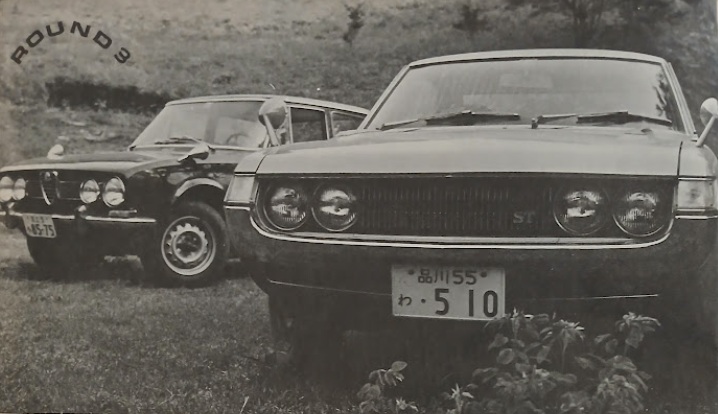
Stylistically, these two cars could hardly be more different. The Celica feels futuristic, almost ahead of its time, while the Alfa Romeo’s use of angles brings to mind the word, “unusual.” Bertone’s bodywork is striking, but not gimmicky–the clean, straight lines are surprisingly straightforward, and that is exactly what makes them “unusual.”
The curvature of the hood and front fenders, combined with flat panels elsewhere, is impressively clean, looking unlike any other car. While many designers these days stick superficial accents on hoods, the Alfa takes a more restrained approach, which only enhances its beauty.
The Celica’s hood line is sleeker, but its designers added small flourishes–louvers, bulges–that make it a bit busy. It might actually be better to skip the optional hood vents for a cleaner look.
The front grille is another contrast. The Alfa Romeo retains its classic shield-shaped grille with horizontal bars, giving the car a noble, refined “mask.” The Celica’s, by contrast, is futuristic and technical, with echoes of racing air scoops–but it is also a bit reminiscent of older Chrysler grilles, once mocked as the “dollar grin” for their toothy smile. Perhaps now, the Celica deserves a nickname like “yen grin."
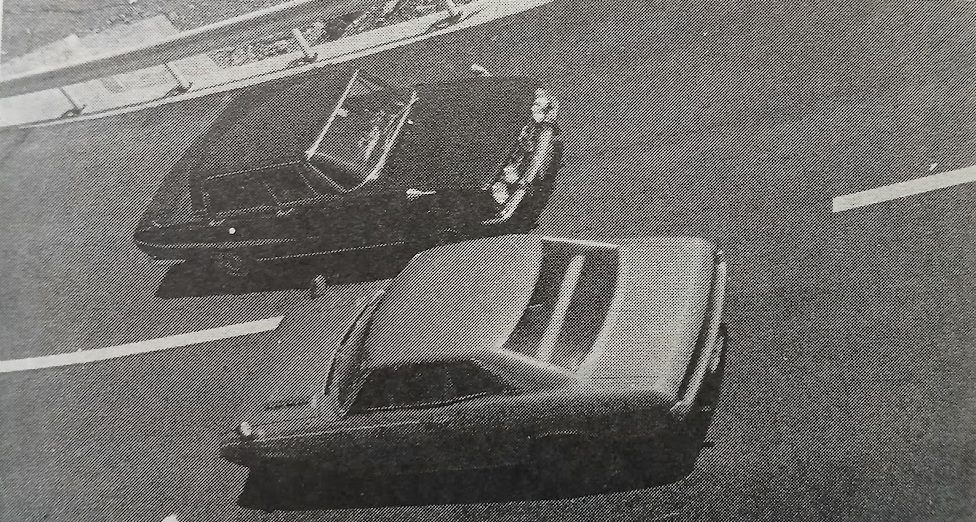
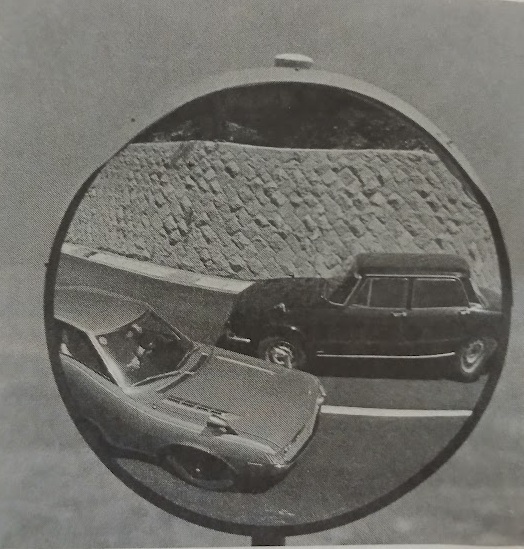
In terms of overall shape, the Celica is low, wide, and aerodynamic; the Alfa is taller, a bit boxy, and somewhat old-fashioned.
Even though the Celica has been on the market for some time, people gawked at our test car from every angle with envy and curiosity. A foreigner in a Corona even rolled up and said, “Oh! A Celica, that’s beautiful!” Perhaps it reminded him of the old Carina commercial: “Am I really that interesting?” And yes, the Celica is beautiful. The built-in bumpers, the way the roofline meets the body side–these details are clearly designed to appeal. Yet the rear view is less successful. The integrated bumper makes the rear look oddly tucked-up, almost like an Edo-period hairstyle–it looks ready to blast exhaust at anyone who gets too close. I can’t say I care for it.
The Alfa, meanwhile, has an upright, straightforward appearance almost like that of the old Colt, or perhaps a child’s drawing of a car. It’s a proper boxy notchback sedan, with only the slightly cut-off tail hinting at aerodynamics. I worried it would struggle in crosswinds on the expressway, but it turned out to be surprisingly stable and enjoyable at speed.
Interior: Alfa’s Pedal Layout Is Top-Notch
To begin with the verdict, both cars earn solid marks for interior design.
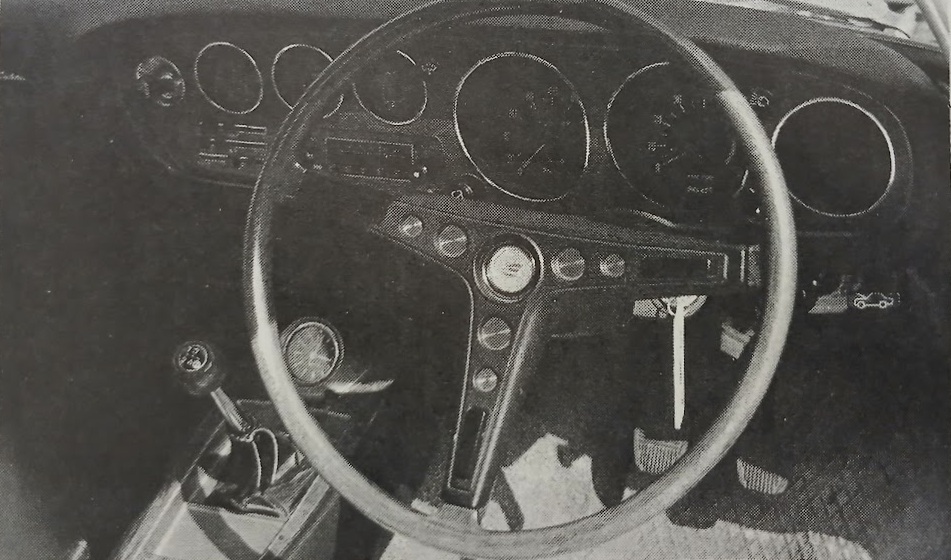
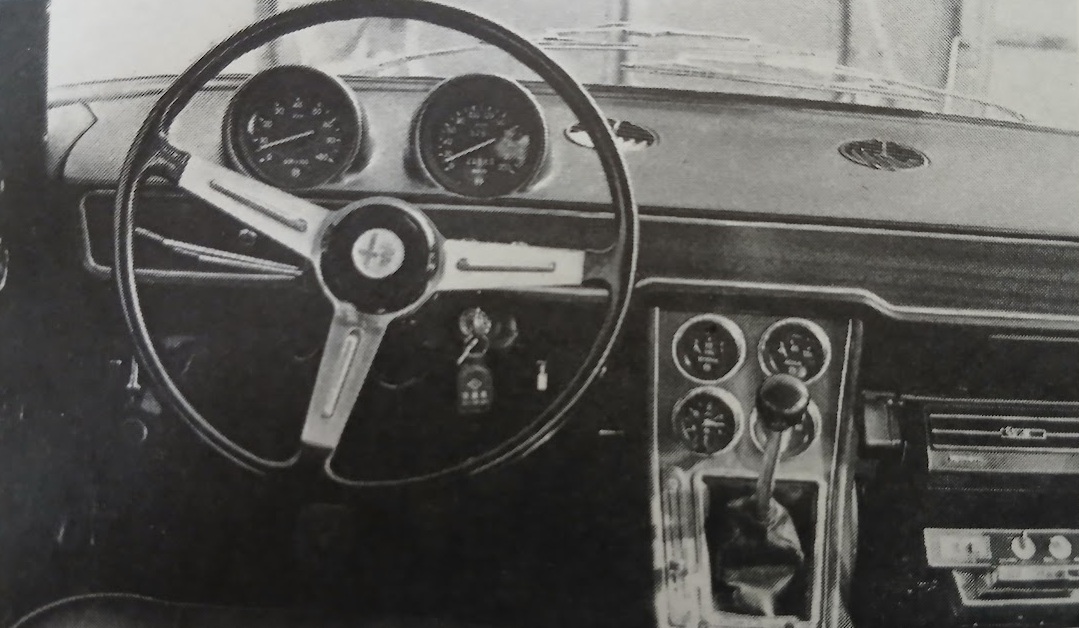
The Celica we tested came with the Custom SW package, which brings a richly styled instrument panel with a full set of gauges, emphasizing functionality. The Alfa Romeo, by contrast, is simpler: a large round tachometer and speedometer sit directly ahead, with the auxiliary gauges grouped in a T-shaped console, angled slightly toward the driver. This layout, too, can be called highly functional.
The switchgear follows the same pattern. The Celica uses pull-type switches on the dashboard, while the Alfa Romeo consolidates the lighting controls into a rotary stalk on the steering column–again, the emphasis is on function.
The Celica’s high-back seats fit very well. The Alfa Romeo’s have no headrests, and the seatback reclines using only a fine-tune mechanism, which makes larger adjustments a bit of a nuisance–but once set, it provides a comfortable driving position. Because the Celica is a two-door coupe, the cabin is inevitably a bit tight, with limited headroom. The Alfa Romeo, on the other hand, feels spacious and open.
Details like the window regulator handles are better positioned in the Celica and easier to use. However, it suffers from the same awkward pedal spacing I noted in the Crown. The Alfa Romeo’s pedal arrangement, by contrast, is excellent. Among all the cars I’ve driven, the Alfa Romeo’s pedal feel is outstanding, and can only be described as superb. The clutch is extremely heavy–probably too much so for some female drivers–but the throttle and brake have a delicacy of feel that’s hard to put into words. Surprisingly, it even has a hand throttle, allowing the idle speed to be adjusted from the driver’s seat.
The steering is another story. The Alfa Romeo’s steering is markedly heavy, making low-speed handling a chore–you have to really put your back into it, applying brute force to the wheel, and the turning circle is large. The Celica, by contrast, has light steering and minimal pedal resistance, which makes driving feel almost effortless.
Performance: High-Speed Cruising Shows the History Gap
The owner of the Alfa Romeo we tested happened to be quite an enthusiast, so it was fitted with cold-type spark plugs. That meant it had to be driven at fairly high revs–but from my perspective, that only made it more enjoyable.
I was once discussing Alfa Romeos with a contract racer from a certain manufacturer. He asked, “Why do you like Alfas? I’ve never driven a car that snaps into oversteer as suddenly as they do. I can’t stand them.” I replied, “That’s exactly what makes them great. When the rear breaks loose, you catch it with a quick countersteer and power through the corner–that’s real driving. It’s masculine, it’s cool–don’t you think? He just sighed and said, “Honestly… you’re just young.” (He’s actually a full generation younger than I am–but never mind.)
As mentioned at the beginning, the Alfa Romeo is very much a wild horse. Heavy steering, an engine that needs to be kept singing to show its true performance, four-wheel disc brakes that seem unresponsive at first but come alive at high speeds, a 5-speed gearbox–this is a car that prioritizes sporting performance to the point where you wonder if it really is a family-style Berlina at all.
The Celica, by contrast, offers mild understeer, easy handling, and rear grip that almost never lets go. It’s safe and agreeable–almost too agreeable, to the point of being a little dull.
What surprised me was this: the Alfa Romeo, with its somewhat feminine styling, delivers thoroughly masculine performance, while the Celica, with its muscular, almost aggressively “manly” looks, turns out to be quite feminine in its behavior.
For sustained high-speed running, with the engine spinning freely, the advantage clearly goes to the Alfa Romeo. At a more relaxed cruise, however–around 60–100km/h–the Celica is wonderfully quiet and comfortable. At these speeds, the Alfa Romeo is still in third gear at best, the engine revving noisily. With its numerous gears and chains–and plenty of aluminum components–it’s the kind of car that could make even the hard-of-hearing complain, “Too loud!” You can almost imagine an exchange like this: “Granny, is that car coming up behind us an Alfa Romeo?” “No, Gramps, that’s an Alfa Romeo.” “Oh, is that so? I thought it was an Alfa Romeo.”
Even at idle, the transmission emits a low, purring rumble, as if a cat is hiding under the shift-lever boot.
But once speeds exceed 120km/h, the story changes completely. The Alfa driver shifts into fifth, the engine settles at around 3500rpm, and the car glides along at 120km/h–smoothly and surprisingly quietly. At the same speed, the Celica–at around 4500rpm in fourth–is practically becoming a noisemaking machine, with a distinct feeling of unease. Of course, drivers as insensitive as myself won’t shy away from 120km/h in the Celica–but the average driver would likely be unnerved by the engine noise, and hesitate to push any further.
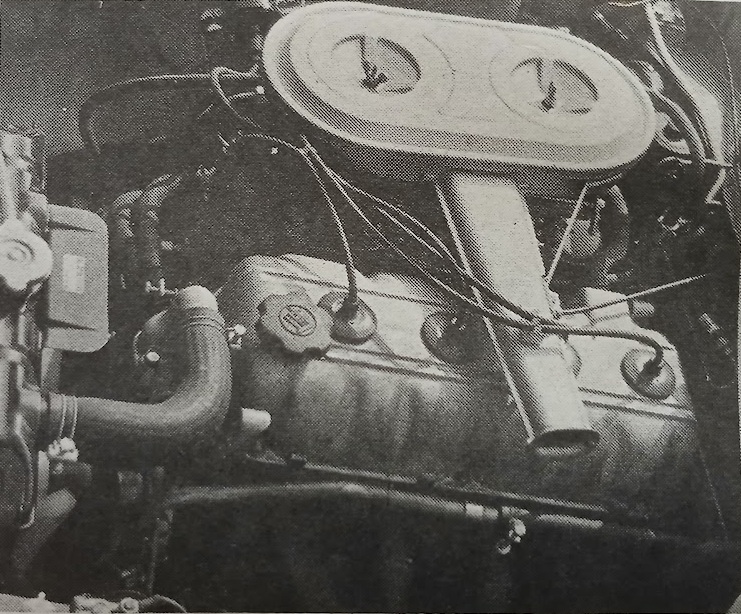
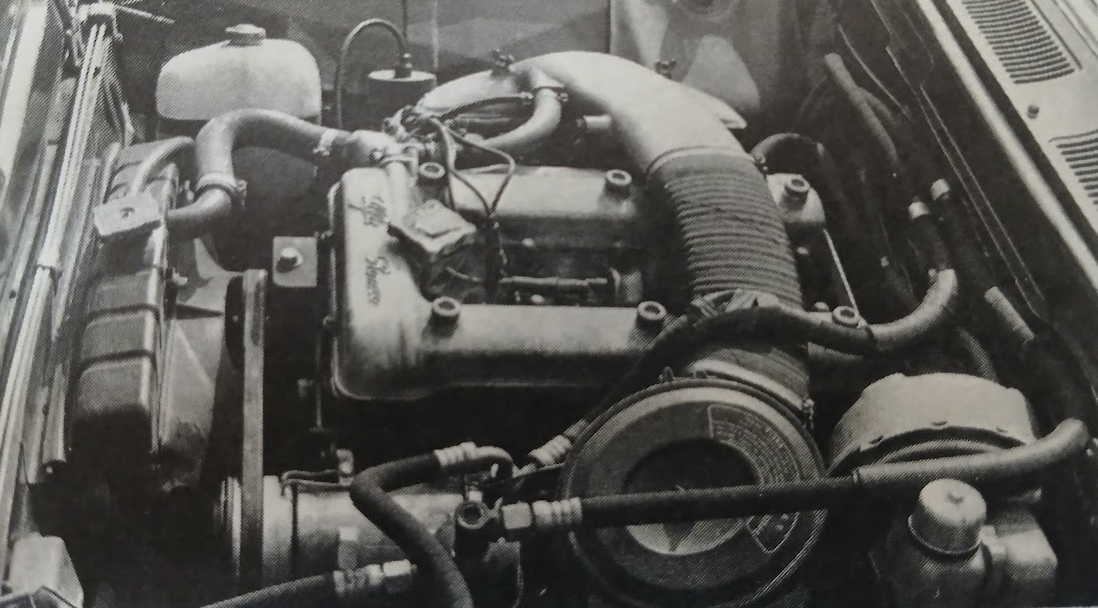
The Alfa Romeo, by contrast, goes on to reach 160km/h at around 4500rpm in fifth, still delivering a pleasant exhaust note and no sense of strain at all. Despite its long-stroke design, the engine revs freely. With a maximum torque of 19.1kgm at 3000 rpm, it accelerates strongly even above 100km/h, allowing for smooth and effortless overtaking.
The Celica, for its part, delivers excellent standing-start acceleration, covering 0-400m in 17.6 seconds–just slightly ahead of the Alfa Romeo. But when it comes to sustained high-speed cruising, it feels as though it runs out of breath. You find yourself saying: “don’t give up, you can do it!”
In conclusion, the Celica is a futuristic-looking, broadly appealing car–a specialty model with a strong emphasis on safety. One suspects it may sell well enough to make the American industry turn pale with fright.
The Alfa Romeo, on the other hand, may wear a classical, almost understated suit courtesy of Bertone, but beneath it lies a wild, temperamental machine. It’s the kind of car that certain enthusiasts will adore, but it demands respect–it will bite those who mishandle it.
So–which would you choose?
Postscript: Story Photos