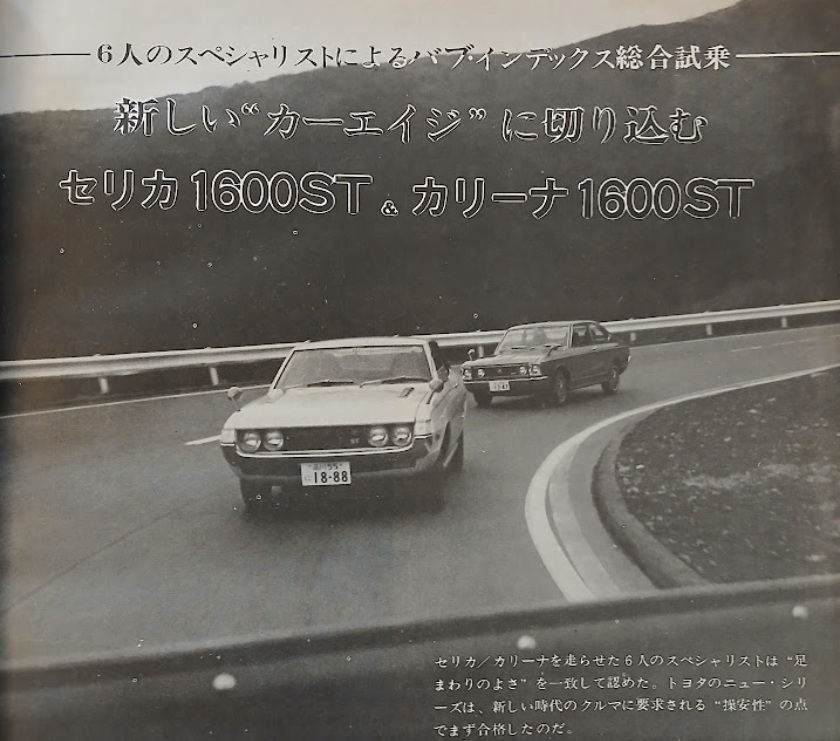
Toyota Celica 1600ST and Toyota Carina 1600ST (1971)
Publication: Motor Fan
Format: “Bubble Index” Road Test
Date: January 1971
Author: Osamu Mochizuki, Katsuzo Kageyama, Shigeki Asaoka, Yasuhei Oguchi, Reiko Ikuuchi, Kensuke Ishizu
Cutting Into the New “Car Age”
The six specialists who took the Celica and Carina out on the road were unanimous, first and foremost, in recognizing the excellence of their chassis and suspension. In terms of the steering and stability demanded of cars in this new era, Toyota’s new series earned a passing mark right from the beginning.
Outstanding Handling and Stability
“What’s this car called?” “It looks just like a foreign car…”
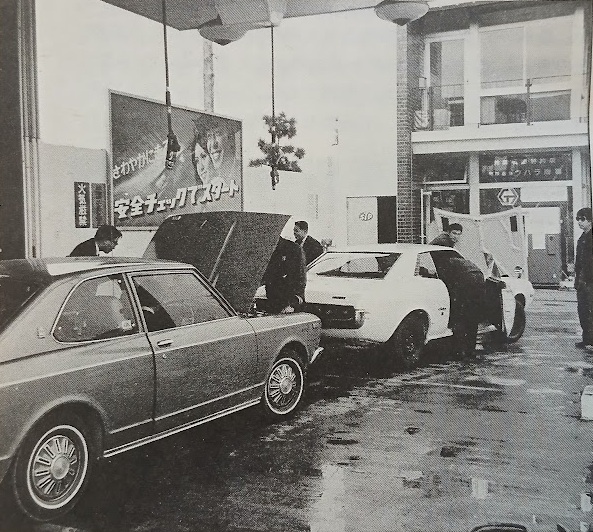
The Celica and Carina that we drove from Tokyo to Hakone for this “Bubble Index” comprehensive test were quickly surrounded by curious onlookers wherever we stopped—from gasoline stations to the parking areas of roadside restaurants.
The reaction was hardly surprising. The Celica and Carina had been announced on October 23, just ahead of the Tokyo Motor Show, but sales were not scheduled to begin until December 1. In other words, when this test drive took place in mid-November, the cars had not yet appeared on the streets as production models.
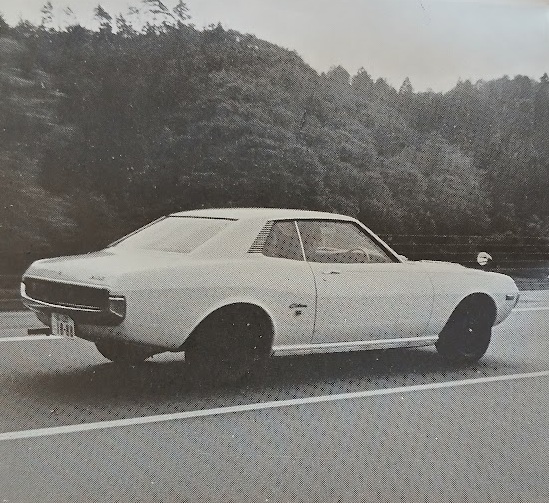
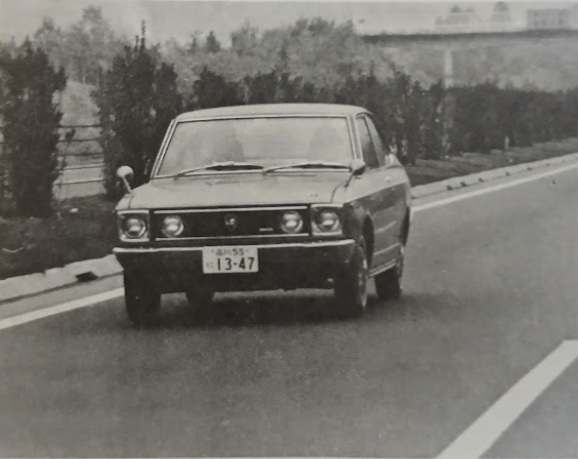
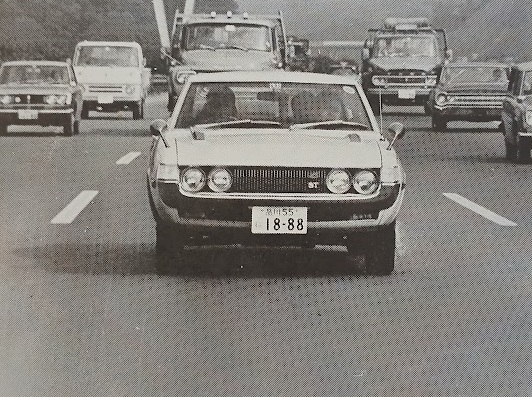
The two test vehicles were a yellow Celica 1600ST and a light-blue Carina 1600ST. Both were powered by a 1588cc water-cooled inline four-cylinder OHV engine. Equipped with twin carburetors, the unit produces 105ps at 6000rpm.
As is widely known, the Celica lineup includes an even hotter model fitted with a DOHC engine. The ST tested here occupies the position just below it in the range—a “medium-hot” model, one might say. The Carina ST, meanwhile, stands as the top-grade model within its own series.
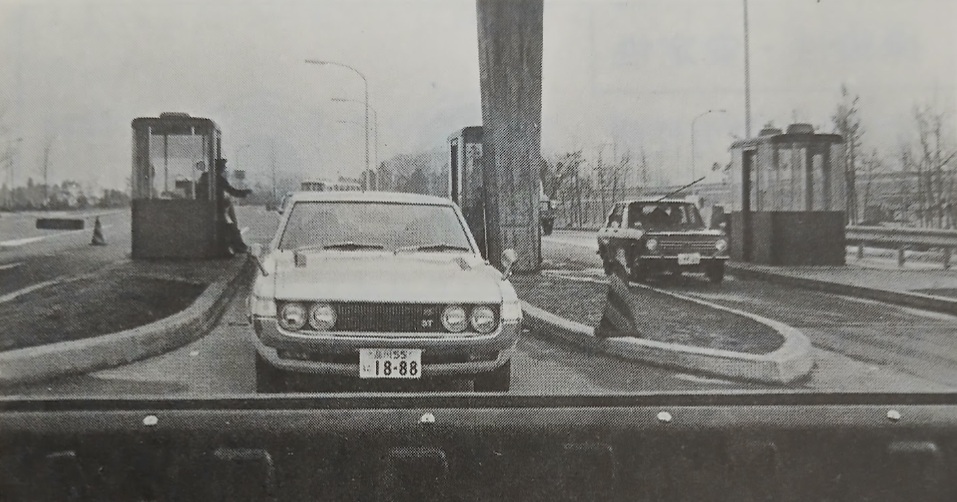
The weather was overcast with occasional sunshine. As usual, the test group set off from the Drive-In Fantasy just before Seta on National Route 246. From there the course ran along the Tomei Expressway from Tokyo IC to Gotemba IC, over Otome Pass, up the Hakone Turnpike, back again via Otome Pass, and finally onto the Tomei from Gotemba IC for the return to Tokyo. (Instrumented tests were conducted mainly with the Celica.)
So—what did the six specialists think?
The first point on which all six immediately agreed concerned the car’s handling and stability. “It’s quite different from the usual for Toyota cars,” they remarked. The details are discussed in the section on handling and stability, but the principal observations may be summarized as follows:
- Road holding is exceptionally good.
- The rear end does not swing out in corners.
- The steering feeds back firmly and decisively.
- After a hard back-and-forth overtaking maneuver, the car quickly regains its composure.
For reference, the Celica and Carina employ strut suspension at the front, while the rear uses a rigid axle located by a four-link arrangement with a lateral rod. This four-link system has already been adopted on models such as the Crown, but in the case of the Celica and Carina it works particularly well in combination with the relatively wide rear tread for cars of this size, further improving both handling and stability.
Taking both style and substance into account, which is better, the Celica or Carina?
Among the six specialists, the majority favored the Carina. However, this came with a qualification: “Younger drivers with a stronger taste for leisure and fun would probably choose the Celica.”
Power Performance: Relaxed In High-Speed Driving (Osamu Mochizuki)
The Celica 1600ST we tested had covered less than 200km, so the engine had not yet been fully run in. Fortunately, the Carina that was prepared to accompany it had already accumulated about 3,000km, and its engine seemed to be delivering its full potential, revving noticeably more freely. Since both cars use exactly the same engine, our evaluation here blends impressions from the two, with a certain amount of guesswork added.
The Celica’s frontal projected area of 1.62m² is among the smallest in this class, and its reported air resistance figure of 0.002 is also remarkably low for a sedan-type body. These factors become particularly advantageous at high speeds. For that reason, it was somewhat surprising that there was quite a lot of wind noise despite the car’s flowing body lines. The primary cause appears to be imperfect sealing of the side windows, and the sound was consistently sharper than in the Carina.
With an output of 105ps, the model equipped with the 4-speed transmission is said to reach a top speed of 175km/h. This figure can be accepted more or less at face value. As for the engine itself, there is a slight peculiarity in its power characteristics. Because the carburetor is a two-barrel type, the moment when the secondary venturi comes into operation produces a very brief pause resembling engine hesitation, which costs the car a little in acceleration. When the throttle is opened fully from low engine speeds, this phenomenon appears at around 3500rpm. Apart from that, however, it is an easy engine to use despite its relatively high output. Perhaps because of its short-stroke design, its response is not sharp below about 4000rpm, but it pulls well from around 1500rpm, and will maintain 40km/h in top gear perfectly smoothly. At higher revs the engine displays truly impressive extension.
Mechanical noise and exhaust sound are both subdued, and even prolonged running at around 150km/h should not unduly increase driver fatigue. At 100km/h the car can be driven in a very relaxed manner.
With low aerodynamic resistance and light weight–both excellent qualities for high-speed performance–it seems slightly regrettable that the standard transmission is only a 4-speed. The availability of a 5-speed gearbox as an option can therefore be considered a wise provision.
The driving position itself is agreeable, though the forward field of vision feels somewhat restricted. In particular, the left-front diagonal view is significantly hindered by three overlapping obstructions—the rearview mirror, the windshield wiper, and the fender-mounted mirror. In city driving, this requires the driver to set the seatback more upright to sit with the upper body raised.
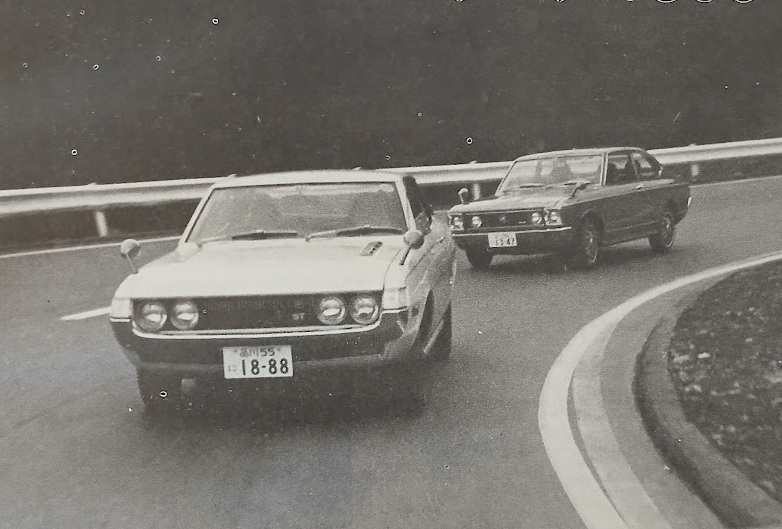
Road holding is excellent, and understeer is in the moderate-to-mild range, allowing it to adapt readily to brisk driving. The suspension springs are relatively soft at 1.7kg/mm both front and rear, and in extreme cornering the body rolls considerably. Under ordinary driving conditions, however, the low center of gravity, wide tread, and the effect of the relatively thick front stabilizer bar keep the roll rate modest.
Admittedly, the test car was fitted with optional radial tires. Even taking that into account, though, this car stands at a level surpassing previous Toyota models. In terms of road holding and handling stability, it comes very close to the balance that is generally considered ideal for Japanese cars.
“Even on the mountain roads of Hakone, it’s possible to climb almost entirely in top gear.” —Oguchi
Handling and Stability: Well-Matched to Its Strong Performance (Katsuzo Kageyama)
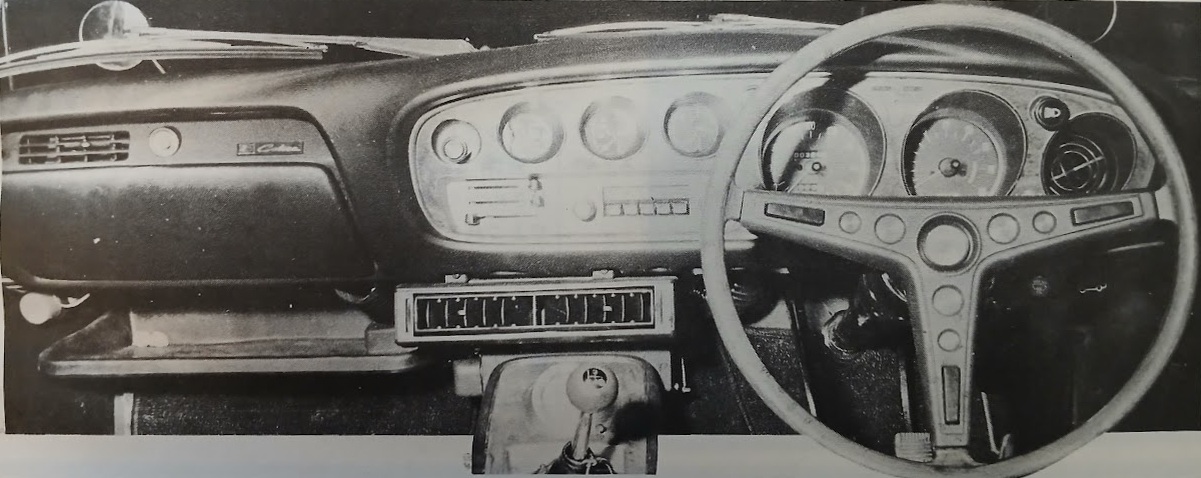
From the Celica’s driver’s seat, the first thing that catches the eye is the beautifully finished woodgrain dashboard, whose subdued tone gives the cabin a refined atmosphere. The speedometer and tachometer are large and easy to read, while the other round gauges are arranged facing toward the driver, making them equally legible. This thoughtful layout is quite impressive.
The various switch knobs are spaced widely apart, perhaps to prevent any confusion in operation. The gear lever is positioned close to the steering wheel, with an appropriate throw length that makes it easy to handle. The pedal arrangement is also good. The seat offers a very wide range of fore-and-aft adjustment. One small complaint is that there is little space to the left of the clutch pedal, leaving no convenient place to rest the left foot.
As for visibility, the rearward view leaves something to be desired, though it is still acceptable overall. Usually when one climbs into an unfamiliar car and sets off for the first time, there is some initial awkwardness—the controls feel unfamiliar, and the car never quite settles into a comfortable rhythm right away. With this car, however, the feeling was quite different. From the moment we began driving, it felt as though we had been accustomed to it for a long time already. Such an impression is rare, and I believe it results from the careful attention paid to the placement, stroke, and operating effort of the various controls.
The steering is light, yet the rigidity of the steering system feels entirely sufficient. In fact, the feel is quite different from that of previous Toyota models. The steering also returns well after cornering, leaving little to criticize.
Even when pushing the car a bit through curves, grip remains strong and the rear end shows no tendency to break loose. The excellent road holding and high lateral rigidity probably owe much to the distinctive design of the rear suspension. The convergence of yaw and roll–whether when changing lanes or when straightening out after a turn–is also extremely good. In this respect, I think the car even surpasses the larger Corona, which is a class above it.
For truly sporty driving, however, the suspension could stand to be a little firmer. That said, this car is not intended to be a GT, so it is only natural that it has been tuned to this level.
The brakes are one of the car’s particularly outstanding features. They are light in operation yet very effective, with excellent controllability. Despite their quality, however, one annoyance appeared during city driving: each time the brake pedal was pressed, a sharp metallic “click” could be heard. We were told this was the sound of the brake-light relay, but it is something that ought to be addressed.
The Carina and Celica possess ample power and strong performance, but the steering and suspension have clearly been developed just as carefully to match this capability. The result is a well-balanced design in which performance and handling stability complement one another very effectively.
Despite its advanced styling, this car is not intended to be a conventional sports car. Rather, the aim appears to be a softer kind of “personal” car–one that anyone can drive with ease. Judged from the standpoint of handling and stability, that objective has been successfully achieved.
“Since it is the ST model, perhaps the suspension could be made a little firmer to bring out more sporting character.” —Mochizuki
Ride and Comfort: Interior Design is Not Bad (Shigeki Asaoka)
Celica and Carina—somehow, the names themselves are confusing. Even now, after finishing the test drive, I still find myself hesitating over which is which.
Of course, it is not only the names that cause confusion. Both models are offered with either a 1400cc or a 1600cc engine. And to make matters more complicated, the 1400cc engine shares its displacement with the Corolla, while the 1600cc matches that of the Corona. Altogether, it becomes rather bewildering.
Toyota’s body designs have always been quick to incorporate the latest trends, and the new Celica and Carina are no exception. But just as with the fashions of “mini” or “maxi,” this too is likely to be more of a passing fad than something that will endure for long. For that reason, there is probably no great need to dwell on the design itself.
To be perfectly honest, I have not had a very favorable impression of Toyota cars up to now. To the driver, they all shared the same traits: loose steering and mushy suspension. I disliked this feeling, and it certainly did not inspire confidence from a safety standpoint. With these two new models, however, that tendency has diminished to a surprising degree.
The interior design itself is not bad, though the Carina’s feels somewhat cheap. Take the seats, for example. The front seats are acceptable, but those in the rear are quite poor. Even in the Celica, the backrest makes a good enough impression, yet the lower seat cushion leaves much to be desired. The ventilation system is also unsatisfactory in both models.
Another issue is the absence of a proper footrest. While driving, I often found myself wondering where to put my left foot. In the end, the only place seemed to be beneath the clutch pedal.
The cars tested on this occasion were both ST models, but if one considers the Celica GT, it would seem to reach a very respectable level as a personal car, even taking its price into account.
One concern, however, lies in the body structure. In the interest of reducing costs, it appears to have been simplified considerably. As a result, in a crash or rear-end impact it might suffer greater damage from the same level of force. One wonders whether that might mean higher repair bills–another profit for Toyota? Still, provided the owner uses the car carefully and looks after it properly, it should not turn into a case of “a bargain price ends up costing more.”
“The position of the shift knob is excellent. It’s very easy to use—I like it very much.” —Kageyama
Safety: Reducing Driver Effort for Greater Safety (Yasuhei Oguchi)
Both in appearance and on the road, this is a car that makes an approachable, reassuring impression.
Grasp the steering wheel and the low-set driving position immediately provides a sense of stability. The exterior reinforces this impression: the relatively low overall height of 1310mm, together with the car’s low-slung stance, suggest a strongly settled feel. Compared with the Carina, the Celica is 75mm lower in overall height, and the sharply inclined front windshield–beneficial for stability in crosswinds–adds to the effect. The rear of the body, which has been “trimmed down” in weight and mass, also appears somewhat more taut than the rather heavy-set look seen on models such as the Mark II.
Such psychological reassurance and a sense of composure may well have influenced our impressions of this car. Yet its comfortable nature in high-speed touring was also clearly supported by more tangible factors: a low center of gravity, excellent road holding, and the tires’ strong cornering grip. Above all, one has the sense that careful attention has been paid to achieving a finely balanced harmony among the car’s various performance characteristics.
It is particularly noteworthy that this design philosophy consistently aims at ease of driving–above all, at reducing the driver’s operating burden. Even when taking the wheel for the first time, the car feels so familiar that one might easily imagine having owned it for years. Some might interpret this absence of a strongly distinctive driving character as a lack of individuality. Yet when viewed from the standpoint of safety, a design that accommodates the characteristics of human drivers rather than challenging them may be more valuable.
In terms of accident prevention, one of the most important dynamic factors is braking performance. In the Celica, the brake pedal requires relatively little effort while providing good effectiveness at low and medium speeds. Under heavy braking at high speeds, a P-valve is employed to prevent the tires from locking, thereby maintaining adequate directional stability.
From a mechanical standpoint, the brake system uses discs at the front, while the rears are equipped with automatic adjusters, representing a sophisticated design intended for a wide range of driving conditions.
As for obstacle avoidance–another factor closely related to safety–the steering system feels noticeably more rigid. The rear suspension uses a four-link arrangement with coil springs and a lateral rod, while the weight distribution between front and rear has been carefully balanced and roll stiffness increased. As a result, the body responds faithfully to steering inputs, making the car easy to control and quick to stabilize even after a sudden evasive maneuver. In this respect, the driving sensation feels rather different from that of earlier Toyota models.
From a more static standpoint, safety considerations include easily visible lighting and a body design that avoids protrusions that could endanger pedestrians.
Regarding occupant protection–the so-called secondary safety measures–the seat belts are stored far more neatly than before, making them less likely to become dirty from mud or dust. This arrangement alone makes one more inclined to use them. In addition, the car incorporates an energy-absorbing body structure and a range of other measures designed to protect occupants in the event of a collision.
“Because of the relationship between the room mirror, the fender mirrors, and the wipers, the left-front diagonal view is rather poor. That point concerned me a little.” —Mochizuki
Economy: The Advantage of the Full-Choice System (Reiko Ikuuchi)
The prices of the cars we test-drove were as follows: Celica ST, 755,000 yen; Carina ST, 700,000 yen (Tokyo prices).
In the case of the Celica, the test car came equipped with a 1600cc twin-carb engine, 4-speed floor shift, disc brakes, collapsible steering column, and a heated rear window. The standard price for this configuration is 783,500 yen, but due to the specific combination of parts on the test vehicle, the price came out to the figure noted above.
The Celica is a purely “personal” car designed to “respond to diversified demand,” allowing buyers to freely mix and match interior trims, exterior features, engine options, and transmissions. This is the essence of Toyota’s Full-Choice System.
Even so, car pricing these days is extraordinarily complex. To get a sense of where the Celica and Carina fall, we can compare them with other Toyota models of similar size, looking at each model’s price range, from the lowest to the highest.
In the Celica’s case, the top price of 990,000 yen reflects a vehicle equipped with vinyl leather top, air conditioning, and other factory options–still within the scope of the Full-Choice System. What this means is that the Celica, despite being a 1400-1600cc model, can be optioned to a much higher price than the most expensive 1500-1700cc Corona. Meanwhile, the Carina’s top price remains considerably lower than that of the Corona. A comparison with the 1400–1600cc Bluebird (with an available 1800cc) also shows the Celica to be generally higher priced.
Viewed this way, the Celica may seem relatively expensive for its engine size, but this is natural–it was designed from the outset as a new type of car that prioritizes enjoyment over practical economy. Meanwhile, the Full-Choice System is a genuine advantage: buyers can select only the features they want without being forced to accept unnecessary extras.
For example, one might want a 1600cc twin-carb engine but prefer a simple, unadorned exterior; or choose a modest 1400cc engine with a sporty appearance and woodgrain steering wheel and shift knob—investing only in what matters to one’s tastes.
Additionally, production is limited to “a maximum monthly target of 10,000 units,” unusually low for a major manufacturer. This limited supply supports stronger future resale values, which is beneficial for owners.
In conclusion, while the Celica or Carina cannot match the pure economy of a Corona if cost alone is the criterion, the Full-Choice System makes them surprisingly good value.
“Considering all factors together, I think this is a car genuinely worth buying.” —Oguchi
Product Appeal: Skillfully Capturing Consumer Psychology (Kensuke Ishizu)
Whether in fashion or in automobiles, consumers harbor two kinds of pride. One is the aspiration toward first-class goods–the pride in wanting to own them, or in already owning them. The other dismisses such thinking as superficial, instead emphasizing the assertion of one’s own originality.
The Celica and Carina, at first glance, display an exceptionally unique style. They express a flavor that has not existed in Japan before. These cars, which evoke the premium aura of models like the Camaro or Mustang, are likely to appeal strongly to the younger generation. I had thought that the Galant, for example, was a good car, but these have a much clearer sense of purpose. As products, they are excellent.
Seen from the opposite angle, and setting aside whether this is “good or bad,” the manufacturer’s thinking is very much that of an “economic animal.” They seem to have selectively borrowed only the most appealing aspects of foreign cars to create vehicles that cater precisely to consumer tastes.
Certainly, Japanese consumers have a strong desire for luxurious things. At a time when import duties on foreign cars are high, domestic cars that embody the image of foreign models in this way are likely to satisfy consumers immensely. In that sense, the Celica and Carina can also be seen as expressions of the manufacturer’s commercial strategy under a protectionist trade policy.
Yet, increasingly, there is a tendency to value uniqueness and originality over the satisfaction of merely approaching first-class goods. This trend ties back to the “return to the origins” concept that I discussed in last month’s feature on the Ford Pinto. Imitation alone cannot fulfill humans’ true desires.
In fashion, there is something known as the “distressed style.” It represents an ideological challenge to the value system of those who have long chased after foreign “first-class” goods.
Why shouldn’t a similar philosophy apply to cars? Today, cars have diminishing value as status symbols. Once safety equipment is fully provided and pollution countermeasures are properly addressed, the rest can simply be adapted to suit one’s own use.
Amid the flood of high-end products, there should also be cars with real substance that actively “resist” them. Even among current domestic models, there are two or three cars already moving in this direction, and I believe they ought to continue along that path.
The impression I came away with is that the Celica and Carina are excellent “products,” skillfully attuned to consumer psychology.
“Both the Celica and Carina have clean, streamlined styling. The bulky, ‘plump’ feel of the Mark II is gone, giving the impression of an overall lighter, more refined design.” —Asaoka
How to Read the Bubble Index
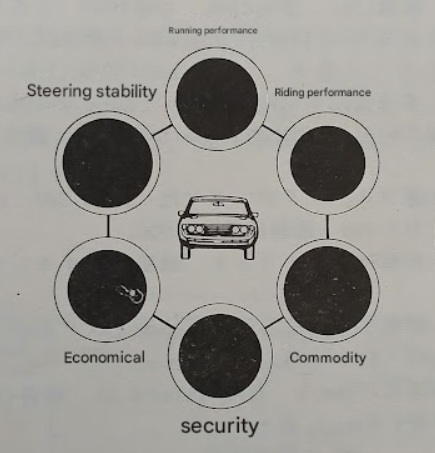
The aim of this comprehensive test drive is to assess a car’s overall character by examining six key pillars: Driving performance, handling and stability, ride comfort, safety, economy, and product appeal. The evaluation method used is the “Bubble Session”–a systems engineering approach in which six specialists from different fields gather around a hexagonal table (“Bubble” = honeycomb) to share their opinions.
In the diagrams, each of the six circles shows the specialists’ evaluations with black segments. The more evenly sized the black areas, the more balanced the car is across all categories; conversely, uneven segments indicate a car with more distinctive, individual character.
Postscript: Story Photos