Toyota 2000GT (1970)
Publication: Motor Fan
Format: Dynamic Test Drive
Date: February 1970
Authors: Shintaro Taki, Rena Takahashi, Motor Fan Editorial Staff (uncredited)
1,200km of Hard Driving: A Luxury Car With An Unclear Design Philosophy
Please allow me a moment to talk about something personal: about human charm. I apologize for starting off by talking about something that seems unrelated to cars, but when I talk about the Toyota 2000GT (with Toyoglide), I find I can’t avoid it.
Human charm is such a vague and elusive concept that it’s almost impossible to pin down, but I would like to offer my own opinion on it, although it is only one narrow aspect of it.
“Balance.” I believe this is the basic condition that gives a person charm. In other words, people living in this society each have their own individuality: differences in age, differences in social status, differences between men and women, different occupations, and so on. And so the way I see it, from babies, to young people, to the elderly, among the rich and the poor, each in their own way have a certain charm.
By contrast, what lacks charm is the kind of person who doesn’t know where they themselves stand.
Knowing oneself is the source of balance. At least, this is what I believe, despite my own limited knowledge and shallow ability.
For example, no matter how hard one may work to polish their muscular, well-built body, if they are empty inside, they will have no charm. And if you dress up in Parisian fashion and wear high heels to go mountain climbing, it will only bring about ridicule.
Ultimately, it is harmony with one’s self and one’s surroundings that create a person’s true charm. That is what I wish to say.
Now that I’ve gotten these thoughts out of the way, let me return to talking about the car.
To jump straight to the conclusion, the Toyota 2000GT (with Toyoglide) was a car that did not move me in the slightest. It gives me no pleasure to say so, but it was the kind of car that doesn’t stir you, that you don’t grow attached to even after driving it for a long time.
When it came time for the second installment of this “Dynamic Test Drive” series, the editors asked me what car I wanted to test. In my previous piece on the Fairlady Z432, I had briefly brought up the Toyota 2000GT for comparison. So we decided that this time, I should actually drive the 2000GT in earnest. We made arrangements, and I got behind the wheel.
To be honest, I’d never had a very good impression of this car. I’d driven one once before, and the transmission broke down, forcing me to retire from the test.
However, such shallow feelings are completely unreliable. If I were to draw conclusions based on such limited experience, I would be one of those people who lack balance.
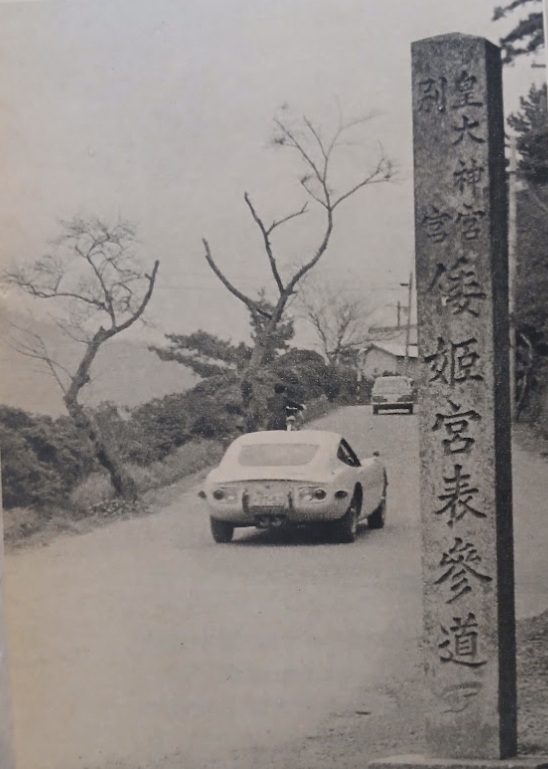
So I thought I should try to spend at least 1,000km with this car. The editors arranged a special schedule, and I was given the chance to take a 2000GT on a two-night, three-day trip, taking the Tomei Expressway, exiting at Nagoya, going through Suzuka, and extending the journey to Nemu-no-Sato. By the time I made it back to Tokyo, I had covered a little over 1,200km.
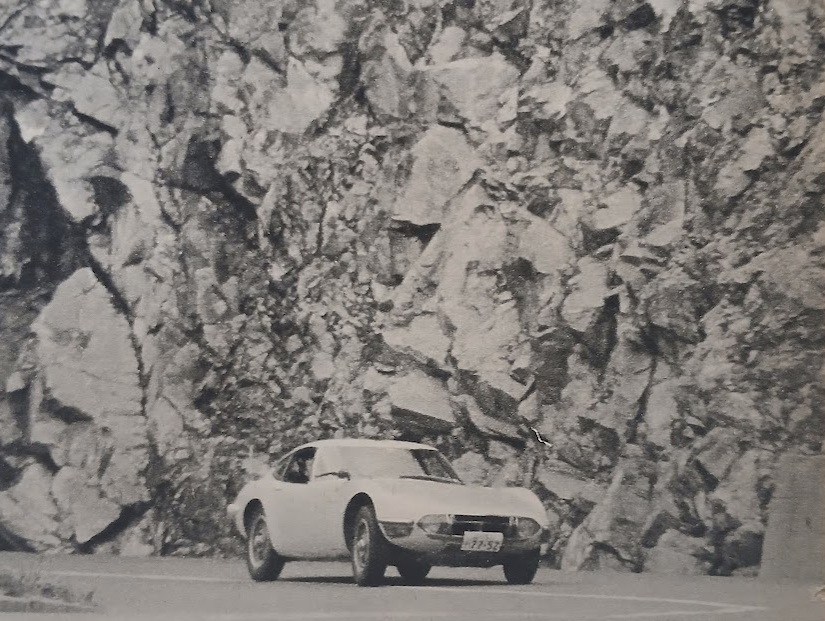
I sped along the Tomei Expressway, got stuck in traffic on the Meishin Expressway, and tested the cornering to my heart’s content on the Ise-Shima Skyline.
And after all that, I still don’t get it, this car. That’s what I concluded overall.
Since I stated the conclusion first, this story may seem out of order, but let me now explain the process that led me to make such a bold statement.
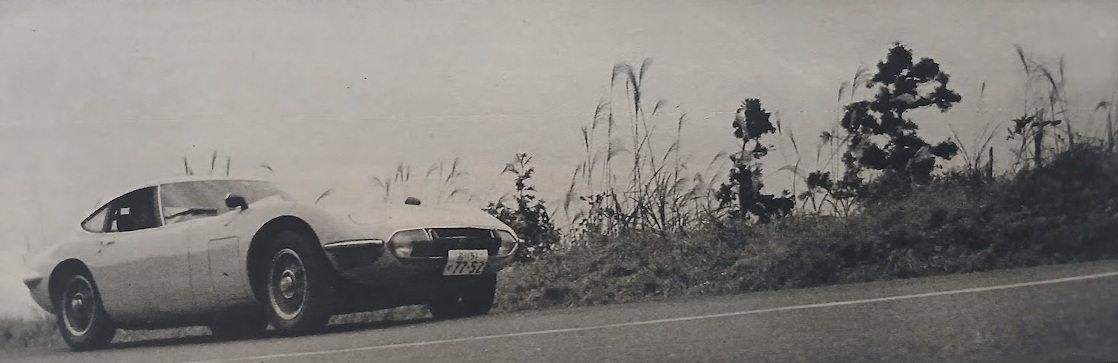
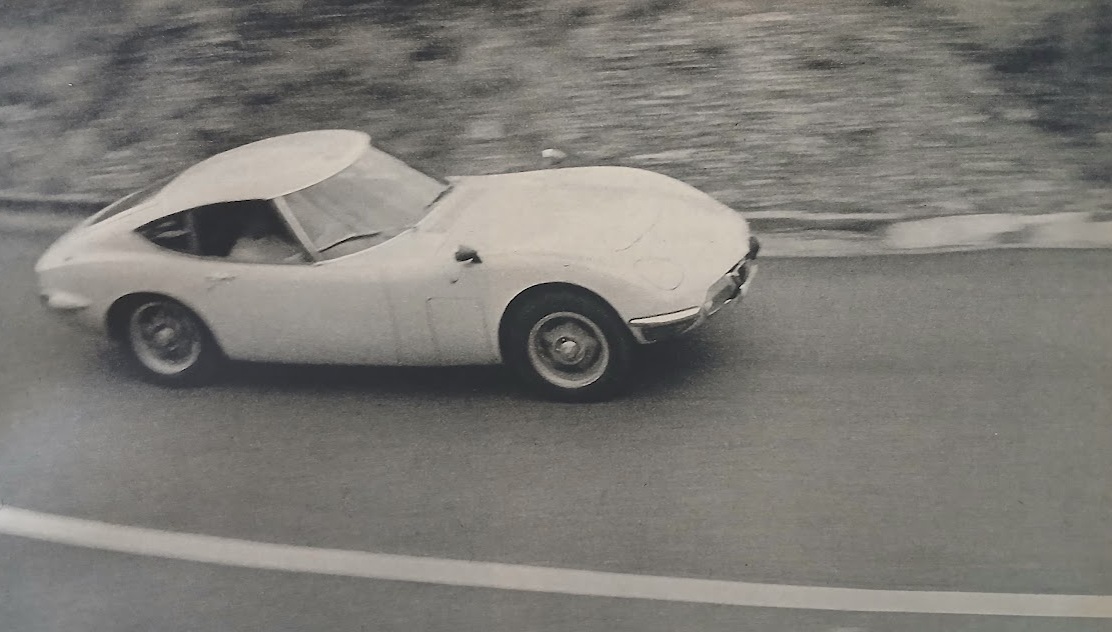
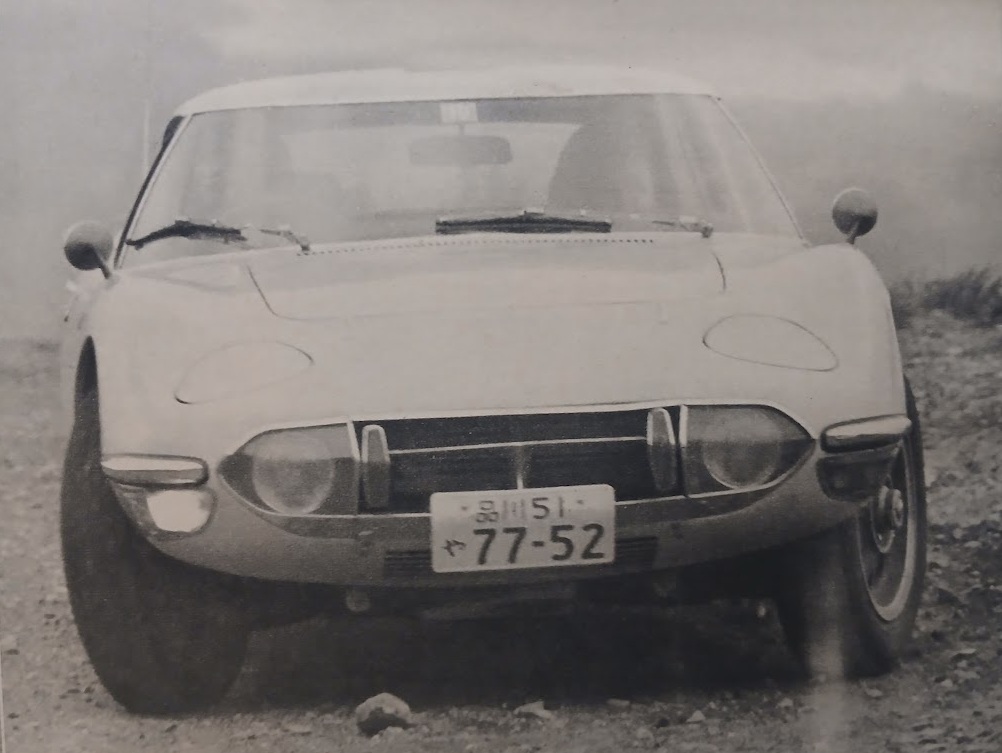
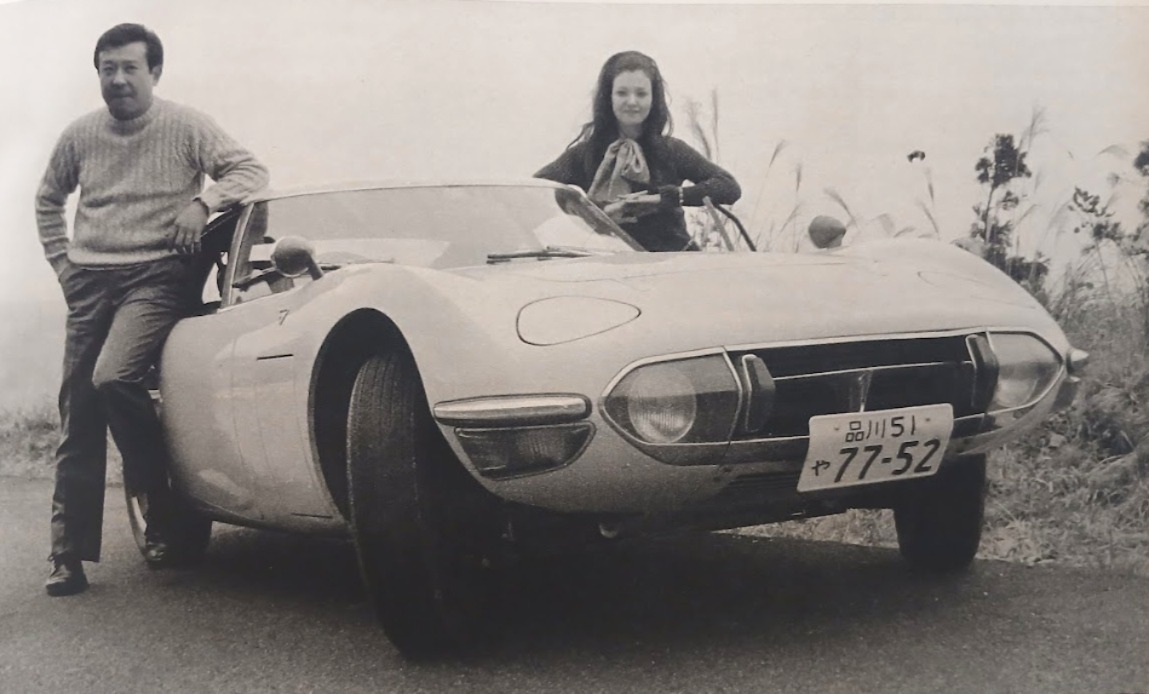
First, the 2000GT’s design is truly wonderful. No matter how you look at it, or where you park it, there isn’t even the slightest flaw. Whether it’s on the highway, a country road, a circuit, on mountain Skyline roads—wherever you are, anyone who glances at it will reflexively exclaim, “That’s nice!” with genuine admiration. It truly is a design icon. As for the woman who might sit next to you, this car has the sort of presence that can withstand the scrutiny of anyone, from a noble lady to a scrappy working-class girl.
The rear view is particularly outstanding. The curved, oviform rear end, which could easily have turned out heavy- or blobby-looking, is cleanly tightened by the concave lines in the roof. As a result, the rounded rear styling gives it an indescribable sense of stability.
While driving, I could feel envious eyes on the car from the outside almost constantly. In Japan, it is safe to say that this car’s styling ranks as number one.
And then there’s the performance. There are no faults here either. In fact, far from having faults, it revs freely and pulls strongly. Acceleration is very good. Toyota’s pride and joy, the Toyoglide automatic transmission, is fully capable of bringing out this performance. Compared with the automatic in the Jaguar XJ6 I’m driving now, it’s not even in the same league.
It was able to withstand traffic jams without a whimper, and even on the Tomei Expressway, where strong acceleration is a must, it let the engine rev freely to demonstrate its full performance, without holding anything back. If I had to find faults, I could only say that the gear ratios for second and third gear are too close together (Editor’s note: the ratios are 1.479 for second, 1.000 for third). This isn’t a problem on the highway, but on city streets, pacing the flow of traffic, the frequent up-down, up-down is annoyingly busy. And of course, making the second gear ratio a little higher would further improve the acceleration. Even so, this is a simple matter, and it’s obviously something they could easily improve. As it is, it is already at a high level.
Then there’s the use of retractable headlamps, unprecedented in our country. And the interior, unified in black with dignified, weighty trim, and thoughtful touches for the passenger (the grab bar, the footrest), and so on. Even the instruments are angled for easy viewing by the driver, and the brakes are discs on all four wheels. All of this proudly expresses the image of an “expensive machine costing over 2.4 million yen."
At first glance, and even after a short drive, I would have to say the car is flawless.
And yet… it just didn’t click. The more I drove it, and kept driving it, and tried my hardest to enjoy it, the more I felt like I was saying goodbye to something for which I held great affection in my heart. Why, why, why?
Well, first of all, I have to say that the suspension is absolutely useless. As the miles rolled up, 300km, 500km, 1,000km, I began to feel fatigue, and the urge to stop and get out of the car kept rising. Yes, this car had about 6,000km on it, and it had just been driven quite hard (it wasn’t a brand-new car; Toyota Motor Sales loaned it to us, and since there had been no time to service it before our drive, we used it as-is). Still, even allowing for these unfavorable conditions, it felt as if the shock absorbers were broken: far too stiff, and mismatched with the engine. To put it bluntly, it felt as if a high-level racing engine had been put into a chassis fit for a truck.
The steering was also terrible, in similar proportion to the poor suspension. I’ve put up with plenty of stiff-steering race cars, and I wouldn’t have objected if the steering was only a little stiff. But this steering–on the highway it shimmies, and on winding roads it stiffens up intolerably. My supposedly strong upper arms began to ache, as though knots were forming in them.
At times I felt like saying, “Enough,” and retiring on my own. The poor compliance, the hard steering, and on top of that, the strong understeer. Understeer seems to be a general tendency in Toyota cars, but even if this one was out of adjustment, the 2000GT’s understeer was so bad it made me want to use the silly expression, “the front end drifts.” In hard cornering, the car hopped and skipped outward and wouldn’t stay planted. For a driver, nothing demands more attention than a front end that keeps moving off your intended line.
Unpleasant “Easy Drive” Idea
To add one more of my own opinions–though I may be pushing it now–I also dislike the idea of “easy driving” embodied by the Toyoglide 2000GT. This is not just any car; it is supposed to be Toyota’s symbolic sports car. Is it really okay to inject a lazy, easy-going character into it?
As racers, we are doing our best, in our small way, to nurture sound and robust motor sports. We train and train, hone our skills, and try to raise motorsports to the level of meaningful, genuine competition. And I believe that Toyota, the largest manufacturer in Japan, is also serious about actively participating in motorsports.
Making the car an “easy drive,” rather than relentlessly pursuing the highest standard of vehicle dynamics, throws cold water on that. There’s no other way to describe it. As a mass-market manufacturer, they surely have their reasons, and they must already be aware of the thoughts of naive people like me, out on the fringes. But precisely because of that, I am compelled to speak up and argue back…
Well, let’s stop there. A schoolboy taking a swing at a grand yokozuna is pointless. Let’s calmly return to the topic of why I didn’t like the car.
If we compare a car’s suspension to a role in the human body, I would say that it corresponds to our two legs. It is said that when a person begins to decline, it starts with the legs. Legs are fundamentally important to human beings. And I believe the same holds true for cars. Separate from the engine, the suspension is the basic life of the car.
Japan’s roads are notorious worldwide for their poor condition, and the era of highways has only just begun here. But for Toyota, a top manufacturer, it shouldn’t be impossible to adopt suspension truly suited for highway use even before the general public is accustomed to highway travel. The 2000GT’s monthly sales are only one or two units (122 units sold in Japan and 108 more overseas, from the model’s launch until the end of November), and production is entrusted to Yamaha, so it is being made in a state of almost handcrafted construction. Wouldn’t it be better to use this opportunity to take care with the details and design a chassis more fitting for speeding down the highway? After all, this is not only a car, it’s a symbol.
I shared my thoughts on “easy driving” already, but if they truly want to make it that way, I would have no complaints. But in that case, they should make driving thoroughly easy, not just with the Toyoglide, but with power steering (apparently available as an option), power windows, and so on.
It’s this half-done, half-baked idea that really irritates me.
In this sense, even the beautiful styling born from fluid dynamics can have flaws, after all. When driving along the Tomei Expressway at steady high speeds, the sharp straight edge of the fender starts to become distracting. They’ve gone to the effort of unifying the body with smooth, rounded lines, yet the fenders themselves have a crisp, sharp peak. This makes them look like a cliff cut at a right angle, and as you drive over long distances, it keeps catching your attention and becomes tiring psychologically.
Another thing that becomes an issue over long distances, is the severity of the dashboard design. To exaggerate only slightly, it felt like a strangely thick mass was looming right in front of me, giving me a sense of being pressed in, further contributing to the feeling of fatigue.
Then there’s the fixed seat. The steering wheel is mounted almost parallel to the body, so it intrudes on your line of sight. The steering wheel can be moved back and forth about 15 cm, but that’s not enough to get it out of your view forward. So you naturally want to adjust the seat somehow, but it won’t recline.
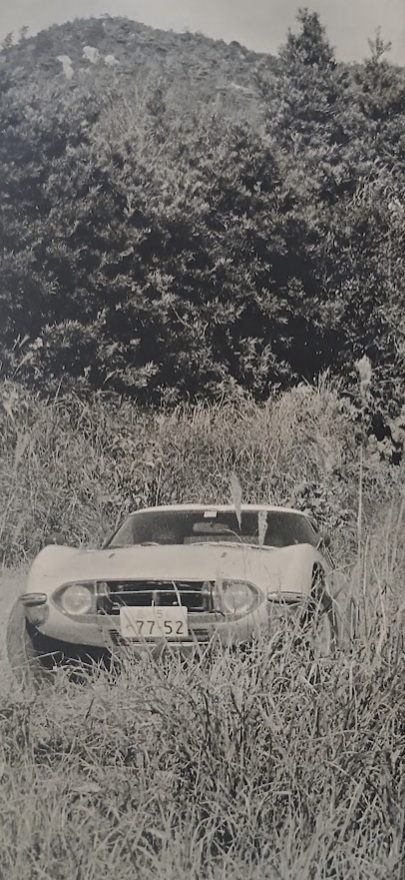
There’s the visibility, too. The long nose that makes the body style so beautiful also inevitably obstructs the view in front of you. The wheel arches bulge upwards, and the body sides bow outward slightly. As mentioned above, the styling is flawless when viewed from the outside, but from the driver’s seat, these features interfere with visibility and make driving more difficult.
There are many cars in the world with long noses. None of them offer great visibility. But when you run them at high speed, most of them at least don’t cause the sort of fatigue this one does.
The Key Point is Balance
However, if we turn our attention to the Toyota 2000GT itself, its innovative mechanisms do justice to its status as Japan’s representative sports car. For example, to reduce the vibration, noise, and exhaust sound that accompany engine revolutions, the two overhead camshafts are driven by a double roller chain. Fuel is delivered by an electromagnetic fuel pump, the electric cooling fan operates only when the water temperature rises, and an aluminum oil cooler is standard equipment to prevent the oil temperature from climbing at high engine speeds.
These advanced mechanisms are backed up by the car’s success in racing, offering proof of their reliability, and by world and international records (such as the famed 78-hour continuous run, covering 16,000 km at an average speed of 206.18 km/h).
But, while I am repeating myself, this completely impeccable design and layout somehow changes in character during long-distance driving, and is overshadowed by this troublesome thing called fatigue. How on earth does this happen? I believe it is precisely the problem I mentioned at the beginning, that essential prerequisite for human charm, balance.
To put it another way, if we were to compare her to a woman, she would be like an unattainable, unapproachably stunning noblewoman. Lovely face, prestigious upbringing… but somehow she fails to stir in a man the desire to know her more intimately…
It is a terrible metaphor, and it lowers my dignity a little to use it, but no matter how much I try to dismiss the image, it sticks stubbornly in my mind. At the beginning I spoke about the charm of human beings. So what, then, is the “charm” of a car?
I think this is also about “balance.” Unlike humans, cars do not have the multifaceted layers of body, mind, and spirit.
Even so, a car has three essential elements: engine, suspension, and body design. The balance between these elements, which we’d call “setting” in racing terms, is the crucial point that makes a driver feel affection for a machine.
Of course, each person, with their own character, forms their own image of a car, and that image itself becomes a major factor within the balance.
Even for me, that indecent metaphor I used may be nothing more than my own personal image. But what I can say clearly is that the balance of engine, chassis, and body that came into focus on this drive was not a flattering one.
The body design raises expectations sky-high, and the free-revving engine only increases them further. The higher the expectations, the more even the slightest flaw becomes a betrayal. I guess that’s just how we are, with our human feelings.
Even a family car of about 1000cc can be something you grow passionately fond of. And just as even the finest British-made clothing sometimes feels strangely incompatible when you wear it, the same thing can happen with a car. Such irrational, emotional responses to objects are something only humans are afflicted with, but what else can we do?
This is why the most important elements of design, the things that make you nod your head in agreement, are the ones you can’t see. The precision of the setting, the balance between engine and suspension, these are the things that make you quietly agree in your heart.
The Toyota 2000GT Toyoglide: it calls to mind the image of a slender modern woman, wearing the very latest fashions, yet clacking through Ginza in traditional geta sandals.
I think that not only I, but anyone, once they have driven this car, will stop gazing at it with mere envy. Instead, you will start to look at the Toyota 2000GT as it races stylishly past and think, with a sense of sympathy, “She must be having a hard time!”
I have written down my impressions in a roundabout way that is uncharacteristic of me. For some reason, I got carried away this time, and I imagine some points were difficult for readers to get through. So, allow me to end by apologizing for my rudeness. I’m sorry.
Editor’s Epilogue
This test drive involved various troubles: confusion at departure, a breakdown along the way, and other incidents. Since we asked Mr. Taki to focus especially on the design philosophy behind the car, we would like to use this space outside the main text to add notes on matters not covered in the article.
We had arranged to pick up the car from Toyota at 8:00am, but when the time came, the previous tester had not shown up to return the car, so our departure was delayed by about four hours. The previous tester was Minoru Kawai, a racer who has had exceptionally good luck over the past year. He had reportedly used the car for rough-road driving in Kusatsu the night before. It was returned covered in mud, and the engine could hardly be seen under the layers of dirt. Toyota offered to wash and service the car, but we decided to skip this and borrowed it as-is. Naturally, Mr. Taki was fully aware of this and took it into account when writing his test report.
Just as we got onto the Tomei Expressway and settled into a cruise, the engine suddenly became sluggish to rev. It didn’t completely stall, and it idled normally. Mr. Taki suspected that gasoline wasn’t being delivered properly from the electric pump. We stopped at Makinohara Interchange, contacted Toyota, and even had JAF come out, but in the end we couldn’t figure it out on the spot. We changed the route and, through Mr. Taki’s skillful driving, made it to Nagoya. When checked at Aichi Toyota, it turned out that debris had clogged the filter in the electric pump. After replacing the filter, the car ran perfectly the next day.
As for the purpose of putting an automatic in the Toyota 2000GT, we asked Toyota this question after the test drive, in light of Mr. Taki’s comment, “I still don’t understand the design philosophy of this car.” Toyota’s response confirmed their reasoning.
Toyota’s Statement (Public Relations Department, Toyota Motor Sales)
“As a company, we position the Toyota 2000GT as a prestige car. It may also serve as a flagship among sports cars. Therefore, it cannot, like a mass-market sports car, be designed for the greatest common denominator; instead, it is intended for a limited group of enthusiasts. We greatly appreciate the many valuable points raised by Mr. Taki, an enthusiast of the highest caliber.
Fitting a Toyoglide automatic to a sports car was also done in response to user demand, and in our view it demonstrates our confidence in the capabilities of our torque converter. If anything, our focus has been less on creating an “easy-driving” sports car and more on showcasing our belief in the Toyoglide and its underlying engineering. Thus, Mr. Taki’s perspective is completely valid, and we welcome his advice as we continue striving to make even better cars.”
Nearing the furthest point of our journey, and having missed lunch, we arrived in Ise at 3:00 p.m. and looked for something to eat, but could see no restaurants nearby. As we wandered around, a young man, apparently a student, called out: “Aren’t you Mr. Taki? We’re grateful for your work in racing!” He then proceeded to help us find parking and even guided us to a restaurant. This was a reminder that Mr. Taki has become quite well-known.
As for the restaurant itself, it was very local. We had curry rice, and everyone agreed, “The flavor is unforgettable.”
Postscript: Story Photos