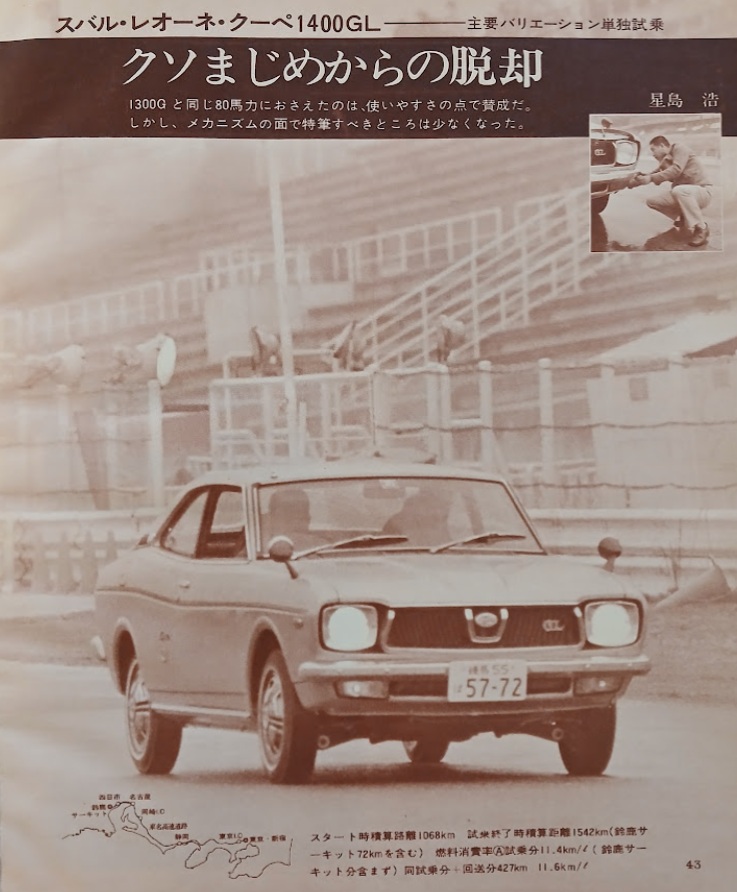
Subaru Leone Coupe 1400GL (1971)
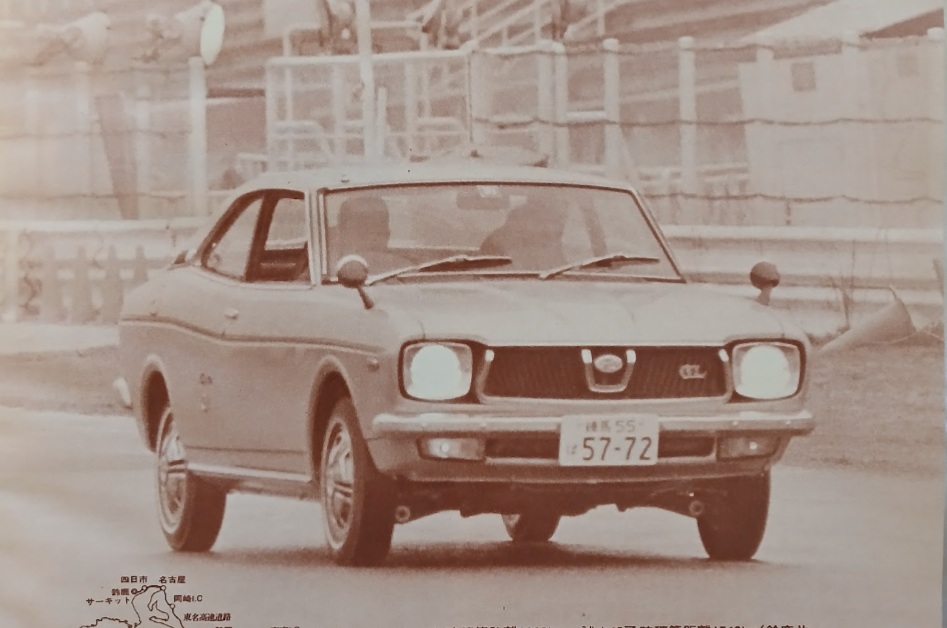
Publication: Motor Fan
Format: Test Drive Report
Date: December 1971
Author: Hiroshi Hoshijima
Moving Away from the Overly Earnest Image
Limiting output to 80 horsepower, the same as the 1300G, is a sensible decision in terms of usability. However, there is now less to single out as particularly noteworthy from a mechanical standpoint.
An Unusual First Impression
From the moment I first laid eyes on the Leone at its unveiling, I was left with a rather curious impression.
The reason was the extent to which it differed from my expectations. What I had anticipated was a Leone conceived as a variation on the ff-1 1300G sedan.
When the sales of a core model begin to level off, or demand starts to decline, it is common practice to introduce a variation model with a fresh appeal in order to reverse the trend. Minor changes serve a similar purpose, but in recent years it has often been sporty variants that have played the role of a kind of stimulant.
As things stand, the Subaru ff-1 1300G has been selling at a rate of around 2,000 units per month at best–results that can hardly be called strong. To be perfectly clear, the sedan itself is by no means a bad car. And so, the natural idea would be to introduce a sporty variation aimed at younger buyers–or those young at heart–thereby enhancing the overall image of the Subaru range.
Yet the Leone is not such a variation model. If the usual approach is to take a sedan as a base and create a coupe or hardtop by modifying portions of the body, then the Leone clearly departs from that pattern, with a body that is entirely distinct from the sedan.
Rather than maximizing commonality with the sedan and keeping changes to a minimum, it almost gives the impression that the intention was to reduce shared components as much as possible. This led me to wonder whether, perhaps, the Leone Coupe itself might serve as the true base version–and that Fuji Heavy Industries could be planning to develop a more practical sedan from it in the future.
One could, for instance, take the two-door body, extend it into a four-door, lengthen the roof, and treat the rear in the manner of something like the Renault 16. In that way, a Leone sedan could emerge.
If not, then even allowing for diversification of demand and a growing preference for more upscale models, it would be difficult to compete in such an intense sales environment by targeting only a limited group of users. Moreover, customers would be unable to fully benefit from the advantages of high production volume–improved productivity and reduced costs.
The car I tested was the Leone Coupe GL, a higher-grade model equipped with the 80ps engine.
In terms of bodywork, it is identical to the GS and GSR models fitted with the 93ps unit.
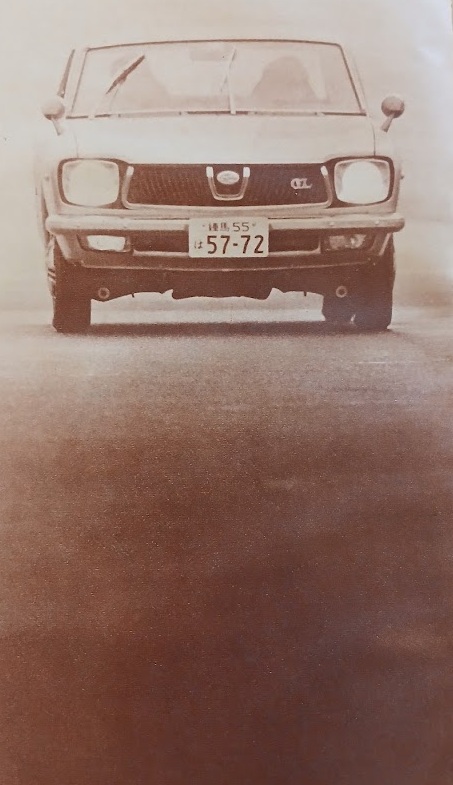
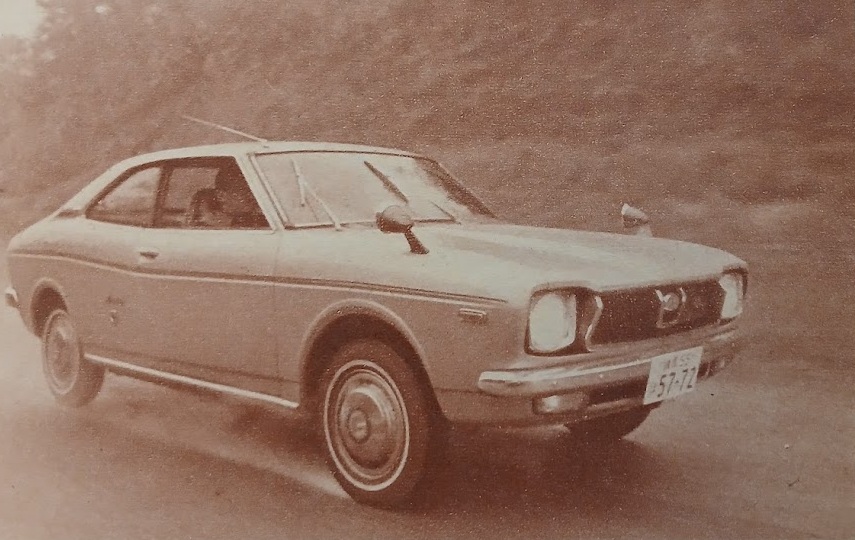
Its proportions are somewhat in the long-nose, short-tail mold. There is, in some respects, a resemblance to the Honda 1300 Coupe, yet compared with the front overhang, the rear is notably short.
In fact, although its wheelbase is longer than that of the Honda, visually it appears longer still. I find it difficult to shake the aforementioned line of reasoning from my mind; even in terms of visual balance, one senses that a sedan body might suit it better.
One of the principal advantages of a front-wheel-drive car in the small-car class is the ability to secure a spacious interior. Because the entire powertrain can be accommodated ahead of the cabin, the remaining space can be laid out with relatively few constraints. There is no need for a propeller shaft tunnel in the floor, so the rear footwell can be made flat, giving a genuinely roomy impression, and seating three across is not especially difficult in practice. With no differential at the rear, the luggage compartment can also be made larger and more usable.
Unfortunately, in the case of the Leone Coupe, these advantages of the FF layout have not been fully realized. In fact, it is almost as though they have been deliberately set aside.
The front seats are satisfactory enough, but the rear is cramped. While there is a reasonable amount of legroom, the low roof and steeply sloped rear window encroach on headroom. When seated in the rear, the upper edge of the rear window is almost exactly at head height. Perhaps I myself was not paying enough attention while driving, but the photographer riding with me struck his head when the car bounced.
While the front seating is generally well judged, the front passenger is treated less favorably than the driver.
The wraparound instrument panel, finished in a rosewood-style trim, together with the projecting padded section, is not without merit. However, on the passenger’s side the safety padding appears insufficient, and no assist grip is provided.
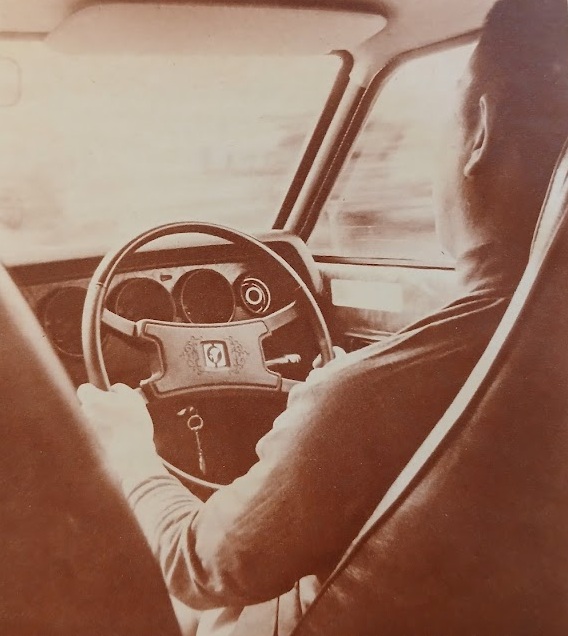
One distinctive feature is the four-spoke steering wheel. Similar designs have been recently seen on cars from Porsche, Mercedes-Benz, and, if memory serves, Peugeot. It seems this is becoming a trend among sporting European cars.
The advantage of this wheel layout lies in the wide range of possible hand positions. One can grip it at the conventional “quarter-to-three” position between the spokes, rest the thumbs on the upper spoke in a “ten-to-two” style, or even hold it lower with the thumbs on the bottom spoke in an “eight-twenty” position. Compared with two- or three-spoke designs, it is genuinely easier to find a comfortable grip. It also imparts something of the feeling of sitting in an aircraft cockpit, which is rather appealing.
The seats are high-back types with integrated headrests. It is somewhat unusual that there is a gap around the neck and shoulder area. The practical benefit of this is not entirely clear, though it may appeal to those concerned about disturbing their hairstyle. In terms of comfort, they are neither too soft nor too firm, and their shape is well judged. Overall, they can be considered above average.
The multi-function lever mounted to the right of the steering column combines the flasher, dimmer, wiper, and washer into a single control. Once one becomes accustomed to its operation, it proves convenient. One point that stood out is the headlight beam indicator: it does not light up for high beams, but instead for low beams. This appears to be consistent with Subaru’s 1300 series, but it is not the usual arrangement.
The tachometer is positioned directly ahead of the driver, with the speedometer to the left. This, too, reflects a layout intended for sporting driving, though one might question whether it is appropriate for a model such as the GL. In fact, the opposite arrangement would likely be preferable. Depending on the driving position, the steering wheel can obscure the speedometer, making it difficult to read the crucial 40, 60, and 80km/h markings. With the tachometer, by contrast, the corresponding range–around 2000-3500rpm–is less critical, so reduced visibility is less of an issue.
There are no triangular vent windows. However, the ventilation system itself is well thought out, allowing cool air to be directed toward the face while warm air is supplied to the footwell. This initially seemed quite effective–until a complaint came from the passenger seat. Sure enough, a dashboard ventilation outlet is provided only on the right, for the driver, with none on the passenger side.
Here too, the driver is favored, while the passenger is neglected.
Will a Leone Sedan Come Next?
The clutch is light. In this class, a clutch usually requires around 10-12kg of pedal effort, but in the Leone it is probably about 7-8kg.
Pedal placement is also good, with none of the leftward offset often seen in FF cars; they are arranged straight ahead. Apart from the accelerator’s very short travel, operation is easy.
It is regrettable that the advantages of the FF layout are somewhat diluted by the center console. It was likely added to accommodate stereo equipment and to avoid the ungainly appearance of a floor-mounted shift lever, but more than reducing the sense of foot space, it actually makes things feel somewhat cramped.
The shift lever operates with long throws. In this respect it is no different from the ff-1. The wide movement, both in the side-to-side (select) and front-to-back (shift) planes, is not ideal. One wonders whether there was no attempt to bring the lever closer to the driver and shorten its length.
Subaru’s much-touted dual radiator system is not present here, but I did not feel that the noise level had increased. Vibration is low, and cabin noise is about average for a Japanese car in this class; overall, it does not feel particularly noisy.
Acceleration is sharp. The test car had only around 1,000km on the odometer, so I drove it fairly gently, but judging by the stopwatch, 0–100km/h came in just over 13 seconds–about 13.4 to 13.5 seconds. With three occupants and an estimated total weight of around 930kg, this straight-line performance can be considered quite strong.
Compared with the Honda 1300 Coupe 9, the Leone is superior in initial acceleration, while the Honda pulls ahead as speed builds.
The test route took us onto the Tomei Expressway to the Okazaki Interchange, then over National Route 1, the Meishi National Highway, and Route 23 to Suzuka Circuit. Total distance from Shinjuku was 402km. Fuel consumption came out to 11.4km/l. From my notes, this is about 0.3km/l better than when I drove a 1100cc ff-1 sports sedan to Suzuka two years earlier. That earlier run was on premium gasoline, so in economic terms the Leone GL is clearly more efficient. Of course, direct comparisons are always risky, but this time there was almost no traffic and the drive was generally pleasant. The driving position also suited me well, so I did not feel fatigued.
At Suzuka Circuit, I tried driving the racing course in a sporty manner twice–once around 6:00pm and again the next morning before 8:00am. This included the 6km long course and the east–west short course, for a total of about 75km. The following morning, thanks to overnight rain, I was fortunately (?) also able to test high-speed driving on a slippery surface.
To begin with, the handling is characterized by mild understeer and an easy-to-control nature. It did not particularly feel like a front-wheel-drive car.
The often-mentioned change in behavior between power-on and power-off is also nearly absent. For someone like me, who frequently drives a Honda 1300 Coupe on the same course, it was something of a surprise that the Leone does not show the tendency to neatly tuck its nose inward when the throttle is lifted. With the Honda, I intentionally make use of that trait: as I enter a corner I briefly ease off the accelerator, let the nose tighten inward, then get back on the throttle while unwinding the steering to exit. If that is what people mean by the sporting character of FF driving, then the Leone would have to be called lacking in “flavor.”
That said, in the broader context of the many small FF cars in the world, the Leone should probably be considered one with particularly good directional stability.
Unfortunately, power feels a little lacking. On corner exit, even with the throttle fully open, compared with something like the Honda 1300 Coupe 9 it feels almost sluggish. However, in the case of the Leone, this too may be appropriate for the chassis. It could be said that the 80ps DL and GL versions are better balanced cars overall than the 93ps GS and GSR.
Even on wet corners, the Leone does not break away suddenly or nervously. It does slide, of course, but in a manner that remains calm and controllable. This is one of the strengths of the FF layout.
Steering effort and self-centering are also well judged. Stationary steering effort is lighter than that of its smaller sibling, the 1300G SS, making it easy to handle even in parking situations.
The brakes were less impressive. When braking from high speeds, there is a sense of softness, and on wet surfaces the rear wheels tend to lock. They should be adequate for normal driving, but some concern remains for emergency stops.
Strong resistance to crosswinds–and good performance on rough roads–are also strengths of FF cars. It is not that they are unaffected by crosswinds, but rather that they remain easier to control. The ability of FF cars to cope with snow is well established; even with standard tires they should still be able to handle fairly deep snow.
Now, as for the Leone Coupe GL, it is difficult to draw a clear conclusion. Personally, I feel that even the current sedan fitted with the 1400 engine, with its stronger mid- and low-speed torque, may well have been sufficient. Or, as noted at the beginning, I cannot help but think that a more practical Leone 1400 sedan would have been the more desirable direction.
Postscript: Story Photos