Subaru Leone Coupe 1400RX (1973)
Publication: Car Graphic
Format: Road Impression
Date: January 1973
Author: “C/G Test Group” (uncredited)
Road testing the Subaru Leone Coupe 1400RX
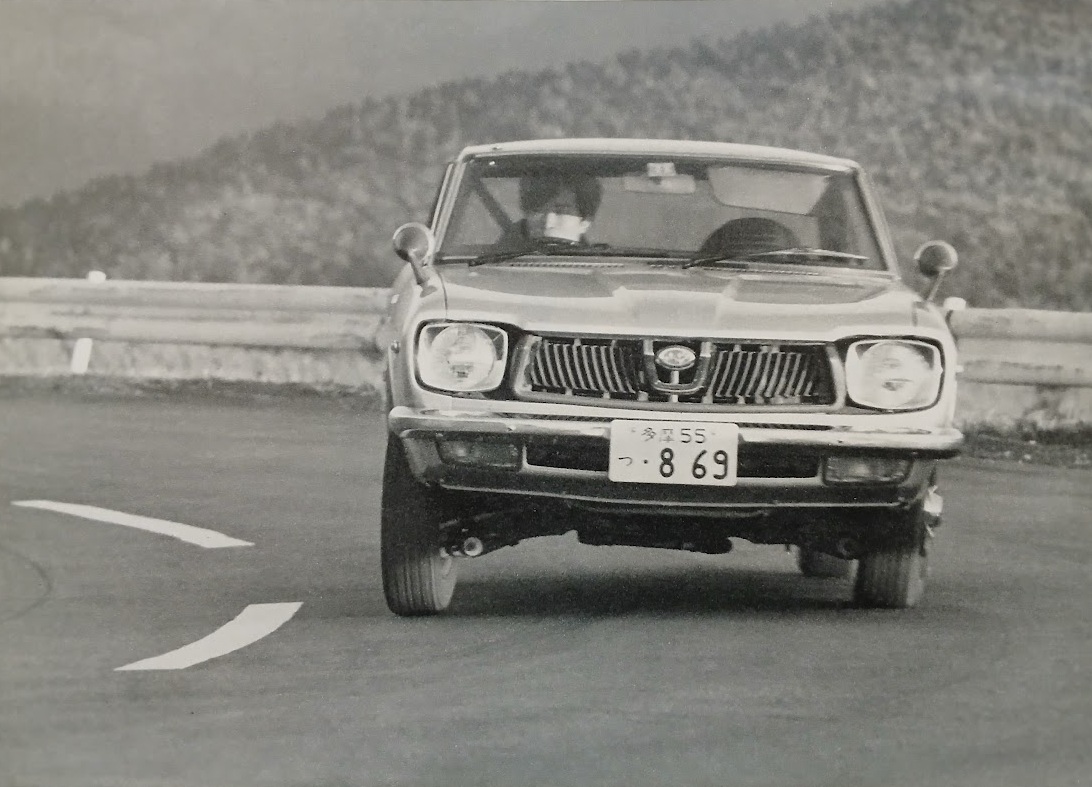
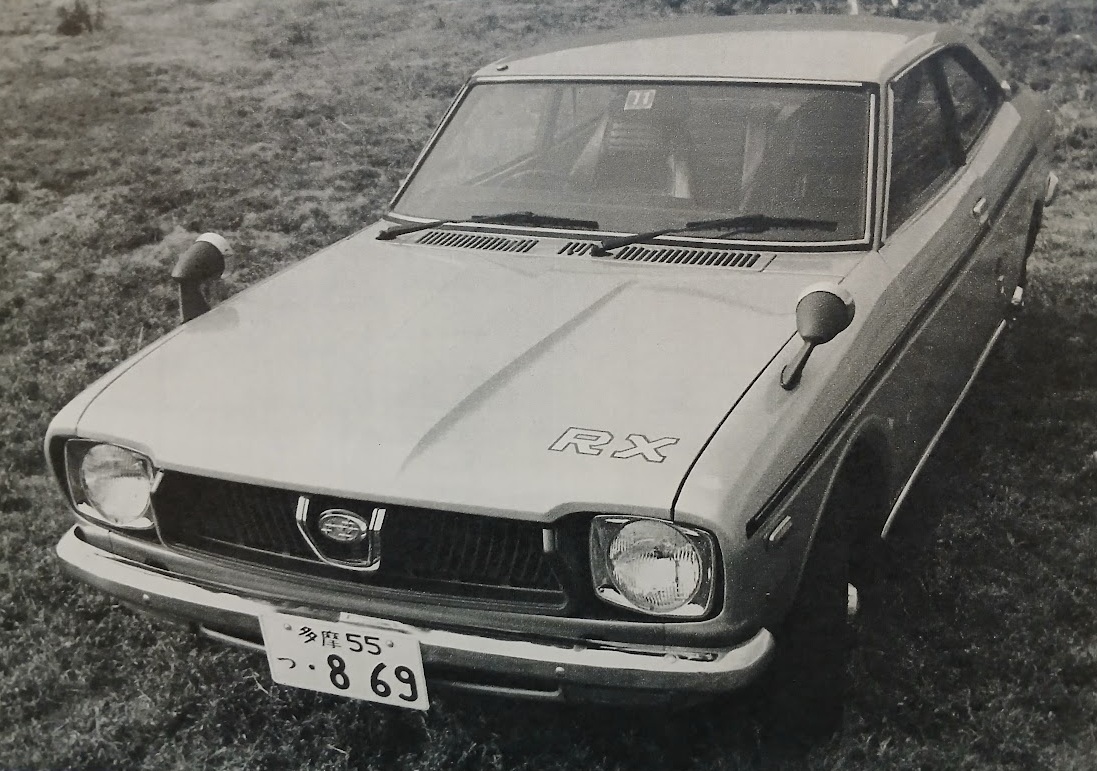
Despite longtime Subaru enthusiasts lamenting its move toward the mainstream, sales of the Leone are reported to be strong. Last October, just before the Tokyo Motor Show, Fuji Heavy Industries added a hotter, more sporting model, the “RX,” to the Leone range, and released it for sale on December 1.
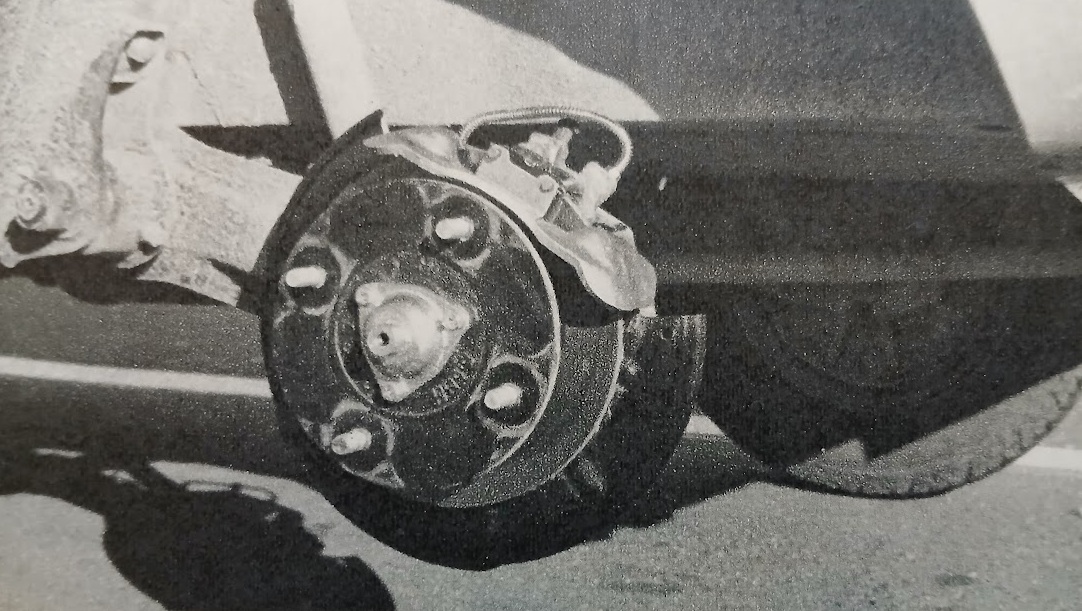
Compared with the previous top model, the Coupe GSR, the differences are: 1) four-wheel disc brakes, currently unique among Japanese production cars; 2) a close-ratio 5-speed gearbox; 3) an uprated suspension stabilizer bar; 4) radial tires increased in size to 155SR-13; 5) a quicker steering ratio; and 6) generally simplified equipment, though with some features unique to the RX. In short, this is a practical specification aimed at the enthusiastic driver. The GSR costs 719,000 yen, while the RX is 734,000 yen; the functional upgrades have been offset by simplifying the equipment, resulting in a difference of only 15,000 yen.
Before this, in the spring of last year, the Super Touring (ST) was introduced, with the 93ps engine fitted in the 4-door sedan. At the same time, the suspension of the sporting models was also uprated, and the Leone range now has the following three suspension specifications:
| Specification | RX | GSR / ST | Others |
|---|---|---|---|
| Front spring constant | 1.70kg/mm | 1.70kg/mm | 1.43kg/mm |
| Front damping force, 0.3m/sec. | Compression 35kg/ Extension 70kg | Compression 35kg/ Extension 70kg | Compression 20kg/ Extension 60kg |
| Stabilizer diameter | 25mm | 22mm | 22mm |
| Rear spring constant | 1.83kg/mm | 1.83kg/mm | 1.45kg/mm |
| Rear damping force, 0.3m/sec. | Compression 40kg/ Extension 140kg | Compression 40kg/ Extension 140kg | Compression 40kg/ Extension 140kg |
| Wheels | 4J × 13 | 4J × 13 | 4J × 13 |
| Tires | 155SR-13 Radial | 145SR-13 Radial | 6.15-13-4PR |
As can be seen, the only differences between the RX and GSR are the diameter of the stabilizer bar and the tire size. The steering was also revised at about the same time. Compared with the 19.2 ratio of the normal coupe and sedan, the radial-tire-equipped GSR and ST were made somewhat quicker at 16.8. The RX takes this a step further with a ratio of 14.7 (the former Subaru Sports was 14.8), reducing the number of turns lock-to-lock from 3.3 on the GSR to 2.9 on the RX.
C/G had previously tested two Leones, the Coupe GSR and Sedan GL (both immediately after their introduction). In each case we were disappointed by the low standard of handling, and strongly wished for more precise steering and tires one size wider. Those changes were made to the sporting models last year, along with a stiffening of the suspension. Driving the RX, the most sporting model, we were surprised at how greatly the Leone’s handling had improved since its debut. The RX can perhaps be called the best-handling Subaru yet.
A major reason for the poor handling of the early Leones was their dull, elastic steering—with so much play that it hardly seemed worthy of being called rack-and-pinion—along with decidedly undersized 4J rims and 145SR-13 tires. Despite its 14.7:1 ratio, the RX’s steering is not as sensitive as that of the former 1000 Sports, but its response is much sharper than in early Leones and represents a major improvement. Straight-line stability on the Tomei and other highways is excellent, a common front-wheel drive characteristic, and the steering settles very well around the straight-ahead position. From there, it responds relatively sensitively to movements of only a few centimeters at the wheel rim.
The Leone has always had somewhat heavy steering because of the substantial front-wheel load inherent in its front-wheel-drive layout, and in the RX this is further increased by the quicker steering gear and wider tires. Together with the strong self-centering action of the steering, this means some arm strength is required at low and medium speeds, but these characteristics become much less noticeable as speed increases.
Although the wheel rims are still 4J, the increase in tire size from 145SR-13 (Bridgestone RD-20) to 155SR-13 (Bridgestone RD-201) has had a considerable effect. On the early GSR, even with tire pressures raised to around 2.3/1.7 (the specified high-speed pressures were 1.7/1.5), the outside front tire reached its limit at surprisingly low speeds, and the front end would break away abruptly. The new RX ultimately reaches the same condition, but its revised underpinnings are effective in keeping the front end from running wide, and the speed at which breakaway occurs is considerably higher. Even though the tires have been increased to 155-width, however, the Bridgestone RD-201s squeal easily in even quite ordinary corners and offer little road grip (pressures were the specified high-speed 1.7/1.5). Subjectively, the understeer seems less pronounced than before, but the basic characteristic is still strong understeer.
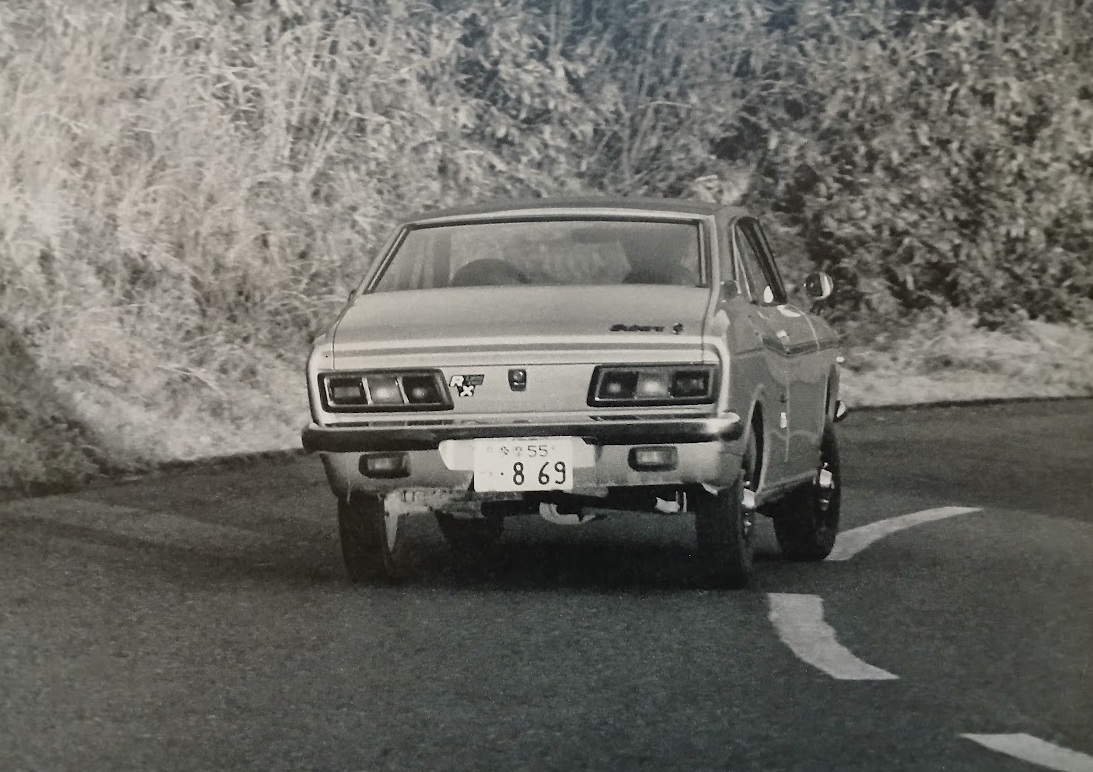
The so-called “tuck-in” that occurs when the throttle is lifted mid-corner is very slight. It is therefore difficult to induce tuck-in midway through a tight corner—as one can with the Cherry or Civic—to point the car inward and tighten its line in one quick movement. Put another way, the Leone’s handling is that much less agile. What it seems to do best is to take relatively wide corners smoothly at medium and higher speeds of around 80–90km/h. In addition to the suspension stiffening applied to all the sporting models, the RX has uprated stabilizer bars, and roll is kept quite low. Through an S-bend, for example, both the initial roll and the subsequent reversal are small, allowing the car to follow the intended line with good stability.
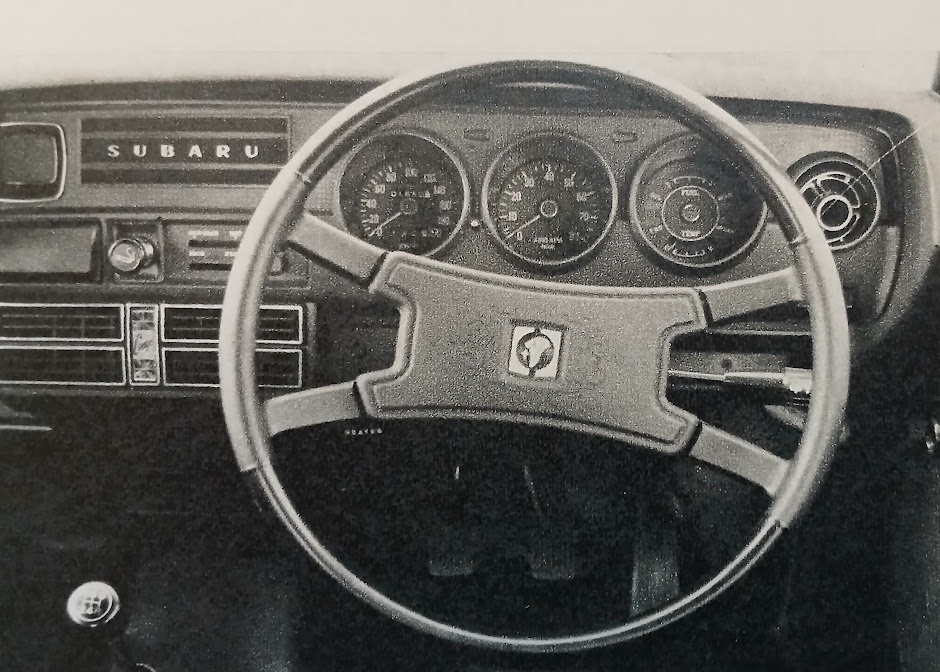
One thing that stood out on the hill climb was the steering-wheel rim, which has non-slip material only in certain areas. It is unsatisfying for the feel to change depending on where the wheel is gripped.
The Cherry and Civic are two of the best-handling cars on the market, but with the arrival of the RX, the Leone can now be counted among them. Each has a slightly different character and flavor, and it is pleasing to be able to choose according to one’s own preference.
Stiffening the suspension can easily lead to a deterioration in ride comfort, but we found that the RX had not suffered at all in this respect. If anything could be singled out, it would only be that its superb ride on dirt roads seemed to have deteriorated very slightly; otherwise, it remains excellent on any surface, with a substantial, solid feel. The Bridgestone RD-201, like the RD-20, is a fairly hard radial tire and constantly picks up small irregularities in the road surface, but these are effectively absorbed by the suspension and are not transmitted directly to the occupants. Thanks also to the long wheelbase, there is no tendency for the car to pitch.
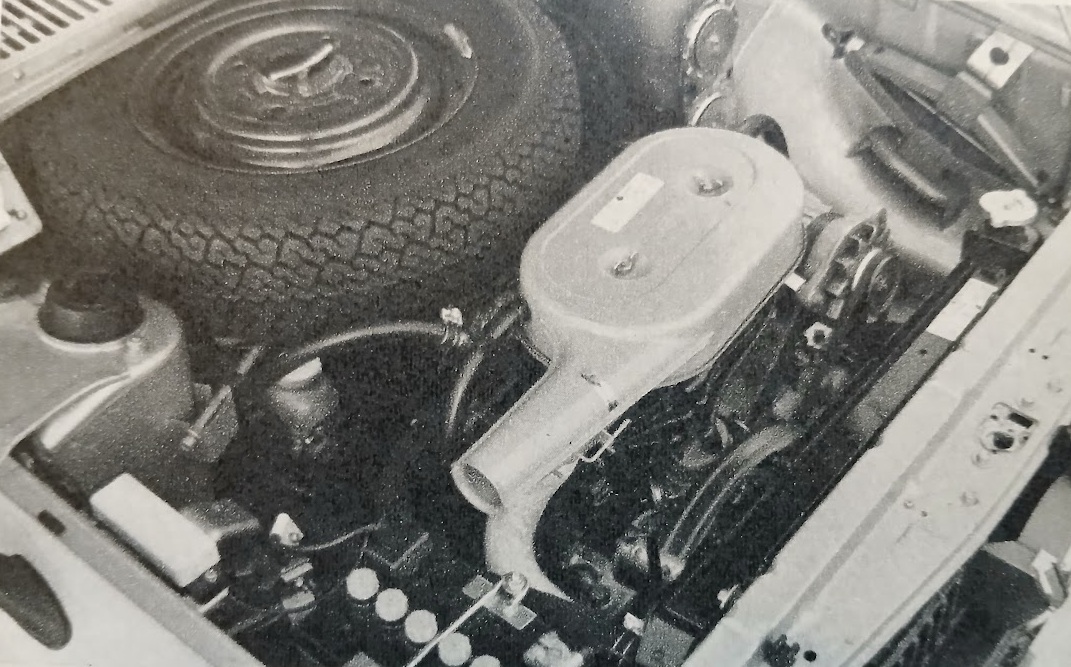
Almost the only feature to carry on the Subaru tradition is the water-cooled, flat-four OHV 1361cc engine. The existing sporting unit is carried over unchanged, with a compression ratio of 10.0 and twin carburetors, producing 93ps/6800rpm and 11.0kgm/4800rpm. Earlier Subaru sporting engines had virtually no torque to speak of below 3500rpm, requiring the driver to keep the engine above that speed at all times and change gear frequently. The 100cc increase over the 1300G has produced a useful increase in torque at low and medium engine speeds, with no loss at the upper end. As a result, it is exceptionally flexible, and together with the ease with which the engine revs up through 7000rpm in one smooth rush, this is one of the Leone’s defining characteristics. As a result, the engine responds consistently wherever it is in the rev range; on the other hand, the strong punch of the earlier engines has disappeared, giving it a milder character.
For this reason, it could be said that in normal use there is no real need for all five ratios of the RX’s newly adopted 5-speed gearbox. The RX’s 5-speed is not simply the former gearbox with an indirect fifth ratio added; compared with the GSR and other models, the reduction ratios in third and fourth have also been increased slightly, and the entire set of ratios has been rearranged into a closer-ratio configuration. With the addition of the 5-speed, the Leone now makes use of the following three sets of gear ratios. The final-drive ratio is 3.889 in each case.
| Model | 1st Gear | 2nd Gear | 3rd Gear | 4th Gear | 5th Gear | Reverse |
|---|---|---|---|---|---|---|
| RX | 3.307 | 2.157 | 1.518 | 1.156 | 0.942 | 4.100 |
| GSR / ST | 3.307 | 2.157 | 1.464 | 1.029 | — | 4.100 |
| Others | 3.666 | 2.157 | 1.464 | 1.029 | — | 4.100 |
The speedometer was reading 7.36% high at an indicated 100km/h, and the speeds shown when the engine was taken to 6800rpm, where the red zone begins, were 58km/h in first, 90km/h in second and 125km/h in third. The catalog maximum speed is 170km/h, exactly the same as for the 4-speed GSR, but while the GSR reaches this at 6700rpm in fourth, right at the limit, the RX reaches its maximum at just over 6000rpm in fifth, some 700rpm lower (calculated figures in both cases). The published 0-400m acceleration time is also identical for the two cars, at 16.8 seconds. Vehicle weight is 790kg, 15kg more than the GSR.
The flexible engine gives fifth gear a wide usable range. On suburban roads, it can be left in fifth at a steady 50-60km/h without any need to shift down, and although acceleration from this speed is leisurely, it is quite adequate. Even when overtaking from around 100km/h (3600rpm in fifth), fifth gear is sufficient. The general noise level at this speed is low; all that can be heard is the distinctive Subaru flat-four sound and a light whine from the gearbox, and normal conversation with the person alongside is possible. The RX has vinyl floor mats rather than carpeting, but there is no resulting increase in noise. Indeed, fifth gear reduces engine speed—and with it the noise level: an indicated 100km/h corresponds to 4300rpm in fourth, while fifth lowers this by 700rpm. From around an indicated 112km/h, however, the speed-warning buzzer begins to sound and drowns out all other noises.
On paper, this gearbox has extremely close ratios, but when we actually drove hard up a mountain road, the gap between second and third became noticeable. This results from its matching with an engine that lacks strong punch: accelerate all the way through second and shift into third, and the acceleration thereafter is rather sluggish. The synchromesh worked strongly throughout, apart from first, which crunched easily—probably a fault peculiar to the test car.
After the hill climb, the water-temperature gauge rose slightly and the electric fan came on, while the idle became somewhat rough. Two other points concerned us: despite the front-wheel-drive layout, there is no space at all to rest the left foot, and all the pedals are set too high off the floor, forcing unnecessarily large movements of the feet.
The braking system—servo-assisted discs on all four wheels, with a tandem master cylinder and diagonally split circuits—is the RX’s biggest selling point. When actually driving the car, however, we were unable to discern any particular advantage from it. Naturally, pedal effort is light thanks to the servo and the brakes come in progressively, but pedal travel is long and there is a dull, elastic feel to the action. Unless the car is to be raced, one has to wonder whether there is really any practical need to fit discs at the rear of a Leone, in which nearly 80% of the load shifts onto the front wheels under full braking. It would appear to be a specification adopted largely for sales purposes, perhaps as a kind of insurance against the unexpected. Incidentally, the discs at both front and rear are of the Girling type, unlike the previous Bendix-type discs.
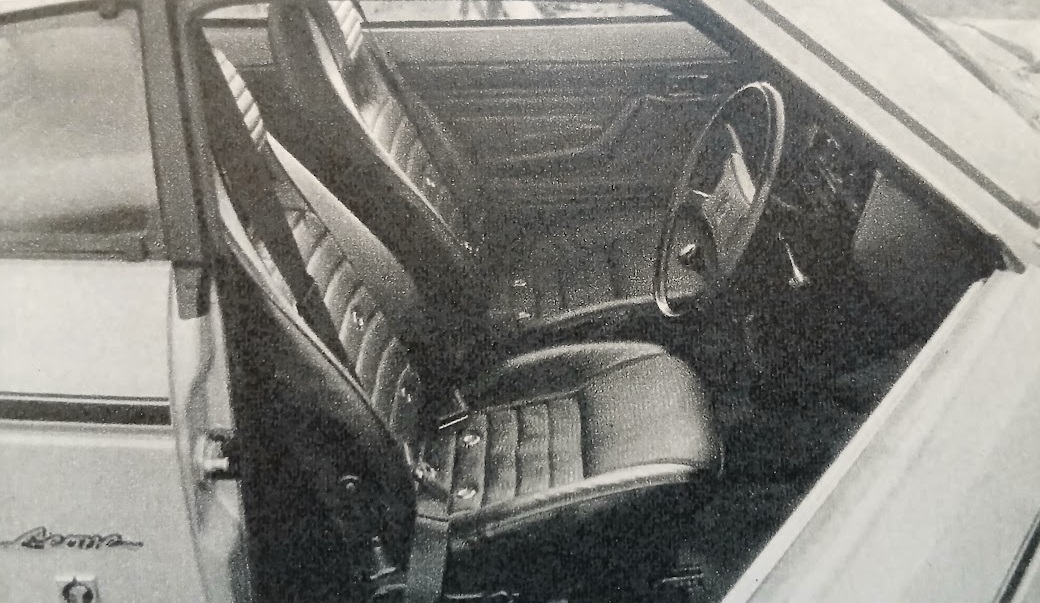
Compared with the GSR, the omitted equipment ranges from functional items like the heated rear window to the radio, clock, center console, overhead console, wood-grain dashboard panel and various moldings. Features unique to the RX, on the other hand, include a spotlight-type interior lamp, black-painted windshield-wiper arms, and 3-point seat belts for both front seats. This is exactly the same approach pioneered by Toyota for its so-called SR models, and the removal of unnecessary accessories gives the RX a cleaner appearance as well.
Fuel consumption averaged 10.18km/l over the test distance of approximately 340km, which covered driving in Hakone and Izu via the Tomei Expressway (corrected for the odometer’s 2.4% optimistic error). Premium gasoline was used, and fuel-tank capacity is 50 liters.
Postscript: Story Photos