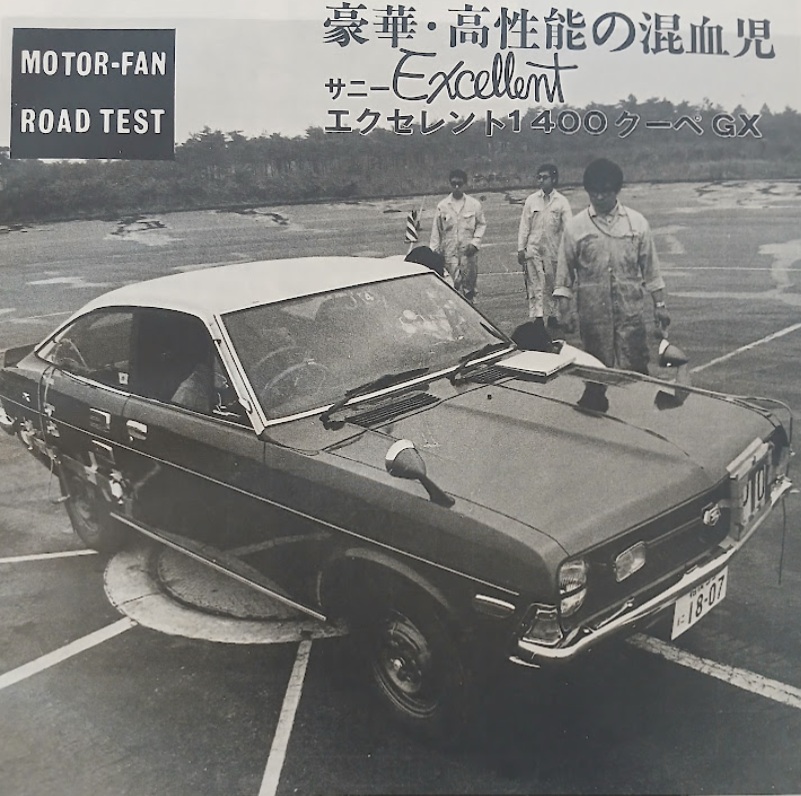
Nissan Sunny Excellent Coupe 1400GX (1971)
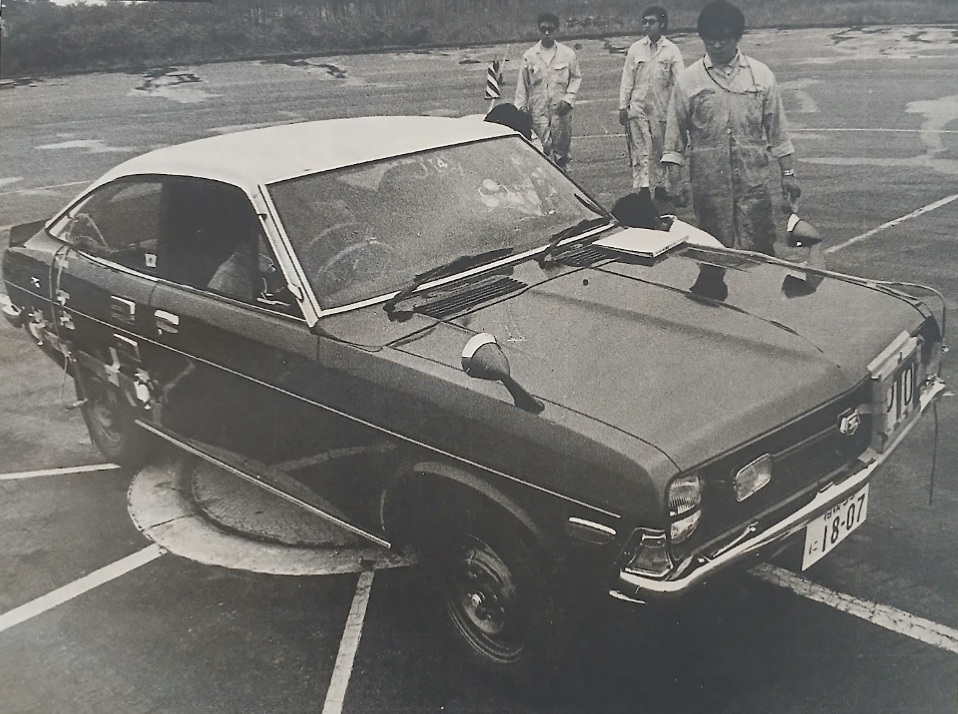
Publication: Motor Fan
Format: Road Test
Date: August 1971
Authors (Roundtable): Zenzo Sonoda, Kenichi Otani, Kenji Higuchi, Osamu Hirao, Isao Sano, Minoru Tanaka, Yasuyori Tomizuka, Kunitaka Furutani, Takehisa Sakagami, Yasuhei Oguchi, Hiroshi Okazaki, Minoru Onda, Kenzaburo Ishikawa, Toshihide Hirata, Motor Fan Editorial Staff (uncredited)
The Subtlety of Combination
Magazine: We’d like to begin with the objectives behind the Excellent.
Sonoda: Last year marked the Sunny’s full model change into the 1200 series. The Excellent was conceived as the top-grade series within that Sunny family. In other words, it was planned for those customers who may feel that the 1200 does not fully satisfy their needs, taking into account the recent trend toward more upmarket preferences. Accordingly, the core of the Excellent series consists of the GL and GX.
In terms of body styles, there are two types: a coupe and a four-door sedan. Depending on the engine and transmission combinations, there are ten variations in total.
From a design standpoint, one of our aims was to clearly differentiate it from the 1200 series, both in substance and in appearance. However, if we had made it feel like a different car entirely, it would have lost the image of belonging to the Sunny series. Therefore, it was developed strictly within the framework of the Sunny.
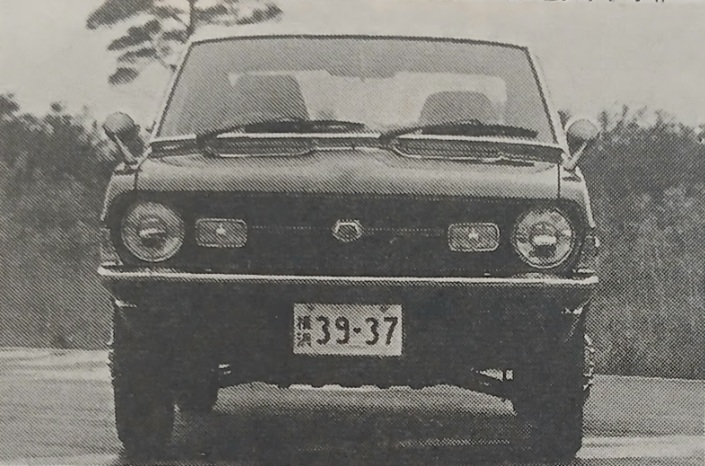
Dimensionally, the front end was extended by 170mm, bringing overall length to 3995mm (4000mm for the sedan). As a result, it now features long-nose proportions. Along with this, we introduced a new grille design. At the rear as well, new tail lamps were adopted.
In terms of performance, it would not have been sufficient merely to install an engine with 200cc more displacement. To create a well-balanced car, we matched the powertrain, brakes, and suspension to the increased performance, and also improved comfort in areas such as noise. With regard to emissions and safety, the car was brought to a level fully capable of meeting the domestic market’s requirements. For example, all models use regular gasoline. In terms of reliability, we have employed well-proven units from the Bluebird and Skyline, and we have full confidence in the mechanisms of the components we are offering to customers.
Magazine: What are its principal mechanical features?
Sonoda: The engine is the Bluebird’s 1.4-liter OHC unit, with the GX equipped with twin SU-type carburetors. The transmission and propeller shaft are from the Bluebird, while the differential and disc brakes come from the Skyline (the drum brakes are from the Bluebird). All models are fitted with a master back servo. The rear brakes are the same as those of the Sunny 1200.
For the suspension, Bluebird-type components are used at the front, tuned to suit this car. The rear is based on the Sunny.
Magazine: So one might say the Excellent was created through the subtlety of combination. From here on, cars of this type –what might be called multi-model, small-volume production–will likely increase. In that sense, it could be considered something of a forerunner…
Sonoda: From mass-market cars through the small and medium classes, and up to the President, I believe the chassis-related components–aside from special-purpose vehicles–have essentially reached a certain stage of completion. Therefore, we considered the approach of making full use of these components to develop new models.
Magazine: In that case, issues of matching the various units and achieving overall balance must have presented some difficulty. Were there particular challenges in that respect?
Otani: Leaving aside purely design matters, we had conducted relatively extensive tests with these existing units experimentally, so in that sense I would not say matching them was especially difficult. Rather, our attention was directed toward how best to achieve compatibility without altering the units themselves. Perhaps this is not the ideal expression, but instead of aiming for the absolute maximum in functional terms, our thinking was to aim for a stable minimum–a reliable, well-settled functionality.
Higuchi: With the Bluebird engine installed in the Sunny body, front load must have increased. Were there any issues in terms of weight distribution? For example, when braking on snow-covered roads or on downhill grades, was there any tendency for the rear to lock up?
Otani: With trucks, such issues can arise when running empty. But in a passenger car, having slightly more load on the front wheels does not create any particular problem.
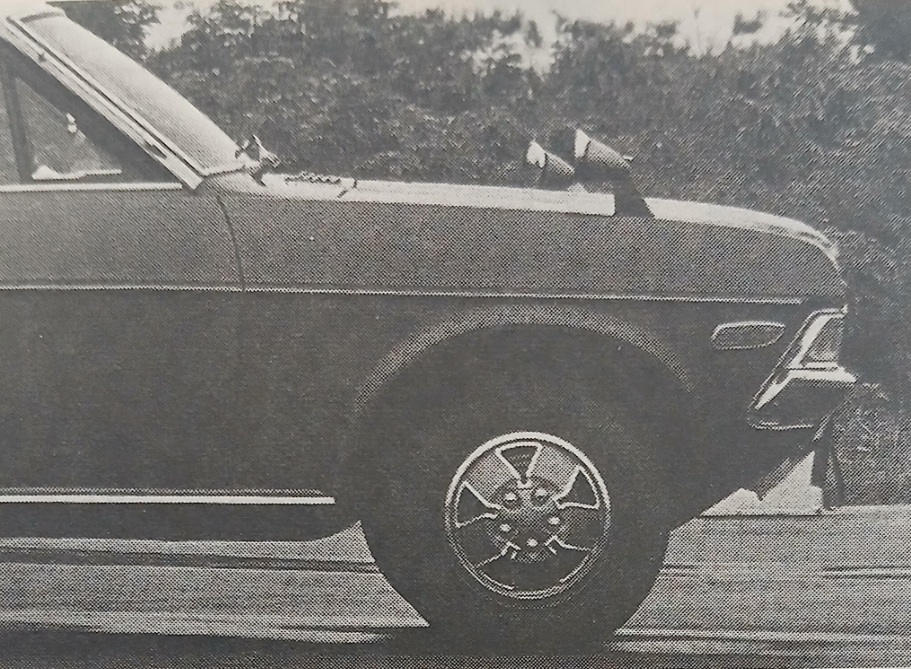
Hirao: I don’t know whether it’s because of the “assembled” nature of it, but somehow the body doesn’t seem to sit quite right. Viewed from the side, it looks as though it’s floating upward. There’s quite a gap between the tires and the wheel arches.
Otani: The tires are low-profile 6.15-13s. Their overall diameter and width are almost the same as the 6.00-12s used on the Sunny 1200 series. However, allowances must be made for fitting snow tires or chains…
Sano: The shape of the tire opening is important stylistically, but we must also account for potential interference between the tire and body, so we determine it in coordination with design considerations. We didn’t intentionally make that area especially large…
Long-Nose Proportions
Magazine: From the front pillar rearward, is the styling the same as the 1200?
Sano: Yes, that’s correct. From the outset, what we had in mind was that, as an upper-grade Sunny, it needed to possess a certain dignity appropriate to that position. At the same time, there had to be a clear sense of difference from the Sunny 1200. To achieve that, we extended the front end and gave it a long-nose proportion.
Many recent American cars use this kind of proportion, and it creates a form with a greater sense of movement. To emphasize the long nose even further, it was necessary to give the radiator grille a pattern with real depth. Compared with pressed steel, plastic makes it easier to achieve that three-dimensional effect, so we judged it to be the better material. Technically as well, it allowed us to produce a single large integrated grille, which is why we adopted it.
Magazine: It’s unusual to make the entire grille as a single piece.
Sano: Plastic grilles have become more common recently, but they are usually divided somewhere. From our experience with the 1200, we had confidence technically, so…
Magazine: Was the long nose purely a styling decision? How about crash safety?
Tanaka: In the end, I think it contributes considerably to safety. However, at the planning stage, the main objective was to create as large a distinction as possible between the 1200 and the 1400. From the standpoint of engine installation alone, it was not strictly necessary to extend it that much, but from a design perspective, we wanted to give the stylists free rein to demonstrate their technique, and so we provided them with those dimensions. (laughs)
Magazine: The engine is the same as the Bluebird 1400 unit, but the GX is fitted with twin SU carburetors. That specification doesn’t exist in the Bluebird line, does it?
Tanaka: Within the Sunny series, there was a strong request for a twin-carburetor version, so we developed it specifically for this model.
Magazine: So in theory, it could also be fitted to the Bluebird?
Tanaka: I am responsible only for the Sunny… (laughs)
Higuchi: I almost think it would be better to drop the “Sunny” from “Sunny Excellent.” It might be clearer to present it simply as a new model called “Excellent”…
Tomizuka: In a sense, it’s a car aimed slightly more toward younger buyers than the Sunny itself, so in the catalog and other materials we emphasize “Excellent” prominently, while making “Sunny” as unobtrusive as possible. We’re trying to give “Excellent” an image through phrases like “a car with excitement” and “a car with an essence.”
What Is the Effect of the Spoiler?
Magazine: Let’s review the results of the performance testing.
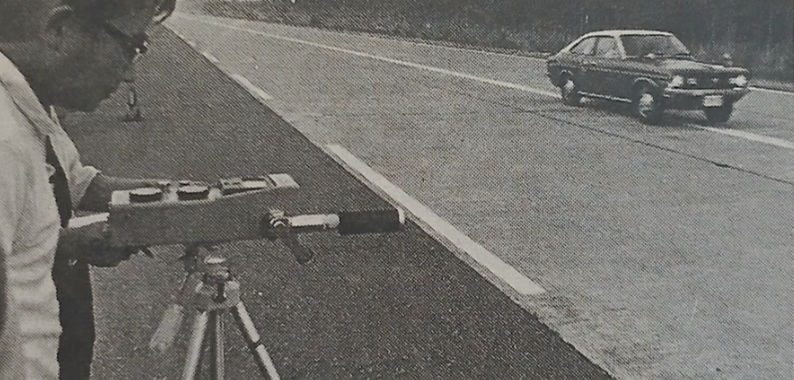
Furutani: The standing-start acceleration figures were 4.9 seconds to 50m, 7.4 seconds to 100m, 11.4 seconds to 200m, and 17.7 seconds to 400m.
Top speed, as measured at the 400m timing point, was 171.84km/h.
The initial phase of acceleration–4.9 seconds to 50m–seems rather slow for this class of car. That appears to have affected the 400m time as well.
Magazine: The catalog lists 17.1 seconds. In this test, it seems the car was not quite able to demonstrate its full potential in acceleration, but top speed exceeded the published figure by about 6-8km/h.
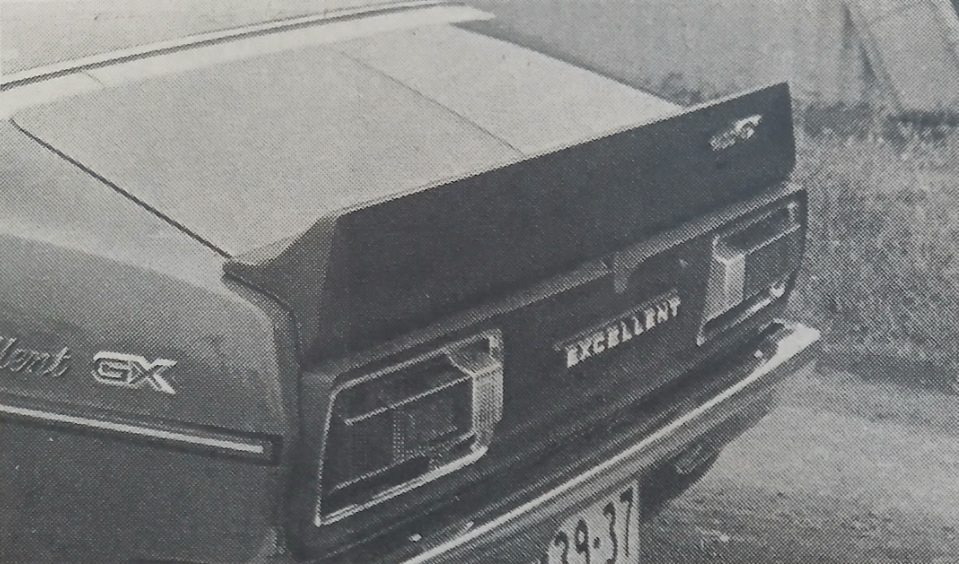
Otani: We happened to have the optional rear spoiler fitted. When the spoiler is installed, aerodynamic drag is reduced slightly. In our testing, the drag coefficient without the spoiler was 0.437; with the spoiler, it dropped to 0.412, a reduction of roughly 6%. Calculated on that basis, top speed increases by around 2-3%.
In addition, fitting the spoiler reduces rear-wheel lift. At 150km/h, rear lift is approximately 26kg, but with the spoiler it falls to about 16kg. So as a means of increasing rear tire contact, one could say the spoiler is effective.
Magazine: So the spoiler improves stability and grip, and might even improve fuel economy–nothing but advantages, then.
Otani: Fuel economy depends on how the car is driven, so it’s difficult to generalize, but in European-style high-speed driving it would likely have a noticeable effect.
That said, the spoiler is essentially more of a playful accessory.
Hirao: Driving in a way that allows the spoiler’s effect to appear in the first place–that’s the real issue.
Magazine: In this class there is also the Corolla 1400. With a light body and a relatively large engine, it could be said to be the hottest performer in terms of power. In this case, dimensionally, it seems the 1800 SSS engine would also fit.
Higuchi: European cars–the Ford Escort, for example–offer a considerable range of engine variations. If a 2000cc-class engine were installed in the Sunny, I think it would make for a very enjoyable car. After all, nowadays, it’s the engine’s actual dimensions that matter more than cylinder displacement.
Hirao: If people drove a car like that, they’d all be spinning out on rainy days. (laughs)
Perhaps it would be manageable with a torque converter automatic, though.
Traditionally Good Fuel Economy
Magazine: Due to scheduling difficulties at the Watari Laboratory, we were only able to have noise levels measured this time by the Oguchi Laboratory. For reference, we’ll present their figures.
Interior noise levels were 65 phons at 40km/h, 66 at 50km/h, 67 at 60km/h, 69 at 70km/h, 74 at 80km/h, 75 at 90km/h, 76 at 100km/h, 78 at 110km/h, and 82 at 120km/h. These are measured on the A-scale, and the speeds are actual speed.
Exterior noise was 75 phons at a steady 50km/h in second gear, and 83.5 phons when accelerating from 50km/h.
From the data, it appears that there are peaks in interior noise at 80km/h and 120km/h.
Sakagami: In our in-house data, there is no peak at 80km/h. I’m not sure why it appeared in this test, but I imagine the surface of the Yatabe test course may have increased road noise. The reason I say that is because there is not much difference on the C-scale.
Magazine: From the standpoint of the “combination” approach, were there any issues regarding noise?
Sakagami: None in particular. Fundamentally, we haven’t changed very much. We’ve added a pre-muffler to the 1200’s exhaust system. We also added sound-deadening materials and used inter-leaf inserts in the rear springs to keep noise levels down.
Magazine: Next, let’s please hear the fuel consumption results.
Oguchi: Steady-speed fuel consumption was 18.2km/l at 40km/h, 18.2km/l at 60km/h, 16.6km/l at 80km/h, 14.1km/l at 100km/h, and 10.8km/l at 120km/h.
Model operating fuel economy was 11.0km/l in a simulated 40km/h speed zone, and 9.4km/l in a 60km/h zone.
Up to now, fuel economy has been regarded as one of the Sunny’s strong points. This car might not stand out dramatically in that regard, but it, too, can be said to return good figures.
Otani: Fuel consumption varies depending on how the car is used, but the present model operating figure of 11km/l corresponds fairly closely with practical driving in central Tokyo. In suburban use, something around 13km/l would probably be realistic in everyday driving.
Hirao: Is the difference from production variation between carburetors on the order of 10 percent?
Otani: I don’t think it would be that much.
However, with the SU-type twin carburetors, if adjustment is not correct, consumption can become worse than expected…
Grown-Up Handling
Magazine: We’d like to move on to handling and stability. Since Professor Kageyama is absent today, we will share his written comments.
“The Sunny Excellent Coupe GX tested this time stands out with its long-nose styling and the luxurious transformation of both interior and exterior. Unlike the family-car image suggested by the Sunny name, the Coupe GX in particular can be said to satisfy young buyers seeking a high-class, high-powered car.
In terms of performance, the high-output engine noticeably improves acceleration. At the same time, attention has been paid to driver comfort and convenience, with features such as servo-assisted disc brakes, ventilation, and a well-thought-out driving position.
Regarding handling and stability, the car displayed consistently stable understeer characteristics in steady-state cornering. Steering effort felt somewhat on the heavy side.”
Higuchi: If you drive it expecting a Sunny, it feels more like a Bluebird… (laughs)
Hirao: That’s right. High-speed stability was quite good.
Okazaki: Certainly, with the increase in class, the feeling is considerably different. It is light in response yet carries a certain sense of weight. However, it was disappointing that the tires lacked grip. Ride comfort is good, but the chassis feels somewhat soft, a bit lacking in firmness–it feels somewhat unsupported.
Magazine: The Sunny 1200 had a reputation for very good handling…
Okazaki: It has definitely become tamer. It still has sporty character, but it is now easier to manage.
Magazine: Has understeer increased compared with the Sunny 1200?
Otani: Compared to the 1200, there is a slight tendency toward stronger understeer.
Who Is the Target User Demographic?
Higuchi: I suspect the target user group is roughly ten years older than that of the 1200 model, judging from the interior. That would mean people with slightly slower reflexes behind the wheel, so the handling had to take that into account.
Sano: Speaking of the interior, when we consider interior design–looking back at our own cars as well as those from other manufacturers–black has been used a lot recently to convey a sporty image. We wanted to break away from black. Society itself is becoming very colorful, and younger people use color boldly.
The interior of this car is available in black, but we also use brown, blue, and yellow tones. For example, the test car even has fabric seats with stripe patterns. The body colors have evolved too, starting with cream, then yellow shifting toward orange, and now we have some bold orange shades we call “Safari Brown” and “Safari Gold.”
Higuchi: Lately, older buyers seem to be going for more showy, American-style colors, while younger people are leaning toward more subdued tastes. Maybe that’s part of it.
Magazine: Wouldn’t the stripe patterns appeal to younger drivers?
Sano: Yes, they’ve been receiving quite a bit of praise.
Okazaki: Personally, I get the feeling they’re presenting it as a car aimed at young buyers, but are really targeting the middle-aged. The gold metallic dashboard, the color-stripe seats–that’s the impression I get, including the overall ride and feel.
Magazine: Does this also apply to handling?
Okazaki: I’d say so. Compared to the 1200, it feels like a more grown-up car.
Magazine: So the steering setup is different from the 1200?
Otani: The steering unit is from the Bluebird series.
Magazine: What about the steering wheel position?
Onda: Measurements show the steering column is angled about 4° more upright than the 1200. That may explain why, the moment you grab the wheel, it feels more “Bluebird” than “Sunny.” The steering wheel diameter is also smaller than the 1200’s.
Magazine: Is the steering wheel rim real wood?
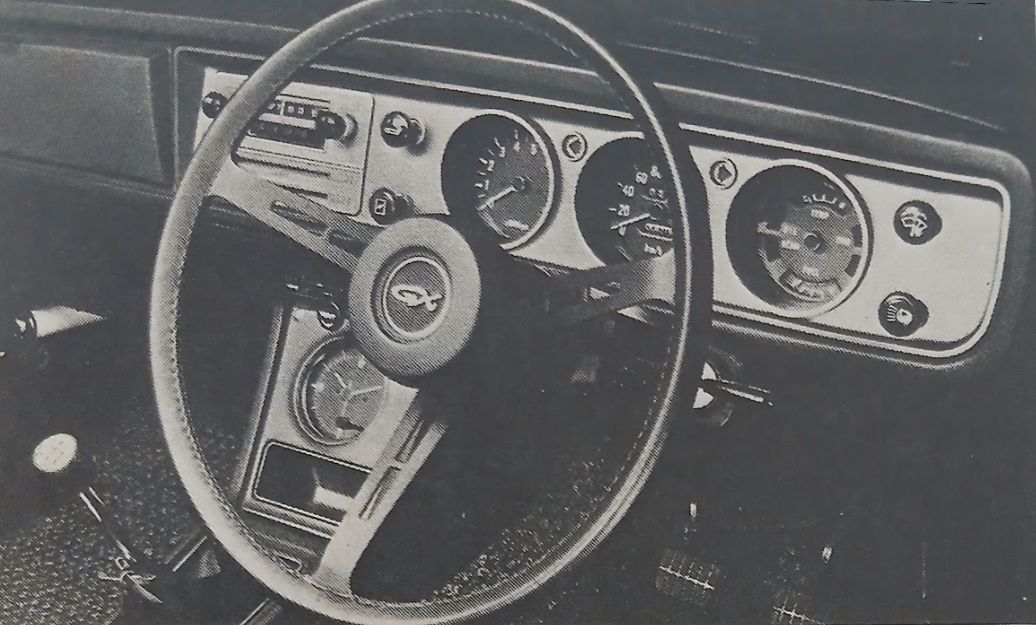
Tanaka: The test car had an optional Nardi-type genuine-wood wheel. The standard wheel is leather-wrapped, though.
Okazaki: The light and wiper switches are quite close together. What do you think about that layout?
Tanaka: Even when they’re close, some arrangements are easier to operate without mistakes than others. The gauge cluster carries over the 1200’s design, precisely because it’s a layout that minimizes accidental operation.
Okazaki: With the three-point seatbelt fastened tightly, you can’t reach the switches at all. What do you think about that?
Tanaka: In general, most people dislike feeling too constrained, so they tend to loosen the belts slightly. Also, foreign regulations tend to favor this setup. And people usually slide the seat forward when driving, so for safety, the switches are recessed into the instrument panel.
Higuchi: That’s fine if the car has an inertia-locking seatbelt. Moving the switches to the center console would be even better. They just need to be designed so you can operate them by feel.
Onda: Once the reach exceeds 700mm, it’s out of reach. We took measurements with the seat in the middle of its slide, but in reality, people usually slide it further back. Well, without the belt fastened, the switches are reachable. You could even add extensions–Professor Higuchi used a rubber hose on the switch. (laughs)
Hirao: I keep thinking, couldn’t the whole dash slide towards you a bit when you get in? Even if just the switches could be pulled out like a little drawer, that would be handy. (laughs)
Red Zones on the Speedometer
Magazine: Since we’re on the topic of dimensions, could we have the data from the Higuchi Lab?
Onda: First, regarding the body, the front end has been extended, so overall length and wheelbase have increased. The tires are a low-profile, tubeless type. Visually, the optional spoiler and integrated fog lamps stand out.
Inside, the test car had optional high-back seats. The rear seats, true to the Sunny Coupe’s tradition, fold flat to create a level trunk space. The trunk itself features high-quality lining, giving a premium impression. Interior width remains the same as before.
Regarding switch placement, aside from the points mentioned earlier, the rear defogger switch stood out. It looks like it was tacked on afterward, which doesn’t match the otherwise high-end feel. Perhaps using a free space in the console would have been better.
One feature that very well-liked was the optional stereo system. The speakers were neatly fitted inside the doors, which I think will be very well-received.
Gearshift dimensions are nearly identical to the Bluebird. As for the pedals, the accelerator is a vertically hung type. The previous 1200 had an organ-type pedal.
Hirao: The oil and ammeter gauges on the console looked cheap. They didn’t match the car’s upscale image.
Magazine: Those are optional, aren’t they?
Hirao: Yes. Also, the speedometer has both a yellow and red zone. I wonder if it might make sense to link those to legal speed limits–yellow at 60km/h, red at 100km/h.
Magazine: Speaking of which, the red zone starts at 150km/h. Considering the top speed is 165km/h…
Tanaka: That’s because the gauges are shared with the 1200.
Ishikawa: Seeing red from 150km/h could be interpreted as “if you go any faster, the car will break.”
Hirao: So the question becomes: from the manufacturer’s perspective, should the marking reflect the legal speed, or the maximum safe speed for the car, including tires and other components? If it’s tied to the legal limit, the meaning is immediately clear.
Higuchi: Seeing that red zone might naturally encourage drivers to test the car up to 150km/h. Right now, “challenge” is the fashionable word. (laughs)
Hirao: There’s also a growing push from the manufacturers’ side to take social responsibility seriously. And other parties are requesting it as well, which is why the Japan Automobile Manufacturers Association is currently debating where such indicators should be placed.
Well-Balanced Brakes
Magazine: Next, let’s have the data on weight, alignment, and brakes.
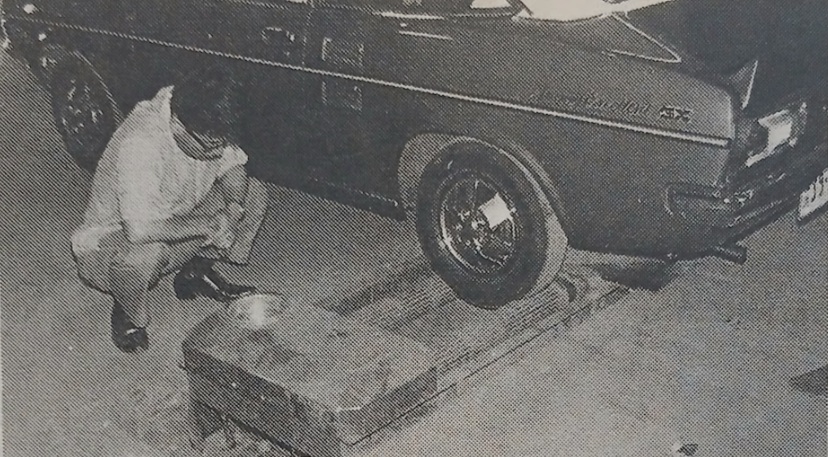
Ishikawa: The test car was fitted with quite a few options, so weight came to 841kg (with 30 liters of fuel), about 20kg heavier than the catalog figure. Weight distribution is 57:43, so compared with the 1200, the front is heavier.
That’s the same distribution as the Corolla 1400 and Celica. With one or two occupants in the front seats, it shifts to 56:44, and with five passengers aboard it becomes 51:49.
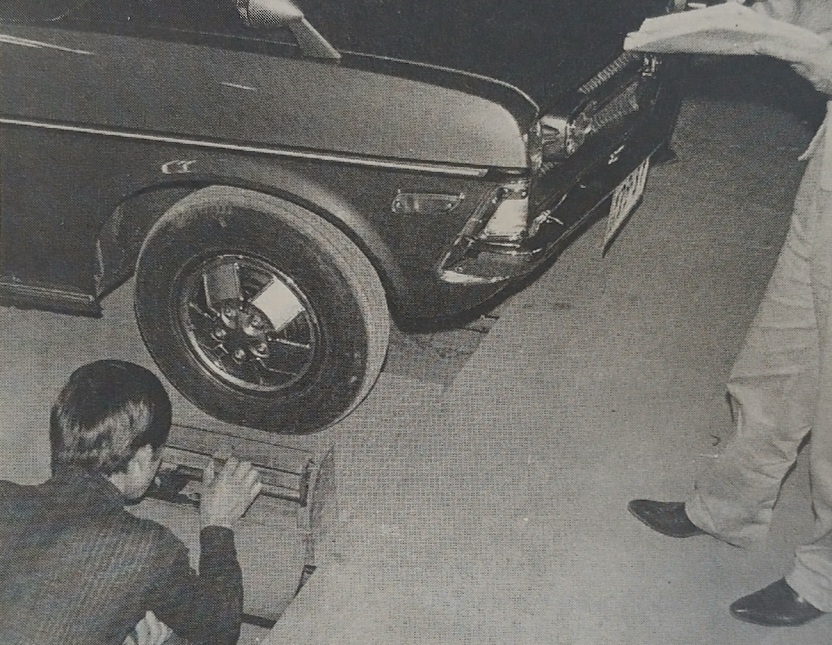
As for alignment, the front has a moderate amount of toe-in and camber. At the rear, both toe and camber are zero.
The brakes are disc front with leading-trailing rear drums, and a master back servo is fitted.
Initial brake application requires about 4kg of pedal effort front and rear, with roughly 30mm of pedal travel. To achieve 0.6g deceleration requires about 23kg of pedal force. Pedal feel is slightly soft at first (the pedal spring constant is 0.7kg/mm), but beyond 0.6g it becomes suddenly firmer, rising to about 1.6kg/mm.
There is no left-right imbalance in braking force; it is very well matched. Front-to-rear brake force distribution at around 0.6g is 62:38. The manufacturer’s specified servo cut-off point is at 22kg of pedal effort, but in our measurements–perhaps due to slightly low vacuum pressure–the servo stopped assisting at about 15kg of pedal force, corresponding to roughly 0.45g deceleration.
In the road test, braking at 0.6g from 50km/h with four occupants aboard required only 18-19kg of pedal effort, so they proved more effective than on the test bench.
As for brake feel, there is no slack in the initial 30mm of travel, and perhaps because they are discs, engagement is smooth and progressive. Overall, the impression is very good.
Regarding operating forces, the shift lever requires 3-4kg and engages with a fairly firm, positive “click-click” feel. The clutch requires 10kg to disengage and 17kg to engage, which is fairly typical. The accelerator pedal requires 4kg under acceleration and 0.5kg to maintain a steady 50km/h; acceleration effort feels slightly on the heavy side.
Magazine: The master back servo unit is the same as the Bluebird’s, correct?
Tanaka: Yes, it’s the 4.5-inch type. Usually, fitting this master back can make the brakes feel overly abrupt–what we call “grabby” brakes–but we’ve tuned it to avoid that.
Ishikawa: That’s right. With initial effort at 4kg, there’s no sense of awkwardness or unnatural response.
Sales Target: 7,000 Units
Magazine: Let’s have the results of the visibility measurements.
Hirata: The forward field of view through the windshield measures 97.5° laterally in total, and 20° vertically. The wiper sweep covers 82° horizontally, which corresponds to about 64% of the total area.
In terms of solid angle, the overall visible field amounts to 1.2 steradians. Of that, the windshield accounts for 0.658 steradians, and the wiper’s swept area is 0.42 steradians. Rearward visibility totals 0.792 steradians, while the rear window itself accounts for only 0.033 steradians.
Compared with other cars in this class, forward visibility is slightly better than average.
Hirao: The glass over the oil-pressure gauge and ammeter reflected light so badly that they were hard to read.
Magazine: Those two are optional equipment, after all. (laughs) How about safety?
Higuchi: As usual, we assess safety by visually confirming the presence of the relevant equipment. On a 100-point scale, it scores 87, so I would say there are no particular concerns in that regard. Beyond that, we would have to conduct collision testing… (laughs)
If one were to be picky, the front and rear bumper heights differ slightly–that’s perhaps a three-point deduction.
Magazine: Are there any plans for export?
Sonoda: At present, we’re not considering it.
Magazine: What about production plans?
Tomizuka: Rather than calling it a production plan, let’s say it’s a sales target. As of the April 1 announcement, we would like to aim for about 7,000 units per month initially.
Historically, the Sunny series as a whole has averaged about 18,000 units per month. With the introduction of the 1400 series, that mix may change somewhat. Including the 1400, we would like to raise the total to around 22,000 units per month. Of that, we expect the 1400 to account for roughly 30-32 percent.
In April, we were not yet able to conduct full-scale sales activities, but even so, about 3,900 units were sold. We don’t yet have May’s figures, but as the top-grade model in the Sunny series, it appears to be receiving the response we had hoped for, and fortunately, sales seem to be climbing steadily.
Magazine: On that note, we’ll conclude our discussion here…
Postscript: Story Photos