Nissan Sunny Excellent 1400GX and Coupe 1400GL (1971)
Publication: Motor Fan
Format: “Bubble Index” Road Test
Date: June 1971
Authors: Osamu Mochizuki, Katsuzo Kageyama, Shigeki Asaoka, Yasuhei Oguchi, Reiko Ikuuchi, Kensuke Ishizu
The Tough-Running Hybrid
Steering feel that inspires confidence, and an engine that spins freely. Built by making extensive use of components from existing models, this “hybrid” nonetheless carries the unmistakable bloodline of the Sunny…
The newly announced Sunny Excellent series represents the third generation of the Sunny line. The original model debuted in March 1966 to considerable fanfare as a one-liter people’s car. Only a few months later it was joined by the Corolla, and the two quickly found themselves locked in fierce competition for market share in what was then still an undeveloped segment of the mass-market car field.
Then, in January 1970, the model underwent a full redesign under the advertising slogan, “Now the car next door looks small.” Displacement was increased to 1200cc, marking a substantial step forward.
Around that same time, however, rumors began circulating that an even larger engine would soon find its way into the Sunny.
As it turns out, those rumors were well founded. This April, Nissan finally announced the Sunny Excellent 1400, equipped with a 1400cc engine based on the L14 unit first introduced in the Bluebird 1400 last autumn.
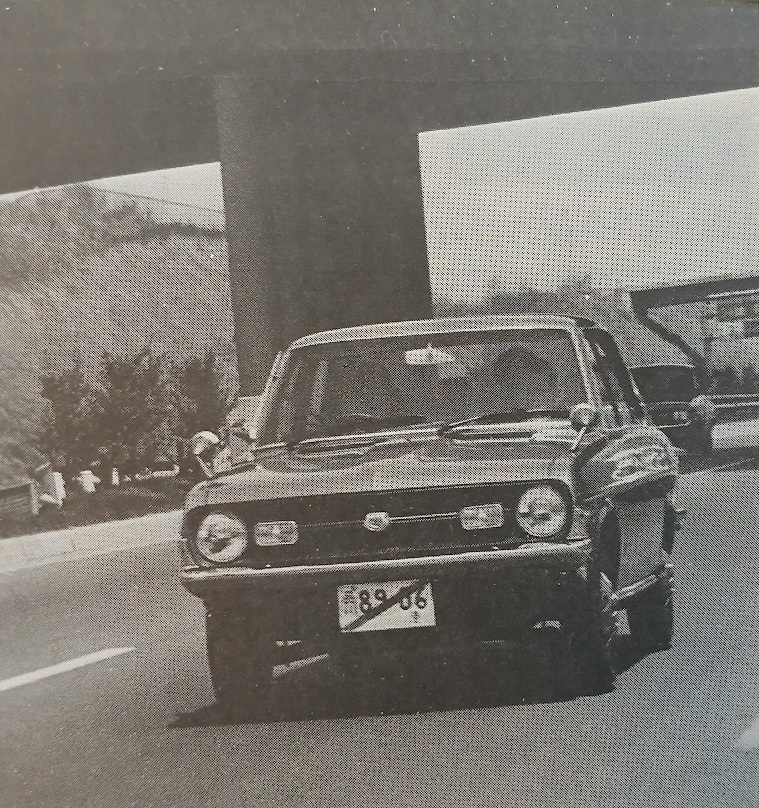
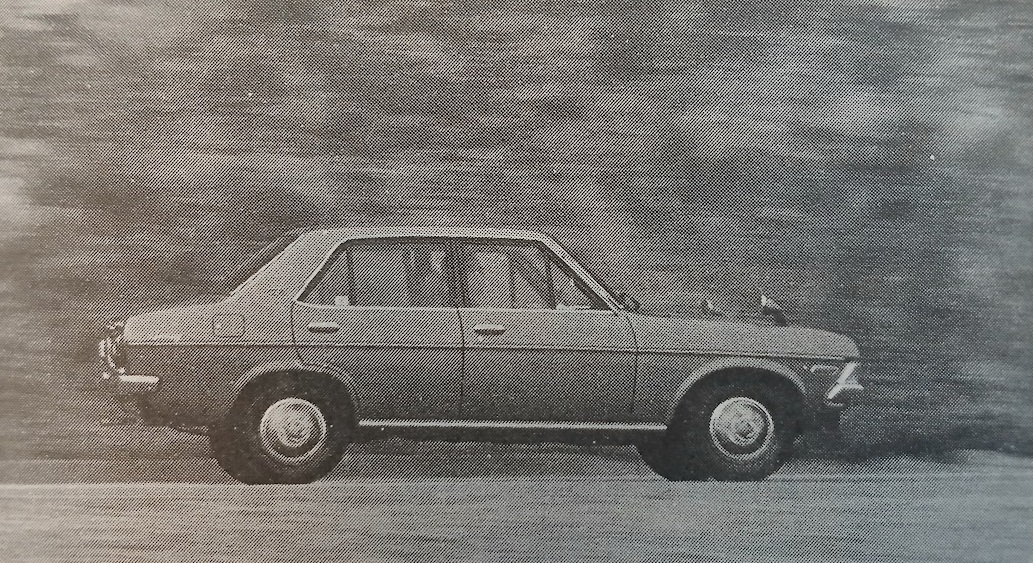
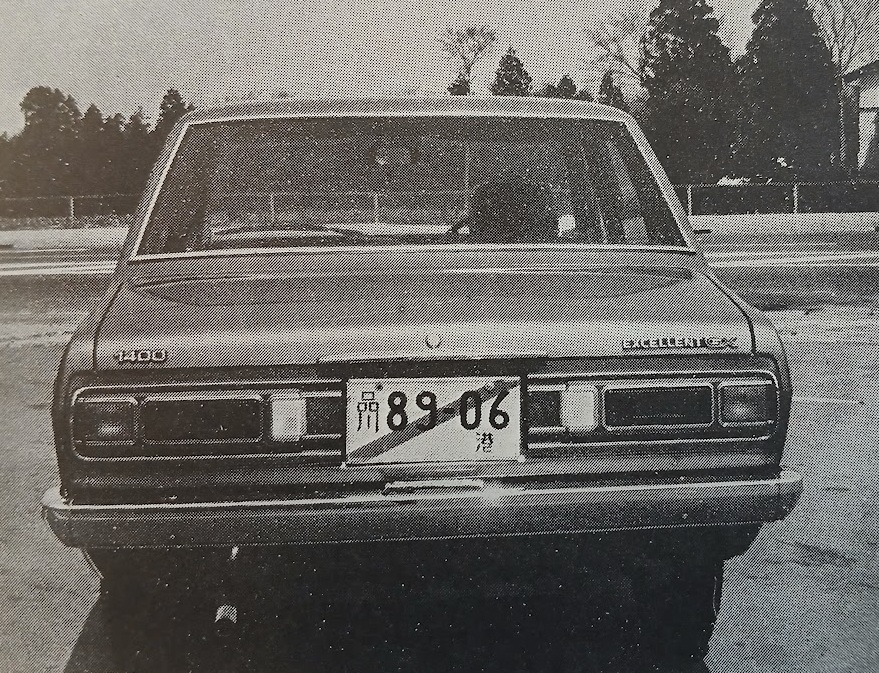
Aside from a 170mm increase in overall length and a 40mm extension of the wheelbase–along with minor revisions to the front grille and rear end–the car remains almost identical to the 1200cc model.
Moreover, much of the front suspension and the drivetrain components have been carried over directly, or with slight modifications, from the Bluebird and Skyline.
In short, this car may fairly be described as something of a hybrid within the Nissan lineup.
For that reason, the question that interested us most with this model change was how much of the original Sunny’s character had been preserved: its excellent fuel economy, its small turning radius, and above all that light, lively getaway that had always been one of its defining traits.
With these thoughts in mind, the test group set out once again on our usual course: from the Tokyo IC of the Tomei Expressway to Gotemba IC, over Otome Pass, up the Hakone Turnpike, back again via Otome Pass, and finally returning to Tokyo on the Tomei. (Measurements were conducted primarily using the GX model. Hill-climbing performance testing was cancelled because the measurement section was under construction.)
After completing the run, the group gathered at our usual base, the “Fantasy” drive-in near the entrance to the Tomei Expressway on Tamagawa-dori, to compare impressions.
The first topic to arise was the steering. Nearly everyone agreed that its character had changed considerably.
Steering effort has become noticeably heavier, and the overly light feel that characterized previous Sunnys has been thoroughly improved. At high speeds, in particular, it now inspires a good deal of confidence.
There were also favorable remarks regarding the engine’s response and ease of use, with some noting that it ranks among the better examples in the 1400cc class.
On the other hand, a few observations were made concerning high-speed driving. While cruising between roughly 90-120km/h, a droning whine was heard from the drivetrain–possibly from the propeller shaft or the differential, though its exact source was unclear. Another point raised was a booming resonance that becomes particularly noticeable at around 80km/h, but diminishes again at higher speeds.
For the details of these various impressions, we invite readers to turn to the reports from each of our specialists on the following pages.
Power Performance: A Remarkable Step Forward (Osamu Mochizuki)
The Sunny series began life as a 1000cc car and has now developed to the point of carrying a 1400cc engine. This represents a typical example of the increasing “deluxe-ification” of the mass-market car, but in terms of performance alone, it now offers more than sufficient ability for a vehicle intended to serve as everyday transportation.
The engine itself is derived from the L14 unit used in the Bluebird 1400, though several detail revisions have been made to improve its characteristics and raise overall performance. Despite its short-stroke dimensions of 83 × 66mm, the engine displays surprisingly strong tenacity at low speeds.
Vehicle weight has increased by about 120kg compared with the 1200 series, yet the car is still capable of accelerating in top gear from as low as 25km/h. If one is not overly concerned about a slight tendency toward engine knock, it can even run at speeds as low as 800rpm. Cars capable of pulling from 800rpm in top gear while carrying a body weighing no less than 825kg are rare, aside from American cars equipped with large V8 engines. Incidentally, the power-to-weight ratio is not especially remarkable, at 11.5kg/ps. It is therefore reasonable to conclude that this low-speed tenacity stems primarily from the engine’s favorable output characteristics. By the time the engine reaches about 1200rpm in top gear, throttle response becomes fully practical.
At medium and high speeds, meanwhile, acceleration remains at a high level, delivering performance that surpasses many sedans in the 1600cc class. At 100km/h the engine is turning close to 4000rpm, and engine noise becomes somewhat more pronounced, but throttle response remains sharp and makes highway driving easy.
The gear ratios are also closer than those of the 1200 model, which contributes considerably to the car’s ease of use. Across the entire speed range, the driver can obtain sufficient acceleration at any time, while each gear allows the car’s speed to build smoothly.
The engine is equipped with twin SU-type carburetors, and even under rapid throttle inputs the venturi opening responds promptly, allowing the car to make smooth and satisfying progress.
The pedals all require only light effort, and the disc brakes (equipped with a master back servo) deliver strong stopping power that seems almost disproportionate to the small pedal pressure required.
Because of the increase in vehicle weight and the larger wheel diameter, which raises the self-aligning torque, steering effort is somewhat heavier than in the 1200. This appears to have a beneficial effect when making lane changes at high speed.
In addition, the 40mm increase in wheelbase contributes significantly to improved cornering performance. Even near the limit the car maintains a moderate degree of understeer, and its behavior remains composed and predictable.
Looking back once more at its overall driving performance, the Sunny 1400GX combines a compact body with flexible, responsive acceleration. It takes to city traffic with the same casual ease as a motorcycle, yet when required it can also reach speeds of 160km/h, a figure that not long ago was a target for dedicated sports cars. Although this advance is undoubtedly the product of the intense competition within the mass-market car segment, one cannot help but be impressed by the extent of its performance development.
“The engine revs freely. For this class, its performance is quite respectable.” —Asaoka
“There’s ample reserve on expressways and mountain roads. It’s a reassuring car.” —Oguchi
Handling and Stability: A Sporty Yet Practical Car (Katsuzo Kageyama)
Lately, it seems that every car brochure emphasizes “luxurious interior equipment.” Sometimes, the level of opulence feels exaggerated, almost as if the car is trying to be something beyond its class, and it can come across as a bit over the top.
The Sunny Excellent 1400, too, highlights luxury in its catalog, much like other cars. Yet my first impression upon sliding into the driver’s seat was quite the opposite: “Respectfully simple, modestly designed, and right-sized.” In this respect, the car inspires confidence. For vehicles of this kind, I would much rather see the inherent virtues of a mass-market car than a veneer of luxury.
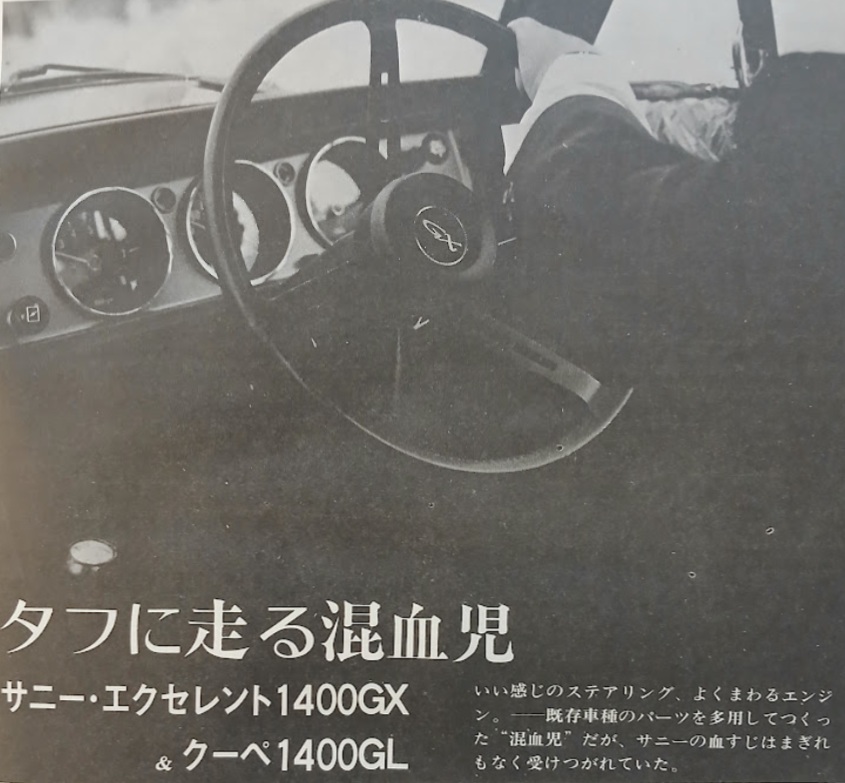
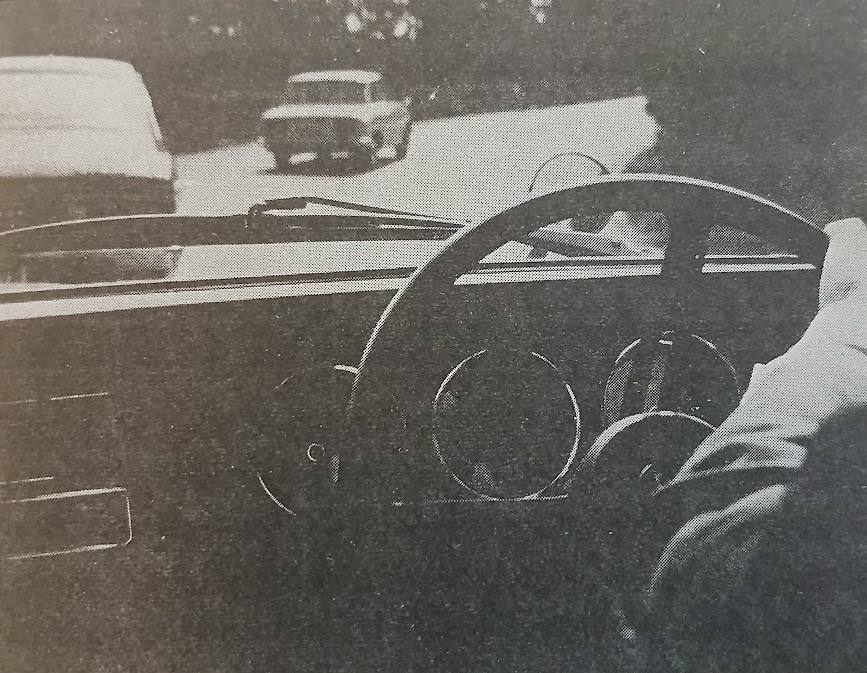
The placement of the steering wheel, shift lever knob, and pedals, in conjunction with the seat design, is flawless. Ergonomic research is clearly reflected in every detail. The shift lever stroke is also perfectly judged–nothing about it felt inconvenient.
The black-painted wipers on the GX model are excellent for reducing glare. The only drawback is that their resting position is somewhat high, which can obstruct visibility, especially when checking the left fender mirror.
The hydraulic clutch is exceptionally smooth and easy to control, and the shift feel is satisfying.
The steering effort is well balanced; not too heavy, not too light, just right. Friction in the steering system is minimal, and the wheel returns naturally. The subtle feedback when turning is exquisite. At high speeds, the car responds with remarkable sensitivity, making for a thoroughly enjoyable drive, perfect for young drivers with sporty sensibilities. The degree of understeer is well judged, never excessive.
The suspension is set up in a straightforward manner–not stiff, yet with minimal roll. This setup encourages a brisk driving style without compromising comfort.
The disc brakes, assisted by a master cylinder, are smooth and strong, requiring only light pedal pressure. Yet they are not overly sensitive, and control is precise and intuitive. At high speed, braking performance is superb, but as speed decreases, the brakes feel somewhat less effective, so the driver must remain mindful of this characteristic.
As always, I approached this test with a critical eye and a somewhat exacting attitude. Regarding handling and stability, I must admit that there was nothing that particularly thrilled me. At the same time, there was nothing I could point to as a real fault, either.
Overall, the Sunny Excellent 1400 leaves the impression of a practical passenger car imbued with a degree of sporty character. Its seemingly ordinary demeanor conceals a surprising amount of talent and capability.
“The steering is responsive, pleasantly firm, and should suit young drivers perfectly.” —Mochizuki
Ride Performance: A Question of Sensibility (Shigeki Asaoka)
In an era when the “wide selection” approach–catering to users’ desire to flaunt their status–is growing ever stronger, here we have yet another car with an in-between-sized engine. Engines now range between 1000cc and 2000cc in increments of 100cc. One can’t help but wonder: is there really a need for so many different engine sizes?
After all, what practical difference does a mere 100cc make–say, between a 1300cc car and a 1400cc car? This proliferation of engine variants may reflect a shift in consumer priorities: drivers increasingly choose a model based on appearance or prestige rather than the requirements of actual use.
Having heard for some time that the Sunny would adopt a 1400cc engine, I had been looking forward to this test drive. My anticipation stemmed from the fact that when I drove the Sunny 1200 at its debut, my impression had been lukewarm. This new opportunity promised to reveal whether improvements had been made.
As for ride performance, discussing this topic is not simply a matter of evaluating comfort. It is, rather, a sensory judgment encompassing the car’s size, styling, powertrain, and overall livability. What makes this area challenging is that these qualities cannot be fully captured by instruments alone.
During the test of the Sunny 1400, I found myself somewhat at a loss as to what exactly should be evaluated. From a distance, the car projects a greater sense of substance and robustness than its predecessors. Yet close up, flaws in finish and materials are immediately apparent.
The doors and hood constantly vibrate, while noise levels are uncomfortably high compared with similar cars–disappointing, to say the least. The gold-colored plastic instrument panel (why gold?) looks fragile, like a thin cracker, and the brown, grid-patterned floor carpet is a problem that goes beyond questions of personal taste.
On the other hand, the engine turns smoothly, producing ample power and torque. The pedals and shift lever are well-placed, allowing any driver to get in and operate the car without difficulty. In these respects, the Sunny competes well with its peers.
But one does not drive a car with their eyes closed. It is not enough to create a mechanically competent vehicle; the design must also demonstrate sensibility. Even if top speed or acceleration exceeds that of comparable models, users will not necessarily respond if it lacks refinement.
A solid fender mirror that actually provides a clear view is far more important than a Talbot-style mirror that vibrates and obscures vision. The same principle applies across the industry: cars that merely look good on the surface risk becoming, like old export-market toys, a source of international embarrassment.
“With so many colors on the body, seats, and side trim, matching one’s wardrobe to the car seems challenging.” —Ikuuchi
“For a car with a relatively stiff suspension, ride comfort is surprisingly good.” —Kageyama
“The rear edge of the hood vibrates violently at high speed, and the hum from the drivetrain (final gear?) is quite noticeable.” —Kageyama
Safety: A Heated Rear Window, Please (Yasuhei Oguchi)
For a car of this size, the Sunny carries a fairly large engine–1428cc–and yet my first impression was more of its reserve power than its acceleration. On highways and other open roads, the driving ease is backed by the relationship among output, torque, gear ratios, and vehicle weight, reinforcing an impression of ample capability and strength.
For the GX and GL models, which emphasize individuality and sportiness, this 1428cc engine seems to be a significant selling point. However, for the Deluxe version, the appeal may be less pronounced. The existing engine already delivered satisfactory acceleration, leaving little to complain about. In that context, the introduction of this 1428cc engine might be best understood simply as an “upgrade” shaped by tax brackets and production efficiencies, rather than offering a significant gain in performance.
Notable improvements include strengthened brakes, enhanced energy absorption in collisions thanks to the longer front end, and the fitment of a collapsible steering column as standard. The front has been extended by 170mm, though its effect on safety is not something that can be revealed in a short test drive. Still, as a precaution for the worst case, it may be a feature worth noting.
The car can also likely be relied on more in a rollover than the thinner-bodied Sunny 1000. That said, if one were being demanding, the strength of the side members under the doors and the rigidity of the pillars–areas which are often overlooked–could probably stand further improvement.
The exterior panels feature press lines designed with both vibration characteristics and styling in mind. Together with reinforcing stays, they contribute not only to structural strength but also to a visual sense of solidity. At times, however, some of these press lines can be slightly intrusive. For instance, the raised press line on the hood, combined with the way the wipers sit, seems to crowd the forward view slightly. This is not really a matter of poor visibility, but rather a psychological impression.
It is disappointing that the coupe’s rear window does not come standard with heated glass. While the standard ventilation system can significantly prevent fogging, it is clear that the heated rear window has been made optional for cost reasons. For a model marketed as top-of-the-line, this feels a little stingy.
Additionally, the passenger seat lacks both a seatbelt and a headrest. The distinction between safety features built into the design versus those offered as options does, of course, give owners more flexibility–but it also leaves room for improvement in standard occupant protection.
“Legally, only the driver’s seat requires a seatbelt and headrest, but in practice, most cars above a certain class include them for the passenger as well. In that case, at least the GX should have them.” —Ikuuchi
Economy: Standardizing the Regular-Fuel Model (Reiko Ikuuchi)
The sedan GX we tested is priced at 647,000 yen at Tokyo dealerships (the coupe GL is 625,000 yen), making it 42,000 yen more than the 1200GX sedan.
However, with 95ps—compared with 83ps for the 1200GX—the 1400GX has more power than one would normally expect from a “mass-market” car. Combined with the range of stylish and luxurious features added to reflect the current fashion-conscious automotive era, the price seems quite reasonable overall.
On the same day the Excellent Series was announced, Toyota introduced its own top-tier 1400SR and 1400SL models (both with twin carburetors) to the Corolla and Sprinter series. They, too, offer 95ps, matching the Sunny 1400GX’s output.
The difference, however, is that all Sunny 1400s are a regular-fuel specification, while the Corolla and Sprinter offer both regular and high-octane versions. In the regular-fuel versions, output drops slightly to 91ps.
Comparing their prices, the Sunny 1400GX (4-speed sedan) lists for 647,000 yen; the new Corolla 1400SL (sedan, 5-speed) lists for 654,000 yen, while the 4-speed version is 639,000 yen. Which is the better value depends entirely on personal preference.
Standardizing the 1400 series on regular fuel came at a good time, coinciding with the recent rise in oil prices.
Official fuel economy figures are 21km/l for the 1200, 20km/l for the 1400—a difference of only 1km/l. According to Nissan’s public relations office, costs for engine tune-ups and routine inspections should be “virtually the same as the 1200.” Additionally, resale values for the Sunny remain strong, offering peace of mind in that regard as well.
At this price point, buyers have a wide array of cars to choose from. With cars that exceed 600,000 yen, one is no longer simply paying for basic utility, and selection becomes a matter of personal taste. In that sense, the Sunny enters a more complex segment. Examples of competing models within roughly 10,000 yen of this price point include: Corona 1600 Hardtop (3-speed column shift): 657,000 yen Celica 1400 LT/DX: (4-speed floor shift): 649,000 yen Skyline 1500 DX: 647,000 yen Bluebird 1600 DX: 654,000 yen Capella 1600 DX: 658,000 yen Familia Presto Rotary Coupe Super DX: 648,000 yen Colt Galant AII Custom (4-speed floor shift): 641,000 yen Honda 77 Custom: 653,000 yen
Clearly, this is an exciting era for buyers, who find themselves spoiled for choice.
“Fuel economy has always been one of the attractions of the Sunny series, and it seems this characteristic is maintained in the 1400 model as well.” —Katsuzo Kageyama
Product Appeal: No Clear Sense of “Assertion” (Kensuke Ishizu)
The seats of this month’s test car, the Sunny Excellent 1400GX, were covered in a striking reddish-brown checked fabric. One often hears remarks like, “What will you do if fabric seats get dirty?”—but we no longer live in an era where dirt is a real concern. In fact, fabric seats can often look even better with a little wear. The same goes for the car body itself: a freshly waxed, spotless car driven in a suit looks, frankly, as sterile and uninspiring as a fresh-from-the-barbershop haircut. Rather, one feels truly natural and at ease when seated on well-worn fabric in a pair of faded jeans.
In today’s fashion world, there is a sensibility known as Neo-Pauperism, which could also be called “New Frugality.”
Modern consumers have grown weary of gaudy, over-the-top luxury. This “deliberately modest look” has emerged in response. It is not about actually lacking money; rather, it’s about individuals cultivating inner richness while keeping outward appearances as modest as possible–a kind of spiritual luxury.
This mindset is reminiscent of the old heii habo (worn-out clothes and hats) trend among students at Japan’s prewar elite high schools. Those students—destined for the Imperial University and bureaucratic careers—would stroll through town with an air of casual satisfaction, almost defiantly modest. Neo-Pauperism channels a similar sense of understated confidence.
Consider a grand chandelier in a simple 2DK apartment, or an overly luxurious ornament brought into a small pre-fabricated house. These gestures may reflect an inferiority complex, a desire to assert superiority through mere appearances.
Likewise, some drivers leave the thin protective vinyl on their car’s interior panels, or cover their fabric seats with protective plastic. One can understand the desire to “take care of their car,” but we no longer live in a world where cars are treated primarily as real estate investments.
This Sunny 1400, reportedly a hybrid of Sunny and Bluebird design, shows that the underlying approach to car-making has not changed. For domestic manufacturers, “playing it safe” seems to remain the basic policy.
Cars built purely on safety and luxury do not allow much room for the driver’s own ideas to be expressed. Recently, however, cars have begun gradually attempting to show individuality even within those safe design boundaries. The cars selected as this magazine’s “Car of the Year” appear to have been recognized for that very quality.
A car is, in many ways, a form of fashion through which the driver asserts their ideas. Among the many cars available, one should choose the one that allows them to express their own identity.
“The stripes and colors are perhaps a bit too bold…” —Oguchi
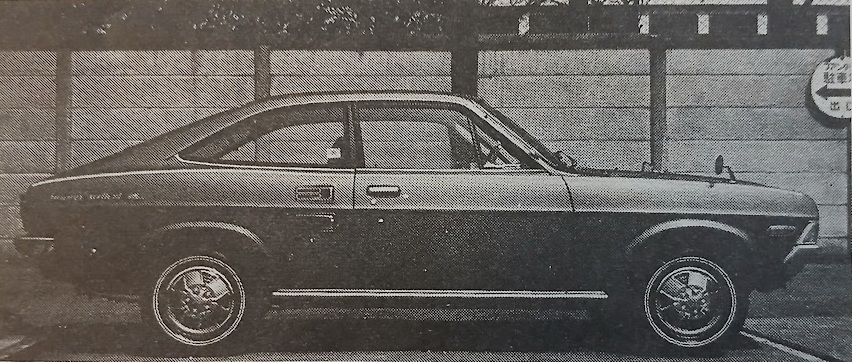
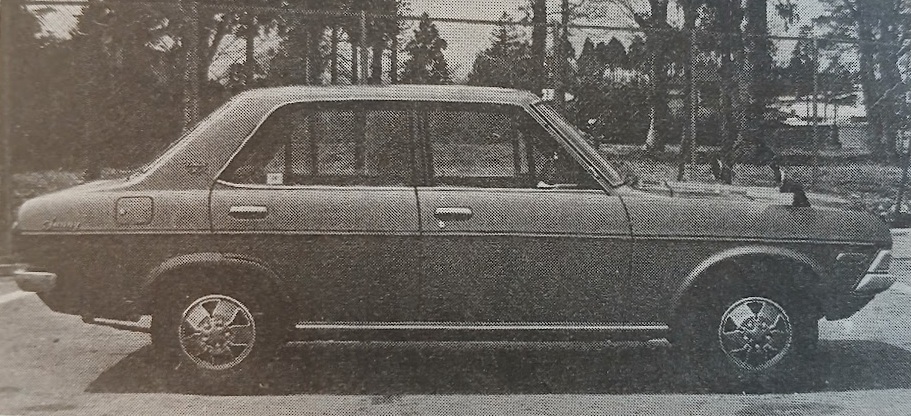
“The 170mm longer overall length is evident from the side view. The front grille is fairly well-integrated.” —Asaoka
How to Read the Bubble Index
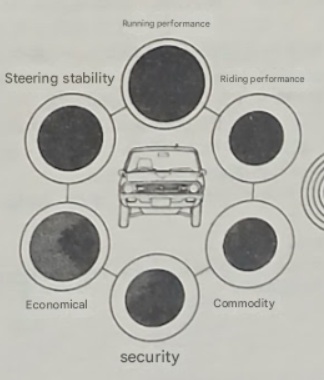
The goal of this comprehensive test drive series is to evaluate a car’s overall performance across six key pillars: running performance, handling and stability, ride quality, safety, economy, and product appeal. Our method of assessment is the “Bubble Session”—a system-engineering approach in which six specialists from different fields gather around a hexagonal table (bubble = beehive) to share and exchange opinions.
Each circle in the evaluation diagram shows the specialist’s rating in black, and the more evenly sized the black segments, the more balanced the car is across all six categories. If the black areas vary significantly, the vehicle can be considered to have a more distinctive, individual character.
Postscript: Story Photos