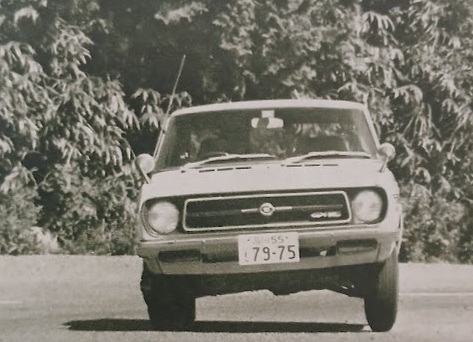
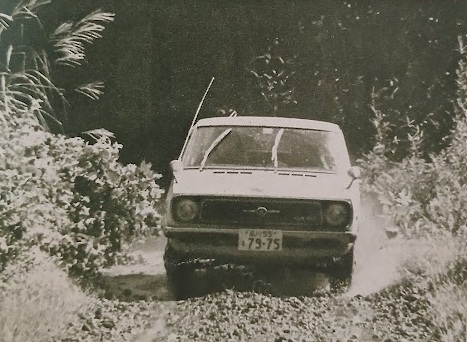
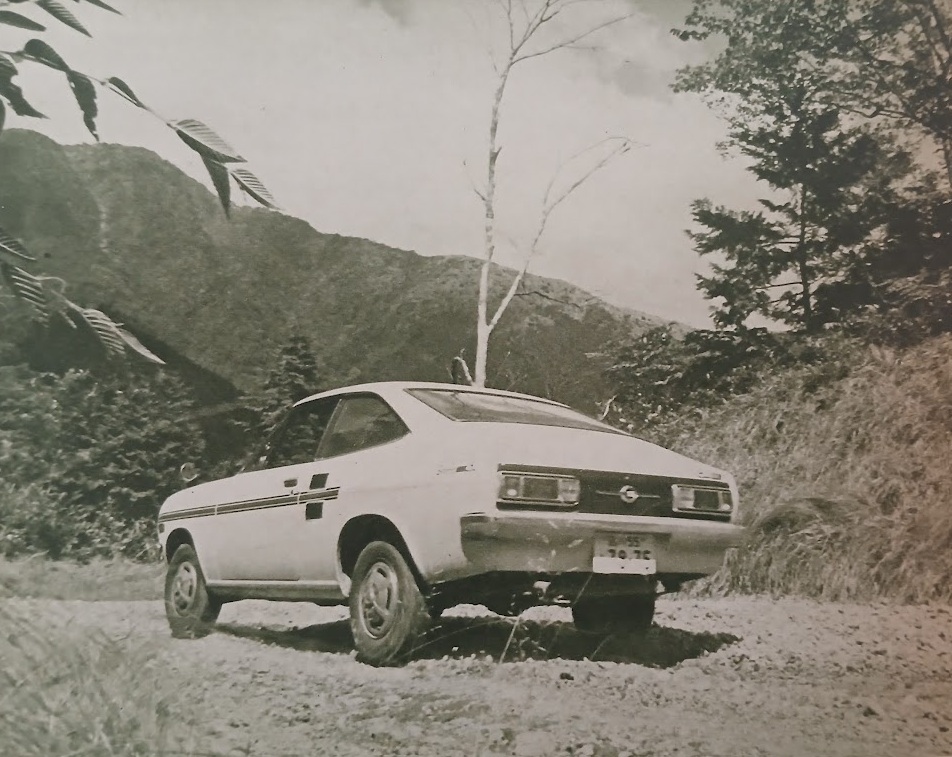
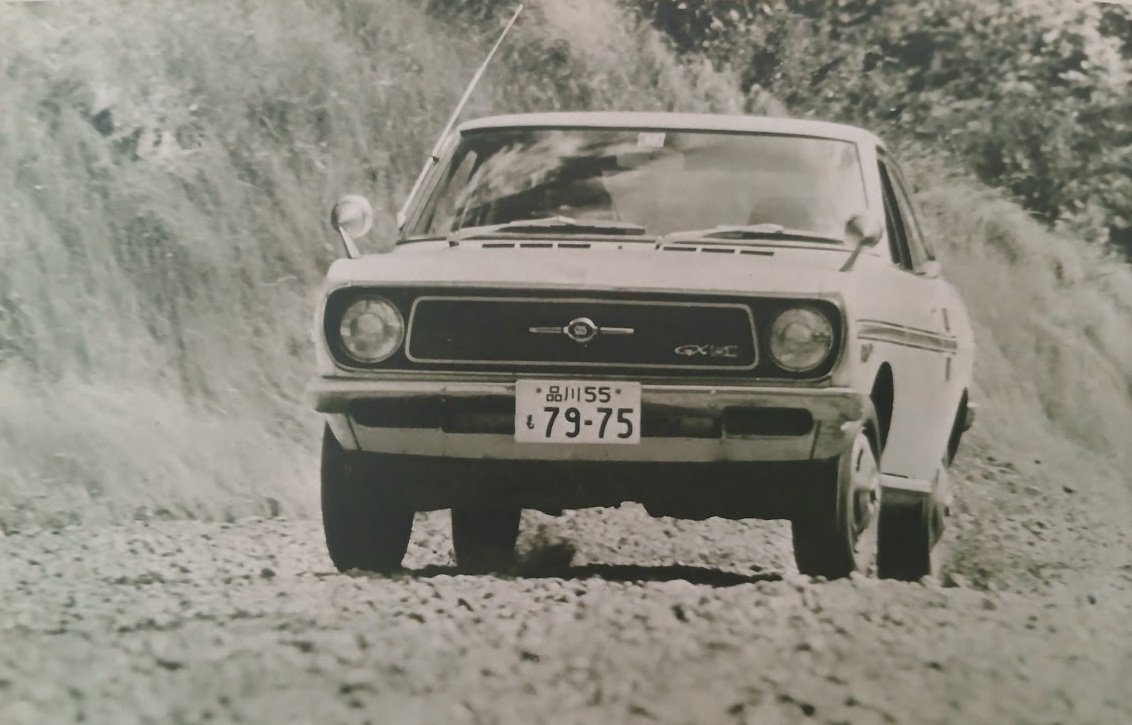
Nissan Sunny Coupe 1200GX-5 (1972)
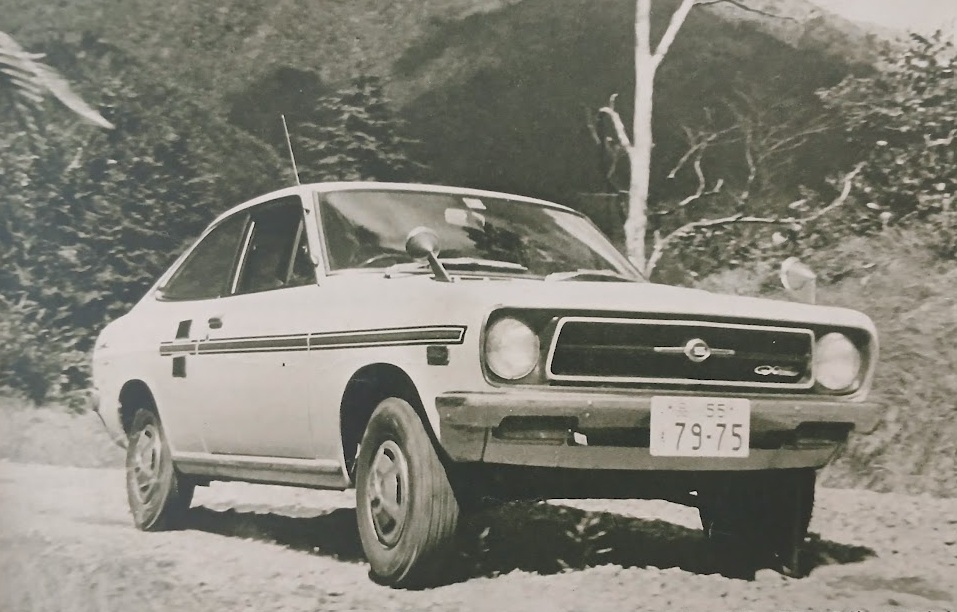
Publication: Motor Fan
Format: Test Drive Report
Date: November 1972
Author: Hiroshi Okazaki
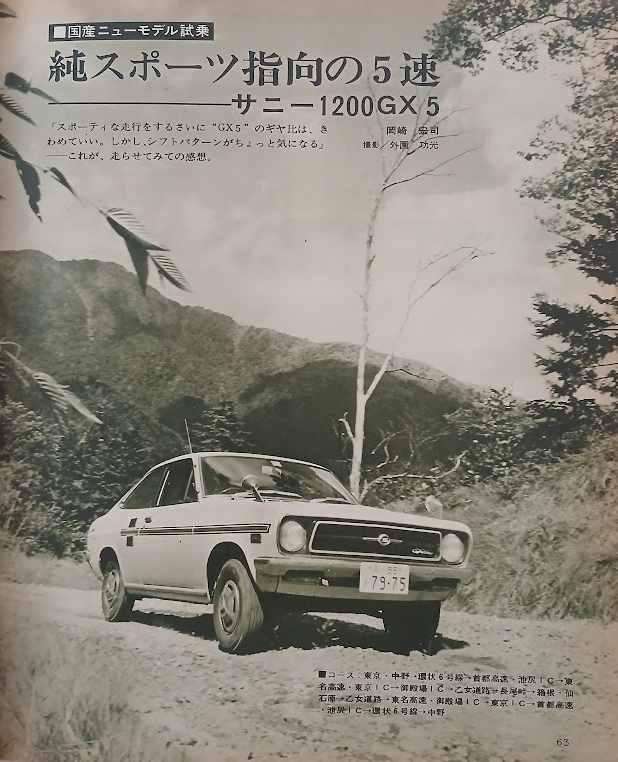
A Five-Speed with Pure Sporting Intent
“For genuinely sporting driving, the GX-5’s gear ratios are exceptionally well chosen. My only reservation is the shift pattern.”
The Fastest in Its Class
Among the many compact sporting cars on the market, the Sunny 1200 Coupe GX already stood out as having a particularly strong sporting character. The arrival of a new 5-speed model only reinforces that impression.
Broadly speaking, there are two types of 5-speed gearbox.
One simply adds a fifth gear on top of a conventional 4-speed, using it as an overdrive ratio to improve fuel economy and reduce engine noise during high-speed cruising.
The other is designed to make the most of the engine’s power, keeping the drop between gears to a minimum for lively performance under all driving conditions.
The Sunny GX’s 5-speed belongs firmly to the latter category.
Rather than following the more common approach of adding an overdrive fifth gear to an existing 4-speed transmission and compensating with a taller final-drive ratio, this gearbox was developed as an entirely new design. As a result, it is exceptionally well matched to the engine, and the advantages of a 5-speed are immediately apparent.
The gear ratios are 3.757 in first, 2.374 in second, 1.659 in third, 1.254 in fourth, and 1.000 in fifth, with a final-drive ratio of 3.900.
Compared with the 4-speed model, both first and top gear remain unchanged, as does the final-drive ratio. In other words, the gap between first and top has simply been divided into more closely spaced intermediate ratios.
Pulled to the beginning of the yellow zone at 6400rpm, the approximate maximum speeds in each gear are 50km/h in first, 70km/h in second, 100km/h in third, 130km/h in fourth, and 160km/h in fifth. From these figures alone, one can easily imagine that the ratios are well judged, and that the car should feel lively under virtually any driving condition.
At any rate, this is a fast car. Used to its full advantage, the 5-speed makes it unquestionably one of the quickest cars in its class.
Easy-to-Use Engine Braking
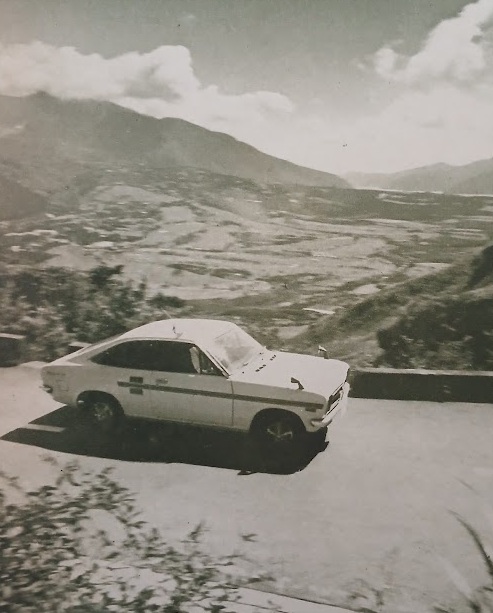
This 5-speed comes into its own on mountain roads, the most natural environment for sporting driving. In a typical 4-speed model, second and third gears naturally do most of the work on a winding mountain road. More often than not, however, second runs out of breath too soon, while third is slightly lacking in pulling power.
The wide gap between second and third also interrupts the flow of acceleration. One can pull second gear to its limit, only to find shifting into third drops the car noticeably out of its stride.
The Sunny GX’s 5-speed is no different in relying primarily on second and third through the mountains, but here the balance is exceptionally well judged. Second offers strong driving torque together with just the right amount of extension, while third retains much of the pulling power and flexibility normally associated with second gear in a 3-speed transmission. Together, they allow the engine’s power to be used to excellent effect.
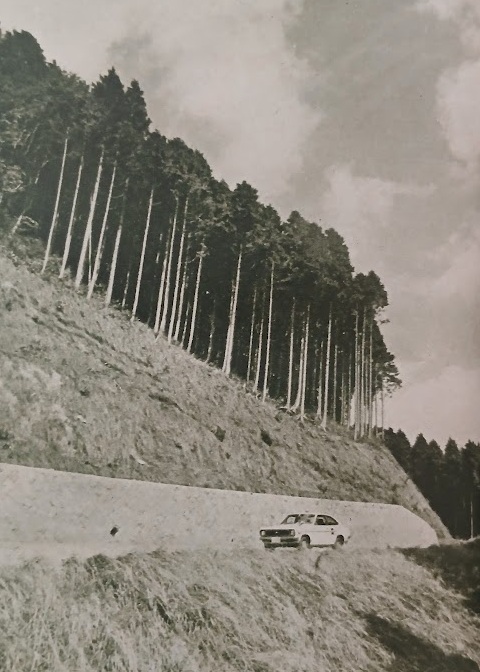
For this test, I covered roughly 150km of mountain roads, both paved and unpaved, and the Sunny’s performance proved entirely satisfying. Compared with the 4-speed model, it was possible to maintain a much higher average speed with greater ease and, at the same time, with a greater margin of safety.
Even on a relaxed, family-style drive through the mountains, this gearbox is remarkably easy to use. Thanks to the broad operating range of third gear on uphill gradients, there is less need to shift down into second, letting the driver take it easy.
To put it another way, on a 3-speed transmission one would tackle almost any mountain climb in second gear. The GX-5’s third gear serves almost exactly the same role… that should give a fair idea of what it is like.
Although I described the GX-5’s 5-speed gearbox as decidedly sporting in character, that certainly does not mean it is at all difficult to use in everyday driving. This is already apparent from the fact that both first and top gear share the same ratios as the 4-speed model.
As a result, fifth gear is perfectly usable even in city driving. Even so, at typical urban speeds of around 50km/h, fourth is generally the better choice, being easier and more practical.
What stands out most in city traffic is the car’s brisk takeoff and excellent overtaking acceleration. Provided the driver has the technique to use the 5-speed effectively, there is little chance of being left behind by another car of this class in the inevitable sprint away from a traffic light. If it does happen, either the other driver is exceptionally skilled—or perhaps you are exceptionally unskilled.
For overtaking in city traffic, I would recommend using third gear in most situations. On the highway, fourth gear proves especially effective.
Closely spaced gear ratios with smooth progression from one gear to the next also make it exceptionally easy to make use of engine braking. This, in turn, allows higher average speeds to be maintained more easily during sporting driving, while also contributing significantly to safety.
A Questionable Shift Pattern
The Sunny’s 5-speed gearbox uses Porsche-type servo synchromesh. The Porsche type certainly provides powerful synchro action, but it also has some well-known quirks. Shift effort is generally on the heavy side (even disengaging a gear requires a fair amount of force), and because engagement lacks a crisp, positive feel, one’s shifting tends to slow down overall. Under sporting driving conditions, this can sometimes upset the driver’s rhythm.
For these reasons, I have never been especially fond of this type of gearbox. In the Sunny, however, the story is rather different.
There is still the characteristic lack of crispness in the shift action, but effort is surprisingly light, and there is little resistance when pulling the lever out of gear. As a result, even when making rapid, repeated upshifts and downshifts, it rarely disrupts the rhythm of one’s driving.
Shift throws are also quite reasonable. The movement across the gate, however, is a little too long.
The shift pattern is another matter. Every other domestic 5-speed gearbox places fifth gear at the upper right of the H-pattern and reverse at the lower right. The Sunny, by contrast, places reverse at the upper left and first gear at the lower left. This is the same layout commonly used in racing gearboxes. Once the car is moving, it works exceptionally well, but for a road car, where first gear is used frequently, I have some reservations.
In racing, fourth and fifth gears are used almost constantly, while first serves little purpose beyond the standing start. Naturally, then, it is more important to optimize the transition between fourth and fifth than between first and second. On the road, however, it is the opposite. The shift between first and second is one of the most frequently used, while changes between fourth and fifth are relatively infrequent. If that is the case, would it not be better for a road car to use a shift pattern that favors the first-to-second transition?
Even if one were prepared to risk a speeding ticket on public roads, there are very few places where fifth gear can be used in the same way it is on a racing circuit. And even if such a road did exist, driving that way would hardly be permissible.
Likewise, even in rally-style driving on an empty mountain road, one would hardly ever use fourth gear, let alone fifth, whether climbing or descending.
First gear, on the other hand, comes into use surprisingly often.
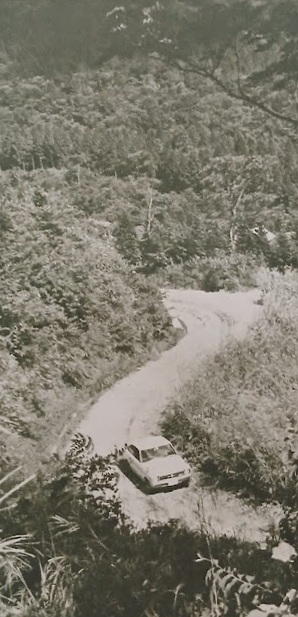
During this test I covered a considerable distance on unpaved mountain roads. As mentioned earlier, the gear ratios themselves are excellent, but on the sharp hairpin bends so often encountered on this kind of road, there were many occasions that called for first gear. In such situations, however, pushing the lever to the left against the tension spring before making the shift tended to introduce a slight hesitation.
Admittedly, there are probably not many drivers who would begrudge the resulting fraction of a second–and the slight disruption of rhythm–when selecting first gear. Those who would are likely limited to the small number of people intending to use the car in rally competition. For that reason, I do not consider it a major criticism.
In everyday driving, however–particularly in crowded city traffic, where first gear is used frequently–I think this extra effort required to engage first is still a drawback.
In addition, I cannot help questioning the wisdom of adopting a shift pattern that differs from every other domestic 5-speed gearbox. A driver accustomed to another 5-speed is almost certain to feel confused for a while after changing to the Sunny, and through force of habit, may well select a gear other than the one intended.
For that reason, until this new shift pattern has become completely second nature, it deserves to be treated with due caution.
I imagine that is the reason it is designed so that a buzzer sounds whenever reverse is selected…
Even so, setting aside my reservations about the shift pattern, this 5-speed gearbox has a great deal to recommend it.
Combining nimble handling and a powerful, sharp-revving engine with a thoroughly serious 5-speed gearbox, the GX-5 would seem an ideal choice for young people who enjoy driving.
Postscript: Story Photos