Nissan Skyline 2000GT-R (1969)
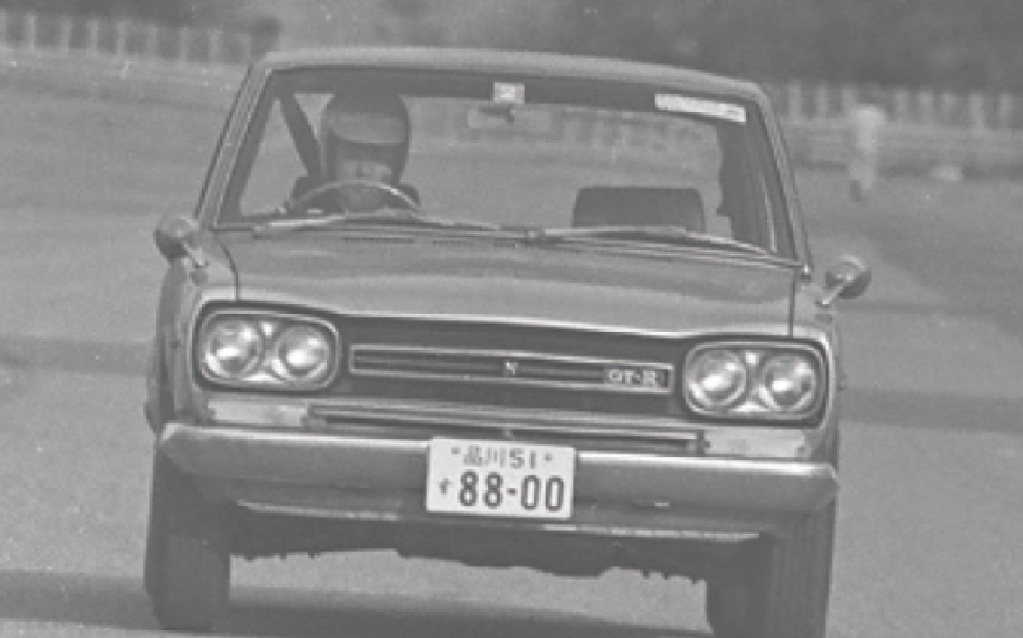
Publication: Motor Fan
Format: Road Test
Date: June 1969
Authors (Roundtable): Jiro Tanaka, Kazuri Okamoto, Osamu Hirao, Atsushi Watari, Kenji Higuchi, Yuji Sakakibara, Jun Narue, Shinichiro Sakurai, Kunitaka Furutani, Hiroshi Hoshijima, Akio Miyamoto, Tadashi Terashima, Taizo Tateishi, Kazuo Kumabe, Kenichi Goto, Yasuhei Oguchi, Kenzaburo Ishikawa, Yoshio Akutsu, Mineo Yamamoto, Toshihide Hirata, Minoru Onda, Motor Fan Editorial Staff (uncredited)
World-Class Performance
Magazine: First of all, let’s begin by talking about the aims of this Skyline 2000GT-R.
Tanaka: This car can be thought of as a sister model to the Skyline 2000GT that is already on sale. In the previous Skyline GT series, we divided the lineup into GT-A and GT-B versions. With this latest model change, what was formerly known as the GT-A has become the 2000GT, while this GT-R has been introduced as the successor to what was previously called the GT-B.
The most important feature is the engine. It is based on the unit developed for the R380 prototype, but detuned so that it can be used comfortably by the general public. Given the nature of a prototype, the proper course is to carry over the technical knowledge gained into production cars, and in that sense, we have tried to make the fullest possible use of what was learned from the R380. We believe this makes it quite a unique car, even by international standards.
This engine produces approximately 80ps per liter. Among production cars, only three other models are at this level of specific output: the Ferrari Dino, Fiat Dino, and Porsche 911S.
There are also very few 2-liter engines with DOHC layouts. Aside from the Dino, the only other example is the domestic Toyota 2000GT. In that respect as well, we consider this to be a car with very few equivalents worldwide.
There are many possible design directions for a sports car–some emphasize performance, others styling, and still others luxury. In the case of this car, its defining characteristic is a thorough pursuit of performance.
It has been developed with the intention that it may also be used in racing, where it would fall into the Group 2 touring car category. Within that class, a fairly wide range of modifications is permitted, and accordingly we have prepared a variety of optional parts. The standard production engine produces 160ps, but with these optional components, it is relatively easy to obtain output in excess of 200ps. In that sense, I would say the car has considerable potential for further performance development.
Refinement Born From a Prototype
Magazine: You’ve taken the R380 engine, detuned it, and adapted it for use in a production car. What kind of performance targets were you aiming for? We also imagine there must have been considerable difficulties along the way–could you tell us about that?
Okamoto: Even though we say it is a “detuned” R380 engine, when it comes to producing it commercially, we have to consider things like external appearance, ease of maintenance, oil consumption, as other issues, as well as thinking about the manufacturing process. So although it is based on the R380 engine, there were quite a few areas where changes were unavoidable.
The bore and stroke remain the same as the R380 at 82mm × 62.8mm, but the compression ratio has been limited to 9.5 in consideration of everyday driving. In terms of performance, output is set at 160ps, with torque at 18kgm. Since the R380 engine had already been run extensively in races and record attempts, and had undergone bench testing as well, we had a fairly good understanding of its performance characteristics. However, with the increasing importance of exhaust emissions in recent years, the design and development process took quite a lot of time.
Magazine: Since it was originally developed for racing, was it always part of the R380 plan that the engine would eventually be used in a production car?
Okamoto: A prototype, by definition, is a kind of testbed that is ultimately intended to lead to mass production, so naturally that was part of the plan from the beginning.
Hirao: Then I suppose you’ve fulfilled that promise. Around the time the car was completed, I remember hearing discussions along the lines of, “What if it can’t be brought into production within two or three years?” It seems that issue has been resolved (laughs). Also, the way it’s described as having reduced performance–rather than saying the performance was lowered, it might be more accurate to say it has been adapted for general driving use. In that sense, even the term “detuned” doesn’t seem quite right. Perhaps something like “adaptive tuning” would be a better way to put it.
Magazine: You mentioned earlier that this is a sports car that prioritizes performance over styling, but it does seem to have been developed with racing quite strongly in mind…
Tanaka: This also applies to the Fairlady 2000, but it’s not that we are expecting it to be used exclusively for racing. Rather, we consider it a point of pride that it is capable of withstanding that kind of use, while still being perfectly suitable for everyday driving.
Watari: When I drove it, I was surprised at how smoothly it would run even at very low speeds while remaining in top gear. This may well be something to be proud of, but what was the thinking behind that aspect of the design?
Easy to Handle On the Road
Okamoto: If a car is difficult to drive on normal roads, the range of customers becomes very limited. So while it can’t be made to drive quite as easily as a typical sedan, we made considerable efforts to broaden the torque band, so that strong torque is available over a wider range of engine speeds. That was one way of addressing the difficulty of driving.
Watari: But in doing so, doesn’t it risk feeling a bit less satisfying?
Okamoto: There are certainly some who would prefer a more aggressive character.
Hirao: If you read descriptions of the Mercedes-Benz 300SL, it says that unless strong acceleration is required, it can run in top gear from as low as 30km/h. From there, the engine will pick up smoothly at any speed. In that sense, I think the GT-R is aiming for something similar to the 300SL.
Okamoto: That may also have to do with the difference between carburetors and fuel injection. The Skyline uses triple carburetors, and a single-stage setup at that, so trying to achieve the ideal fuel ratio between maximum and minimum engine speeds becomes an issue. With carburetors alone, it’s difficult to fully cover such a wide operating range.
Narue: When a machine is commercialized, ease of use–also in terms of its image–becomes very important from a sales standpoint. Saying that it can run slowly in top gear is a simple way of expressing that, and it certainly adds to the car’s appeal.
Watari: In practice, if you’re just ambling along in top gear, you’ll eventually have to shift down anyway. In those situations, it’s better to use one gear lower—you can accelerate without shifting. But the question is which approach people prefer.
Narue: Ideally, the owner’s manual should probably state that it’s better to drop down a gear in those cases…
Tanaka: These days, people are starting to use 4-speed gearboxes even in ordinary sedans, but you hear complaints about top gear not being flexible at low speeds, and even so, people still tend not to use third gear very much.
Watari: Personally, I simply say that fourth gear shouldn’t be used around town, but perhaps the PR hasn’t been sufficient in this regard. There seem to be quite a few people who feel they must use all the gears, no matter what.
Higuchi: On the other hand, I’ve heard that when you drop to third, the acceleration is less controllable, making it harder for older drivers to keep up–whereas in top gear, although acceleration is weak, it will still build speed gradually even with a light throttle, which makes driving less tiring.
Numerous New Mechanisms Adopted
Magazine: Turning to the engine itself, we understand that a side-bolt system has been adopted. Could you explain this in a bit more detail?
Sakakibara: As a way of increasing the rigidity of the engine block, the idea is to make the skirt section of the block behave more like a box structure. To achieve that, we use the bearing caps and fasten both sides of them to the block. With an inline six-cylinder engine, the shape inevitably becomes quite long, which makes it difficult to maintain rigidity. So by using bolts from the sides to firmly clamp the skirt section of the block to the bearing caps, we can significantly improve stiffness.
Hirao: There were some engines in the past that used through-bolts, weren’t there?
Sakakibara: Yes, and actually, that was our initial intention. However, that approach would have made the lower portion of the engine longer and encroached on the space for the oil pan, so we used the lower section around the bearing area instead.
Narue: Another interesting feature is the use of a transistorized ignition system.
Okamoto: When you want to produce a strong and stable spark at high engine speeds, this method is definitely more effective. For ordinary road use, a conventional contact-point distributor is still sufficient. However, if you want to go further with tuning, the contact-point system tends to produce a weaker spark. So from the outset, we decided to adopt a transistorized igniter as standard equipment.
Hirao: Is that related to FIA regulations? Specifically, the one that states, “The ignition system must not be changed.”
Sakakibara: That is one reason, and also, since this mechanism is still not a common feature in mass-produced cars in Japan, we felt that we should at least do this much.
Magazine: As for the body, from the outside the changes seem limited to things like the overriders and the rear wheel arches. However, with such a powerful engine, we imagine there have been many changes to the suspension and other areas as well…
Sakurai: From the standpoint of the manufacturer, competition in motor sports presents the most demanding conditions for designing a car. In order to ensure it can withstand that kind of use, we have reinforced many areas—more so than on the previous GT-A and GT-B models, particularly in the suspension.
As for the body itself, one of the main design priorities was to keep weight as low as possible, including equipment and interior fittings. For that reason, we did not consider items such as a torque converter automatic or air conditioning, and instead focused on the standard specification, bringing everything together as a more focused, performance-oriented package.
In terms of body shape, the wheel arches have been enlarged to accommodate wider tires. Correspondingly, the chassis has been reinforced so that it can withstand the greater cornering forces these larger tires generate.
Dimensionally, the most significant change is the increase in track. The front has been widened to 1370mm and the rear to 1365mm, with the aim of improving cornering characteristics when using wider tires.
As for the brakes, the Skyline 2000GT is equipped with a master back servo booster, but since pedal effort with this system can vary depending on engine boost, we have omitted it here as standard and instead made it available as an option.
The springs have been made considerably stiffer in preparation for competition use. The exhaust system is a fully-fledged dual type, and the fuel tank has been enlarged to 100 liters. Previously, the electromagnetic fuel pump was mounted in the engine bay, but to avoid the influence of engine heat, it has been relocated to the trunk, adopting a system that pushes fuel forward from the rear.
Designed with Racing in Mind
Magazine: How about the interior?
Sakurai: The accelerator pedal has been shaped to make heel-and-toe operation easier, with a wider heel section for better contact. We’ve also adjusted its fore-and-aft position slightly so that when braking, the driver can more easily reach the accelerator. As for the seats, the front seats are a bucket type designed to hold the lower body firmly, so that the driver doesn’t shift position even under extreme cornering.
Watari: The pedal layout is very good, but why do they feel so heavy? The clutch is light when you first depress it, but the engagement point is fairly high, and it feels particularly heavy toward the end of the pedal stroke, around the take-up point. The brakes also require a good deal of force, so I wonder if heel-and-toe might actually be difficult in practice…
Sakurai: From what we’ve heard from those who have driven the car, the higher pedal effort hasn’t been much of an obstacle to using heel-and-toe. As for the clutch, we decided to use a diaphragm type since this is a high-revving engine. However, if we were to add a mechanical servo, the pedal feel would tend to change constantly. Given that this car is intended for drivers who expect something fairly “hot,” we accepted that level of heaviness… (laughs).
Watari: That’s a little different from what we were saying earlier about ease of use (laughs).
Hirao: When performing heel-and-toe, the toe—the part of the foot holding the brake pedal down—tends to act as the anchor. If the brakes are too light, it can actually make the technique harder to execute. In that sense, if the brake requires more effort, it’s natural for the clutch to be made heavier as well, to maintain balance. I think that’s something that’s deliberately done in sports cars. Still, since a brake servo is available as an option, it might be better if the clutch could also be lightened to match…
Magazine: For a car capable of 200km/h, the sedan-type body shape does raise some questions. How does it perform aerodynamically?
Tanaka: In general, running resistance is quite low. That said, we would have liked to reduce front-end lift a bit more…
Hirao: There are ways to address that–lowering the nose slightly, for example. In racing, you could also raise the rear.
Tanaka: Compared to the four-cylinder sedan, this car is about 195mm longer, which does have some effect. However, the 2000GT and the GT-R are the same in that regard.
Magazine: In terms of safety at high speeds, what measures have been taken?
Sakurai: Compared to the 2000GT that has already been released, we haven’t made any particular changes to improve safety in areas such as the cabin. However, at high speeds, one of the greatest concerns is tire failure, so we’ve adopted H-rated tires, which are capable of continuous running at up to 205km/h. Naturally, the car complies with the safety regulations that came into effect on April 1, but beyond that, we haven’t made specific provisions solely for high-speed use. That said, we do offer a wide range of optional equipment intended to ensure safety in competition.
0-400m in 15.6 Seconds!
Magazine: Let’s hear the results of the Hirao Laboratory’s power performance tests.
Furutani: This test was conducted on the course at Nissan Motors’ Murayama Plant. The vehicle weight during the test was 1316 kg, including three people and test instruments. From a standing start, in terms of time to distance, the results were 0-50m in 4.0 seconds, 0-100m in 6.3 seconds, 0-200m in 9.8 seconds, and 0-400m in 15.6 seconds.
In terms of time to speed, it took 2.9 seconds to reach 40km/h, 4.4 seconds to reach 60km/h, 6.0 seconds to reach 80km/h, 8.3 seconds to reach 100km/h, and 10.9 seconds to reach 120km/h. This makes it a car with very strong initial acceleration. In particular, the 0-50m time of 4.0 seconds is unprecedented for a Japanese production car.
Hirao: Have any foreign cars managed that?
Oguchi: None in Motor Fan testing. When this car hit the 4-second mark, we also measured acceleration force. It started at 0.6g, dropped to 0.54g, and then held steady for a surprisingly long stretch. Normally, acceleration peaks and drops off quickly, but here the high g-force is sustained–it feels like the driver is being firmly held back in the seat for a long time. As for overtaking acceleration, starting from 30km/h in third gear, the times were 1.2 seconds to 40km/h, 4.6 seconds to 60km/h, 7.4 seconds to 80km/h, 10.2 seconds to 100km/h, and 13.2 seconds to 120km/h.
Hirao: So the acceleration is about on par with a Porsche?
Tanaka: The Porsche 911 has almost the same horsepower, so the performance is comparable. Strong power like this also contributes to safety…
Hirao: Well, in this day and age, we have to talk about speed in terms of safety anyway (laughs).
Magazine: This 0–400m time of 15.6 seconds–is it repeatable in the company’s in-house testing?
Tanaka: Yes, the 15-second range is achievable consistently.
Oguchi: Up to now, the Fairlady 2000 has held the best 0-400m time in Motor Fan testing, but at low speeds, this Skyline 2000GT-R’s times are actually slightly shorter, and their acceleration curves seem to cross around 400m. But the Fairlady’s acceleration was measured with two people on board, whereas the Skyline GT-R was tested with three–so accounting for the extra load, the performance is essentially the same.
Hoshijima: Psychologically, this car actually feels faster than the Fairlady. This may be due to the driving position and the sedan-style visual cues.
The Challenge of Setting the Bucket Seat
Magazine: The bucket seats on this car are quite different from what we’ve seen before. This is a first for Nissan, right?
Tanaka: Yes, structurally we have incorporated a number of new ideas.
Hoshijima: I think the racing-style seats are great, but for actual competition use, people will probably switch to a different seat anyway. Still, having such a stylish seat in a production car is itself a selling point, isn’t it?
Miyamoto: It’s like a fighter jet seat–if you put a parachute in the back, it looks exactly the same (laughs).
Watari: I don’t think it would support your head properly when accelerating at 0.6g.
Sakurai: When we planned the seat, we assumed the car would spend much more time at higher speeds than ordinary cars. We put a lot of thought into how the body would be supported, trying to break away from conventional seat concepts. But we’re still in the experimental stage.
Hirao: People have different body sizes, so ideally the seat should be custom-made like a dress shirt for each user. Then there’d be no complaints…
Terashima: We tested the seats with people of all shapes and sizes–heavier, thinner–and set the dimensions that way. Our main concern was whether pressing on the sides of the hips would impede circulation. We decided on a size that would allow even relatively large people, at least by Japanese standards, to sit comfortably without getting tired.
Hirao: I wonder if it’s okay for women too (laughs).
Watari: I think there could be a way to hold the hips in place without raising the sides so much, but it might make getting in and out trickier.
Tanaka: We focused more on supporting the body once seated than on ease of entry. The current shape is actually lower than we originally planned, to make getting in and out easier. Ideally we’d make the side bolsters even higher.
Hoshijima: I think it would be nice to have support around the driver’s knees too.
Hirao: True, support for both the back and knees would be good.
Sakurai: If the bolsters extend all the way to the knees, then it becomes like a true racing car seat, and getting in and out becomes very difficult.
Higuchi: In my opinion, there should be standard seats that are a little easier to get in and out of, with the current aggressive bucket seats available as an option. But many of the people who buy this car will want to feel like they’re in a racing car, so keeping the current shape–perhaps adjusted slightly for entry–is probably the right compromise.
Aiming For Weight Reduction
Magazine: Next, could you share the data on suspension frequency and noise measured by the Watari Laboratory?
Tateishi: First, regarding vibration, the sprung vibration frequency was 1.5 cps for both the front and rear wheels, while the unsprung vibration frequency was 15.0cps at the front wheels, and 16.0cps at the rear wheels.
In terms of interior noise, it was measured at 67 phons from 40-50km/h, 68 phons at 60km/h, 70 phons at 70km/h, 73 phons from 80-100km/h, 74 phons at 110km/h, and 75 phons at 120km/h. External noise was measured in second gear, with a reading of 74 phons when driving at a steady speed and 86 phons when accelerating. All of these figures were obtained while driving on Nissan’s test course.
Watari: One notable feature of the interior noise is that, unlike in ordinary cars, the relationship to speed is relatively flat. So even if it seems loud at low speeds, it gives the impression of becoming quieter as speed increases. There are some peaks here and there, though, and at 40km/h in top gear it’s a bit noisy for relaxed city driving.
Magazine: For a car like this, we wouldn’t expect many complaints about noise or ride quality, but how did it feel during the test drive?
Kumabe: Considering why this car was built, a little extra noise is acceptable. In fact, with the sound insulation being reduced to save weight, the slightly louder sound could even be seen as a point of pride.
Tanaka: I wouldn’t say we’re proud of it (laughs). I think it’s quieter than a Porsche, and among this type of car, it’s actually on the quieter side.
Hirao: I remember the Alfa Romeo and Jaguar E-Type were pretty quiet when we tested those.
Goto: The E-Type actually has a fairly loud engine note.
Hoshijima: While driving, it’s probably the intake sound that draws attention more than anything else.
Sakurai: Compared to the previous Skyline GT-A and GT-B, the engine sounds more prominent because we used much less soundproofing material in the engine bay. To save weight, we eliminated anything we could reasonably do without, so the noise naturally comes through more easily.
Higuchi: It makes me want a GT-R Deluxe (laughs).
Hirao: The Benz 300SL has 3 liters and 240ps. This one has 2 liters and 160ps, so the power output per liter is similar. But the Benz uses fuel injection, whereas this Skyline still uses carburetors. That makes the conditions for noise and vibration control tougher. So even if you tried to make a deluxe version, managing noise and vibration could become quite a challenge.
Surprisingly Good Fuel Economy
Magazine: How did the fuel economy turn out?
Oguchi: Before we tested it, we assumed the GT-R would consume a lot of fuel, but when we measured it, we were surprised to find that its fuel efficiency curve didn’t drop sharply at higher speeds, and the overall figures weren’t that bad either.
In terms of constant-speed fuel economy, in direct fourth gear, the figures were 14.0km/l at 40km/h, 13.8km/l at 60km/h, 12.5km/l at 80km/h, 12.3km/l at 100km/h, 9.0km/l at 120km/h, and 6.9km/l at 140km/h. In overdrive fifth gear, the fuel consumption was 15.4km/l at 60km/h, 14.0km/l at 80km/h, 12.3km/l at 100km/h, 10.3km/l at 120km/h, 8.2km/l at 140km/h, and 5.7km/l at 160km/h. In other words, 60km/h in fifth gear is the most fuel-efficient way to drive.
Magazine: How was the model fuel economy in more realistic conditions, similar to driving in an urban area?
Oguchi: When we set a target speed of 40km/h, keeping our acceleration below 0.3g and stopping intermittently as in normal driving, our fuel consumption was 7.3km/l, with an average speed of 21.5km/h. At a target speed was 60km/h and an average speed of 25.3km/h, the figure was 5.7km/l.
Magazine: Interesting–that’s relatively good. Have any special adjustments been made to improve fuel economy?
Sakai: It mostly comes down to carburetor settings. Even with the R380 engine, it runs surprisingly well at low speeds, so those who drive carefully in top gear can get good fuel economy.
Tanaka: There’s also the issue of exhaust emissions, of course.
Sakai: If you only aim for hot performance, exhaust problems will definitely arise. Frequent acceleration, combined with having three carburetors, makes it hard not to exceed regulations, so tuning the carburetors becomes difficult.
Magazine: Some suggest electronically controlled fuel injection could improve fuel economy while reducing emissions. Is that something you’ve considered?
Tanaka: It’s not that we haven’t considered it, but it’s not feasible in the short term.
Okamoto: Technically, I think almost any manufacturer could do this now, but the biggest problem is cost.
Magazine: Now, let’s hear the results of the weight, alignment, and brake measurements carried out at the Ship Research Institute.
Ishikawa: Vehicle weight was 1144kg with a spare tire, tools, and a nearly full tank of fuel. The weight distribution is 613kg at the front and 531kg at the rear, with a front-to-rear ratio of 54:46, so the front end is heavier. With a full five passengers, it shifts slightly rearward to 48:52.
Regarding wheel alignment, the front wheels have camber and toe-in adjustments, while the rear has almost zero camber with only the driver on board. With five people on board, the rear develops significant negative camber.
The brakes are discs at the front and leading-trailing drums at the rear. The car does not have a brake servo as standard, but the car we used for measurements had the optional 4.5-inch master back. The front brakes start to work at about 1-1.5kg of pedal pressure; for the rear brakes, it is about 6kg. The relationship between pedal travel and pedal effort is unique. The pressure is only about 0.1kg/mm before the brakes start to work, but once they do, the pedal suddenly stiffens to 1.5kg/mm.
The servo’s rest point is about 25kg of pedal pressure, and the pedal pressure at 0.6g deceleration was 20kg in the bench test. Brake force is distributed about 65:35 front-to-rear, but the rear brakes’ share drops off when deceleration exceeds 0.6g–this seems intentional in the design.
The parking brake is a mechanical floor lever type that works on the rear wheels. It’s light, requring about 20kg of effort to achieve 20% of the total braking force; an effort of 25kg is sufficient to hold the car on a one-in-five grade.
The shifter is light to operate, requiring around 3kg for each gear, and the window cranks are light at about 1-3kg. The clutch requires 8kg to engage and 10 to 12kg to disengage. To disengage, however, you normally press all the way to the toe board, in which case effort reaches about 30kg–somewhat heavy, as we heard earlier.
A Sense of Controllable Handling
Magazine: We understand you also drove the car after completing the measurements. What were your impressions?
Ishikawa: I had expected that controlling acceleration and deceleration might be quite difficult in a car like this, but although the changes in speed are very sharp, it isn’t at all difficult to handle. What surprised me on the Tomei Expressway was how effortlessly it could pass other cars one after another. I used the brakes frequently as well, and their stability when applied was very good–I was able to drive without any concern.
Tanaka: We also had some of the older staff in the company drive it, and they seemed quite at ease up to around 160km/h.
Hirao: In Europe, cruising at about 160km/h isn’t particularly unusual, after all.
Hoshijima: When I was driving on the Tomei, I absentmindedly took my eyes off the speedometer and found the speed creeping up. Driving at night, I realized that what caught my attention more than the engine noise was the clicking of the electric fuel pump.
Sakurai: If we were to fit more sound insulation at the rear, it would certainly make a difference, but yes, that might be the case.
Magazine: Next, please tell us about the data on handling and stability from Kondo Laboratory.
Akutsu: In the oversteer and understeer tests, the car showed mild understeer when accelerating in a circle from 0-40km/h. The line began to tighten from a lateral acceleration of around 0.8g, and we tested it up to approximately 0.96g. Steering effort ranged from about 0.5kg to a maximum of 5.8kg, and the roll angle is about 3.5°. Stationary steering effort is quite high near full lock—at around 270°, the instrument went off scale, so it is likely over 15kg.
In the slalom test, steering effort at 0.25g lateral acceleration was about 2.5kg in both directions. In the free-release directional stability test, we reached speeds of up to 180km/h–something we had not done before in this series of tests–and the car settled without any instability.
Magazine: On the topic of handling, since this car is a sedan, how many passengers is the ideal weight distribution set for?
Sakurai: The original condition was set for two occupants in the front seats. We’ve made sure it remains stable even with a full load, and for racing, an optional stabilizer is available. So handling should feel essentially the same whether there are two or five people aboard.
Advanced Body Design System
Yamamoto: How about the pitching moment?
Sakurai: It all falls within about 5% of our target values. These days, we’re able to carry out thorough checks after the design phase, and there’s very little deviation in the position of the center of gravity. In particular, the accuracy with respect to weight has improved considerably–if anything, cost estimates are now less precise by comparison (laughs).
Tanaka: Body design itself has advanced to the point where we no longer need to make major modifications after the prototype stage.
Hirao: The steering gear ratio is different from that of the Skyline 2000GT. Is that due to changing the arm lengths or something?
Tanaka: The gear case itself is different. The standard 2000GT has a ratio of 19.8:1, while this one is 18.5:1. To reduce weight, the gear case is made of aluminum.
Magazine: Please tell us the results of the visual field measurements.
Hirata: For these measurements, we placed a dummy in the driver’s seat and positioned a fisheye lens at the eye point. The measurements vary depending on the seat’s fore-aft position, but with the seat slide set at the middle notch (the fifth of nine, in this case), the results were as follows: the visual field through the windshield is 80.5° horizontally, and 26.5° vertically; the visible range through the rear window is 48°; the wiper sweep is 69°; and the horizontal blind angle, including the eye point, is about 65°.
Magazine: You previously took these measurements on the Skyline 2000GT–there are some differences this time.
Hirata: This is due to the GT-R’s seats, which give the driver a lower viewpoint. In the GT-R, the viewpoint is 115cm from the ground, compared to 121.5 to 118.5 cm for the 2000GT.
Yamamoto: Even though the body is the same, a lower eye point affects the numbers slightly. The horizontal blind spots are almost unchanged. The visible range through the rearview mirror was 36° to 36.5° in the Skyline 2000GT, but here it’s improved to 38°. Were any special measures taken to achieve that?
Sakurai: The mirrors are the same. The difference must come from the eye point height.
Magazine: Now, let’s move on to the dimensional measurements from the Higuchi laboratory.
Onda: There isn’t a great deal of difference in dimensions from the Skyline 2000GT. The main changes are that the tread is wider and the tires are H-type.
Inside, the seats are full bucket type. Compared with the more relaxed seats of the 2000GT, they’re narrower and set slightly lower at the base. The seatbacks are fixed and do not recline.
In the trunk, the fuel tank has been enlarged to 100 liters, which reduces luggage space. Also, perhaps to emphasize the “hot” character, the tank and spare tire are left exposed, without a covering mat or partition, which gives a distinctive look.
As for the pedals, the accelerator has been made larger and is mounted about 20mm further back than in the 2000GT. Among the gauges, the tachometer reading up to 10,000rpm stands out.
Tanaka: A flashlight for emergencies and four-way hazard flasher switch have also been fitted, in accordance with regulations.
Safety Comes with High Performance
Magazine: We’d now like to hear Professor Higuchi’s evaluation of the safety aspects.
Higuchi: Our safety checks are based on visual inspection, and in some cases, even items that are little more than decorative will improve the score simply by being present. Since this GT-R is in standard specification, there are areas where it loses points as a result.
For example, the absence of items such as a heater, defroster, or grab handles lower the score somewhat. That said, there are also areas where it improves upon the 2000GT, so the overall rating is nearly the same. It’s clear, however, that practical safety has been enhanced through improvements in acceleration performance and seating, among other factors.
For those who intend to drive at higher speeds or participate in racing, I think this is a car that can be very well suited by selecting from the wide range of available options.
On maintenance, I’d offer a small critique: I would like to see a manual with technical data specific to the GT-R included. For items shared with the standard 2000GT, the manual could also explain things more clearly. For example, specifying only “gear oil” without further detail is somewhat unhelpful. In short, an owner’s manual intended for an ordinary sedan doesn’t quite cover what’s needed for this car.
Magazine: We understand that a wide array of optional equipment is available. Could you walk us through those?
Sakurai: In terms of the engine, performance characteristics can be altered through components such as pistons, camshafts, and exhaust manifolds. There are also items like an oil cooler, a higher-capacity radiator, and carburetors, including Weber 45DCOE units or larger-diameter Solex N44PHH types. In addition, high-voltage ignition leads and generators can be specified to set the car up for racing or other forms of competition.
On the chassis side, there are two types of transmission and two types of final drive, as well as alternative limited-slip differentials for those who want a stronger effect. Naturally, there are also springs and stabilizers for circuit driving, along with oil dampers offering higher damping force. A quicker steering ratio of 15.2:1 is also available.
Other options include a high-flow electromagnetic fuel pump and harder brake linings, as well as more general options such as a radio, heater, brake servo, and steering lock. And of course, equipment such as roll bars, harnesses, and even heavy-duty wipers for rally use are available.
Tuning Can Yield 200ps!
Magazine: There seem to be quite a number of competition-oriented parts in addition to those for road use. If one were to carry out a full tune using these components, how much would it cost?
Sakurai: If it’s done properly through a dealer–removing the engine, rebuilding it completely, and checking performance on a chassis dynamometer–then depending on the extent of the tuning, it would cost around 600,000 yen.
Magazine: How much improvement could be expected over the standard 160ps?
Tanaka: It depends on the skill of the tuner…
Hirao: I think achieving 200ps should be quite easy.
Magazine: With an engine like this, one might hope for an even more overtly sporting style–a version like that would be great to see as well.
Tanaka: That’s what some people say. On the other hand, there are also those who appreciate that, despite its high performance, it doesn’t have an overly specialized appearance and can be used in everyday situations. It’s a difficult balance to strike (laughs).
Magazine: Thank you all for your time.