Nissan Skyline 2000GT-R (1969)
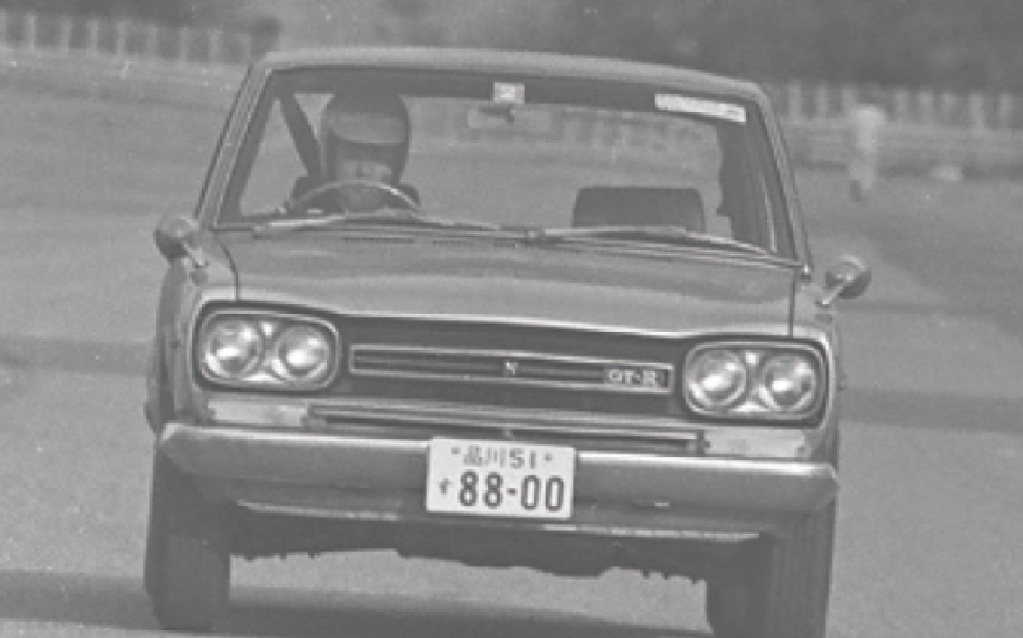
Publication: Motor Fan
Format: Road Test
Date: June 1969
Author (Roundtable): Jiro Tanaka, Kazuri Okamoto, Osamu Hirao, Atsushi Watari, Kenji Higuchi, Yuji Sakakibara, Jun Narue, Shinichiro Sakurai, Kunitaka Furitani, Hiroshi Hoshijima, Akio Miyamoto, Tadashi Terashima, Taizo Tateishi, Kazuo Kumabe, Ken Goto, Yasuhei Oguchi, Kenzaburo Ishikawa, Yoshio Akutsu, Mineo Yamamoto, Toshihide Hirata, Minoru Onda, Motor Fan Editorial Staff (uncredited)
World-Class Performance
Magazine: First of all, let’s start by talking about the aim of this Skyline 2000GT-R.
Tanaka: This car is a sister model to the Skyline 2000GT that is already on the market. In the previous Skyline GT series, there was a GT-A and a GT-B, but in this model change, what was previously called the GT-A has been renamed to the 2000GT, and the GT-R has been introduced as the successor to the GT-B.
The most important feature is the engine, which is a version of that in the R380 prototype that has been detuned so that it can be used by the general public. Given the nature of a prototype, the natural course of action is to transfer the technical knowledge gained from it to production, and we are proud to say that this is a car that is quite unique, even from a global perspective, in the sense that we want to make the most of what we have gained from the development of the R380.
This engine produces about 80 horsepower per liter, and there are only three other commercially available cars that have this level of specific output, the Ferrari 246 Dino, the Fiat Dino, and the Porsche 911S.
Also, the only other 2-liter DOHC cars are the Dino and the domestic Toyota 2000GT, so in that respect it is a unique car, and one that is rare worldwide.
There are many different ways to make a sports car, such as those that aim for high performance, those that are stylish, or those that emphasize luxury, and this car is characterized by its thorough pursuit of high performance. It was designed with the purpose of being used in races, and it falls into the Group 2 touring car category, but since that class allows for a wide range of modifications, a variety of optional parts are available. The quoted output of 160ps is for the commercially available engine, but with optional parts it is relatively easy to get over 200ps, so I think it is a car with plenty of room for improvement in performance.
Well-Bred From a Prototype
Magazine: You’re detuning the R380 engine to use in a mass-produced car. What performance-wise were you aiming for? And how much effort did you put into that?
Okamoto: Even though we say it is a “detuned” R380 engine, when it comes to selling it commercially, we have to take into consideration things like the appearance, ease of maintenance, oil consumption, and other issues, as well as thinking about the manufacturing process, so even though it’s an R380 engine, there were many things that we had no choice but to change to some extent.
Bore and stroke are 82mm x 62.8mm, the same as the R380, but the compression ratio is limited to 9.5, in consideration of normal driving, and in terms of performance, the power is set to 160ps and the torque to 18kgm. Since we have been running the R380 in races and record attempts for a while, and have also been doing constant field testing, we knew its performance relatively well, but because of the recent issue of exhaust gas, which has become a big problem, the design and development took a lot of time.
Magazine: You initially developed it for racing, but was it part of the R380 plan to use this engine in mass-produced cars?
Okamoto: A prototype is a testbed that will eventually lead to mass production, so it was naturally in the plan.
Hirao: So that promise has been fulfilled. I had heard people asking, “even after the car is completed, what will they do if they can’t put it into mass production within the next two or three years?” But that problem has been resolved now, too (laughs). You also explained that the performance has been reduced, but it’s not really a case of reducing the performance, it’s better to say that it was modified to suit general driving - in that sense, the word “detuned” doesn’t quite fit. I think we should think of a better way to say it, like “adaptively tuned” or something.
Magazine: You mentioned that this is a sports car that prioritizes performance over style, but even so, it seems like you’re very focused on entering it in races…
Tanaka: The same can be said of the Fairlady 2000, and we’re not necessarily expecting it to be used only in races, but yes, we’re proud of the fact that it can withstand such uses and can also be used for general driving.
Watari: When I drove it, I was surprised at how smoothly it could run even at low speeds in top gear. This is indeed something to be proud of, but I wonder what the design intention behind this was.
Difficult to Handle On the Road
Okamoto: If it’s difficult to drive on the road, the number of sales will be very limited, so although it cannot be made to drive as easily as a sedan, we put a lot of effort into widening the range of rotation speeds at which torque is strong to minimize the difficulty in normal driving.
Watari: Doesn’t that make it less satisfying to drive?
Okamoto: Some people would like it to have a rougher feel.
Hirao: When I read the description of the Mercedes Benz 300SL, it said that if you don’t need to accelerate quickly, you can put it in top gear at speeds as low as 30km/h, and even if you accelerate from there, the rotation speed will increase smoothly. In that sense, I think the GT-R has a similar aim to the 300SL.
Okamoto: I think that’s because of the difference between a carburetor and fuel injection. The Skyline uses triple carburetors, and they’re single stage, so trying achieve ideal fueling between maximum and minimum revolutions becomes an issue, and it’s a bit difficult to completely cover that wide range with just carburetors.
Narue: When you are making a car as a commercial product, it is very important from a sales strategy perspective that it is user-friendly, in terms of its image. In general, a short and sweet way to express this is that a car can be driven slowly in top gear, and this can be said to increase the perceived value of the product.
Watari: In reality, if you’re driving at a relaxed pace in top gear, you’ll eventually have to downshift. So if you don’t use top gear and drive in a lower gear, then you don’t have to change gear to accelerate, but the question is which is more effective for a particular scenario.
Narue: I wish the instruction manual had a paragraph about how the car should be driven…
Tanaka: Recently, even ordinary sedans have started to use 4-speed gearboxes, but even so, there are still reports of people saying that their car doesn’t run well in top gear at low speeds, and that driving in third gear is difficult with a 4-speed.
Watari: I simply say that I don’t use fourth gear in the city, but I think we need to promote this idea with more driver education. I think there are probably a lot of people who just aren’t satisfied unless they are using all the gears.
Higuchi: On the contrary, even if you drop it to third gear, the response is slow and the elderly can’t keep pace with traffic. I’ve also heard people say that since the acceleration is poor in top gear, you can accelerate gradually and just relax, and not get tired.
Numerous New Mechanisms Adopted
Magazine: Regarding the structure of the engine, we understand that a side bolt system has been adopted. Could you please explain this a little?
Sakakibara: To increase the rigidity of the engine block, we wanted to make the skirt part of the block like a box. To achieve this, we used bearing caps to secure both sides of the block to the block. Six-cylinder engines are inevitably long, so it is difficult to make them rigid. That is why we used bolts from the side to firmly fasten the skirt part of the block to the bearing caps.
Hirao: Some old engines used through bolts.
Sakakibara: Actually, we wanted to do that, but if we did, the bottom of the engine would have been longer, leaving less space to attach the oil pan, so we used the bottom of the bearing part instead.
Narue: Also, the ignition system that uses a transistor igniter is quite novel.
Okamoto: If you want to produce a strong spark stably when driving at high speeds, this method is definitely better. If you’re going to drive only on the road, a contact point distributor will do, but if you want to tune it up further, the spark will be weaker with the contact point type, so we decided to make the transistor igniter standard equipment from the beginning.
Hirao: I think it has to do with FIA regulations: “The ignition system must not be changed.”
Sakakibara: That’s one reason, and also, since this mechanism hasn’t yet been available in mass-produced cars in Japan, we felt that we should at least do this much.
Magazine: As for the body, all we can see from the outside is that the overriders and rear wheel arches have been changed, but I imagine there have been many changes to the suspension and other parts to accommodate the more powerful engine…
Sakurai: From the perspective of the manufacturer, the most difficult conditions the car will face are when it is used in competition. In order to be able to withstand such conditions, there are many more reinforced parts than in the previous GT-A and B. This is especially true of the suspension.
The design focus point for the body itself was to keep the weight as light as possible, including the equipment and interior. Therefore, we didn’t even think about things like torque converter automatics or air conditioners, and instead kept the level of equipment standard and made the car hotter.
The wheel arches of the body were enlarged to accommodate larger tires, and the chassis was reinforced to withstand the greater cornering forces produced by larger tires. The biggest difference in dimensions is that the track has been widened to 1370mm at the front and 1365mm at the rear to improve cornering characteristics when larger tires are fitted.
The Skyline 2000GT has a master back brake servo, but since the pedal pressure changes depending on the engine boost with this system, we removed it and made it available as an option on the GT-R.
The springs are much stiffer, the exhaust is a full-fledged dual type in preparation for competition use, a large 100-liter fuel tank is installed, and the electromagnetic fuel pump, which was previously installed in the engine compartment, has been changed to a push-out type that is mounted in the trunk so that it is not affected by the engine temperature.
Race-Minded Design
Magazine: How about the interior?
Sakurai: We wanted to make heel-and-toe easier, so we made the accelerator pedal larger so it is easier to reach with the heel, and we changed the front-to-back position slightly so that it’s easier to step on the accelerator while stepping on the brake. The seats are bucket-type, and are designed to hold the hips and lower back as firmly as possible so that the driver does not slide even during extreme cornering.
Watari: The placement of the pedals is great, but I wonder why they’re so heavy. The clutch is light when you release it, but the release point is surprisingly high up, so if you stretch your foot out fully, the stroke becomes long. It seems like it’s very heavy around the take-up point. The brakes also require a lot of force, so it seems like “heel-and-toe” would be impossible…
Sakurai: When I asked people who actually drove it, they didn’t say that heel-and-toe was difficult because the pedal force was too heavy. We decided to use a diaphragm clutch because it is a car with a high-speed engine, but when we added a mechanical servo, the feeling changed constantly, so we decided to go with a firmer clutch because we felt that people who buy this car would be fine with a fairly hot one… (laughs).
Watari: That’s a little different from what we were saying earlier about ease of use (laughs).
Hirao: When heel-and-toeing, the toe is the part of the foot that is holding the brake pedal down. So if the brakes are too light, it can be difficult to accomplish. Also, if the brakes are heavy, the clutch is made heavy to balance the control efforts, which I think is done on purpose in sports cars. However, since you can add a servo to the brakes as an option, it would be nice if the clutch could be made lighter to match that…
Magazine: The sedan-type body shape is a bit unusual for a car that can reach 200km/h. What does this mean in terms of aerodynamics?
Tanaka: Generally speaking, there is little running resistance. However, I would have liked to reduce the front lift a little more…
Hirao: There must be a way to do it, such as lowering the nose a little more. For racing, you can also raise the rear.
Tanaka: It is 195mm longer than the four-cylinder Skyline sedan, so that certainly has an effect. However, the aerodynamics are the same for the 2000GT and the GT-R.
Magazine: How about the safety when driving at high speeds?
Sakurai: Compared to the 2000GT that has already been released, we haven’t done anything to improve safety, especially inside the car, but we have adopted H-rated tires (high-speed tires that can be driven continuously at 205km/h) to prevent the most frightening punctures at high speeds. Of course, the car satisfies the safety standards that have been in effect since April 1st, but we were not particularly conscious of increasing safety at high speeds. However, there are many options to ensure safety for competition use.
Acceleration From 0-400m in 15.6 Seconds!
Magazine: Please tell us the results of the power performance tests that were conducted at Hirao Laboratory.
Furuya: This test was conducted on the course at Nissan Motors’ Murayama Plant. The vehicle weight at the time of measurement was 1316 kg, including three people and testing instruments. In terms of time to distance from a standing start, the results were 0-50m in 4.0 seconds, 0-100m in 6.3 seconds, 0-200m in 9.8 seconds, and 0-400m in 15.6 seconds.
In terms of time to speed, it took 2.9 seconds to reach 40km/h, 4.4 seconds to reach 60km/h, 6.0 seconds to reach 80km/h, 8.3 seconds to reach 100km/h, and 10.9 seconds to reach 120km/h, all of which means it is a car with excellent acceleration. In particular, the 0-50m time of 4.0 seconds is a value that has never been seen before in a Japanese car.
Hirao: Has a foreign car ever done so?
Oguchi: None in Motor Fan testing. When we hit the 4-second mark, we also measured the force of acceleration, which dropped from 0.6g to 0.54g and then didn’t drop any further. Normally, acceleration peaks at the start and then drops, but this car felt like it was maintaining a high g for a very long time. I think it’s appropriate to say that it felt like you were being pinned back in the seat for a long time. The overtaking acceleration times in third gear were 1.2 seconds to go from 30km/h to 40km/h, 4.6 seconds to 60km/h, 7.4 seconds to 80km/h, 10.2 seconds to 100km/h, and 13.2 seconds to 120km/h.
Hirao: Is that about the same acceleration as a Porsche?
Tanaka: The Porsche 911 has almost the same horsepower and weight, so I think it would be about as fast. Good power performance also translates to safety…
Hirao: Anyway, we are in an age where we have to talk about speed from a safety standpoint (laughs).
Magazine: Is the 0-400m time of 15.6 seconds consistently achieved in the company’s in-house testing?
Tanaka: Yes. I’ve even gotten times under 15 seconds.
Oguchi: The Fairlady 2000 has achieved the best 0-400m time in Motor Fan testing up until now, but at low speeds, this Skyline 2000GT-R is slightly faster, and their acceleration curves seem to cross around 400m. However, the Fairlady’s acceleration was measured with two people on board, and we tested the Skyline GT-R with three on board, so considering that the GT-R has a larger load capacity, the results are almost the same.
Hoshijima: Psychologically, this car feels faster than the Fairlady. This may be because of the better driving position and the fact that you’re driving a sedan.
Difficult Bucket Seat Setting
Magazine: The bucket seats in this car seem to be quite different, and this is a first for a Nissan car.
Tanaka: Yes, structurally, we have done a lot of new things.
Hoshijima: I think the racing-style seats are very good, but for competition use, I think they would probably install a different seat anyway. Isn’t the fact that they put such a cool seat in a production car more of a “selling point?”
Miyamoto: It’s just like a fighter jet seat. If you put a parachute under it, it would look just like that (laughs).
Watari: I don’t think it would support your head when accelerating at 0.6g.
Sakurai: When we were planning the seat, we assumed that there would be many more opportunities to drive at high speeds than in previous Skylines, given the way high-speed travel is evolving, so we gave a lot of thought to how the body would be supported, and we decided to break away from previous seat design concepts, but we’re still in the consideration stage.
Hirao: Size requirements vary depending on the user, so if the seat could be tailored to fit the user like a dress shirt, there wouldn’t be any complaints…
Terashima: We decided on the dimensions by having people of all sizes sit in them, including heavier and thinner people, but our biggest concern was that the pressure on the sides of the hips could impair blood circulation. So we decided on a size that would allow even relatively large people, at least by Japanese standards, to sit comfortably without getting tired.
Hirao: I wonder if it’s okay for women too (laughs).
Watari: I’m sure there is a way to keep the base of the driver’s legs from sliding around without raising the sides of the seat so much. I think the bolsters might make it a little difficult to get in and out.
Tanaka: We thought more about the hold once seated than about sitting down, so while we did make the sides lower than the original plan, taking into account the ease of getting in and out, I actually wish they were higher.
Hoshijima: I think it would be good to have support on the sides of the driver’s knees as well.
Hirao: That’s right, I would want them to support both my back and knees.
Sakurai: If the knee bolsters extend all the way forward, then it becomes like a true racing car seat, and makes it very difficult to get in and out.
Higuchi: In my opinion, I would like to see seats that are a little easier to get in and out of as standard, and to have seats like the current ones available as an option. However, many customers who drive this car will want to show that they are driving a racing car, so I think it would be okay to keep the seats as they are now and just make them a little easier to get in and out of.
Aiming For Weight Reduction
Magazine: Next, we would like to ask for the data on suspension frequency and noise measured by the Watari Laboratory.
Tateishi: First, regarding vibration, the sprung vibration frequency was 1.5 cps for both the front and rear wheels, while the unsprung vibration frequency was 15.0cps at the front wheels, and 16.0 cps at the rear wheels. In terms of interior noise, it was measured at 67 phons from 40km/h to 50km/h, 68 phons at 60km/h, 70 phons at 70km/h, 73 phons from 80km/h to 100km/h, 74 phons at 110km/h, and 75 phons at 120km/h. External noise was measured in second gear, with a reading of 74 phons when driving at a steady speed and 86 phons when accelerating. All of these figures were obtained while driving on Nissan’s test course.
Watari: The characteristics of the noise inside the car are a little different from those of a normal car, in that its relationship to speed is pretty flat. So, even though it starts off loud at low speeds, it seems to become quieter and quieter as the speed increases. It’s not, actually; it’s just that the noise level doesn’t change much. There are some peaks, though, and at 40km/h in top gear, it may be too loud for a leisurely drive around town.
Magazine: I don’t think there is much to complain about in terms of the sound or ride comfort with a car like this, but what was the impression during the test drive?
Kumabe: Considering the motivation behind making this car, it’s fine for it to be a little noisy. If anything, they intentionally reduced the amount of soundproofing materials to make it lighter, so I thought they might be proud of this loud sound…
Tanaka: It’s not that I’m proud of it (laughs), and I do think it’s quieter than a Porsche, and is one of the quieter cars of this type.
Hirao: I think Alfa Romeo and Jaguar E-Type were quieter when we tested those.
Goto: The E-Type has a loud engine.
Hoshijima: Rather, I think it’s the intake noise that is bothersome.
Sakurai: I think the sound coming out of the engine bay is influenced by the fact that we have used much less soundproofing material compared to the previous Skyline GT-A and GT-B. In order to make it lighter, we removed anything that added weight as much as possible, so it’s easier for sound to enter the cabin.
Higuchi: It makes me want a Deluxe GT-R (laughs).
Hirao: The Benz 300SL has 3 liters and 240 horsepower. This one has 2 liters and 160 horsepower, so in terms of output per displacement, they are about the same. But since the Benz uses fuel injection, whereas this Skyline uses carburetors, I think the Skyline’s engine is operating under stricter conditions mechanically. So even if you were to make a deluxe model, you might run into some difficult issues in terms of noise and vibration.
Surprisingly Good Fuel Economy Results
Magazine: How was the fuel economy?
Oguchi: Before our first test, we thought that because it’s a GT-R, it would consume a lot of fuel, but when we measured it, we were surprised to find that its fuel efficiency curve didn’t drop sharply at higher speeds, and the overall figures weren’t that bad either.
In terms of constant-speed fuel economy, in direct fourth gear, the figures were 14.0km/l at 40km/h, 13.8km/l at 60km/h, 12.5km/l at 80km/h, 12.3km/l at 100km/h, 9.0km/l at 120km/h, and 6.9km/l at 140km/h. In overdrive fifth gear, the fuel consumption was 15.4km/l at 60km/h, 14.0km/l at 80km/h, 12.3km/l at 100km/h, 10.3km/l at 120km/h, 8.2km/l at 140km/h, and 5.7km/l at 160km/h. In other words, 60km/h in fifth gear is the most fuel-efficient way to drive.
Magazine: What was the practical fuel consumption measured under conditions similar to driving in an urban area?
Oguchi: When we simulated driving in a 40km/h speed limit zone, keeping our acceleration below 0.3g and stopping intermittently, our fuel consumption was 7.3km/l, with an average speed of 21.5km/h. When the speed limit was 60km/h and our average speed was 25.3km/h, the figure was 5.7km/l.
Magazine: I see, that’s relatively good. Has anything been done to improve the fuel economy?
Sakai: It’s mainly a matter of carburetor settings, and since you can run the R380 engine at surprisingly low speeds, those who drive well and at a moderate pace can get good fuel economy.
Tanaka: There is also the issue of air pollution.
Sakai: If you only aim for hot performance, exhaust problems will definitely arise. If you accelerate frequently, the fact that there are three carburetors will come into play and you will inevitably exceed the regulations, so setting the carburetors is difficult.
Magazine: It seems that there is a way to reduce pollution while improving fuel efficiency by adopting electronically controlled fuel injection. Are you considering that as well?
Tanaka: It’s not that I haven’t thought about it, but it’s not something that can be done quickly or hastily.
Okamoto: Technically, I think it’s now possible for almost any manufacturer to do this, but the biggest problem is the price.
Magazine: Now, let’s hear the results of the weight, alignment, and brake measurements carried out at the Ship Research Institute.
Ishikawa: The weight was 1144kg with a spare tire, tools, and a nearly full tank of fuel. The weight distribution is 613kg at the front and 531kg at the rear, with a front-to-rear ratio of 54:46, so the front end is heavier, but with five people on board, the rear becomes slightly heavier at 48:52.
Regarding wheel alignment, the front wheels have slight camber and toe-in, while the rear has almost zero camber with only the driver on board, but with five people on board, the rear wheels have significant negative camber.
The front brakes are discs, and the rear brakes are leading-trailing drums. The car does not have a brake servo as standard, but the car we used for measurements had the optional 4.5-inch master back. When the front brakes start to work, the brake pedal pressure is 1-1.5kg, and for the rear brakes it is about 6kg. The relationship between the pedal travel and the pedal pressure is unique. The pressure is only about 0.1kg/mm to push through the initial “play” before the brakes start to work, but after the brakes start to work, the pedal suddenly stiffens to 1.5kg/mm.
The servo’s rest point is about 25kg of pedal pressure, and the pedal pressure at 0.6g deceleration was 20kg in a bench test. The brake pressure is distributed about 65:35, but it seems that the design is such that the rear brakes’ share drops further if the deceleration is increased beyond 0.6g.
The parking brake is a mechanical floor lever type that works on the rear wheels, and it is light, requiring a force of about 20kg to obtain a braking force of 0.2g, and a force of 25kg is sufficient to hold the car on a one-in-five grade.
The gear lever throws are about 3kg for each gear, and the window cranks are light at about 1-3kg. However, the clutch weighs 8kg to engage and 10 to 12kg to disengage, and when disengaging it, you usually step on the toe board, in which case it is 30kg, which is somewhat heavy, as you said.
Feels Easy to Control
Magazine: I believe you also took a test drive after the measurements. What were your impressions?
Ishikawa: I thought that it would be very difficult to control the acceleration and deceleration of a car like this, but even though the acceleration and deceleration were sudden, it was not difficult to handle. What surprised me when I drove on the Tomei Expressway was how easy it was to pass all the other cars. I used the brakes a lot, but the stability when I stepped on them was good and I could drive without worry.
Tanaka: I also asked some older people in the company to try it out, and they seemed to be able to drive it safely up to about 160km/h.
Hirao: In Europe, cruising at about 160km/h is not that unusual.
Hoshijima: When I was driving on the Tomei Expressway, I accidentally took my eyes off the gauges and my speed increased a lot. Also, I noticed this when I kept the car overnight, but what bothered me more than the engine noise was the clicking of the electromagnetic fuel pump.
Sakurai: It would make a difference if there were some soundproofing material in the back, that’s true.
Magazine: Next, please tell us about the data on handling and stability from Kondo Laboratory.
Akutsu: In the understeer and oversteer tests, when accelerating on a 15m radius circle, there was weak understeer from 0 up to about 40km/h, which was a lateral acceleration of 0.75g. It started to reverse into oversteer around 0.8g, and we kept pushing in oversteer until we reached an indicated maximum of 0.96g. The steering force ranged from 0.5kg to a maximum of 5.8kg, and the roll rate was about 3.5°. The steering was quite heavy when the car was stationary, and the instrument we use to measure steering force went over scale at around 270° of steering angle, which means it was over 15kg. The steering force in the slalom test was about 2.5kg to the left and right at a lateral acceleration of 0.25g, and in the hands-free directional stability test, we tried driving at up to 180km/h for the first time since we began conducting this test, and even when we twitched and released the steering wheel at this speed, the car converged without any worries.
Magazine: On the topic of handling, since this car is a sedan, how many passengers is the ideal weight distribution set for?
Sakurai: The initial conditions we used to calibrate the car are with two people in the front seats, but we’ve made it so that the car doesn’t become unstable even if there are more people on board, and we’ve also taken care to provide an optional stabilizer for use in races, etc. Therefore, I think the maneuverability is pretty much the same whether there are two or five people on board.
Advanced Body Design System
Yamamoto: How about the pitching moments?
Sakurai: Everything is within about 5% of the original plan. Nowadays, we can check things thoroughly during the design process, so there are fewer deviations in the center of gravity. In particular, the precision of weight estimation has improved, so it’s almost as if the precision of cost estimation is worse (laughs).
Tanaka: Body design has advanced so much that we no longer need to take large-scale measurements after prototyping.
Hirao: The steering gear ratio is different from that of the Skyline 2000GT. Was that due to changes in the steering arm length or something?
Tanaka: The gear case itself is different. The ratio of the 2000GT is 19.8:1, the GT-R’s is 18.5:1. To reduce weight, the gear case is made of aluminum.
Magazine: Please tell us the results of the visual field measurements.
Hirata: For these measurements, a dummy is placed in the driver’s seat, and a camera with a fisheye lens is placed at the viewpoint of the driver to take the photos. The values are different when the seat slide is moved forward or backward, but for our tests, measurements are taken with the seat exactly in the middle position (the fifth of nine detents, in this case). For the GT-R, the visual field through the windshield is 80.5° from left to right, and 26.5° from top to bottom. The visible range through the rear window is 48°. The wiping range of the wipers is 69°, and the blind area through the horizontal plane, including the viewpoint itself, is about 65°.
Magazine: We previously took these measurements on a Skyline 2000GT, and the results were slightly different.
Hirata: This is due to the GT-R’s seats, which give the driver a lower viewpoint. In the GT-R, the viewpoint is 115cm from the ground, compared to 121.5 to 118.5 cm for the 2000GT.
Yamamoto: Even though the body is the same, the viewpoint is lower, so the values are slightly different, but the blind spots to the left and right are almost the same. The visible range through the rearview mirror was 36° to 36.5° in the Skyline 2000GT, but this time it has improved to 38°. Have any measures been taken to improve this?
Sakurai: They are both the same. It must depend on the height of the viewpoint.
Magazine: We have had the Higuchi Laboratory measure the exterior and interior dimensions, so let’s please hear them.
Onda: The exterior dimensions aren’t that different from the Skyline 2000GT. The main differences are that the tread is wider and the tires are H-type.
Inside the car, the seats are full bucket type, narrower and set slightly lower than the spacious ones in the 2000GT. The seatbacks are fixed and do not tilt. The trunk contains the large 100-liter fuel tank, so there is less space for luggage, and perhaps to give it a hot feel, the tank and spare tire are exposed and there is no mat or bulkhead, which gives it a unique look. The accelerator pedal is larger, and is placed 20mm further back than the 2000GT. Also, the tachometer that goes up to 10,000rpm stands out.
Tanaka: An emergency flashlight and four-way hazard flasher are also installed as per regulations.
High Performance and Safety
Magazine: We would like to ask about the safety aspects that were investigated by Professor Higuchi.
Higuchi: In the methodology of our safety checks, there are some features that can increase a car’s score even if they seem only superficial, so because this GT-R offers only standard equipment, it receives a lower score in some areas.
For example, the lack of a heater, defroster, and grab handles cause the car to lose a few points. But there are also some improvements over the Skyline 2000GT, so the overall rating is almost the same. It is clear that safety is improved by the more responsive acceleration, and that the seats and other features make the car substantially safer. So if you often drive at high speeds, or if you plan to participate in races, I think this car is a good choice among the wide range of options available.
As for maintenance, I would like to have a manual that includes more technical data specifically for the GT-R. Also, I would like to see simplified explanations for the things that are common to the general Skyline 2000GT. It’s a bit unhelpful that the recommended oil grade is specified only for the gear oil, and more broadly, an owner’s manual typical of a normal sedan is not sufficient for this car.
Magazine: We understand that a wide variety of options are available. Could you please explain them to us?
Sakurai: In terms of the engine, the pistons, camshafts, exhaust manifolds, etc. can all be changed to tune the performance characteristics. There are also oil coolers, large-capacity radiators, and carburetors such as Weber’s 45DCOE and Solex’s large-diameter N44PHH, as well as high-voltage cords and generators that can all be used to set the car up for races and other competitions.
In terms of the chassis, there are two types of transmissions, two types of final drive, a more aggressive limited-slip differential, and of course there are springs and stabilizers for circuit driving, oil dampers with higher damping force, and a quicker steering gear with a ratio of 15.2:1.
Other options include a high-flow electromagnetic fuel pump and harder brake linings, as well as more general options such as a radio, heater, brake servo, and steering lock. Of course, there are also rollbars, competition seat belts, and even powerful wipers for rallies.
Depending On the Tuning, it Can Reach Up to 200hp!
Magazine: Clearly, there are a lot of options for racing as well as road use. But how much would it cost to tune the car up using these?
Sakurai: If you have the dealer do it, remove the engine, redo everything, and check the performance on a chassis dynamometer, it would cost about 600,000 yen, depending on the level of tuning.
Magazine: How much would output improve over the stock 160ps?
Tanaka: It depends on the skill…
Hirao: I think it would be easy to achieve 200ps.
Magazine: With such an engine, if they could come up with something a little more sporty in style, we would love to see that released.
Tanaka: That’s what some people say, but also, because it’s a high performance car yet doesn’t have a special appearance, others say they like that it can be used on a daily basis, so it’s quite difficult (laughs).