Nissan Skyline 2000GT-X Hardtop (1973)
Publication: Motor Fan
Format: Road Test
Date: January 1973
Authors (Roundtable): Kenichi Goto, Shinichiro Sakurai, Jun Narue, Kyoichi Yamaguchi, Atsushi Watari, Katsuzo Kageyama, Kenji Higuchi, Kunitaka Furutani, Toshiaki Kinoshita, Masahide Sano, Taizo Tateishi, Eizo Ikeda, Osamu Hirao, Seiichi Motomiya, Yasuhei Oguchi, Kenzaburo Ishikawa, Tadashi Terashima, Minoru Onda, Hiroshi Hoshijima, Fusaki Inozaki, Motor Fan Editorial Staff (uncredited)
A Human Touch in Product Design
Magazine: First, could you explain the thinking behind the development of the new Skyline?
Goto: The Skyline dates back to 1957, and the C10 model we’ve been selling until now was introduced in August 1968. So it’s been a little over four years. During that time, thanks to our customers, sales have continued to grow and never declined, even toward the end. Still, we felt that even a car selling well ought to undergo a model change after about four years, so we started work on the new Skyline in 1969. Precisely because the existing car was selling so well, however, deciding how to change it presented quite a problem.
Our fundamental policy for this model change was to carry over the aspects of the car that were already well regarded, and to correct only those areas where the previous model was lacking. Above all, we wanted to create a car with a “human touch,” one that had warmth and character. With that as our basic philosophy, we established five objectives to guide development.
The first was product design with a human touch. The second was distinctive styling in harmony with the times. The previous Skyline also had a very distinctive appearance, but it had grown old. Some customers still liked it, of course, but we felt that the styling had to be brought up to date while retaining its distinctive character.
Third was a high degree of reliability. As cars have become increasingly similar in performance, reliability has become an important consideration in their development. Fourth was a positive approach to safety and pollution control. Here, we pursued safety and pollution measures in a much broader sense than is ordinarily understood. And fifth was a satisfying level of high performance. Those were our five objectives.
Magazine: Respect for the human element seems to be rather fashionable these days. What does that mean in practical terms?
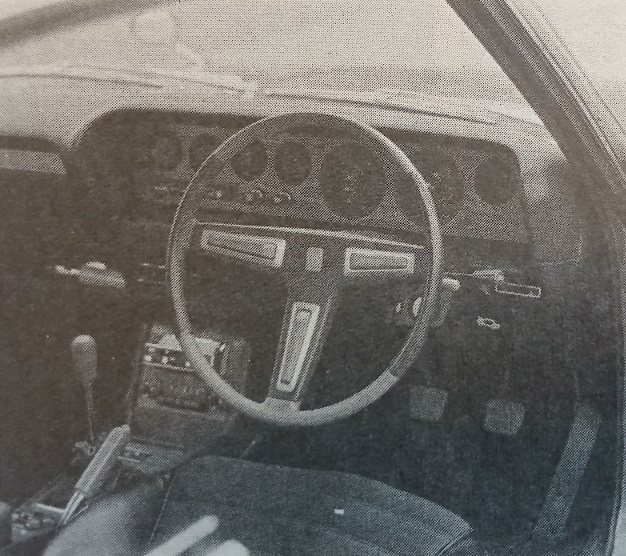
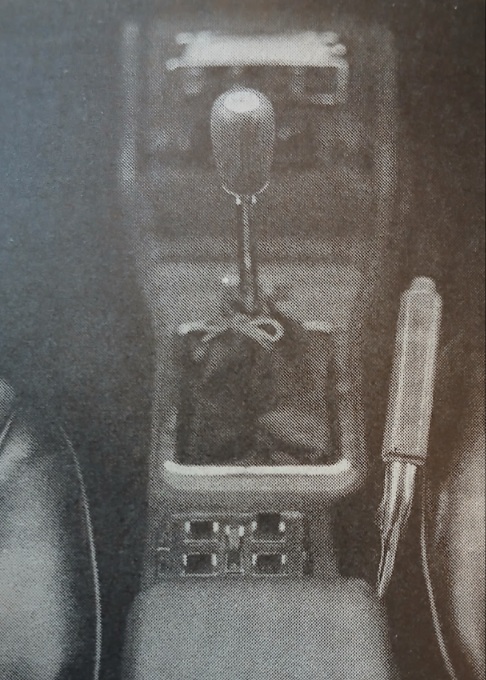
Goto: When you use a car, you’re constantly making various movements. The things you operate in the course of those movements—the gearshift lever, handbrake, switches, and so forth—should be positioned so that you can operate them naturally.
Then there’s the feel of the controls when you operate them. Lightness isn’t necessarily everything. With the brakes, for example, we want the braking effort to be such that you can instinctively sense how much stopping power you’ll get from a given amount of pedal pressure. As for the interior, rather than decorating it excessively, we wanted to give it a spacious, restful atmosphere.
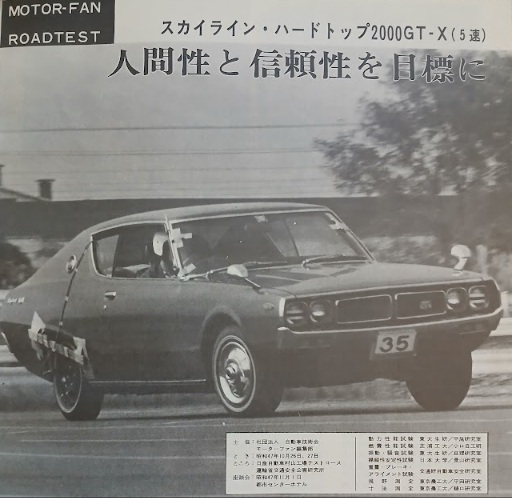
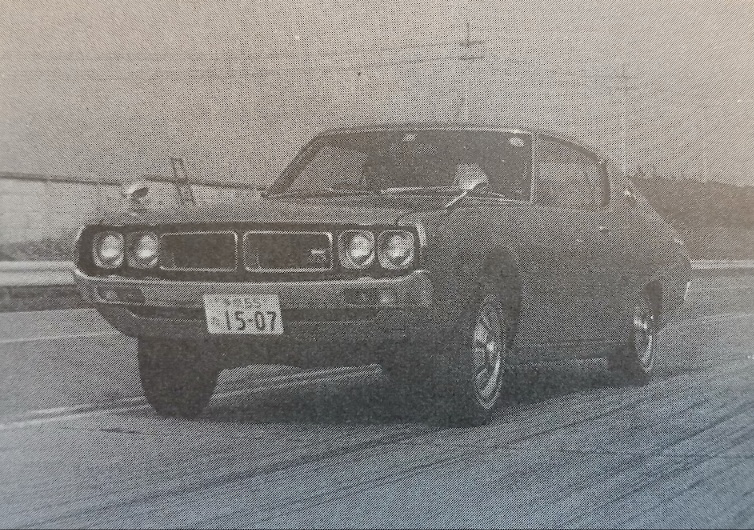
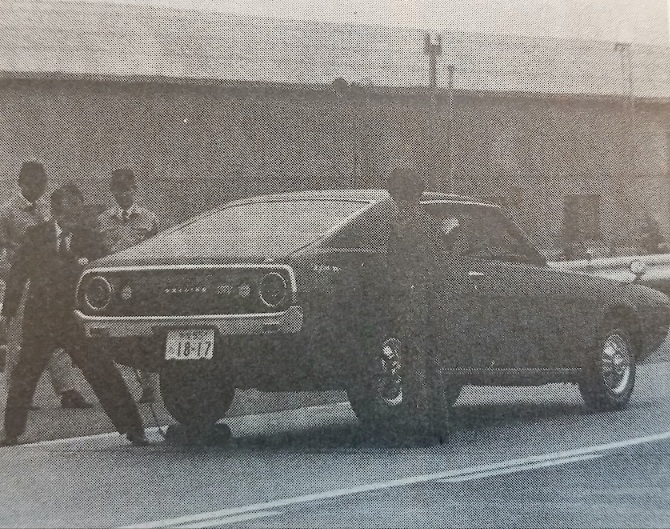
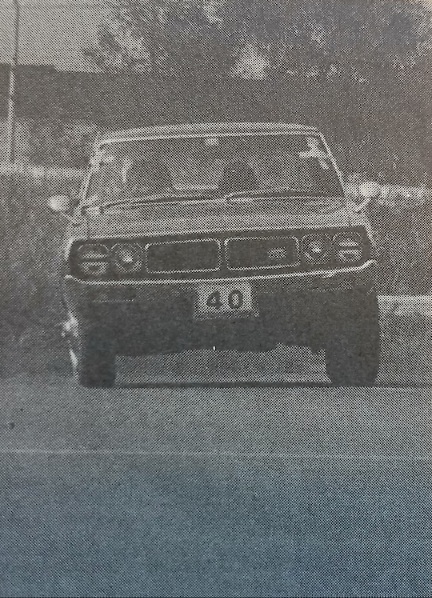
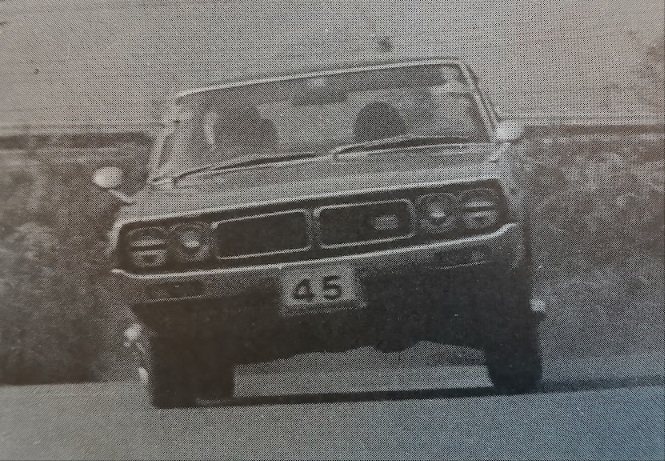
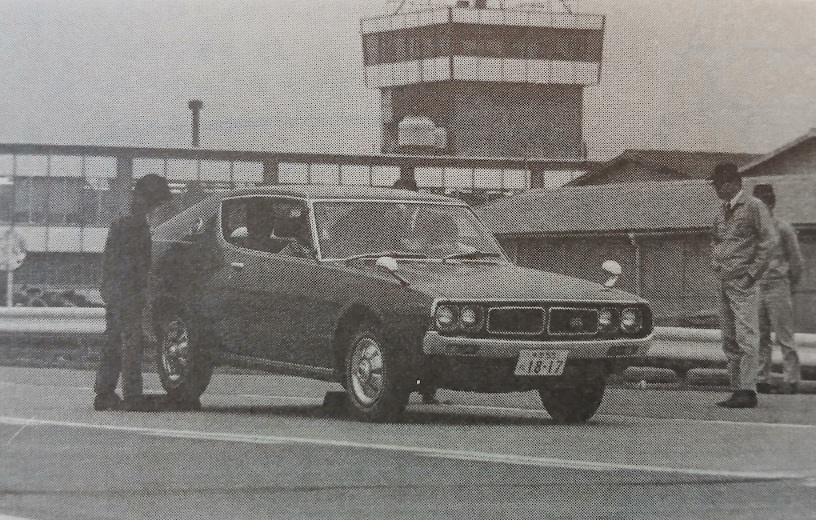
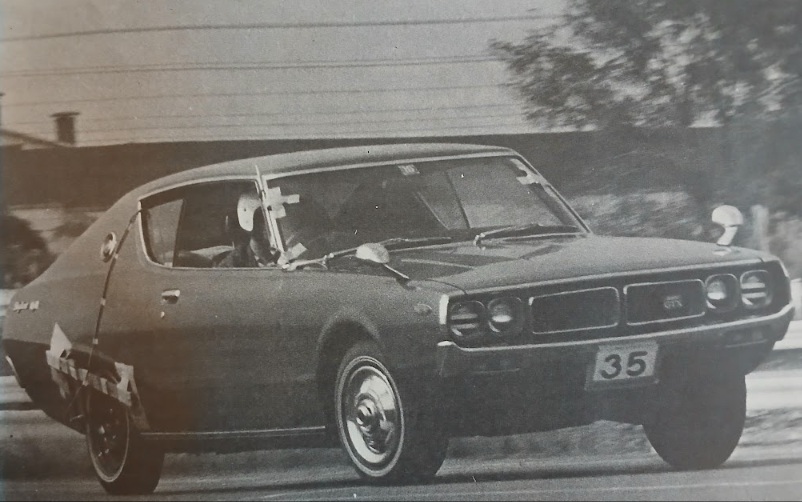
Turning to the styling, we wanted to retain the distinctive “surfing line” while pursuing a dynamic kind of beauty. We adopted an overall wedge shape to give the car a sense of speed. At the front, we’ve given it a depth of sculpturing not seen on our previous cars, creating a richer appearance. On the four-cylinder model, we also lowered the position of the front pillars to correct the somewhat unbalanced look caused by the short nose of the previous car.
As for reliability, our objective was to maintain consistently high quality, so we’ve tried to carry over as many proven components as possible from the previous Skyline. This isn’t limited to the Skyline; we’ve taken the same approach with the Laurel. About 60% of the components we’re using have a well-established record of reliability.
In safety and pollution control, too, we’ve incorporated as many new measures as possible, including quite a few that anticipate future safety regulations.
Magazine: Before the new Skyline was announced, there was a lot of talk about how much it would have in common with the Laurel. Although their individual performance characteristics are different, we do get the impression that there’s something rather similar about their overall feel. We imagine you must have taken considerable pains to give the two cars distinct characters.
Sakurai: Since both the Laurel and the Skyline are built at the Murayama plant, we wanted to be able to adjust production flexibly according to the balance of demand for the two models. For that reason, we’ve made their manufacturing processes as similar as possible, sharing components wherever we can.
As for how we’ve differentiated their characters, with the Laurel we wanted the car itself to express a sense of spaciousness and luxury. With the Skyline, on the other hand, we’ve aimed for sharp, agile handling, while keeping its role as a grand touring car firmly in mind.
To give a specific example, even when we use similar suspension arrangements and struts, we don’t simply change the spring rates and shock absorber damping characteristics. We also make changes to things that could otherwise remain the same, such as the length and angle of the steering knuckle arms, and adjust the steering response to suit the character of each car. In this way, we’ve tried to give each model its own distinctive feel on the road.
Magazine: I understand you’ve also done a great deal of work on the driving position. Do you regard this as the ideal driving position?
Sakurai: I don’t think a driving position is so much a question of good or bad as one of personal preference. Broadly speaking, I think there are two schools of thought.
With the Skyline, we’ve placed greater emphasis on a driving position that fits the body closely and is thoroughly suited to driving, rather than on ease of getting in and out. There are other cars, I think, that take ease of entry and exit into account, as well as the need to accommodate people of much larger build in export markets.
Magazine: Speaking of making the controls easy to operate with natural movements, you’ve changed the position of things like the windshield-wiper switch. So you’ve paid particular attention to the smaller details around the driving position, arranging them so that the driver can operate everything naturally.
Sakurai: We tried all sorts of things. Much as they do in aircraft development, we built a mock-up and experimented with various arrangements inside it. We also tried removing existing components and considering where each one ought to be placed to make the best use of its function and allow it to be operated naturally. We settled on the final arrangement by checking each item individually.
As a result, we examined the shapes of the grips, and even with something as small as a control knob, we spent quite a lot of time working out the details so that it could be operated without confusion or any sense of awkwardness.
Styling That Also Takes Fashion into Account
Magazine: We’ve noticed that quite a few recent Nissan cars have rather poor rearward visibility. Is there some particular thinking behind that?
Sakurai: Not especially, but the trend in styling has been toward making the rear of the car appear larger, with the tail gradually becoming higher. I think that’s probably why the designs have come to resemble one another to some extent.
Magazine: Is the increasing popularity of this kind of design a result of designers being given more freedom?
Sakurai: There are certain constraints, of course. The wheelbase, overall length, width, and general layout are more or less predetermined, and the designers have to work within those limits. But we try to give as much weight as possible to the ideas of younger people. In that respect, maybe we do allow more freedom than other manufacturers.
Narue: The C10 was a very original design, and when it appeared, I thought it was somewhat ahead of its time. What you’re saying about the new model sounds rather more conservative, as though you’ve decided not to go against current styling trends. Given the Skyline’s image, did you not consider trying to get ahead of the times again with its styling?
Sakurai: We thought we were getting ahead of the times, but perhaps we didn’t go quite far enough. When we introduced the C10, everyone seemed to descend on us asking what on earth we thought we were doing. It was enough to make me want to run away. (laughs)
This time, on the other hand, we’re being told the design is too familiar, and I must say that’s left me rather at a loss.
Yamaguchi: The way I see it, this car was destined to become rather bulky. It has the basic structure of a car that ought to look bulky. Yet they’ve managed to make it look as slender as this, and quite cleanly styled at that. I think the designers must have had a difficult job.
From a functional standpoint, though, there’s the question of rearward visibility. And after going to the trouble of lowering the edge of the trunk on the Laurel, it’s been raised again on this car. That’s too bad, I think.
Watari: Opinions on a car’s styling can change considerably between the time it’s first announced and two or three months later. In other words, a design is judged twice.
Kageyama: I think it’s judged three times. The third comes when the next model appears and everyone starts saying how good the old one was. (laughs)
Sakurai: Being told that the previous model was better is the hardest thing of all.
Magazine: You mentioned that about 60% of the components are shared. I imagine we’ll be seeing more cars assembled from common components in the future. When that happens, how do you go about giving each car a different character? What methods do you use?
Sakurai: If you simply look at the components, they’re the same components. But I think you can give a car quite a distinctive character through the way you use and combine them. Isn’t that what automotive engineering will increasingly be about—adapting cars to suit customers’ different tastes?
We have the major challenges of 1975 and 1976 ahead of us, and we’re devoting all our efforts to meeting them. Measures to control air pollution have nothing to do with a car’s individual character. They’re simply requirements that we must overcome. Once we’ve overcome them, I think the real contest will be how successfully we can give each car its own character. And when that time comes, I don’t think it’s impossible to achieve distinctiveness through different combinations of common components.
Higuchi: But from the user’s point of view, there’s also the desire to own something different from what everyone else has. Differences in driving character alone aren’t necessarily enough to satisfy that desire. I think people also look for different mechanical arrangements, different styling, or different ornaments and grilles.
To take that a little further, some manufacturers use the same door panels across different models. Even then, they can produce quite different styling simply by changing the windows and grille. Compared with that approach, I felt yours was rather halfway between the two.
Sakurai: GM once used exactly the same doors across several models, changing the lines of the front and rear fenders around them to make the cars look different. We studied that approach quite carefully, but I don’t think we want to go quite that far.
Higuchi: I can understand that.
Performance Unchanged from the Previous Model
Magazine: Could we have the results of the performance tests?
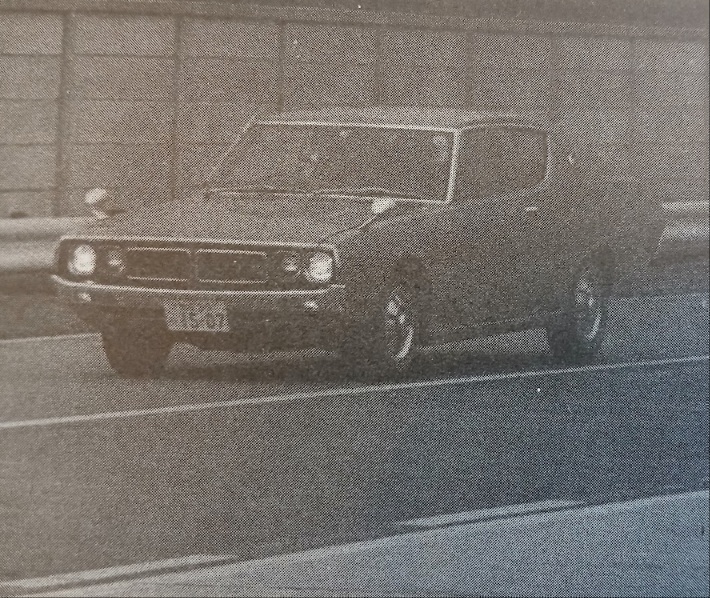
Furutani: For standing-start acceleration, we recorded 0-50m in 4.4 seconds, 0-100m in 6.8 seconds, 0-200m in 10.6 seconds, and 0-400m in 16.8 seconds. These figures are exactly the same as those we recorded for the previous Skyline GT (GC10).
In terms of time to speed, the figures were 0-60km/h in 4.7 seconds, 0-80km/h in 7.3 seconds, 0-100km/h in 11.1 seconds, and 0-120km/h in 15.5 seconds. Overtaking acceleration seems to be slightly worse than in the previous model.
Magazine: The GC10 was the single-carburetor model with 105ps, wasn’t it? This car has 130ps and a 5-speed transmission, yet its standing-start acceleration is exactly the same and its overtaking acceleration is worse. Is the gearing taller?
Kinoshita: The previous model had a final-drive ratio of 3.900, while this one has 4.111.
Magazine: So the previous model’s gearing was actually a little taller.
Goto: The weight has increased slightly, and the hardtop is heavier than the sedan, too.
Furutani: Although engine output has increased, the engine is now tuned more for high-speed running. I think that may explain the overtaking acceleration figures, since the tests start at 30km/h in third gear and 40km/h in fourth, using the lower part of the engine’s rev range. In the standing-start acceleration tests, though, we don’t use those low engine speeds…
Running resistance has been significantly reduced as well.
Magazine: Well, it does break 17 seconds from 0-400m, so it’s certainly fast.
This transmission uses Porsche-type synchromesh only on fifth gear, doesn’t it? Isn’t it normally used on the lower gears, where the gear ratios are higher?
Sakurai: Porsche-type synchromesh is extremely effective, but in terms of feel, it doesn’t have that positive “click” to its engagements, so it isn’t particularly popular with ordinary drivers. When the synchronizer is subjected to a heavy load and the gear is forced into engagement, the Porsche type is well suited to the task. I think it’s a type of synchromesh that lends itself to hard, rough use.
For ordinary driving, however, Warner-type synchromesh gives a more definite sense of engagement and generally has better feel, so we wanted to use the Warner type wherever possible. But there were limitations involving our production equipment and other considerations, and we couldn’t change everything over to Warner-type synchromesh at once. Since the over-top gear isn’t used very often, we concentrated on the gears up to top. We also wanted to introduce the improved transmission as quickly as possible, so this was the arrangement we settled on.
Yamaguchi: BMW also used Porsche-type synchromesh before eventually changing over to the Warner type, and if I remember correctly, the reasons were much the same. But why Porsche-type synchromesh was retained on fifth gear has always been something of a mystery to me.
Magazine: Is the feel of Porsche-type synchromesh not very well regarded in Japan?
Sakurai: No, that isn’t necessarily the case. Depending on how a car is used, there are some for which Porsche-type synchromesh is really essential. I think it’s well suited to a car like the 240Z, for example. And the GT-R, too—although there isn’t one right now, if we were to introduce one, I don’t think it would be the sort of car where we could just use Warner-type synchromesh.
Higuchi: The “R,” huh?
Yamaguchi: Well, there’s always the “GT-R” to consider, after all. (laughs)
Magazine: Of course, that would be true of cars like those, but for ordinary drivers, is it fair to say that the Porsche type doesn’t feel quite as agreeable?
Sakurai: Yes, I think so. With the Warner type, the gears engage with a definite “click,” and quite a few people seem to prefer that feel.
But I suppose it’s really a matter of personal preference.
Magazine: Next, could we have the fuel-economy results?
Sano: In the steady-speed fuel-economy tests, using fifth gear, we recorded 19.5km/l at 40km/h, 19.2km/l at 60km/h, 16.6km/l at 80km/h, 13.7km/l at 100km/h, and 10.8km/l at 120km/h.
For the simulated practical driving fuel-economy tests, we obtained 10.3km/l at a target speed of 40km/h and 8.4km/l at a target speed of 60km/h.
We didn’t conduct fuel-economy tests on the previous GC10, so comparing these results with those of the Laurel (KHC130), the steady-speed figures are generally better across the board. The simulated practical driving figures can also be considered good for a car in the 2000cc class.
Ride Comfort with Broader Appeal
Magazine: Could we have the vibration and noise measurements?
Tateishi: For the sprung mass, we measured a bouncing frequency of 1.4Hz and what appears to be a pitching frequency of 1.5Hz. The unsprung-mass frequencies were 14.5Hz at the front seats and 13.0Hz at the rear seats.
Interior noise was measured in fourth gear, and the results were very good: 59 phons at 40km/h, 64 phons at 60km/h, 66 phons at 80km/h, 70 phons at 100km/h, and 74 phons at 120km/h.
For exterior noise, we recorded 73 phons at a steady 50km/h in second gear, 79 phons under acceleration, and 68.5 phons at a steady 50km/h in fourth gear.
Watari: The test course at Nissan’s Murayama plant tends to produce relatively favorable interior noise figures, but even allowing for that, these results fall below the lower end of Motor Fan’s evaluation range. It’s certainly a quiet car for its class.
I’d have liked to take measurements at higher speeds, but the speed warning buzzer came on and prevented us from doing so. Still, judging by the trend of the figures, I imagine it would remain relatively quiet up to around 140-150km/h.
As for the suspension spring rates, I sometimes get the impression that you’re trying to satisfy both preferences and ending up somewhere in between. The Tomei Expressway has developed quite a few uneven patches recently, particularly around the expansion joints, and when you drive over them at high speed, the car seems to leap upward, or something of that sort. I had that impression, anyway. I don’t know whether it’s due to the wheelbase or the spring rates, but what do you think?
Sakurai: You’re quite right. We’ve been moving toward a suspension setting with broader appeal, and one of the things we’ve done is reduce the damping force at higher suspension movement speeds, within limits that won’t adversely affect stability. As a result, when the suspension is jolted suddenly, there isn’t quite as much damping force to hold it down.
We’ve tried various settings, and what we’d like to find is a point that appeals a little more to ordinary drivers while still retaining something of the characteristic Skyline feel.
Ikeda: So you’ve chosen a setting that gives better results on rough roads at relatively low speeds?
Sakurai: We want it to be good on both rough roads and smooth ones. Of course, when I put it that way, you’ll probably say we’ve simply settled on an average compromise. (laughs)
Watari: That’s why I think the only real solution may be to offer two suspension settings, so that customers can choose between a firmer one and a softer one.
Hirao: As for noise, I’d like to see you reduce the sound of the ventilation fan a little more. I can put up with it being somewhat noisy on the high setting, but on low it’s really rather hard to tolerate.
Watari: If you concentrate on reducing interior noise without doing anything about the fan, its noise will only become more noticeable.
Ikeda: There’s some wind noise, too.
Sakurai: Around the pillar-mounted antenna, you mean.
As soon as we heard about that, we tried various things, but it seems to be quite sensitive to position. When it’s fitted exactly right, there may be no noise at all, whereas if it’s bent even slightly, it can produce noise.
Hirao: Some cars use the trunk lid as an antenna, don’t they? Couldn’t you do something like that?
Sakurai: We’d like to incorporate the antenna into a part of the body like that, as long as its directional characteristics weren’t a problem. Unfortunately, it becomes much too directional.
Magazine: There are also antennas built into the windshield.
Sakurai: Those are highly directional, too. Change the car’s orientation and reception can suddenly disappear.
Narue: Even in America, they usually offer a conventional antenna as an option with those systems.
Apparently, reception can be poor in certain locations.
Sakurai: It seems that a conventional rod antenna is still the best solution. That’s why it’s such a nuisance to find somewhere to put it.
Considerable Effort in Setting the Variable Steering Ratio
Magazine: Could we have the results of the handling and stability tests?
Motomiya: The minimum practical turning radius was 5.72m on the outside and 3.02m on the inside. Compared with other cars in the 1800–2000cc class, these figures are slightly on the large side. The overall steering ratio, averaged between the inner and outer wheels up to a steering-wheel angle of 300°, was 20.5, which is about average for this class.
Since the car has variable-ratio steering, we examined the figures in greater detail. The ratio was 19.3 up to a steering-wheel angle of 100°, 23.5 between 350° and 550°, and 21.9 beyond 600°.
Stationary steering effort was 12kg in either direction at a steering-wheel angle of around 300°, increasing to 13kg near full lock. These are relatively light figures for this class. In particular, the effort increases very little beyond 150°, and near full lock it is lighter than on other cars. The effect of the variable-ratio steering is quite pronounced.
The roll rate was 4.0° in the lateral-acceleration measurements and 4.2° by photographic measurement. Both figures are relatively low for this class, although the subjective impression of the ride is quite soft, almost what might be called a luxury-car setting.
The steering effort required to hold a constant turn was 3kg at 0.2g of lateral acceleration, rising to approximately 4kg at 0.3g and remaining at that level up to around 0.6g. The effort at about 0.3g is rather high for this class.
The understeer and oversteer characteristics are much the same as those of other recent cars in this class. One characteristic is that the turning radius changes almost linearly with the square of speed up to about 0.45g of lateral acceleration, with a tendency toward somewhat stronger understeer beginning around 0.5g. Within the range of our measurements, there was no pronounced tendency toward reversal into oversteer.
Steering effort increased with lateral acceleration, reaching 6-6.5kg at 0.5g, which is on the heavy side for this class.
In the hands-off stability test, the oscillations began to show somewhat poorer convergence from around 100km/h. The yaw-rate trace initially exceeded the magnitude of the input immediately after it was made, which may explain the poorer convergence. The subjective impressions also suggested that the oscillations were slow to settle.
Sakurai: In the slalom test, when you’re comparing a constant-ratio steering system with a variable-ratio one, if you base the test on lateral acceleration rather than a fixed course, the steering angle will vary with vehicle speed, won’t it? How do you conduct the test in that case?
Kageyama: Actually, we conducted the test in our usual way without paying much attention to the variable-ratio steering. It was only when we came to analyze the data that we realized the problem, and we’ve been giving it a good deal of thought since. In fact, we were discussing the need to reconsider our method of testing steering effort.
Sakurai: If you look only at lateral acceleration, there are different ways of producing it, depending on both vehicle speed and steering angle. So the question is how the test ought to be conducted…
The reason I ask is that I had a great deal of difficulty deciding on the variable steering ratio myself. At first, straight-line stability was poor, and determining the range over which the ratio should remain constant proved quite delicate. There was also the question of how the ratio should begin to change.
What I want is to use variable-ratio steering without making the driver conscious of the variation—to achieve a natural, agreeable steering feel, without anything seeming unnatural.
That’s why I’d like to establish a definite test procedure by which we can evaluate it.
Magazine: Haven’t Skyline owners expressed any demand for power steering?
Sakurai: Not currently. Besides, if we fitted power steering to the Skyline, I think we’d hear complaints that it wasn’t the sort of car that should have it. (laughs)
Narue: But Mr. Goto has been doing a great deal of research into power steering. A system that retains a sporting character and incorporates a variable ratio as well. If the feel is right, I’m sure people would accept it.
Goto: I imagine all of you would prefer the power steering fitted to a Mercedes-Benz. The trouble is that if we fitted that kind of system, ordinary Japanese customers wouldn’t even think it was power steering.
Kageyama: It doesn’t have to be anything as sophisticated as power steering. I’d be quite happy if you could change the steering ratio with a single lever.
Hirao: We made something like that years ago, didn’t we?
Kageyama: Since the damping in the hands-off stability test wasn’t particularly good, we compared the yaw-rate response with that of other cars. The damping ratio was clearly lower. When you give the steering wheel a sudden input, the car initially yaws in one direction. But when it swings back in the opposite direction, the response is even greater than it was in the direction of the original input. That’s why it takes so long for the oscillations to die away.
Hirao: I wonder if that’s because of the variable-ratio steering. The steering passes through the region where the gear ratio increases, doesn’t it? Perhaps that’s where the movement is being driven. But if there’s nothing wrong with the car when you’re driving with your hands on the wheel, it doesn’t really matter whether the hands-off response tends to diverge or not.
Oguchi: Still, I noticed it myself, and I thought that was the biggest difference from the previous model.
Hirao: Hands-off stability is a very important test for establishing the characteristics of the mechanical system. But I think judgments about whether a car is good or bad ought to be made by driving it with your hands on the wheel.
Oguchi: It was something I noticed while driving with my hands on the wheel and making lane changes. The driver receives feedback from the car and senses its movement right at the beginning. That’s when you realize that something feels different.
Hirao: With variable-ratio steering, the effort becomes lighter as you turn the wheel farther. Someone used to a car in which the steering becomes heavier with increasing lock will apply the same force and end up turning the wheel farther than intended.
So even if the car exhibits understeer when the steering wheel is held at a fixed angle, it can behave as though it has oversteer when the driver applies that amount of force. The wheel turns farther than the driver intended, so from the driver’s point of view, the car behaves as though it has oversteer.
Once the driver gets used to it, they’ll change the amount of force they apply when turning the wheel. But because the relationship between steering angle and steering effort varies through the turn, a car that should exhibit understeer as a mechanical system can behave as though it has oversteer when the driver and car are considered as a single system.
Oguchi: So it’s a question of whether the input is steering angle or steering force.
Hirao: Exactly. That’s why I think that, as an intermediate step, the variation in steering ratio might have been made a little smaller. Then, if you’d introduced the current ratio at the next model change, probably nobody would have said anything about it.
Narue: Rather than simply saying that the convergence is poor, I’d say the self-aligning torque is considerably weaker. Couldn’t the suspension be contributing to that as well?
Sakurai: I think it’s a combination of the suspension and the steering. As far as the suspension is concerned, it isn’t that the natural frequencies themselves have changed. We’ve also been checking the damping characteristics, mounting rigidity, and so forth, but…
Ikeda: Until now, increasing the self-aligning torque has generally just made the steering heavier. But with this system, it’s been mechanically arranged so that the steering becomes lighter as the wheel is turned farther. So I think you could afford to increase the self-aligning torque around the straight-ahead position.
Sakurai: We’ve revised the variable-ratio characteristics from our original setting and widened the range over which the ratio remains constant. Without doing that, straight-line stability was poor when judged by the steering feel people have become accustomed to.
Ikeda: I think this kind of variable-ratio steering, with a longer, flatter section at the bottom of the ratio curve, is well suited to Japan.
Magazine: Could we have the results from the Traffic Safety Research Institute?
Ishikawa: The weight when unloaded was 1177kg, with a front-to-rear distribution of 55:45. The distribution changes very little with one or two occupants, but with five on board it becomes approximately 50:50.
As for wheel alignment, the front wheels have quite pronounced toe-in and camber, while the rear wheels have a slight amount of toe-in. With five occupants, the front alignment changes very little, but the rear wheels develop considerably more negative camber, and the toe-in changes to toe-out.
The pedal effort required to produce braking equivalent to 0.6g deceleration was approximately 27kg on the test rig. On the road, it was around 20kg from speeds of 50-100km/h, increasing to 25-27kg from 130km/h. Perhaps this is because the brakes are designed for high-speed use and become more effective once their temperature has risen to some extent.
The braking-force distribution was approximately 70:30 front to rear, and the left and right sides were very well balanced. The brake pedal had a rather soft feel.
As for the other pedals, the clutch was relatively light, while the accelerator effort became heavier under acceleration. The operating effort of the gearshift lever was about average.
Magazine: The clutch has become lighter, hasn’t it? Were there complaints that the previous model’s clutch was too heavy?
Sakurai: Yes, although mainly from people driving in Tokyo traffic.
Terashima: The effort around the clutch engagement point hasn’t changed very much, but I think it’s become much lighter when you press the pedal farther. The range of people buying the Skyline has broadened, too, so I suppose there was a need to make the clutch lighter.
About the Trunk Opener
Magazine: Could we have the results of the dimensional measurements?
Onda: I’ll leave the dimensional figures for everyone to examine in the data, but there are a couple of things I’d like to ask about.
First, what was the purpose of adopting the trunk opener? And second, although a seven-gauge instrument panel isn’t particularly unusual, you’ve provided quite a number of gauges and warning lights. I’d like to know your thinking behind this arrangement from the standpoints of function, ergonomics, and safety.
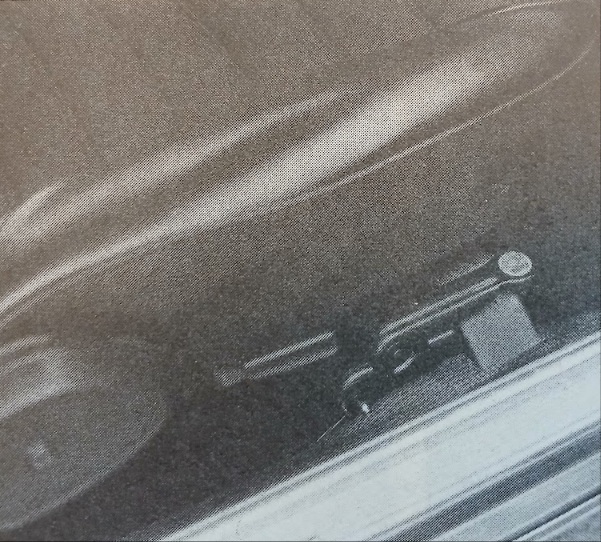
Sakurai: There isn’t any particular reason worth singling out for the trunk opener. It’s simply convenient in various situations. You might want to open the trunk while the engine is warming up, for example, or let someone take their golf bag out without having to get out of the car yourself.
We also developed a special cable mechanism that doesn’t require a solenoid or vacuum assistance, and the operating feel isn’t bad, either. So it was really a matter of convenience.
Onda: My concern is that being able to open the trunk without switching off the engine means the car is still ready to move off while someone is standing behind it. And since the trunk can be opened without a key, isn’t there also a risk of someone opening it without permission?
Sakurai: We no longer use the sort of key arrangement we had in the old days, where you could hand a parking attendant a key just for the ignition and he couldn’t open anything else. Besides, for anyone who doesn’t like the idea of the trunk being opened that way, we’ve made the opener cable easy to disconnect.
Hoshijima: Isn’t the position of the opener a problem?
Ikeda: It’s extremely easy to operate by mistake, especially when you get into the car in the dark.
Kageyama: I did it myself. Pop, up it went.
Sakurai: It’s just a matter of getting used to it. I don’t think you’d have that problem once you’d bought the car. (laughs)
Narue: But I don’t think it needs to be so large and easy to operate. The driver only needs to know where it is, so there’s no particular reason to make it that easy to pull. It’s much too conspicuous.
Magazine: And what about the gauges and warning lights?
Sakurai: A seven-gauge instrument panel isn’t anything particularly new, but the idea is to have the information available whenever the driver wants to look at it. We’ve made the gauges that are needed frequently larger, and tried to arrange the others according to how often they’re likely to be looked at.
Also, these gauges are not intended to work like those in an aircraft, where the normal condition is indicated by all the needles pointing straight up, so that you can judge the condition of the machine simply from their positions.
They’re there so that, if something goes wrong, you can see where the trouble is, or check something like whether the battery is being charged. They’re not instruments you absolutely need in order to drive the car.
As for the warning lights, there’s also the question of their own reliability. For example, we’ve arranged for the brake-fluid warning light to illuminate when the parking brake is applied, so that the driver can check that the warning light itself is working properly.
Magazine: You’ve used quite a lot of wood trim, haven’t you? If it’s genuine wood, I imagine it must be rather difficult to obtain a consistent quality of material.
Sakurai: It is genuine wood, but we don’t make the pieces by carving them out of solid timber. Instead, we slice the wood into thin sheets and mold them into shape. You’ve probably seen chairs made from bent plywood. We use much higher pressure than that, in a process that’s something of a combination of press forming and woodworking.
And since it is real wood, the natural resins gradually come to the surface with age, giving it an increasingly attractive color. The shift knob is made differently, though, more like a piece carved from solid wood. The dashboard panel isn’t real wood; it has a woodgrain finish.
Higuchi: These days, most cars use molded plastic parts, but looking at this one, it’s almost like seeing the grilles of past years again. There are quite a few die-cast parts and pressings. I suppose this is one area where you’ve tried to give the car a distinctive character.
Sakurai: With the Skyline GT, we take pride in avoiding unnecessary decoration. The instrument panel has a woodgrain finish, of course, but as far as possible, we want to avoid that sort of thing. If a part has a function, we’d rather let that function show than disguise it with something artificial. We don’t want to resort to anything that only creates an impression. That’s why we made the GT’s grille as a die-casting.
Yamaguchi: Couldn’t something be done about the seat belts? That feeling of being squeezed by them?
Sakurai: If that’s how you felt, we’ll certainly look into it.
Magazine: There was a racing version on display at the Tokyo Motor Show, wasn’t there? We couldn’t tell much about its specifications, but from the outside, the only thing we could identify was the four-wheel disc brakes. Is there still no possibility of putting that car into production?
Narue: In other words, the GT-R.
Inozaki: As far as the GT-R is concerned, we’re not yet in a position to say whether we will or won’t introduce it, so I’m afraid I can’t give you a definite answer.
Magazine: And what about production, including exports…?
Inozaki: Production has got off to a very strong start. For the domestic market, we’re planning monthly production of 13,500 passenger cars, or 15,000 including vans.
The October figures aren’t complete yet, but from what we’ve seen so far, sales appear to be running at nearly twice the previous month’s level.
For fiscal year 1973, we’re planning monthly production of 15,000 passenger cars, or 16,800 including vans. As for exports, we intend to start with around 500 cars and gradually increase the number.
Magazine: Will the export models have the 2.4-liter engine?
Goto: The models for Europe will have the 2.4-liter engine. For markets outside Europe, we’ll also export the 1.6- and 1.8-liter models.
Sakurai: The 2-liter six-cylinder model is only for Japan.
Magazine: Thank you all very much.