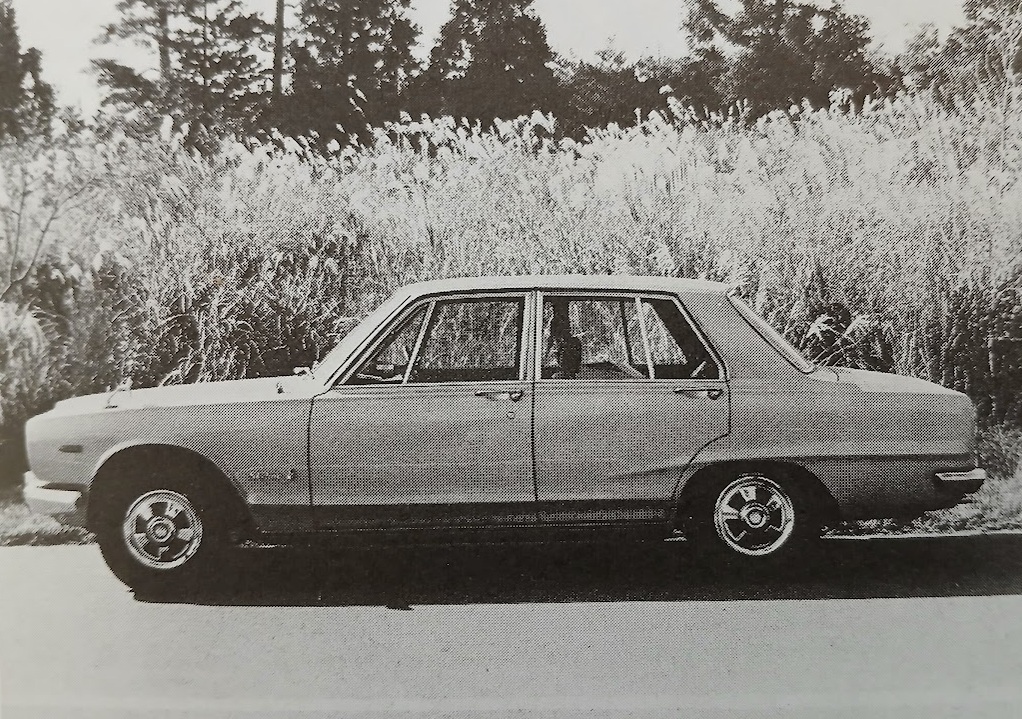
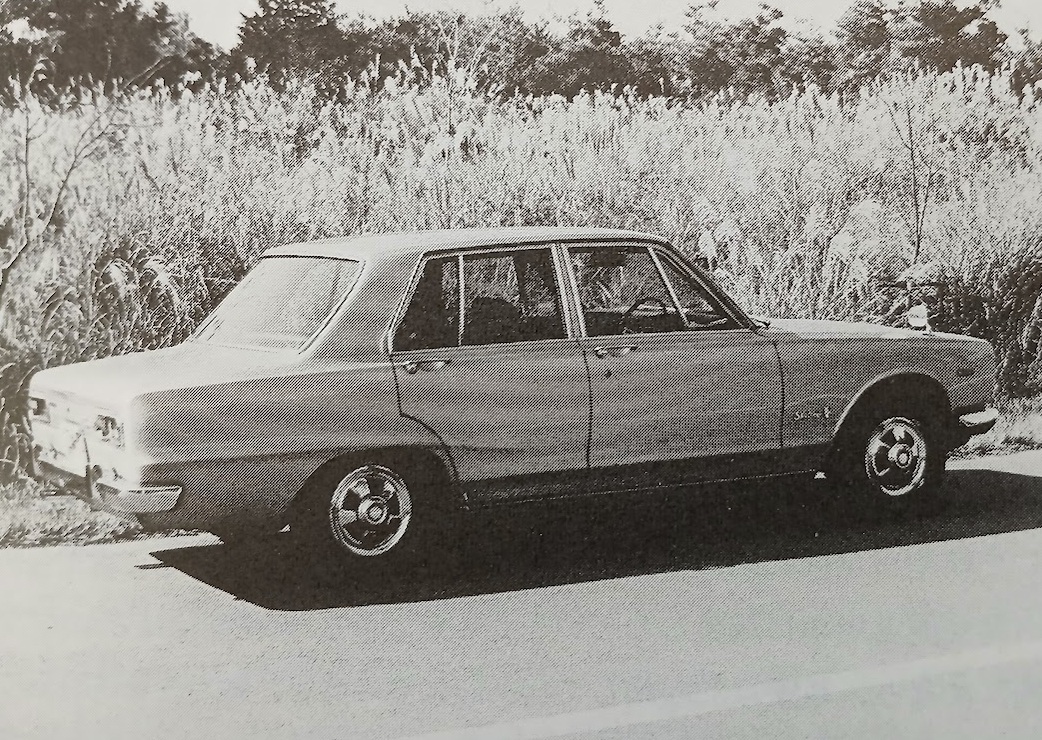
Nissan Skyline 2000GT (1969)
Publication: Car Graphic
Format: Road Test
Date: January 1969
Author: “C/G Test Group” (uncredited)
Summary: A high-speed five-passenger sedan with four-wheel independent suspension and a six-cylinder engine. Flexible and tractable, though somewhat rough at higher engine speeds. Lower-geared than the previous model, excellent 4-speed gearbox, handling and ride comfort both at a high level, controls light in operation. Overall practicality greatly improved over previous model.
Road testing the Skyline 2000GT
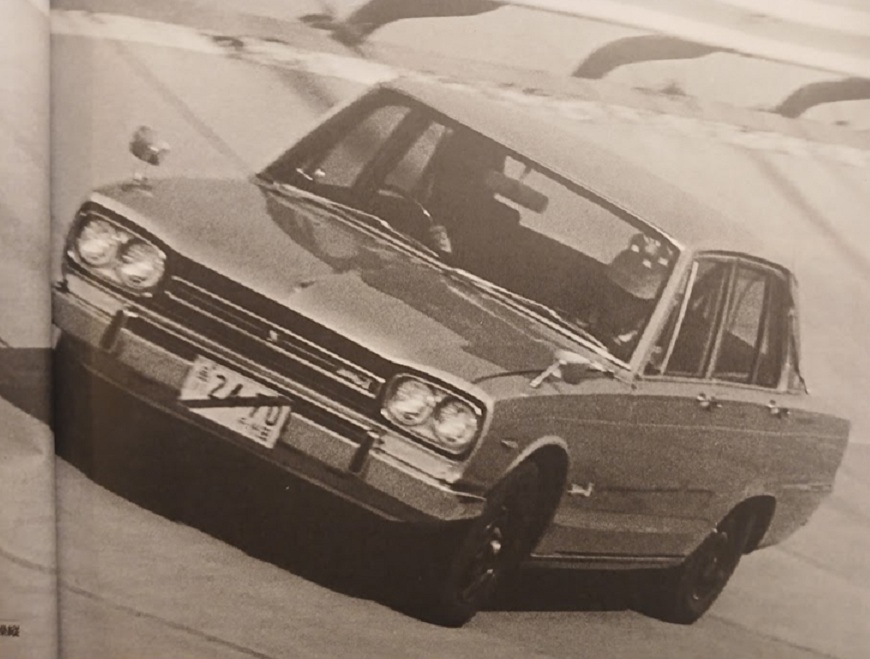
The new Skyline 2000GT announced shortly before the Tokyo Motor Show is a heavyweight 2-liter six-cylinder sporting sedan developed with practicality in mind, broadly equivalent in positioning to the previous 2000GT-A. Its engine and body are entirely different from the earlier model, with the new car being based on the body shell of the new Skyline 1500. In order to accommodate the six-cylinder engine, the hood has been extended by 195mm, and the wheelbase consequently lengthened by 150mm, though in most other respects the basic structure remains that of the Skyline 1500. The suspension, however, is completely different, the most notable feature being the adoption of a rear semi-trailing-arm independent layout similar to that used on the Bluebird and Laurel.
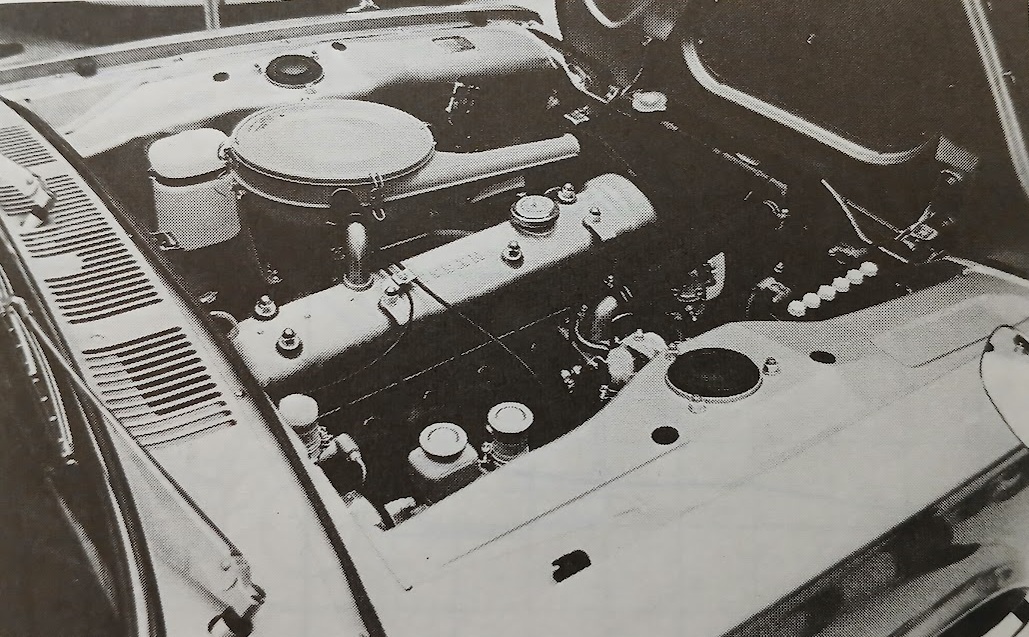
The engine in the previous 2000GT-A was the Gloria’s G4-type 1988cc four-bearing unit, whereas the new model uses the Cedric’s L20 six-cylinder SOHC 1998cc engine with seven main bearings, revised in various details for its new application. Changes include an increase in compression ratio from 8.5 to 9.0, revisions to the camshaft, and the use of F770 metal as the bearing material for improved high-speed durability. The carburetor, however, remains a single 2-barrel unit in the interests of practicality. Output and torque are officially quoted at 105ps/5200rpm and 16.0kgm/3600rpm, identical to the figures for the base Cedric engine (and, coincidentally, the previous 2000GT-A), though in practice the actual output is said to be slightly higher.
A driver familiar with the previous 2000GT-A would almost certainly find this new 2000GT far more refined and mature in character—perhaps even somewhat softened, depending on one’s point of view. The earlier model possessed the peculiar charm of seeming to force a powerful 2-liter six-cylinder engine into what was fundamentally still a 1500-class body, and driving it demanded a certain degree of technique, rather like handling an unruly horse. By contrast, the new model has had its rough edges largely smoothed away. Rather than a GT aimed primarily at younger drivers, it may better be described as a highly practical high-performance sedan.
Passenger accommodation has become far more “civilized,” and although vehicle weight has increased by 35kg to 1090kg, performance is in no way inferior to that of the earlier model. It reached a maximum speed of 172.4km/h on the 1km straight at Yatabe (one-way), and averaged 170.6km/h over the 5.5km circuit. Most impressive of all is the improvement in acceleration performance, covering 0-400m in 17.6 seconds compared with 18.5 seconds for the previous 2000GT-A.
This improvement in acceleration has been achieved less through increased engine output than through revised gearing. Comparing the gear ratios of the new and old models (numbers in parentheses indicate overall ratios): the new model’s ratios are 3.549 (13.85) / 2.197 (8.57) / 1.420 (5.54) / 1.000 (3.90); the previous model’s ratios were 2.963 (13.17) / 1.632 (7.25) / 1.000 (4.44) / 0.762 (3.386).
The gearbox is the area in which the new 2000GT has improved most dramatically. The previous model was in effect a 3-speed transmission with overdrive, and fourth gear could not realistically be used until speeds exceeded roughly 60km/h on the open road. The unusual shift pattern, which required a U-shaped movement between third and fourth, was also unpopular. In addition, the overdrive fourth gear produced more gear noise than direct third, another notable weakness.
By contrast, the new model’s gearbox is a great improvement in every respect. The ratios are spaced much more closely, the Borg-Warner-type synchromesh operates very effectively, and the shift action itself is excellent. As can be seen from the ratio comparison above, the new model’s ratios are generally lower overall than those of the previous car, resulting in greater flexibility and making the car noticeably easier to use, particularly in city driving. Clutch effort has also been reduced considerably, while engagement is exceptionally smooth.
Even when the clutch is released abruptly from high engine speeds during acceleration testing, slip is minimal, and the car pulls away cleanly with only a trace of wheelspin. The only real complaint concerning this otherwise excellent gearbox is that the lever’s spring loading toward the third/fourth plane is overly strong. If one shifts casually from first to second without paying attention, the lever may occasionally be pulled into fourth by the spring force. Drivers likely to purchase a 2000GT hardly require such a safeguard, and even if one considers it necessary, a much lighter spring would suffice.
The Cedric-based six-cylinder SOHC engine fitted to the new 2000GT, however, cannot be rated quite so highly–at least judging from the example installed in our test car. Up to around 3500rpm, the range used most frequently in normal driving, it displays the smoothness one naturally expects of a six-cylinder engine, but a noticeable vibration period appears around 4800-5000rpm. Beyond 6000rpm this vibration becomes rather severe, and by approximately 6200-6300rpm the engine encounters such strong resistance that it feels almost as though a governor has intervened, making further increase in engine speed impossible.
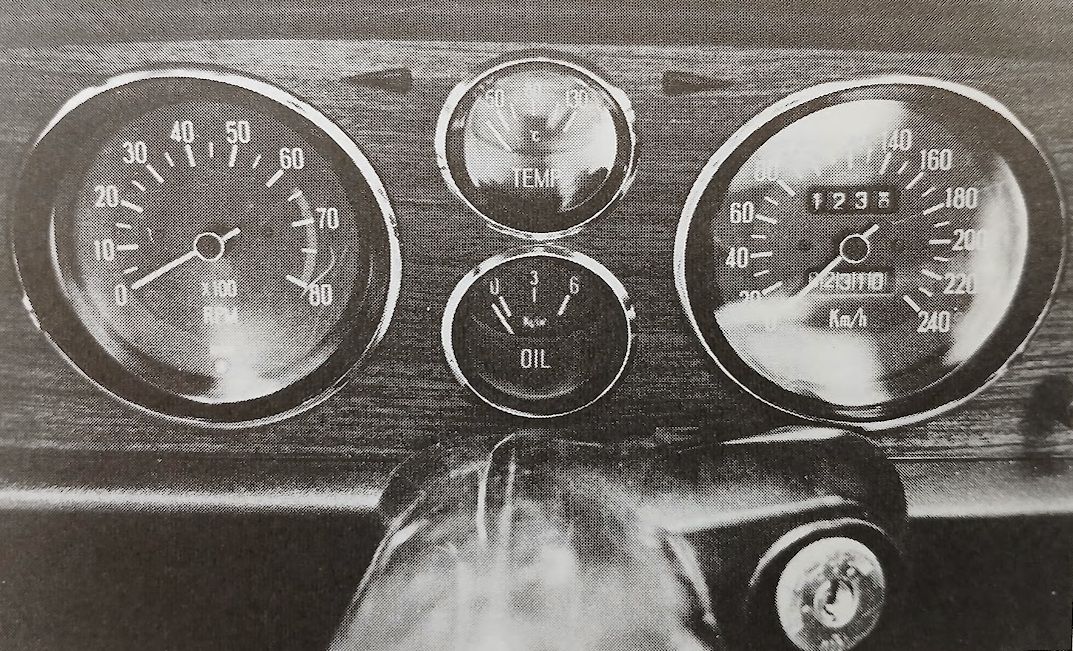
At the same time, the tachometer needle fluctuated violently, suggesting that the cause may have perhaps been electrical. Although the red zone begins at 6400rpm, torque falls away sharply past 6000rpm, and there is little practical reason to extend the engine beyond that point.
As noted earlier, the gear ratios of the new model are generally lower overall than those of the previous car, which makes the engine’s shortcomings at higher engine speeds all the more regrettable. When comparing gearing, it is meaningless simply to compare final-drive ratios or top-gear ratios in isolation; one must instead consider the effective rolling radius of the tires and compare the speed per 1000rpm in top gear. The overdrive fourth gear of the previous model corresponded to 32.9km/h per 1000rpm, whereas the new model’s fourth gear provides only 28.9km/h per 1000rpm.
Both cars achieve a maximum speed of approximately 170km/h, but whereas the earlier model reached this figure at 5200rpm, the new car requires 5900rpm–a roughly 12% higher engine speed. This is considerably above the engine’s rated power peak at 5200rpm. A figure of 28.9km/h per 1000rpm in top gear is not unreasonable for a 2-liter car, but for this particular six-cylinder engine, which does not especially enjoy high engine speeds, it may perhaps be somewhat too low-geared.
At the very least, it must be said that much of the earlier 2000GT-A’s appeal–its quiet, relaxed high-speed cruising made possible by high overall gearing–has now been lost. Whether one chooses top-gear flexibility or quiet high-speed cruising is, assuming the same engine, largely a matter of gear-ratio selection. However, if the engine were further refined so that the higher speed range could be used more comfortably, this need not be an either-or compromise at all; the two characteristics should be entirely compatible.
Alternatively, even if the engine itself remained unchanged, the addition of an electrically operated overdrive, such as the Laycock de Normanville type, on top of the existing 4-speed gearbox would surely make high-speed cruising considerably quieter and more economical.
The engine in our test car also displayed a flat spot around 3500-4000rpm, with an unpleasant tendency to hesitate momentarily during acceleration. Mechanical noise levels were not especially low either, becoming quite noticeable once beyond 100km/h (3400rpm). One can only hope these characteristics were peculiar to this particular example.
The shortcomings described above only become apparent when one attempts to extract the car’s full performance by extending the engine into the higher speed range. Within the scope for which the car was plainly intended, the 2000GT is in fact very smooth, powerful, and easy to drive. Thanks to its abundant torque and exceptionally smooth clutch engagement, the car can pull away quietly from an idle of roughly 700rpm with barely any throttle at all.
On ordinary national roads, where speeds are generally no more than 60-80km/h (2000-2500rpm), cruising is genuinely peaceful. The remarkable strength of the engine’s torque in top gear is demonstrated by the fact that, throughout the wide range from 20-110km/h, the time required to accelerate through each successive 20km/h interval remains consistently within the 5-second range. Shifting down to third shortens these figures by a further 1.5–2 seconds, making it possible even to sweep past two large trucks in immediate succession with complete confidence.
The brake system uses front opposed-piston discs and rear leading-trailing drums, equipped–naturally, for a car of this performance level–with both servo assistance and a tandem master cylinder. Pedal effort is light and brake feel pleasingly progressive, but for some reason absolute stopping power is not especially strong. During hard braking from 50km/h in neutral, deceleration beyond 0.85g could not be achieved regardless of pedal effort; pressing harder merely locked the front wheels.
In the fade test consisting of ten consecutive 0.5g stops from 100km/h at 1km intervals, pedal effort increased from an initial 22kg to 28kg by the final stop, indicating reasonably good fade resistance at this level of braking demand.
When a full emergency stop was made from 160km/h, tremendous clouds of blue smoke and the acrid smell of burning brake pads poured from behind the front wheels. Even under such severe braking, however, the car remained entirely stable in attitude, with nose dive very well controlled. The handbrake is positioned to the left of the gear lever and, in an emergency, is capable of producing 0.3g deceleration on its own, bringing the car to a stop from 50km/h in 28m.
One particularly irritating trait, however, was the constant scraping noise from the discs, an all-too-common characteristic of disc brake systems.
The handling and ride quality of the 2000GT, equipped with four-wheel independent suspension, are both markedly superior to those of the previous 2000GT-A. The first impression upon taking the wheel and turning the first corner is of light steering that responds in a natural, unforced manner. This is in sharp contrast to the old 2000GT-A, which required considerable steering effort and exhibited strong understeer, demanding significant physical strength in corners regardless of speed.
In the new 2000GT, the steering remains surprisingly light even during parking maneuvers. The steering gear ratio has been slightly relaxed (from 18.5 to 19.8), and with three turns lock-to-lock it can feel somewhat busy in tight corners. Steering system rigidity is high, with almost no play, and as speed increases the response becomes progressively sharper.
On the first day of testing, we ran the car on the standard Dunlop Grand Speed GS1 6.45S-14 tires. At the recommended high-speed pressures (100km/h setting) of 1.8/2.0kg/cm², the front tires in particular squealed heavily in corners, and understeer was excessively strong. Moreover, the rear tires lost grip surprisingly early, sliding progressively outward.
Accordingly, tire pressures were raised to 2.5/2.2kg/cm², after which steering response improved noticeably, and handling became almost neutral in character. As we are generally accustomed to cars with pronounced understeer, our initial tendency when driving quickly on winding roads was to turn in too much, requiring occasional correction mid-corner. Once we were used to it, however, it became possible to place the car accurately to the edge of the road and enjoy a high degree of precision in cornering.
From the second day of testing onward, the optional 165SR-14 radial tires (Yokohama GT Special) were fitted. The high-speed testing at Yatabe was also carried out on these radials, and at 2.0kg/cm² pressure the steering response was similar to that of the Dunlop GS1 at 2.5/2.2kg/cm². Straight-line stability is excellent, allowing hands-off driving at 160km/h with complete confidence.
We carried out slalom testing at sustained speeds of 120-140km/h, using the full width of the circuit, and it was genuinely impressive to see a relatively heavy car of over 1200kg follow steering inputs with such light-footed precision.
Ride comfort is significantly softer than that of the 2000GT-A, although by general standards it is still on the firm side. Pitching, however, is almost entirely absent, and on good surfaces the ride has a smooth, almost gliding character. Because there is very little compliance in the suspension, even the cross-ply Dunlop GS1 feels almost as harsh as the Yokohama GT Special radial (which, as radials go, has a relatively soft tread).
The damping force is extremely strong (for example, compared with the Laurel, the rear damper rates are 110kg in rebound and 50kg in compression for the 2000GT, versus 50kg and 20kg respectively on the Laurel), and as a result the car is jostled quite sharply on poor roads. In return, however, its ability to maintain composure over rough surfaces is excellent, and the body rigidity is felt to be extremely high.
That said, the test car exhibited one irritating flaw: the plastic cover on the steering column rubbed against the dashboard, producing a continuous squeaking noise. Although trivial in itself, such shortcomings in finish noticeably detract from the overall impression of the car.
The interior is far more luxurious than that of the previous 2000GT-A. Dimensions have also increased; for example, overall width is greater by 100mm, and rear-seat accommodation in particular has improved dramatically, allowing five passengers to travel comfortably over long distances. The driving position remains similar to the old 2000GT-A and is excellent. The reclining seats with adjustable headrests are well shaped and properly sized, and the backrest extends up to shoulder height, providing good lateral support.
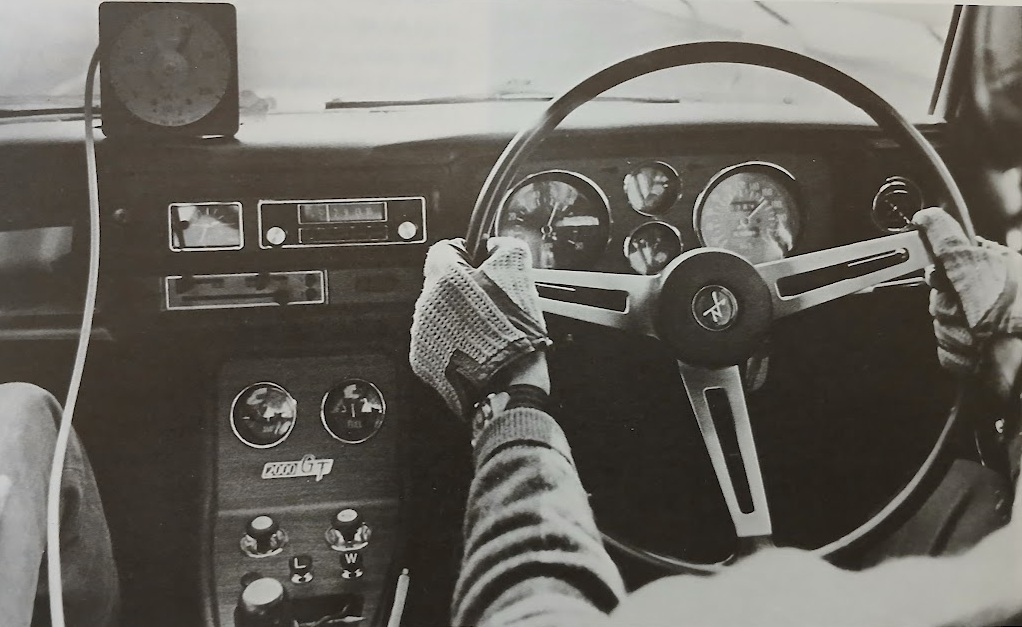
The cushioning strikes a reasonable balance between firmness and elasticity, although ideally the front edge of the seat base could be slightly higher to better support the thighs. The steering wheel is set close to vertical and mounted in a low, Mercedes-like position, so long-distance driving does not cause shoulder fatigue. The rim, however, feels somewhat too thin. This is likely a matter of designer preference, but excessively thin rims tend to be tiring to the fingers.
The three-spoke steering wheel incorporates horn buttons built into the spokes, allowing the driver to operate the horn without removing their hands from the wheel. The horn itself has a sharp tone similar to Bosch units. Pedal placement is well suited to heel-and-toe operation.
The dashboard is finished with woodgrain trim, giving a distinctly upscale impression.
A large-diameter tachometer and speedometer are positioned directly in front of the driver, with the most important auxiliary instruments for monitoring the engine’s condition–water temperature and oil pressure–placed between them. Unfortunately, the glass is highly reflective, and the needles are too thin, making them difficult to read at a glance. Painting the needles red would improve visibility considerably.
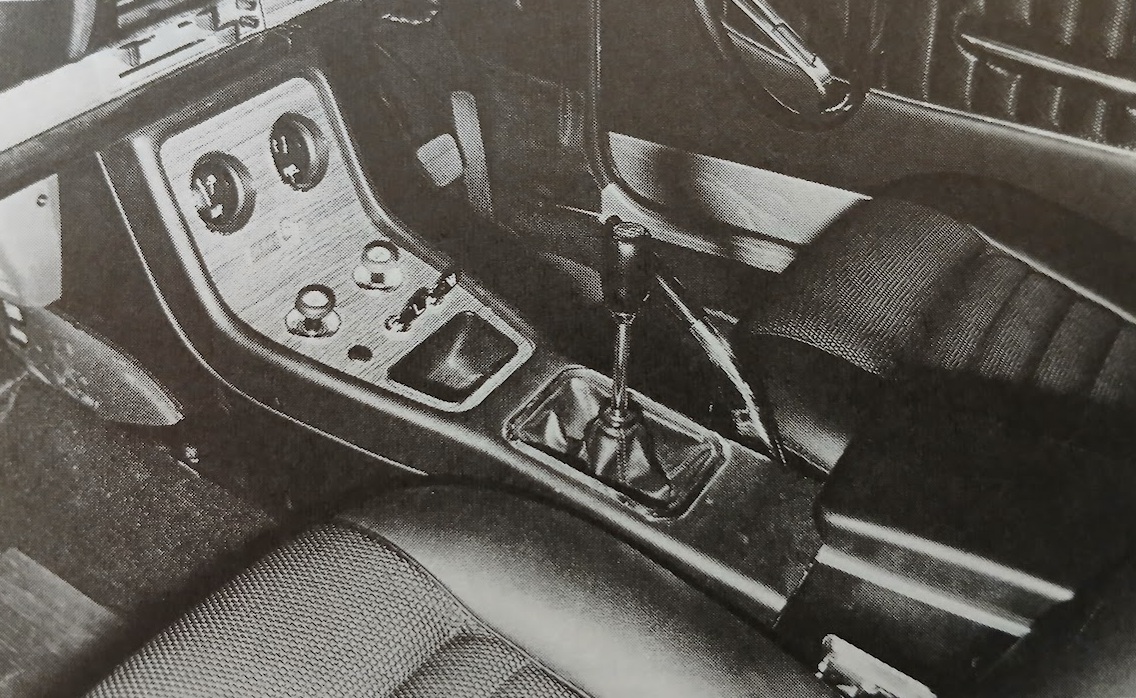
The center section of the dash is connected to the transmission tunnel by a console box, which houses the fuel gauge and ammeter, along with the frequently used light and wiper switches, as well as the cigarette lighter and windshield washer button.
The headlight switch is plainly positioned too far away. Even from a normal driving position, one must lean forward slightly to reach it. As we pointed out in our Skyline 1500 test report, we would very much like to see the return of the convenient steering-column-mounted stalk control used on every Skyline since the original model. According to the manufacturer, the addition of a steering lock made it impossible to mount the switch on the column. However, one must ask whether it is truly appropriate to prioritize protection against the remote possibility of theft over a switch that is used dozens of times every day.
The heater and ventilation system is comprehensive, allowing the ideal condition of warm air at the feet and cool air directed toward the face. An air conditioner can also be installed, as one would now expect in a practical car of this class. It is also commendable that there are storage spaces for hand luggage throughout the cabin. At the rear of the center console is a fairly deep box that also serves as an armrest and can easily accommodate a single-lens reflex camera.
The dashboard glovebox is wide and deep, and below it is a shelf suitable for items such as handbags, although these tend to slide off under hard acceleration.
The two-speed wipers are of the parallel-action type, but the blades are too short and leave a rather wide unwiped section in the center.
Fuel consumption is among the figures that vary most dramatically depending on driving conditions, but generally speaking the 2000GT appears to be slightly better than the previous GT-A.
The Car Graphic test group measures fuel consumption using a precision fuel meter of British manufacture. In addition to steady-speed fuel consumption over the 1km Yatabe test course, the same instrument is also used to record real-world consumption on public roads.
Even under the worst city driving conditions, consumption never fell below 5.5km/l, while the round trip between Tokyo and Yatabe returned a figure of 7.5km/l. Anyone driving this car will naturally tend to use the engine’s full performance, and in such conditions fuel economy inevitably suffers. However, the strong low-speed torque also makes it possible to drive gently, and under those conditions both constant-speed testing and measured data show surprisingly good economy. Even so, the 50-liter fuel tank seems somewhat on the small side.
As noted at the beginning of this report, the new 2000GT is superior to the old model in almost every respect, and is a highly usable, practical high-performance car equally at home in city traffic and on the highway. Harder-edged enthusiasts may find it somewhat lacking in excitement, but their expectations will likely be fully satisfied by the soon-to-be released DOHC 160ps 2000GT-C (?).
Postscript: Story Photos