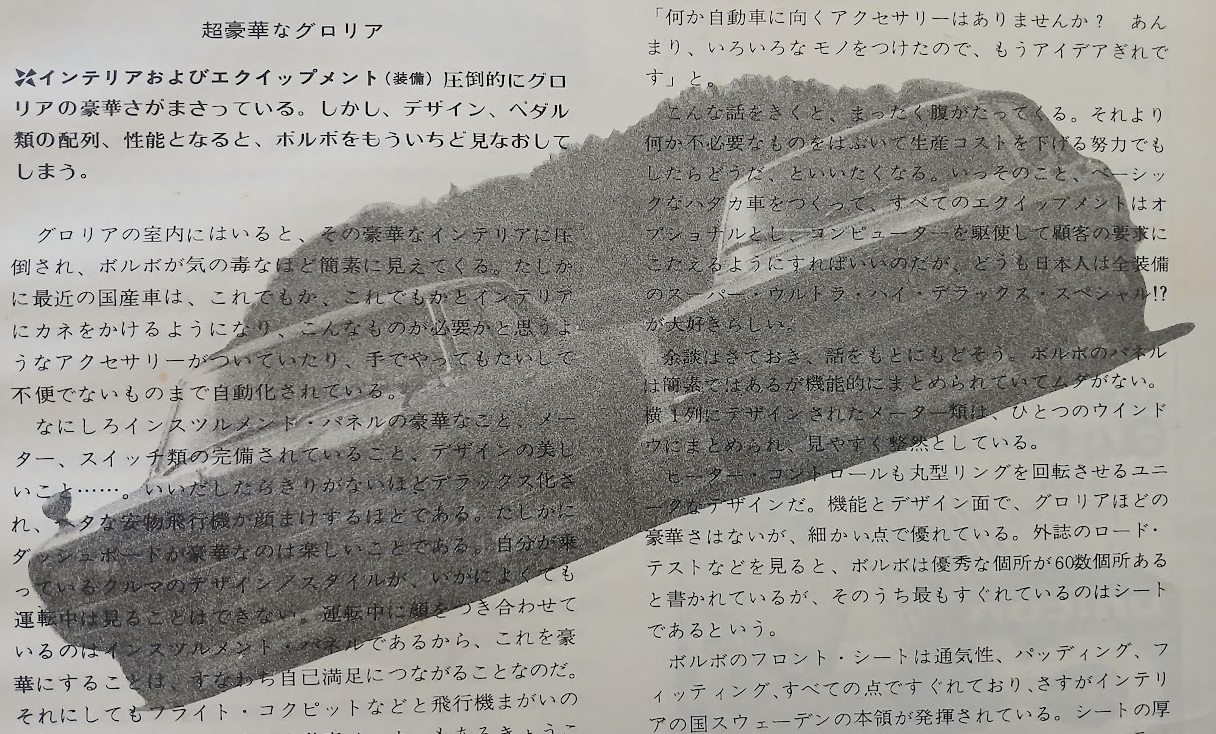
Nissan Gloria GX vs Volvo 144S (1971)

Publication: Motor Fan
Format: Group Test
Date: June 1971
Author: Joji Obara
Have Domestic Cars Reached International Standards? Round 2: “Substance” and “Agility”
Our “deliberately provocative” series of foreign-and-domestic tests, which began in last month’s issue, continues here. The second round again features a contest in the two-liter class. Which car will ultimately leave the stronger impression–the Gloria or the Volvo?
Elegance and Refinement
Prologue: Around the world, automakers are rushing to tackle the challenges of modern times, with safety and pollution being the top priorities. Among these, the pursuit of high-speed safety is especially urgent…
When looking at European cars, one cannot help but get the impression, based on their styling, that they are a bit delicate compared with domestic models. The Swedish-made Volvo 144S, however, is an exception. It is a car imbued with a sense of sturdiness and solidity.
This is hardly surprising. Having been developed under the harsh conditions of Scandinavian snow and mud, it is a very tough car with formidable underlying strength.
Meanwhile, the newly updated Gloria GX has just undergone a full model change. As is well known, it now shares its basic structure with the Cedric. Only minor changes have been made to the front and rear styling; fundamentally, their mechanicals are the same.
Recent Japanese production methods have become more rationalized, and in both economic and stylistic terms, domestic cars are beginning to approach the level of European products. That said, in the two-liter class there is a crowded field of lavish models, and these days the domestic offerings are so numerous it’s hard to tell one from another. In terms of sheer variety, they are on a par with American cars.
So, the second round of this title match becomes a luxurious contest between the Swedish “tough guy,” the Volvo 144S, and the Gloria GX.
The name “Volvo” comes from Latin, meaning “to roll.” Backed by the renowned SKF bearing company, the car rolls very smoothly indeed.
The Gloria, meanwhile, shares its body shell with its sibling, the Cedric, and the two have become something like identical twins–difficult to tell apart at a glance.
The long-nose, short-deck styling of both the Volvo and Gloria leans toward the American compact aesthetic: safe and unadventurous. In terms of looks, both can be described as American-style, conventional sedans.
Volvo has earned a global reputation for its superb road-holding and excellent quality of construction.
The Gloria, on the other hand, is elegant, dignified, and lavishly equipped–a car that carries the technical excellence of Prince/Nissan, and enjoys a particular following within Japan.
The Distinctive Volvo
Styling: Both cars adopt a gentle, generally appealing shape, making it hard to declare a clear winner. But the Gloria’s appeal is slightly greater: its lines curve gracefully, lending it a sense of subtle luxury.
Both cars follow a straight-lined, notchback silhouette–exactly the shape that comes to mind when one imagines what a “car” ought to look like. If you asked a child to draw a car, chances are it would look very much like these.
This basic shape is practical, rational, and unadventurous. It’s a thoroughly orthodox solution for making the most of interior space while keeping proportions sensible. And indeed, both cars boast interiors spacious enough to feel generous even for long trips, with correspondingly large trunks. To balance these proportions, the rear overhangs on both models are pronounced. At the height of the long-nose, short-deck craze, this might have seemed a little old-fashioned, but the “long-tail” design somehow lends the side profile a convincing sense of speed and flow.
Both test cars were four-door sedans. The Volvo features an extra window between the rear door and quarter panel, a so-called “six-light” design. This, combined with a light-colored interior, makes the cabin feel remarkably airy and open–the generous glass area contributes a great deal to that impression.
The Gloria’s glass area is by no means small, particularly at the front. However, the effect of its luxurious interior works in the opposite direction, giving an impression of heaviness rather than lightness. Compared with the Volvo, it feels less airy, as if being weighed down by its own elegance.
Another curious point: the Gloria does not have front quarter windows, but the front pillars seem unusually thick, making visibility feel somewhat obstructed. In principle, visibility should be better than in the Volvo, and the pillars themselves are not especially large, which makes this impression rather puzzling.
In reality, visibility in the Gloria is probably better than in the Volvo. It may simply be that differences in cabin brightness create this perception.
The Volvo’s styling, taken as a whole, can appear somewhat too simple. Compared with truly plain, boxy sedans like the Peugeot 404 or Fiat 124, it does have a slight custom-like character. However, when set against the Gloria, the Volvo’s simplicity gives it a lighter presence, while the Gloria emphasizes a more substantial, executive feel.
This difference is especially apparent at the front. The Volvo uses a two-headlamp layout, while the Gloria has a more typical four-headlamp arrangement. (These days, four lamps have become standard, though they once seemed rather novel.) The Volvo’s two-lamp setup somehow gives it the look of a smaller-displacement car–something in the 1000-1400cc class–despite its actual size and performance.
The Volvo’s body width is 173cm in standard form, which would normally qualify is as a “3-number” car in Japan. However, for the Japanese market, details such as recessed door handles and the omission of side moldings bring it down to 169.5 cm, just within “5-number” limits. Even so, despite being wider than the Gloria, it somehow appears narrower. This may be due in part to the headlamps being set inward, with parking lamps placed toward the outer edges, which visually reduce the car’s width.
Looking at the Volvo as a whole, it is composed of sharp, well-defined lines. The hood, side fenders, and roof edges are formed with crisp angles and flat surfaces, almost like origami folds. This continues at the rear, with a cut-off tail that gives a clean, refreshing impression.
The Gloria’s styling, by contrast, shows signs of compromise. It incorporates curved elements similar to those used on the President, softening the lines and creating a safe, broadly acceptable shape. However, it lacks a strong sense of individuality, and instead gives the impression of following American compact-car trends. The front grille, bumpers, tail lamps, and even the wheel covers all reflect American-style design cues, somewhat heavily applied.
The Volvo’s wheels, by comparison, use a perforated design with a more sporting appearance, which contributes to its image as a lighter, more personal sedan.
The Ultra-Luxurious Gloria
Interior: In terms of sheer luxury, the Gloria is clearly ahead. However, when it comes to design, pedal layout, and overall functionality, the Volvo invites a second look.
Step into the Gloria, and the richness of the interior is immediately striking. In contrast, the Volvo seems almost austere. Recent domestic cars have had more and more money poured into their interiors, sometimes to the point of excess–adding features one begins to question the need for, and automating functions that would not be inconvenient to operate manually.
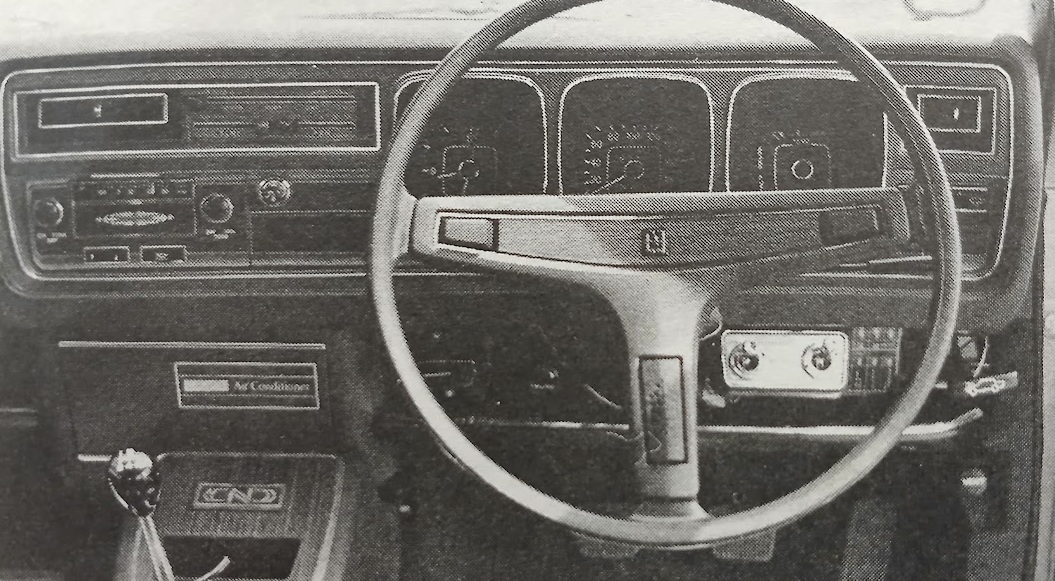
The instrument panel alone is remarkably elaborate: fully equipped with gauges and switches, and attractively designed. This treatment goes beyond “deluxe”–it’s enough to rival even a modest aircraft cockpit. Certainly, a luxurious dashboard has its appeal. After all, no matter how good a car’s exterior design may be, it cannot be seen while driving. Instead, what the driver constantly faces is the instrument panel, and a lavish one contributes directly to driver satisfaction. These days, some manufacturers even use terms like “flight cockpit,” and interiors that resemble actual cockpits have become increasingly common. The Gloria can be said to follow this trend.
The gauges use non-reflective glass, while the instrument panel and console are covered in woodgrain trim. Switches and control knobs are somewhat scattered, lacking a strong sense of order. Equipment includes a power antenna, power windows, power steering, air conditioning, an auto-tuning radio with car stereo, a remote trunk lid control, lights that monitor whether the tail lamps are working, a heated rear defogger with timer, and even levers to adjust the fender-mounted mirrors from inside the cabin.
At first glance, the fender mirror housings seem stylistically out of place–but they serve the practical purpose of accommodating the remote-control cables.
It is not only the instrument panel that impresses. Seats, trim, padding, carpets–everything is lavishly finished. It’s a bit like a TV quiz show in which the prizes grow more extravagant every year. A friend recently told me that a designer at a certain manufacturer asked him, “Can you think of any accessories well-suited to cars? We’ve added so many that we’ve run out of ideas.”
Hearing this, one cannot help but feel irritated. Wouldn’t it be better to remove unnecessary items and make an effort to reduce production costs? One might even consider offering a “basic” model in which all equipment is optional, tailoring each car to the customer’s individual needs. However, it seems that Japanese buyers have a strong preference for fully-equipped “super-ultra-high-deluxe” models.
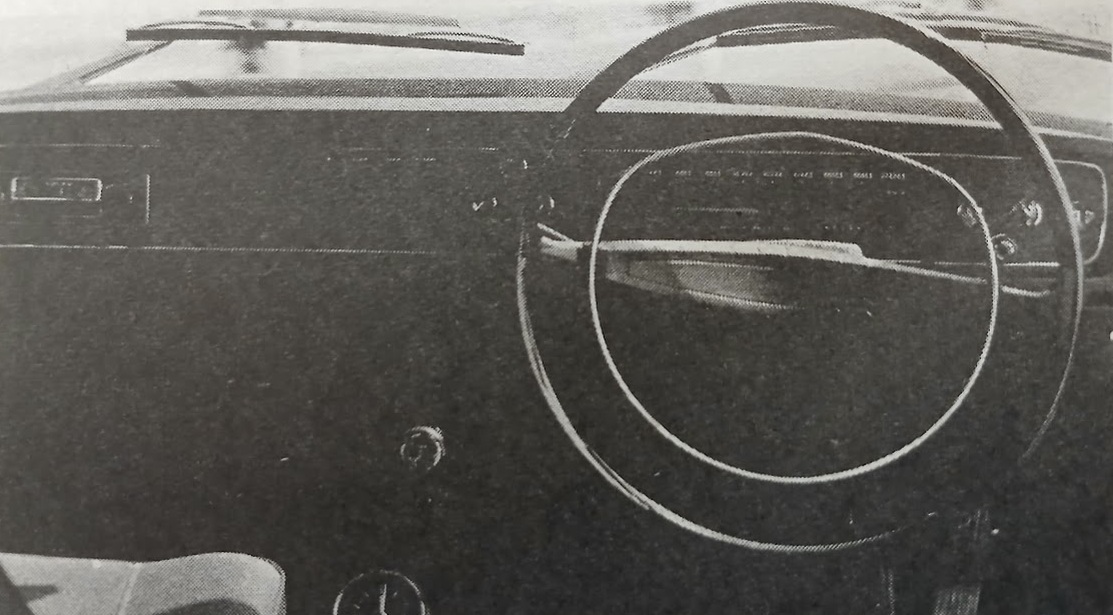
Setting that aside, and returning to the point: the Volvo’s instrument panel is simple, but well-organized and free of waste. The gauges are neatly arranged in a single horizontal row within one cluster, making them easy to read. The heater uses rotary ring-type controls.
While the Volvo’s interior cannot match the Gloria’s level of luxury, it is superior in certain details. Road tests in foreign magazines note that the Volvo has dozens of well-executed features, among which the seats are considered the most outstanding.
The Volvo’s front seats are excellent in every respect–ventilation, padding, and fit–all reflecting the expertise one would expect from Sweden. Although the cushions are not particularly thick, they provide very good support for the driver. The color of the upholstery is also light and pleasant. However, the driving position appears to be designed with taller Northern Europeans in mind, and may feel slightly buried for Japanese drivers. The large steering wheel, 42cm in diameter, also requires some trial-and-error adjustment to find a comfortable position.
By contrast, the Gloria’s seats boast six-way adjustment, and use a combination of leather trim and tricot fabric, creating a strong impression of luxury.
Handling and Stability: Advantage, Volvo
Performance: The two cars are closely matched overall. The Volvo offers the more sporting feel, while the Gloria has the advantage in soft, easy driving. In terms of high-speed safety, the Volvo comes out ahead.
The Gloria is a quiet car. In fact, it is so quiet that what seems to be the sound of the cam drive chain becomes noticeable inside the cabin, and this proved somewhat distracting. Wind noise also stood out. Because everything else is so well subdued, even small sounds that would normally go unnoticed seem unusually prominent, and once you become aware of them, they are hard to ignore. Typically, one might notice a hum from the transmission or final drive, but in both the Gloria and the Volvo, such noise was not detectable.
In the Volvo, the fan and air cleaner are specially designed with attention to eliminating noise, and even without extensive sound insulation, engine noise does not intrude into the cabin.
Both cars’ transmissions have excellent synchronizers. The Gloria’s shift action feels somewhat light and vague, offering less tactile feedback, while the Volvo uses a direct linkage with a long lever that provides a more positive feel. The lever’s motion is up-and-down, rather than forward-and-back like the Gloria’s remote shift, and it requires longer throws, but these characteristics somehow contribute to the sporting feel.
The Volvo’s clutch is extremely heavy. The return force is strong, so care is required when finding the bite point from a stop.
Brakes are a Volvo highlight: it is equipped with four-wheel Girling discs with servo assistance, delivering exceptional stopping power. These brakes show their true effectiveness at speeds above 100km/h. From 50km/h, the stopping distances are 14m for the Gloria and 15m for the Volvo, giving the Gloria a slight advantage. At higher speeds, however, the situation is decisively reversed.
The Gloria’s power-assisted steering is light, and the car maintains an understeering tendency even at speed, which makes it easy to handle. The Volvo’s steering is heavier, with strong self-centering force, which can make low-speed maneuvers feel somewhat demanding. At higher speeds, however, this heaviness becomes less noticeable. As speed increases during steady cornering, it maintains mild understeer with a stable feel, but with additional throttle, the rear gradually begins to slide, transitioning into oversteer. Corrections are easy, and body roll is limited, allowing for enjoyable sporting driving.
Despite its heaviness, the Volvo’s steering is effective in tight spots. It uses relatively large 15-inch tires, yet its turning radius is a compact 4.9m, giving it good maneuverability, comparable to a London taxi. The Gloria’s 5.5-meter turning radius is reasonable, considering the car’s size, but not as impressive as the Volvo.
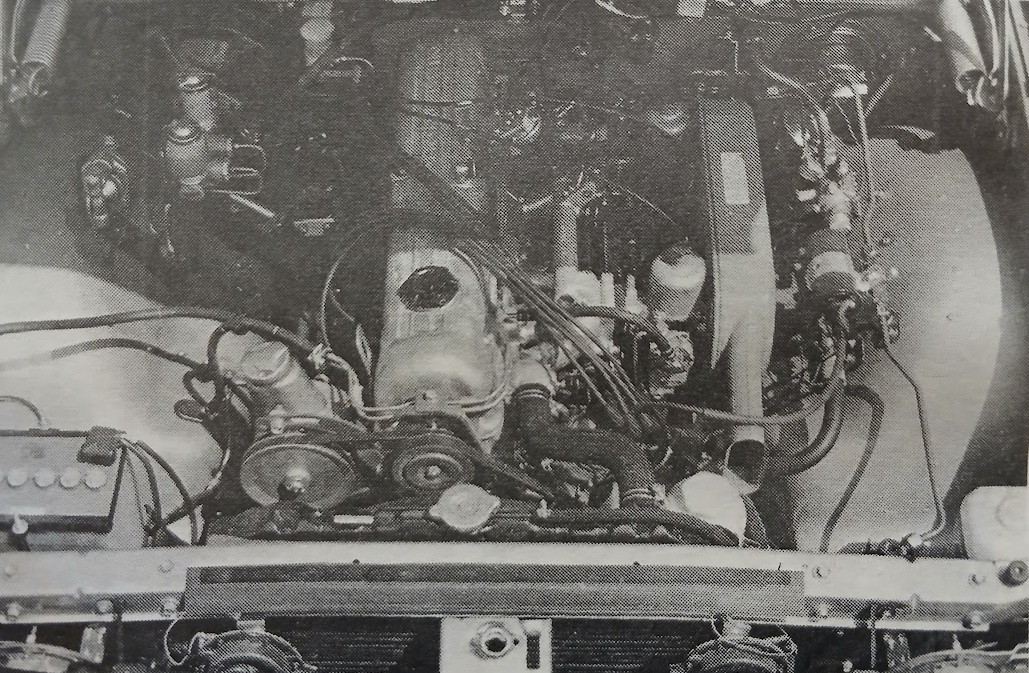
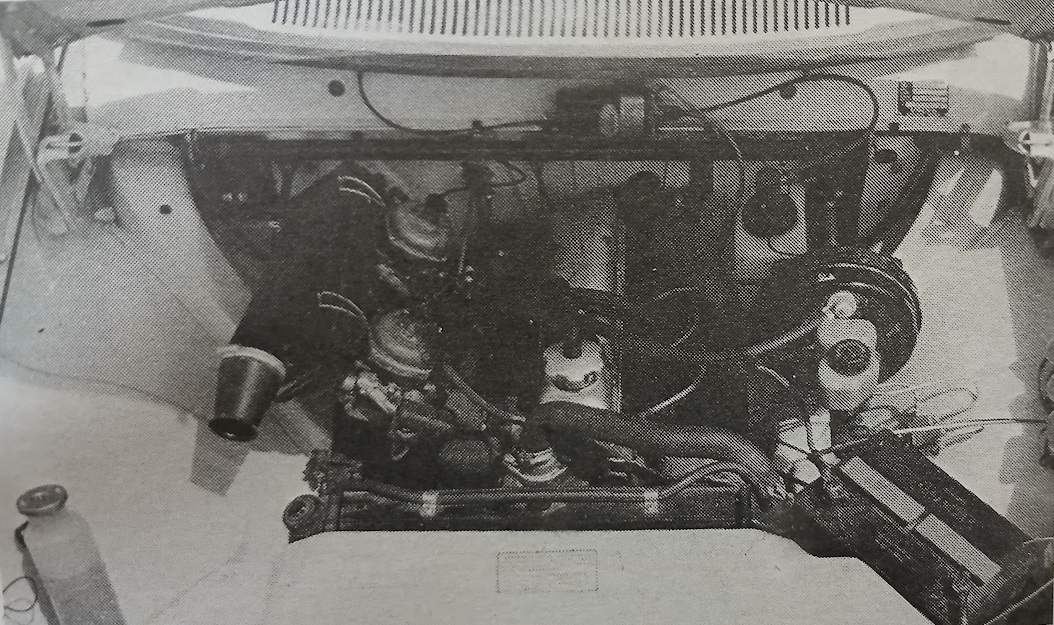
The Gloria’s engine is a 1998cc inline-six SOHC unit producing 130ps at 6000rpm and 17.5kgm at 4000rpm (with twin SU carburetors). The Volvo, by contrast, uses a 1986cc inline-four OHV engine producing 118ps at 5800rpm and 17kgm at 3500rpm (with twin Zenith-Stromberg downdraft carburetors). Despite the differences in layout, their performance is quite similar.
Vehicle weight is 1625kg for the Gloria and 1445kg for the Volvo. Despite being lighter, the Volvo’s top speed is slightly lower, at 160km/h compared to the Gloria’s 170km/h. Acceleration performance is nearly equal, with standing quarter-mile times of 18.35 seconds for the Gloria and 18.8 seconds for the Volvo. Comparable foreign cars include the Ford Corsair 2000E and the Triumph 2000.
The Volvo performs especially well in mid- to high-speed acceleration, giving it an advantage in highway overtaking. The Gloria’s suspension appears to be set softer than the Volvo’s, which ensures a comfortable ride, but leads to significant pitching on rough surfaces.
For city driving, slow cruising, and parking, Gloria’s easy manners will be appreciated. But when it comes to high-speed driving and overall handling safety, especially on rough roads, the Volvo clearly has the upper hand.
In conclusion, both cars have their respective strengths, making a clear judgment difficult. In terms of luxury and ease of driving, the Gloria is likely to appeal more to general buyers, while the Volvo stands out as a personal sedan well-suited to the more discerning driver.
Postscript: Story Photos