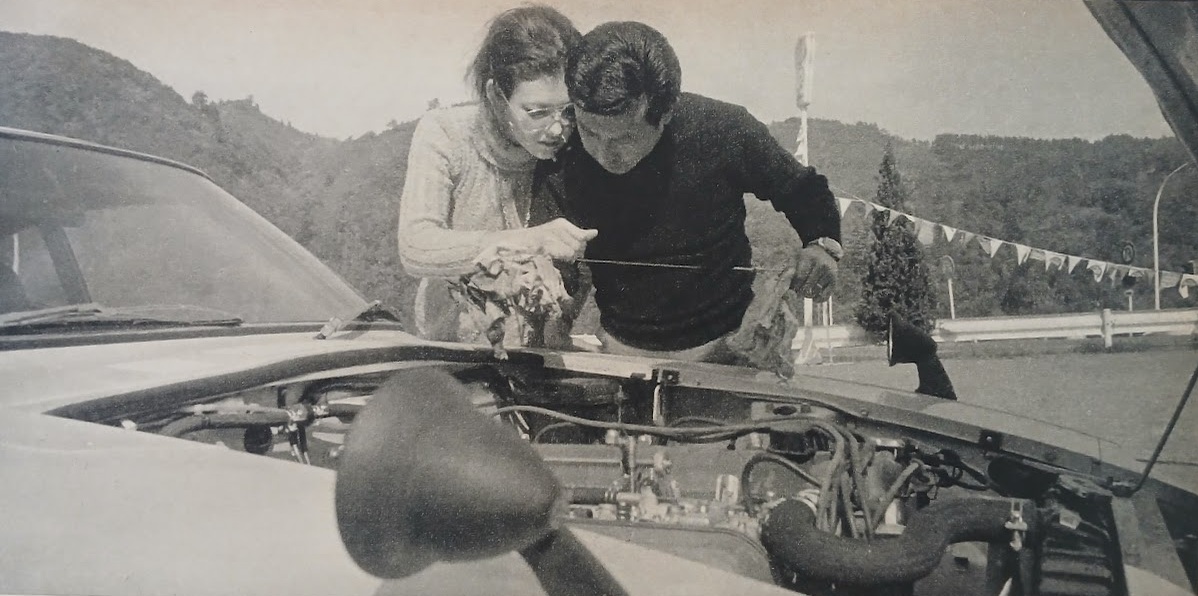
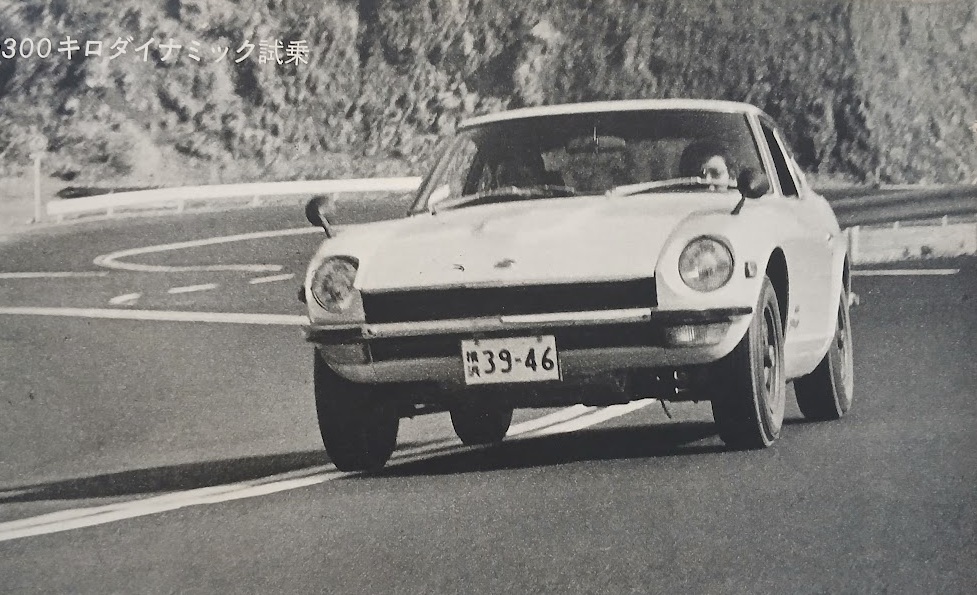
Nissan Fairlady Z432 (1970)
Publication: Motor Fan
Format: Dynamic Test Drive
Date: January 1970
Author: Shintaro Taki
The Fairlady Z432: Reflecting on My Arch-Rival “380”
Let me give it to you straight.
Starting this month, Motor Fan has decided to feature my road tests. I suppose I should begin with a word of greeting, but I doubt most readers are looking for formulaic pleasantries. Since this is the first installment, I’d rather take the opportunity to lay out the way I think about cars.
It’s been just over thirty years since cars began to be produced in Japan, and the pace of progress in that time has been astonishing. Especially in recent years, the curve has grown markedly steeper. It would be no exaggeration to say that, when set side-by-side with cars from around the world, today’s Japanese cars no longer come off poorly by comparison.
Even when comparing domestic cars against one another, the overall level has risen so much that picking at minor details, like poking around the corners of a lacquered box, has ceased to be very interesting or instructive.
So, for however long this series may last, what I intend to do is speak from the human side: to drive the car, and to tell you directly about the feeling and experience. You can praise an engine’s novel mechanism or admire the brilliance of its layout all you like, but if, after a long drive, you step out feeling exhausted, then all that technical excellence means little. The roads have improved, and from here on long-distance driving is only going to become more common. At the same time, I believe there will be a growing demand for driving for driving’s sake, simply for pleasure. Setting aside formality and preconceived notions, and without prior “research,” I want to attempt my own evaluations intuitively, physically, and on my own terms.
Of course, one’s judgment of a car depends on one’s tastes. Even so, I intend to express what I personally felt and wished for, plainly and without sugar-coating. There will no doubt be mistakes, and from time to time I’ll probably spew some reckless remark that betrays my own lack of experience. But I’m prepared to accept the criticism and speak my mind directly. (If you have objections, feel free to let me know, by letter or even by phone.) To be honest, flattery and euphemism just aren’t my strong suit. My wife scolds me, “Why can’t you say things more gracefully…?”, but this is a temperament forged over thirty-odd years, and nothing can be done about it. If some of what I say grates on the nerves, I apologize in advance and ask for your patience.
That’s enough preamble. Now let’s turn to the Fairlady Z432.
Since its announcement on October 18, the Fairlady Z432 has been a car I’ve been desperate to drive as soon as possible. When the Motor Fan editors told me, “For the first installment, we’d like you to drive the Fairlady,” my heart leapt.
Memories of the R380…
That’s because the engine fitted to this Fairlady Z432 is a detuned version of my old arch-enemy, the R380. On the night before the test drive, November 13, my past battles with the R380 came flashing back through my mind, and I couldn’t get a wink of sleep. You may say I’m too old for that sort of thing, and you’d be right. But ever since the third Japanese Grand Prix, the anguish I’ve suffered, and the ferocity of those fights–those who know, know.
“How has it been improved?” “What kind of setup have they gone with?”
I kept asking myself this and that, over and over, waiting in anticipation like a grade-school kid on the night before a school trip.
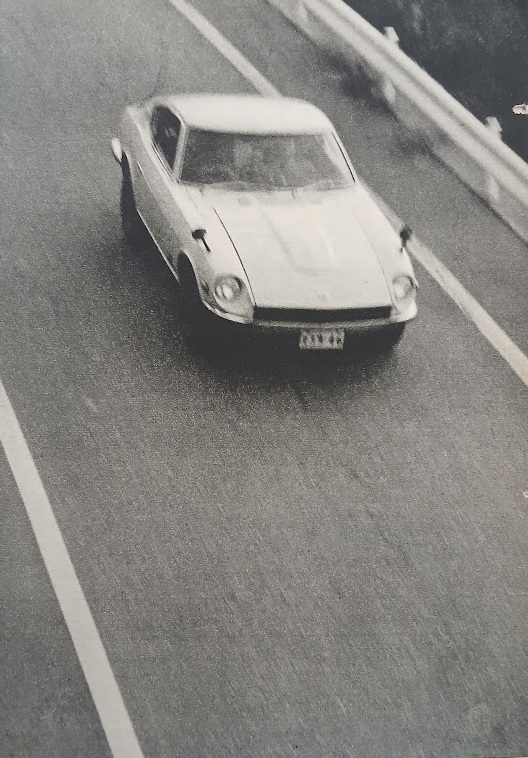
At 4:30pm on the 13th, the long-awaited Fairlady Z432 appeared below my apartment in Harajuku, its body finished in yellow. “Hmm,” I nodded to myself.
My wife was along for this test drive, and the moment she saw it, she said, “Buy it.” Wham–my heart skipped a beat. As she gazed at it, her eyes seemed to soften, if only slightly.
“Damn it… you got me already, didn’t you,” I muttered to myself. But outwardly I put on a casual face: “Well, it’s not bad.” And we set off.
Since it was a weekday, the eastern side of the city at dusk was wide open. I pressed my right foot deep into the throttle. Four thousand, five thousand, six thousand–the revs climbed steadily. In step with them, the car sliced through the air and surged forward.
“Hmm…” Another sigh escaped me–one tinged with irritation.
The shift feel is good. As if it can see straight through my emotions, it responds crisply–snick, snick–up and down through the gears. In the pale-violet haze of the Tomei Expressway, the image of a race at Fuji suddenly flickered through my mind.
On one side, the much-praised R380–on the other side, my Porsche Carrera 6. Back then, I’d been defeated by my own hotheaded bravado: “No matter how good your engine is, I’ll beat you with my own driving.” Then, there was the enemy, slicing past with ease.
I glanced down at the tachometer: 6000rpm. Speed: 150km/h. Whoa–don’t get carried away.
And yet this speed came effortlessly.
“So this is the engine I was fighting against,” I muttered to myself. “No wonder it was tough.”
Beside me, my wife narrowed her eyes and grinned.
We took a short break at Ebina, and that’s when my major blunder was exposed. I’d been absolutely convinced that fourth was the top gear when the Motor Fan editor casually asked, “So, how does fifth feel?”
“Eh? Fifth?” …
I see. So there was still another gear left to go.
This Fairlady Z432 cruises to 160km/h in fourth gear without the slightest strain. “Let’s get going again,” my wife says, completely oblivious to what I’m feeling.
We leave the Tomei at Atsugi and head for the Hakone road. Past Jukkoku Pass, we enter the Izu Skyline, where the corners tighten considerably.
Heh–this is it. This is the car’s real test. Can you keep up with me?
Cornering: Faultless
The Izu Skyline lies in darkness. Now and then an oncoming car flashes past. Other than that, there isn’t a sound–nothing but the smooth, pleasing roar of the engine. Down to the right, far below, the lights of towns occasionally glimmer faintly.
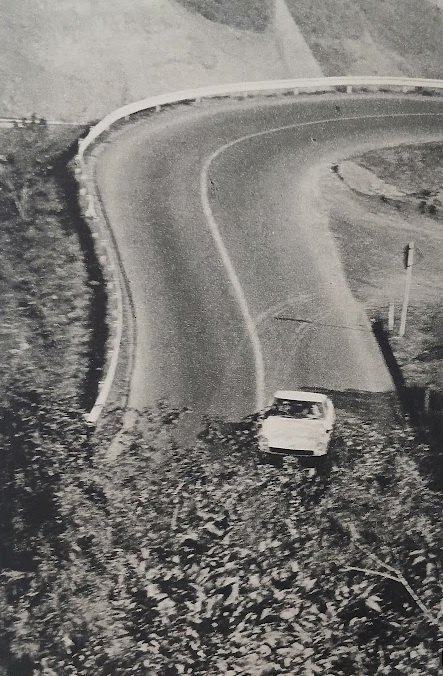
Left, right–the wooden steering wheel spins in my hands. I turn in hard; the front wheels bite. The rear, gripping perfectly and without a sound, does exactly what I ask of it. In a sedan, this would already be the limit, but here I turn in just one notch more, and it’s still unfazed.
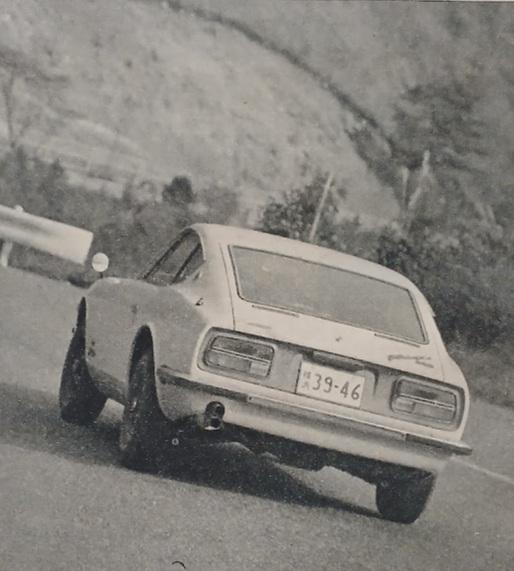
I’m told it uses strut-type independent suspension front and rear. And in a new approach inspired by the Jaguar E-type, the rear suspension is mounted behind the center line of the rear wheels. How much research must have gone into this boggles the mind. To have brought it this far–well done, truly. Rear suspension mounted behind the rear wheels is something you rarely see. But in this car, it feels utterly secure.
The front-engine, rear-drive layout, by common sense, should mean the tail starts to swing when pushed. But unbelievably, this car just sticks with you. A quick left, then immediately right; then left, right again—this is a demanding course. And yet it flows through with plenty in reserve, slipping through the bends smoothly, cleanly, as if it were nothing.
They say a patent is pending, and I can believe it. This rear suspension is superb. It’s a sports car, so in one sense you could say this is only to be expected. But the truth is that, until now, with an FR layout, this kind of rear-wheel grip simply hasn’t been achievable.
After leaving Hakone and passing through Hikawa and Kameishi Pass, we completed this stretch of the Skyline and arrived at our destination, Yugashima Onsen, in just under an hour.
Damn it–it’s a good car.
Even after dinner and a soak in the onsen, once we’d settled down, that grudgingly impressive drive kept coming back to me. With the editor present, my wife and I got to talking. It may be a bit silly, but I’ll let you in on a snippet of that conversation.
Me: Did you feel tired at all?
My wife: No, not at all.
Me: I see. That’s good. Generally speaking, sports cars have cramped passenger seats. The driver may be fine, but the person riding alongside is often worn out. You enjoy the drive, arrive at your destination—and just when you’re ready to go, your companion feels sick with fatigue. That’s a letdown. Two-seat sports cars tend to be like that, and it’s never really been to my taste. So, you weren’t tired? That’s good to hear.
Her: And how were the instruments, from the driver’s side?
Me: It feels like a product from Nissan, a company that takes racing seriously. Extremely easy to read. The tachometer and speedometer sit right in front of you through the steering wheel, while the other gauges, the ones you don’t really need while driving, are off to the left. It’s smart design. People sometimes talk about racing as if it was a bad thing, but this is a design clearly made better because of racing.
Her: The high-back seat that really wraps around you feels great, but there was something that bothered me…
Me: What was it?
Her: They call it a chopped-off fastback style, I think. It has a wide trunk that’s integrated with the cabin. When I glanced back from the passenger’s seat… somehow it just felt…
Me: Hmm… how to put it… maybe it’s just my imagination, but it definitely feels a bit like a light van. And you really can’t put anything back there, can you? What if you stomp on the brakes and the luggage flies into the front seat? Or if you brake hard and something comes loose–like a bra or something–well, that would ruin the mood.
Her: Maybe a recessed center section that holds things in place would help.
Me: Yeah… something definitely needs to be done. Say you take off a jacket and want to toss it somewhere. You have nowhere to put it and end up clutching it the whole time. The doors are wide enough, so maybe add some pockets there… Ah, no, that won’t do. If someone tosses a match in one of those pockets and forgets it… that would be disastrous. Good grief.
Her: Still, I managed to sleep soundly for 20–30 minutes. The road was pretty twisty, right? And yet I could sleep through it. Now that’s impressive.
Me: What do you think of the looks, from a woman’s perspective?
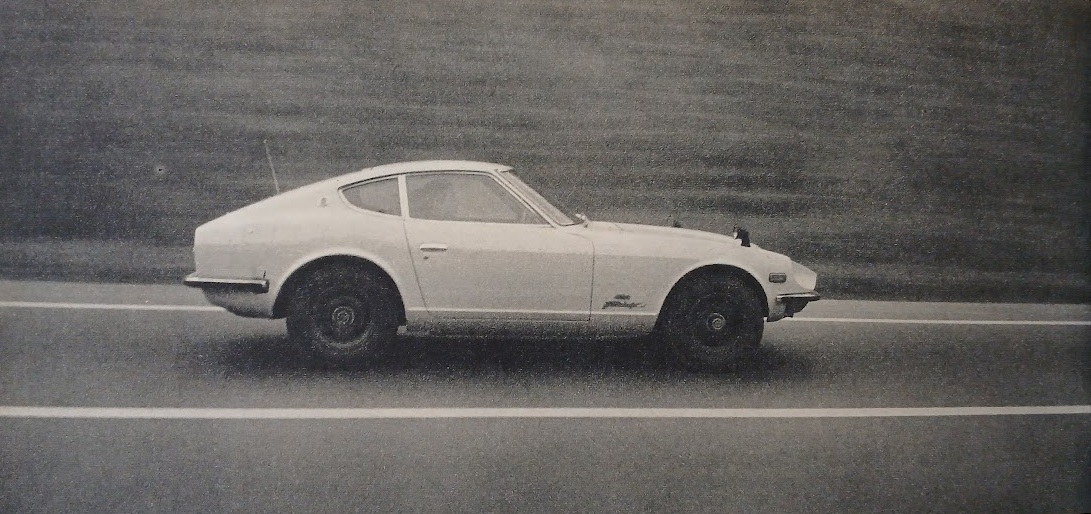
Her: Well… it has a very raw look, almost rugged… very masculine.
Me: Yeah. In Japan, the only thing that really compares is the Toyota 2000GT. But looking at the exterior, engine performance, and suspension, I’d say this one feels more masculine. Not like Toshiro Mifune, of course, more like Koji Tsuruta.
Her: Oh, that’s an old reference. Young people these days wouldn’t have a clue who Koji Tsuruta is. In Japan, maybe Koji Ishizaka… or for foreigners, someone like Jean-Paul Belmondo. If he drove it, this car would fit him perfectly.
Me: The Toyota 2000GT comes off like a girl who is beautiful, but emotionally distant, and there’s not much you can do about it, in that sense. But this… well, you could say it’s a car that understands the man behind the wheel. Step on the accelerator and the revs climb instantly—it hits you just right!
Her: Oh? In what way?
Me: You don’t think so…? (laughs) Well, maybe that’s just me being an “intellectual yakuza.”
Her: I don’t know about that, but anyway–compared to a Lotus Europa, this car makes it look like nothing.
Me: Well, I suppose that’s true. I was a bit distracted by some wind noise, though. Were you?
Her: Not at all. I mean, I was able to sleep, remember? Although, I do think the driver’s side window didn’t quite close all the way.
Perhaps I’d gotten a little too excited. We had been chatting about trivial things, and when I glanced at the clock, it was past 1:00am. We decided to rest for the night and postponed our conversation until tomorrow.
A Nostalgic Electric Fuel Pump
The strong sunlight woke me. Opening my eyes, I found a cloudless early winter morning. From the window of the inn along the river, vibrant autumn foliage burst into view. I suddenly remembered that, busy with work, our honeymoon had still been postponed.
Perhaps in January or February, I thought, I could take a break and treat my wife to a proper vacation. Ridiculous, utterly unlike me–but I let my mind start to wander.
From the next room came the editor’s voice: “Awake yet?”
Driving my age-old rival had clearly scrambled my thoughts, and his voice snapped me back to reality.
Rather than driving cautiously on unfamiliar roads, I wanted to take full advantage of this perfect day and tear through my favorite routes. My wish was granted: we set off to cover a broad swath of the Izu Skyline.
By 10:00am, the freshness and calm of the morning–completely different from Tokyo’s smoggy streets–was broken by the roar of the engine: barrooom!
The engine started on the first try. And then, unexpectedly, I heard a curious sound: kachi, kachi, kachi–the electric fuel pump, gradually speeding up.
A familiar sound… could it be? To think they had borrowed the race-spec electric pump here… overcome by nostalgia, I cut the engine and began again. I turned the key: kachi, kachi, kachi. I paused for a beat, then twisted it fully to the right. I barely touched the accelerator, and the engine fired cleanly.
It’s important never to forget that brief pause—and to press the throttle only halfway down. Push further and you risk fouling the plugs, making the engine reluctant to start.
All right–let’s go.
As always, the rear end sticks. Perfect. Tail wagging? That’s a thing of the past.
The bright sunlight outside illuminates the interior. The mood in the all-black cabin is superb. And here, on the console, a reminder of the triple-carb setup—double choke levers. Well done. The seats, integrated with the headrests, feel a bit thinly-padded, but they wrap around the body perfectly, feeling snug and supportive.
Design Informed by Racing Experience
Between Shuzenji and Ito, we hit an unpaved stretch of about 2-3km. My first encounter with rough roads.
The strut-type independent suspension on all four wheels was chosen, in part, to cope with the realities of poor roads. I charged onto the rough section with some confidence. At first, it was okay. But as the next couple of kilometers passed, the ride felt a bit stiff. The bumps punched right through the seat. With over 30% of Japan’s roads still unpaved, a bit of concern is inevitable.
On the highway, running at high speed, this suspension feels compliant and perfectly suited to a 2000cc car. Yet on rough roads, its firmness makes the road surface acutely felt. Human perception is a curious thing: we can live with one extreme or the other, but striking a satisfactory balance between the two is no easy task.
Changing topics slightly, magazine editors–many of them rather mischievous (my apologies)–tend to delight in coaxing criticism. This Motor Fan editor was no exception, urging me, with sly insistence, to find faults. But what can I say? When something is good, it’s good.
Take, for example, the DOHC inline-six. To some, it’s already an antique. “Why use that and call it a true sports car?” they might ask.
Here’s how I see it: no matter how advanced a mechanism, incorporating it into a production-ready, general-use car takes time. When it’s finally done, it inevitably aligns with what some might call an “obsolete” design. And that’s fine. New technology always comes with flaws. Even the latest V6 or V8 engines, lightweight and high-performance as they may be, are not yet perfected. In some ways, they are still at a precarious stage.
Does progress and development towards “the ideal car” truly exist? Perhaps the first step toward advancement comes not from ideals, but from facing present reality, gaining a certain mastery of it, and then pushing beyond it.
In that sense, I want to praise the Japanese engineers who boldly took the R380 engine and polished it for general use. This is the R380–once considered the pinnacle of engineering–now completed as a production engine and made available to the public.
Ah, enough. I’ve gone on too long, spouting pretentious talk uncharacteristic of me.
The Birth of a True Sports Car
Back to the story. We frolicked around the Amagi Highlands, picking mandarins and driving to our hearts’ content, then made our way to Ito, Atami, and finally set off for Tokyo.
Being the first test in the series, it seems the editor had planned a rather aggressive schedule. We left for Tokyo near 5:00pm, with our return slated for midnight. Ambitious, but I couldn’t let myself be outdone by the editor’s enthusiasm for pushing the limits.
We hit the Tomei Expressway. On the Izu Skyline, I had only used third and fourth gears, but now, I was ready to really open up fifth gear and see what this car could do.
It was late at night, and like on the outbound trip, traffic was light–the perfect opportunity. I made full use of the engine’s maximum torque, 18.0kgm at 5600rpm, shifting swiftly. According to Motor Fan’s road test data, the 0–400m time was 15.578 seconds, and the acceleration was smooth as expected.
The seats hugged me firmly, transmitting the sensation of speed directly through my back. For Japan, where true sports cars had scarcely existed until now, this could honestly be called the first sports car in the real sense. Of course, it’s still not the same as Porsches or Ferraris in some ways.
But make no mistake: this car has clearly surpassed the domain of “sporty cars.” The Toyota 2000GT and Isuzu 117 Coupe remain, regrettably, in the realm of sporty cars. Meanwhile, the Fairlady Z432 fully outpaces the Ford Mustang GT or even the Chevrolet Corvette Stingray.
Before I knew it, we had exited the Tomei. Despite having streaked across the expressway at high speed, this Fairlady Z432, of course, was no match for crawling city traffic. Third gear at 3000rpm. Speed, 60km/h. At 3000rpm, you can’t even engage fourth. Engine knock is inevitable.
It does make one wonder. Why couldn’t the engine have been made a little more flexible? The carburetor tuning wasn’t perfect either. When starting the engine, one of the spark plugs occasionally misfires. I understand Nissan’s intention with the Z432: to cultivate a completely new customer base, different from the traditional Fairlady owner. But given Japan’s less-than-ideal road conditions, a bit more consideration of city driving wouldn’t have gone amiss. Where are you supposed to put a sake cooler? And why not fit disc brakes on all four wheels…?
Yet, the Fairlady Z432 is a pioneering car that has taken the first step into boundless potential. Despite the various criticisms, I have no choice but to say–with reluctant admiration–that “even as an enemy, it deserves praise.” That is my conclusion after over 350km of testing. Even my wife, the morning after we returned to Tokyo, remarked to me: “I suppose you’d have to study cornering a little more before it would be safe to buy me one.”
Postscript: Story Photos