Mitsubishi Colt Galant AI Custom (1970)
Publication: Motor Fan
Format: “Bubble Index” Road Test
Date: January 1970
Author: Atsuro Sasaki, Kazuhiko Mitsuwa, Yasuhei Oguchi, Masahide Sano, Atsuhiko Okubo
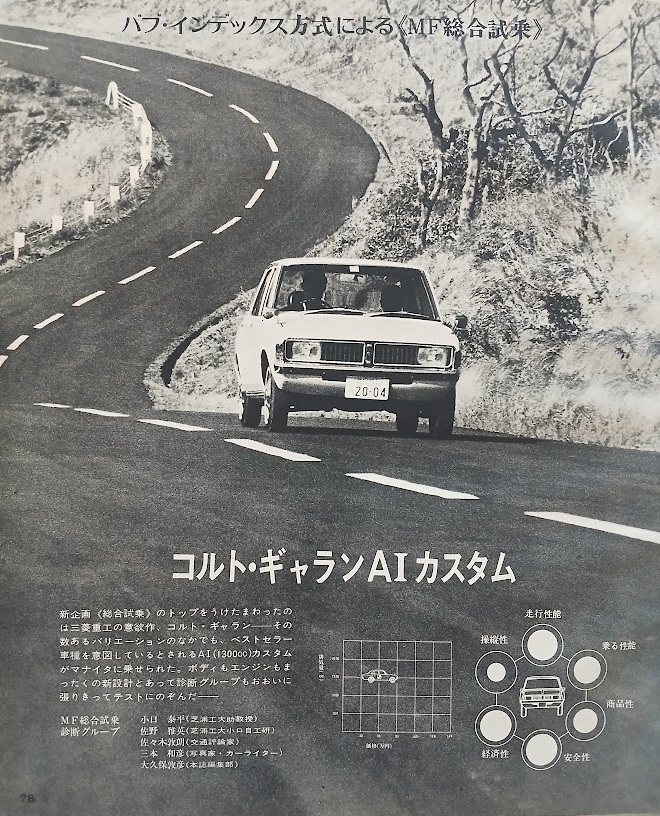
Opening the new “Comprehensive Road Test” series is Mitsubishi Heavy Industries’ ambitious new effort, the Colt Galant. Among its many variations, the AI (1300cc) Custom–intended to be the best-selling model of the line–was chosen as the subject of our examination.
With both its body and engine being entirely new designs, the evaluation group approached this test in high spirits and with considerable anticipation…
Can Mitsubishi Change Its Image?
Mitsubishi’s new model, the Colt Galant, made its appearance in late October. As readers will have seen in last month’s issue, it has already been introduced in these pages. Most people have also likely encountered it at the Tokyo Motor Show or at regional launch events. Sales began in late November, so by the time this issue reaches you, cars bearing registration plates should already be appearing on the roads.
Our “evaluation group” was assigned this newborn Colt Galant as the very first subject of the “Bubble Index” comprehensive road test series.
The name “Colt” for Mitsubishi passenger cars traces back to the Mitsubishi 500, the company’s first small passenger car. When that model later underwent a styling change, it was given the name Colt, meaning “young horse.” From the following year, in 1964, the name Colt was successively applied to each new Mitsubishi passenger car: a 1000cc sedan, an 800cc two-stroke fastback, and a more-powerful sedan fitted with a 1500cc engine.
It has now been six years since the first Colt appeared. And yet, despite that passage of time, these “young horses” never quite managed to impress. Their pedigree was said to be good. Their innate qualities were not poor. And yet somehow, they never truly shone.
Mitsubishi itself is an enormous enterprise, one of Japan’s foremost industrial giants. Before the war, it stood at the center of shipbuilding and aircraft production. But when it came to automobiles, the company inevitably showed signs of being “behind the curve.” That situation has persisted for nearly a decade.
For that reason, the Galant—newly born within the Colt lineage—has drawn a great deal of attention. Particularly so at a moment when Mitsubishi’s tie-up with Chrysler is beginning to take concrete shape. Might this car earn the kind of evaluation never before seen among domestic models? Could this colt become a true thoroughbred, capable of dramatically transforming the image of Mitsubishi automobiles?
Our test began, first and foremost, with keen interest…
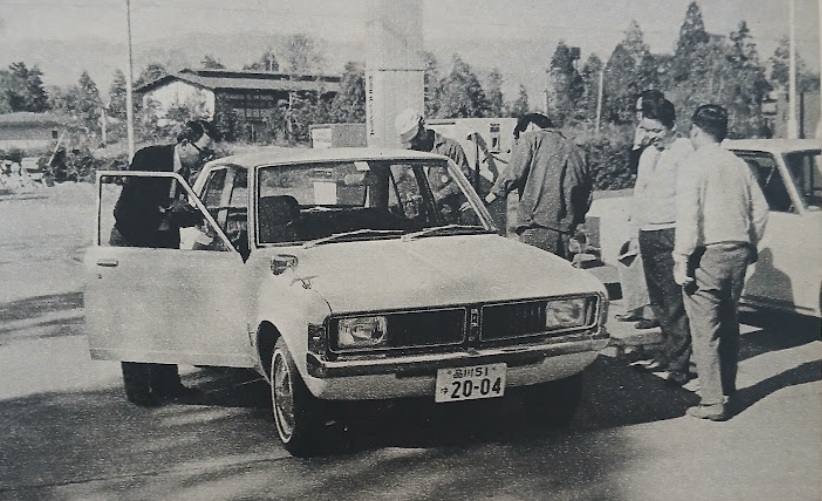
The evaluation group gathered around the pure-white Colt Galant AI brought out onto the road. The test car is the 1300cc A1 Custom. Output: 87ps. Price: 601,000 yen. Top speed: 150km/h. Casting sidelong glances at these appealing figures, the group circled the car, quietly appraising it.
They are cautious. Without a word, they climb aboard.
“Well… until you drive it and try it out…”
A voice mutters indistinctly from somewhere. A knowing grin appears.
“Very well, we’ll depart via the Tomei. From Atsugi to the Odawara-Atsugi Road. In Hakone, the Tokyu Turnpike. Then as far as Miyanoshita. There’s no rough road section, but on the first day we should be able to carry out various instrumented measurements. Let’s fuel up in front of the Tomei Tokyo Interchange and begin recording from there,” says the lead editor.
In the Galant ride Kazuhiko Mitsuwa (driving), Yasuhei Oguchi, and Masahide Sano (manning the test instruments). In the accompanying car are Atsuro Sasaki (your author) and Atsuhiko Okubo. We set off.
From the Tomei entrance, the Galant accelerates eagerly. The surge is strong enough that it hardly feels like a 1300cc car.
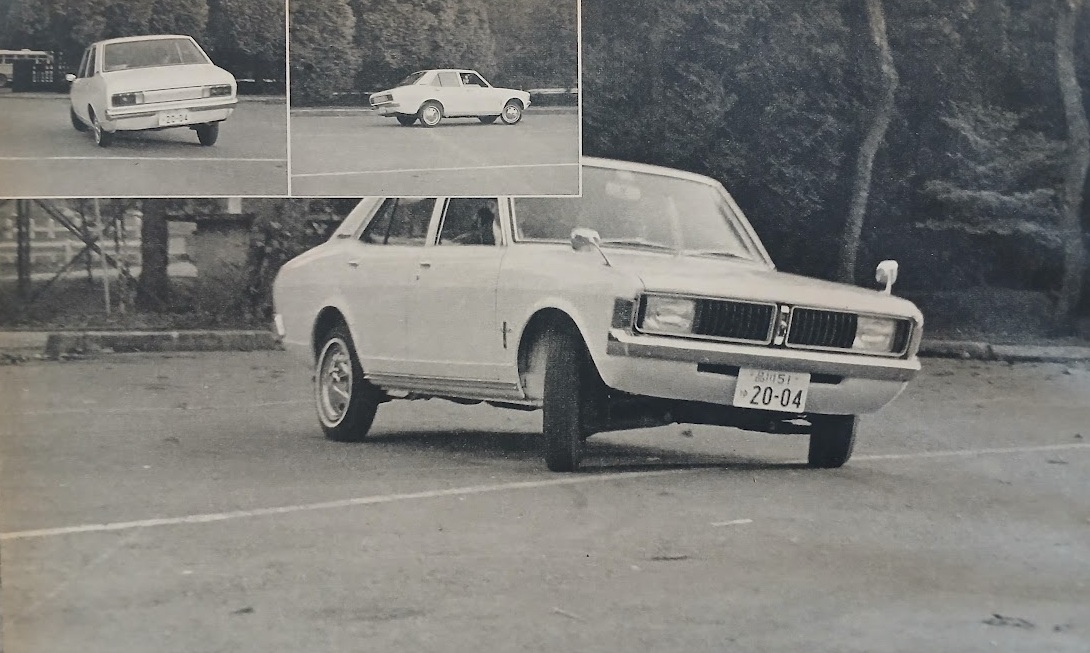
As for the styling–well, the photographs speak for themselves. Opinions vary from person to person; praise and criticism depend on individual taste. The dullness, the lack of distinct charm that comes with aiming for universal appeal–this is something readers will have already scrutinized.
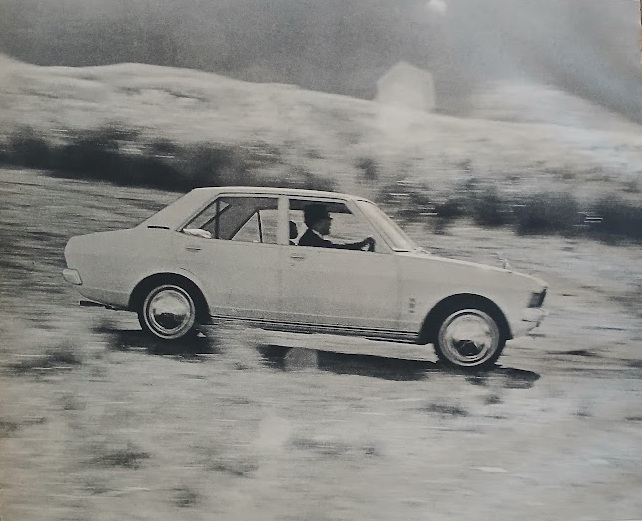
Our evaluation group’s scrutiny begins not from inside the Galant, but from the accompanying car. Its best view is diagonally from behind. Mitsubishi’s selling point–the so-called wedge shape–shows to good effect from this angle. It becomes especially noticeable when running at speeds above 100km/h on the expressway.
“It has a real sense of speed.” “Quite nice.” “It’s a restrained style that makes good use of straight lines.” “The rake of the front windshield–the way it rises from the hood–is natural and well done.”
After these fragmented comments, the group’s opinion converges on a single point. Seen in motion, the car appears small to everyone. Yet when viewed head-on, it gives the unexpected impression of being rather tall. Why should that be?
Later, we checked the figures. Comparing the dimensions of the Bluebird (of the same 1300cc class) with the Galant, overall height is 1410mm and 1385mm, respectively; overall width is 1560mm for both; and ground clearance measures 210mm and 175mm.
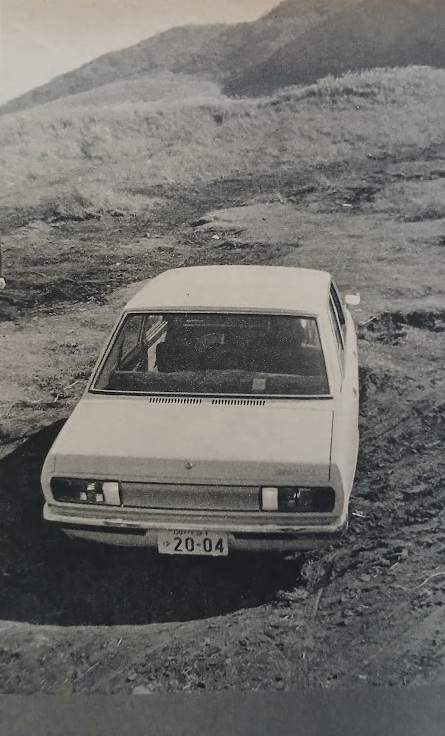
“By all logic, the Galant ought to look lower.” “They must have had exports to America in mind. Their bumpers are wide over there.” “The wide area below the bumper probably helps as a mudguard.” “You could even recess fog lamps into it.”
At this point the discussion drifts somewhat into background noise. Since styling is closely tied to “product appeal,” we won’t belabor it further. But when we stopped at the Ebina Service Area for fuel, we took the opportunity to listen to a few voices from the “outfield seats”: a service station attendant, a young GT-car enthusiast, and a university student.
“In some ways, the lines resemble many other manufacturers’ cars. They’ve borrowed from models that are selling well. But it’s skillfully put together. The grille feels unresolved. It’s not clearly sporty, nor clearly family-car either. Still, it has good lines.”
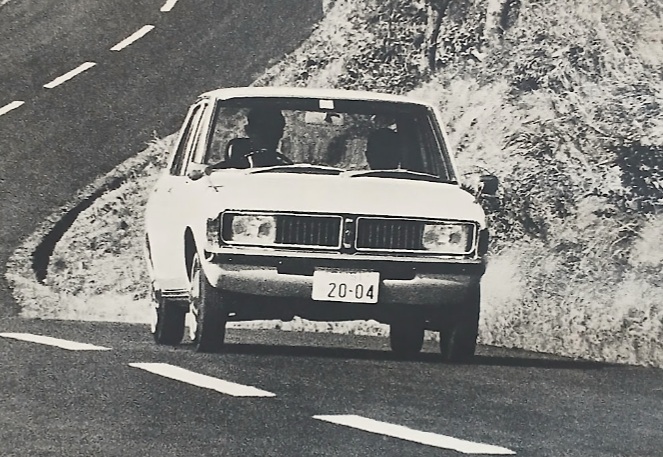
From the front, the dominant impression is of a rather high-set grille. The bumper, too, sits high. The rectangular headlamps are positioned almost at the outer edges, but because air ducts are placed even farther outboard, the lamps appear slightly pinched inward. These elements likely contribute to the effect. Especially when following the car, the skirt section beneath the bumper appears prominently exposed.
An Engine Eager to Rev
The moment we entered the Tomei Expressway, our testing began. This was not a closed-course test, of course, but a practical evaluation with three aboard.
Here, measurements are taken in real time, at a “real-world” level. This is not merely a list of personal impressions or subjective feelings. We ask readers to keep this firmly in mind.
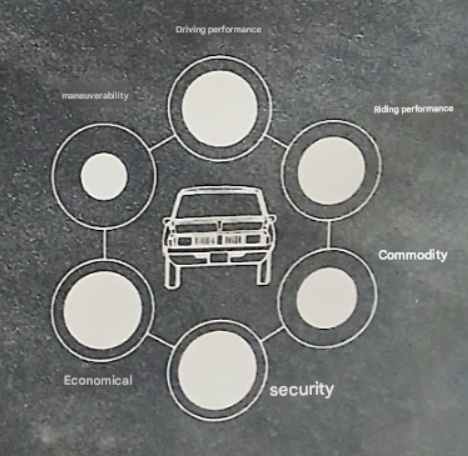
In the hexagonal chart that accompanies this test report, the topmost category–marked with a circle–is “Power Performance.” This includes standing-start acceleration, overtaking acceleration, hill-climbing ability, and maximum speed. Please refer carefully to the individual sections below for the measured results.
As noted in those sections, the performance is outstanding. All five drivers who alternated at the wheel during the two-day round trip from Tokyo were in unanimous agreement. At 87ps/6300rpm from 1300cc, it surpasses the Bluebird 1300 (72ps/6000rpm), yet falls short of the Honda 1300-77 (100ps/7200rpm). In other words, it sits squarely between them. But the quality of its acceleration deserves special mention.
“It feels as though it would rev forever. Since the Custom doesn’t have a tachometer, I found myself worrying that I might exceed the allowable engine speed,” remarked Mitsuwa.
“As Mitsubishi claims, the combustion chamber shape, the improved intake and exhaust efficiency from the crossflow layout, the careful finishing work such as deburring inside the exhaust manifold, the large valve diameters–taken together, these produce a high-performance engine that can be revved easily to quite high speeds. It’s an engine where the torque doesn’t fall away as the revs rise,” said Oguchi.
In modern automobiles, the ability to run comfortably on the expressway has become a fundamental requirement. The standard by which top speed, safety, and many other factors are now judged is whether a car is capable of traversing the still-incomplete Tomei-Meishin Expressway system. If it cannot, users will not feel at ease.
Yet when the moment comes to actually use the expressway–particularly for first-timers–there is often hesitation at the entrance ramp. That short approach road, curving uphill, the sudden lifting of the 40km/h restriction, merging onto the main line–can one accelerate from 40km/h to mainline speeds within the available 200-250m?
And similarly, when traveling along the main lane and catching up to a slower vehicle, can one move into the passing lane and overtake decisively?
Though slightly out of sequence, our testing addressed precisely these situations. We conducted entry tests at Kawasaki IC, Yokohama IC, and on the return leg at Gotemba IC, changing drivers at each location. In every case, it proved possible to merge “without anxiety.”
In the merging test, we accelerated from 40km/h just before the end of the restriction sign to a main lane speed of 100km/h. The measured time was 13.7 seconds, and the distance covered was 266m. This is fully sufficient to reach cruising speed within the length of the acceleration lane.
As for overtaking performance while underway, this is a 4-speed (floor-shift) car. By making proper use of third gear, overtaking can be accomplished without strain. In our test, we began 60m behind a truck traveling at 80km/h, accelerated from 80km/h to 100km/h, overtook, and returned to the main lane smoothly 60m ahead of it. The maneuver required 10.9 seconds and covered just 360m. These practical figures can hardly be rated as anything less than commendable.
The catalog lists a top speed of 150km/h, but naturally we cannot attempt this on public roads. That said, in 100km/h zones we maintained a modest “plus alpha” above the limit for extended stretches. There were no problems whatsoever. On one occasion the needle slipped past 120km/h before the driver eased off the accelerator. It reaches such speeds almost too easily–and lightly. Precisely because this is a 1300cc practical sedan, users would do well to keep this in mind.
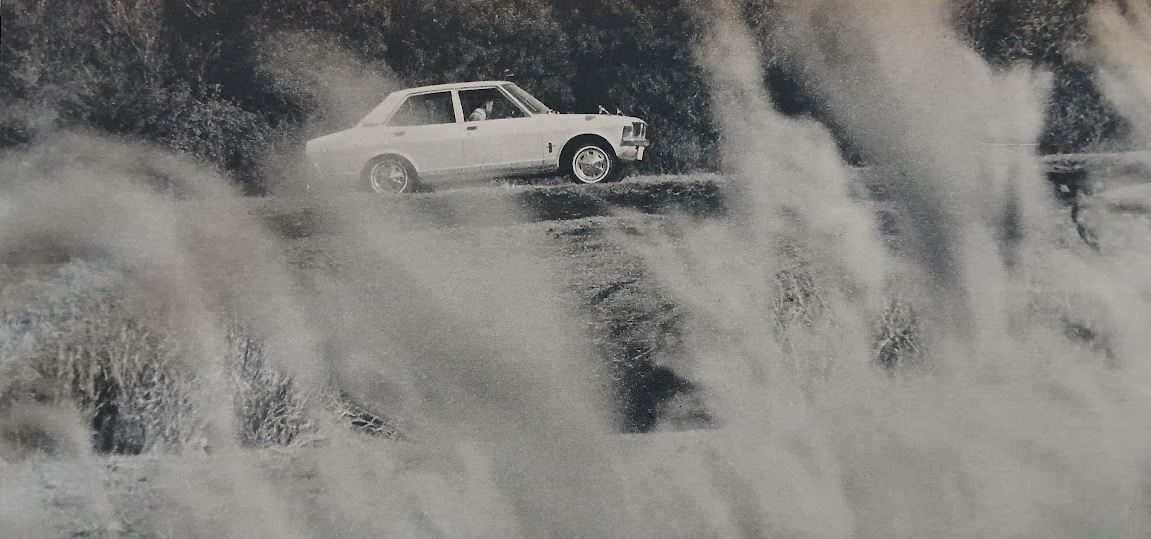
Hill-climbing performance was evaluated on the Tokyu Turnpike in Hakone, with its undulating contours and significant gradients. The measured figures, as shown in the graph, are by no means poor.
Ride Performance
Interior comfort, vibration, noise, and ride quality–these factors are closely related not only to comfort itself but also to handling and overall product appeal.
Noise testing was conducted on ordinary public roads, not on a manufacturer’s quiet proving ground. Please bear this in mind.
Interior noise levels measured 68 phons at 60km/h, 73 phons at 80km/h, and 80 phons at 100km/h during top-gear cruising. In this class, those figures might be described as reasonable. During testing, however, we discovered something interesting: opening the vents at both ends of the dashboard increased noise by 1 phon at 80km/h and 2 phons at 100km/h. A 2-phon increase at 100km/h is quite fatiguing for the driver.
“The incoming air from the front intake must be swirling through the tunnel inside the fender as it rushes in. Of course there’s probably a step or baffle along the way, but what we’re hearing is resonance–essentially a jet tone,” observed Oguchi and Mitsuwa.
“I thought wind noise was relatively low. I felt that the interior became suddenly noisy past 100km/h, but maybe it was the vents all along. Perhaps they were left open,” said Sasaki.
Between 100km/h and 110km/h, a degree of yawing becomes noticeable. Every member of the group felt it. It produces a faintly uneasy sensation. At first we wondered whether it was simply the road surface. “It isn’t severe, but when the speedometer is indicating over 100km/h, the car feels almost as though it is being struck by crosswinds. It took some time before we realized–ah, this is yawing,” said Sasaki. “It happens even at 90km/h. It’s an unpleasant feeling,” added Mitsuwa and Okubo.
Yet once off the expressway and back onto ordinary roads, the sensation is quickly forgotten. One reason is the seat construction–a unitary urethane-foam structure–which works remarkably well. Thigh support is by no means poor.
The test car, being the Custom grade, featured separate fixed seats. As for seating comfort, the group was near-unanimous: “Above standard–no objections!” “But the seatback reclines too far. Couldn’t they have provided at least two or three degrees of adjustment?” –Mitsuwa. “I think the angle is just right. It must have been calculated that way,” countered Oguchi.
The Galant lineup includes 14 variations in the AI series and 7 in the AII series. The Custom sits roughly in the middle of the range. But if they have already gone so far as to fit a floor shift and separate seats, why not provide reclining adjustment as well? Such voices were heard within the group.
“Perhaps it’s sales technique–‘Another 15,000 yen and we can arrange that,’” someone quipped.
Problems in High-Speed Stability
The next evaluation category—the one marked on the upper left of the hexagon—concerns handling. If we were to pursue it in strict detail, we would be encroaching upon this magazine’s formal road test territory. What we present here instead is a practical driving test based on real-world use. We shall report on hands-off directional stability, along with each driver’s individual impressions.
We tested the steering’s self-centering characteristics from a steady 60km/h cruise, applying a slight steering input–simulating the effect of a crosswind–and then gently releasing the wheel. In this case, the car wavers, changes direction, and requires slightly more than one full oscillation from right to left before settling back to its original course. This takes 3 seconds. At 100km/h, it requires two full oscillations and slightly more than 6 seconds. The verdict: the settling characteristics are not especially good.
As for steering feel–we found it somewhat reluctant. “There’s a damped sensation,” said Oguchi. “Perhaps ’elastic’ is the word,” suggested Mitsuwa. Those expecting sharpness will be disappointed. The overall assessment: it’s better suited to calm, unhurried drivers.
The transmission, on the other hand, offers a “pleasingly positive engagement” (Mitsuwa, Sano). Though the test car had only about 1,000km on it, shifts are smooth and sure. It can be fairly called a well-made gearbox. The shift pattern places reverse to the left, engaged by pushing the knob downward. This avoids confusion with second gear. One wonders whether the reverse-left layout reflects consideration of the American export market.
Turning to the category of safety, this is, of course, something that cannot be tested directly. We concluded that the proper benchmark is the degree to which the manufacturer has incorporated features meeting or exceeding safety standards.
Mitsubishi promotes the car with the catchphrase “Safety 77,” enumerating seventy-seven safety-related features. Listing them all would be endless.
Among them are such items as the variable-ratio steering system (a point of pride), square-type headlamps, a breakaway ashtray, recessed door handles, and even a muffler noted for its superior silencing effect. One cannot entirely escape the impression of a “highlight anything even remotely related” approach.
Yet in an age when safety is so widely discussed, the overall impression is not merely one of superficial appearance or advertising flourish. There is substance behind it. Take, for example, the tilt steering wheel–this allows the driver to select the most comfortable position, directly contributing to safer driving. Or the trunk lid functioning as a protrusion-free antenna. Or the four-jet windshield washer nozzles, the large side-mounted flasher lamps, the fuel tank fitted with a shield, and the door-ajar warning lamp. These may reasonably be interpreted as evidence of thoughtful design and consideration.
As for economy, whenever the word is mentioned, the first thing anyone thinks of is fuel consumption. Does the car guzzle gasoline? From the middle to the base of Japan’s motorizing public, this is watched keenly and with no small anxiety.
Some foreign observers have remarked, “Japan’s motorization is still overreaching itself.” But we too have no fondness for cars that gulp down a 50- or 60-yen-per-liter liquid as though spilling it carelessly. Nor would we wish to recommend such a car to Japanese users. Accordingly, we measured the Galant’s fuel consumption using the same full-tank method as would an ordinary owner.
From the Tomei’s Tokyo IC entrance to the Ebina Service Area, we ran a purely expressway distance of 31.7km (outbound, with Mitsuwa driving). The result was 12.7km/l.
The return trip took us from Gotemba IC to Tokyo IC, then via surface roads and the Metropolitan Expressway Route 3 to Tamachi–a total of 101km at an average speed of 71km/h (with Sasaki driving). The figure, coincidentally, was again 12.7km/l.
Mitsuwa holds an International A-class racing license. Sasaki is the senior member of the group and drives very much like an ordinary user. That both produced the same figure is intriguing. Moreover, in both directions we drove at relatively brisk speeds and conducted various tests along the way.
According to the catalog, fuel consumption on a level road is listed as 19.5km/l. Our figure amounts to roughly 65% of that. One is reminded of the common saying: “Take the catalog mileage and multiply by six-tenths.” It almost seems proven here. Yet considering how we drove on the Tomei–and the urban congestion encountered after returning to Tokyo–this number cannot fairly be called poor.
Another important aspect of economy is engine durability. This is explained in detail in the sections below, so we shall not repeat it here. However, when calculated from the data, the Galant revealed a somewhat unexpected characteristic. Those who enjoy working through figures may wish to recompute the data for themselves.
A Well-Behaved Honor Student?
Finally, product appeal. This is, in effect, the summary of the evaluation. Therefore–if somewhat arbitrarily–we shall use it to bring this report to a close.
The Colt Galant enters an established Colt series that already includes 1100, 1200, and 1500 models, interposing itself with the 1300cc AI and 1500cc AII variants.
As noted at the beginning, previous Colts had never quite sparkled. That alone made it particularly interesting to see whether this new model might inject a fresh gust of wind and reclaim lost ground. It certainly possesses the makings of a turning point.
And now, on the matter of product appeal…
“It shows the designer’s ambition: to make it appear small yet seat occupants generously. The styling is more refined than previous Colts. The elimination of the triangular vent windows, the high-speed-oriented engine, the clear determination to sell–perhaps this reflects a more aggressive stance from Mitsubishi itself. It is very much in the character of a Mitsubishi-style honor student. There is no strong eccentricity; it is consistently above average. Yet it lacks a single striking, compelling personality trait.” –Mitsuwa, Oguchi.
But there are other voices:
“The broad base of Japan’s motorization is seeking exactly this kind of car. If one speaks in terms of the greatest common denominator–it is for the calm commuter, for the family outing. Used in that way, it will yield satisfying results. It may be the kind of car that, as a beginner grows accustomed to it and gradually draws out its capabilities, inspires genuine affection.” –Sano, Sasaki.
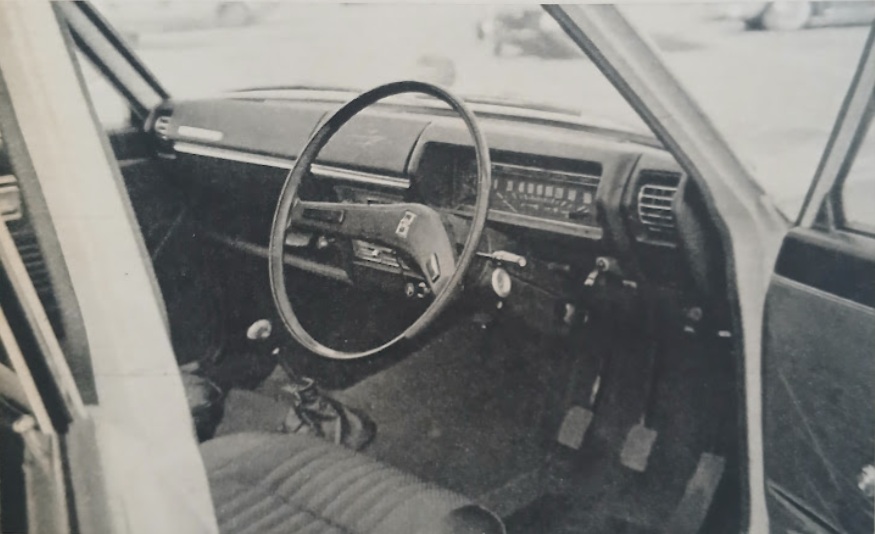
As for the interior and instrument panel area, some felt further study was desirable. Of course, those seeking something sportier may turn to the S-type, and indeed, others commented that visibility of the instruments was unexpectedly good. As with styling, these judgments appear largely subjective.
Yet one detail is clearly questionable. Given the evident care devoted to anti-glare treatment, why leave bright chrome elements such as the ventilator grilles, the instrument panel trim, and the Colt emblem at the center of the steering wheel? What was the reasoning behind retaining these reflective surfaces?
The ridged, anti-slip pattern on either side of the steering wheel proved surprisingly irksome and drew unanimous disapproval. The variable-ratio steering, on the other hand, was indeed effective and light at low speeds, helpful when maneuvering on rough roads or in parking lots. This feature, the group judged, would certainly be a plus for more reserved, cautious drivers.
Compared to the previous Colts, the Galant can be said to have scored far more points.
Yet… there remains something that holds one back. There is a certain over-earnestness, an unseasoned seriousness, that prevents one from simply throwing up one’s hands and declaring, “Well done!” On the diagnostic sheet, its physique and its nourishment are above average; its intelligence quotient, its appearance… all are positive points. Yet somehow one feels inclined to deliver a little lecture: “Don’t spend all your time studying… but don’t go in for reckless athletics either. You listen, now…”
Perhaps this is a car we ought to watch over just a little longer.
The Aims of the MF Comprehensive Test Drive
New models appear one after another. To introduce their characteristics and performance while revealing their true nature is, arguably, one of the great responsibilities of an automotive specialist magazine. The so-called road test–or test drive and road evaluation–must be conducted with fairness and accuracy, offering clarity for the user while also maintaining objective, persuasive authority.
In cooperation with Shibaura Institute of Technology and the Oguchi Automotive Research Laboratory, this magazine has devised a “Bubble Session” approach to evaluating automobiles—a method derived from systems engineering in which specialists from differing fields examine a single subject from multiple angles. The evaluations are conducted around a hexagonal table (“Bubble” = honeycomb), and, in addition, the results are presented visibly using a hexagonal “Bubble Index,” creating a novel kind of test drive report.
This method combines the subjective impressions of multiple members capable of fair judgments with instrument-measured data. Though it is only one experimental approach, we believe it produces considerably less deviation than road impressions recorded by a single individual.
Here, the performance of a vehicle is divided into six categories, and its evaluation is expressed through an index that captures measured data both quantitatively and visually. The area within the circle at each vertex of the hexagon represents the performance of the vehicle in that category. To contextualize this assessment with the vehicle’s class, the car’s category is indicated, correcting for disparities between high-priced and more modest vehicles, and thereby ensuring a reasonable characterization of its qualities.
The test course is standardized over a fixed section, with fuel consumption and hill-climb measurements similarly normalized. The members of the test group, the measurement locations, and the methods are also kept constant. Naturally, this approach is still young and unrefined. Together with our readers, we aim to continue developing this methodology into a more authoritative and reliable product-testing framework.
1. Standing-Start Acceleration
From its 1300cc displacement the engine produces 87ps. With a specific output of 67ps/l and a power-to-weight ratio of 9.5kg/ps, the figures are exceptional for this class. Perhaps owing to its OHC design, the engine climbs through the rev range with notable smoothness, and valve surge is scarcely perceptible. If anything, there is the risk that the engine may rev beyond its allowable limit before the driver realizes it.
In first gear it delivers 0.6g of acceleration, and may fairly be described as a car with a sharp, decisive launch.
2. Ride (and Interior Noise)
Wind noise is comparatively low. However, when the air inlets at either end of the dashboard are opened, interior noise increases by 2 phons at 100km/h and by 1 phon at 80km/h.
3. Overtaking Acceleration
When using full throttle to overtake a vehicle traveling at a steady 60km/h, the total distance required from start to finish is 182m, and the time required is 7.3 seconds. Speed at the completion of the pass reaches 90km/h. For the purposes of this test, the following and leading distances were each set at 30m.
Similarly, when overtaking a vehicle traveling at 80km/h, a distance of 360m is required, with a recorded time of 10.9 seconds. In this case, both the initial and final following distances were set at 60m.
4. Ramp Entry Acceleration
As a matter of practical performance, rapid acceleration from 40km/h to 100km/h is required when entering an expressway. In the case of the Colt Galant, using third gear under full acceleration, the run requires 13.7 seconds and a distance of 266m.
This figure only just exceeds the 250m acceleration-lane standard adopted by the Japan Highway Public Corporation for ramp design, and presents no practical difficulty.
5. Steering Stability
While traveling at a constant speed, the steering is momentarily turned to produce a lateral acceleration of 0.2g, and is then released; the subsequent directional stability of the vehicle is measured by accelerometer.
To maintain consistent conditions, all measurements were conducted with steering input to the right. In the case of the Colt Galant, at 60km/h the vehicle returns to straight-line running after approximately one and a half oscillation cycles (3 seconds). At 100km/h, settling is somewhat slower, requiring two full cycles (just over 6 seconds).
6. Hill Climbing
The catalog lists maximum gradeability as sin θ = 0.478 (28.5°). For practical evaluation, however, we use a section of the Hakone Turnpike. Using what was judged to be the most effective driving technique, the car recorded a time of 49.5 seconds over a distance of 1,150m.
7. Fuel Consumption
Operating fuel consumption was measured primarily under expressway driving conditions, over the outbound route from the Tomei Expressway Tokyo IC to the Ebina Service Area, and on the return from Gotemba IC via the Tomei to Tamachi, Tokyo. Because the full-tank method was used, a limited amount of ordinary road driving was necessarily included.
The results for the outbound and return runs were identical, both recording 12.7km/l.
8. Engine Durability Index
How far do the pistons travel during 1km of running in top gear? This serves as one yardstick for estimating engine durability. Assuming production standards, engine materials, and cooling systems to be equivalent, the smaller this index, the greater the engine’s potential durability.
The durability index improves under the conditions of larger tire diameter, shorter stroke, and smaller overall gear ratio. As such, the method of calculation is: Engine Durability Index = (Number of revolutions per 1km of travel) × 2 × (stroke length).
The number of revolutions per 1km is calculated as: 1000 × (top gear ratio × final drive ratio) ÷ tire circumference (m).
For the Colt Galant AI, the calculated result is 8.63 × 10⁵. This considerably exceeds the average value for this class, which falls in the range of 5-7 × 10⁵, suggesting that from the standpoint of durability, some questions remain regarding the engine layout. It may be assumed, however, that compensating measures have been taken in production engineering to address this point.
Postscript: Story Photos