Mitsubishi Colt Galant GTO MII (1971)
Publication: Motor Fan
Format: Road Test
Date: January 1971
Author (Roundtable): Sadao Kobayashi, Masakatsu Suzuki, Osamu Hirao, Yasutaka Toyoshima, Hiroshi Hoshijima, Kimiaki Uesuna, Kenji Higuchi, Yutaka Nakamura, Chiaki Moriya, Hiroshi Okazaki, Zo Doi, Kunitaka Furutani, Yasuhei Oguchi, Kenzaburo Ishikawa, Minoru Onda, Takashi Ishizaka, Toshihide Hirata, Masanori Suda, Motor Fan Editorial Staff (uncredited)
Aerodynamic Style
Magazine: Let’s start by talking about the development aims of the Galant GTO.
Kobayashi: We launched the Galant sedan last year, and then in May of this year, we released the hardtop and estate van, expanding the range of models. Now we have added the luxurious, high-performance GTO sports model to the series. The prototype of this car, the GTX, was exhibited at the 16th Tokyo Motor Show last year, where it was very well received, and with the cooperation of Chrysler, we have further refined it into the GTO. However, even though it is part of the Galant series, it is a significantly new model with its own style, engines and interior. We are proud that its engines deliver high performance and have been carefully designed with regard to pollution prevention measures and other considerations.
Magazine: What specifically does Chrysler’s cooperation involve?
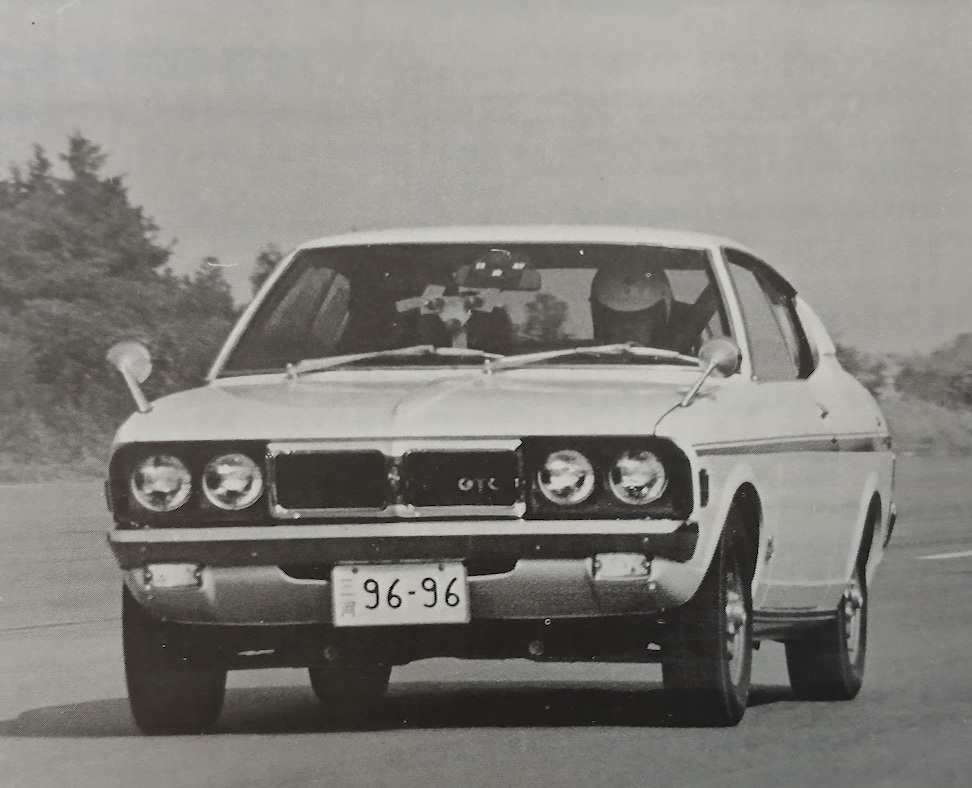
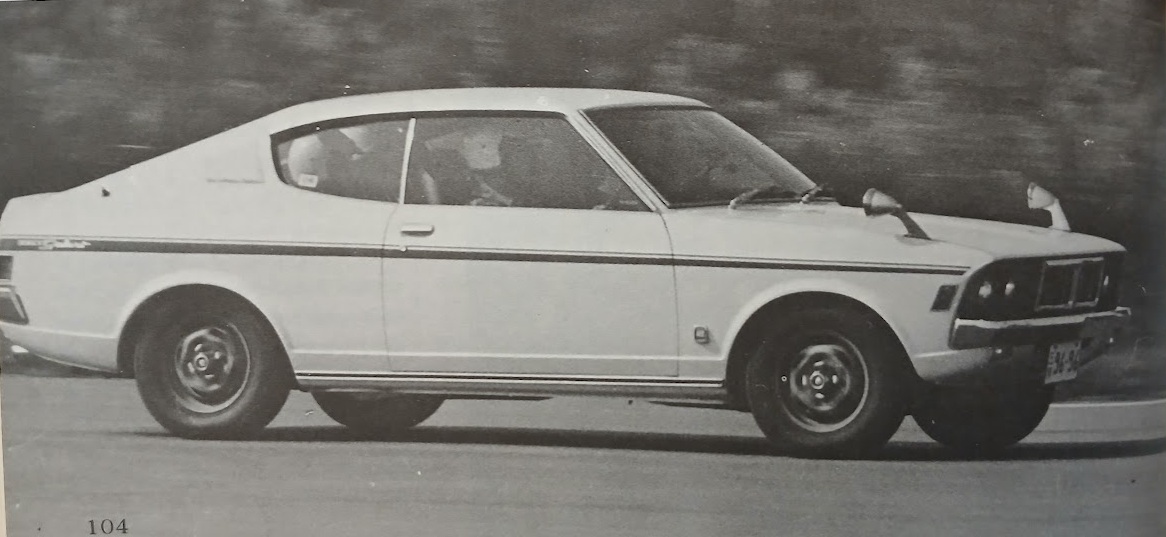
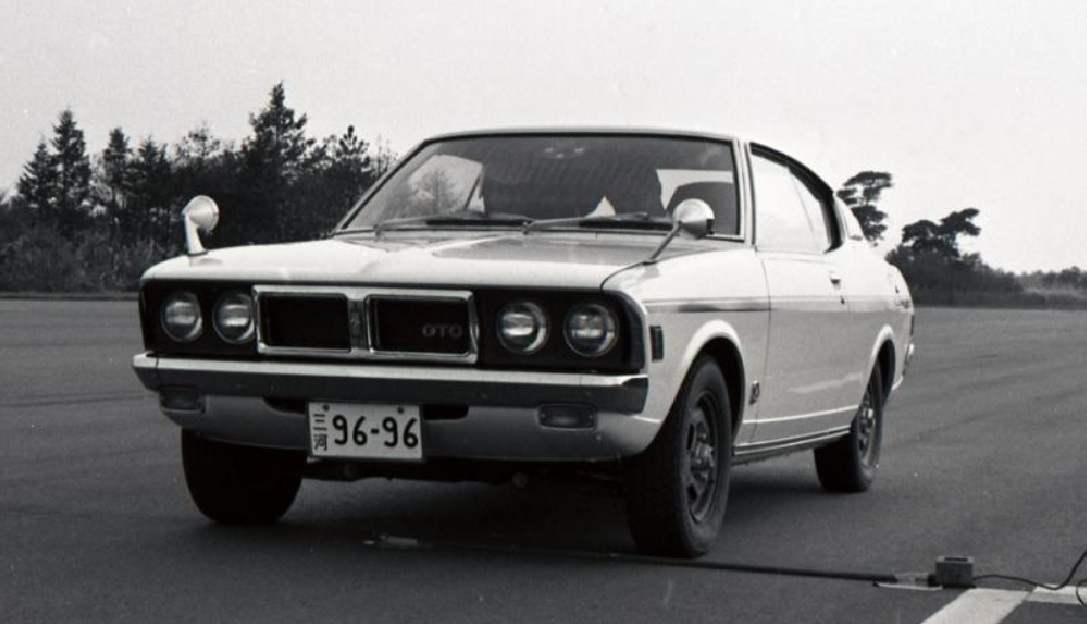
Kobayashi: Chrysler had not yet invested in the company, so we did all the development ourselves, but when we showed the prototype to Chrysler early in our talks, their suggestion was, “this style is very good, but considering future trends, a more ’tumblehome’ shape would be better,” so we incorporated that idea and used 50-inch curved side glass and tapered the roof.
Magazine: Why did the name change from “GTX” to “GTO”?
Kobayashi: Generally, coupes sacrifice interior space, but this one doesn’t neglect the roominess of the rear seats. The dealers asked us to change the name to reflect this, and so we decided on GTO, which is “Gran Turismo Omologato” in Italian.
Magazine: The styling is a selling point, isn’t it?
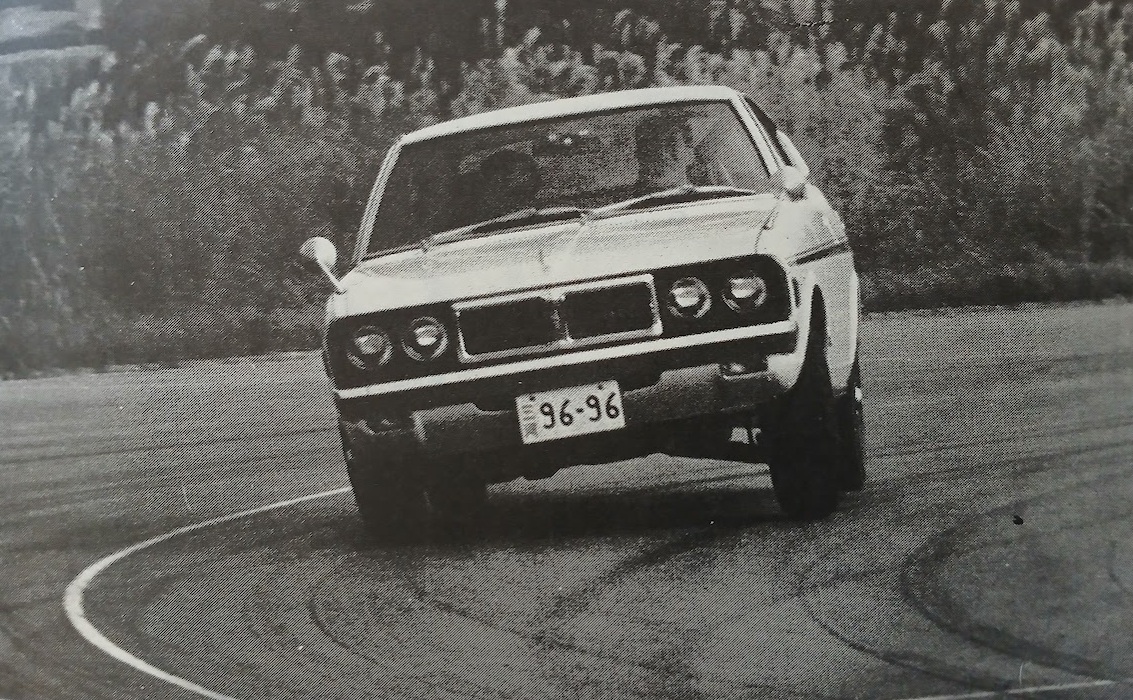
Uesuna: This car is a sibling of the Galant, and rather than trying to develop the usual expensive, fast, narrowly-focused sports car, we aimed to make something more affordable, and which also could be driven by a wide range of users, not just young people. Moreover, since it is light and has a small engine, we worked with the aerodynamics group to incorporate aerodynamic advantages in order to achieve the highest speeds.
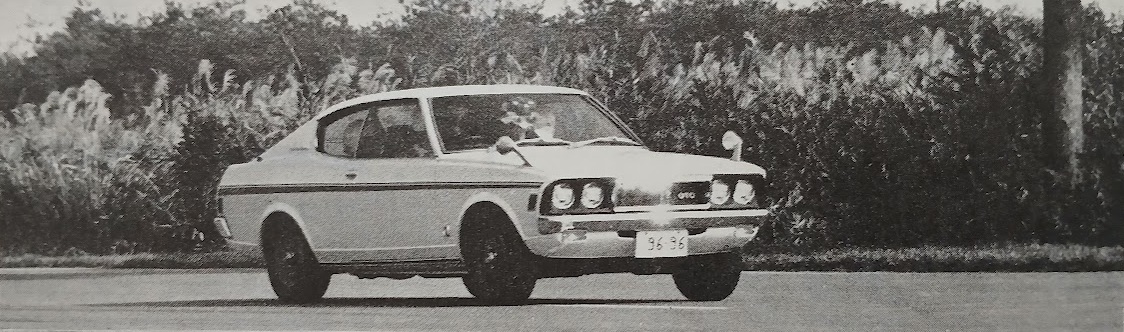
One of the key styling features, the “cut back” or “ducktail,” has been derived from streamlining concepts, and the design mixes this with a shape that gives a sense of speed. At the same time, it has a functional aerodynamic advantage when driving over 100km/h. This time, it was especially easy to work with the advertising section, who clearly understood the designers’ requests. As for the tumblehome, we wanted to reduce air resistance without sacrificing interior space, so we cooperated with Chrysler in design and production technology to solve the more difficult aspects of the construction.
Magazine: How is the “ducktail” in terms of aerodynamics?
Suzuki: Historically, the streamlining trend that began in the 1930s has continued to the present day, but as cars’ performance has improved and road conditions have changed, the challenges became more complex than just reducing air resistance. For example, problems with crosswinds and lift arose, and prototypes were designed with Kamm tail shapes, or more extreme types of ducktail designs.
Mitsubishi has been doing extensive wind tunnel testing for a long time, but especially since 1967 when the company was aiming for a new organizational structure, we started doing very large-scale wind tunnel testing. The biggest problem was that the ducktail design of the GTO, the so-called fastback, had very little air resistance but a lot of lift. This was not a problem for cars that could only go up to about 150km/h, but when cars reached speeds of 200km/h and the body became light, controlling the lift became a big problem. At the time, ducktails were still only used on highly specialized cars, and they were still in the experimental stage, but they were confirmed to be quite effective through repeated wind tunnel tests. When actually applying them, the biggest problem is in relation to the styling, and the size becomes an issue. If you add something large, it will be effective in controlling lift, but it will affect the styling or the field of view. If it is small, it will not be effective, and that is why it has become the shape it is today.
Magazine: At what speed does it become effective?
Suzuki: Theoretically, it should have some effect at any speed, but the practical effect is that, even if you drive at 180-190km/h, the amount of lift is about the same as a normal sedan driving at 130-140km/h. In other words, it’s about 40% less lift than a sedan. For example, when a sedan is driving at 180km/h and is hit by a 15m/s crosswind, a large lifting force of about 160kg is generated, but in this car, it’s about 100kg.
Hirao: Does that mean the rear wheel load is reduced by that much?
Suzuki: It’s the total load. It’s the force acting on the aerodynamic center point. The aerodynamic center point is slightly forward of the center of gravity.
Magazine: How much is the load on the rear reduced?
Suzuki: About 60% at the rear.
Magazine: How much less air resistance is there compared to the Galant sedan? I think it’s quite a lot…
Suzuki: I think it’s about 20-25%.
Magazine: And that’s due to the fact that the windshield is more reclined and the rear is now a fastback, right?
Suzuki: Another thing is that adding a ducktail reduces lift, but this also creates resistance, so taking all that into account, it’s around 20-25%.
Hirao: The curve of the side glass also reduces the frontal projected area…
Suzuki: Yes, the frontal projected area has been reduced by about 4%. That is included in the overall total of about 25%.
Magazine: Was development carried out at the same time as the sedan?
Toyoshima: Yes. We had four car models in mind, including the van, in the early stages of development, and we considered the commonality of parts and productivity. Then, for the cars that were to be released later, we focused on the upgrades for the high-end models, such as the hardtop and GTO, and we set out with the idea of releasing them in order. However, it was delayed by about six months.
The Ducktail Effect
Magazine: When you actually drove the car, how did it feel in crosswinds?
Hoshijima: It did feel like it was sticking to the road, and the road holding was good. I don’t know if that was because of the ducktail, though.
Hirao: I’ve also heard that there’s an option to add a rear spoiler, so will that make it even better?
Suzuki: We’ve been conducting tests with spoilers, and have even added one to our Formula car, and they are an effective way of controlling lift. But spoilers themselves have their own drawbacks. That is, as I said before, they increase air resistance. And if you were to add a spoiler, you’d have to think about how good it would be in terms of the actual feeling.
Magazine: If you were to add a spoiler to this car, how would you attach it?
Hirao: That’s the problem, where to attach it.
Uesuna: At the model stage, it’s not completely attached to the body, it’s floating on supports.
Hirao: If that option were to become available, it would be a hot topic all over again.
Hoshijima: They seem very effective on snowy roads. We installed one on another fastback car, and even at 60km/h on snowy roads, the sense of stability was different.
Suzuki: However, it’s difficult because you have to consider the balance between air resistance and suppressing lift.
Hoshijima: When you view this car from the rear, the style has an American-car image.
Uesuna: Because we used 50-inch radius glass, we were able to make it look like the fuselage of an airplane, and I think this image was utilized as well.
Magazine: How is the curved glass in terms of cost?
Kobayashi: It’s expensive.
Magazine: What about the problem of the window rattling when opened at high speeds?
Toyoshima: We conducted experiments such as lowering the glass slightly at high speeds to see how much it bends. In particular, we have increased the quality of the guide rollers and added firmer supports. The glass is 6mm thick, and the bottom is hollowed out to reduce weight.
Hirao: I wonder if the windows even need to be opened at high speeds. Because the windows on the Shinkansen don’t open.
Magazine: Don’t they all close their doors at speeds over 120km/h?
Hirao: Yes, and that’s why they decided to design it so the glass doesn’t lower. This would allow the inside of the door to become a passageway for the air conditioning, for example, and the door would also contribute to the rigidity of the body. Also, if we had a mechanism where when the latch is halfway down when closing the door, in other words when the door is half-open, it would electrically clamp down on the door, making the door seal much harder. That way, air wouldn’t leak out and cause a whistle even at high speeds…
Higuchi: There are cars in Northern Europe that also use the lower door panel as an air duct.
Light Engine
Magazine: We wonder what’s changed in the engine…
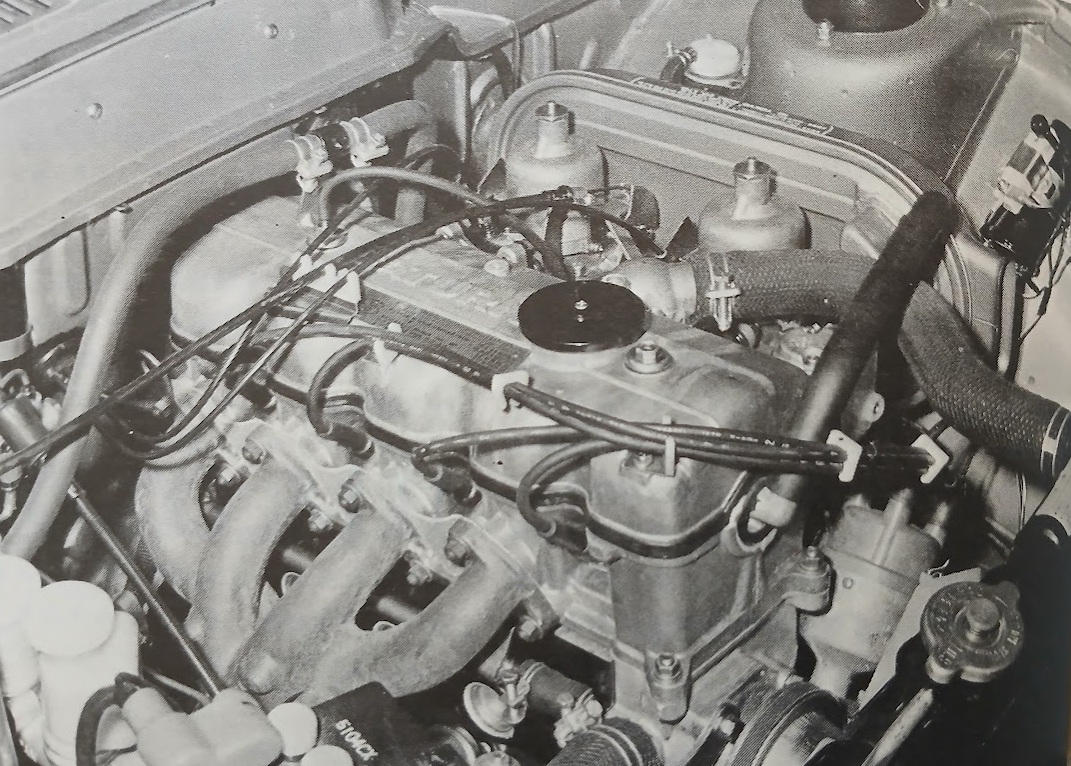
Nakamura: The basic idea of a long stroke and a spherical combustion chamber is the same. That is, a spherical combustion chamber allows for larger intake and exhaust valves, and has good intake efficiency. A long stroke also gives good low-speed performance, and when combined with an OHC, it also gives good high-speed performance. There is not much difference in piston speed with this bore-stroke ratio. In terms of pollution issues, there is an advantage in that the surface area of the combustion chamber is reduced by combining a long stroke and a spherical combustion chamber, and the surface area of the combustion chamber is reduced as much as possible, resulting in fewer hydrocarbons. The surface area of the combustion chamber is about three-quarters that of a wedge type.
Also, a long stroke allows the engine to be made more compact. There are three types of engines for this GTO: MI, MII, and MR. All of them have had their displacement increased through a bore-up of the sedan engine. The MR is a DOHC, but the cylinder block has been kept as similar as possible to the MI and MII. The bore-up has made the bore-stroke ratio about 1.1. The MR can reach 6800 rpm, and the MII can reach 6700 rpm. We’ve tried to make sure that the horsepower doesn’t drop even in that area.
We’ve also lowered the compression ratio by 0.5 in each, to 8.5 for the MI, and 9.5 for the MII and MR. The reason for this is that we can use low-octane gasoline just by retarding the ignition advance.
Engine weight is almost the same as the sedan’s 1500cc, with an increase of about 0.5kg. The weight of the MI engine is 106.6kg, so roughly 1 horsepower is produced per kg, which is why I think it can be said to be light among cast iron block engines.
Hirao: How thick is the cylinder wall?
Nakamura: About 4mm.
Magazine: So is there a possibility to be able to bore it up further?
Nakamura: There’s probably a chance, yes.
Magazine: What’s the piston speed?
Nakamura: About 16.5m/s at 7000rpm.
Hirao: It gets pretty loud when you pull it up to 7000rpm.
Higuchi: I didn’t rev it up to 7000rpm much, but when I was driving on the highway, I definitely wanted an overdrive gear on top of fourth. In terms of noise, fuel consumption, and piston speed.
Magazine: The MR has a 5-speed transmission.
Hirao: Is an automatic transmission an option?
Nakamura: Not at the moment.
Higuchi: That will be in six months (laughs).
Highly Rigid Suspension
Magazine: Is the suspension the same as the Galant sedan?
Toyoshima: It hasn’t changed much from the existing model. However, the springs have been strengthened. The MII has four leaf springs in the rear. The tires have been changed to 165S-13 radials. Other than that, we have made small adjustments to the spring attachment mounts and other details.
Magazine: You mentioned that the road holding is good.
Moriya: I think the aerodynamics have helped the most in that respect. That, and the radial tires. In terms of the details, we have increased the damping ratio of the shock absorbers by 50-60% along with making the springs stiffer. We have also increased the stiffness of the stabilizer. I think that as a result of all this, we have achieved rather good characteristics. Also, I think the balance of the weight distribution has something to do with it.
Okazaki: It has good high-speed stability. There is not much difference in steering force as the speed increases, so it feels calm. In terms of handling, it feels smoother than the sedan or hardtop. To me, it felt less sharp than the sedan, but more stable.
I did feel that the understeer was quite strong. The specified tire pressures were 1.4kg/cm2 in the front and 1.6kg/cm2 in the rear, and I’m guessing that this was done to emphasize ride comfort within the range that general users will drive in, rather than for handling. If you want to get a better feeling of maneuverability, I think that pressures of around 1.8 to 2.0kg/cm2 would be good.
On dirt roads, it transitions into oversteer relatively quickly, but the cornering speed is much faster than the sedan. Also, I wondered if the rigidity of the rear suspension itself had been increased. The rigidity of the mounting parts seemed high.
Magazine: What is the rim width for the tires?
Toyoshima: 4.5J.
Okazaki: I feel that for these tires, at least 5.5J is needed.
Moriya: We focused on stability at high speeds, so we increased the rigidity of the suspension. We also increased the rigidity of the body structure itself, increased the rigidity of the leaf spring mounting parts, and slightly revised the rubber bushings. The spring constant has also been increased to 2.28 compared to 1.97 for the sedan. We tried various things to balance maneuverability and stability when selecting tires.
Magazine: How was the test data on maneuverability and stability?
Doi: The practical minimum turning radius is 5.125m on the outside and 2.684m on the inside, which is the smallest value in this class. The stationary steering effort is on the low side for a car with radial tires, and the maximum values on the left and right were 17kg and 15kg.
The data on understeer and oversteer characteristics has not yet been compiled, but when I accelerated in a circle on the skidpad at Yatabe, I felt strong understeer. The μ of that skid pad is low, so the rear wheels began slipping from about 50-60 km/h, but it was easy to control and I didn’t feel uneasy.
The roll rate has not yet been calculated, but it is about 3.0 to 3.5 degrees in the photos, and according to in-house data it is 3.37 degrees with five people on board, so I think the roll rate is low.
We conducted the free-release stability test up to 140km/h, and at 100km/h, the cycle was 0.9 seconds and the damping ratio was 0.18, which were good values, and the waveform looked good as well.
Magazine: Is the strong understeer by design?
Moriya: When V² is 100m²/s², it is normal to have a result around 1.37 to 1.40, so we are within that normal range.
Okazaki: Even if you try really hard to turn in, the rear doesn’t slide and you end up going off front-first.
Moriya: On the concrete surface of the test course Mr. Okazaki used, the understeer is maintained up to a lateral acceleration of 0.7 to 0.8G.
Magazine: Was the tire pressure set to 1.4kg/cm² and 1.6kg/cm² in consideration of ride comfort?
Moriya: No, it was for stability.
Hoshijima: I didn’t know that was the specified pressure, so I raised the front to about 1.7kg/cm² and left the rear at 1.6kg/cm², and I didn’t get the impression that the understeer was too strong. I was able to drive it just on the line I intended.
Hirao: If you raise the front pressure, the understeer will be weaker. Ideally, the driver should be able to choose the front and rear air pressure for themselves.
Magazine: The tires also seem quite stiff. Is that the “high block pattern?”
Hoshijima: There’s quite a bit of road noise. And I was surprised by how many bothersome noises there were in general. The sound from around the transmission…
Hirao: From that point of view, I think the MI is best.
Okazaki: Yes, I was also bothered by the transmission noise.
Moriya: We did it that way so that there wouldn’t be any big peaks in the sound level.
Hoshijima: The exhaust sound is cool, though.
Toyoshima: The exhaust sound was so quiet that we had to measure it twice when the Ministry of Transport inspected it. In the early sedans, a louder sound was preferred, so we had to make the exhaust louder, even if we didn’t want to. However, recently, quieter sounds have become more desirable, so we have switched to an optional quieter exhaust system.
0-400m in 16.7 Seconds
Magazine: How were the results for power performance?
Furutani: Standing-start acceleration times were 4.5 seconds for 0-50m, 6.8 seconds for 0-100m, 10.6 seconds for 0-200m, and 16.7 seconds for 0-400m.
Magazine: It’s very fast. How are the gear ratios?
Furutani: It felt like low and second gears were a little short. Third gear was fine though.
Magazine: So the good acceleration is partly due to large first and second gear ratios?
Furutani: Yes, but considering that, the acceleration doesn’t generate a particularly high peak g force. However, it can maintain that g force for a long time.
Okazaki: When I timed it with a stopwatch, it was very quick to reach 160km/h. Even when the speed passed 100km/h, its response didn’t drop off.
Hirao: Less air resistance means good acceleration.
Magazine: The 0-50m time was under five seconds, but was there much wheelspin?
Furutani: Yes, there is a little, but not that much.
Oguchi: The maximum acceleration force is about 0.6g, and it’s maintained for a long time. As far as the launch, it depends on the way the clutch is engaged, but I felt that it took off smoothly with little shock.
Magazine: How was the clutch?
Furutani: For a car of this type that puts out a lot of power, the engagement is smooth.
Oguchi: One factor is the relationship between the stroke and the pedal force.
Hirao: In the case of a twin carburetor, it’s also a function of the weight of the accelerator pedal.
Ishikawa: The operating forces were 12.0kg to release the clutch, 12.5kg to engage it, 2.0kg to hold the accelerator at a constant speed, and about 4.5kg to accelerate, which is about the same as a normal sedan.
Oguchi: In that respect, the feeling is that it’s easy to handle, and the acceleration also feels gentle. But it’s actually very fast.
Higuchi: I guess it’s not recommended for people lacking in self-control (laughs).
Hirao: When you drive on the Tomei Expressway at 100km/h, there is a 100% margin, in the sense that it is rated for 200km/h. But I’m sure there are people who would say, “Why make a car that can go up to 200km/h?” To those who say, “You can only drive at 40km/h in Tokyo, so there’s no need for such high speeds,” I say, “That’s true in Tokyo, but you’ll be driving both in Tokyo and on the highway with one car, so that’s not realistic. If you have a little more money, by all means, buy two cars and use them separately.”
Light Braking
Magazine: How were the brakes?
Ishikawa: We tested the brakes’ initial effectiveness as well as their resistance to fade. The effectiveness test was done at 50km/h, 100km/h, and 130km/h, with deceleration ranging from 0.2g to 0.6g, and up to 0.8g at 50km/h. The results were that the 0.2g pedal force was about 7kg at 50km/h and 100km/h, and the 0.4g pedal force was about 15kg. The 0.6g pedal force was about 27kg at 50km/h and about 30kg at 100km/h. At 130km/h, the 0.2g was the same, but at 0.4g it was 15kg at the beginning, and increased to about 35kg just before stopping. At 0.6g it was about 35kg at the beginning and about 45kg at the end. The brake type is front disc, rear leading/trailing drum, with PCV on the rear, master-back servo, double circuit, so I think the increased pedal force is due to the servo reaching its rest point.
The fade test showed a fairly large increase in pedal force, from about 16-20kg on the first stop, to around 30kg on the fifth stop, and around 35kg on the ninth stop, but even when stopping from around 100km/h it is fairly easy to control. Recovery was good. Also, I tried applying full brakes from 80km/h, but the rear wheels did not lock up.
Magazine: What do you think of the brake feel?
Ishikawa: With a tandem master cylinder and a servo, it inevitably becomes a bit soft.
Gorgeous Interior
Magazine: Please provide us with some dimensional data.
Onda: In terms of body dimensions, the overall length and wheelbase are almost exactly the same as the Fiat 124 Coupe. The width is typical among Japanese cars, but both the overall width and the tread are narrower than most European cars. The height is very low at 1300mm. The minimum ground clearance is slightly smaller where the exhaust pipe protrudes, but I think it is the same as the Galant sedan. In terms of style, there is no triangular vent window, so the side window area is fully open, which looks neat.
The trunk opening is a little tight due to the ducktail, but the inside is as spacious as before.
In terms of interior dimensions, the measured headroom figures are sufficient, and you can see the efforts the designers made, such as hollowing out the rear seat cushion. I think the curved glass is good in terms of style and aerodynamics, but in terms of dimensions, I think it is actually a disadvantage because it narrows the head clearance at the sides.
Toyoshima: Yes, it’s not that the interior space has improved because of the curved glass, but that by using the curved glass, it looks cool and is aerodynamically superior without compromising interior space.
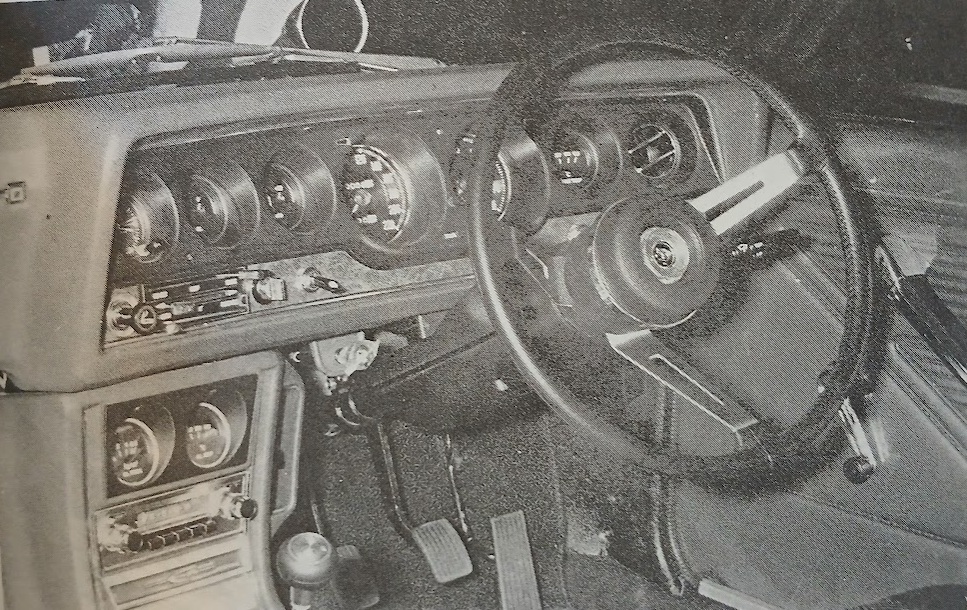
Onda: The interior aims for a luxurious mood, so the equipment includes almost everything you can imagine. The rear heat-printed defogger operates on a timer, which I think was designed with battery conservation in mind. The gear shift pattern places reverse in a position that is less common than in other cars. Another novel feature is the warning lamp on the ceiling, or overhead console.
Magazine: The rear seats are quite low, but how is the leg space?
Onda: There is plenty of space in the front seats, and the rear space is about what you would expect, so I think it’s fine. The dimensions are small in terms of the numbers, though.
Magazine: Does the trunk connect to the rear seat area when you fold them down?
Toyoshima: No. It was clear from torsion tests and the like that this area is a strength point for the chassis. There’s a solid bulkhead there.
Magazine: How comfortable were the seats?
Hoshijima: The front seats were very good. However, the rear seats weren’t so great. The knee space wasn’t as good as I expected. Also, it’s good that the console is facing the driver. There are lots of gauges, which is a selling point. However, I have some doubts about the overhead console. It would be cool if there were controls mounted up there, but only warning lights…
Higuchi: It would be nice if there was a choke lever there too (laughs)
Hirao: The ventilator adjustments were indicated by picture diagrams in the sedan. I thought that was a very good idea, but in this car, they’re written in words again. Was there something wrong with the earlier approach?
Toyoshima: No, nothing like that. I would like to have this GTO use the picture diagrams as well.
High Safety
Magazine: What about safety?
Higuchi: Based on a visual evaluation, the safety score is 88 points out of 100. It has 2-liter class safety equipment, and all the things that users consider to be safe are installed, so I don’t think they missed anything. In reality, we don’t know if adding all those things will lead to safety…
Magazine: We wonder if you have done a lot of crash tests…
Ishizaka: We have been doing crash tests with actual vehicles for the past two years. In particular, we have incorporated the idea of making the cabin sturdy and absorbing as much impact as possible from the front and rear.
Magazine: How about the strength of the car, since it does not have a center pillar?
Ishizaka: Generally speaking, it is said that having no center pillar is a weakness, but the structure of the front pillar, side sill, and rear pillar is solid, and the thick rear pillar in particular fully makes up for it. Also, when it comes to rollovers, from a safety standpoint, a car that is less likely to roll over in the first place is preferable, and this was a car that was difficult to roll over in the test.
Magazine: Please tell us the results of the field of vision.
Hirata: The overall visibility is 2.5 steradians, which is in the middle range of all the measurements we have taken so far.
Higuchi: With regard to visibility, it would be nice if the headrest of the high-back passenger seat could be removed when backing up…
Hirao: It will get in the way when trying to get luggage from the back, too (laughs)
Magazine: When backing into a garage, how far behind can you see?
Ishizaka: It depends on the driver’s eye position, but you can see about 6 meters.
Magazine: We didn’t measure suspension vibration this time, but how was the ride?
Okazaki: For a car with such good handling stability, I thought the ride was generally good. The damping was effective and it felt comfortable.
Toyoshima: The dampers have twice the damping force compared to the sedan.
Moriya: However, the springs are stiffer, so the damping ratio is about 50% higher.
Magazine: Finally, please tell us about your production and export plans.
Suda: Our production plan is for 2,500 units per month. As for the issue of exports, we’re not thinking about exporting this GTO right away. We think we’ll do that a little later.
Hoshijima: If it’s made into a left-hand drive car, will you have to reverse the angle of the console? (laughs)
Uesuna: That was an issue I worried about when my superiors brought it up, but I improvised and said, “We’ll use the one from the hardtop” (laughs)
Higuchi: Why not just make it with the blueprint turned upside down? (laughs)
Magazine: That’s all for now…
Postscript: Story Photos