Mitsubishi Colt 1200 Deluxe (1968)
Publication: Motor Fan
Format: Test Drive Report
Date: July 1968
Authors: Yasuhei Oguchi, Kenji Higuchi
More Than the Extra 100cc Suggests: Pointing the Way for the Family Car (Yasuhei Oguchi)
The Colt series has a long history as a family car, and the newly announced Colt 1200 is a high-performance model worthy of a well–established name in the 1000cc class. Particularly in terms of engine performance, the 1100 that replaced the Colt 1000 in September 1966 has had its capacity increased by a further 100cc, providing greater reserves of acceleration at high speeds.
As it happens, its release coincides with the opening of the first section of the Tomei Expressway, and it has attracted attention as a well-timed introduction in preparation for the fully-fledged high-speed era ahead.
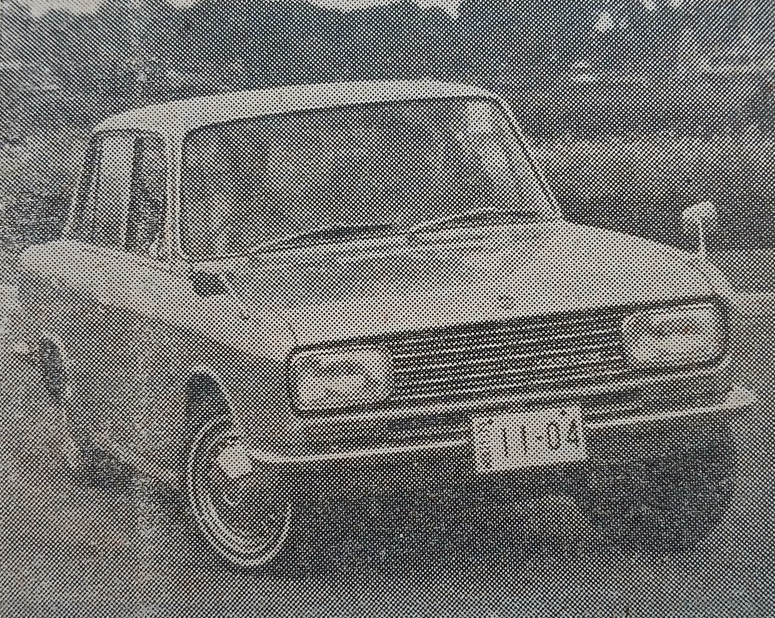
My first impression on seeing the test car was one of slight surprise that, in terms of styling, the image of the previous 1100 has been retained almost unchanged. What is new, however, is the way the front deck and square lamps are brought together with softer lines. Settling into the driver’s seat, one finds an admirably simple instrument panel layout, while the dashboard, from the base of the windshield down toward the passenger-side floor, has been given a rounded shape, presumably with safety in mind.
The instruments, switches, and even the spot ventilators are on the small side, giving the whole arrangement a clean, uncluttered appearance. Among the novel features are Japan’s first tilt steering wheel, adjustable through 60mm vertically, and all-weather ventilation, both of which should make for more comfortable driving.
An engine designed for higher speeds, an even more comfortable interior, and the various safety measures incorporated throughout might be said to point the way toward the higher-performance family car of the future. It is an ambitious car indeed.
The Feel of the Acceleration
I looked over the performance curves, familiarizing myself with just the minimum needed for various kinds of driving—the relationship between road speed and engine speed in each gear, the reserve driving force—and then set off. If one studies the engine and performance curves too closely before driving, it sometimes becomes difficult to form a fresh impression of the car.
Avoiding the crowded city streets, I took the expressway toward Haneda. Along the way, I repeatedly observed the rise in revs and the response to the accelerator, and the acceleration felt like more than an increase of only 100cc.
In particular, there is none of the labored feeling when overtaking from 80km/h found in the 1100, and passing times are short. There is no urge to pump at the accelerator or lean forward in one’s seat, and overtaking can be accomplished safely.
Taking advantage of gaps in the traffic, I took each gear up to the full 6000rpm and, allowing for some overrun, even tried revving it to a little over 6500rpm, as indicated by the performance curve. There was no surging or any other trouble at all. The revs rise smoothly from 400rpm to 6000rpm.
By this time I had reached the parking area. Next, I tried to simulate city driving, deliberately driving in a lazy manner with as few gear changes as possible.
Generally, when an engine gains performance at high speeds, something must be sacrificed at the lower end, making delicate control at low speeds difficult. There is no sign of this in the 1200. Leaving the car in top gear, I braked sharply, allowed it to coast, rounded a corner at low speed, and then accelerated hard. There was none of the unpleasant jerking or wind-up one might expect; instead, the engine dug in and pulled willingly. The relationship between the accelerator pedal’s effort and travel also felt better than in the 1100, and the clutch-pedal effort seems particularly well balanced, making the timing of downshifts and upshifts easier.
The Feel of the Steering
One thing I noticed immediately on driving the car was that the softness of the previous 1100’s steering has gone, giving it a firm, positive feel. Even with fairly hard inputs, the car responds crisply, including the suspension, and holds the intended line.
The suspension itself is basically unchanged, with independent wishbones at the front and an orthodox arrangement of four asymmetrical semi-elliptic leaf springs at the rear. Even so, it seems that one factor behind the positive steering feel—though there is still a sense of friction in its action—is improvements to the rubber bushes in the steering system and elsewhere.
A variable-ratio steering gear has also been adopted. Instead of the 1100’s fixed ratio of 17.53, the ratio now varies from 15.58 to 18.18 over approximately 20° of steering-wheel movement away from center. This reduces steering effort when cornering, while improving stability in high-speed straight-line driving. For example, when garaging or parking, the wheel has to be turned toward full lock, and the steering generally tends to become heavy; this too has been improved, and it is now considerably lighter. At high speeds, on the other hand, the range of steering movement is small, so stability is more important than light effort; here too, the variable ratio is advantageous.
An Engine Designed for Reliability
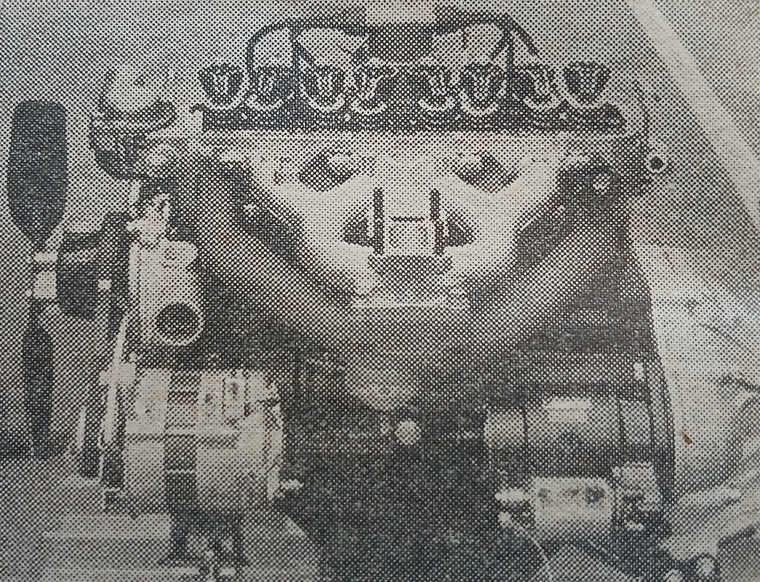
After driving for some time, I opened the engine hood. From outside, the main differences from the 1100 are the cylinder head, with the characteristic metallic finish of aluminum alloy, and the thick pipes leading into the air cleaner from the timing-gear case and head cover as part of the blow-by recirculation system. The engine auxiliaries are neatly arranged, with plenty of space left around them for ease of servicing. Somehow, it is reminiscent of the engine compartment of a European car.
The cylinder head is an aluminum-alloy casting, reducing weight, while the head cover is also said to reduce both weight and noise. Even so, the gear noise at high engine speeds seems somewhat loud. At idle, however, the engine is exceptionally quiet; when waiting at traffic lights in noisy city areas, it is quiet enough to make one wonder whether the engine has stopped.
Returning to the subject of externally visible differences from the 1100, a cartridge-type oil filter has been adopted for the first time, though these have now become relatively commonplace.
As for changes that cannot be seen, but are important to the higher performance, the combustion chambers are wedge-type for greater combustion efficiency, while the additional 100cc of displacement has been obtained not by increasing the bore, but by lengthening the stroke. The 1100’s bore and stroke of 73 × 65mm has grown to 73 × 71mm, making the engine almost square. This is probably the main reason for its strong, flexible pulling power.
The manifolding, which of course can be seen from outside, has also been changed. On the intake side is what is called a “tournament”-type manifold, shaped like a pair of “Y"s arranged side by side and joined together.
This is said to have improved intake efficiency considerably. The exhaust, meanwhile, is of what is called the independent-branch type, specifically intended to prevent interference between the exhaust pulses.
The valve gear uses a high-lift camshaft, and its reciprocating mass has been reduced to ensure stable operation at high engine speeds; the tappets, for example, are said to be hollow.
With the increase in output, changes to improve reliability have been made in such details as the bearings, camshaft, and valve springs. The basic engine design, however, remains unchanged.
This engine might therefore be described as extremely conventional, reliable and well-proven. The carburetor is the same as before, but one small difference is that its adjusting screw is now located on the outside of the engine. Compared with its position on the inside in the 1100, this greatly improves ease of servicing.
The idle adjustment, however, is probably best left alone. If an inexperienced owner starts tampering with it, there is a risk of upsetting the careful adjustment that keeps CO emissions below the Ministry of Transport’s standards.
Of course, this is not something particular to this car, but a general rule that applies to any car.
Producing Ideal Flexibility
The ample reserve of driving force from low to high speeds, and the further increase in flexibility, can be clearly felt while driving. This was one of the things that interested me most during this test, so I decided to quantify this flexibility using a method I had long wanted to try when the opportunity arose.
The method consists of pressing the accelerator fully while traveling at a constant speed and comparing the resulting build-up of acceleration at various road speeds. The less the acceleration falls off as speed rises, the greater the engine’s flexibility.
First, I measured and compared full-throttle acceleration from 40km/h and 60km/h in third gear. As the accompanying chart shows, both produced approximately 0.2g, with almost no difference between 40km/h and 60km/h.
In top gear, full-throttle acceleration from 40km/h and 60km/h both produced 0.16g, again with no difference between the two speeds. Moreover, the difference in acceleration between third and top was only 0.04g, which is not particularly large.
This indicates a flat torque curve and substantiates the car’s ease of driving.
For reference, I also measured acceleration from a standing start. All measurements were made with three people on board, and as it happened, the road surface was wet from rain, so conditions were not ideal. The driving technique was conservative as well, so under better conditions the figures would presumably improve.
I then opened the catalog to compare the performance curves with what I had felt and measured. As expected, the strong flexibility at low and medium speeds and the engine’s willing extension at higher speeds corresponded closely with the curves.
The torque curve is flat from 2000-5000rpm, reaching 9.0kgm. Looking at the road-performance curves, those for third gear and top overlap.
The maximum output and torque figures of 62ps/6000rpm and 9.0kgm/3800rpm are more than just the engine’s peak values; they might be said to provide the backbone of its performance from low to high speeds.
Rather than pursuing horsepower for its own sake, the Colt has been set up to provide reliable performance with actual driving conditions in mind. This deserves attention as one direction the family car of the future might take.
A Test from the Standpoint of the Product (Kenji Higuchi)
There are various ways of testing a car.
First, and most orthodox of all, is the full-scale test such as the Motor Fan Road Test published in each issue of this magazine.
Here, the car is treated purely as a machine and rigorously tested with precision measuring instruments: from performance characteristics such as standing-start acceleration, overtaking acceleration, and fuel consumption, to ride vibration, comfort and noise, handling and stability, and finally braking performance.
The next most common form is what is called the test drive report. This is an account of a car by a test driver who has experience with many different types of cars and has not only excellent driving technique, but also a thorough knowledge of their mechanisms.
Meanwhile, production of Japanese cars has risen rapidly to become the second highest in the world, and their styling and performance have improved accordingly.
Compared with the cars of past years, which were little more than bodies mounted on truck chassis that were barely able to run, it feels like a completely different era.
As a result, whichever car one tests nowadays, the findings tend to be much the same: 0-400m in under 20 seconds, excellent ride comfort, and little vibration or noise. Moreover, the new models introduced from last year through this year, in preparation for the opening of the Chuo and Tomei expressways, are all capable of genuine high-speed touring, with the result that their performance has become more and more alike.
For this reason, I decided to adopt an entirely different method of testing the new Colt 1200 on this occasion. This is what I shall call a “product-oriented” test.
What Is a Product-Oriented Test?
What, then, do I mean by a product-oriented test? We shall assume that the car’s performance and durability as a machine have already fully reached the required standard, and set these considerations aside.
The first thing to examine is the styling and the interior and exterior finish, to see whether they are capable of arousing a user’s desire to buy the car. The next step is to drive it and consider whether it has the kind of feel that gives a sense of satisfaction.
Of course, this involves not only acceleration, braking performance, and the feel of the steering. Vibration, ride comfort, and noise are also major factors. Roominess and safety are important considerations as well.
And naturally, such matters as luggage space, the user-friendliness of accessories such as the ashtray and cigarette lighter, and the maintenance of the engine, brakes, and other components must also be taken into account.
First, the Body Styling
Mitsubishi’s history in passenger cars is still rather too short to speak of any tradition in body styling. In the 1000-1500cc family-car class, in particular, the new Colt represents its first model change; the Colt 1000F and Minica belong to entirely different lines.
Perhaps because the old Mitsubishi 500 and Colt 600 had placed too much emphasis on sheer practicality, Mitsubishi brought in Hans Bretzner, a designer trained at America’s GM, for the development of the former Colt 1000 and the Debonair.
Consequently, these cars looked like miniature American cars from any angle, with large grilles on their small bodies and headlights surrounded by heavy chrome to provide a strong accent.
The 1500, developed from the Colt 1100, went to four headlights in an effort to create a more luxurious feel, but it could not necessarily be called a success in terms of design.
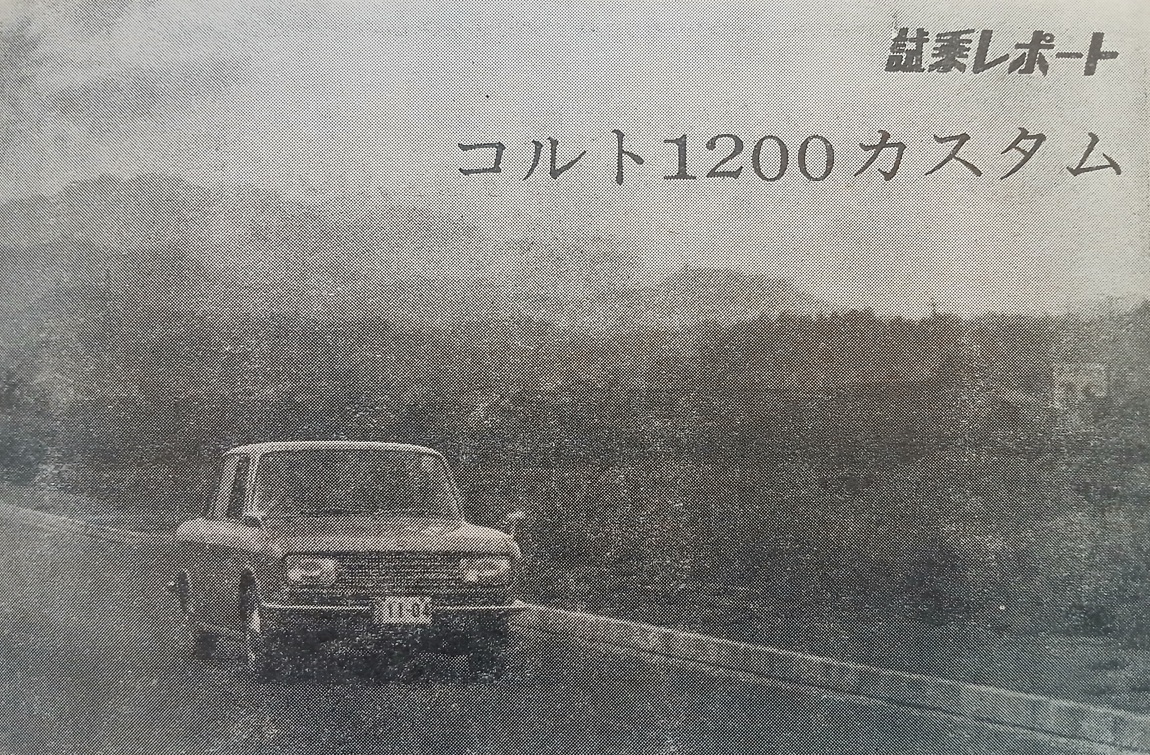
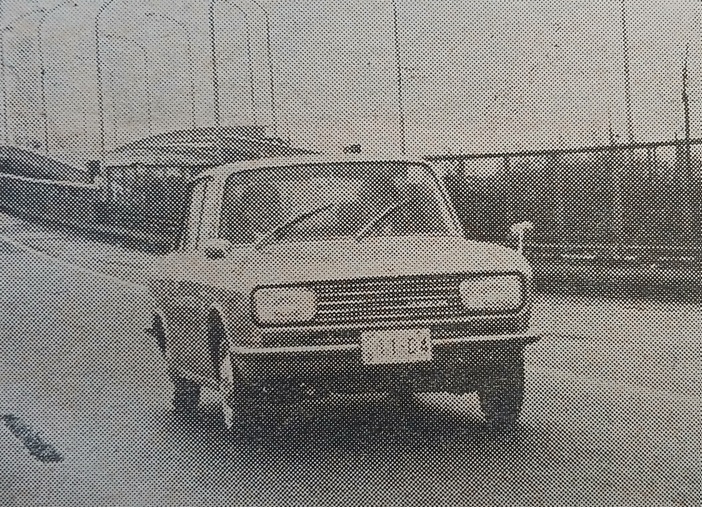
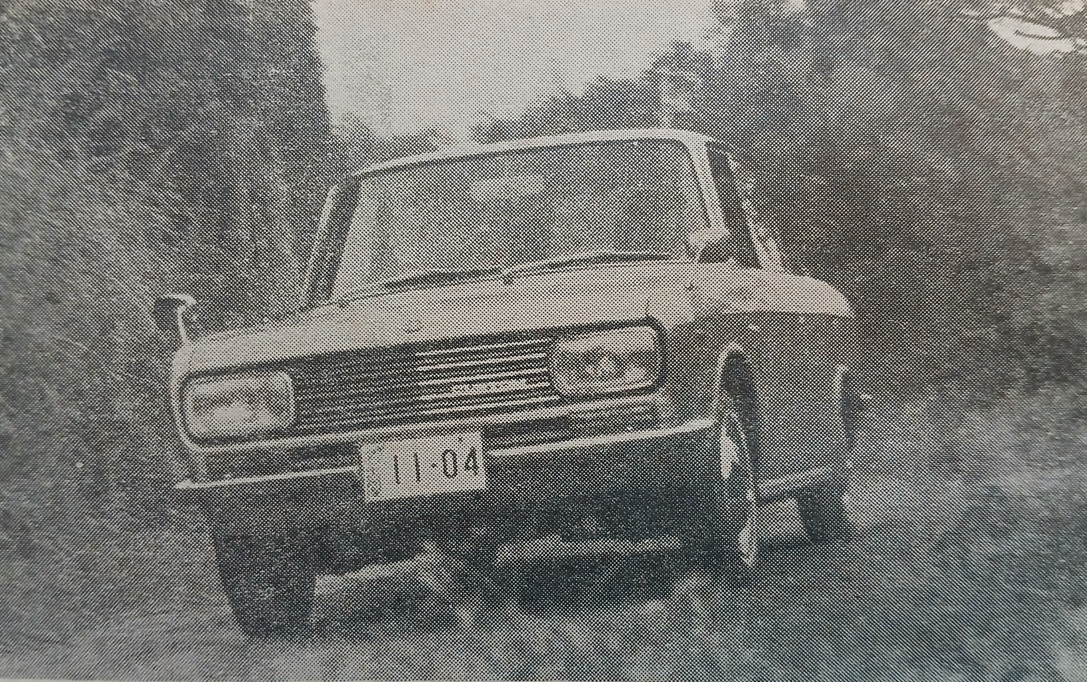
And now we have the new Colt. With rectangular headlights and a louvered grille, the front has become much cleaner and simpler. Seen head-on in the catalog photograph, it presents itself very well indeed.
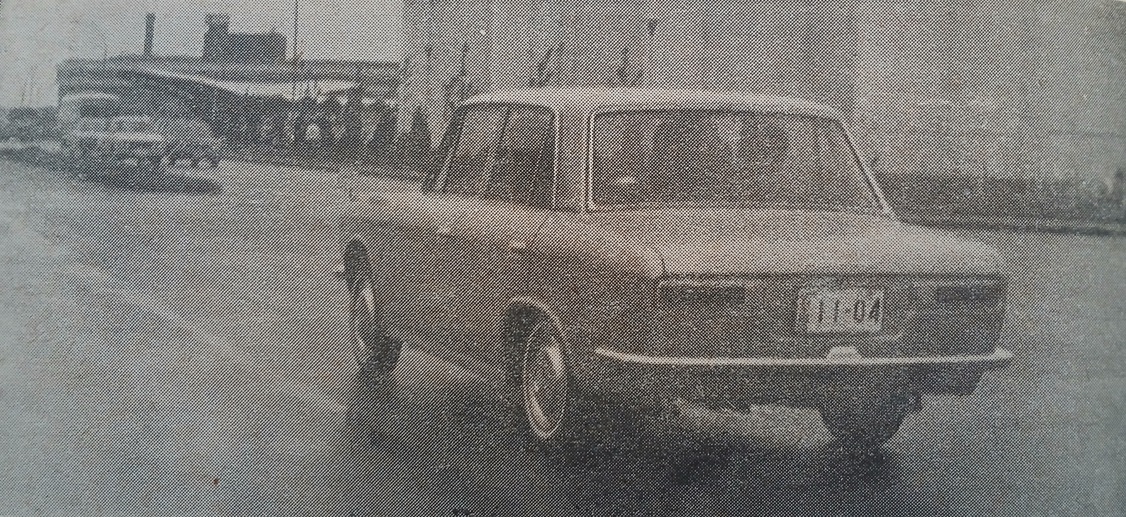
The waistline, stripped of all the objectionable moldings, is pleasing, as are the side lamps without chrome trim. The neatly finished tail end, with simple rectangular combination lamps, is also welcome.
Yet when one sees the actual car, the impression changes completely. The manufacturer calls it a full model change, but in person the image of the old car remains, no matter how one looks at it.
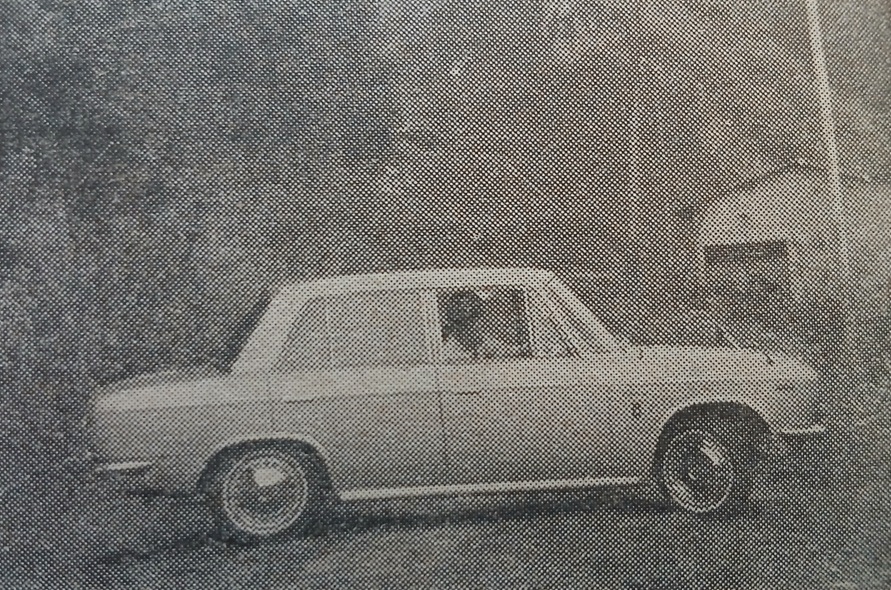
Why should it give such an impression? First, it is because the treatment of the front and rear windows and the area around the doors has hardly changed at all. Unlike a catalog photograph, when one sees the actual car one’s eyepoint is level with the upper half of the body, and it is probably the silhouette of this area that determines the overall impression.
Compared directly with the old model, the new car is clearly different: the front fender line is lower and longer, the rear window is more steeply inclined, and the trunk lid also slopes downward toward the rear. Nevertheless, the designers’ “Dynastream Line” gives a somewhat dated impression, putting the car at a disadvantage in terms of commercial design.
Safety Almost to the Point of Luxury
The old model already offered a relatively high level of safety, but the new model, responding to the demands of an age increasingly concerned with the “safety car,” is almost lavishly equipped in this respect.
There is a wealth of safety equipment: the dashboard, with thick crash padding throughout, along with the padded roof and interior trim; optional three-point seat belts and headrests; a large rear-view mirror designed to break away on impact; safety grips in three locations; anti-burst, push-button door locks; and a Zonelite windshield.
More elaborate still is the tilt steering wheel. Its two spokes are heavily padded to protect the driver in a frontal impact. Even out of sight beneath the dashboard, the area that might be struck by the knees is covered in plastic as an additional safety measure. This is one of the areas that presents the greatest difficulty in protecting front-seat occupants of small and medium-sized cars against frontal impacts. Presumably, the final shapes were determined through repeated crash tests using dummies, with suitable impact areas provided for both the head and knees.
Particularly noteworthy is the fender-mounted side mirror which, although fitted only to the 1500cc model, has a flexible mounting stalk, extending the safety consideration even to pedestrians.
Driving Impressions
That will do for the showroom-style inspection; it is time to move on to the road test. With the time available, I decided to concentrate this product-oriented test on such matters as vibration and ride comfort, accommodation, and ventilation.
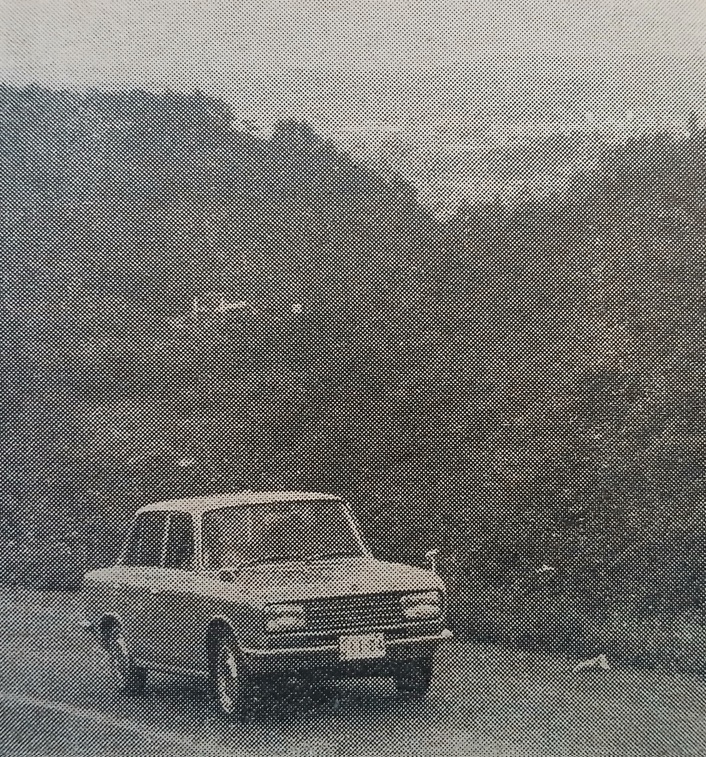
For the test route, therefore, I drove around the hilly districts of Ome and Itsukaichi in the Santama area on the outskirts of Tokyo.
First, the increase in engine capacity to 1200cc naturally gives stronger acceleration than before, but what impressed me was the positive engagement of the diaphragm clutch, which enables a dynamic style of driving.
Cars in the 1000cc class often record good 0-400m acceleration times, yet when accelerated hard they produce so much noise from the engine and through the body that it becomes tiresome. The new Colt, despite its small size, accelerates with a solid, substantial feel.
Overtaking acceleration in top gear is also quite adequate. Even with four people on board, I could easily overtake on narrow, busy roads without feeling any particular need to downshift.
The ride is also good. Perhaps partly because of the longer wheelbase, there is none of the pitching that so often troubles small cars, nor any body-jarring shock when the car drops into a depression in a roughly surfaced road.
The brakes, too, operate smoothly and with good stability, and the stopping distance does not increase unduly even from relatively high speeds. Pedal effort at low speeds is rather high, however, which led me to suppose that the brakes might be of the twin-leading or leading-trailing type. When I was later told that they were actually duo-servo at both front and rear, I was again impressed.
With the Tomei and Chuo expressways nearing completion, Mitsubishi is said to have continued its research into brake linings, eliminating the instability that is the weakness of the duo-servo system while retaining its characteristic light pedal effort.
The steering, too, uses a variable gear ratio so that it is lighter for large steering inputs but somewhat heavier through small angles, thereby improving stability at high speeds. The effect could be clearly felt at the wheel.
I drove particularly hard over a twisting mountain road, and although the tires squealed in protest against the cornering forces, the body remained stable and the steering had just the right amount of weight; there was not the slightest feeling of uneasiness.
Compared with the old model, the improvement is such that one would hardly recognize it as the same car. Indeed, its high-speed performance is so good that the image suggested by the body styling, and even by the Colt name itself, almost works against it. One could say that its aerodynamic body lines do express this performance, but perhaps because we have become accustomed to the semi-fastback and wedge shapes of other cars, it nevertheless seems to lack modernity.
On the other hand, considering that the Colt 1000F is a fastback, sporty model aimed at younger buyers, this car’s styling has a certain subdued refinement that should appeal to somewhat older users. As a model one class above, perhaps this is as it should be.
The Interior
Open the door and settle into the driver’s seat, and compared with the somewhat ordinary body styling, the interior is truly excellent.
Everything from the steering wheel to the dashboard, including the instruments, is unified in black, while not only the top but also the sides and underside of the dashboard are finished in crash padding or molded plastic.
There are some similarities to the interior of the latest Debonair, but the design is original, and it not only looks luxurious but also shows a great deal of consideration for safety. Moreover, all the frequently used switches and levers have been grouped together on the steering column.
This is an arrangement often found on European cars, particularly French ones, but thought has also been given to identifying the switches and levers with pictorial symbols and distinguishing them by shape, so that the driver is less likely to make a mistake.
The seat cushions are also very well finished, and the seating comfort is excellent.
It is good, too, that the insides of the doors are trimmed over as wide an area as possible, leaving little exposed metal. Particularly effective is the thick padding extending from the headlining around its edges, which not only contributes to safety but also helps create a more pleasant atmosphere inside the car.
The large glove box beneath the dashboard, the console-like center tray, and the door pockets are further examples of the detailed attention paid to practicality and ease of use.
In short, the new Colt’s outward body styling may not make a particularly striking impression, but once one sits in the driver’s seat, it becomes apparent what an excellent car it really is.
Accommodation
Remembering that the old Colt 1100’s front seats were only just satisfactory and its rear seat cramped, I checked the interior space and found that, like the interior design, this too has been much improved.
Even with the front seats moved all the way back, sufficient legroom remains for the rear-seat passengers. For a car with a flat-deck body style, it is very cleverly packaged.
Looking into how this space had been obtained, I found that the fore-and-aft dimension of the passenger compartment—from the windshield to the rear window—has been increased slightly. In addition, the dashboard has been positioned farther forward and made relatively shallow.
Compared with other cars whose semi-fastback body styling makes them look spacious even though their usable seating dimensions are actually rather limited, the new Colt does not look particularly spacious at first glance, but once seated it proves genuinely roomy.
In width, however, the flat side windows are exactly the same as those of the old model, so the car does not feel particularly wide, either in appearance or in actual space. Still, while cars in this class are rated for five passengers, if one regards them as four-seaters in practical use, the width should be sufficient. Even so, it would be better to adopt the currently fashionable curved-glass side windows.
Interior ventilation is also effective. Thanks to the large air outlet located ahead of the trunk lid, even at a low speed of 40km/h with all the windows closed, a strong flow of outside air comes through the personal ventilators at either end of the dashboard. Moreover, since the rear cabin outlet is located in the center of the rear shelf rather than in the quarter pillars, it presumably also has some de-misting effect on the rear window.
I tried switching on the heater fan, and its noise was relatively low. When a car’s interior is quiet on the move, fan noise tends to become more noticeable, but in this car the problem has been very successfully overcome. Particularly worth mentioning is the fact that the rear side windows on the two-door model can be raised and lowered.
From the Standpoint of Product Value
Now, looking back over the results of the tests and checks described above, let us sum up the product value of the new Colt 1200:
Features That Appeal to the User at First Sight
- A wide selection: both the 1200 and 1500 series include a van, while Standard, Deluxe, Custom, and Sport models are available with either two-door or four-door bodies.
- The low, stable-looking front grille, and particularly the wide, elegantly styled and distinctively shaped headlamps.
- The clean waistline without side moldings, and the flush-fitting door handles.
- The low, wide appearance of the rear, along with the large combination tail lamps.
- A tilt-adjustable steering wheel like those found on large luxury cars, along with a luxurious console design.
- The lavish interior treatment, with thick safety padding and a fitted headliner.
- Safety equipment including three-point seat belts, integrated headrests, safety grips, and a safety rear-view mirror.
- The reassuring sound of the doors closing.
Qualities That Reveal Themselves on the Road
- Excellent ride and freedom from vibration, particularly the lack of pitching and the absence of road shock.
- Its quietness: engine noise, gear noise, tire noise, interior resonance, and wind noise have all been reduced to the point that none is bothersome.
- The easy reach to the switches and levers grouped around the steering column, along with the design policy of identifying them by symbols and shape to reduce the possibility of mistakes.
- Steering and brakes that provide excellent high-speed stability. The feel of the duo-servo brakes in particular is outstanding.
Points That Work Against It as a New Model
- The angle and shape of the windshield and rear window remain almost unchanged from the old model, weakening the impression that this is a new car.
- Because the side windows are flat, the car does not convey an impression of being wide or low, even though it is not actually narrow in terms of dimensions.
- It photographs well from a low camera angle, but viewed from normal eye level, the unchanged passenger-compartment section of the body makes it look like no more than a minor change.
- The engine, too, has been completely redesigned, and Mitsubishi Motors, a pioneer of the high-camshaft engine, has improved it down to the smallest details. Rather than developing power through engine speed, it does so through torque, and it is quieter as well. However, these virtues are unlikely to be appreciated by anyone but an expert.
In short, although the new Colt has undergone a full model change, such fundamentals as its flat-deck body style, high-camshaft engine, and wishbone-front, rigid-axle-rear suspension remain entirely unchanged from the old model. Along with the fact that it lacks any single feature that can serve as a catchphrase for the new model, this puts the car at a considerable disadvantage as a product.
On the other hand, upon taking the wheel and driving it, one is surprised all over again by just how good a car they have made. The new Colt has been so thoroughly improved that hardly a trace of the old Colt remains.
Whether one calls it Mitsubishi’s way of doing business, or simply its tradition, I was left more strongly than ever with the impression that its established way of doing things—put sound engineering first, build a good car, and it is bound to sell—is reflected in this car, for better or worse.
Postscript: Story Photos