Mazda Luce Rotary Coupe (1969)
Publication: Motor Magazine
Format: Test Drive Report
Date: December 1969
Author: Jun Narue
Luce Rotary Coupe: The Prestige Car of the Series
We suspect that many of the owners who have lived with the Familia Rotary Coupe for some time have already reached a certain level of satisfaction with the rotary engine itself–or perhaps arrived at a practical compromise with its characteristics–and now have even greater expectations for advances in the car’s styling, chassis, and overall class. It is probably fair to say that “rotary-ization” has now reached the point where it ought to enter a second phase of development and refinement.
Just as NSU evolved from the Spider to the Ro80, and as Daimler-Benz produced the mid-engined C111 rotary prototype sports car, the level of rotary-engine development today seems to be advancing at a rapid pace. It was perfectly timed, then, that we were finally given the opportunity to test the Luce Rotary Coupe RX-87, which has now entered full-scale production.
A Styling Leader
To establish a strong image for the rotary engine–and to impress upon buyers the pride of possessing the latest technology–there could hardly be a more effective approach than to create a truly beautiful styling leader. Because the rotary engine is so compact, it is possible to adopt fashionable Italian-influenced coachwork without great difficulty. At the same time, generous cabin space can be provided even in a relatively compact car. These are advantages that should be exploited to the fullest.
The Bertone styling of the Luce four-door sedan can no longer be called especially fresh today, yet many owners were undoubtedly captivated first by its familiar, softly flowing body lines. Indeed, this graceful styling has always been the primary appeal of the Luce.
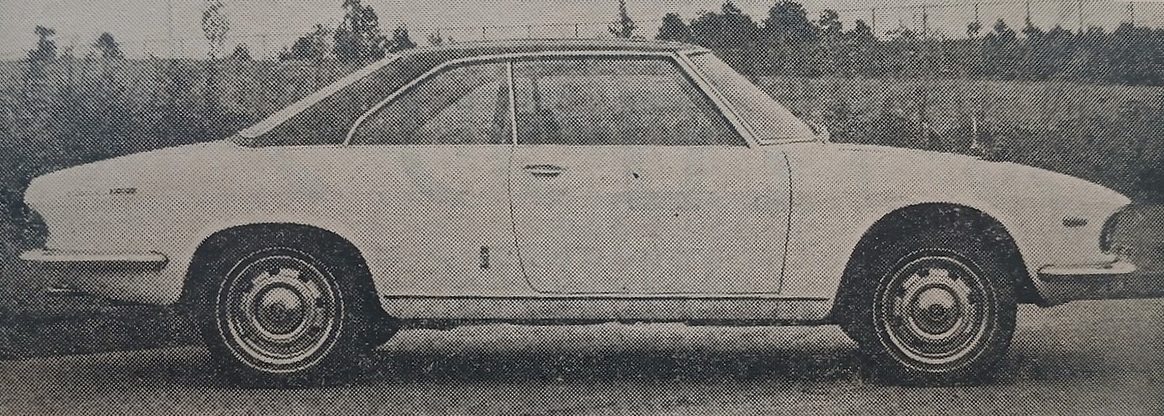
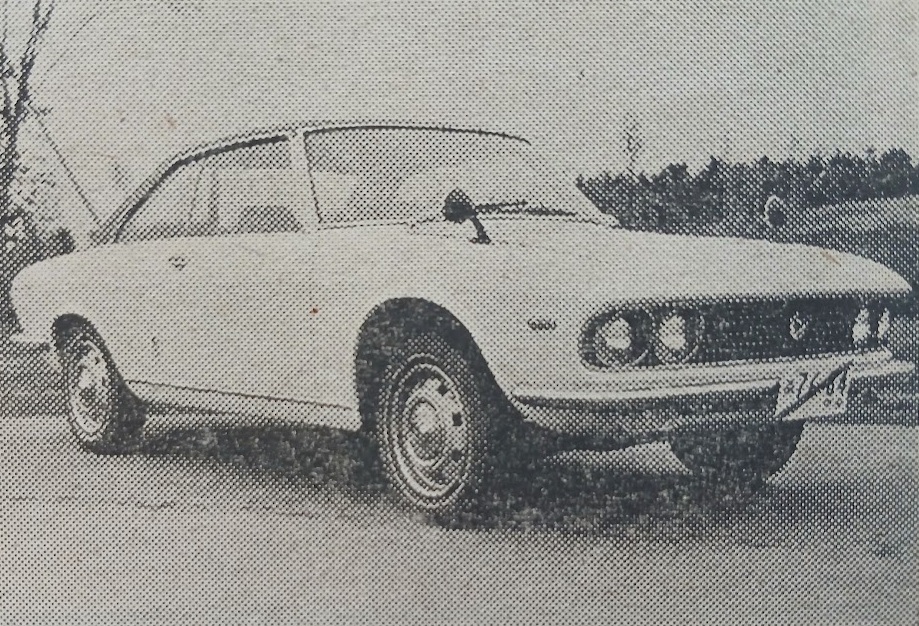
The Luce Rotary Coupe reinterprets the sedan’s design theme as a two-door hardtop, and it gives the impression of a style that has been brought fully to completion. If there is one regret, it is that the design no longer feels especially new.
The body itself appears a class larger than it actually is. The striking hardtop roofline gives it a dignified presence comparable to that of a 2-liter-class car.
The test car was the Super Deluxe model: the most expensive version in the range, priced at 1.75 million yen and painted light ivory, with a leather roof, power steering, and air conditioning.
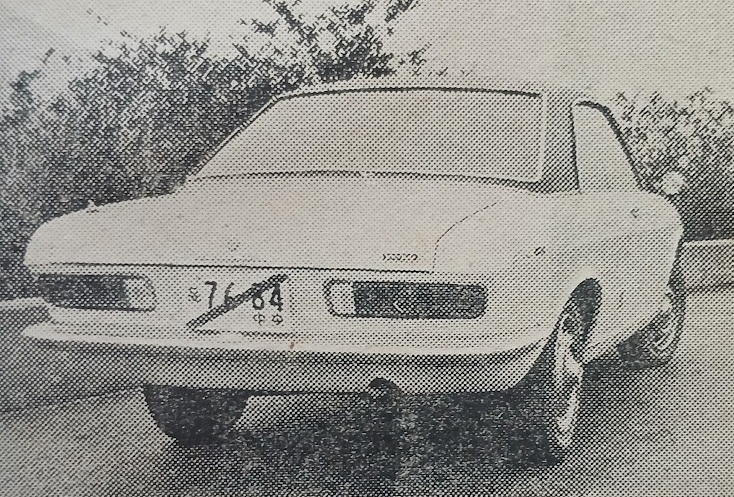
The Luce identity has clearly been retained, and the resemblance is immediately recognizable. At first glance, it gives the impression of being simply a two-door hardtop version of the Luce sedan. In reality, however, almost no body pressings are shared, and the level of detail finish is unmistakably more sophisticated.
The seats, for example, are upholstered in a subdued green velour with a notably soft feel. Their generously thick backrests, deep cushions, and excellent support give it something of the classical atmosphere of older European luxury cars. These days, when one usually finds PVC upholstery as far as the eye can see, the Luce Coupe’s soft, richly tailored ambiance stands out memorably.
The thickly padded door trim is also very well executed. Particularly impressive is the large door-mounted handgrip integrated into the armrest design. The rear bench seat incorporates a folding center armrest. The shape of the seat itself is exceptionally good, recalling that of a high-class sedan. Unless the front seats are slid fully back, even adults can ride in the rear seat in reasonable comfort. Headroom, however, cannot be called generous.
One interesting detail is that by opening the zipper in the armrest storage section, it becomes possible to retrieve items directly from the trunk compartment.
A Comfortable Driver’s Seat
Settling into the driver’s seat, visibility is excellent thanks to the low front and rear fenders, and the expansive glass area creates a bright, pleasant driving atmosphere.
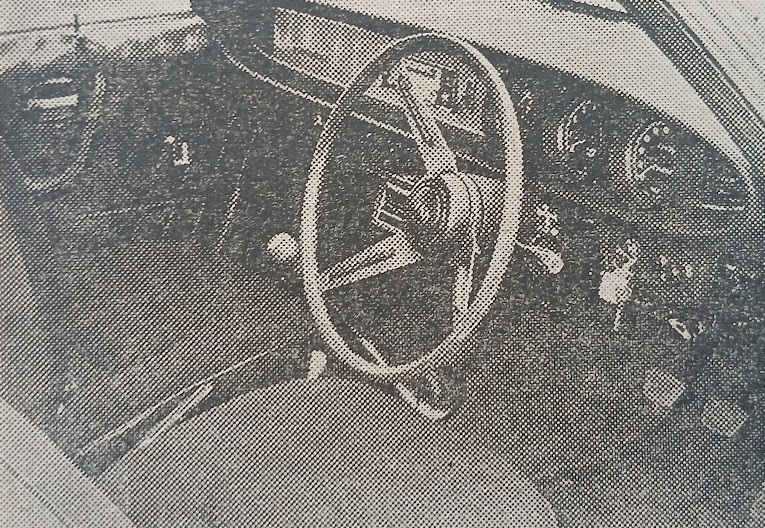
Naturally, the seats feature full reclining adjustment, and together with the three-position tilt steering wheel, it is possible to tailor a genuinely sporting driving position. Even very tall drivers are able to find a satisfactory posture.
The woodgrain steering wheel and gearshift knob both offer an appropriate grip, while the parking brake is a floor-mounted type.
The dashboard follows the familiar Luce design, though finished in black, with substantially thicker upper and lower padding. At the center sits an 8000rpm tachometer, marked with a yellow zone beginning at 6000rpm and a red zone from 6500rpm onward. To the right is a speedometer reading to 200km/h, while a combination gauge incorporating the clock and auxiliary instruments is on the left.
The dashboard of the Super Deluxe was fitted with a fairly bright stainless-steel trim panel. While this may reflect prevailing tastes, one cannot help feeling that a subdued woodgrain finish would convey a greater sense of luxury. It is not distractingly flashy, yet while this treatment might be perfectly satisfactory when it comes to furniture design, in an automobile–constantly subject to changing light while in motion–its qualities may prove difficult to appreciate.
Another factor contributing to the Luce Coupe’s excellent cabin comfort is its highly effective ventilation, heating, and air conditioning. In addition to the central outlet beneath the dashboard, the air conditioning system supplies air through vents positioned at both ends of the dash. Fan speed is controlled by a three-position switch.
The Luce Coupe’s air circulation is extremely effective, and the heater distributes warm air throughout the cabin almost immediately.
In any case, the Luce Coupe’s excellent air-conditioning system makes vent windows seem entirely unnecessary. The comfortable cabin atmosphere it creates deserves high praise.
The engine is remarkably quiet. At idle, one almost has to check the tachometer to confirm that it is even running, as the sound of the electric clock and the idle note blend together in a pleasing unison.
A New 655cc × 2 Rotary Engine
The Luce Coupe’s 13A rotary engine was newly designed specifically for this model, and has a displacement of 655cc × 2, a compression ratio of 9.1:1, and a Stromberg downdraft two-stage four-barrel carburetor. Output is rated at 128ps/6000rpm, with maximum torque of 17.5kgm/3500rpm. (For comparison, the Cosmo’s 491cc × 2 rotary produces 128ps/7000rpm, while the Familia Coupe’s 491cc × 2 unit develops 100ps/7000rpm.)
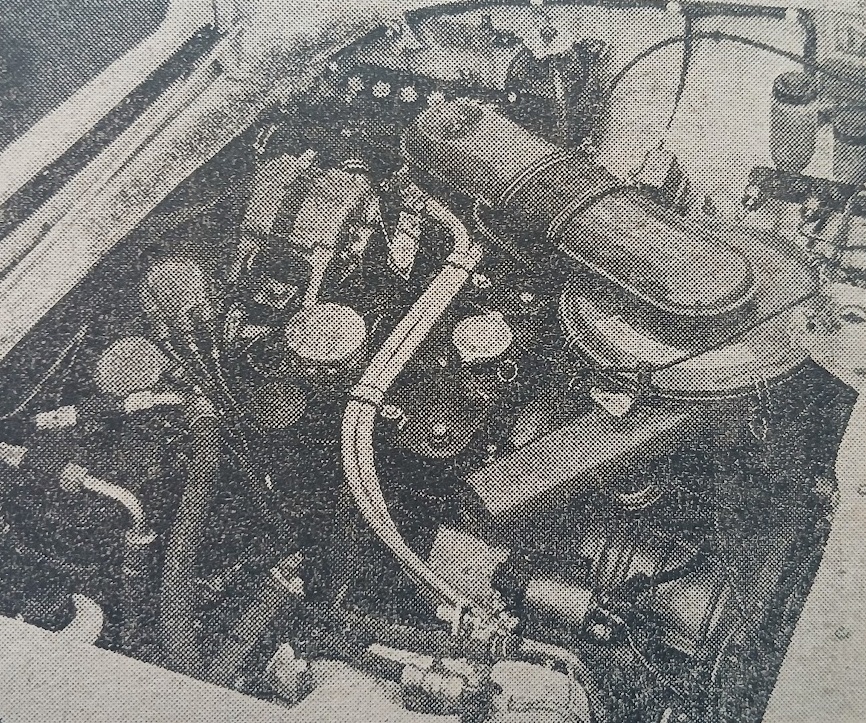
As usual with a rotary engine, the compact unit itself is almost dwarfed by its auxiliary equipment, with the twin distributors, air cleaner, air-conditioning compressor, and other components dominating the engine bay.
The dual-circuit power brake fluid system and battery are both easily accessible for inspection, though reaching the four spark plugs still requires bending down awkwardly.
Even at high engine speeds, the sound remains characteristically subdued, and the rotary spins effortlessly higher the more one presses the accelerator. Unlike a reciprocating engine, it gives none of the familiar signs–such as valve noise when approaching its limits–that warn the driver of overrevving. Particular caution is therefore required in this respect.
Mazda has attempted to prevent overrevving by fitting a warning buzzer that sounds once engine speed exceeds 6500rpm. In addition, the secondary throttle valves close as a further protective measure. As a result, if the driver attempts to maintain high engine speeds for sustained racing-style driving, the buzzer becomes a constant companion.
The 200km/h speedometer is somewhat crowded and not especially easy to read, but once accustomed to it–simply remembering reference points such as “needle straight up equals 100km/h”–it presents little real difficulty in ordinary driving.
As expected, the aerodynamic body shape proves highly effective, and wind noise is low. The power steering, while certainly useful in city driving, feels excessively light. Once one settles into sustained driving, this becomes less of a concern. Even so, it still seems that a more connected steering feel could have been achieved. Recently, even American cars have increasingly begun to adopt power steering systems with genuinely good feel. The era when power steering merely had to be foolproof and low-effort should already have passed.
An FF Car Without FF Bad Habits
Overall, the Luce Coupe is extremely comfortable in sustained high-speed driving, and it is one of the few cars that does not leave the driver feeling fatigued.
Naturally, its 190km/h maximum speed is not something that ordinary driving requires. Even so, with this Luce Coupe, it finally feels as though Mazda has provided a chassis capable of making full use of the high-performance rotary engine. Mazda’s decision to adopt front-wheel drive for the first time also seems to reflect an intention similar to that of the NSU Ro80: first establishing a stable, trustworthy chassis with sufficient reserve capacity, then allowing the rotary engine’s performance to be fully exploited.
Indeed, this is the aspect of today’s high-performance rotary cars that interests us most. There has always been a contradiction in claiming performance comparable to that of reciprocating engines with twice the displacement, while installing these rotary engines into existing small-displacement chassis and bodies with almost no modifications. It seems to us that this imbalance has acted as a brake on rotary cars earning wider acceptance as practical vehicles.
After testing the Luce Rotary Coupe, however, we came away with the feeling that it might finally be possible to reconsider some of those earlier views.
Both speed and acceleration continue to display the excellent feel that is characteristic of the rotary engine, while the weight distribution afforded by the front-wheel-drive layout and the braking performance are extremely well matched. In that respect, the feel of the power steering becomes all the more regrettable, since in every other area the car delivers sensations clearly exceeding expectations. (Power steering is optional on all models except the Super Deluxe.)”
On the Hakone Turnpike hill climb, the car demonstrated exceptionally satisfying road holding. Despite its relatively soft ride, body roll was milder than expected. The effect of the radial tires was clearly apparent in cornering, especially when accelerating out of bends.
Pushed hard, the strong understeer tendency characteristic of front-wheel drive can certainly be detected, yet it never becomes especially pronounced. For ordinary owners, the overall setup is extremely safe.
Under heavy braking, directional stability was exceptional. The sensation of the car sinking firmly into the road surface is exactly the kind of feel that is most desirable in high-speed braking.
One thing that became apparent after sustained high-speed driving was that the backfiring we noticed during testing of the Familia Rotary Coupe did not occur even once in the Luce Coupe.
The occasional soft “pabasuun, pasuun” sensation of light misfiring had been a source of no small concern. However, the test car was fitted with the specified B-8EE spark plugs intended for high-speed driving, and it is evident that considerable study has gone into spark plug selection this time around. For ordinary driving, B-7EE plugs are specified, while B-9EPD plugs are recommended for circuit use.
Rotary engines are far more sensitive to spark plug selection than reciprocating engines, and for that reason owners must first choose plugs appropriate to their driving conditions.
The owner’s manual provides a thorough and helpful explanation on this subject.
On rough roads, the Coupe remained impressively capable. Ground clearance is 185mm, yet because the nose appears so low, one tends to worry about scraping the underside. In practice, however, the car demonstrates excellent performance on rough surfaces.
The suspension consists of double wishbones with telescopic dampers and torsion rubber springs at the front, while the rear uses a semi-trailing arm arrangement with coil springs. It is an impressively costly and conscientiously engineered setup, and one that reveals an important aspect of this car’s character.
The Luce Rotary Coupe possesses a refined atmosphere that is worthy of the flagship of Mazda’s rotary series, and in addition to Mazda’s existing customer base, great expectations can be placed on expanding sales to older buyers who prefer a more upscale character.
Working with the same rotary-engine challenges, Mazda has raised its level of engineering to a degree beyond comparison with its earlier efforts, while demonstrating a much better understanding of what a rotary-powered car ought to be and giving the car an excellent overall setup. Only with this level of engineering can the rotary engine’s true value finally be realized and accepted widely as a genuinely complete product.
Postscript: Story Photos