Mazda Luce Hardtop GS II (1973)
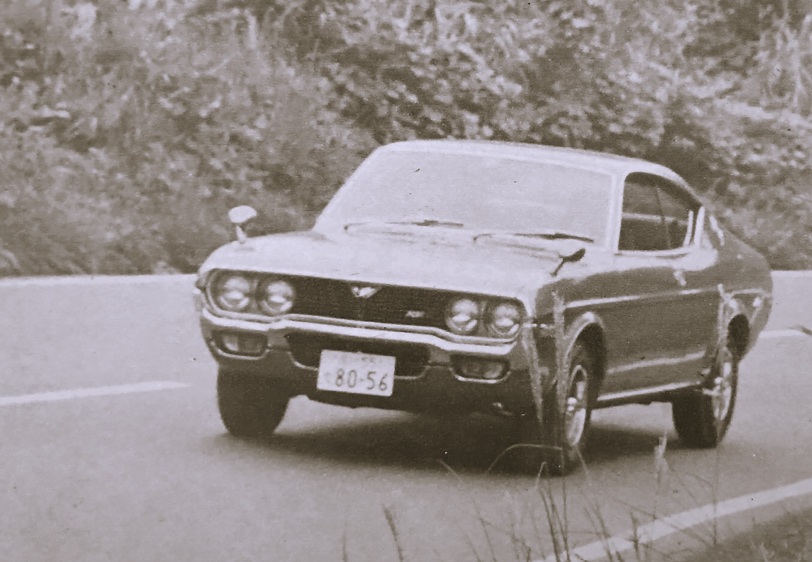
Publication: Motor Fan
Format: Test Drive Report
Date: December 1972
Author: Kyoichi Yamaguchi
Its True Abilities Emerge on a Long-Distance Run
The new Luce was created with the full resources of Toyo Kogyo behind it. Naturally, it has a rotary engine. Here is our initial report, examining its hidden capabilities in detail.
A Concentration of Mazda Technology
The Luce is a car that brings together the ideas and trends in planning, design and development that Toyo Kogyo has demonstrated in several models over the past two years, and a clear line of development can be traced through them.
First, the Capella. This produced the 12A, currently the best rotary engine in terms of both performance and feel. The Mazda Pollution Control System fitted to the 12A was an improved and refined version of the emission-control system developed for the 10A engine of the US-export Familia Rotary (R100). Following the RX-2 (Capella), the 12A with this system has also been installed in the RX-3 (the US-export Savanna) from this season. The Mazda REAPS (RE Anti-Pollution System), introduced here on the Luce, is likewise a domestic version based on this system. Besides being a front-runner among emission-controlled engines, it has also been the driving force in racing successes such as Japanese Grand Prix class victories with the Capella and Savanna RX-3.
The early Capella had a stubbornly understeering character, while its 155SR-13 tires and 4J wheels were also somewhat inadequate. Here too, however, steady improvements followed, with the GS II adopting 165SR-13 tires and 4.5J wheels. With the G series came the RE-Matic, an automatic transmission manufactured by JATCO (Japan Automatic Transmission Co.). The “potential” offered by the GR RE-Matic—its suitability for the emission-controlled engines that would soon appear—was one of the major reasons it received Motor Fan’s Car of the Year award.
Next came the Savanna. This was the work in which Mazda’s designers, long under the spell of Giugiaro’s flowing elegance, suddenly awakened to a sense of “wildness.” With its Mustang-like nose and honeycomb grille, and air ducts reminiscent of a reptile’s dorsal fin, it succeeded—regardless of the design’s merits or whether it is to one’s tastes—in creating a powerful impression of being a “different car” from the reciprocating-engined Grand Familia.
I have long felt that introducing rotary- and reciprocating-engined versions of the same car at the same time is not a wise policy. There can be few cars as underrated as the Capella 1600, despite its excellent basic qualities and balance. In this respect, helped in part by the advantage of its price class, the Grand Familia has managed to coexist successfully with the Savanna by establishing an image as a “different car.”
In width and track as well, the Savanna succeeded in breaking through the conventions of its class. It is wider than its big brother, the Capella. Greater body width and track are desirable both for improving handling and stability and for accommodating an emission-controlled engine.
Every Mazda passenger car from the Chantez to the Capella, with the exception of the made-to-order Cosmo, uses the same type of MacPherson-strut front suspension. At the rear, however, an interesting progression can be seen. Having successfully used a four-link arrangement with a Panhard rod on the Capella, Mazda’s engineers returned to leaf springs for the Savanna. Their reasoning was that excellent handling could be achieved as long as the axle was firmly located; on the Savanna they used a system called “bias-mounted dampers.” The same arrangement has also been carried over to the Chantez.
This introduction has become rather long. What I wanted to explain is that the new Luce represents the accumulation and further development of all these currents of thought and technical trends. The test car was the Hardtop GS II, the high-performance model combining the 130ps engine with a 5-speed gearbox.
Powerful Impression Throughout
Although Toyo Kogyo introduced a hardtop relatively early with the previous Luce Rotary Coupe, it seems to have been extremely cautious about reintroducing this fashionable body style. With rollover safety in mind, it deliberately resisted the trend with the Capella and Savanna, using pillars on their coupe bodies. This could be considered sound engineering judgment.
The reason for returning to the hardtop with the new Luce, we are told, is that quite apart from commercial considerations, Toyo Kogyo had also become confident of achieving sufficient—and “appropriate”—body rigidity from an engineering standpoint.
What does “appropriate” mean? Insufficient rigidity leads to undesirable effects such as vibration and noise. On the other hand, if rigidity is too high, deformation at points where stress is concentrated can lead to cracking. The idea is to strike a proper balance between these two characteristics. Target values were established for torsional and bending rigidity between the axles, and these are said to have been achieved. I expect the story behind this development will eventually be covered in this magazine.
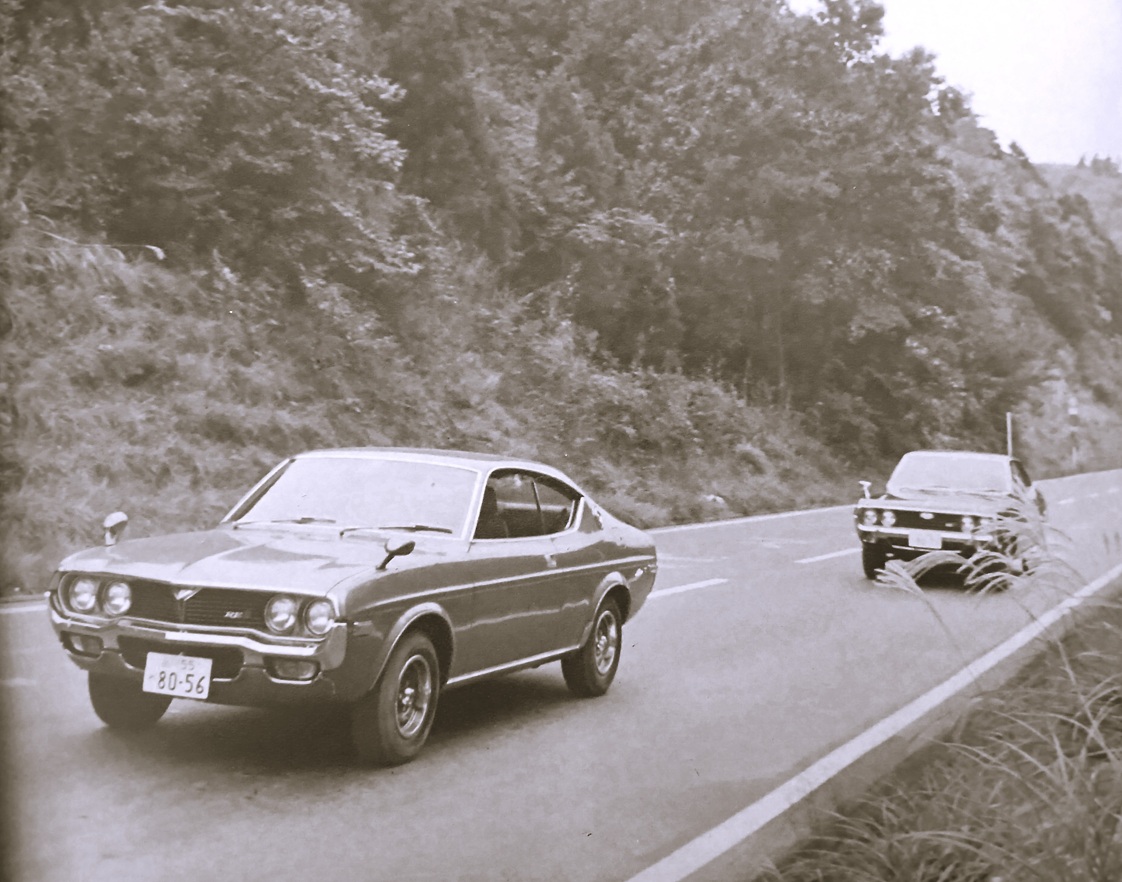
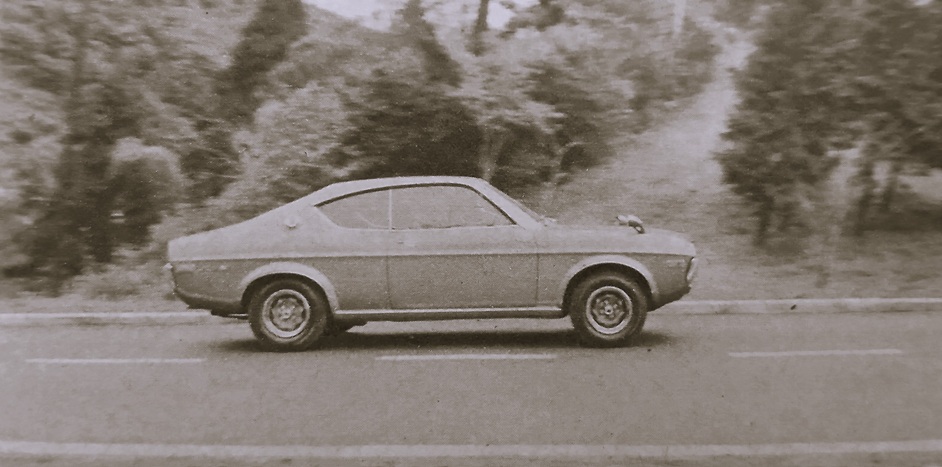
One thing I found especially pleasing was that this car does without the vast, panel-van-like rear quarter panels that have been adopted almost universally on recent hardtops. The rear window and quarter-panel treatment clearly follows the Capella design. The panels are necessarily wider than the Capella’s, but even so, they do not create blind spots as large as those in the new Skyline or Mark II.
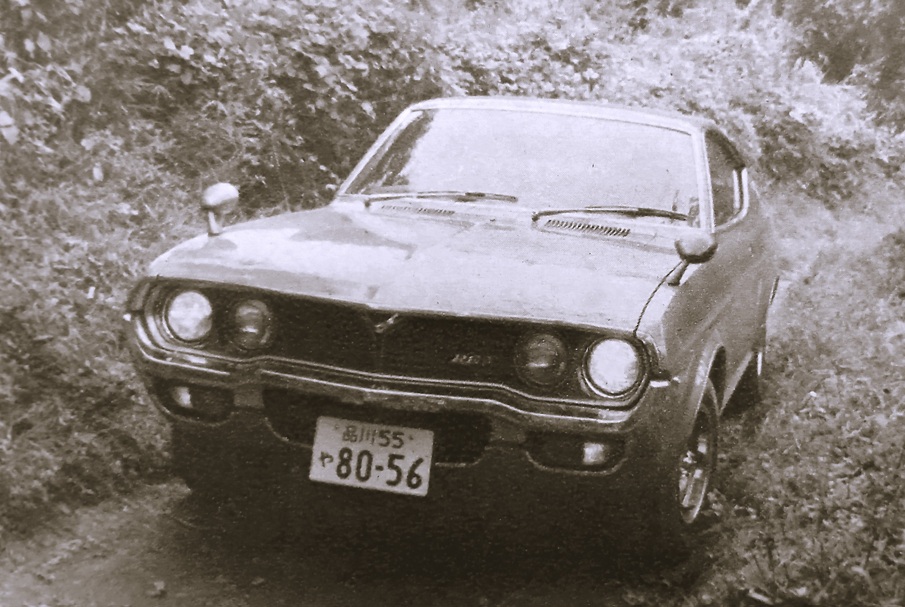
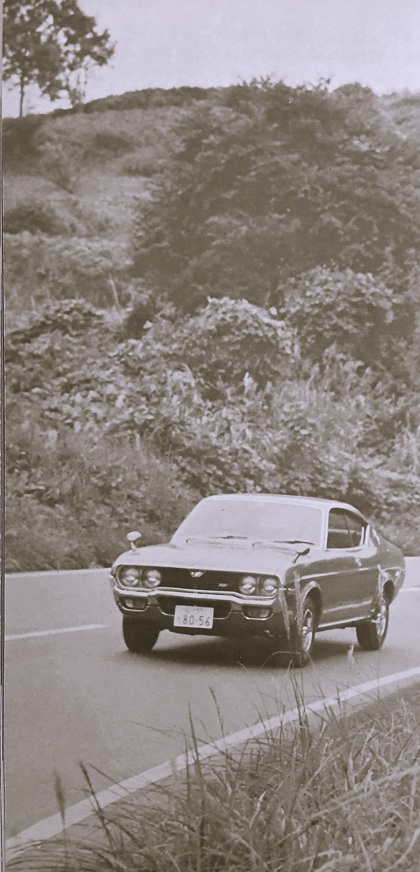
The basic styling is orthodox, but the boldness of the lines throughout gives the car a powerful presence. The widely flared wheel arches, necessary to accommodate the enormous B70-13 tires (equivalent to 195/70-13 radials) on 5J wide-rim wheels; the “crisp” line (“crisp” meaning something like sharp and dynamic) running almost straight along the length of the sides; the large bumper integrated with the deeply sculpted grille; and the large air intake opening beneath it—all are deliberately emphasized. The so-called “finisher” panel at the tail, however, is too ostentatious, while the unusually high edge of the trunk lid works against its practicality.
The body is also wide, at 1665mm, but this should be understood as necessary to cover a track width of 1380mm at the front and 1370mm at the rear, dimensions in the Crown and Cedric class. The relationship between track and overall width makes it clear that the reason for making the body so wide was not to provide the cabin width expected of a medium-sized car.
The wide track and ultra-low-profile tires are presumably intended primarily to bring a major improvement in handling and stability. They also allow a wider engine compartment. With a rotary engine, which is short in overall length, it is width that is needed most. An emission-controlled engine fitted with a thermal reactor, and consequently generating a great deal of heat, especially demands plenty of space. The large opening in the nose is also essential for cooling the engine compartment.
On the other hand, the overall length of 4320mm has been kept relatively compact. The six-cylinder cars from the “Big Two,” which will naturally be its rivals, have begun to become ponderous because of their length. Toyo Kogyo deserves credit for resisting the temptation to compete with these cars in overall length.
Front Seats with an Excellent Feel
The test car’s interior was coordinated in shades of blue to match the sapphire-blue metallic exterior. The color coordination extends from the carpeting to the headlining, and includes the dashboard as well. The dashboard design has departed from the symmetrical layouts of the Capella and Savanna in favor of a more conventional asymmetrical design. In the GS II it is a “cockpit” type, with a large, curved instrument panel that wraps around the driver. The large center console also has a sense of continuity with the instrument panel. Surely, this is exactly the sort of luxurious and “functional” atmosphere that owners in this class are looking for.
There are fresh-air inlets at either end of the dashboard. The passenger-side inlet is a vertical rectangle, while the driver’s is the round eyeball type. In my experience, the simpler eyeball type seems to provide a greater volume of air. On cars equipped with air conditioning, cool air is delivered through these dashboard inlets as well as through the louvered outlets in the console. The new heater/ventilation system follows the “cool head, warm feet” principle, supplying cool air through the defroster/demister outlets and warm air to the footwells. It is also said to provide excellent demisting—though I had no opportunity to test this—and to be a comfortable system for the occupants.
A small, currently-fashionable overhead console is also fitted. It contains warning lights for the doors and seat belts (the latter remains illuminated for 20 seconds after a door is opened), a fuel warning light (appropriately enough for a rotary, this comes on with about 10 liters remaining), as well as the interior light and map light.
The steering wheel is an elaborately styled four-spoke type, with two horn pads positioned within easy reach of the fingers.
Mazda persisted with imitation-wood steering wheels on the Capella up through the GS II, but for the Luce it has adopted urethane, which feels far better in the hands. The wheel’s 400mm diameter is relatively large, but the thickness and position of the rim are quite satisfactory. The lighting and wiper controls use the familiar Mazda arrangement, operated by two levers on either side of the steering column. The main light-control lever, however, has been lengthened and is now easier to use. On the GS II an intermittent position has also been added to the wiper control. It wipes once every five seconds and is useful in light rain.
What I liked most about the GS II was its front seats. They are semi-bucket seats with high backrests, upholstered in what is described as a “moquette” fabric that is warm and very pleasant to the touch. The integral head restraints inevitably obstruct the view for rear-seat passengers, but in a hardtop that gives priority to the front seats, they will simply have to accept it. In the sedan, greater consideration is given to the rear-seat passengers, and the front seats have separate, height-adjustable head restraints.
One more item I’d like to mention regarding interior equipment is the radio. In the GS II, Mazda has gone to the expense of providing an AM/FM multiplex stereo radio and an 8-track tape deck. In areas with strong signal reception, FM broadcasts can be enjoyed in stereo. Naturally, a windshield-integrated antenna with excellent FM reception is standard. It is the sort of audio system I was unable to create in my own Savanna (introduced on page 82). It is easy to understand why the designer aptly called this a “Clubman’s Interior.”
Proven 130ps 12A Engine
The engine is the 12A, a twin-rotor unit with a single-chamber displacement of 573cc × 2. More than 130,000 have already been produced. The version used in the GS II (and GR II) is known as the Type 3, and develops a maximum output of 130ps/7000rpm and maximum torque of 16.5kgm/4000rpm. Incidentally, the standard 120ps/6500rpm, 16.0kgm/3600rpm engine used in the Luce, Capella and Savanna GT is known as the 12A Type 1, while the Capella GS II’s 125ps/7000rpm, 16.3kgm/4000rpm version is the 12A Type 2. The carburetor is a Nikki two-stage four-barrel downdraft type, with 28mm primary and 34mm secondary bores. The compression ratio is 9.4:1. These specifications are the same for Types 1 and 2 as well.
The additional 10ps is obtained by changing the ignition advance and reducing resistance in the main silencer. Low- and medium-speed torque has not been sacrificed at all, and naturally the engine is quite happy on regular-grade low-lead gasoline. Compared with the engine in the NSU Ro80, Mazda’s rotary engine is inherently less highly stressed—in other words, its bmep is kept low—and this degree of tuning introduces no temperamental qualities whatsoever. Maximum output speed is 500rpm higher than with the Type 1, but the engine can easily be revved to this range, both “physically and physiologically.” In fact, it is almost difficult to avoid revving it that high without meaning to. Because of power units like this, I cannot take a liking to Japanese 2-liter sixes….
From a servicing standpoint, oil and coolant capacities have been increased to 5.2 and 8 liters, respectively, improving cooling capacity.
The clutch and 5-speed gearbox are based on those of the Capella GS II, with the same diameter and ratios. In the past, Mazda’s gearboxes have occasionally been found to have rather weak synchromesh. On the Luce, measures have been taken to increase synchronizer capacity, including changing the angle of the cones and giving the splines on the rings a reverse angle to ensure that the rings are pressed firmly and consistently into engagement. The lever seems to feel slightly stiffer, but this is probably a small price to pay for improved synchromesh durability. The final-drive ratio is also the same as that of the Capella GS II, at 4.111.
First-Class Braking Performance
True to the tradition of Mazda rotary-engined cars, the Luce GS II is overwhelmingly fast, and quiet as well. Since it weighs 55kg more than the Capella GS II, the manufacturer’s claimed 0-400m acceleration time is 0.2 seconds slower, at 15.8 seconds. In my own brief attempt, with the same two occupants aboard, I could only manage just under 17 seconds, but any car capable of running in the 17-second range is fast by any standard. Nor are there many sports cars or GTs that can match the manufacturer’s claimed 0-80km/h time of 5.1 seconds.
Even in a standing start from high engine speeds, the rigid rear axle, controlled by the GS II’s two torque rods, shows none of the judder known as “power hop,” while the B70-13 tires spin just the right amount for a clean start.
The new Luce’s suspension is a thoroughly conventional arrangement, with “Mazda-type” MacPherson struts at the front and a rigid axle with leaf springs at the rear. The dampers are mounted ahead of the axle in the usual manner, inclined inward to form a V. The reason for choosing this “straightforward” layout was presumably to obtain good ride comfort even in the sedan, which is more formal in character and not a performance-oriented model. Damper settings are the same for both sedan and hardtop, at 105/50kg @0.6m/s front and 200/100kg @0.6m/s rear, but the spring rates are tuned to their expected patterns of use: 1.7kg/mm front and 2.0kg/mm rear for the sedan, and 1.9kg/mm front and 2.3kg/mm rear for the hardtop. The front anti-roll bar is 21mm in diameter on all models.
The rear torque rods on the GS II (and the GR II sedan) do more than suppress the leaf-spring wind-up oscillation during hard starts, as mentioned above. The difference between the arcs described by the leaf springs and the torque rods—in other words, the geometric interference between them as the suspension moves vertically—acts as a kind of progressive-rate spring, effectively increasing the rear spring rate. The leaf springs alone have a rate of 2.3kg/mm, but with the torque rods this effectively rises to 2.6kg/mm. This increases rear roll stiffness and brings the steering characteristics closer to neutral. Moreover, the “spring rate” contributed by the torque rods is progressive in character, so it does not adversely affect ride comfort. The torque rods have one other feature: by making the amount of interference greater on bump than on rebound, they give the axle steer an understeering characteristic.
Combined with this suspension are B70-13 ultra-low-profile cross-ply tires on 5.5J rims—truly European dimensions. As an option, enormous 195/70SR-13 radials are also available. The B70 was jointly developed by Toyo Kogyo and the tire manufacturer and naturally has characteristics tailored to the Luce’s suspension. Like the Z78 used on the Savanna, it is intended to combine the cornering power of a radial with the ride comfort and low noise level of a cross-ply.
On the road, the GS II has very high cornering power, and I would describe its handling characteristics as ranging from an appropriate degree of understeer to very slight understeer. In steady-state cornering on a dry, high-friction surface, one rear wheel will eventually spin. Up to that point, the car remains controllable throughout. Roll is also relatively slight, and its cornering attitude is stable. For tires with such a large contact patch, steering effort at low speeds is also reasonable, and not excessive.
The brakes are inherited from the Capella, with French Bendix-type discs at the front and drums at the rear. Servo assistance is fitted, but there is no pressure-control valve. Having been well proven in Europe, these can be considered first-class brakes in stopping performance, fade resistance and feel.
This time, my drive amounted to no more than a very brief road impression. The Luce GS II would surely show its true abilities on a long-distance tour. It is the kind of car that makes me want to set off on a trip with enough money to fill its 65-liter tank four or five times.
Postscript: Story Photos