Mazda Luce Rotary Coupe (1969)
Publication: Motor Fan
Format: Engineering Interview
Date: December 1969
Author: Atsuhiko Okubo, Moriyuki Watanabe, Kenichi Yamamoto
The Luce Rotary Coupe and Rotaryization at a New Stage: A Visit with the Top Design Executives of Toyo Kogyo Co., Ltd.
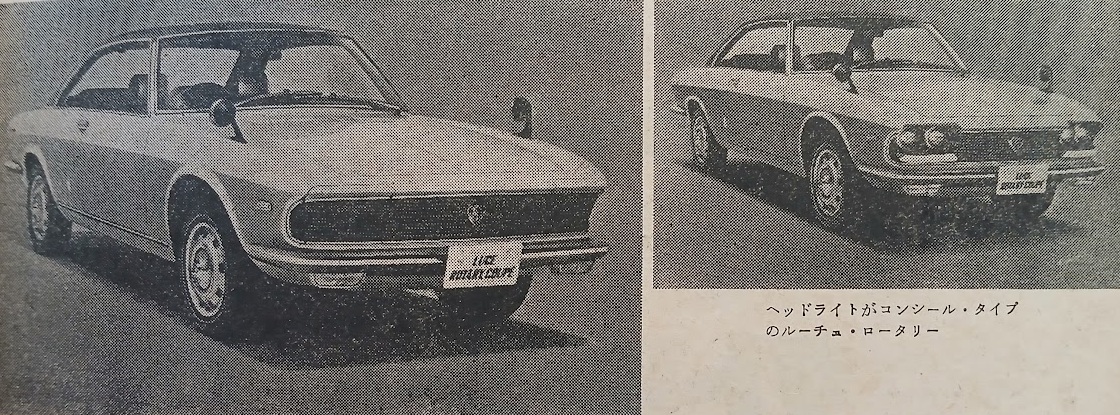
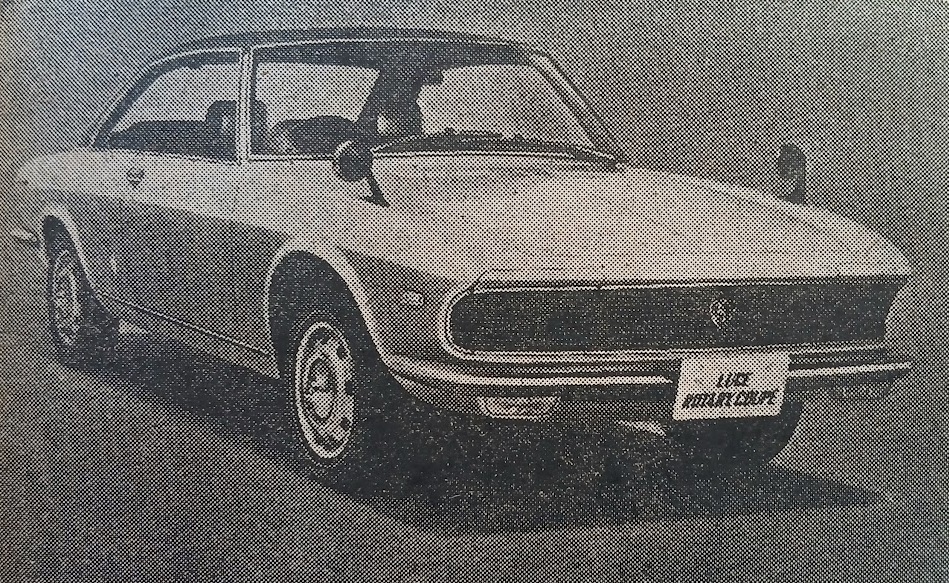
Exhibited at the Motor Show the year before last under the name RX87, the Luce Rotary created a sensation with its flowing, elegant body design and its unique combination of rotary engine and FF layout. Now, at last, it is to be placed on the market.
This car represents more than just another model in the company’s rotary-engine lineup. For Toyo Kogyo’s engineering staff, it carries significant meaning as a touchstone for the company’s forthcoming rotary offensive.
With that in mind, our editorial staff traveled to Hiroshima to interview Design Department General Manager Moriyuki Watanabe and Rotary Engine Research Department General Manager Kenichi Yamamoto, asking them about the challenges they faced during development and their views on the future direction of rotary-powered cars.
An Engine One Size Larger
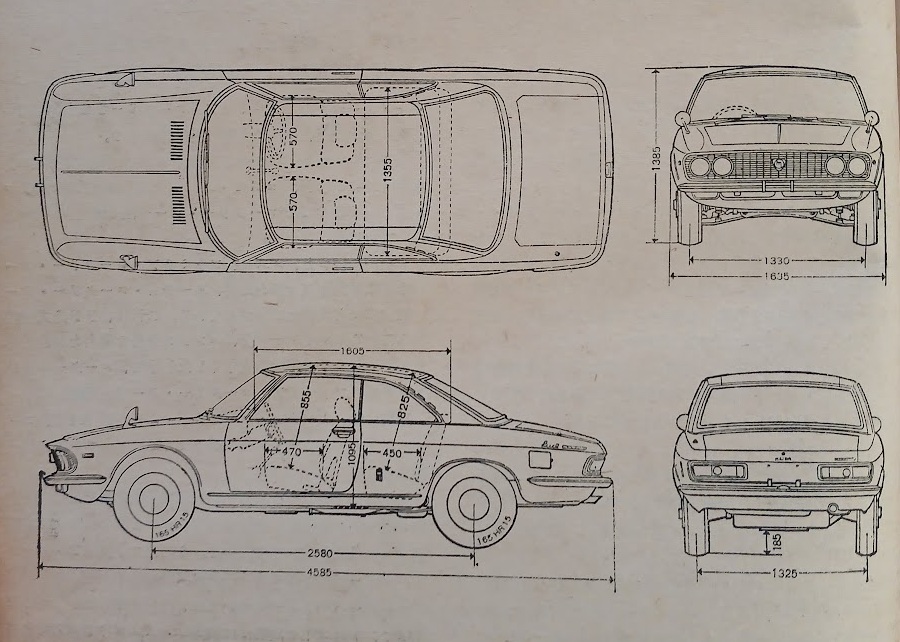
Until now, the rotary engines produced by Toyo Kogyo consisted of a single displacement type, 491cc x 2 rotors, beginning with the first Cosmo and continuing through the Familia Rotary series. However, the Luce Rotary Coupe is equipped with a newly designed 655cc × 2 rotor unit.
In this engine, the rotor thickness itself remains 60mm, the same as the earlier 491cc × 2 rotor version. The trochoid, however, has been enlarged by one size, increasing the generating radius by 15mm, and resulting in an approximately 30% increase in displacement.
It is often said that the relationship between generating radius and rotor thickness corresponds to that between stroke and bore in a reciprocating engine. Viewed in that way, one might say in simple terms that this new engine is a longer-stroke type than the previous one.
When we asked Rotary Engine Research Department head Yamamoto why this approach was chosen, he replied:
“There is no single ideal ratio between generating radius and thickness. In this case, one factor was that the body designers had indicated that the car would adopt an FF layout, so there was an absolute requirement to limit overall engine length.
However, from the standpoint of engine performance, we also considered many different combinations, creating prototypes and repeating tests. As a result, it became clear that there is a trade-off relationship between combustion efficiency, size, cooling efficiency, cost, and other factors. That is, improving one tends to worsen another. Therefore, even within the same rotary engine concept, the designer’s task is to vary the combination of radius and thickness to suit the intended application. For example, if one were to pursue compactness by indiscriminately increasing rotor thickness, the apex seals would also become longer, raising issues of manufacturing technology and precision.”
Another interesting point is that this engine’s compression ratio has been reduced from 9.4 in the Familia Rotary to 9.1.
This change reflects how the character of the car shifted during development from the original planning concept. Watanabe, head of the design department and primarily responsible for the body, spoke about this with a wry smile:
Expectations for a More Passenger-Car–Like Engine
“When we first began thinking about creating a rotary-powered car as a high-grade GT, we assumed the engine’s character could not be made as mild-mannered as what has now been achieved. Accordingly, we began the body design as a sporty hardtop style, and asked the engine side to ‘make it as soft in feel as possible.’
As it turned out, the engine exceeded our expectations; it became something extremely well-controlled and easy to manage. So those of us on the design side, who had assumed the rotary engine naturally needed a sporty body in order to be well-received, felt that we were the ones who had been outdone.”
Indeed–seen in that light, it is not difficult to understand. Four years ago, the general perception of rotary engines was very different. Aside from the NSU unit, the rotary engine as a fully finished product scarcely existed. It would not have been strange at all to doubt whether a highly flexible, refined engine truly suited for a high-grade passenger car could even be made.
Regarding the design of this engine, Yamamoto explains:
“We already had the 491cc × 2 rotor unit in production, so we had gathered a great deal of data from that. At the same time, while we can make calculations, it seems that with engines there are many things that only become clear through trial and error. The relationship between intake opening timing and exhaust closing timing, the shape and position of the combustion chamber, plug location and ignition advance–all of these change when the trochoid is enlarged. We tried combining these factors in various ways until we were finally able to achieve a satisfactory balance of flexibility, cost, and mechanical layout.”
In fact, in terms of timing, it was only relatively recently that a model ready for production was completed. When the body was displayed at the Motor Show the year before last, a fully satisfactory engine had not yet taken shape. Nevertheless, the public showed great interest in the car. For Toyo Kogyo, this must have created no small amount of pressure to bring it to market quickly.
Bringing Every Technology to Bear
Watanabe states plainly that, in the case of this car, the designers did not begin with a target selling price in mind. Rather, as preparation for the full-line policy Toyo Kogyo aims for in the future, development was centered on the idea of crystallizing the company’s accumulated technology to produce, so to speak, an ideal car.
For that reason, the car incorporates a number of firsts for the company: the front-wheel drive layout, power steering, an all-power accessory specification, and the hardtop body style. The engine, too, is newly designed. And although the body pressings resemble those of the Luce sedan, not a single pressing die is shared.
From this, one may reasonably infer that beyond the existing two-pillar passenger car structure of Familia and Luce (leaving aside the Carol), Toyo Kogyo was preparing to add a new third pillar–naturally, one centered around the rotary engine.
In that sense, the Luce Rotary Coupe may be seen as a test case for defining the future direction of Toyo Kogyo: an investment in elevating its technical standards, embodied in one vehicle.
Now, let us examine some of these new technologies in greater detail.
First, the combination of FF layout and rotary engine. Coincidentally, NSU’s Ro80 employs the same general configuration, leading to suspicions of imitation–something Toyo Kogyo finds quite disagreeable. Although the company maintains a technical partnership with NSU regarding the Wankel engine, there has been no exchange whatsoever concerning chassis design or related matters.
The principal reason for adopting FF lies in the rotary’s layout itself. With a rotary engine, the output shaft is positioned exactly at the center of the engine. In an FR configuration, this would inevitably place the propeller shaft high in the chassis, requiring a large transmission tunnel through the passenger compartment, an undesirable arrangement in a high-grade sedan.
That said, in this particular car, the usual FF advantage of a flat floor is, frankly, not fully utilized. When questioned on this point, Watanabe replied:
“It is true that the benefits of FF do not extend fully to rear-seat accommodation. That is partly because of the priority we placed on styling, and partly because we felt that in this type of car the emphasis should remain on the front seats…”
Another factor, it seems, was the desire to avoid excessive overall length. With FF, the engine cannot be extended too far in the fore-aft direction. As noted earlier, this constraint also influenced the rotary’s dimensions.
Within the company, the prospect of adopting FF prompted considerable debate, particularly regarding steering characteristics. Foreign FF cars were purchased and tested at the Miyoshi course. Among test drivers unfamiliar with FF behavior, some misjudged throttle application in corners, and in extreme cases, even experienced rollover accidents. From this, it was concluded that cars exhibiting strongly distinctive FF characteristics, such as the Lancia Flavia or Austin Mini, would be risky to market to Japanese drivers accustomed to FR layouts.
Accordingly, efforts were made to give the car steering characteristics as close as possible to that of an FR vehicle, despite being FF.
Watanabe says: “I believe the Morris 1100’s FF layout is very well-done. Subaru’s FF-1 also appears to aim in much the same direction as we did, and I respect the thoroughness of its development. The Luce Rotary Coupe is, above all, a high-class touring car. Even if certain drivers might enjoy sharper traits, we could not allow it to retain characteristics that would make it difficult to control.”
At the same time, the fundamental advantages of FF–superior high-speed stability, reduced sensitivity to crosswinds, and strength on poor roads or snow–naturally remain. In that respect, the design team feels their efforts were worthwhile.
Pursuing Luxury and Safety Performance
Conceived as a model to lead Toyo Kogyo into its next era, this car reflects an effort to incorporate every possible element of luxury specification.
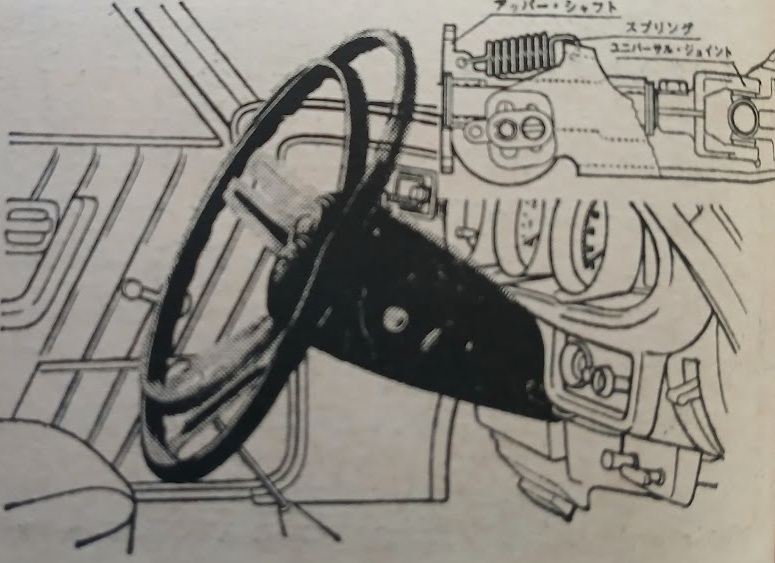
One example of this considered approach is the adoption of a tilting steering wheel. It was decided that seat fore-aft adjustment alone could not provide the ideal driving position for every driver, and so tilt adjustment was introduced for the first time (at present, in Japan, only the Mitsubishi Colt offers this feature). Likewise, the shock-absorbing steering column is not optional but standard equipment.
What is particularly interesting is the degree of ingenuity applied in areas that are not immediately visible.
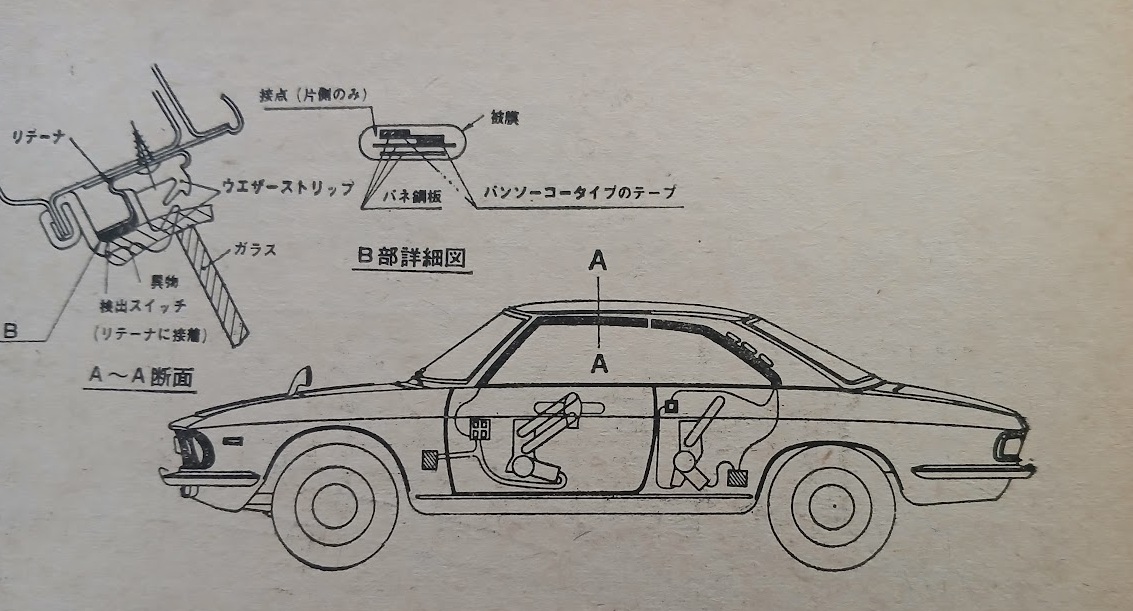
Even when power windows are fitted (only on the Super Deluxe), the concern was raised: what if a child’s hand or neck became caught? For the three windows other than the driver’s door, if a foreign object becomes trapped and strong resistance is detected, an electrical sensing device activates and automatically lowers the glass. This is a thoughtful safeguard.
As for the brake system, it naturally includes a tandem master cylinder–but beyond that, if the hydraulic pressure difference between front and rear circuits exceeds 15 atmospheres, a valve actuates and a warning lamp illuminates to indicate a fault in the braking system. Furthermore, if even one filament of the stop lamp burns out, a micro-switch near the driver’s feet triggers an audible warning.
There is also an episode concerning the triangular vent windows. During development, they were still fitted. However, when Watanabe happened to see President Matsuda climbing somewhat unsteadily into a prototype, he felt a sudden alarm: “This won’t do. If a passenger were injured on the sharp edge of the vent window, it would be inexcusable.” He immediately ordered a design revision to eliminate the vent windows altogether.
But this proved a formidable challenge. This would be the first hardtop without vent windows in Japan. With no rigid frame at front or rear, and only rubber weatherstrips supporting the glass, aerodynamic suction pulled the glass outward at speeds above 100km/h. This caused it to deflect nearly 1mm, preventing proper sealing against the weatherstrip. Worse still, if one attempted to raise the window while driving at high speed, it simply would not seat correctly.
At first, the internal door regulator mechanism was strengthened, but satisfactory results still could not be achieved.
Perplexed, the engineers decided to try applying a cutting-edge structural analysis method: the “finite element” method. This finite element approach is regarded as indispensable among American aerospace firms and at NASA in spacecraft development. Fortunately, it was also already being explored at Toyo Kogyo. Programs were written and run through a computer. The results showed that with 5mm glass (standard for passenger cars), deformation at 120km/h would reach 8mm. Calculations then indicated that to reduce deflection below 4mm, glass thickness must be increased to precisely 6mm.
Prototypes were built and tested, and indeed, this solution proved satisfactory.
Having already achieved success with the rotary engine, Toyo Kogyo’s engineers possessed both the fighting spirit and the confidence to embrace new methods of development. That is perhaps one of the company’s greatest strengths.
Torsion Bars Rejected; Rubber Is Best
Watanabe holds a firm belief that “those engaged in automobile design must press forward with what they believe in, even in the face of resistance, and persist until good results are achieved.”
Mazda has never fitted a 3-speed gearbox to any of its cars. That reflects the engineers’ conviction that, all else being equal, having more gear ratios is advantageous. In the same spirit, Toyo Kogyo is unlikely ever to adopt torsion bars for its suspension.
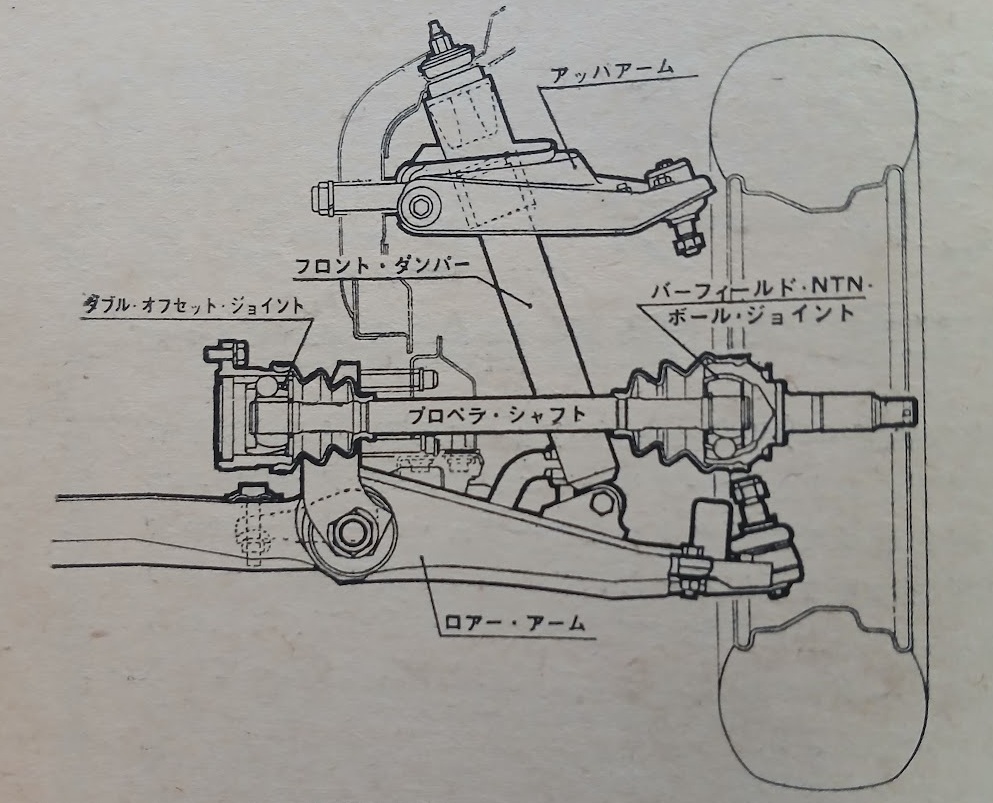
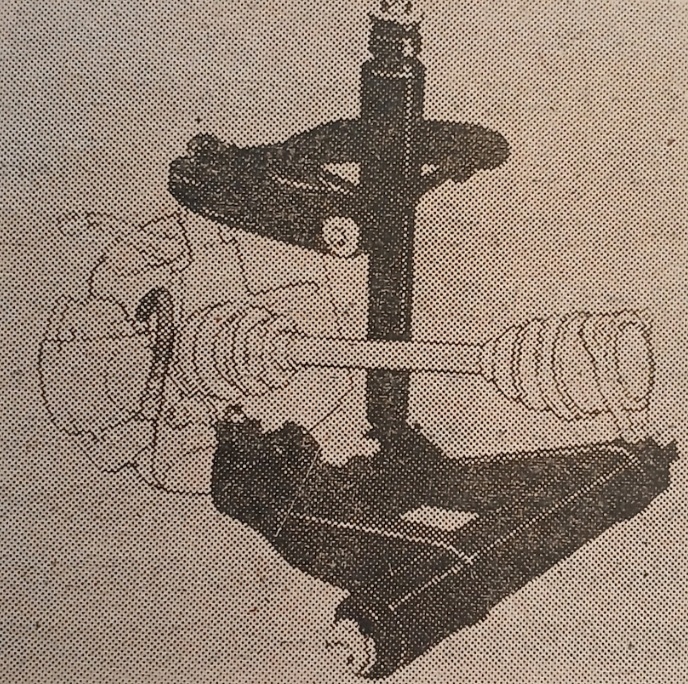
On the Luce Rotary Coupe, the front suspension uses a wishbone layout. Because of space constraints created by the FF driveshafts, coil springs were impractical, and torsion rubber springs were employed instead.
Regarding torsion bars, Watanabe comments: “They are very convenient when trying to keep the vehicle height low. However, there have been cases where corrosion fatigue has caused them to break, and for that reason I would prefer not to use them. In contrast, very good rubber materials are now available. In terms of ride comfort, and even with respect to aging characteristics, I believe rubber surpasses torsion bars. It is also resistant to oil. The only drawback is that heat can weaken the adhesive bonding, but that problem is largely on its way to being resolved.”
Initially, rubber was also considered for the rear suspension. However, in anticipation of stricter exhaust emissions regulations, which could require the installation of an afterburner system, that idea was abandoned, and coil springs were selected instead. In any case, Toyo Kogyo’s stance toward rubber as a suspension medium is notably positive and forward-looking.
Preparing the Way for a New Generation of Rotary Cars?
This car carries a price of 1.75 million yen (Super Deluxe). One could say that, given the extent of its engineering and equipment, such a figure is understandable. Yet beyond that, succeeding the Cosmo Sport, it serves another purpose: to demonstrate to the public that “the rotary is not merely an engine for sports cars. It is fully qualified to power a deluxe passenger car of this level.”
At the same time, as mentioned earlier, it represents both a symbol of Toyo Kogyo’s technical capabilities and, internally, a significant test case for the company.
In short, it is not a car conceived purely for sales volume.
And below its 1.75 million yen price point, dropping sharply into the 600,000-yen range, the Familia Rotary series represents what could be called the popular version of the rotary car.
Looking at this lineup, one notices a gap: there is no rotary model directly aligned with practical, middle-market demand–a highly usable, mainstream rotary passenger car. Given that so many of the production and performance challenges of the rotary engine have now been addressed, it is only natural to speculate that a true “mainstay” model to fill this vacuum may soon appear.
Watanabe remarks, with deliberate implication, “With this, we have secured both the entry and exit points of rotary cars.” Yamamoto adds, “The star performer does not appear so easily. If we release it too soon and the rotary engine itself receives a poor evaluation, that would be a serious problem…”
Still, the fact that this car uses an enlarged engine trochoid suggests that further engine variations could be developed comparatively easily from the same basic geometry. Likewise, although the body resembles the Luce, it is entirely separate in its press tooling, which may equally indicate that production facilities are being prepared with future mass-production models in mind.
The key point is, the car is more than a mere image leader for the manufacturer. The technologies applied here are clearly intended for broad adaptation to other models. In that sense, it embodies a more advanced approach than the high-priced “dream cars” from some manufacturers, whose appeal remains largely symbolic.
Toward the Expansion of “Rotaryization”
Views toward anything new inevitably divide into two extremes. On one side are the fervent advocates proclaiming, “This is amazing!” On the other are those who cling to the status quo, insisting without thorough study: “It’s no good; it will never amount to anything.”
The rotary engine has been subject to exactly such polarized debate. Indeed, one might say that it still is. For those engaged in developing something new amid such conditions, the position is a delicate one.
If a product under development is released under the complacent assumption that it is “good enough,” even minor shortcomings–however easily remedied–may be seized upon and magnified, resulting in an overall negative assessment.
For that reason, Toyo Kogyo has introduced its rotary cars in stages, gradually familiarizing the public with the concept. The company has been reluctant to commit prematurely to a “definitive,” high-volume model aimed at a broad user base.
The Cosmo Sport carried an unmistakably experimental atmosphere. The Familia Rotary series, by contrast, was presented in a manner that would not overly disrupt the company’s existing lineup. And the Luce Rotary Coupe, too, is not the ultimate “mainstay” model. Rather, it serves as groundwork, a means to thoroughly validate the new engine before unveiling an ambitious new model that will become the main pillar of rotary expansion.
One of Watanabe’s particular points of pride is the brake system, properly matched to the car’s high-speed performance. In the days when duo-servo drum brakes were at their peak, he was known to declare bluntly: “That’s not braking–it’s merely stopping. If all you want is to stop, you could just throw wheel chocks in front of the tires!”
From that time, he had advocated a system consisting of front servo-assisted discs and rear leading-trailing drums with a proportioning valve. Now, in the course of creating Toyo Kogyo’s image car, all of these elements have been realized, a fact that clearly gives him satisfaction.
Because the FF layout inevitably tends to increase steering effort, the company also tackled and completed development of a power steering system. However, since this was designed using an American system as a reference model, he candidly admits that the resulting steering feel may not satisfy every driver.
Even so, one senses in his words a confidence: a readiness to stand toe-to-toe with Toyota and Nissan, with rotary-powered cars leading the charge.
Next year (1970) marks the 50th anniversary of Toyo Kogyo’s founding. It seems that a full-scale offensive with rotary-engine cars, including moves toward more widely accessible, general-market models, is set to truly accelerate in conjunction with that milestone.
Postscript: Story Photos