Isuzu Bellett 1600GTR (1969)
Publication: Motor Magazine
Format: Test Drive Report
Date: December 1969
Author: Hiroshi Shinozaki
Bellett 1600GTR: High Performance is its Main Attraction
When the 117 Coupe was unveiled, there were probably quite a few enthusiasts who immediately thought that its superb twin-cam engine ought to be installed in the Bellett GT as well.
More than six years have passed since the Bellett GT first appeared, yet its excellent driving performance has hardly lost any of its luster, and with its distinctive character, it continues to enjoy a loyal following among enthusiasts. Even so, the performance of its 1.6-liter pushrod engine had begun to feel somewhat left behind among the increasingly powerful sports touring cars of this class.
Because the twin-cam Bellett GT promised to address this shortcoming–while at the same time delivering performance approaching the top ranks of domestic cars–it is only natural that many should have high expectations for this model.
At the same time, there was also a sense that, after more than six years in production, the development cost of major components apart from the engine had likely already been amortized, making it possible to offer the car at a relatively low price. In that respect, the Tokyo showroom price of 1.16 million inevitably came as something of a disappointment. From a buyer’s standpoint, one suspects many would at least have hoped to see it priced just under the one-million-yen mark.
A 1.6-Liter DOHC Engine
In any case, we were given the opportunity to test the new Bellett GT-R, now endowed with an even more aggressive character, and the following are our impressions.
The short-stroke engine, with a displacement of 1584cc and bore and stroke dimensions of 82×75mm, boasts overwhelming performance figures: 120ps/6400rpm and maximum torque of 14.5kgm/5000rpm.
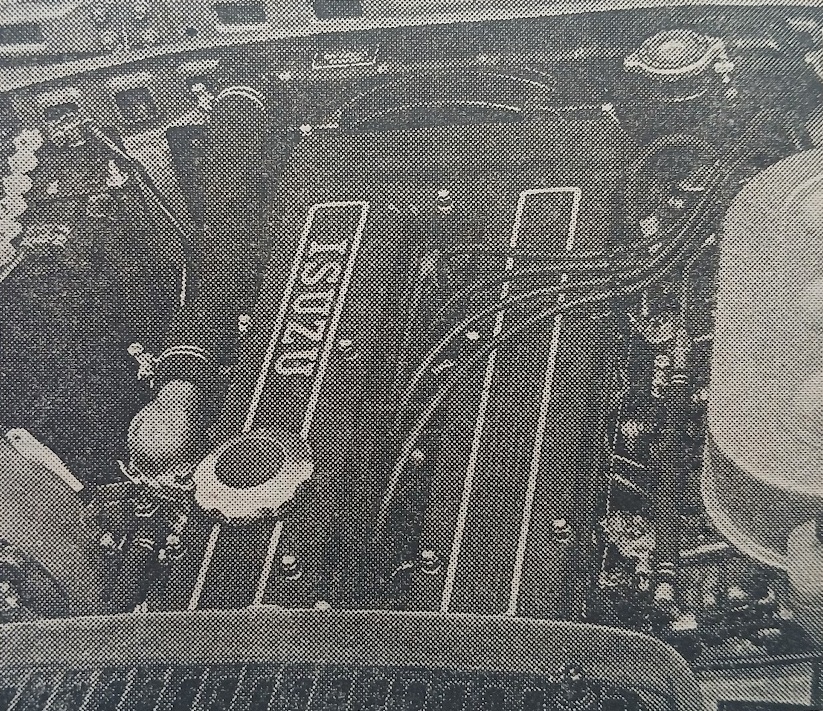
Opening the hood reveals a crackle-finish cam cover with the kind of beauty produced only by the concentrated efforts of human ingenuity. Carburetion is by twin side-draft Solex N40PHH-3 units.
There is a slight flat spot around 2000-2500rpm, but this is hardly noticeable unless one is paying very close attention. The engine’s razor-sharp response to the throttle is exactly what makes a twin-cam a twin-cam. Engine speed rises quickly, and it also falls just as quickly. Smooth downshifting therefore requires delicate throttle work, and it will likely take some time for the driver to adapt to the engine’s quick changes in rpm.
The sensation at start-up is noticeably lighter and easier than in previous Bellett models. While testing the GT-R, we also had the opportunity to drive the Bellett 1600DX equipped with the new OHC engine, and both cars showed a marked reduction in warm-up time.
This improvement appears to result from changes to the cooling-water passage between the cylinders and thermostat. In earlier Belletts, this routing was contained within the cylinder block itself, whereas in the new series it has been relocated outside the cylinder assembly. As a result, the influence of cold-soaked iron has been substantially reduced, which presumably accounts for the shorter warm-up period.
In the case of the GT-R, however, idle vibration was somewhat pronounced.
A Sporting Shift Feel
The front seats have headrests integrated with the backrests, and are closer in character to bucket seats than ordinary separate seats. The lower section of the seatback is curved to wrap firmly around the driver’s waist, and as one would expect, lateral support during cornering is excellent. The cushions themselves are fairly firm, and reclining adjustment is provided.
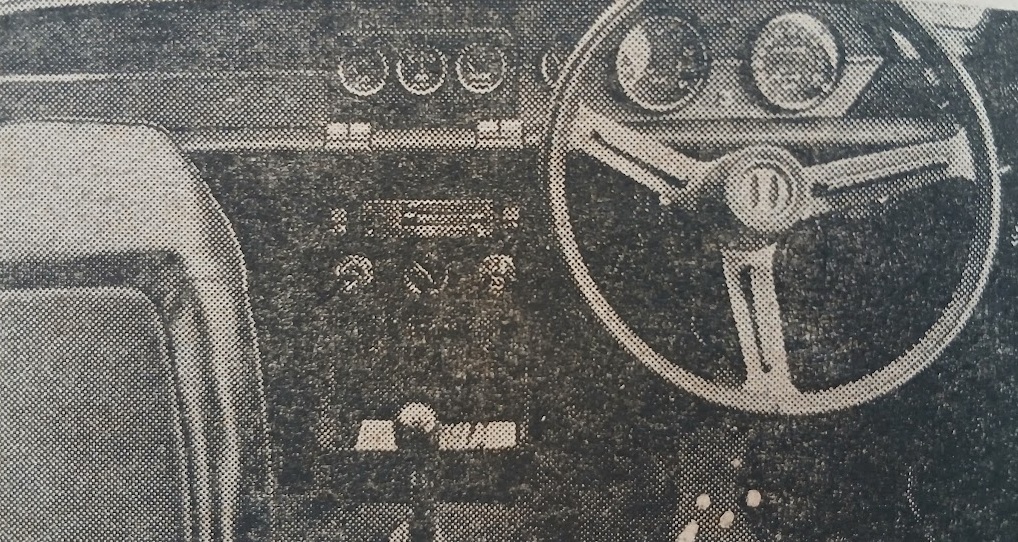
The driving position feels much the same as that of the standard Bellett GT. The steering wheel, however, is wrapped in leather, and its somewhat thicker grip gives a favorable impression. Its relatively small diameter, recalling that of a racing car, should appeal strongly to enthusiasts. The addition of a collapsible steering column is also a thoughtful touch.
An extremely short shift lever rises from the center of the floor. The short shift stroke is especially welcome when changing gear frequently.
The shift feel itself has been softened considerably compared with the direct, mechanically notchy sensation traditionally characteristic of Isuzu cars. This is probably due to the linkage arrangement used to shorten both the lever and the shift stroke. The comparatively smooth shifting action makes a favorable impression.
The gearbox is a 4-speed unit carried over from the 1600GT. Ratios are 3.467 in first, 1.989 in second, 1.356 in third, and 1.000 in fourth, making it fair to describe the upper gears as a close-ratio arrangement.
That said, what this high-output 120ps engine really calls for is a 5-speed transmission. Particularly in a grand touring car like this, where high-speed touring comfort and economy are important, the absence of a fifth gear leaves the car feeling like it is missing something. Ideally, second and third gear would also be spaced closer to fourth, making shifting even more enjoyable.
One of the real pleasures of driving lies in carefully-judged shift work that keeps engine speed from falling away, and that is exactly what one wants to enjoy with a strong, high-revving twin-cam engine. Admittedly, this is something of an ideal, and even with the GT-R’s 4-speed transmission, it is still possible to thoroughly enjoy driving.
As usual, the shift pattern places reverse gear adjacent to second. In the GT-R, the return spring has been strengthened to make accidental engagement more difficult. Even so, placing reverse beside second gear, the most frequently used ratio, is hardly ideal. One must admit that the possibility of a missed shift while underway remains high.
Distinguished by Its Hood-Mounted Air Scoops
The dashboard design is exactly the same as that of the 1600GT. The instrument panel is finished in a subdued gray color, and all the gauges are round.
Of the two large gauges, the one on the left is the 8000rpm tachometer. Its black face and evenly spaced markings make it exceptionally easy to read. The yellow zone begins at 6500rpm, while the red zone starts at 7000rpm. The speedometer is scaled to 220km/h, a clear indication of the GT-R’s high-speed capability. The font and needle design have also been revised slightly.
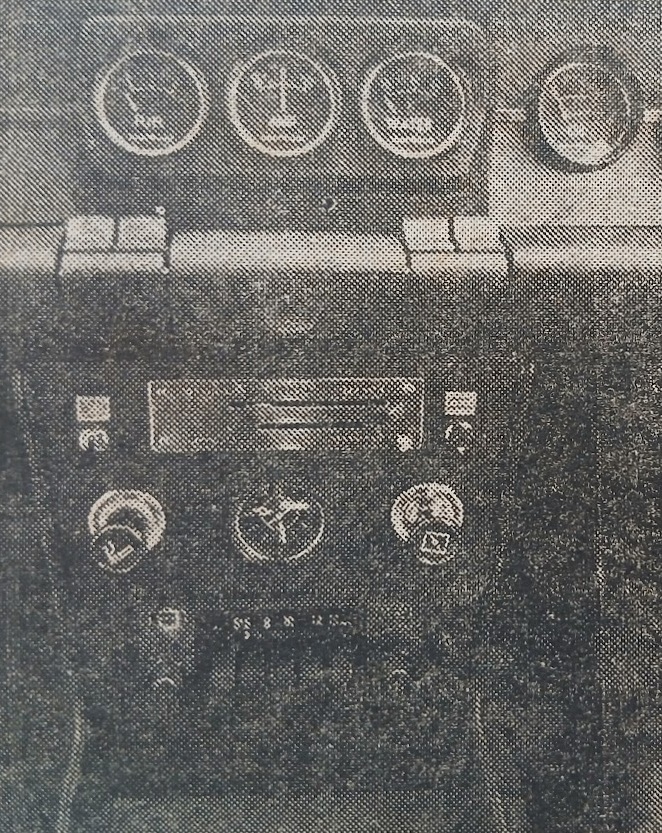
Off to the left are gauges for oil pressure, water temperature, current, and fuel level, likewise housed in round dials that contribute to the car’s functional atmosphere.
The center console below the dashboard contains the heater controls, choke, cigarette lighter, clock, and radio, along with a small storage space for miscellaneous items. This arrangement proves quite convenient.
The lighting and wiper controls are the now-familiar switches mounted along the lower edge of the dashboard. Naturally, passing lights and four-way flashers are also incorporated. The passing-light function is integrated into the flasher-dimmer lever: pulling it toward the driver activates the high beams even when the main lighting switch is turned off.
Fog lamps and a heated rear-window defogger are equipped as standard, with their switches positioned on the center console.
The entire cabin is finished completely in black–including the headliner–further emphasizing the car’s purposeful character.
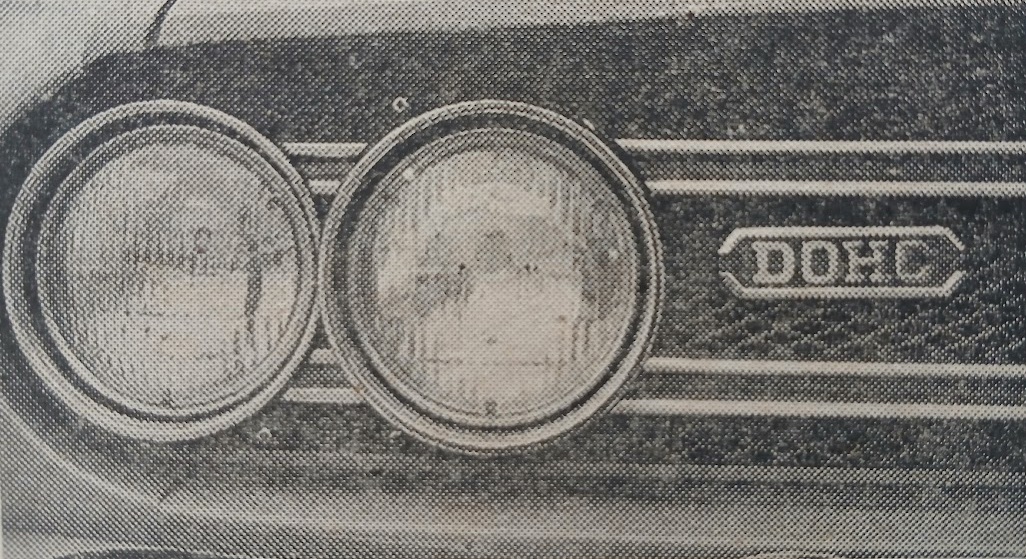
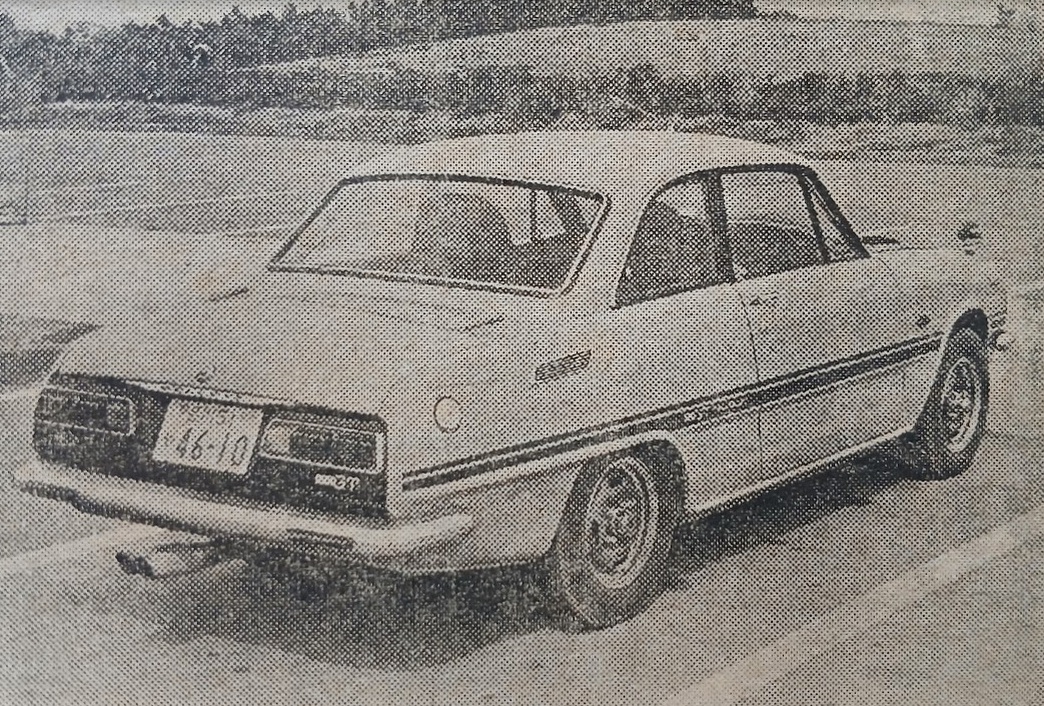
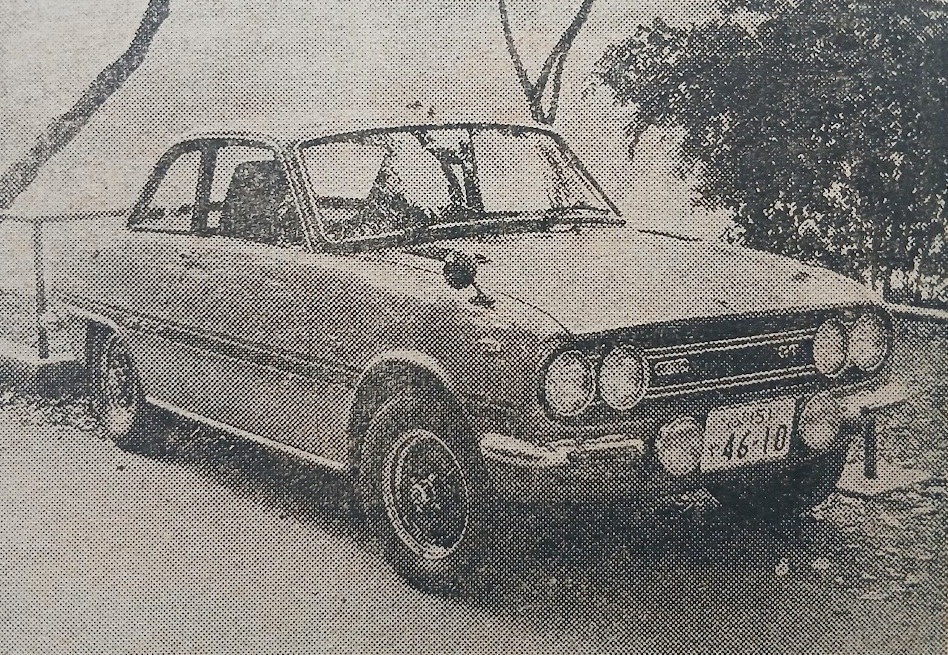
Externally, the most obvious distinctions are the prominent “DOHC” and “GT-R” emblems fitted to the radiator grille, rear panel, and fenders. More significantly, however, air scoops have been added to both sides of the hood to improve ventilation in the engine compartment. The hood itself is finished in matte black paint to reduce glare, while black striping is used to create a distinct GT-R character. Capless wheels are also used to heighten the sporting mood.
Six body colors are available: Maple Orange, Adonis Yellow, Ilex Green, Magnolia White, Iris Blue Metallic, and Madder Red.
Radial tires are fitted as standard equipment.
Overwhelming Acceleration in Second Gear
The clutch is relatively light for this type of car. Engagement is also free of quirks and easy to modulate. Because of the engine’s ample power, there is no need to be especially delicate when starting off.
The sensation of acceleration is, as one would expect, extremely impressive. In particular, the overwhelming surge delivered in first and second gear gives a vivid sense of the engine’s 120ps output.
We extended each of the lower gears to a maximum of 6700rpm. Approximate speeds were 50km/h in first, 108km/h in second, and 147km/h in third. In ordinary driving, this second gear–capable of stretching all the way to 108km/h–becomes exceptionally effective for overtaking.
The torque curve is flat, which is one of this twin-cam engine’s greatest strengths, though we nevertheless made a point of keeping engine speed above 2000rpm whenever possible.
In second gear, 2000rpm corresponds to roughly 30km/h, and the engine delivers fully satisfactory acceleration from that point all the way to the maximum 108km/h.
If one is not particularly concerned about acceleration, second gear remains perfectly usable even from around 20km/h.
For reference, the following overtaking acceleration figures were recorded in second gear:
30-50km/h: 2.8 seconds
40-60km/h: 2.8 seconds
50-70km/h: 2.8 seconds
60-80km/h: 2.7 seconds
70-90km/h: 2.8 seconds
We did not have the opportunity to test higher speeds than this, yet it is worth noting how consistent the acceleration remains throughout the entire 30-90km/h range. This is another area where the twin-cam engine’s strengths are most evident.
A figure of 2.8 seconds falls well within the time required for safe overtaking while underway.
In third gear, the recorded overtaking times were 4.5 seconds from 30-50km/h, 4.2 seconds from 40-60km/h, 3.1 seconds from 50-70km/h, and 3.9 seconds from 60-80km/h. Although we were unable to record figures at higher speeds, there is no doubt that third gear would prove highly effective for passing on expressways.
At 100km/h, engine speed is approximately 3300rpm. Considering the engine’s 120ps output, it seems the revs could stand to be somewhat lower–another reason one finds oneself wishing for a fifth gear.
One point worth noting: once speeds exceed roughly 120km/h, a fine vibration begins to appear. This causes the rearview mirror to shake, significantly reducing rearward visibility. This is something that ought to be improved, and is especially difficult to ignore in a car priced at 1.16 million yen.
The final-drive ratio is 3.727, which seems an appropriate choice. It appeared to balance acceleration and high-speed flexibility quite well.
We measured standing-start acceleration with one run each to 60km/h and 100km/h, recording times of 7.9 and 11.0 seconds, respectively. The engine’s abundant driving force caused wheelspin at launch, so under ideal conditions these figures should improve further. A 0-100km/h time of around 10 seconds ought to be achievable.
In city driving, fourth gear is largely unusable. At the typical 40km/h urban speed limit, engine speed in third gear is only around 2000rpm, while 2000rpm in fourth corresponds to roughly 60km/h. As a result, the driver effectively relies on second and third gear in the city, with fourth becoming useful only on open suburban roads.
The suspension has been strengthened, and radial tires are fitted as well. The ride is by no means soft, but cornering is completely stable. A locking differential is fitted as standard equipment on the rear axle, providing such strong driving force through curves that the car almost feels as though it is being pushed from behind while cornering. The characteristic feel of the rack-and-pinion steering further emphasizes the GT-R’s sporting character.
High-speed stability is, naturally, faultless. Wind noise is very well suppressed, and the engine note is also more subdued than one might expect. Even while touring at 100km/h, the cabin remains comfortable enough to enjoy the radio.
With the addition of the twin-cam engine, the GT-R has taken on an almost transformed character, and while six full years have now passed since the Bellett’s debut, its styling still holds up remarkably well. For the serious-minded enthusiast who values performance over atmosphere, there is no doubt that the GT-R will prove highly appealing.
If one wish remains, however, it is the same one mentioned at the beginning: one cannot help wishing the price had been set just a little lower.
Postscript: Story Photos