Isuzu Bellett 1600GTR (1969)
Publication: Motor Fan
Format: Test Drive Report
Date: November 1969
Author: Jun Todoroki
A Long-Awaited Performance Car
The Bellett GT, alongside the former Prince Skyline 2000GT, once enjoyed almost unrivaled status as an idol for car-obsessed youth. First introduced in the autumn of 1964 as a sporting variant of the Bellett, which had debuted the previous year, its smart body shell has possessed a unique ability to captivate enthusiasts with a taste for sports cars at an impressionable age. Even now, five years after its introduction, its crisp, purposeful lines have hardly dated.
Over the past three to four years, however, amid a rapid escalation in the horsepower race among rival manufacturers, the Bellett GT seemed to fall slightly behind the times. During that period, Isuzu unveiled the upmarket Coupe 117 tourer, and it was made clear that the DOHC 1600cc engine installed in that model could, theoretically, be fitted to the Bellett GT as well.
In the end, the question became simply this: when would the race-bred Bellett GT-X, which Isuzu fielded in competition on several occasions, finally be offered for sale to the public? Recently, at long last, the powerful model long awaited by ardent Bellett GT fans has been released: the 1600GTR. The “R,” needless to say, stands for “Racing,” and its curb weight of just 970kg is paired with a highly sophisticated engine producing a maximum output of 120ps. Even in the course of a very brief test drive, this machine delivered a bold, thoroughly satisfying feeling that fully lived up to expectations.
The Engine Comes from the 117 Coupe
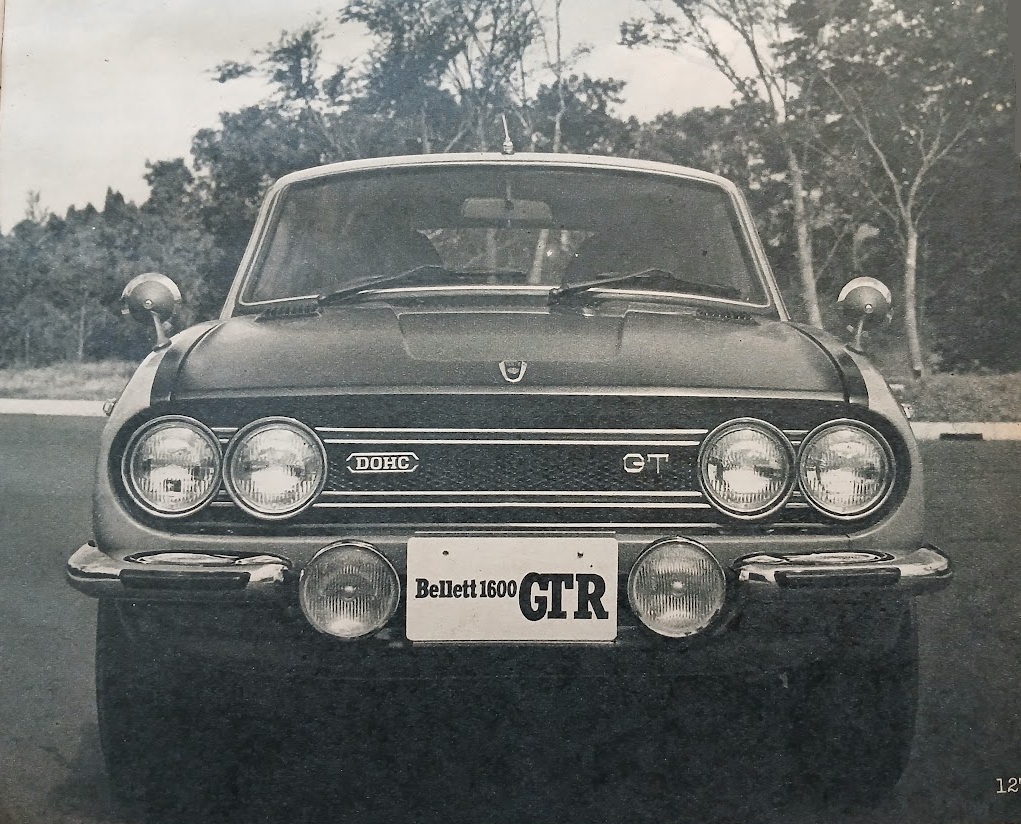
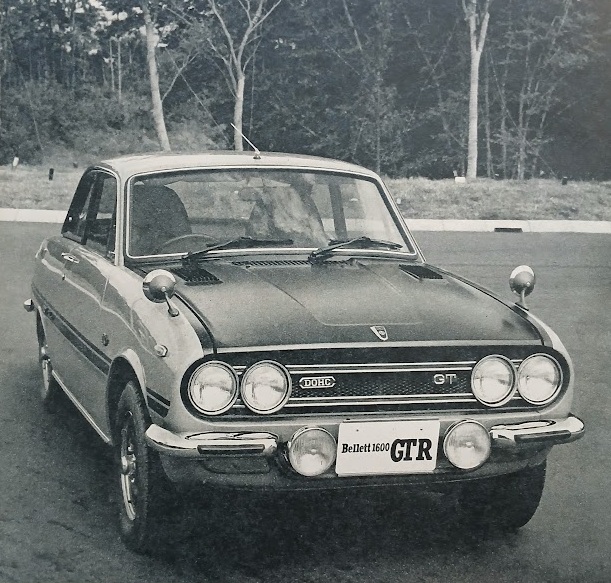
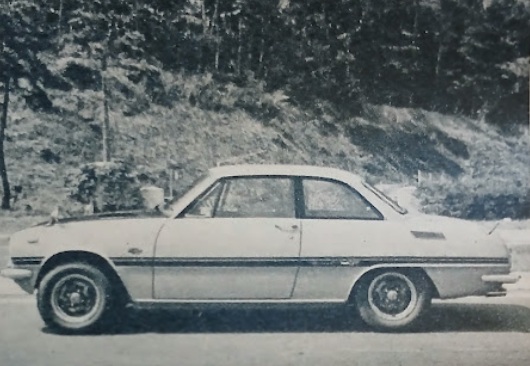
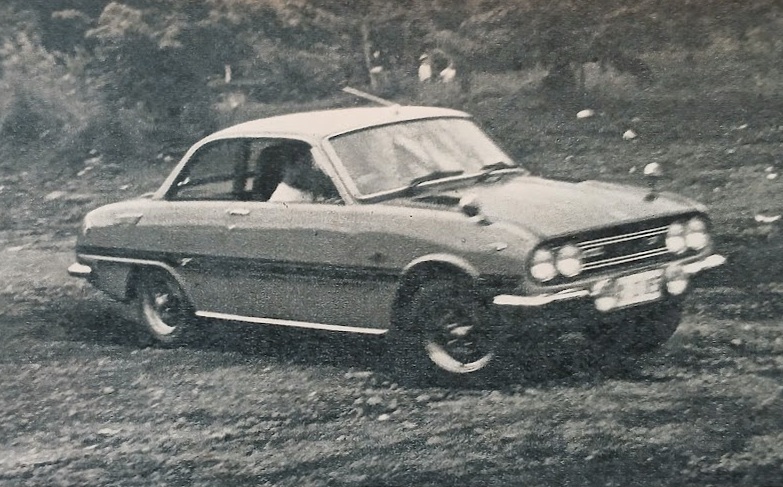
The car supplied by Isuzu Motors at its Omori facility in Tokyo on September 18 was finished in a deep orange paint color called “Maple Orange,” accented by two black stripes applied to the hood, rear panel, and sides, giving it a decidedly flamboyant appearance. What is unusual is that this color is not a special option, but a standard color scheme. One could see this as the manufacturer’s attempt to impart a striking, forceful image despite retaining the older body shell.
Opening the hood, eyes are immediately drawn to the beautiful blue, crinkle-finished cam cover. Its twin-row shape, already familiar from the 117 Coupe, is proudly displayed and still inevitably quickens the pulse of anyone who sees it.
The carburetors are hidden from view beneath an oval-shaped air cleaner, but are twin Mikuni-built Solex-type units (N40PHH-3). Although the engine is fundamentally the same as that of the 117 Coupe, a number of changes have been made, including the materials used for the oil seals (the asbestos rope type is replaced with special rubber lip seals). The shapes of components such as the crankshaft, casing, and flywheel have also been revised. These changes reflect the requirements of mass production, but more importantly, were also made with durability in mind. There has been no detuning whatsoever in terms of performance.
Poor Instrument Visibility is a Concern
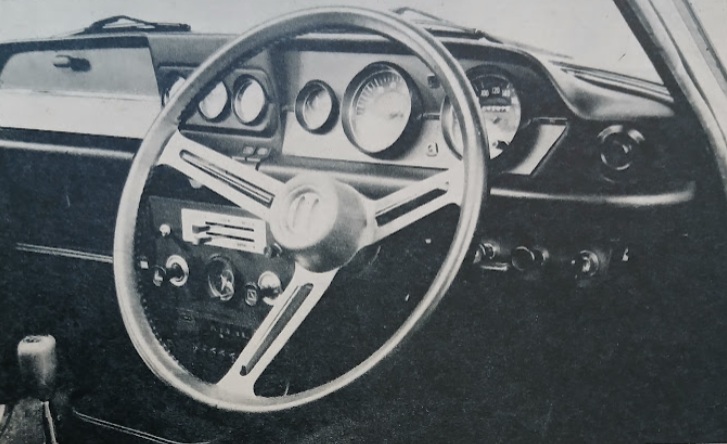
The interior is finished entirely in black, including the leather-wrapped steering wheel, with only the wooden shift-lever knob providing a contrasting note of gloss.
The layout of the instruments is the same as in the GT and Bellett Sport models, but the panel itself is matte black.
On the right sits the speedometer, scaled to 220km/h, and on the other side of the steering column is the tachometer. The yellow zone begins at 6500rpm, with the red zone extending from 7000-8000rpm. Following these are a neat row of small round gauges–oil pressure, water temperature, ammeter, and fuel level–which together create a distinctly functional, purposeful atmosphere.
However, once one settles into the newly designed seats (with integrated headrests), adjusts the driving position, and looks at the instruments through the steering-wheel spokes, portions of the speedometer and tachometer, particularly their upper sections, are obscured by the wheel rim. In the case of this 173cm-tall author, it initially seemed like a matter of individual build. But when a colleague standing 185cm tall took the wheel, he too found the instruments difficult to read. A driver around 165cm tall can just manage to read the gauges clearly within the inner arc of the rim, but for taller drivers, or more precisely, those with a greater seated height, this point will not go unnoticed.
The cause is likely the combination of the thicker, leather-wrapped rim and the reduced steering-wheel diameter. It seems inevitable that there will be some complaints about this.
Top Speed (190km/h) Comes Easily
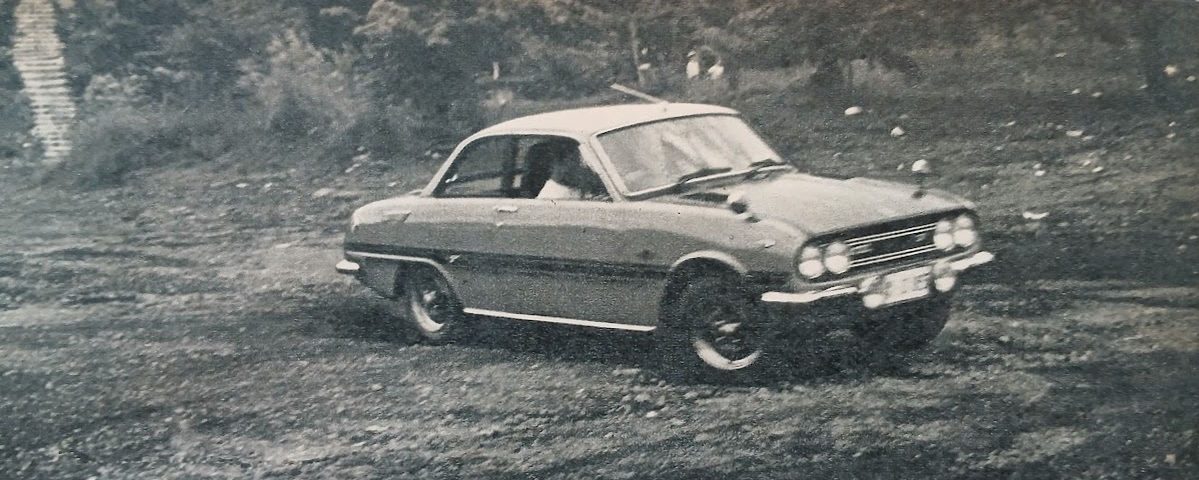
For this test, we selected a route totaling approximately 300km, incorporating sections of the Tomei and Chuo expressways as well as gravel roads in the foothills of Mount Fuji.
Considering the hard-edged performance potential of this car, the clutch and shift lever efforts are surprisingly light, and even in congested traffic it never feels difficult to handle. This may have been because we were expecting a “physically demanding” kind of driving experience comparable to that of the Toyota 2000GT or Skyline 2000GT-R, but we found that the car was surprisingly easy to drive.
That said, the ferocity of its acceleration from rest leaves no doubt as to the potency of its 120ps at 6400rpm. Waiting at an intersection for the light to turn green, selecting low gear, then pressing the throttle firmly sends the tachometer needle leaping to 6000rpm in an instant, dispatching the surrounding taxis in the blink of an eye. What makes this especially enjoyable is that it happens without conscious effort; one is simply driving as they would in an ordinary car.
In overtaking situations, accelerating from 40km/h in top gear produces response similar to that of a typical 1500cc-class sedan accelerating in third. This alone indicates that the engine is not a high-strung, peaky unit tuned only for maximum output, but rather one designed to allow full use of its ample low-speed torque, while covering the high-speed range with its dual camshaft mechanism. Of course, driving lazily without downshifting would be unkind to such an engine. Drop into third, and the car accelerates so forcefully that high speeds arrive sooner than the driver might expect.
Leaving expressway toll gates under hard throttle, one notices that the fishtailing or wheelspin so often associated with launching a high-powered car is scarcely present, thanks to the differential lock that is fitted as standard equipment.
The way speed builds crisply and in direct proportion to throttle openings is reminiscent of a rotary-engined car, yet the overall sensation is one of greater reassurance and solidity. We were not lucky enough to have an opportunity to confirm the catalog top speed of 190km/h, but judging from the rate at which engine speed rises and from the on-paper performance curve, there is little doubt that 190km/h can be achieved, and perhaps even exceeded, given the apparent power in reserve.
Performance for the Skilled Driver
We have already devoted a considerable amount of space to discussing straight-line performance, but when one stops to consider the kind of buyer this car is intended for, it is difficult not to feel a certain unease. It is extremely flexible in all its responses, and its controls are, if anything, easier to manage than those of an ordinary sports-type car. Yet therein lies the concern: once one allows oneself to be carried along by this apparent ease, the car can suddenly bare its fangs in the most unexpected circumstances.
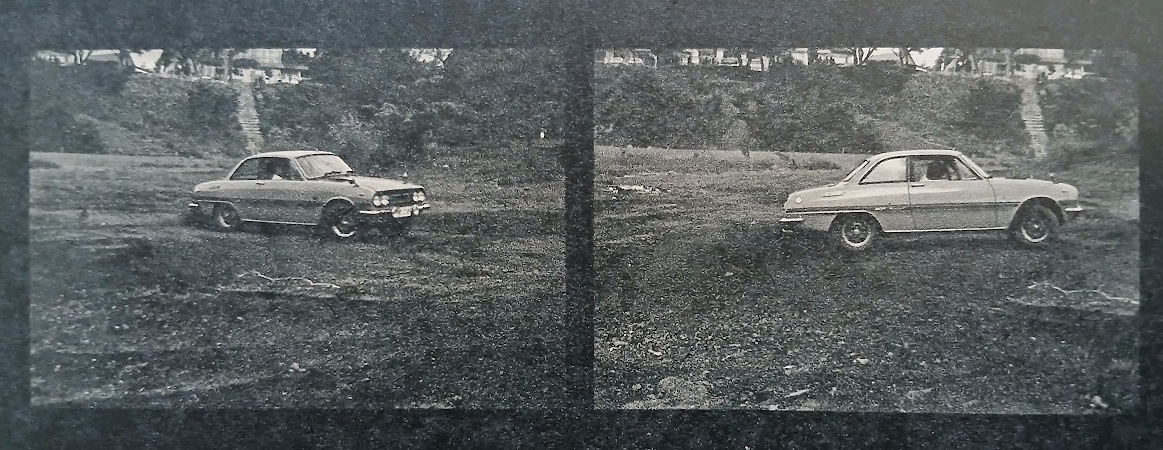
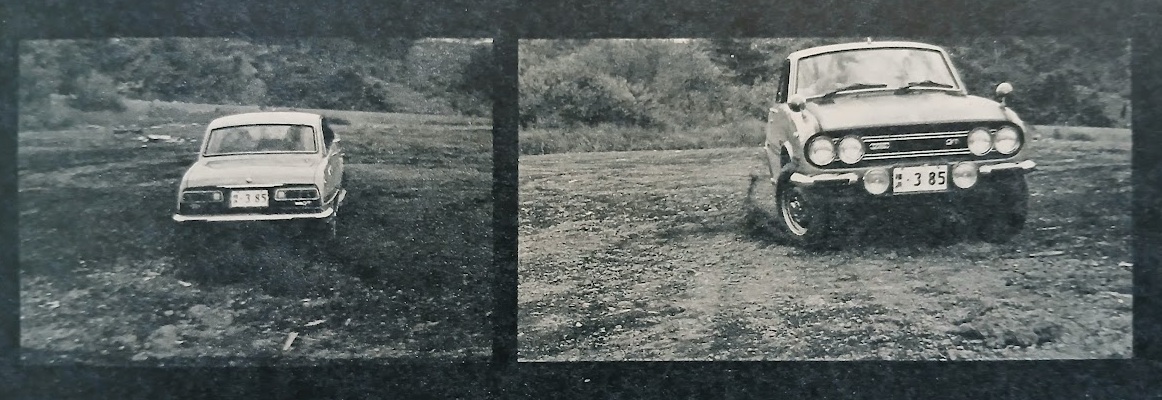
When tested on dirt, throttle-induced oversteer proved remarkably easy to induce. More precisely, simply turning the steering wheel and applying the throttle smartly is enough for the engine’s prodigious torque to send the car instantly into a spin. In the hands of someone who understands this behavior and knows how to use it to their advantage, this translates into superb controllability. But if an inexperienced driver were to treat the throttle carelessly, then panic and abruptly lift off after losing control, the car would break free of the driver’s intentions and spin violently on its own.
From the standpoint of responding to increasingly diversified market demand, manufacturers have been putting a great deal of effort into developing high-performance cars, and the GTR can be seen as just one example of this trend. But if a buyer were to invest 1.16 million yen thinking that they were simply buying a more powerful version of the Bellett GT, this car–precisely because it seems so manageable at first–could become genuinely dangerous.
Certainly, from a mechanical standpoint it is equipped with all the expected modern safety features, including an energy-absorbing steering column, dual-circuit braking system, crash padding, and other items intended to anticipate and mitigate potential accidents. Even so, that is no reason to wish this car upon those who lack proper understanding.
At the very least, it can be said this is a machine that will only truly come into its own in the hands of exceptional drivers–in the positive sense of the word–who are thoroughly familiar with sports cars, and who have complete confidence in, and take full responsibility for, their own driving techniques.
Equipment Leaves Little to Be Desired
As far as equipment is concerned, there is nothing to complain about. Besides the aforementioned safety measures, almost everything one might hope for in a sports-type car is fitted as standard. The tires are 165HR-13 radials (with a choice of Bridgestone BS11s, Dunlop SP3s, or Yokohama GT Specials), mounted on capless wheels. Halogen fog lamps with 55W bulbs are installed between the split front bumper and the license plate. The rear window is equipped with an electric defogger. Braking is by servo-assisted discs at the front, while the rear drums incorporate a pressure control valve to help prevent lockup. The wipers are a high-speed type, finished in matte black, and even the hood is similarly blacked out to prevent glare. One might even say the equipment borders on excessive.
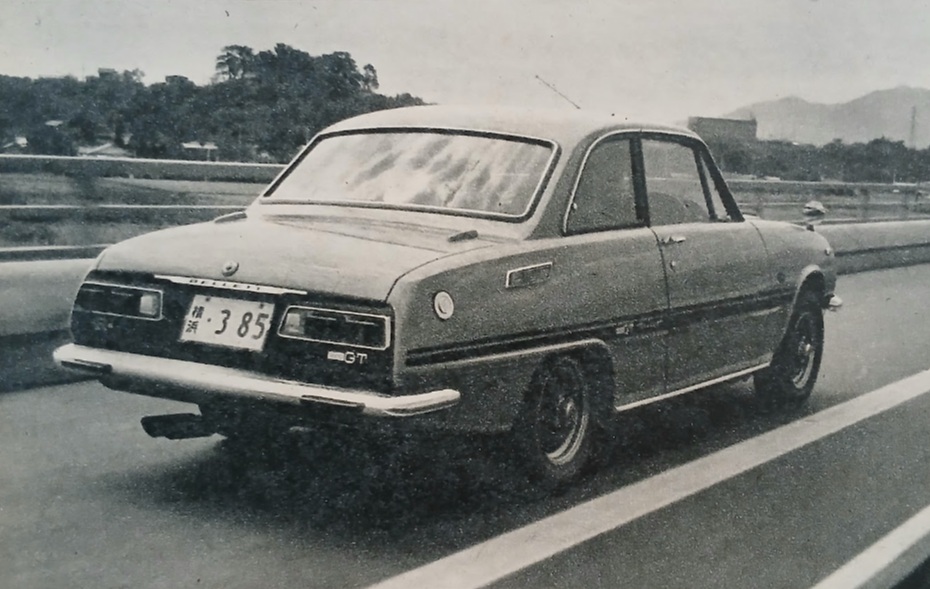
One feature that deserves special mention is the addition of outlet vents on the rear fenders to improve cabin ventilation. These are not limited to the GTR, but have been adopted across the entire Bellett range except for the 1300 series. In practical use, however, their effect is not particularly noticeable.
The suspension on the GTR has been significantly stiffened, but despite this, there is surprisingly little harshness even on the standard radial tires, and ride comfort is by no means poor. This is likely due in large part to the new seats, which represent a marked and most welcome improvement over previous designs. It is often said that a sports car or GT is not “the real thing” unless it rides harshly, but this is a lingering illusion from the past, when improvements in road holding could only be achieved at the expense of ride comfort. As long as stable handling with minimal roll can be attained, there is no reason not to aim for a good ride as well. Excessive softness may indeed lead to driver fatigue, but neither is a rock-hard racing setup well suited to long-distance travel on rough roads. To argue that such a ride embodies the true essence of a sports car is, frankly, a strange notion.
In this regard, the GTR caused no discomfort when driven over rough surfaces, let alone on paved roads, and there was never any sense of the ride becoming punishing.
The transmission is the same unit used in the 117 Coupe. Excessive gear noise has been cited as a long-standing weakness of the Bellett, but at least in this test car’s case, operation was exceptionally quiet. No vibration was transmitted through the shift knob, and the gearbox proved genuinely easy to use. We used double-clutching during upshifts and downshifts, but this was done primarily out of consideration for protecting the synchronizers and the clutch itself, and in practical terms there is no real need to do so. Still, given the strong torque output of 14.5kgm at 4000rpm, one would hope that a conscientious owner would choose to drive it in this manner, as it is the proper way to treat this kind of car.
Will It Become the Darling of the Racing World?
Since the Toyota RT55 (sold as the Toyota 1600GT) ceased production, the market had been without a domestically made 1600cc car equipped with a DOHC engine–apart from the GTR’s sibling, the 117 Coupe, which belongs to another class. Compared with the RT55, however, the GTR offers dramatically better performance. The RT55 delivered 110ps at 6200rpm and a maximum torque of 14.0kgm at 5000rpm, and a catalog top speed of 175km/h. Even so, race-spec versions of the RT55 went on to achieve outstanding success in competition. Therefore, it is natural to expect that private entrants will soon begin tuning this machine as well to compete in races, and that it will become a lively presence in the racing scene.
All the same, the fact that the production RT55 was offered with a 5-speed gearbox comes to mind.
While charging along the highway in the GTR, a thought briefly crossed my mind: “Since they have gone to such lengths to equip this car so completely, why not go all the way and make a 5-speed transmission standard?”
Is it unreasonable to wonder, perhaps selfishly, that only then could the engine’s full power truly be unleashed on the road?
Postscript: Story Photos