Isuzu 117 Coupe (1969)
Publication: Motor Fan
Format: Touring Report
Date: January 1969
Author: Shuzo Araki, Jun Todoroki
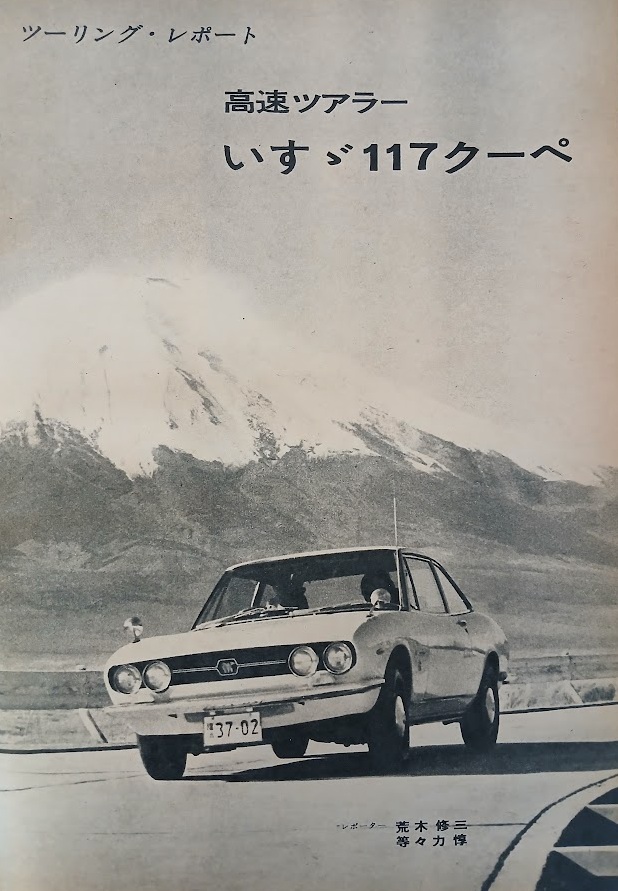
Isuzu 117 Coupe: High-Speed Tourer
At last, Isuzu has released the Isuzu 117 Coupe, the company’s interpretation of the ultimate luxury tourer. Its flowing lines, styled by the renowned Italian carrozzeria Ghia, have been eagerly awaited for mass production ever since the car’s appearance at the 13th Tokyo Motor Show. Seizing the opportunity, Motor Fan set out to evaluate the true capabilities of the 117 Coupe, undertaking a demanding 570km touring test over every kind of terrain, including expressways, mountain roads, and rough surfaces.
Through a Rainy Night
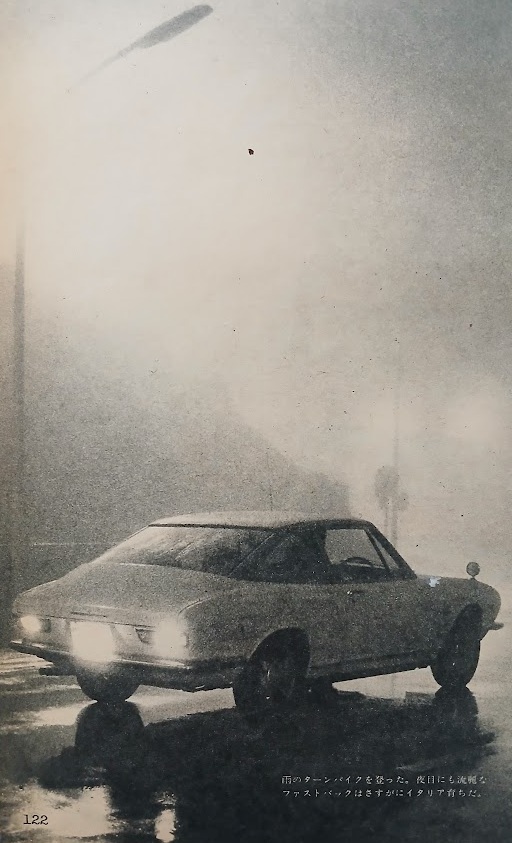
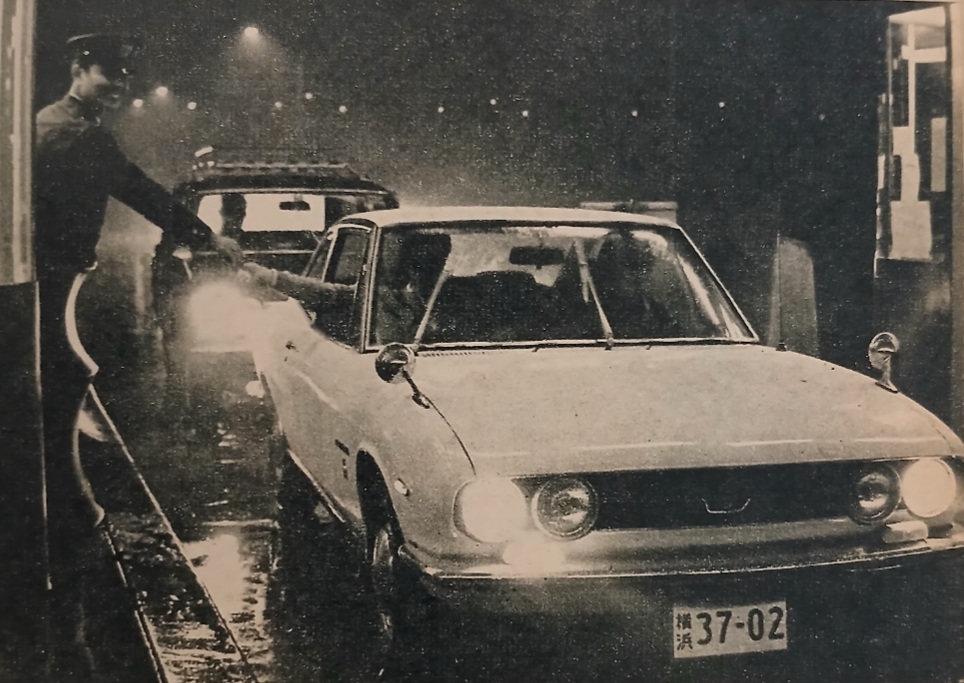
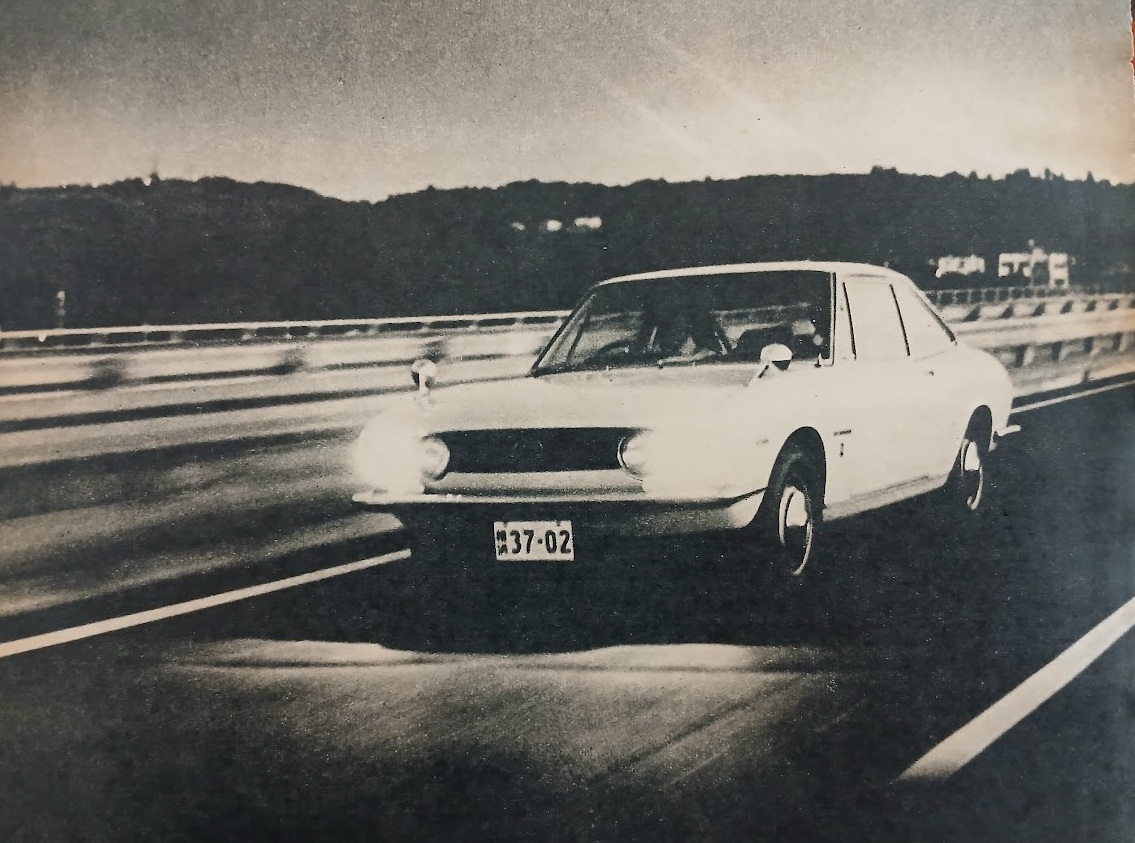
Finished in a pale cream color, the brand-new Isuzu 117 Coupe slipped out into the rainy Tokyo night on November 9, with the chill of deep autumn in the air.
In preparation, we had sought to plan a route capable of fully exploiting the abilities of this ultimate luxury tourer.
The test car’s odometer already showed more than 1,300 kilometers.
If this was the result of thoughtful preparation on the manufacturer’s part, it was a welcome one, sparing us the need for any break-in concerns.
Our route first took us along the Tomei Expressway toward Atsugi. The rain steadily grew heavier. From there we followed Route 246 to Matsuda, then turned onto Route 255 and continued on to Odawara.
To reach the mountains of Hakone, we chose the familiar Turnpike, with its steep gradients and demanding curves–just the right environs to draw out the car’s high-performance character.
Up to now, most of our test drives have been limited to daytime conditions. But if a car is to be called a tourer, then it cannot truly be judged without testing the ability to travel comfortably in all conditions that the name implies. Night driving thus becomes an important factor, and driving in the rain is equally significant.
For this trial, we deliberately chose to drive the Tokyo-to-Hakone route at night. Strangely enough, the rain turned out to be a blessing, perfectly fulfilling both conditions at once.
Leaving the city behind, the smooth, Italian-bred styling of the coupe stood out vividly under the glow of streetlights, clearly drawing people’s attention.
The Essence of the Fastback
Araki: This car was first shown two years ago at the 13th Motor Show, but even now it doesn’t feel dated at all. That’s impressive.
Todoroki: True. There have been quite a few fastback cars released lately, such as the Sunny Coupe and the Corolla Sprinter, but this one has a completely different kind of freshness. Of course, it’s probably unreasonable to compare it directly with those cars in the first place.
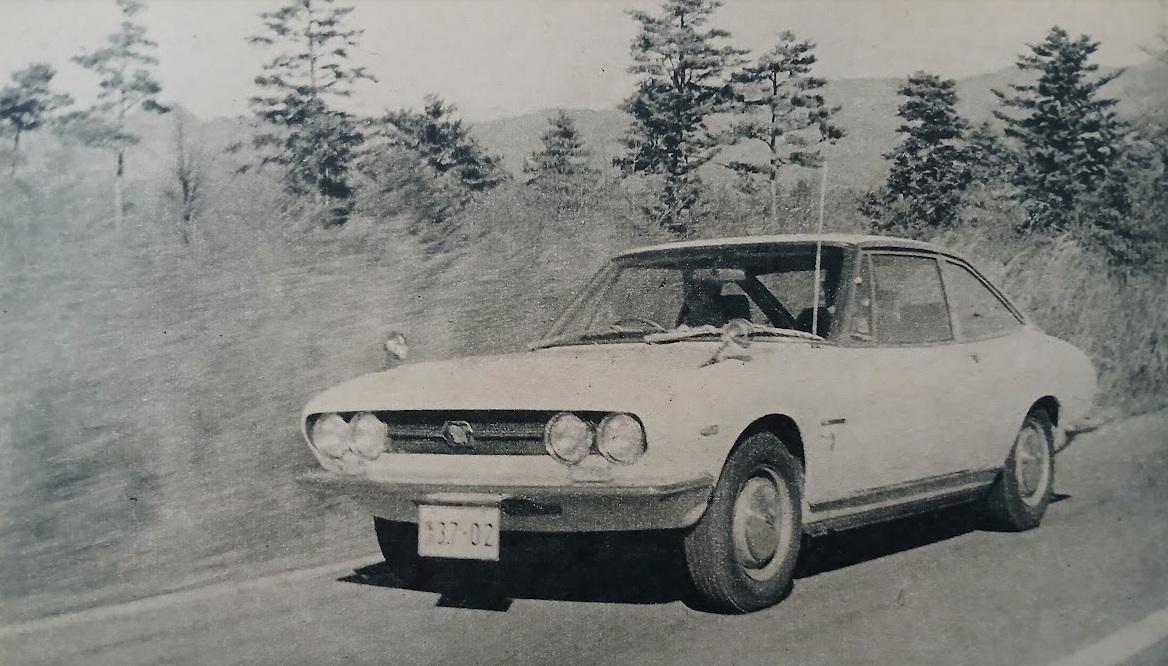
Araki: The lines from the front through the sides are very natural. “Graceful” is exactly the right word for it.
Todoroki: True, although one could say it’s perhaps a little too delicate. Many people will admire its unadorned, refined beauty, but it doesn’t necessarily make a powerful, overwhelming impression.
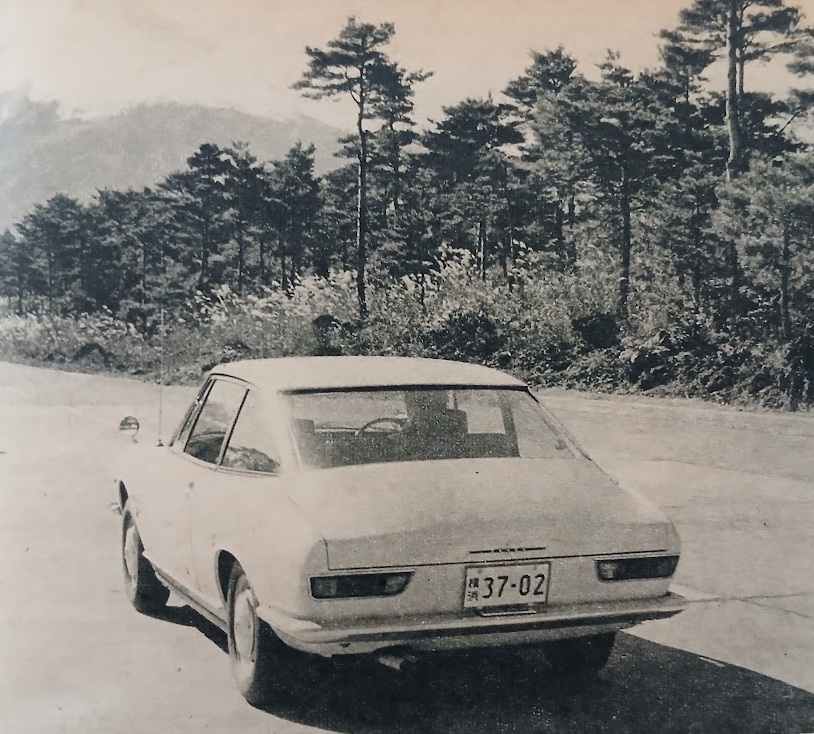
Araki: Even so, wouldn’t you say that the way the roofline flows down and merges seamlessly into the rear fenders really captures the essence of a fastback?
Todoroki: Yes, and the slender rear pillars finished in stainless steel work particularly well. In fact, this applies to the entire design. It’s all very clean and uncluttered.
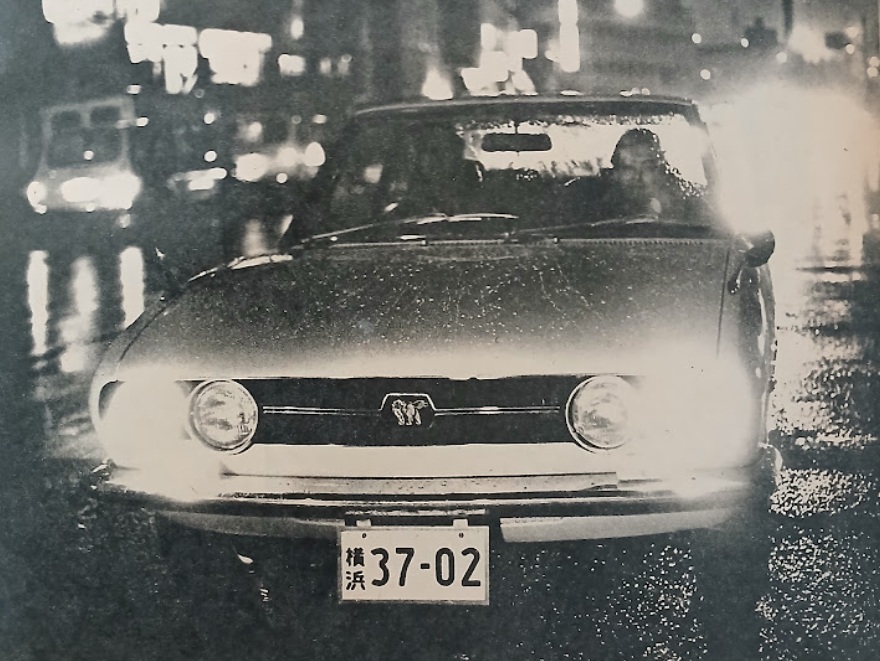
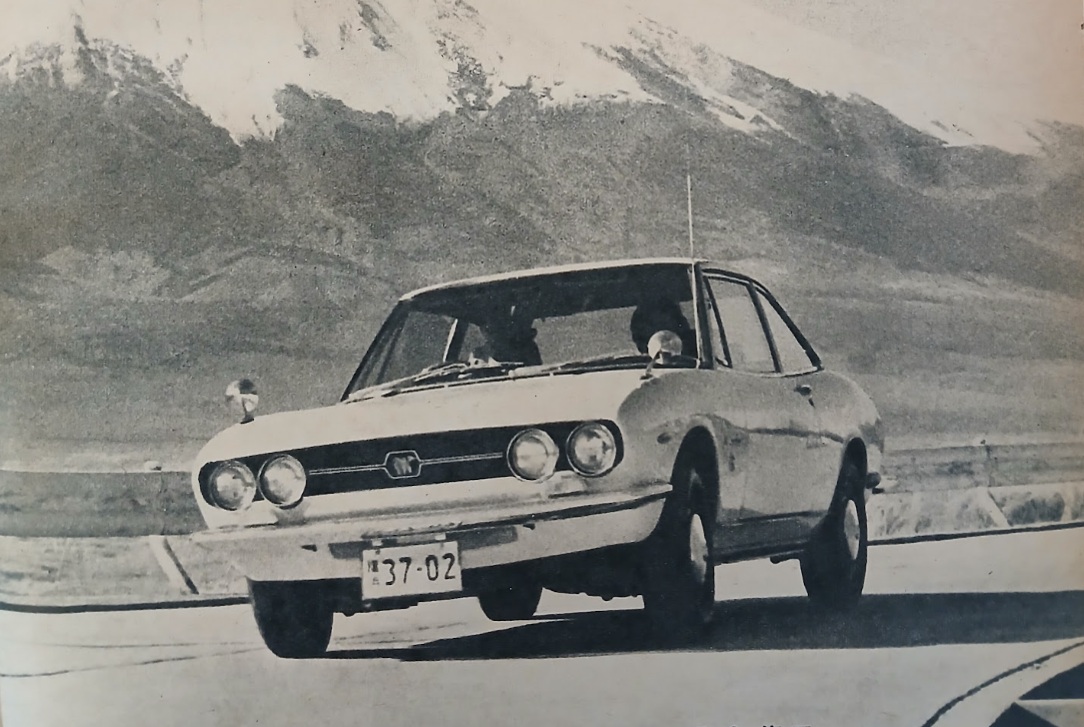
Araki: The front grille is stylish too: a black mesh background with a thin horizontal chrome bar running across it, and the lion emblem placed at the center. It’s tasteful in a subtly clever way. That said, when viewed from the rear, despite the overall neatness, the coke-bottle treatment bulges a bit and comes across as slightly heavy.
Todoroki: I don’t see it that way myself. It’s less a “coke-bottle line” than a natural flow, and the degree of fender flare doesn’t upset the overall balance. From the front it looks extremely slim, while from the rear it has a certain voluptuous glamour. It’s the harmony between the two that should be appreciated.
Araki: Despite having a road clearance of 180mm, which is about the same as a sedan, the overall height is an extremely low 1320mm. With this layout, headroom becomes a little tight, but the seats ought to be able to be set lower. Of course, doing so would make the nose appear visually longer to the driver, making the car more difficult to place, so there’s a trade-off involved.
High-Grade Appointments
As we drove, heavy rain lashed the Tomei Expressway. The Tokyo-Atsugi section is wide, with three lanes in each direction, but has no road lighting; the powerful quad headlights pierced effectively through the darkness ahead.
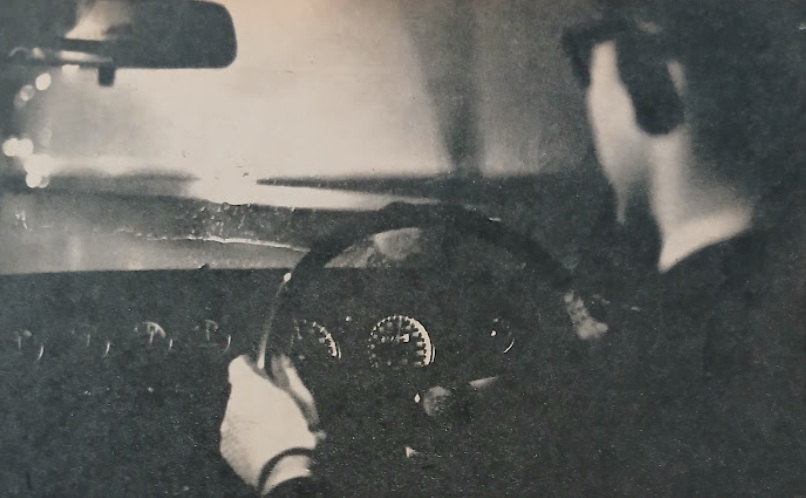
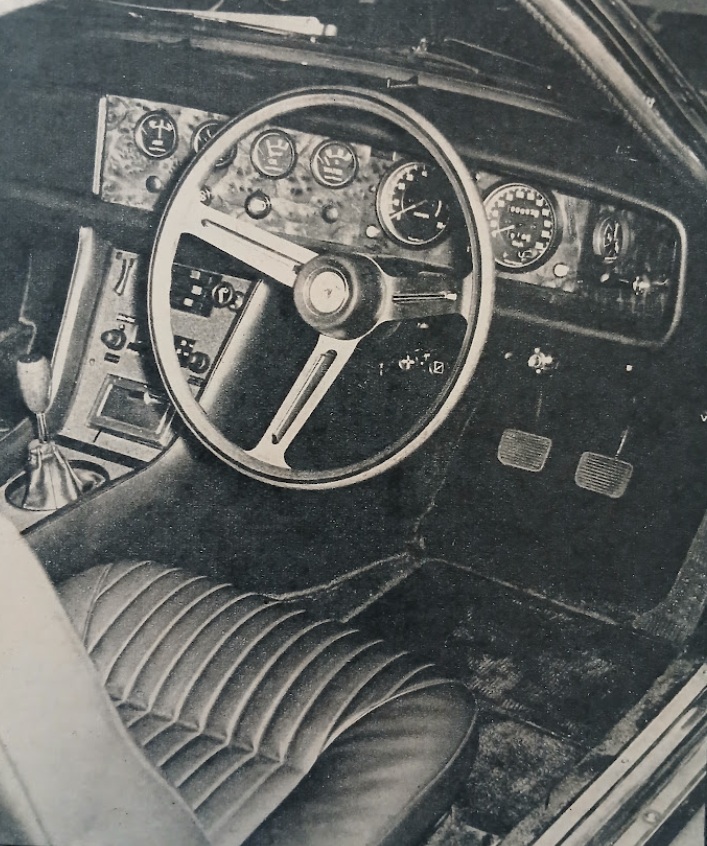
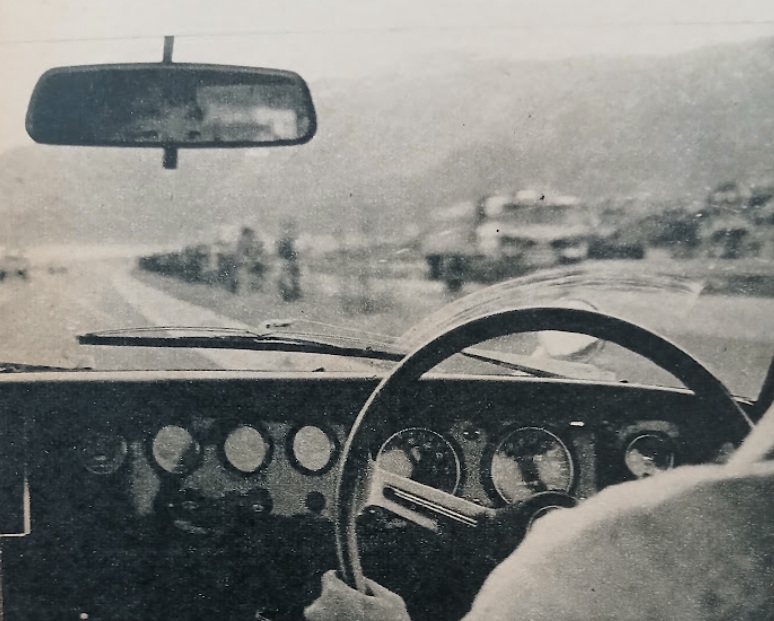
The cockpit is designed to wrap around the driver, with the dashboard angled around the seating position, a feature previously unseen in domestic cars. Directly ahead are two large circular instruments: on the right, a speedometer graduated to 220km/h; on the left, a tachometer reading up to 8000rpm, with a yellow zone beginning at 6500rpm and the red zone from 7000rpm.
To the left, a panel turned toward the driver carries four smaller gauges. Arranged from nearest to farthest are gauges for water temperature, oil pressure, fuel, and ammeter. Below them are pull switches for the wipers and lights. Further to the right of the speedometer is another inward-facing panel housing the clock.
The panels are finished in genuine Taiwanese camphor wood, its beautiful cloud-like grain left visible. Walnut is used for the steering wheel and gearshift knob, while the stainless-steel–spoked steering wheel, with its windowed horn bars, provides a tasteful accent. These elements combine to create a superb blend of luxurious richness and sporting feel.
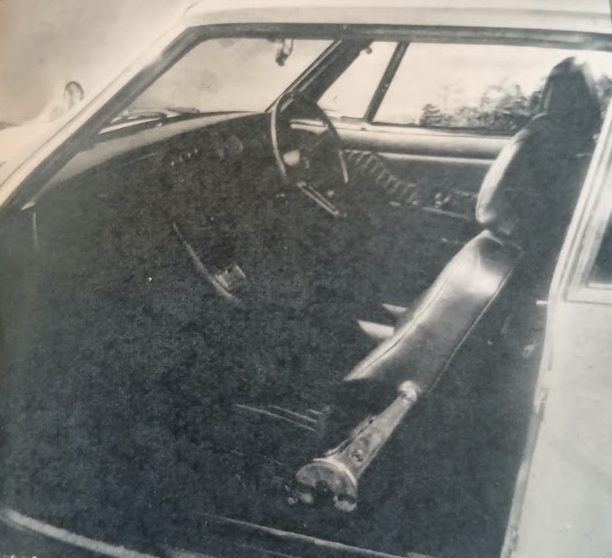
Lowering overall height to enhance styling beauty inevitably compromises interior space, and countering this requires careful attention to details such as the inclination of the occupants’ upper bodies and lowering the hip point. In this car, headroom is set at 850mm–a figure worth noting, as it corresponds to the FIA’s dimensional criterion distinguishing a true four-seater from a 2+2. With only seat cushion deflection allowed beyond this figure, the design ensures adequate accommodation not only for the front seats but for the rear seats as well.
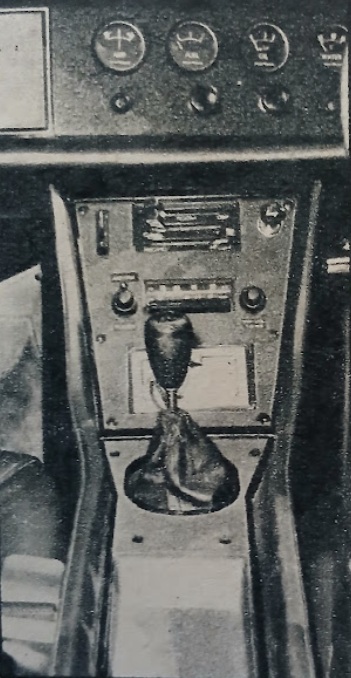
The center console houses an AM/FM self-seeking radio and the heater controls, with a short shift lever emerging from its center. Everywhere you look, the interior gives the impression of being filled with genuinely expensive components.
Form-Fitting Seats
Todoroki: First of all, these seats are excellent! In fact, I’d go as far as saying they’re more comfortable than in any domestic car that’s been released to date.
Araki: I agree. Especially the way the lumbar area is shaped to support the body; it’s hard to describe just how comfortable that feels. The only downside is that the recline notches are a bit coarse. At my height of 170cm, I found the seatback was always just a little too far in one direction or the other; it was tricky to find the perfect position.
Todoroki: In a car this expensive, a stepless reclining mechanism seems more appropriate. A friction-type adjustment would solve that problem immediately.
The shift lever is also very well judged. Your left hand naturally drops from the wheel and lands right where it should. It’s hard to find any fault there.
Araki: I do have one minor quibble with the shift pattern. It’s not the standard layout, so when downshifting from third to second, it can occasionally “clunk” against reverse.
Todoroki: The clutch isn’t too heavy, nor is it too light. It’s mechanically operated, but it has a really satisfying feel.
Araki: The pedal layout as a whole shows a lot of careful thought. If I were being picky, though, I’d like a left-foot rest.
Todoroki: Given the character of this car, there probably isn’t much need for heel-and-toe driving, but if you tried it, it would be very easy to do.
Araki: This is something you wouldn’t notice unless you drove at night, but in the Florian, by the same Italian designer, the light switches have small tactile rings to make them easy to distinguish. That’s a clever idea. I wonder why they didn’t adopt it on the 117 Coupe?
Todoroki: Well, you get used to it, and that’s true for most other cars anyway. By the way, the wipers are excellent.
Araki: Their sweep area is wide, and they park cleanly when turned off. Plus, they completely clear the area near the right pillar, so the right fender mirror remains perfectly visible.
Todoroki: And when you operate the windshield washers, the wipers work along with them. The only thing is, the front pillar seems a bit thick. This is probably related to structural strength, but it does create a slightly larger blind spot.
Araki: A touch of over-engineering, perhaps. That said, while the interior is luxurious, it’s still very “Isuzu” in character. Both the pillars and the dashboard use expensive materials in their construction, but some of the finishing is still a little rough. The warning lamps, in particular, feel somewhat crude–at least a diamond-cut finish would have been nicer.
Pleasant-to-the-Touch Steering Wheel
Todoroki: It’s true; the panels are high-end, made of Taiwanese camphor wood backed with aluminum, but the edges and screw heads could use a bit more careful finishing. On the other hand, the warning lamps–for the doors (pale orange), parking brake (red), and defogger (sky blue)–all look soft and well-integrated. And the defogger itself worked very effectively.
Araki: Speaking of expensive materials, the impression from the walnut steering wheel is also very good.
Todoroki: At 39cm in diameter, it’s on the smaller side, and the thickness of the grip is just right. It’s a well-crafted wheel that really lets the driver feel quality of the materials.
Araki: What did you think of the rear seat?
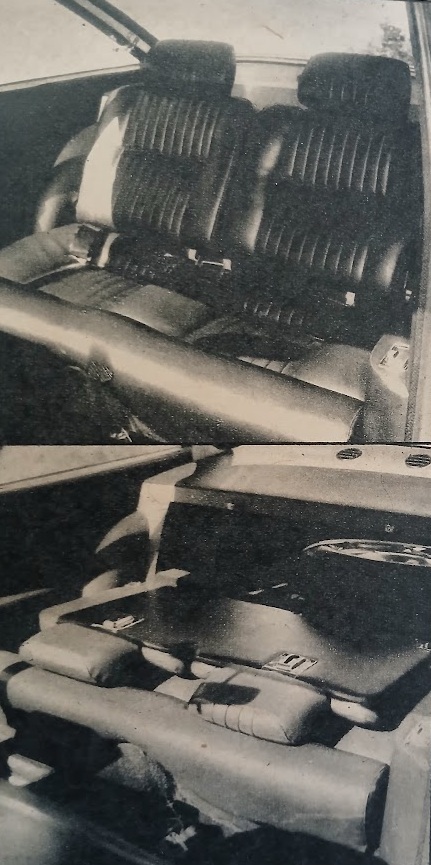
Todoroki: The shape of the seats is reminiscent of a Porsche. They’re semi-bucket types, offering relatively good comfort. For someone 173cm tall, the headroom is admittedly limited.
Araki: I’ll admit the rear seats are far from an afterthought. But in summer, they’re probably going to get hot, given the large glass area and the slope of the rear window.
Todoroki: I’d like to see sunshades used there, with chrome trim applied like those used on the Corona Mark II 1900 Hardtop SL. The sculpted armrests on the sides of the rear seats are very well done. You can even use them for small-item storage, which is quite convenient.
Araki: The rear seats can recline, but only slightly, so it doesn’t make much difference. The mechanism is also a bit tricky to operate by oneself when seated.
Todoroki: Still, the way the seatbacks fold forward to connect with the trunk and create a flat, spacious luggage area is essential for a grand touring car. It’s especially useful in situations like today’s rainy conditions.
Araki: I also appreciated that the trunk is fully carpeted; it adds a touch of luxury.
Successful Ease of Handling
We spent the night in Hakone, and the next day dawned clear and crisp–perfect touring weather. Our aim was simple: to drive for as long and as extensively as possible, over as many types of road conditions as we could find. That, we felt, was the true service a test drive could offer readers. So at 5:00am, we fired up the engine.
The temperature was 2°C, and the car had been parked outside all night, yet it started without hesitation. Following the owner’s manual, we pulled the choke and simply turned the ignition without applying the throttle. The engine caught immediately with a smooth, steady surge; even in the chill, warm‑up time was minimal. Cars like this are often fussy to start or prone to temperamental behavior, but the 117 Coupe is notably easy to handle in this regard.
The carburetors are Mikuni‑Solex 40 PHH twin‑choke units, with a 40mm bore, and they contribute to performance that is more than adequate for sporty driving.
Solex carbs are well known in racing circles for their stable fuel delivery even on steep slopes and high volumetric efficiency. Starting, though, can sometimes be tricky.
Yet for everyday drivers, the Isuzu 117 Coupe’s starting quirks must be understood and managed; otherwise, the car could hardly be called practical. A starter system is fitted to assist, but in this case the throttle valves act like the choke in a conventional carburetor, so it’s essential not to rev the engine. Once you know this, there’s no risk of struggling to get the car going.
We crossed Otome Pass to Gotemba, then took Route 246 across to Susono, climbing the Kannosaka Pass along the way.
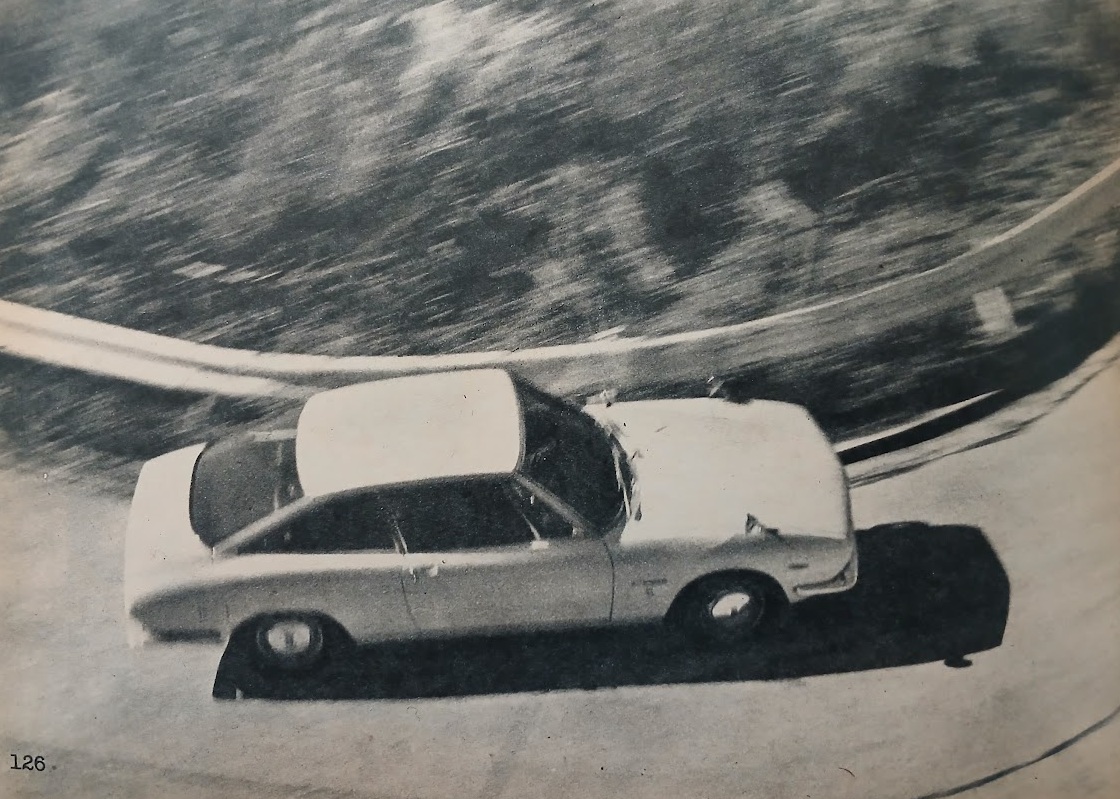
On these grades, the character of the DOHC 1600cc engine became strikingly clear. Despite the car’s 1050kg curb weight with only two aboard–arguably heavy for a 2+2 coupe–light pressure on the throttle at around 70km/h sends the engine powering effortlessly through steep inclines or tight uphill corners with the smoothness of an electric motor.
Isuzu Tradition Lives in the DOHC
What’s the secret? The engine uses the block from the Bellett 1600GT, with the valve train upgraded to DOHC to endure high revs, but with Isuzu’s underlying philosophy of strong low-speed torque remaining fully intact.
Araki: They’ve essentially super-tuned the Bellett GT engine, but to do so using a block designed for pushrod operation must have taken a lot of ingenuity.
Todoroki: Considering the target production of just 50 cars per month, reusing parts is a necessity for cost management. You could say it’s the kind of tuning a specialty shop might do, but here the manufacturer has applied it on a much larger scale with a DOHC head, enabling high revs for power while keeping the traditional Isuzu low-speed torque intact.
Araki: The same goes for the transmission. The relatively low gear ratios make city driving easy, while at high speed the engine’s extended range covers everything. They’ve managed to balance user-friendly drivability with a car that can still be driven hard.
That said… I’d still like a fifth gear. At highway speeds it would lower engine noise and make things more relaxed. The car’s geared a little low, and the engine’s revs run high even on the expressway.
Todoroki: This engine is so flexible that a 5-speed gearbox might not technically be necessary. Even so, considering fuel economy, noise, and the car’s class, it would probably be better to have one.
The engine’s feel is soft and relaxed. You can cruise comfortably on half throttle at any time. Of course, if you want to, it will run as hard as you like, but it creates a mood that doesn’t make you want to hurry.
Araki: I agree. Its response isn’t sharp in the sense of being edgy. Rather, its appeal lies in that feeling of abundant power in reserve. That said, whether due to the transmission or other sources, noise is an issue. In particular, the “booming” sound during engine braking caught my attention.
Todoroki: Still, the quality of the sound is high, so it’s not really unpleasant to the ear.
Araki: For a top-class grand touring car, quietness is a major requirement. I couldn’t help but feel slight echoes of the Bellett in that respect… that was a bit disappointing.
Todoroki: Still, for a Solex-carbureted engine, the low-speed tuning is excellent, and the absence of intake noise is something I think deserves special mention.
Climbing the Fuji Subaru Line
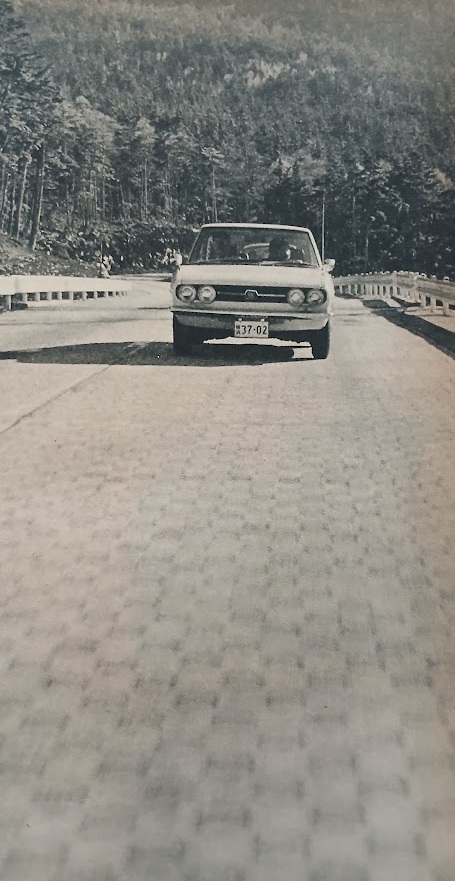
From Route 139 we headed into Fujiyoshida, and from there made a single, uninterrupted climb up the Fuji Subaru Line to the fifth station of Mount Fuji. Stretching a little over 29km in length, this fully paved, two-lane highland highway is a first-class scenic road, outstanding both in scale and in the views it offers.
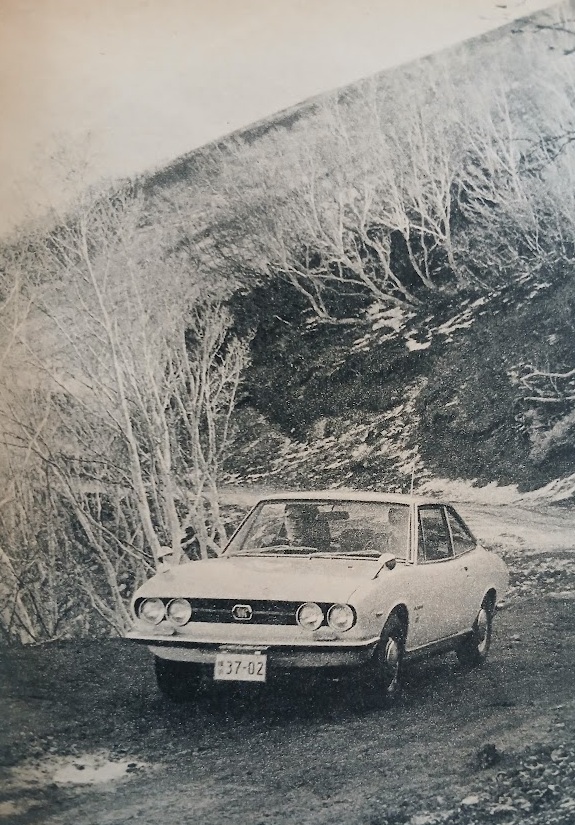
As we climbed, the surrounding scenery changed from red pine forests to birch woods, then to open scrubland thick with low shrubs. Higher still, the mountainside turns harsh and barren, strewn with loose volcanic rock.
The fifth station sits at an elevation of 2,340m, and here there was still snow on the ground. Up to this point, we were able to enjoy the 117 Coupe’s thoroughbred performance to the fullest. Even pulling second gear up to 90km/h and third to 120km/h, there was still ample power in reserve. Slower cars climbing steadily ahead were reeled in almost effortlessly.
A wonderfully satisfying surge of acceleration constantly urges you on. Body roll in corners is minimal. Although the rear suspension is an orthodox rigid axle located by asymmetric semi-elliptic leaf springs, its road holding is beyond reproach, thanks to the car’s low center of gravity, well-matched tires, and judiciously chosen spring rates.
To prevent wind-up during launch, a torque rod is fitted between the side members and the rear axle housing. Energy is absorbed through the deflection of rubber bushings mounted at both ends of the rod. As a result, it also serves naturally to increase the lateral rigidity of the leaf springs.
Excellent Road Contact is Another Strength
From the fifth station we continued on to the Takizawa forest road. Even on rough surfaces the car maintains good road holding, and thanks to its generous ground clearance it can tackle such conditions without causing undue concern. However, because the road surface was frozen, and since we had no chains with us, we were forced to turn back before going too far.
Araki: On rough roads, the rear wheels tend to hop, don’t they? Isuzu has plenty of experience with independent suspension, so why didn’t they adopt it for this car?
Todoroki: That’s a fair question, but overall, this suspension has a character that’s in no way inferior to a good independent setup. Given the nature of this car, it’s unlikely to be driven on rough roads very often anyway.
What impressed me most were the tires. A large part of the excellent road holding seems to be attributable to them. Even in fairly tight corners, they hardly squealed at all.
Araki: They’re using 6.45H-14 tires, which are quite wide for a 1.6-liter car, and that clearly improves grip. And they don’t seem to pick up surface irregularities much, either. That may well be due to the gas-charged dampers.
Todoroki: I would say the steering characteristics are mildly understeering, but close to neutral, wouldn’t you?
Araki: I think it maintains understeer even under fairly high lateral g. For a ball-and-nut system, the steering does feel a bit heavy.
Todoroki: I imagine they chose this layout to eliminate kickback shocks being transmitted from the road, while still preserving some of the feel of a sporty rack-and-pinion setup. In that sense, the character isn’t bad at all.
Araki: One thing I noticed when we turned around on the forest road was that the turning circle is on the large side.
Todoroki: At 5.2m it certainly isn’t small, but in practice it rarely becomes a problem.
A Tourer Suited to Japanese Conditions
Descending the Subaru Line, we drove along National Route 139, which loops around the Fuji Five Lakes. The mountains were blanketed in autumn foliage, and the smooth, winding road threaded its way through the valleys, until suddenly the hairpins ended and the broad expanse of the Fuji foothills opened up before us. Mount Fuji, towering with its snow-capped peak, looked just like a painting.
The Fujinomiya Toll Road stretches straight on through the pastures of the Asagiri Highlands. Passing Shiraito Falls along the way, we then made a single, uninterrupted run to the Fujinomiya Interchange on the Tomei Expressway.
Even amid the patchy traffic within Fujinomiya City, the 117 Coupe proved extremely easy to drive, negotiating the flow as smoothly as an ordinary sedan. This is precisely where the car’s usability, developed with Japan’s uniquely inconsistent road conditions in mind, really shows its value.
Using brake feel as just one example, the system inspires confidence at high speeds, yet in the cramped, stop-and-go conditions of city streets it does not require excessive pedal effort and delivers a very well-modulated response. One can’t help thinking, “They’ve polished this to a remarkable degree.”
Among foreign cars–especially European high-speed tourers–it is not uncommon to encounter brakes that feel uncertain at low speeds, particularly those equipped with discs. In this respect, however, the 117 Coupe clearly reflects careful development aimed at ensuring that even inexperienced drivers feel no anxiety at all.
The Fuji-Shizuoka section of the Tomei Expressway is, at present, the only seaside highway open in Japan. With strong winds blowing in directly from Suruga Bay, cars are relentlessly buffeted, and no matter how good the road surface may be, failing to account for these crosswinds can sometimes lead to trouble.
On this day the weather was clear, but winds exceeding 10m/s were blowing, and the shock is especially noticeable when emerging from tunnels.
The 117 Coupe, however, behaved quite differently from most cars. As one would expect from its aerodynamically refined shape, the faster it went, the more it seemed to cling to the road. Even in strong crosswinds, it quickly became apparent that the car was remarkably resistant to their effects.
One more thing surprised us: even at around 100km/h, opening the window slightly allowed almost no wind to enter the cabin from that side.
Surprisingly Good Fuel Economy
Returning to Fujinomiya, we continued via Route 1 and over the Hakone Pass back to Tokyo. Over the full distance of 573km–368km of which was measured from Lake Yamanaka to Tokyo–the fuel consumption came out to 9.05km/l. The manufacturer cites an average touring fuel economy of 10km/l, and considering how hard we drove on this trip, a typical driver should have no trouble maintaining this figure. For a GT car, it can be considered quite economical.
Todoroki: Entering the Tomei, I floored the accelerator to get up to speed. I felt nothing like a sudden jolt of acceleration, but when I looked at the speedometer, I was surprised at how fast we were actually going–that’s the real impression this car gives.
Araki: The feel is smooth and soft. Those who expect razor-sharp response might be disappointed, but isn’t this precisely the kind of character one associates with European cars?
Outstanding Stability
Todoroki: One of its characteristics is that you don’t really feel the speed. Despite the large glass area, the view from the driving position feels distant. Plus, the stability is exceptional, so it doesn’t give the impression of going fast.
Araki: It was barely affected by crosswinds. Perhaps that comes from the body style.
Todoroki: I think so. It really demonstrates the excellence of the car’s design. Safety is always a concern, but I’ve always felt that preventing collisions is more important than surviving them after they happen. Features like this car’s resistance to wind contribute to exactly that. For instance, when a truck suddenly pulled into the passing lane, I had to brake hard at high speed…
Araki: At moments like that, when you slam the brakes instinctively, it feels as if a giant hand is gently pulling you back. With these brakes, you can feel secure even when braking from high speed…
Todoroki: This car uses servo-assisted disc brakes at the front, and I have to say the reliability is extremely high. The feel is exquisite too…
Araki: Nearing top speed, I could feel a slight vibration in the body.
Todoroki: Even so, in the case of this car, it wasn’t something that really bothered me.
I almost forgot–the horn has a wonderful tone. It’s a crisp sound, unlike anything I’ve heard before, and once you hear it you immediately know it’s a 117 Coupe. Quite distinctive.
Araki: The tone is good, and it carries well. It’s perfect for highways. There are a few minor things you might quibble over, but after driving over 500km, you really appreciate the car’s fundamental qualities.
Todoroki: We tested it under all sorts of conditions, and in terms of overall performance, it strikes me as exactly what a grand touring car should be. And, well… at a price of 1.72 million yen, it certainly ought to be…
Postscript: Story Photos