Isuzu 117 Coupe (1969)
Publication: Car Graphic
Format: Road Impressions
Date: January 1969
Author: Shotaro Kobayashi
Road testing the Isuzu 117 Coupe
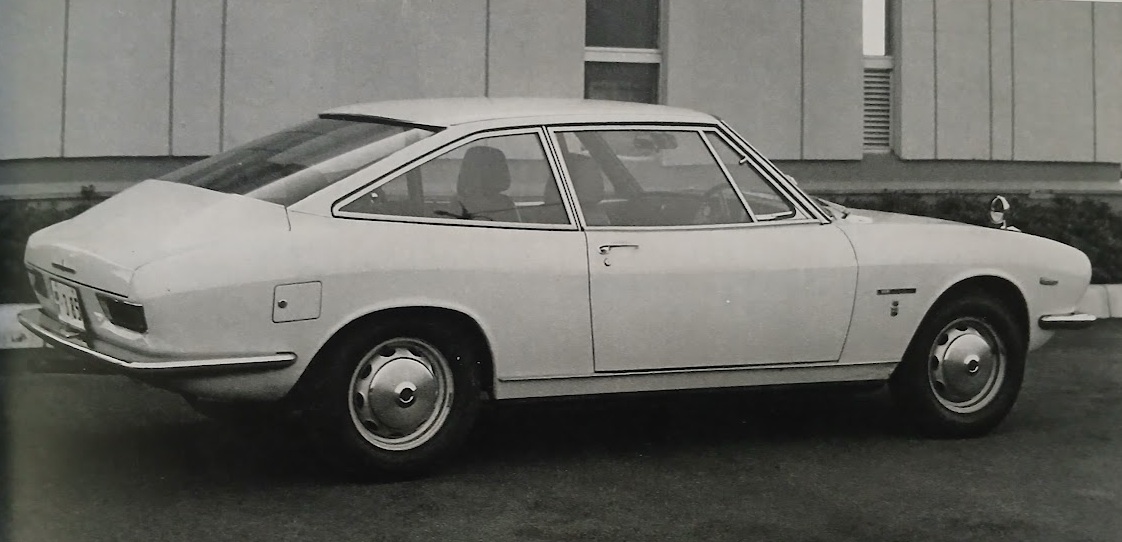
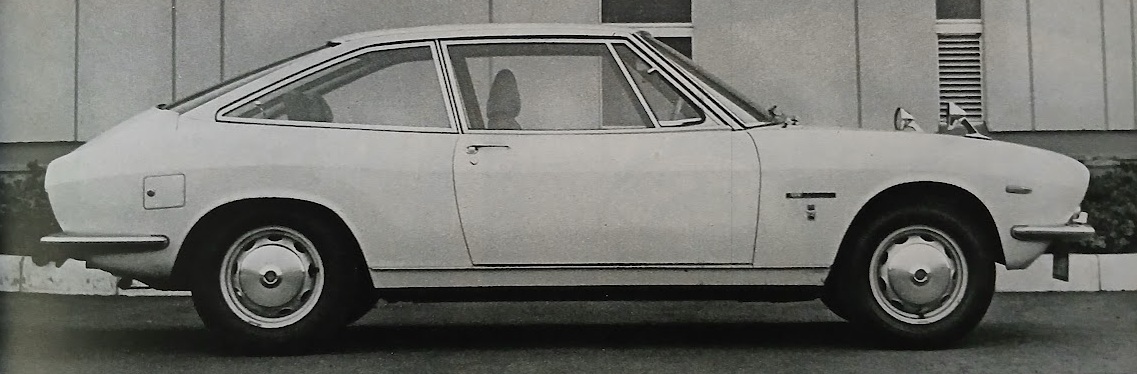
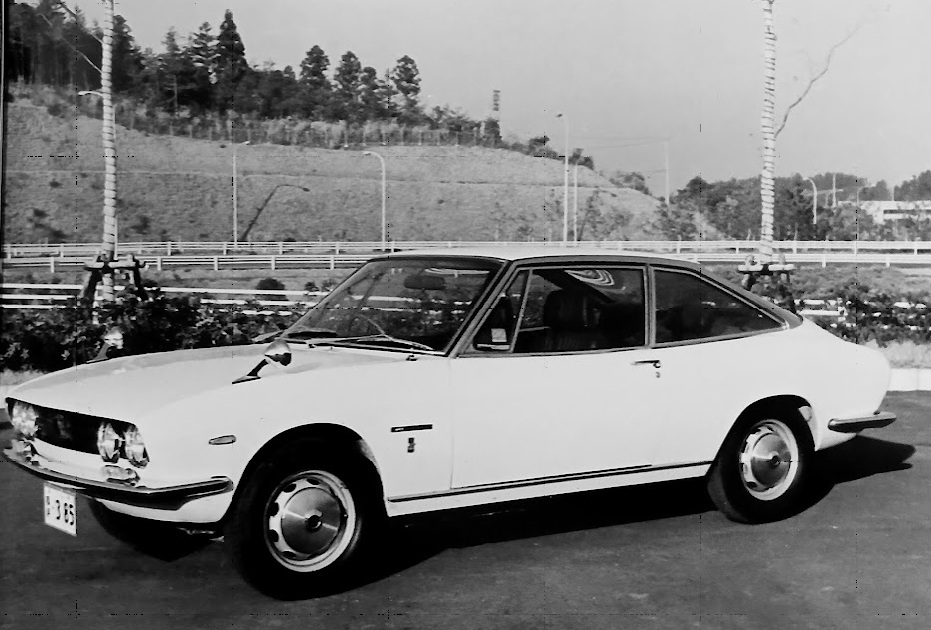
Two years ago, the beautiful form of the Isuzu-Ghia-designed 117 Coupe first appeared at the Tokyo Motor Show. After that, however, there was no sign of it entering production, and we began to fear that it might be yet another beauty fated for a short life, remaining no more than a show model. Looking back now, however, we know that throughout those two years an intensive development program was proceeding quietly and without interruption behind the scenes.
Having now subjected the newly released Isuzu 117 Coupe to a thorough test covering some 500km, we know that those two years of waiting were by no means wasted. Some manufacturers, under pressure from their sales departments, reluctantly put cars on the market while they are still at what might be called an “extended prototype” stage of development. There are even automotive engineers who openly declare that they would be afraid to buy a car immediately after its introduction. The attitude of those responsible for the design and manufacture of the Isuzu 117 Coupe, however, is so conscientious that it might almost be called old-fashioned. Until their consciences as engineers were satisfied, no matter how strong the demands of the sales department, they would not consider putting a “half-baked” prototype into production.
The test car was a very early production model, chassis No. 18, with a pale yellow body and subdued dark-blue interior, and had already covered some 3,250km. To give our conclusion first, considering its performance, handling, ride and accommodation as a whole, we can say with confidence that the Isuzu 117 ranks among the world’s finest 1600cc-class four-seat coupes.
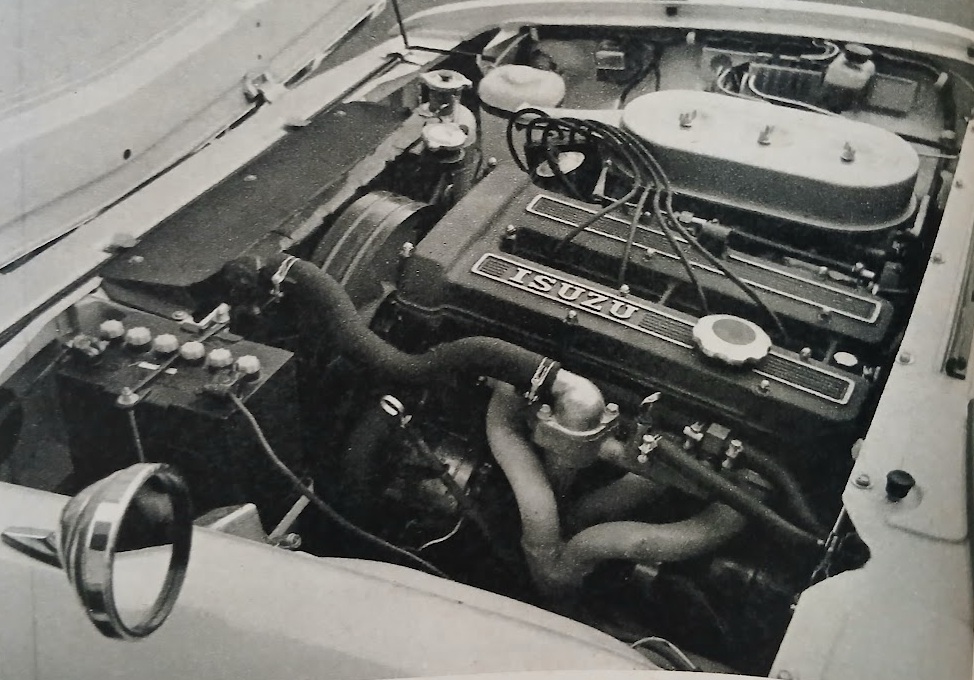
First of all, the performance is outstanding by any standard. The DOHC 1584cc engine has a compression ratio of 10.3 and two twin-choke Solex carburetors, producing 120ps/6400rpm and 14.5mkg/5000rpm. From the specifications alone, it would seem to be a very “hot” engine, but in practice it is remarkably flexible, and we were surprised to find it equally easy to use in crowded city traffic and on the highway.
Unfortunately, many Japanese four-cylinder engines remain rough at high speeds, even with DOHC and five main bearings. The 117 engine, however, revs lightly and smoothly beyond 7000rpm, without any noticeable vibration period. On Japanese roads, absolute maximum speed has little practical significance, but our test car not only reached an indicated 185km/h (at approximately 6300rpm) without difficulty, but maintained this speed for several kilometers.
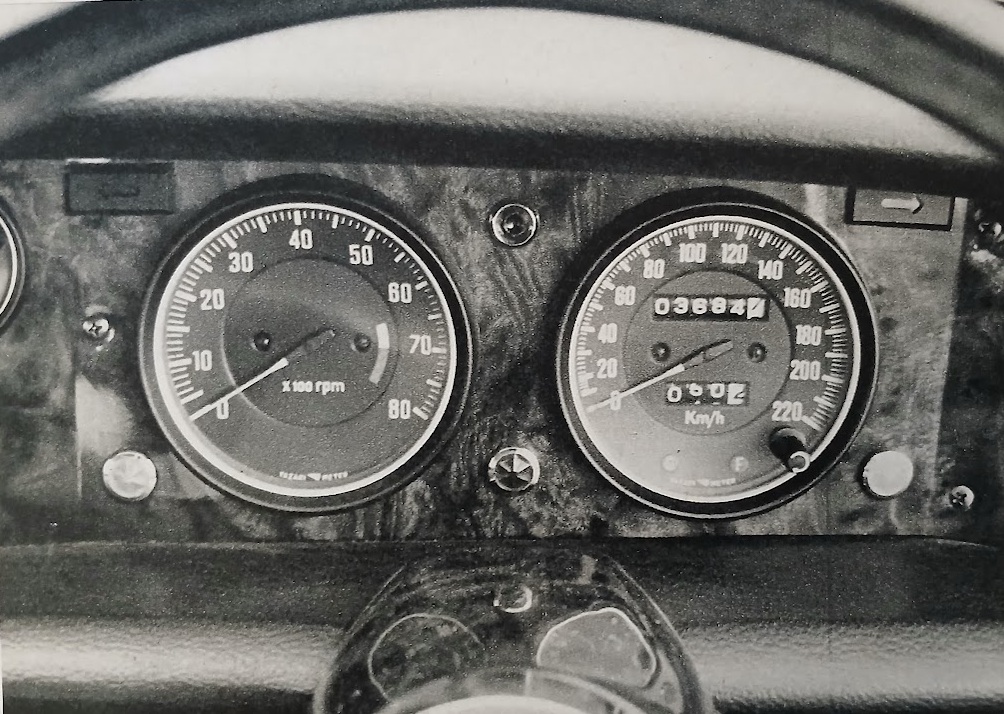
Two final drive ratios are available (4.1 as standard and 3.727 as an option). The test car had the 4.1 ratio and was fitted with Dunlop Grand Speed GS1 MkII 6.45H-14-4PR tires. By calculation, the catalog maximum of 190km/h should be reached at 7000rpm, but because the diameter of cross-ply tires increases by as much as 7% at high speed, it is said that 190km/h is actually reached at around 6700rpm (although this requires removal of the air cleaner; our test, of course, was conducted with the car left as standard). The rev counter has a yellow zone from 6400-7000rpm and a red zone from 7000-8000rpm. At maximum speed the engine is therefore running very close to the red zone, but there is still some margin in both breathing efficiency and the valve gear, and one has the impression that another 5km/h would be possible on a downhill grade.
The engine is exceptionally free from vibration and quiet throughout the rev range. Accompanying us on this test was Mr. Howard, technical editor of Autocar, who happened to be visiting Japan on assignment and took a turn at the wheel. He gave the engine high marks, saying that it was considerably smoother than the Lotus-Ford DOHC.
There was, however, some vibration in the driveline of the test car beginning at about 155km/h. It disappeared again as speed was increased, but returned at 180km/h. Since the vibration remained even when the transmission was shifted into neutral, the engine could not have been the cause. Nor was there any vibration through the steering, ruling out front-wheel imbalance. The most likely cause appeared to be either the propeller shaft or imbalance of the rear wheels.
For the Isuzu 117, 150km/h is an entirely effortless highway cruising speed. Engine speed is only about 5400rpm, and wind noise from the aerodynamically efficient body is very low, so the noise level inside the car is low enough to permit conversation with a passenger in a normal voice. Directional stability is so good that there is no sense of unease even with one’s hands off the steering wheel, and consequently there is not even the degree of tension one would feel driving an ordinary sedan at 100km/h.
We drove continuously for about 20 minutes at speeds between 140-180km/h. Water temperature remained at 80°C throughout, while the Dunlop GS1 tires (set to the specified high-speed pressure of 1.8kg/cm²) became only slightly warm. Oil pressure, however, fell from an initial 6kg/cm² to 4kg/cm² after ten minutes at these speeds. For circuit driving and similar use, the manufacturer recommends fitting the optional oil cooler.
Acceleration performance is outstanding for a luxurious 1.6-liter coupe. According to the manufacturer, the 0-400m time is 16.8 seconds with four occupants aboard. Since this was not a formal road test, we did not carry out performance measurements, but our impression was that this figure could easily be achieved. The engine has no trace of the harshness often associated with high-performance units, and with a vehicle weight of 1050kg, acceleration from rest never feels particularly dramatic. Yet as the cars in the rear-view mirror rapidly become smaller, one realizes that the car is in fact delivering tremendous acceleration.
The gearbox is very well matched to the engine characteristics and vehicle weight; taken up to 6400rpm, where the yellow zone begins, the car reaches 94km/h in second and 140km/h in third. The shift action is also pleasant and the synchromesh effective, but unfortunately the gearbox produces a certain amount of gear noise, while above 5000rpm there is also a slight vibration from the gearshaft. Since the overall noise level is exceptionally low, the gearbox sounds are particularly conspicuous, which is truly regrettable. We would like to see one further effort made in this respect. The clutch has a helper spring, giving light pedal effort, and engagement is exceptionally smooth.
One of the virtues of this engine is that it produces strong torque over an unusually wide range of engine speeds. The torque curve shows that from 2500-6000rpm it develops at least 90% of its maximum torque. For example, in top gear, the car will run smoothly and without strain at 40km/h, accelerate strongly from 50km/h, and even at 140km/h respond clearly when the throttle is opened. The reserve of power around 120-140km/h in particular is difficult to believe for a car with an engine of only 1.6 liters. For this reason, we felt that an overdrive fifth gear for economical high-speed highway cruising would make it better still.
The engine remained in excellent condition throughout our 500km of high-speed testing. From cold, it starts immediately with the choke pulled, settles within a few minutes to a steady 700rpm idle, and will pull strongly even if driven away at once. In a long traffic jam the idle becomes somewhat rough (though the water temperature remains completely unchanged), but never to the point of stalling.
We were just as deeply impressed by the handling as by the performance. The quickest way to test handling is to drive hard up and down the winding roads of Hakone, and here the Isuzu 117 comes very close to the Fiat 124 Coupe, which previously scored exceptionally well in this test. This was not only the opinion of the C/G test group; the Autocar road tester accompanying us agreed completely. Incidentally, the Fiat 124 is recognized worldwide as an outstanding car that marked a new era in the handling of practical cars with rigid rear axles.
Moreover, the Fiat we tested was fitted with Pirelli radial tires, while the Isuzu was running on cross-ply Dunlop GS1s. These are low-profile H-rated tires (a high-speed type capable of continuous running at 175km/h), and are fully suited to the Isuzu 117’s performance potential. At the specified pressure of 1.8kg/cm², they coped with everything from sustained 140-180km/h running to high-speed cornering with plenty in reserve. The handling maintains a very natural, mild understeer right up to high speeds.
Steering effort remains appropriately weighted (or perhaps one should say appropriately light) regardless of speed. The steering system has high rigidity and response is excellent. It takes about three turns from lock to lock, but because there is virtually no free play, the steering feels extremely sharp. At the same time, kickback from the road surface is effectively isolated, and the fact that almost no reaction is transmitted to the hands even on rough roads is particularly noteworthy.
The Dunlop GS1 has a fairly hard tread and, with some suspensions, is a tire that can produce a decidedly harsh ride, but in the Isuzu 117 this characteristic is skillfully suppressed. Even with stiffer radial tires (165HR-14s are optional), this suspension would probably make the low-speed harshness characteristic of radials hardly noticeable.
Road holding is far better than one would expect from an entirely conventional suspension layout (coil springs and double wishbones at the front, and a rigid axle located by semi-elliptic leaf springs and torque rods). Roll in corners is kept to a reasonable degree, and the Dunlop GS1s hold the road remarkably well. Particularly impressive is the fact that even when cornering over surfaces with small irregularities, rear-wheel grip is barely affected and the car’s attitude remains undisturbed. The 117 demonstrates clearly that, with proper tuning of the springs and dampers (in this case gas-filled de Carbon units), even a rigid axle can achieve results that a poorly designed independent suspension cannot begin to approach. The car remains very stable in its cornering attitude even at the limit, and because the driver can clearly sense the inside rear wheel gradually losing grip, it is easy to maintain control with steering and throttle.
It is generally accepted that to combine good handling with a rigid rear axle, some sacrifice in ride comfort is unavoidable. The Isuzu 117, however, overturns this conventional wisdom. Its ride is excellent over almost every kind of road surface and at virtually any speed. “Soft” is not the right word for it, but the ride is certainly not hard. Small irregularities are well absorbed by the suspension; even when driven fast over rough tram tracks, for example, they are heard rather than felt as shocks. At low speeds around town the ride is almost on the level of an ordinary sedan, but the suspension is naturally set up with high-speed driving as its first priority, and the smoothness of the ride above 100km/h is particularly noteworthy.
On the other hand, this beautiful coupe is unexpectedly capable even over very poor roads. As an experiment, we drove it at more than 60km/h over a stretch rough enough to give one pause, but with 180mm of ground clearance the coupe was unfazed. The occupants, however, were subjected to considerable vertical tossing. Despite the large window area, the strength and rigidity of the body seemed exceptionally high, and even under such rough treatment we detected no abnormal creaking or deformation.
Braking performance, too, is of a sufficiently high standard to allow the car’s performance and handling capabilities to be used with confidence. The front brakes are Dunlop–Sumitomo Type 35 opposed-piston discs, while the rear uses leading–trailing drum brakes fitted with Alfin cooling fins. Naturally, a tandem master cylinder and vacuum servo are standard. It goes without saying that the brakes are powerful, and the servo assistance is also well judged, with braking action building progressively in proportion to pedal effort, giving a very satisfactory feel. The front-to-rear balance is also good; under hard braking, there is a sense that all four wheels bite into the road together. Nose dive is slight. The complete absence of so-called brake “squeal” is also welcome.
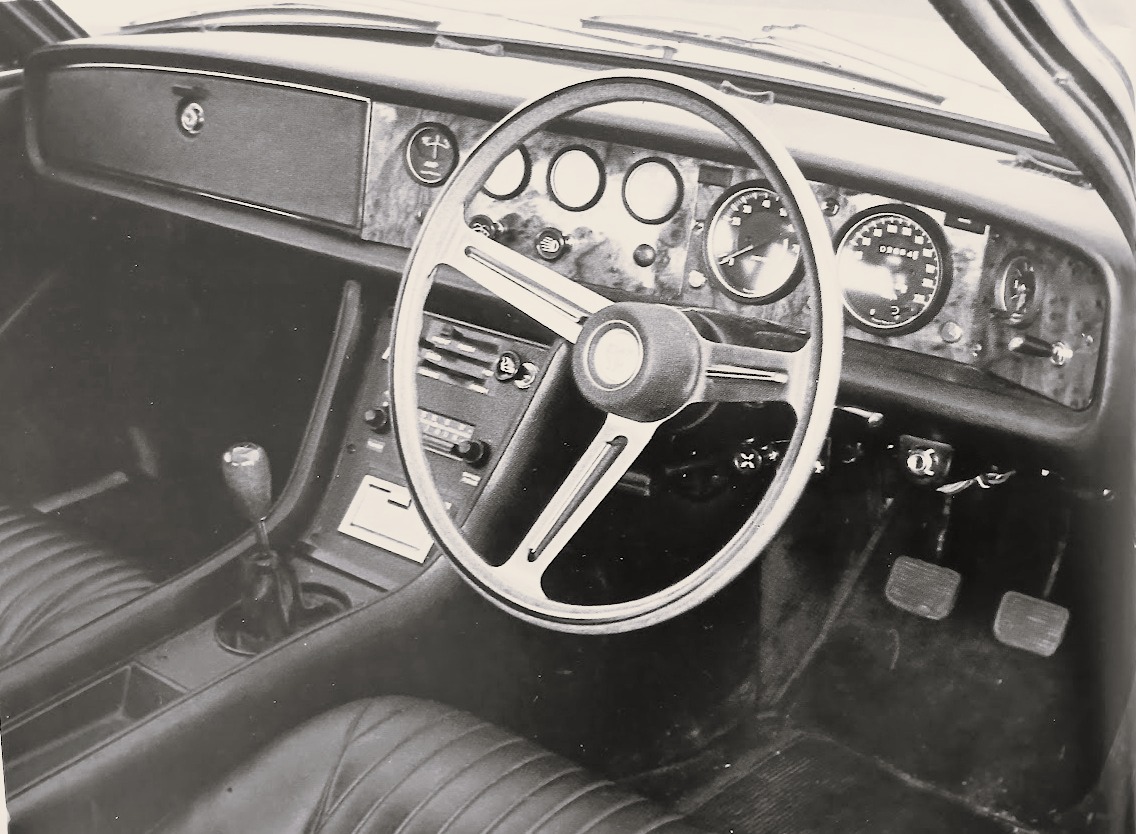
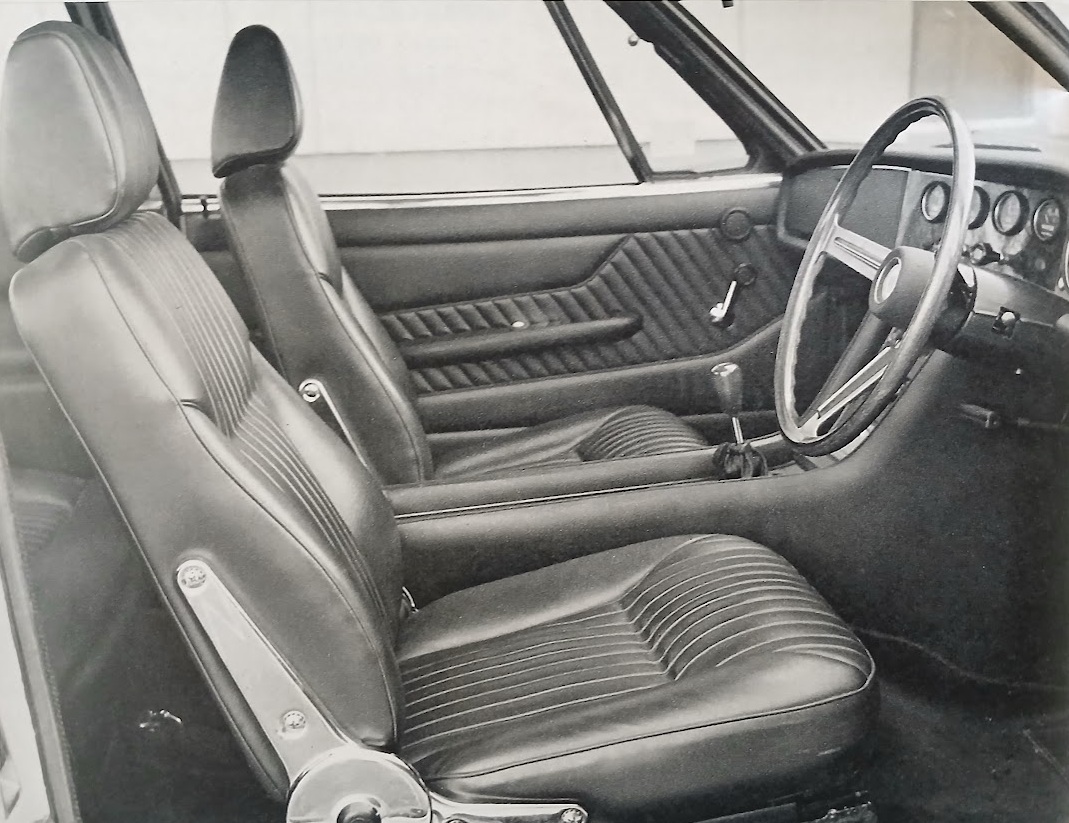
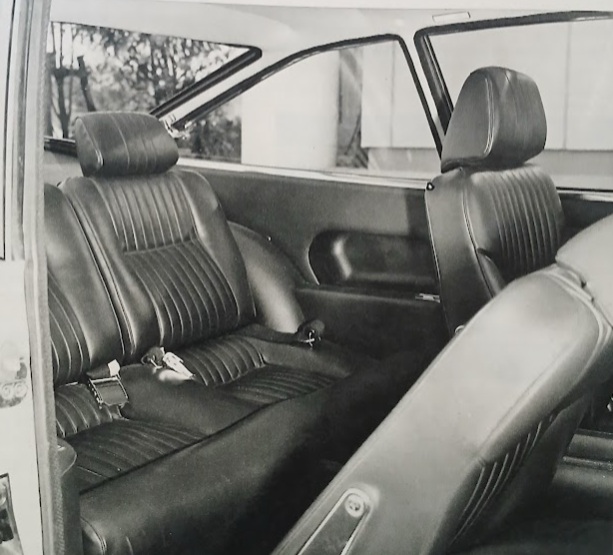
The interior is truly luxurious, while at the same time being functionally well laid out. Its overall atmosphere has the richness and elegance of a high-class British sporting saloon, such as a Jaguar. The driving position is excellent. The reclining front seats, with height-adjustable headrests, are well shaped, and the cushions have an appropriate degree of resilience and firmness; lateral support is also quite sufficient even without using the standard three-point belts. In addition, the side of the center console is ideally placed for bracing one’s leg for additional support.
The position and angle of the rather thick wood-rim steering wheel are just right: low enough to stay out of the driver’s forward line of sight, while never obstructing the view of the instruments. The pedals are correctly placed, allowing heel-and-toe braking and double-clutching to be done very naturally. Pedal efforts are light enough to present no problem even during repeated use in city driving. The gear lever is short and upright, positioned so that it falls naturally to the driver’s hand when lowered from the steering wheel, and is exceptionally easy to operate.
The instrument panel is beautifully made from genuine Taiwanese camphor wood, with the rev counter and speedometer directly ahead, and the water-temperature, oil-pressure, fuel and ammeter gauges neatly arranged to the left. All have white markings and red needles on a black background and are particularly easy to read at night. If there is a criticism, it is that the graduations on the rev counter and speedometer are somewhat too fine, making them difficult to read at a glance; we feel they could probably be made a little larger. The frequently used light and wiper switches are on the instrument panel, but are somewhat too far away from a natural driving position. It seems that modern safety designs call for long arms.
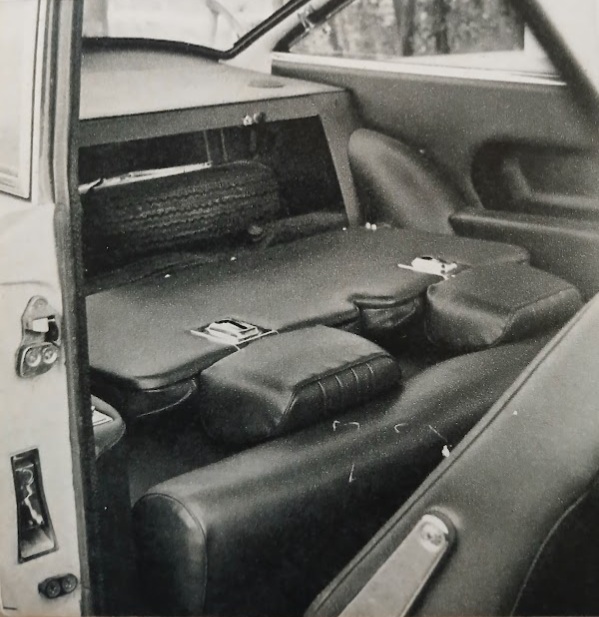
Front-seat accommodation is virtually ideal, and long hours of high-speed travel can be enjoyed in comfort. By contrast, the rear-seat space is somewhat inadequate for two adults on a long journey. There is only barely enough headroom and legroom. If one sits squarely upright they will just fit, but it is difficult to settle into a relaxed position (unless the front seats are moved well forward). In this respect, the Fiat 124 Coupe, which is almost identical in exterior dimensions, is superior.
The rear-seat backrest can be adjusted to three different angles, and when folded forward horizontally, the rear compartment connects with the trunk to form a large luggage space (though the backrest adjusting mechanism is difficult to use and deserves reconsideration). The trunk, like the interior, is carpeted, so even easily damaged articles can be carried without concern. However, the opening is narrow, and the large spare tire sits on the floor, occupying about half the space. So unless one has the courage to leave the spare behind in the garage, bulky luggage cannot be carried here. Of course, the two or three large suitcases required for a long journey by two people will fit easily.
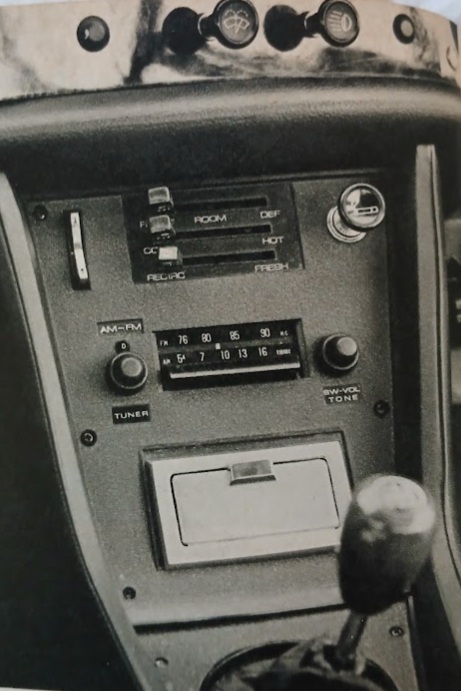
The provision of a full heater and ventilator system is only to be expected in a modern car, but the Isuzu 117 also has a warm-air outlet for the rear seat at the back of the center console. A control on the console allows the heat to be directed either to both front and rear seats or to the front seats only. The heater blower has three speeds, while there are four defroster outlets for the windshield, each with adjustable airflow direction. The rear window also has its own defogger, which draws in cabin air and blows it onto the glass through two outlets; the direction of these can be adjusted as well. The rear side windows are supported by substantial fittings and hinge outward at their front edges. Even when opened at about 80km/h, there is no wind buffeting and little noise, while ventilation is extremely effective.
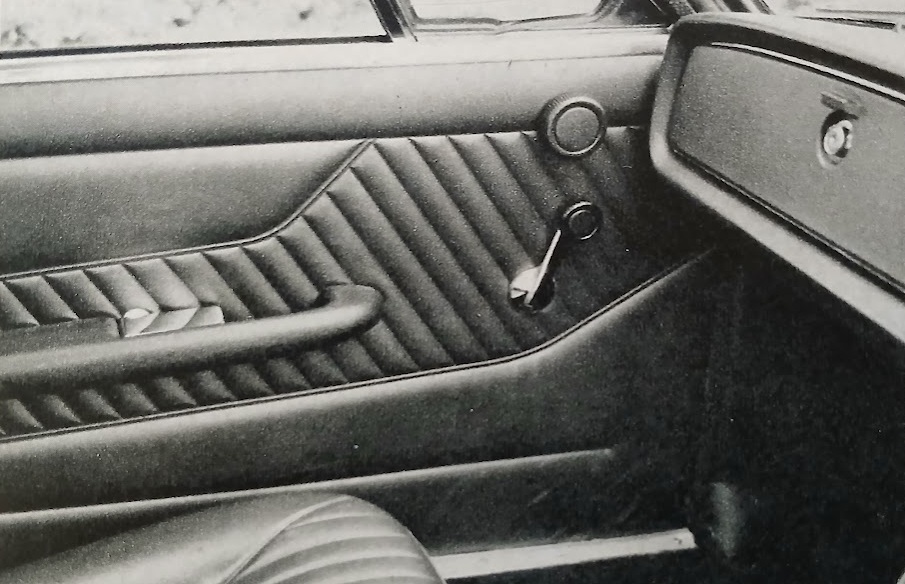
The interior finish compares favorably even with that of expensive British cars. Safety design is also quite thorough, with virtually no exposed metal projections. Even the ignition key is covered in anti-glare black plastic for safety. Four-way hazard flashers, which will become mandatory from next year, are already fitted. An AM/FM radio and power antenna are also standard equipment, and even at 100km/h music can be enjoyed without raising the volume very much. The doors open wide, making access to the rear seat relatively easy. For the same reason, however, it is easy to strike an adjacent car or the garage wall with an opened door. We would like to see a door check to hold them open partway.
It is often precisely those wealthy enough to buy a 1.72 million yen car who are particular about fuel consumption, and in this respect too the Isuzu 117 is quite good. When we made full use of its performance in high-speed driving and hill climbing, it returned 6.0km/l; cruising along the Tokaido at normal speeds gave 9.5km/l, and the overall average for the approximately 500km test was 7.7km/l. The fuel tank holds 58 liters, and a warning light comes on when about 8 liters remain. During our test the light began to come on while cornering, so we refueled, whereupon it took about 40 liters (the gauge was already pointing to “E”). Oil consumption over the 500km of high-speed testing was so slight that it could not be measured.
For those fortunate enough to be able to spend 1.72 million yen on a car, the Isuzu 117 Coupe should provide satisfaction fully commensurate with its price.
Postscript: Story Photos