Isuzu 117 Coupe (1969)
Publication: Car Graphic
Format: Road Impressions
Date: January 1969
Author: “C/G Test Group” (uncredited)
Road testing the Isuzu 117 Coupe
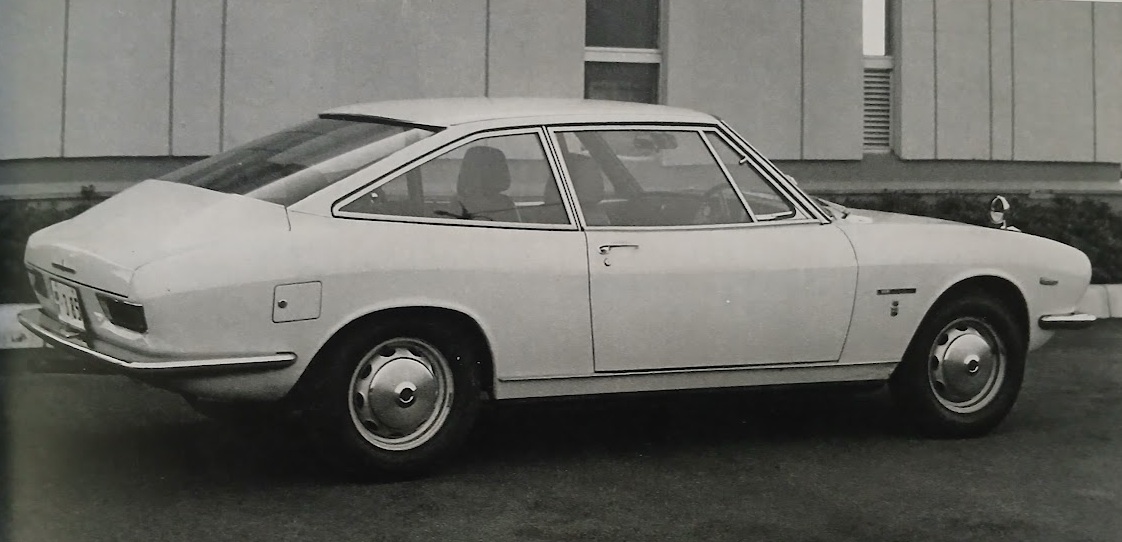
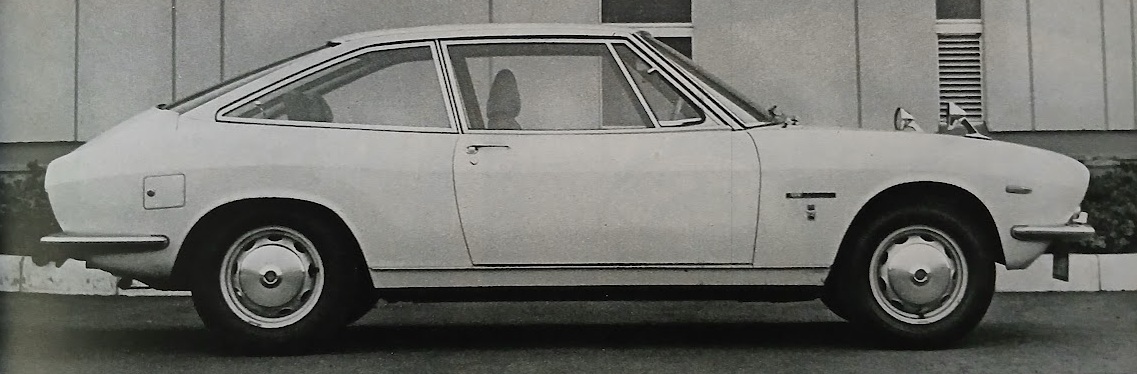
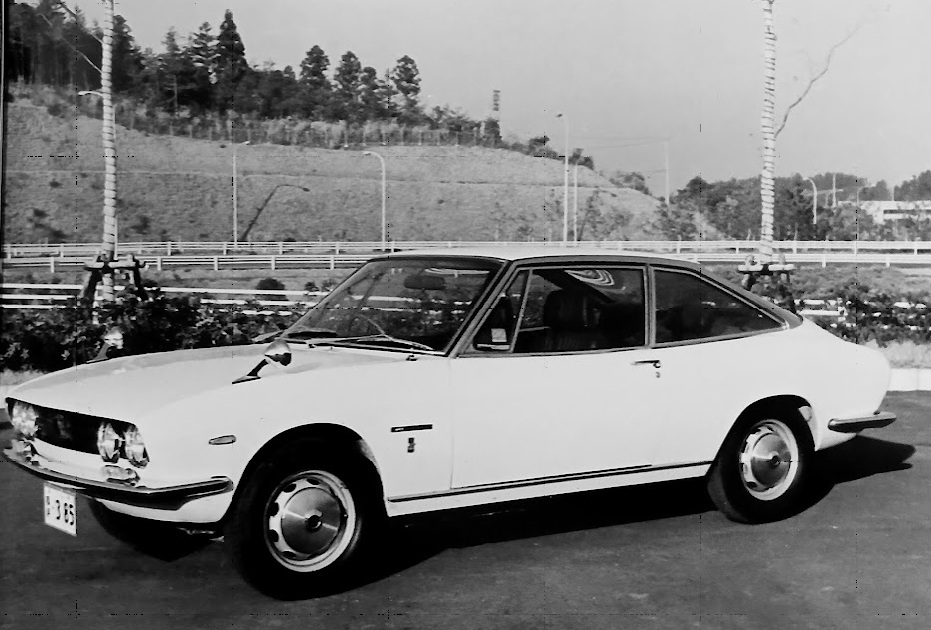
Two years ago, at the Tokyo Motor Show, the Isuzu-Ghia-designed 117 Coupe’s beautiful shape was first revealed. After that, however, no indications were given that the car would enter production, raising concerns that it would share the fate of many show models–admired for a brief moment, only to disappear. Seen now, though, it is clear that during those two years an intense development process was quietly and tirelessly proceeding behind the scenes.
Having now conducted a thorough test of the newly released Isuzu 117 Coupe over a distance of approximately 500km, we realize that the two years we were made to wait were by no means wasted. With some manufacturers, cars that are still effectively in an “extended prototype” stage of development are sometimes released reluctantly, under pressure from the sales department. There are even automotive designers who openly state that they would be afraid to buy such a car immediately after its launch. By contrast, the attitude of those involved in the design and manufacture of the Isuzu 117 Coupe can be described as almost un-modern in its conscientiousness. Until their professional conscience as engineers was satisfied, no matter how forceful the demands may have been, they refused to put a “half-baked” prototype into production.
The test car was a very early production example, chassis number 18, finished in pale yellow with a subdued dark blue interior, and showing a mileage of approximately 3,250 kilometers. To get straight to the point, when power performance, handling, ride comfort, and accommodation are all considered as a whole, we can say with confidence that the Isuzu 117 ranks at the very top of the world’s 1600cc-class four-seat coupes.
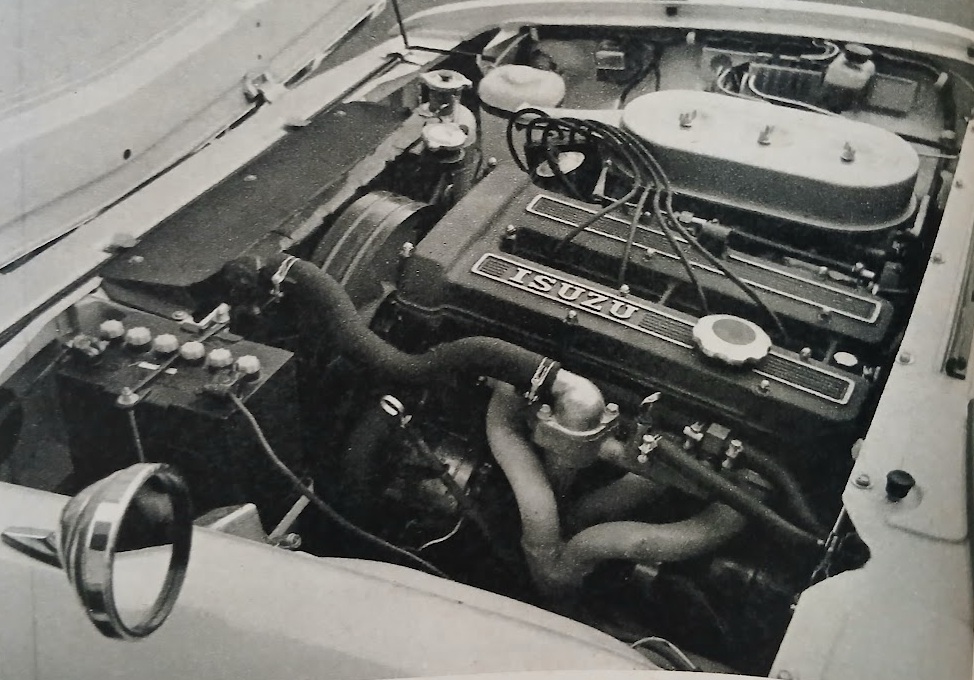
To begin with, its power performance is outstanding by any standard. The DOHC 1584cc engine has a compression ratio of 10.3 and is equipped with twin Solex double-choke carburetors, producing 120ps at 6400rpm and 14.5kgm of torque at 5000rpm. Judging by the specifications alone, it appears to be a very “hot” engine; in practice, however, it proves to be extremely flexible, and it is surprisingly easy to use, whether in crowded city traffic or on the highway. Among domestically produced four-cylinder engines, even those with DOHC and five main bearings, there are unfortunately many that remain rough at high speeds. The 117 engine, however, revs lightly and smoothly beyond 7000rpm, with no detectable harmonic vibration.
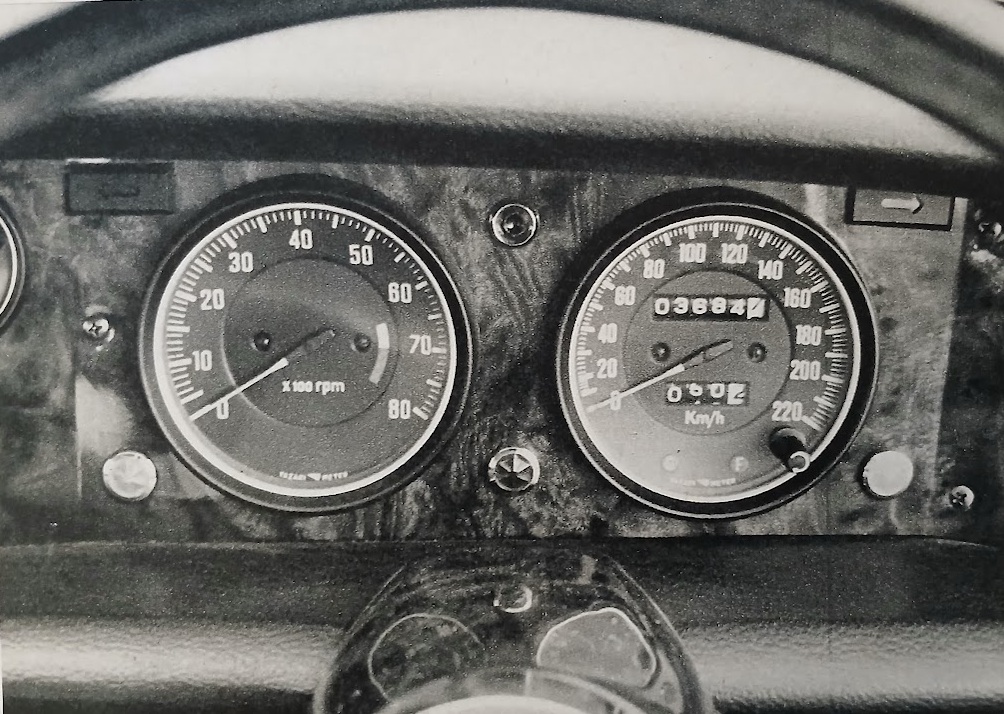
On Japanese roads, absolute maximum speed has little practical meaning, but our test car not only reached 185km/h on the speedometer (at an engine speed of about 6300rpm) without difficulty, it was able to sustain that speed for several kilometers. Two final-drive ratios are available (standard 4.10, optional 3.73); the test car was equipped with the former. The tires were Dunlop Grand Speed GS-1 Mk IIs in size 6.45H-14-4PR. In theory, the catalog top speed of 190km/h should be achieved at 7000rpm, but because the effective diameter of cross-ply tires increases by as much as 7% at high speed, it is said that the car actually reaches 190km/h at around 6700rpm. (This requires removal of the air cleaner, however, which of course was left as standard during our test.) The rev counter’s yellow zone is marked from 6400–7000rpm, with the red zone from 7000–8000rpm.
At top speed, the engine is close to the red zone, yet there remains ample margin, both in terms of intake and exhaust efficiency and in the valve mechanism itself, and it feels as though a further 5km/h might still be possible on a downhill grade. Throughout the entire rev range, the engine is exceptionally quiet and exhibits remarkably little vibration. On the day of the test, Mr Howard, Autocar’s technical editor, who happened to be in Japan on assignment, accompanied us and took turns at the wheel. He was unequivocal in his assessment, stating that it was far smoother than the Lotus-Ford DOHC.
There was, however, one reservation. At approximately 155km/h, a vibration began to appear in the driveline of the test car; it disappeared when speed was increased further, only to reappear at around 180km/h. The vibration remained when the gearbox was shifted into neutral, so the engine could be ruled out as the source. Nor was there any shake in the steering, so it was unlikely to be due to front-wheel imbalance. The most likely causes were thought to be the propeller shaft, or an imbalance in the rear wheels.
For the Isuzu 117, 150km/h is an entirely effortless highway cruising speed: the engine is turning at only around 5400rpm, and because aerodynamic wind noise from the body is extremely low, the noise level inside the cabin remains subdued enough that conversation with a passenger is possible in a normal speaking voice. Moreover, directional stability is so good that even with one’s hands removed from the steering wheel there is no sense of unease, and the level of tension is no greater than that of driving an ordinary sedan at 100km/h.
We maintained continuous speeds of 140-180km/h for about 20 minutes. The water temperature remained at a constant 80°C throughout, and the Dunlop GS1 tires (set to the recommended high-speed air pressure of 1.8kg/cm²) warmed up only slightly. Oil pressure, however, did fall: from an initial 6kg/cm², it dropped to 4kg/cm² after 10 minutes of continuous driving at these speeds. The manufacturer recommends installing the optional oil cooler for circuit driving and other extreme uses.
Acceleration performance is outstanding for a luxurious 1.6-liter coupe. According to the manufacturer, the car records a 0–400m time of 16.8 seconds with four occupants aboard. This was not a formal road test, so no performance measurements were taken, but our impression was that this figure could be easily achieved. The engine displays none of the harshness often found in high-performance units, and due to the vehicle’s weight of approximately 1,050 kg, acceleration from a standing start does not feel especially dramatic. However, as the surrounding cars rapidly become smaller in the rear-view mirror, one becomes aware that the car is actually delivering formidable acceleration.
The gearbox is extremely well matched to the engine’s characteristics and the vehicle’s weight: revved up to the beginning of the yellow zone at 6400rpm, the car reaches 94km/h in second gear and 140km/h in third. Shift feel is good and the synchromesh effective; however, the gearbox produces a certain amount of gear noise, and above 5000rpm a slight vibration can be felt in the gear lever. Because the overall noise level of the car is exceptionally low, the gearbox sounds particularly noisy, and this is truly unfortunate. One would hope for a further step of refinement here. The clutch, fitted with a helper spring, requires little pedal effort and engages very smoothly.
One of this engine’s best qualities is that it generates strong torque over an unusually wide rev range. Examining the torque curve shows that it delivers no less than 90% of its maximum torque between 2500rpm and 6000rpm. To give a practical example of this: in top gear, the car will run smoothly and without strain at 40km/h, from 50km/h it accelerates with authority, and even at a high speed of 140km/h it responds clearly to the throttle. In particular, the reserve of power in the 120–140km/h range is remarkable for a car with a 1.6 liter engine. For this reason, one feels that the car would be even better with an overdrive fifth gear for economical high-speed cruising on the highway.
The engine remained in good condition throughout the 500km of high-speed testing. Cold starts are immediate with use of the choke, and within a few minutes the engine settles into a steady 700rpm idle. Even when setting off immediately, it pulls strongly. When caught in a prolonged traffic jam, the idle does become slightly rough (though the water temperature remains unchanged), but it never deteriorates to the point of stalling.
In terms of handling, the car was just as impressive as it was in power performance. The quickest way to assess handling is to drive up and down the winding roads of Hakone at high speed, and in this test the Isuzu 117 proved to be almost on a par with the Fiat 124 Coupe, which has scored exceptionally well under these conditions in the past. This was not only the opinion of the Car Graphic test group; the Autocar road tester who accompanied us was in full agreement. It should be noted that the Fiat 124 is internationally recognized as an outstanding car that sets a benchmark for the handling of rigid-axle production vehicles.
Moreover, while the Fiat we tested was fitted with Pirelli radial tires, the Isuzu was equipped with cross-ply Dunlop GS-1s. These are low-profile, H-rated tires (approved for continuous running at 175km/h), and they are well matched to the Isuzu 117’s high performance potential. With the specified pressure of 1.8kg/cm², they handled everything from sustained 140–180km/h running to high-speed cornering with ample reserve. The handling balance is very neutral, maintaining a mild understeer that continued up to high speeds.
The steering remains appropriately weighted at all speeds (or perhaps one should say appropriately light). The rigidity of the steering system is high and response is excellent. The wheel takes about three turns from lock to lock, but because free play is virtually nonexistent, it feels extremely precise. At the same time, kickback from the road surface is very effectively filtered out, and almost no reaction is transmitted to the driver’s hands even on poor surfaces.
The tread of the Dunlop GS-1 is relatively hard, and depending on the suspension to which it is matched, this tire can impart a pronounced harshness. In the Isuzu 117, however, this tendency is skilfully suppressed. Even if stiffer radial tires were fitted (165HR-14s are optional), the low-speed shocks characteristic of radials would likely be barely noticeable with this suspension.
Road holding is outstanding to a degree that is hard to believe from what is, essentially, an entirely conventional suspension layout (double wishbones with coil springs at the front, and a rigid axle located by semi-elliptic leaf springs and torque rods at the rear). Body roll in corners is moderately restrained, and the Dunlop GS-1 tires grip surprisingly well. Particularly striking is the fact that even in corners on uneven surfaces, the grip of the rear wheels is scarcely affected, and the car’s attitude remains undisturbed. It is a striking reminder that, even with a rigid axle, careful tuning of springs and dampers (gas-filled DeCarbon types in the case of the Isuzu 117) can produce results far superior to a poorly executed independent suspension. This car demonstrates that fact clearly. Even at the limit, the car’s cornering attitude remains extremely stable, and the driver can clearly feel the inside rear wheel gradually begin to lose grip. As a result, maintaining control with the steering and throttle comes naturally and easily.
It is generally accepted that combining a rigid axle with good handling inevitably requires some sacrifice in ride comfort. The Isuzu 117, however, succeeds in breaking with this conventional wisdom. Ride comfort is excellent on almost all road surfaces, and at virtually any speed. “Soft” would not be an appropriate description, but neither does the ride ever feel stiff. Minor surface irregularities are well absorbed by the suspension, and even driving quickly over rough trackwork produces more sound than actual shock. At low speeds in town the ride is close to that of an ordinary sedan, but naturally, the suspension is tuned primarily for high-speed driving, and the smoothness of the ride above 100km/h is particularly noteworthy.
On the other hand, the car’s ability to cope with severely rough roads is also unexpectedly good for such a beautiful coupe. We even drove experimentally at speeds above 60km/h over surfaces one would normally hesitate to attempt, yet with a minimum ground clearance of 180mm, the coupe showed no apparent signs of distress, although the occupants are subjected to considerable vertical tossing. Body strength and rigidity feel extremely high despite the large glass area, and even when the car was treated this roughly, no abnormal creaks or signs of deformation were detected.
Braking performance, too, allows the car’s high level of power and handling to be exploited without anxiety. The front brakes are Dunlop–Sumitomo Type 35 opposed-piston discs, while the rear uses leading–trailing drum brakes fitted with Alfin cooling fins. Naturally, a tandem master cylinder and vacuum servo are standard. The stopping power of such a system goes without saying, but equally commendable is the well-judged servo assistance: braking effort builds progressively in proportion to pedal pressure, giving a very pleasant feel. The balance between front and rear brake forces is excellent, and under hard braking all four wheels seem to bite the road surface together. Nose dive is minimal, and the absence of brake “squeal” is another welcome feature.
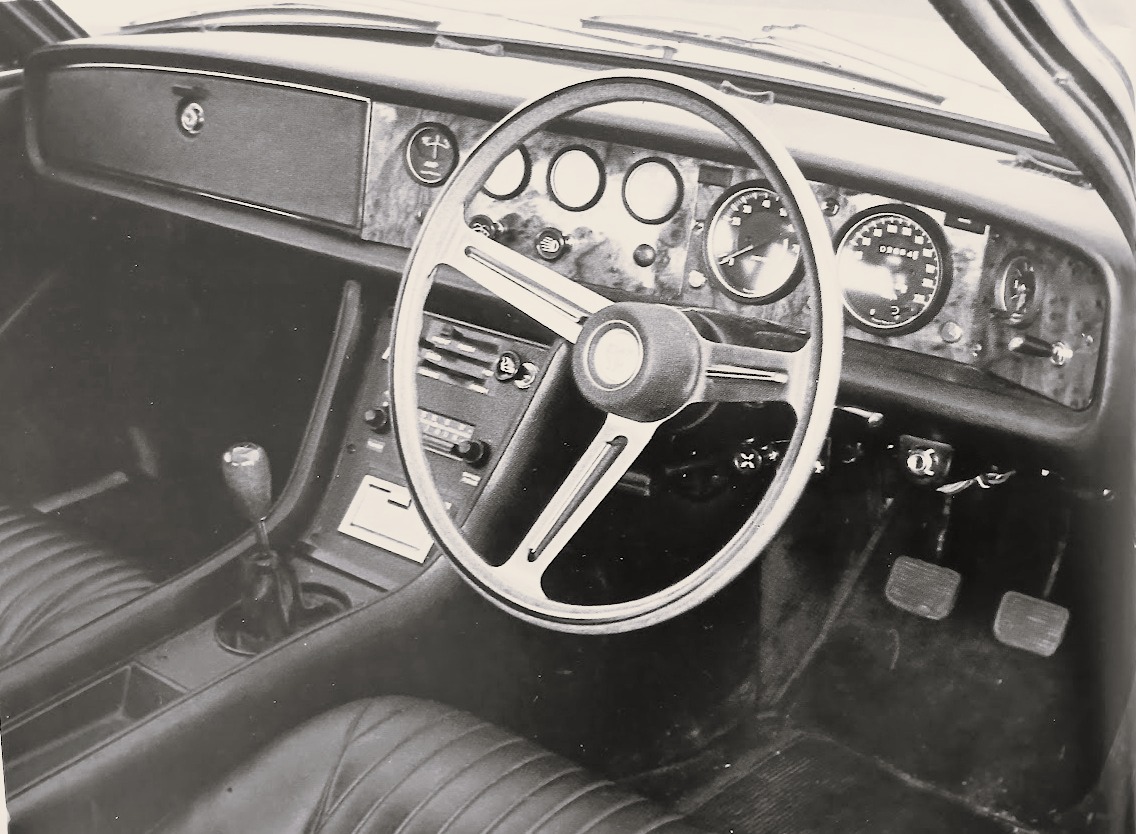
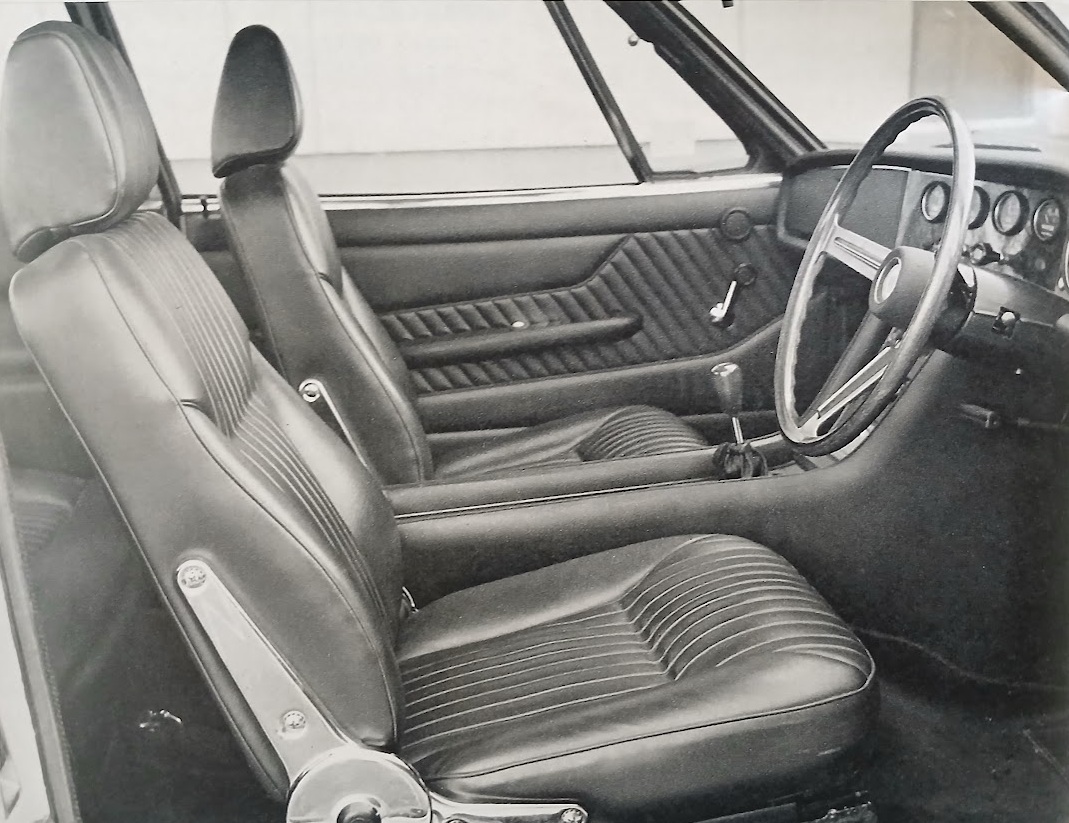
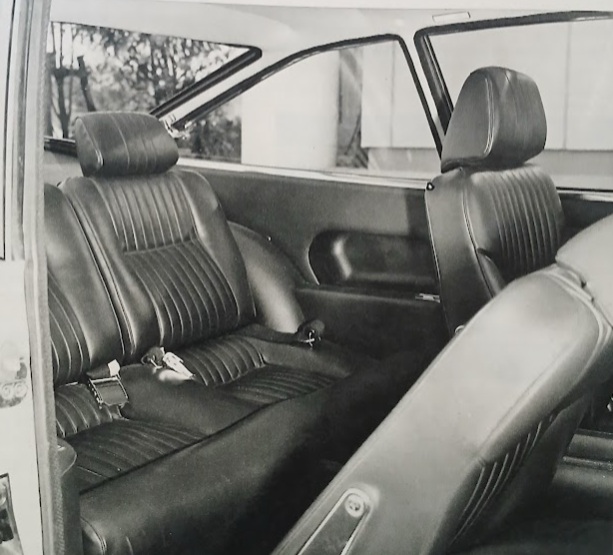
The interior is genuinely luxurious, yet at the same time functionally well laid out. The overall atmosphere is rich and elegant, comparable to that of an English luxury sports saloon such as a Jaguar. The driving position is excellent. The reclining front seats, with height-adjustable headrests, are well shaped, and the cushions offer an ideal balance of resilience and support. Even without using the standard three-point seatbelts, lateral support is more than sufficient. In addition, the sides of the center console are ideally positioned to brace the legs and help support the driver’s body.
The slightly thick wood-rim steering wheel is positioned at precisely the right height and angle: low enough not to intrude into the forward field of view, yet never obstructing the instruments. The pedals are well-placed, allowing heel-and-toe braking and double-clutching to be performed very naturally. The pedal efforts are light enough to present no problem even during repeated use in city driving. The gear lever is short, upright, and positioned so that it falls naturally to hand when the driver drops an arm from the steering wheel, making it very easy to use.
The instrument panel is beautifully made from genuine Taiwanese camphor wood. The rev counter and speedometer are placed front and center, with the water temperature, oil pressure, fuel level, and ammeter gauges neatly arranged to the left. All instruments use white markings on a black background with red pointers, making them particularly easy to read at night. If one were to find fault, it would be that the graduations on the rev counter and speedometer are slightly too fine, making them difficult to read at a glance; slightly larger ones might be preferable. The frequently used lighting and wiper switches are located on the instrument panel, but they are positioned somewhat far from a natural driving position. It seems that recent safety designs require long arms.
The front-seat accommodations are truly ideal, making long-distance, high-speed travel a comfortable pleasure. By contrast, the rear-seat space is somewhat insufficient for two adults over long distances. Both headroom and legroom are only just adequate. One can sit upright with their legs drawn back against the cushion, but it is difficult to settle into a truly relaxed position unless the front seats are moved quite far forward. In this respect, the Fiat 124 Coupe, which has nearly identical overall dimensions, is clearly superior.
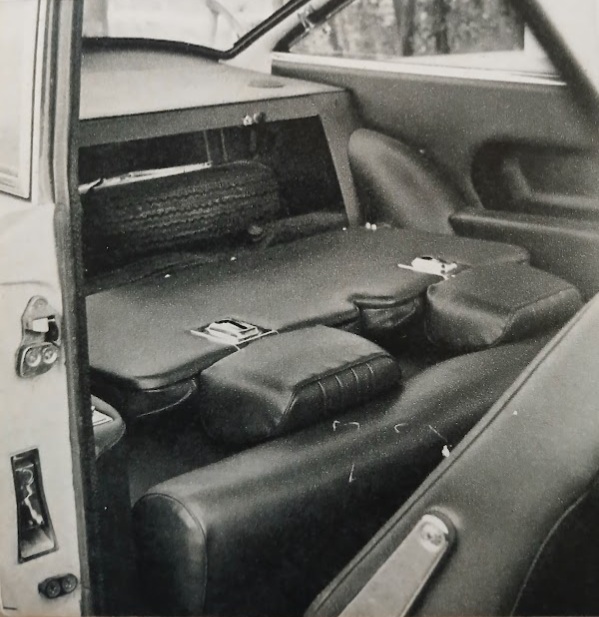
The rear seat backrests can be adjusted to three different angles, and when folded forward horizontally, the rear compartment opens into the trunk to create a large luggage space (though the backrest adjustment fittings are awkward to use and should be reconsidered). The trunk, like the interior, is fully carpeted, so even easily scratched items can be carried safely. However, the opening is narrow, and the full-size spare tire sits on the floor, occupying roughly half the space. Unless one has the courage to leave the spare in the garage, large luggage cannot be accommodated here. Of course, there is no problem fitting the two or three large suitcases needed for a long trip for two.
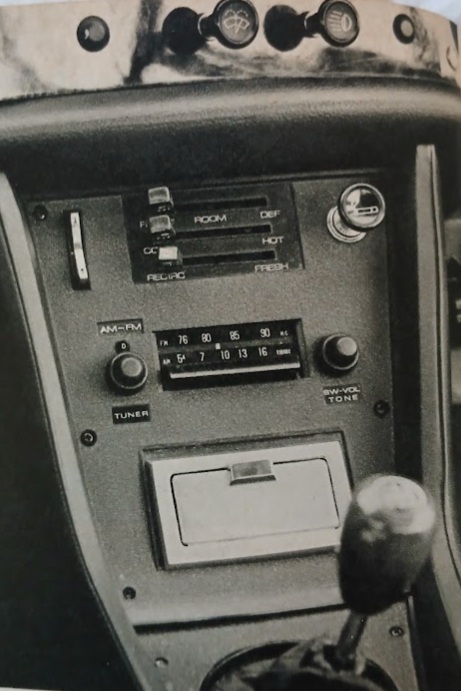
Naturally, the full heater and ventilator expected in a modern car are fitted as standard equipment, but the Isuzu 117 Coupe goes a step further: a warm-air outlet for the rear seats is built into the rear section of the center console. Using the controls on the console, airflow can be switched between both front and rear seats or the front seats only. The heater blower has three speeds, and the windshield defroster has four outlets, each of which can be adjusted to direct airflow as required. The rear window also has its own defogger: cabin air is drawn in and blown onto the glass from two outlets, and the direction of these can be adjusted as well. The rear side windows open outward on a sturdy hinge at their front edge. Even at around 80km/h, opening them does not induce turbulent airflow or excessive noise, and the ventilation provided is remarkably effective.
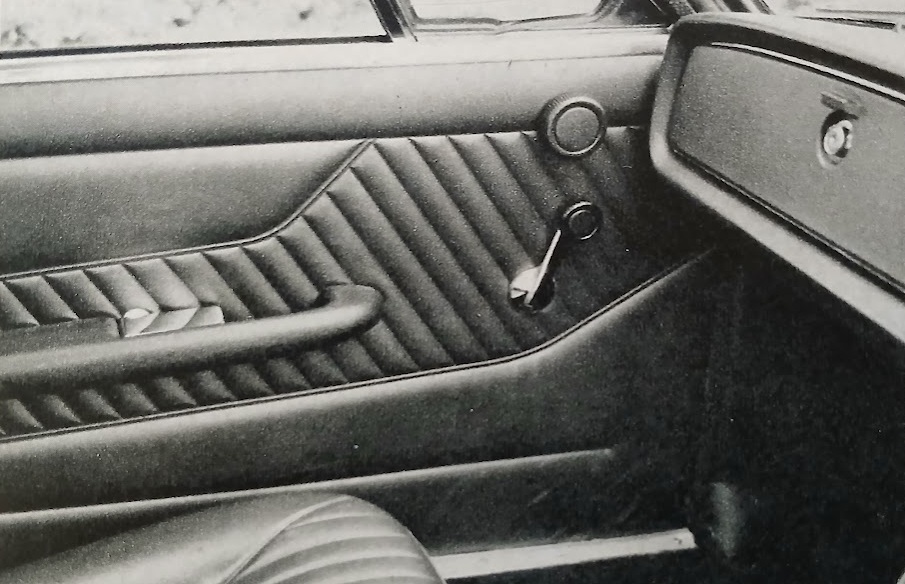
The interior finish stands comparison with that of high-grade British cars, and the approach to safety is similarly thorough: there are virtually no protruding metal parts, and the ignition key is covered in black anti-glare plastic for safety. In addition, the four-way hazard flasher that will become mandatory next year is already fitted. An AM/FM radio and power antenna are standard, and even at 100km/h it is possible to enjoy music without needing to raise the volume significantly. The doors open widely, making access to the rear seats relatively easy. For the same reason, however, it is also easy for them to strike an adjacent car or the wall of a garage. A door check to hold them open halfway would be desirable.
It seems unlikely that those wealthy enough to afford the 1.72 million yen price tag will quibble about fuel economy, but even in this respect the 117 Coupe is quite good. Using its full performance during high-speed driving and hill climbing, we recorded 6.0km/l. When cruising at normal speeds along the Tokaido it returned 9.5km/l, and the overall average for the approximately 500km test was 7.7km/l. The fuel tank holds 58 liters, and a warning light comes on when the fuel level falls to about 8 liters. During our test, it also came on while cornering, so when we refilled the tank it only took about 40 liters (the gauge was already pointing to “E”). Oil consumption was so slight that it could not be measured, even during this 500km high-speed test.
For those fortunate enough to be able to spend 1.72 million yen on a car, the Isuzu 117 Coupe will provide satisfaction commensurate with its price.
Postscript: Story Photos