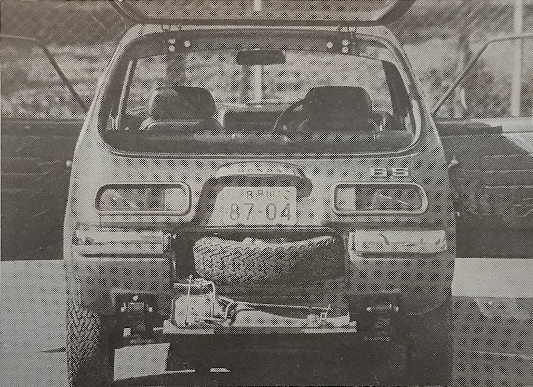
Honda Z-GS (1971)
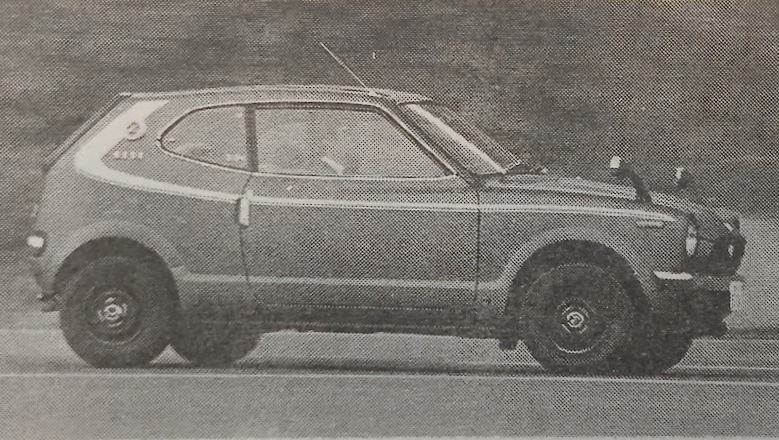
Publication: Motor Fan
Format: “Bubble Index” Road Test
Date: April 1971
Authors: Osamu Mochizuki, Katsuzo Kageyama, Shigeki Asaoka, Yasuhei Oguchi, Reiko Ikuuchi, Kensuke Ishizu, Masahide Sano
A Small Luxury Car
How effectively can a 5-speed gearbox be utilized within the constraints of a kei car?
This question set the tone for this test as a whole. So—what was the reality?
How Effective Is the 5-Speed Transmission?
Of the five models in the Honda Z Dynamic Series, the “Z-GS”–the last to be introduced–went on sale on January 25. Its bold styling is fundamentally the same as that of the four models already released (ACT, PRO, TS, and GT).
Where the Z-GS differs most significantly from the other cars in the Dynamic Series is in its brakes and gearbox. The brakes are front discs, a first among kei cars, while the transmission is a 5-speed. In terms of safety and high-speed touring capability, it has been equipped to a degree that even many ordinary passenger cars would struggle to match. Naturally, however, this is reflected in the price, which comes in at 465,000 yen (Tokyo delivery).
In this car, a strong “full-sized car” atmosphere is packed into the dimensional constraints of the kei-car category. Judging from its price and equipment, it clearly goes well beyond what has traditionally been expected of a kei car. But how does it perform in actual driving? As usual, our six specialists set out to examine the car from every angle.
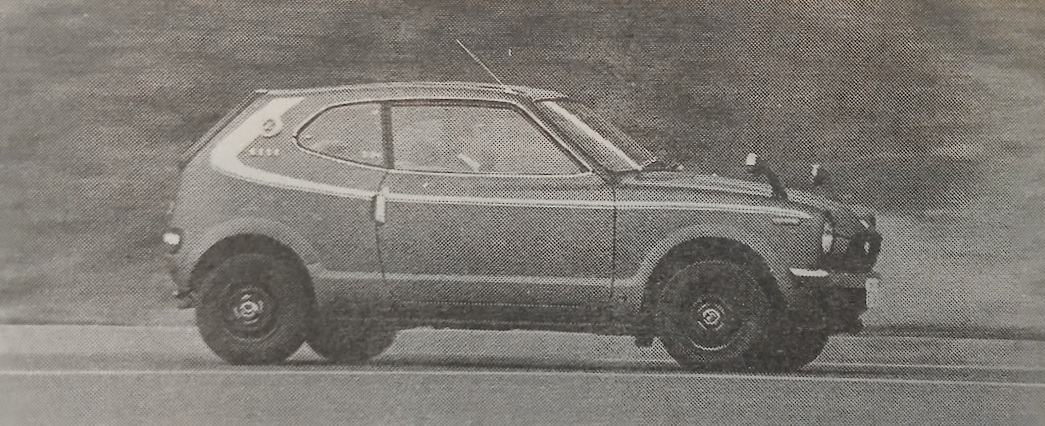
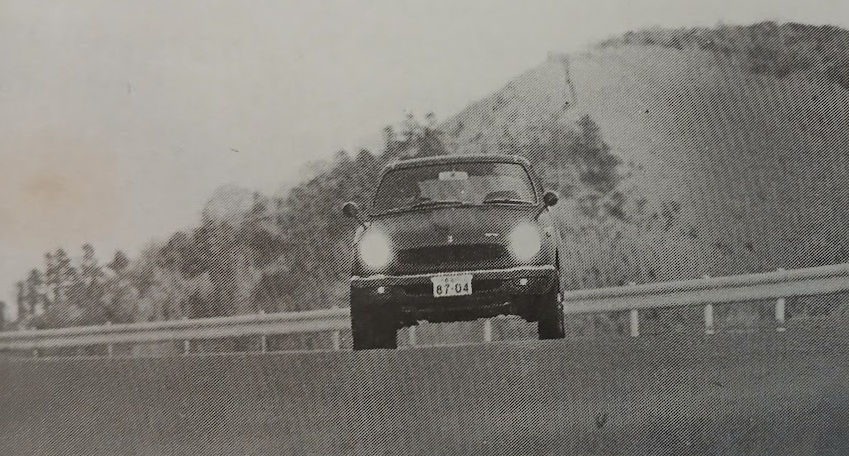
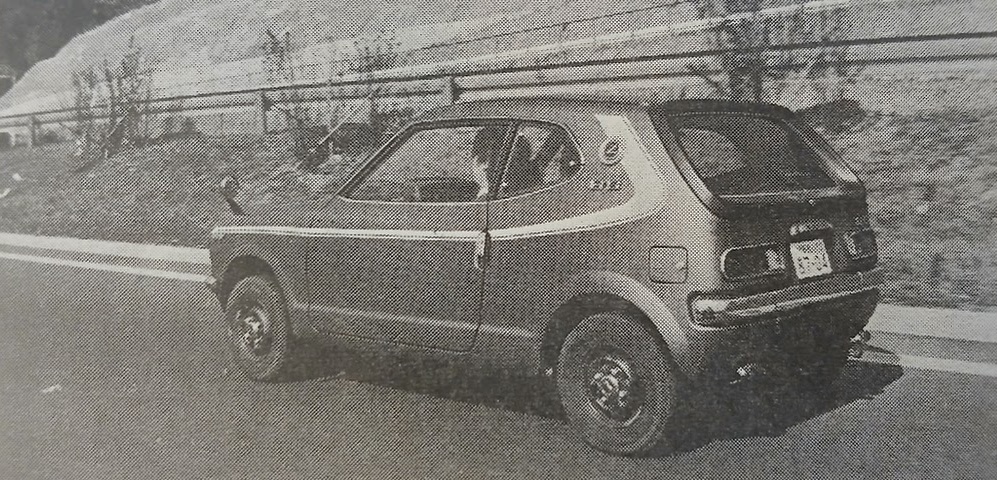
The test car prepared for us was finished in a matte black known as “Zero Black.” A pair of white stripes ran sharply along the sides of the body like flashes of lightning, giving it a somewhat ghostly, tightly drawn appearance.
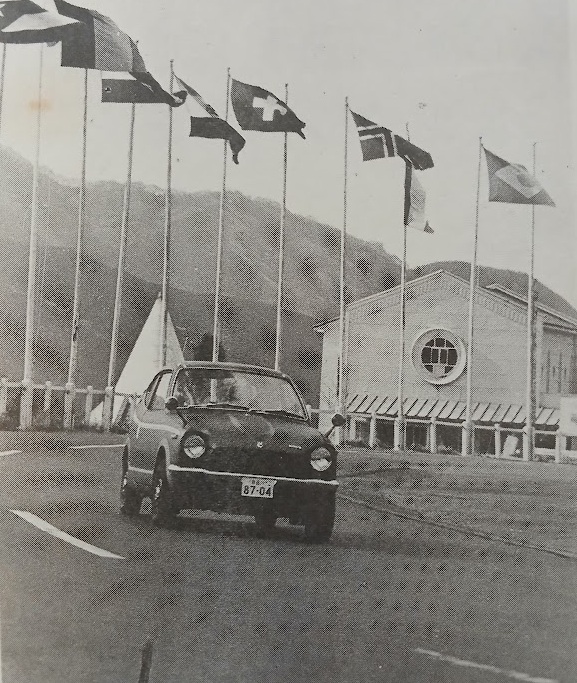
The test group set off along the now-familiar route: onto the Tomei Expressway from the Tokyo IC to Gotemba IC, over Otome Pass, up the Hakone Turnpike, and back again via Gotemba to Tokyo, evaluating the Z-GS’s character along each section.
At the post-drive meeting, the car earned a generally favorable assessment for its trustworthiness at high speeds. This appears to be the result of numerous careful refinements incorporated throughout its design. However, some unexpected weaknesses were also noted, particularly on uphill sections in the Hakone mountains and in city driving. On inclines, the car felt severely underpowered in third gear or higher, while in first and second it quickly ran out of revs. Compounding this was a certain frustration in finding each gear cleanly, which detracted from the driving experience on winding roads and in urban traffic.
That said, some allowance must be made here: the gearbox employs a constant-mesh design, and it requires a certain degree of driver familiarity.
How, then, did our six specialists evaluate this “small luxury car” in concrete terms? For the details, we invite readers to turn to their individual reports in the following sections.
Power Performance: Consideration to Gear Ratios (Osamu Mochizuki)
The newest Honda Z model, the GS (Grand Sports), lives up to its name, showing genuinely sprightly performance. That said, this speed is achievable only under rather specific conditions.
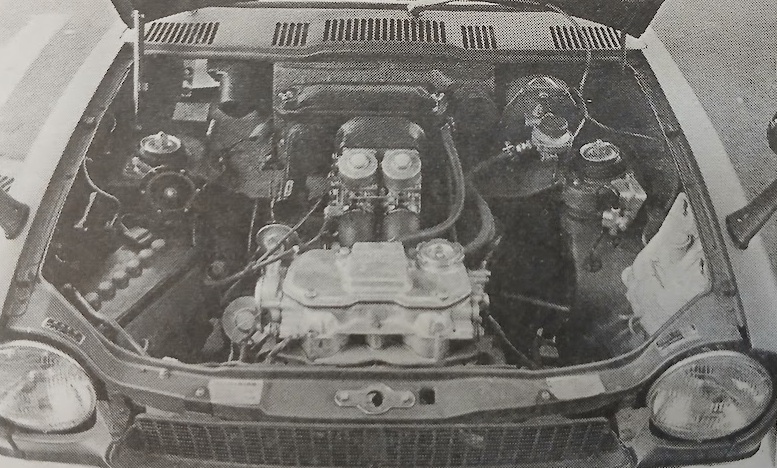
Compared with the NIII series, the GS sits 65mm lower, and its softly curved, forward-leaning body has remarkably low air resistance. As a result, even though the engine–equipped with twin carburetors, and rated at 36ps–remains unchanged, high-speed performance has improved dramatically. Reaching 100km/h on the highway is easy, and maintaining the catalog top speed of 120km/h for extended stretches is not particularly difficult. At a steady cruise, it can keep up a pace that hardly feels like that of a kei car.
However, in city streets or on mountain passes, where engine revs fluctuate over a wide range, any kei car begins to feel a bit sluggish. The reason is clear: the low absolute values of the power-to-weight and especially torque-to-weight ratios. Unloaded, the car weighs 525kg, giving a power-to-weight of 14.6kg/ps, which is not especially poor. Maximum torque of 3.2kgm arrives at 7000rpm, so peak driving force is only available at fairly high revs. Torque reaches 3kgm around 5250rpm, dropping off sharply below that.
The GS is 20kg lighter than the NIIIS’s 545kg, yet compared with other cars in its class, it is still heavier by up to nearly 100kg. From a safety standpoint, heavier bodies are generally safer, but purely from a performance perspective, this is a handicap. Direct comparisons are complicated by differences in engine speed, but looking at weight per unit of torque, similar cars average 120kg/1kgm–the GS sits at 168kg/1kgm, a considerably heavier figure. This seems to manifest itself in slower acceleration.
For sporty performance, Honda has adopted the only dog-clutch-style 5-speed transmission in the kei-car segment. To a certain extent, the effort is effective. The top ratio of the 4-speed and 5-speed gearboxes is identical (0.648); below that, each of the 5-speed’s gears is set slightly shorter than those in the 4-speed. Full-throttle acceleration through the gears shows good response, but the car reaches its top speed in each gear relatively quickly.
Practical response is achieved above 5000rpm, which corresponds to about 35km/h in third gear, and about 52km/h in fourth. In city driving, this makes third gear the most efficient choice–but it is accompanied by rather noisy engine and exhaust sounds, leading drivers to favor fourth gear instead. At 40km/h in fourth, revs remain around 4000rpm, so with two aboard, a certain sluggishness in response is unavoidable.
High-speed stability is satisfactory in most respects, helped by the low center of gravity and firm suspension. The suspension’s firmness does not compromise comfort, and it strikes a reasonable balance with good handling stability. During lane changes or sudden steering corrections, a trace of yaw remains, but at the level of a kei car, this is not a significant concern.
Steering effort is moderate, neither too light nor too heavy, and feels ideal at both high and low speeds.
“With this gear distribution, it is questionable whether the transmission can really be called a 5-speed.” —Asaoka
“Weak on hills—that’s the fate of a kei car, I suppose.” —Kageyama
Handling and Stability: Steering Suited for High Speeds (Katsuzo Kageyama)
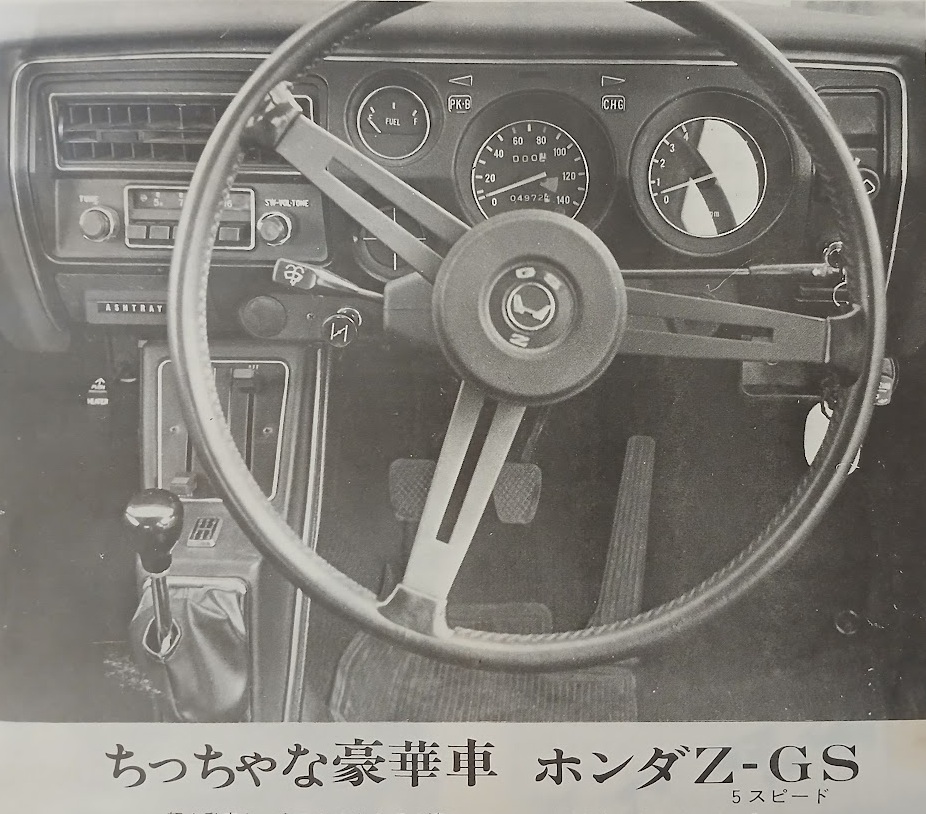
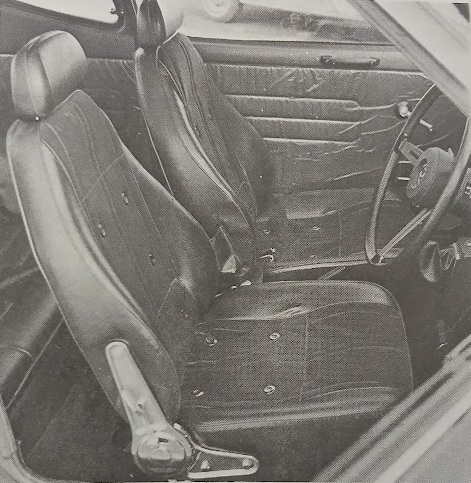
Behind the wheel, the first thing that grabs your attention is the richness of the instrument panel and seats. The bucket seats are a bit firm but hold the body nicely. The overhead console, mounted on the ceiling, has a fresh, modern feel–yet another example of Honda’s knack for striking exactly the right notes to thrill younger drivers.
The footwell is surprisingly deep, but because the pedals are pushed to the left by the wheel housing, legroom can feel cramped. Still, given the constraints of kei-car dimensions, that’s unavoidable. Visibility is excellent, helped by the absence of triangular vent windows. Even the rearward diagonal sightlines, which look to be difficult from the outside, turn out to be entirely manageable once seated.
Once on the move, the first thing you notice is the steering. It has almost no free play and exceptionally sharp response, and is perfectly suited to the quick reactions demanded at high speeds. Its character is truly sporty. The wheel is somewhat heavy, and its return action after rounding a corner is slightly sluggish. These traits are likely due to friction in the steering system.
Hands-off stability is not especially good. The car doesn’t wander dangerously, but at high speed it doesn’t settle as nicely as one might hope. With firm suspension and a low center of gravity, body roll is minimal. It seems Honda paid particular attention here to emphasize the car’s sporty nature.
Steering effort changes depending on whether the power is on or off, and the shocks felt through the wheel when coasting are the inevitable trade-off of front-wheel drive. The throttle pedal travel also feels a bit too long. Presumably, this was done to accommodate a variety of driving conditions, but in normal use, it’s simply excessive. Because the engine’s response to throttle inputs is somewhat sluggish, this can impede nimble maneuvers. Driving thus requires anticipating road conditions and pressing the accelerator “in advance,” which often leads to overdoing it, which in turn can be felt as jolts through the steering.
Engine braking is surprisingly weak; on downhill stretches, it almost feels like driving a two-stroke car. That said, speaking from experience in tests of other vehicles, the difference between “strong” and “weak” engine braking is very subtle, and the perceived effect can change quite abruptly around certain measured deceleration points.
As compensation, the Z-GS features front servo-assisted disc brakes and rear PCV-equipped leading-trailing drums–the first time such setups have appeared on a kei car–and their performance is flawless.
Before driving it, I assumed this car was little more than an NIII dressed up with a sporty-looking body. Experiencing it firsthand, I realized that observation was far too shallow. In character, this car is entirely unlike the N series. The intended user is naturally different, and the purpose behind the Z-series launch finally made perfect sense.
“Feels completely different from the NIII series.” —Mochizuki
Ride and Comfort: Sports-Car-Like Seats (Shigeki Asaoka)
Not so long ago, when one spoke of kei cars, the Subaru 360 was virtually the only name that came to mind. Today, however, manufacturers such as Honda, Mitsubishi, Subaru, Daihatsu, and Suzuki are all competing fiercely in this segment. Over the past decade or so, kei cars–like other domestic vehicles–have seen remarkable gains in performance, along with clear improvements in styling.
To be honest, I have had very few opportunities to drive kei cars over the past ten-odd years, and therefore lack the breadth of experience needed for meaningful comparisons. My own memories are limited to more than a decade ago, when I entered an SCCJ rally solo (without a navigator) in a then-newly released Subaru 360 convertible, driving from Tokyo to Shiga Highlands.
In recent years, mini-car racing has become more popular, and Honda’s cars have been particularly active, so I have grown accustomed to seeing the Z. Even so, actually driving it came as something of a surprise. Here is a car powered by an engine barely larger than a small travel bag, and yet one finds equipment rarely seen even in normal passenger cars: servo-assisted disc brakes, a non-synchromesh 5-speed transmission with extremely close ratios, and rack-and-pinion steering—all fitted as standard.
The seats offer good support and are solidly built, and even feature ventilation holes similar to those in racing cars. The front compartment is surprisingly spacious, and the overall driving impression is better than one might expect. That said, the 5-speed transmission feels like a mismatch for a kei car. Given the limited power available, such a setup is better suited to a racing machine; for a 360cc engine, it is not particularly practical. In everyday driving, one is forced to upshift and downshift constantly to make smooth progress.
Steering precision has improved, with less of the oversteer that characterized the earlier N360. Whether this is due to the so-called heavy-duty suspension (which does not feel especially “heavy” in practice), or to effective countermeasures addressing the defects that have recently been a topic of discussion, is difficult to say.
In any case, Honda’s rapid rise onto the world stage likely owes much to its ability to think with a youthful mindset and consistently aim its products at the younger generation–those who embody, and seek to shape, the modern age.
This car is like a salad tossed in a bowl: even if the ingredients are nothing more than crisp greens and thin, bland mushrooms, a clever dressing can make it taste superb. But those who value the ingredients themselves, plain and unadorned, will probably find little to interest them here.
“You need ‘practice and know-how’ to drive this car well.” —Ikuuchi
“The frequent gear changes become tiresome.” —Kageyama
“The seats don’t let you slide laterally at all. A bit more movement would actually be preferable.” —Mochizuki
Safety: Thoughtfully Rigid Body Design (Yasuhei Oguchi)
When it comes to vehicle safety, there seem to be two prevailing approaches. One is to clearly define the car’s underlying philosophy and basic design, then incorporate safety measures within that framework. The other focuses specifically on occupant protection–particularly for smaller cars, which tend to suffer greater damage in a crash, making careful attention to safety design even more crucial.
Perhaps we are now in a transitional period in which these two perspectives overlap. Looking ahead, however, it seems likely that the human-centered philosophy seen in recent experimental safety vehicles (ESVs) will become increasingly dominant. In other words, rather than just relying on simple structural principles, designers will increasingly prioritize safety measures based on human performance. In this sense, small cars like the Z-GS align more closely with the latter of the two viewpoints described above.
One sign of this shift is the rapid development of prototypes in the so-called “2,000-pound car” class. It’s not impossible that some of these lessons will eventually trickle down to kei cars. Since cars are part of everyday life for the general public, such developments may arrive sooner than we expect. This was a thought that came to mind during this test, my first involving a kei car in quite some time.
Putting aside broader speculation, the Z-GS’s particular approach to safety is most evident in its body structure. Unlike a conventional sedan, the body shell adopts a distinctive design that emphasizes rigidity in the passenger compartment.
The front pillars are slim to maximize visibility, but the integrated quarter pillars appear to compensate for this. In the event of a rollover, it seems likely that occupant protection would remain at a fairly high level even if the front deforms–though this may owe much to the styling itself.
From an aerodynamic standpoint, the steeply raked windshield and the cut-off rear treatment suggest that crosswind stability may be quite good for this class. That said, this remains an impression rather than a tested conclusion.
One particularly novel feature is the design of the impact-absorbing steering column. It uses a two-joint structure, which should be especially effective in a front-engine layout.
As for visibility, the rear three-quarter blind spots proved less troublesome than expected. This is not merely a result of the compact kei-car dimensions.
The biggest concern, however, was the difficulty of operating the transmission. It was apparent from the moment one took the wheel, and even after some time it required conscious effort to shift properly–many testers never fully adapted to it. It seems that this is not just a personal impression.
In general, human adaptability includes both functions that one “gets used to” and others that do not improve much with practice. This car appears to fall, at least in part, into the latter category. Even allowing for the GS’s 5-speed transmission, the operational burden feels rather high.
“The brakes work impressively well.” —Asaoka
“Forward visibility is excellent.” —Mochizuki
“The headrests aren’t very effective.” —Kageyama
Economy: The Most Expensive Kei Car (Reiko Ikuuchi)
The Honda Z-GS tested here carries a Tokyo delivery price of 465,000 yen, making it the most expensive kei car on the market. For reference, here are the highest-priced models from each kei car series (as detailed in our March 1971 issue): Honda Z-GS — 465,000 yen Minica GL — 425,000 yen Suzuki Fronte SSSR (with radial tires) — 421,000 yen Subaru R-2 GL — 410,000 yen Fellow Max SS — 408,000 yen
That said, the Z-GS comes equipped with nearly everything one might expect of a sporting car: a 5-speed transmission, twin carburetors, front servo-assisted disc brakes with PCV-equipped rear drums, and radial tires. Seen in that light, it may not be especially expensive after all.
On the other hand, what would the same 465,000 yen buy if one were to choose from the small passenger car class instead? In that case, models such as the Corolla 1200, Sunny 1200, or Familia 1300 would be available in standard trim, while a Cherry 1000 could be had in Deluxe specification. The choice, then, comes down to priorities: if practicality is the sole concern, the standard small car is the better option; but for enjoyment of driving technique, the Z-GS has the advantage.
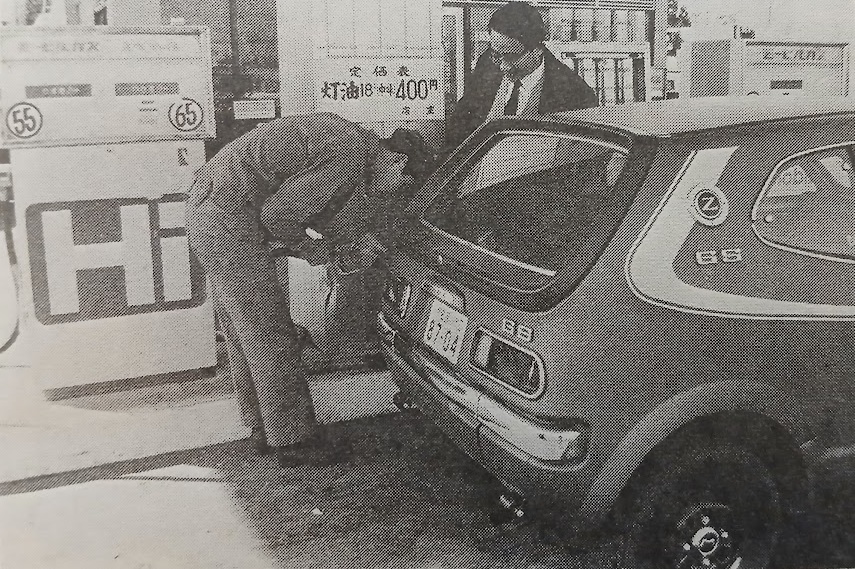
Naturally, when running costs are taken into account, the kei car comes out ahead. Fuel consumption is lower, and compulsory insurance for 12 months costs 8,350 yen for a kei car, compared to 18,650 yen for a small car. Annual road tax is also significantly cheaper–4,500 yen for a kei car versus 21,000 yen for a 1000–1500cc car. In addition, kei cars are currently exempt from periodic vehicle inspections and do not require proof of parking space.
Toll roads present another difference. On the Tomei Expressway, fees are the same for kei and small cars, but on general toll roads the gap widens. For example, on routes managed by the Japan Highway Public Corporation, the tolls for kei cars versus small cars, respectively, are 250 / 500 yen on the Bandai-Azuma Skyline; 70 / 400 yen on the Amakusa Pearl Line; and 10 / 30 yen on the Shonan Road.
However, one disadvantage for kei cars is their poor residual value. In simple terms, this means lower trade-in prices. Comparing kei cars with 1000cc cars, the residual value rates according to the Japan Automobile Appraisal Association are as follows: 40% (kei) / 55% (1000cc) after one year; 26-27% / 41% after two years; and 21% / 30% after three years.
In other words, depending on usage, a kei car will fall to less than half its original price after just one year, while a 1000cc car retains more than half its value.
In conclusion, with its matte “Zero Black” body color and sharp styling, the Z-GS is clearly not suited to those concerned only with economy. But for those who wish to enjoy a sense of individuality within reasonable economic bounds, it fits perfectly. For the everyday car enthusiast, it is sure to be most welcome.
“Perhaps the person driving it and the person paying for it are not the same…” —Ishizu
Product Appeal: The Charm of the “Rope-Curtain Shop” (Kensuke Ishizu)
Setting logic aside, this is a genuinely appealing car. Its boldly styled body shell and the many new ideas incorporated throughout give it a kind of uniqueness that other cars simply don’t have.
A major strength of this car as a product is that its target is clearly defined. Young people who want something stylish. People who want what others don’t have. In short, it is aimed squarely at that kind of customer. A product like this can serve as a counterpunch against more conventional offerings in the same category.
Looking at the current market, most cars lack individuality. They are designed to be “safe” choices–built to suit any purpose and appeal to anyone–and as a result, they have no real interest to them at all.
The same can be said of people. Take a walk through an office district and you’ll see it at once. Whether managers or junior employees, everyone is dressed in the same drab, colorless “sewer-rat” style. There is no trace of individuality. No one tries to stand out, yet at the same time everyone seems to be making a pointless effort not to fall behind.
The Honda Z’s uniqueness is not limited to its styling or mechanical features. Its body colors are also well chosen. Pop Orange, Pop Green, Zero Black—these choices show careful thought in appealing to its intended buyers.
Price, of course, has a great deal to do with product appeal. At 465,000 yen (Tokyo price), this car is expensive for a kei car, and that may give potential buyers pause. But this is balanced by its distinctiveness, along with the inherent kei-car advantages—lower taxes, inspection costs, and fuel consumption—so there is little cause for concern.
This is, after all, a kei car. Compared with a standard passenger car, its performance and ride comfort are naturally inferior. And yet it has undeniable appeal. That appeal lies in something like the charm of an oden shop you enter beneath a simple rope noren. Such a place has none of the luxury of a restaurant with white tablecloths and chandeliers—just a cramped space, simple chairs, and a bare light bulb. But the atmosphere there cannot be compared with that of a restaurant.
There is always something striking about Honda’s approach.
That said, one hopes they will next pursue something new–a car focused purely on practicality, stripped of leisure or hobby elements.
“A high-end toy for older teenagers.” —Asaoka
“The GT-style layout should be well received.” —Mochizuki
“Even though it’s the top model in the Z series, it doesn’t even have a cigarette lighter.” —Sano
How to Read the Bubble Index
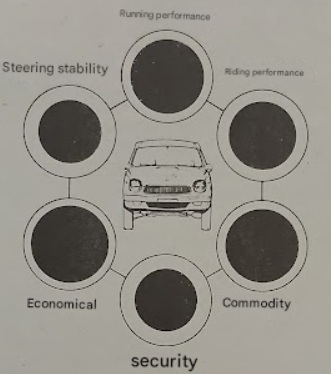
The aim of this comprehensive test drive series is to judge a car’s overall character by evaluating it across six key pillars: running performance, handling and stability, ride quality, safety, economy, and product appeal. For the evaluation, we use a format called the “Bubble Session”–a method from systems engineering in which six specialists from different fields gather around a hexagonal table (the “bubble,” or honeycomb) to exchange opinions.
Each black area within the six circles represents a specific evaluation. The more evenly sized the black areas are, the more balanced the car is across all aspects; if the sizes vary, it signals a vehicle with more pronounced personality in certain areas.
Postscript: Story Photos