Honda N360TS (1969)
Publication: Car Graphic
Format: Road Impressions (full article includes Daihatsu Fellow SS, Subaru 360 Young SS, and Suzuki Fronte SS360)
Date: January 1969
Author: “C/G Test Group” (uncredited)
Road Testing the Honda N360TS
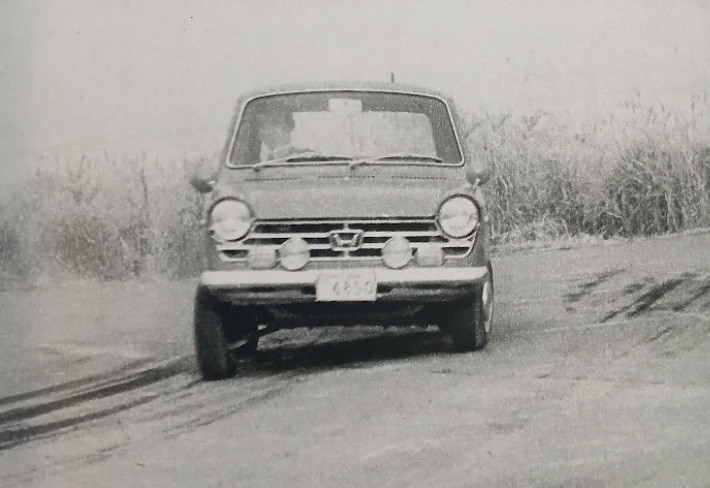
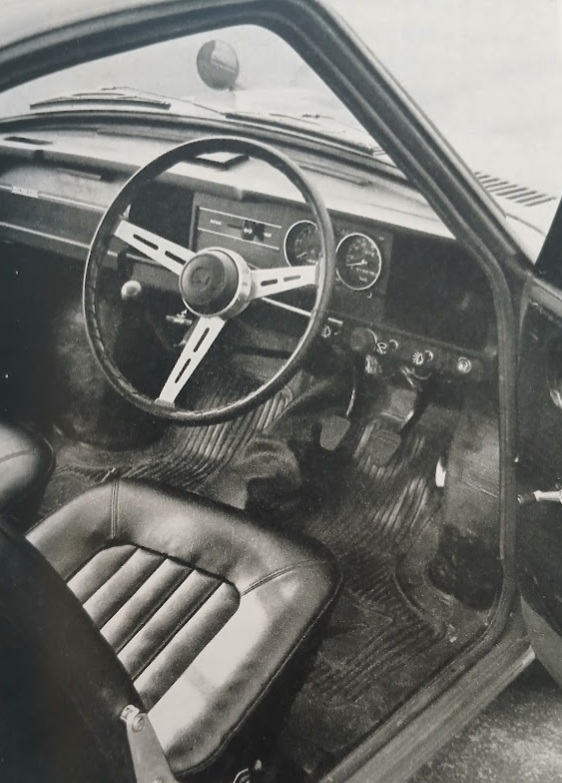
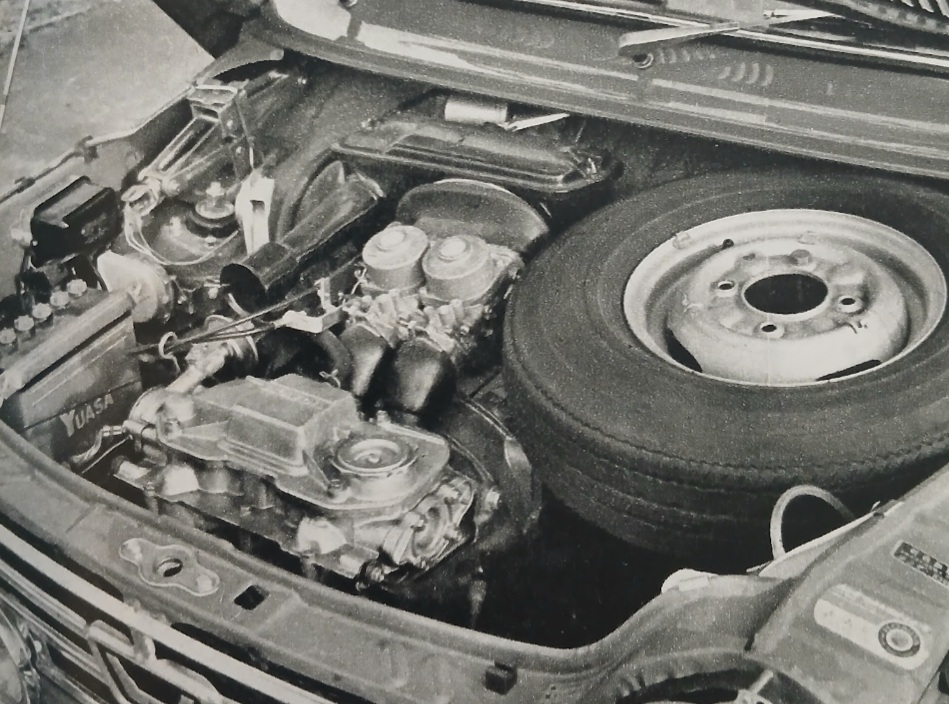
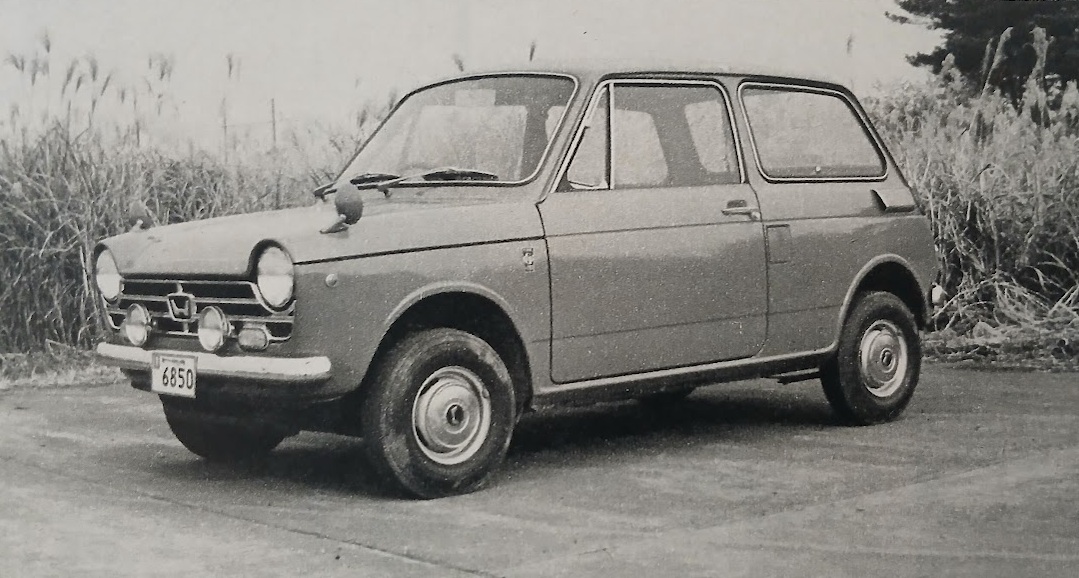
With driving performance comparable to that of a 1-liter class car and a spacious interior, the Honda N360 dramatically changed the image and perceived value of the kei car. In the two and a half years since its release, the N360 has seen numerous variations introduced, including the S-type, M-type, G-type, and an automatic transmission model. The latest addition to the N family is the T-series. The T is essentially a sports model, featuring two Keihin variable venturi carburetors, independent ports, a higher compression ratio, and a revised cylinder head. Additionally, the valve springs and crankshaft have been strengthened. As a result, the air-cooled, four-stroke, two-cylinder, SOHC 354cc engine’s power output has increased from the standard 31ps to 36ps at 9000rpm, and maximum torque has increased to 3.2kgm, delivered at a high 7000rpm. There are several variations of the T series, but the car we tested this time was a TS, which is sporty both inside and out, being equipped with a tachometer, a leather-wrapped steering wheel, and more.
In short, the N360TS can be described as an extremely well-balanced, ultra-compact sporty-sedan version of the N series. It combines higher driving performance without losing any of the advantages of the standard N. The engine, which produces a high specific output of 100ps per liter, is very easy to handle without feeling strained, which is a common weakness in cars of this type.
Even on cold mornings, the engine starts up immediately with a gentle hum from the dynamo starter, and thanks to its air-cooling, it doesn’t require much warming up before driving, though it often stalls while idling before it’s fully warm. Since it produces maximum power at 9000rpm, 500rpm higher than standard, and maximum torque at 7000rpm, 1500rpm higher than standard, it’s necessary to rev it up more than usual when starting off. At first, we were all too conscious of the engine’s high-revving nature, and drove it at fairly high rpm all the time, but after a while, we found that we could keep up with the flow of traffic in town without trying so hard, even with upshift points around 4000rpm.
The engine’s torque increases suddenly around 5000rpm, but it’s not as peaky as other sports-model kei cars, and throttle response is still tenacious even at fairly low speeds. Furthermore, revving above 5000rpm inevitably leads to increased noise. The mechanical noise emitted by the air-cooled, two-cylinder engine has been called one of the biggest drawbacks of the N series. Recent models have made significant improvements in noise reduction, and in fact this TS seemed much quieter than the last standard N we tested, and it wasn’t particularly loud compared to the other three cars in the group. However, it still becomes difficult to communicate with passengers above 6000rpm, and we would be hesitant to drive it through residential areas at night when everyone is asleep.
The engine revs smoothly and surprisingly freely, resulting in excellent low-speed acceleration. In first and second gears, in particular, it quickly reaches the 9000rpm redline, and the top speeds in each gear are 30km/h in first, 50km/h in second, and over 80km/h in third. The T series’ top gear ratio is 0.648, slightly higher than the standard 0.608, but even so, acceleration drops off sharply once in top gear. Consequently, while the 0-200m acceleration time using third gear was 13.5 seconds, the fastest of any of the four kei sports cars, and the 40-60km/h time in third gear of 5.5 seconds was also excellent, the 0-400m acceleration run, which ends at 100km/h and 7000rpm in top gear, took 21.9 seconds (the catalog claims 21.05 seconds). The maximum continuous speed listed in the catalog is 120km/h, and when we drove on the Tomei Expressway, although acceleration dropped significantly above 100km/h, it seemed possible to reach this speed easily over long distances.
The gearbox is a constant mesh type, so quiet operation requires double clutching, but once you get used to it, the shifts are very light and quick, making downshifts to the low gears much easier than with other non-synchronized gearboxes.
The rack-and-pinion steering is light and sharp at both low and high speeds, which is surprising since it is front-wheel drive, and at high speeds it’s virtually unaffected by crosswinds, making it very stable. Speaking of wind, the N360’s boxy body creates extremely high air resistance, which significantly reduces acceleration when driving into a headwind.
Being front wheel drive, its handling characteristics are dominated by strong understeer, but when the power is cut off, its line will suddenly cut inwards. In fact, care must be taken when taking tight corners with this car. When enjoying a gymkhana at Murayama, if we increased the cornering speed a little too much, the inside rear wheel would lift completely off the ground, and the car would tend to assume an unstable position on the verge of tipping over. While stable in everyday use, it is actually unsuitable for gymkhana-style driving, and its lap time was the slowest of the four cars.
The brakes were quite stable, stopping straight from an initial speed of 50km/h in about 9m with a good pedal pressure of 28kg.
Finally, regarding the interior, the S-model-specific leather-wrapped steering wheel is quite solid and gives a much more secure feeling than the standard synthetic one. The circular speedometer and tachometer are small in diameter, but the markings and needles are easy to read. Also, as is common with other N series models, it is nice that the heater and defroster are powerful, despite it being an air-cooled car. Removing the rear seat (which is surprisingly easy) allows you to carry large items in back, which proved extremely useful while conducting tests with our bulky equipment. Because the engine is a four-stroke, it also boasts excellent fuel economy, achieving 20km/l during a continuous 80km/h round trip on the Tomei Expressway, and 15km/l in intense traffic in Tokyo, making it the most economical of the four cars.
Postscript: Story Photos