Honda 1300 99S (1969)
Publication: Motor Magazine
Format: Test Drive Report
Date: December 1969
Author: Hideyuki Yamagishi
Honda 1300 99S: A Practical Sedan with Punch
The Honda 1300 has only recently started to become a familiar sight on city streets. Whereas I had previously driven only the 77, the car assigned to me for this test was a brand-new 99S showing just 87km on the odometer, freshly delivered from Suzuka.
Since this much-discussed car hardly requires a lengthy introduction at this point, I would instead like to look back casually on the impressions gathered during the three-day test run.
A Well-Finished Interior
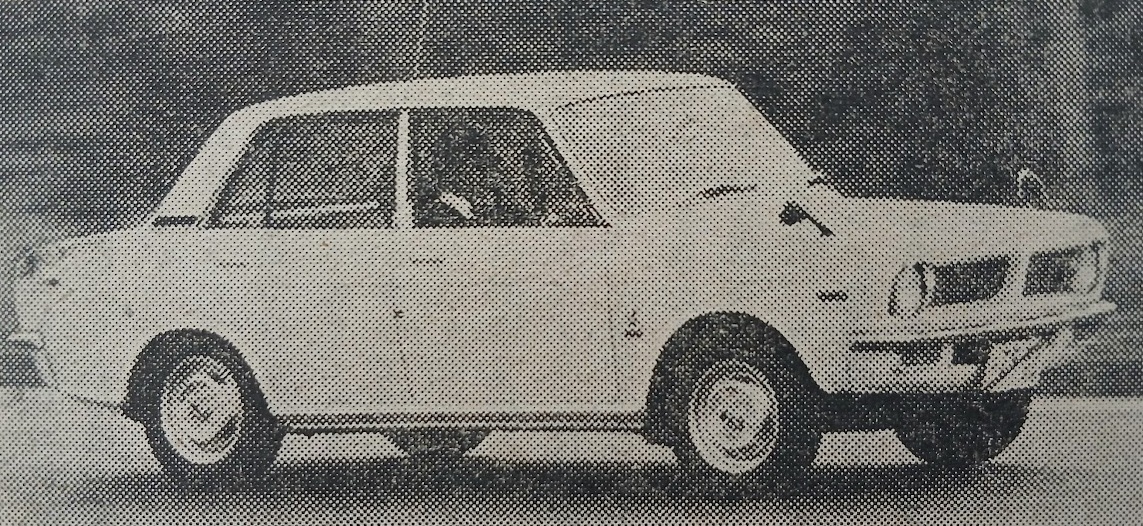
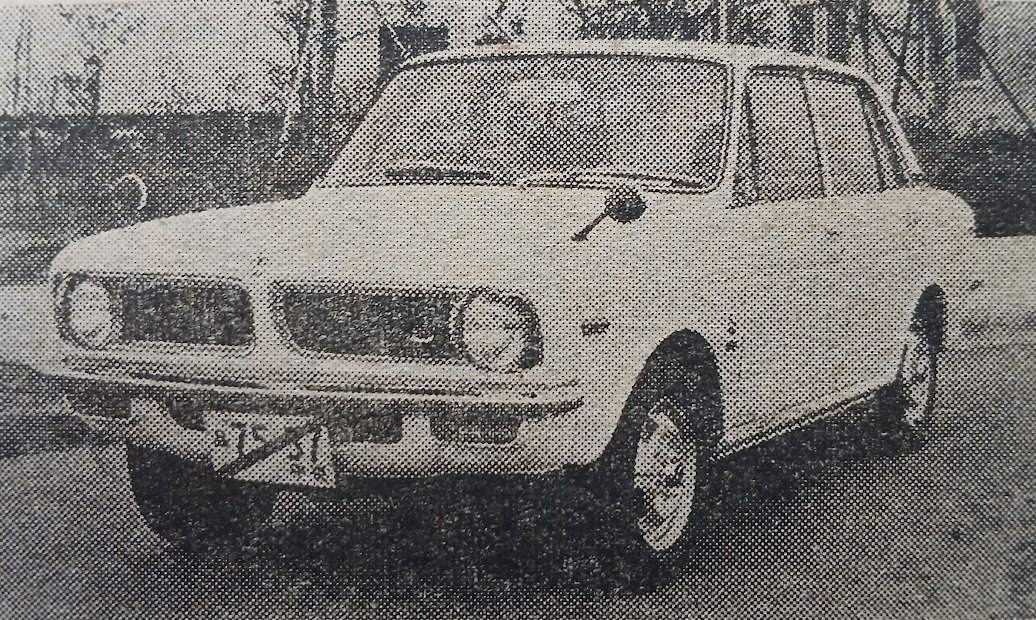
Externally, the distinguishing features of the 99S are its blacked-out grille incorporating single sealed-beam headlights, along with its silver-painted capless wheels.
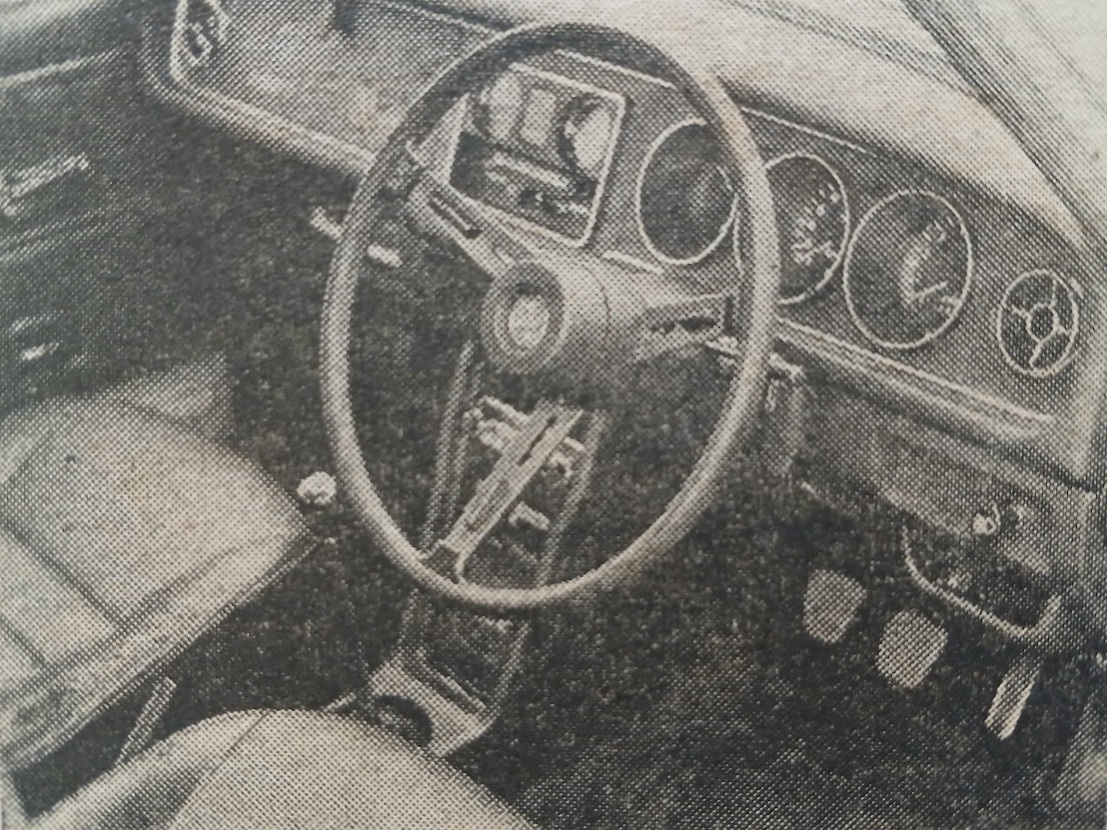
Inside, the dashboard, door panels, seats, and nearly every other surface are finished in black, creating a distinctly sporting atmosphere. At the same time, the overall quality of finish was very satisfying.
The 99 series’ seats feature horizontal striping in contrast to the vertical pattern of the 77, and the seating itself uses somewhat firmer padding, particularly in the backrest. The seatback fits the body very well, while the lower cushion is surprisingly soft. Lateral support, however, seems somewhat lacking for what is intended as the sports version. On the other hand, getting in and out feels natural and smooth.
The headrests are easily adjustable for height, though when lifted they move proportionally farther from the back of the head, which raises doubts about their effectiveness.
The reclining mechanism is also very well executed, locking firmly and securely into position. Conveniently, pockets for storing the seatbelts are provided on both sides of the backrest.
The seat offers 180mm of fore-and-aft travel, though in my case the driving position still ended up all the way at the rear.
The position of the steering wheel feels just right. Because the wheel is angled slightly toward the right, it feels quite natural to drive while leaning against the armrest on the door panel. It does not seem likely, however, that one could comfortably maintain this posture over long distances.
Speaking of which, it is worth mentioning that the pedals also seem ideally arranged for operation from this askew seating position. Yet once one becomes more serious and attempts to drive from a proper straight-ahead posture, the layout proves surprisingly poor for a car produced by an international racing constructor.
The main cause of the problem is that the wheelhouse intrudes into the footwell, forcing the accelerator pedal onto the centerline of the driver’s seat, while the other two pedals are squeezed into the narrow space between it and the center console.
Until one gets used to it, pressing the accelerator often means contacting the wheelhouse with one’s foot first, and it sometimes feels as though the shoe slides down awkwardly onto the pedal. The shape of the accelerator pedal itself also deserves reconsideration. I had the same impression previously when driving the 77 Deluxe: if the pedal extended slightly farther toward the driver and were set at a gentler downward angle, it would not only make heel-and-toe work easier, but would also reduce ankle fatigue in ordinary driving.
Unfortunately, the same complaint must be repeated with the 99S. In addition, it seems to me that a proper left footrest is virtually essential equipment for any driver intending to use the S model seriously. Fortunately, the area behind the center console panel is usefully recessed, so even a footrest positioned within this space would likely suffice. In actual hard driving, I often found myself pushing my left foot deep into this space in search of something solid to brace against.
As time passed, my shoe would gradually slide down the sloped carpet until it dropped behind the brake pedal, where I occasionally realized I was bracing myself against the joint of the steering shaft.
Leaning one’s leg against the well-designed console is certainly effective for maintaining position, but ideally the driver should first be supported by a proper footrest, and only then stabilized further by the console, rather than relying upon it entirely.
The steering wheel itself is excellent, with a pleasantly thick grip, an appropriate diameter, and a leather-wrapped rim that gives a very satisfying feel. The position of the shift lever is also nearly ideal. Reverse seems placed slightly too far away, but the crisp, positive feel of the gearshift itself is first-rate. Apart from occasionally striking one’s fist against the ashtray when it is fully open, there is little to criticize.
Superb Road Manners
Like the 77, the 99 is remarkably quiet at idle. In keeping with its sporting dual exhaust system, however, pressing the throttle summons a powerful exhaust note that is genuinely gratifying. Idle speed was set at around 800rpm, but it was so quiet that, if it were my own car, I would be tempted to raise it closer to 1000rpm.
The clutch is light, and engagement is exceptionally smooth in normal city driving. Compared with the 77, however, the 99 demands slightly more throttle when pulling away. Around 1800-2000rpm on the tachometer seems to be about right, and until one becomes accustomed to it, stalling the engine is not unusual. Of course, in genuinely sporting driving, this is hardly an issue.
Among production cars, the Honda 1300’s engine must surely rank among the most satisfying in terms of mechanical sensations. Anyone who has driven one is unlikely to disagree that its character is utterly irresistible to the enthusiast.
The engine climbs beautifully through the rev range, yet has none of the sterile feeling often associated with machinery from electronics manufacturers. Instead, it conveys a strong sense of mechanical vitality. Engine noise grows sharper from around 4500rpm onward, but the sound retains the pleasant tone characteristic of a SOHC engine and never becomes harsh.
Performance, and acceleration in particular, is surely among the finest in this class.
Surprisingly, however, the car conveys very little sensation of speed, likely because of the 99S’s excellent directional stability in a straight line.
Its top speed is 185km/h, but 160km/h–approximately 6700-6800rpm in top gear–comes up almost effortlessly. Given suitable conditions, reaching maximum speed should be quite easy. At highway speeds, the car displays a reassuringly composed character that leaves the driver with no sense of unease, either dynamically or psychologically.
The disc front brakes and leading-trailing rear drums, aided by the action of the pressure-control valve, allow very confident braking even at high speeds. The S model also uses stiffer spring rates, so the slight floating sensation under hard braking that was noticeable in the 77 is no longer present, resulting in a highly satisfying feel. Nose dive likewise seems somewhat reduced compared with the 77. Since the front discs are power-assisted, the brakes remain extremely easy to use even in ordinary city driving.
The overall driving feel is so sporting that it is quite removed from the image one normally associates with a five-seat, four-door sedan, and this only heightens anticipation for the rumored coupe version.
Although the entire 1300 series, both the 77 and 99, uses the same 4-speed gearbox, the ratios are very well suited to ordinary driving and make the car exceptionally easy to handle outside of racing use. Top-gear flexibility, however, proved somewhat less impressive than expected. As a result, one naturally finds oneself relying more often on second and third gear in city traffic. Even in such situations, the engine noise remains remarkably subdued for an air-cooled engine, which is a great help.
Engine braking in the 99S is extremely strong. While this works very much to the driver’s advantage during high-speed braking, at lower speeds an inexperienced driver, if their inputs are clumsy, can suddenly find the car tugged back with a sharp “kyuu, kyuu” sensation under deceleration. This tendency is especially pronounced in second gear, which naturally leads one to rely most often on the relatively flexible third gear.
The rack-and-pinion steering feels light for a front-wheel-drive car. In the test car, the steering actually felt lighter and cleaner when turning sharply in one sweeping motion than when easing the wheel in gently. Perhaps the caster settings have been revised in this latest production version, because the steering’s self-centering action feels considerably stronger than before–but certainly not excessively so, and probably to about the right degree.
The test car did exhibit a slight shimmy at speeds of roughly 85-95km/h, but once beyond 100km/h, this disappeared completely.
Persistent Understeering Characteristics
The handling character observed on winding roads and hill climbs was marked by strong understeer, and moreover, this understeer tendency felt extremely persistent. It was clearly stronger than what I had previously experienced in the 77. At the same time, however, the car’s behavior remained very consistent, with surprisingly little difference in attitude between power-on and power-off by front-wheel-drive standards. In this respect, my impressions differed from many evaluations I had heard before.
Consequently, it seemed likely that with more careful acclimatization–and once one had mentally sorted out the degree of understeer and body roll–considerably faster times should be possible.
Even so, it is difficult not to feel that the 99S should have been equipped with radial tires as standard. They would undoubtedly sharpen steering feel during small steering inputs at low speeds, while also bringing a significant improvement in high-speed road holding.
On rough roads, the suspension shows impressive compliance. As mentioned earlier, the spring rates are somewhat higher than on the other models, yet ride comfort remains very good, and over rough surfaces, the quality of the ride becomes especially apparent. The De Carbon-type dampers deserve much of the credit here. Not only do they absorb vibration very effectively, they also do an excellent job of suppressing road noise.
When driving very aggressively, making large steering inputs rapidly from side to side–or perhaps more accurately, hauling the wheel into turns–the steering returns with much better timing than one might expect. Even when making sharp, slalom-like corrections to avoid potholes on rough roads, the car responded remarkably well.
As speeds rise and steering angles become more severe, however, the understeer intensifies sharply. Even so, if one continues to keep the throttle applied, the car strays surprisingly little from the intended line.
Braking performance stood out for its dependability, even on rough surfaces. At the risk of repeating myself, however, there was a persistent feeling throughout that the car would have benefited from radial tires, especially when accelerating out of corners.
Even amid this sort of frantic driving, the gearshift continued to operate faultlessly. Under normal conditions, the shifter engages with a crisp, slightly firm click, but in hard driving it slots into gear with such certainty that it almost seems to be pulled into place by itself.
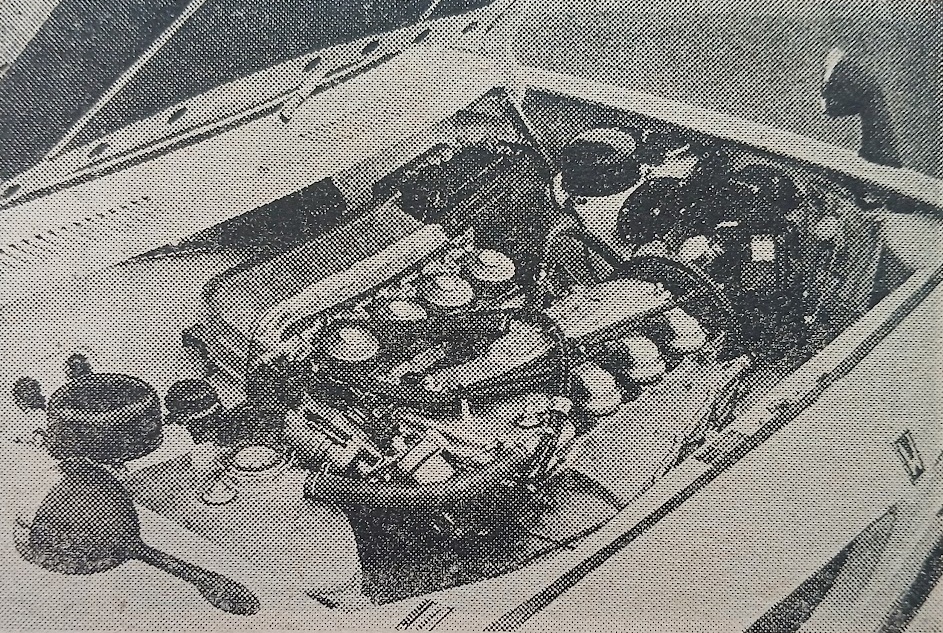
The engine compartment is laid out in a highly practical manner. Oil level is checked with a dipstick, while there is another dipstick to the right for checking transmission fluid level. Ahead of this, on the clutch housing, is a large release arm, and the adjustment bolt below it makes clutch-cable adjustment particularly easy.
The test car was fitted with NGK B8ES spark plugs. Immediately after a hill climb, plugs No. 1 and No. 2 showed traces of carbon deposit, while No. 3 and No. 4 displayed an appropriate burn pattern. No unevenness whatsoever could be detected between the four carburetors, and the engine maintained a consistently smooth idle.
The routing of the plug wires is also handled far more neatly than on the earliest models, and the entire engine bay now gives a much more organized impression.
I have already mentioned the excellent quality of the interior trim, but compared with the woodgrain dashboards used in the Deluxe and Custom models, this black dashboard also feels much easier to live with.
Thanks to their angled glass covers, the instruments are very easy to read, and they remain so at night as well. The glovebox is usefully sized, though the shelf beneath the dashboard is shallow and allows small items to fall out too easily. The console box is small, but very convenient.
The radio speaker is mounted beneath the left side of the dashboard, but it vibrates badly and sounds quite unpleasant as a result. It would be better to locate it elsewhere.
The heater controls consist of two levers for temperature and airflow direction, and their placement and effectiveness are nearly ideal. The heater itself is especially powerful.
The interior light is connected to all four doors, illuminating even when a rear passenger opens a door. The door-ajar warning lamp on the dashboard is also genuinely useful.
Also mounted at the center of the dashboard is a seatbelt reminder lamp, which illuminates for approximately twenty seconds after the ignition is switched on before turning off automatically. This is a good idea, though one wonders whether, at least on the 99S, it might not be better for the light to remain illuminated until both front occupants buckled their seatbelts.
There is also a warning lamp for the brake system, and this is a feature that truly deserves to become standard equipment on all cars.
The vents positioned at both ends of the dashboard are extremely effective. Air circulation throughout the cabin is excellent, though unfortunately I have not yet had a chance to drive the Honda in the rain, so I cannot say how it might behave under those conditions.
One also wonders how durable the leather wrapping on the steering wheel rim will prove over time. Since it has been adopted as standard equipment, however, the company must surely have confidence in it.
The blue emblem at the center of the steering wheel stands out amid the otherwise entirely black interior and is somewhat distracting to the eye.
The wiper, washer, and lighting controls can all be operated without removing one’s hands from the steering wheel, though one still wishes that a passing-flasher function had been included as standard equipment.
As mentioned earlier, the armrest on the door panel is very well designed, and even the window regulator handle is ideally positioned. The location of the handbrake is likewise excellent, though one does get the feeling that small objects could easily fall into the hole at its base.
The trunk provides more than adequate space for a car of this size. Particularly impressive is the way the jack and wheel wrench are securely stowed in their housings, reflecting the meticulousness of the car’s designers.
Under fairly hard driving–likely close to the worst possible conditions for economy–the 99S returned fuel consumption of 7.35km/l. During combined city and highway driving at an average speed of roughly 80km/h, it recorded 9.78km/l.
Postscript: Story Photos